At Universitetskaya Street, 33 you can see a street art piece by Kailas-V featuring a Kharkiv “F”-type tram; it was created based on a historical photo from the 1910s.
The city’s tram history began in 1906 with 12 German MAN trams manufactured in Nuremberg.
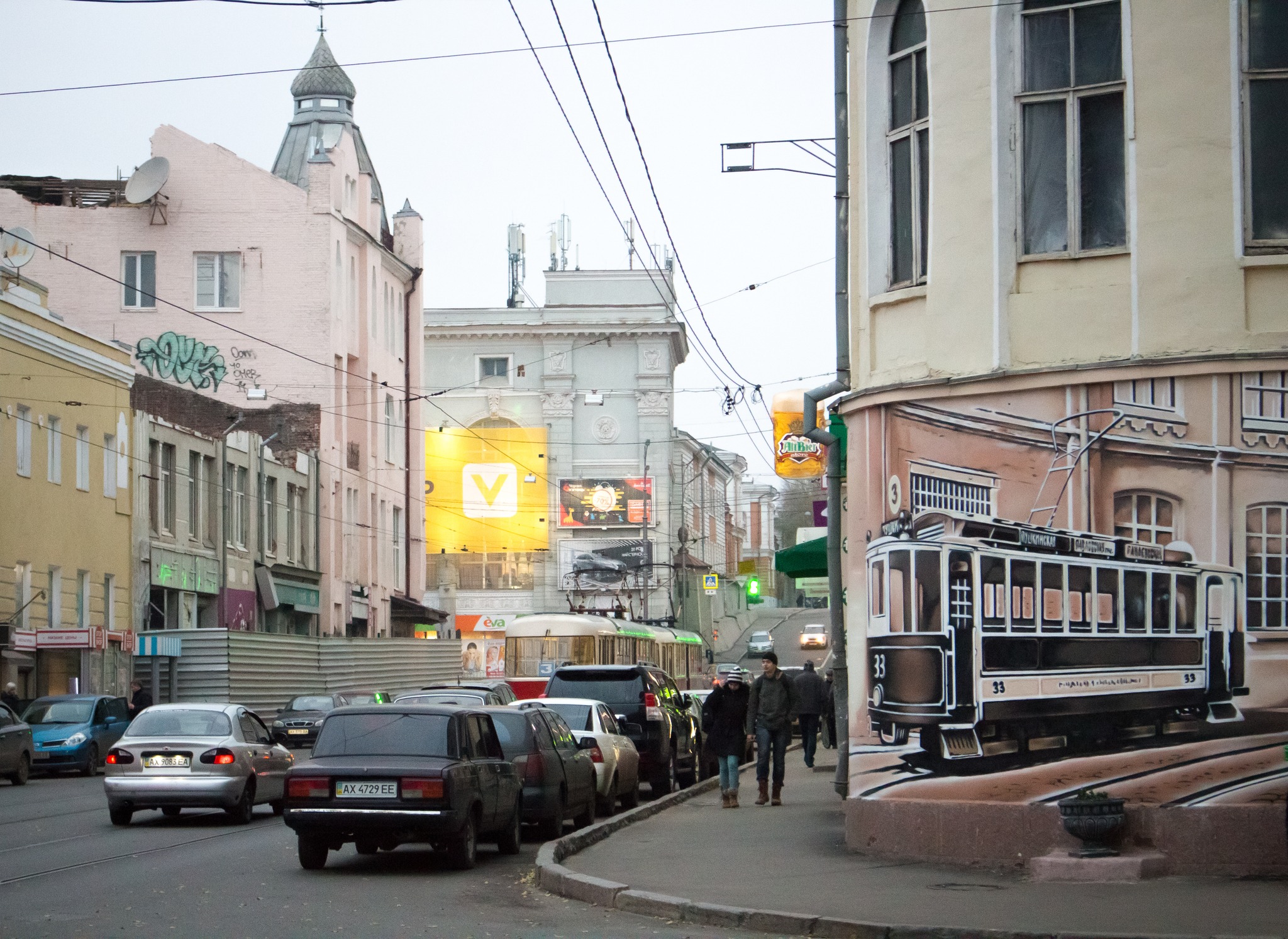
The body was made of wood mounted on a steel frame; the passenger compartment had 18 seats, and the total capacity was 50 passengers. The trams were underpowered (31 hp) and slow (~10 km/h). But the lines were actively expanding, and from 1910 to 1913, the Kharkiv tram fleet was expanded with 84 motor cars and 28 “F” trailer cars, now coming from factories in Mytishchi, Mykolaiv, and Tallinn. Externally, they closely resembled German trams, but were more powerful (55 hp) and faster.
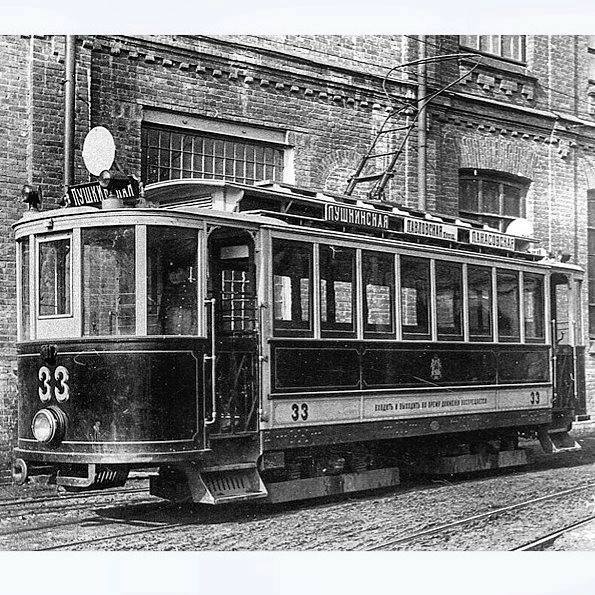
“F” stood for “lantern,” but this had nothing to do with a headlight—the term “lantern” referred to a superstructure with small windows in the roof of the car. By 1930, the tram network had completely switched from the narrow 1,000 mm gauge to 1,524 mm, and the trams themselves had grown larger. The “Kh” series cars could now carry twice as many passengers—100… Most pre-revolutionary trams were decommissioned or transferred to other cities; some cars were converted to broad gauge and used as trailers. Nevertheless, in some other cities, the last “F” type cars were not retired until the mid-1960s, and in Yevpatoria and Konotop, they remained in service until the mid-1970s—by that time, they were already 60 years old!

- The Architectural Evolution of the Kharkiv Theater - 26.09.2026
- 1st Kharkiv Gymnasium - 17.09.2026
- The Oldest Movie Theater in Ukraine - 24.08.2026