In recent years, there has been a growing number of articles with flashy headlines like “Top 10 (20, 30) Best (Most Beautiful, Most Unique, Most Extraordinary) Buildings in Kharkiv.” Sadly, the rate at which these articles appear is practically on par with the pace at which this very architecture is being destroyed and ruined. For the most part, the stars of these “top lists” are buildings from the pre-soviet period. This is understandable, since old mansions, without proper restoration and maintenance, are leaving our beautiful city much faster than others. The only thing that has always bothered me about such articles is that, aside from frequent errors in the construction date and the architect’s name, it is not always clear why this particular building is better than the rest or what its significance is.
While working in the archives on the collection of the “Main Department of Architecture and Urban Planning of the Executive Committee of the Kharkiv Regional Council of People’s Deputies,” I was fortunate enough to discover a wonderful document (albeit without an author’s name) dated late 1953— “A Brief Description of the Best Buildings and Structures of the City of Kharkiv from 1917 to 1953.” The five pages of typewritten text contained a detailed description of twenty architectural structures from the Soviet period, including those built in the postwar years. After all, as we know from the article “On the Chief Architect of Postwar Kharkiv,” considerable attention was paid in those days to the beautification and greening of our city.
Many of the pre-soviet mansions were destroyed, and new buildings began to be erected on the sites of the ruins. Despite the devastation, the plans at that time were ambitious. However, not all of them were destined to come to fruition.
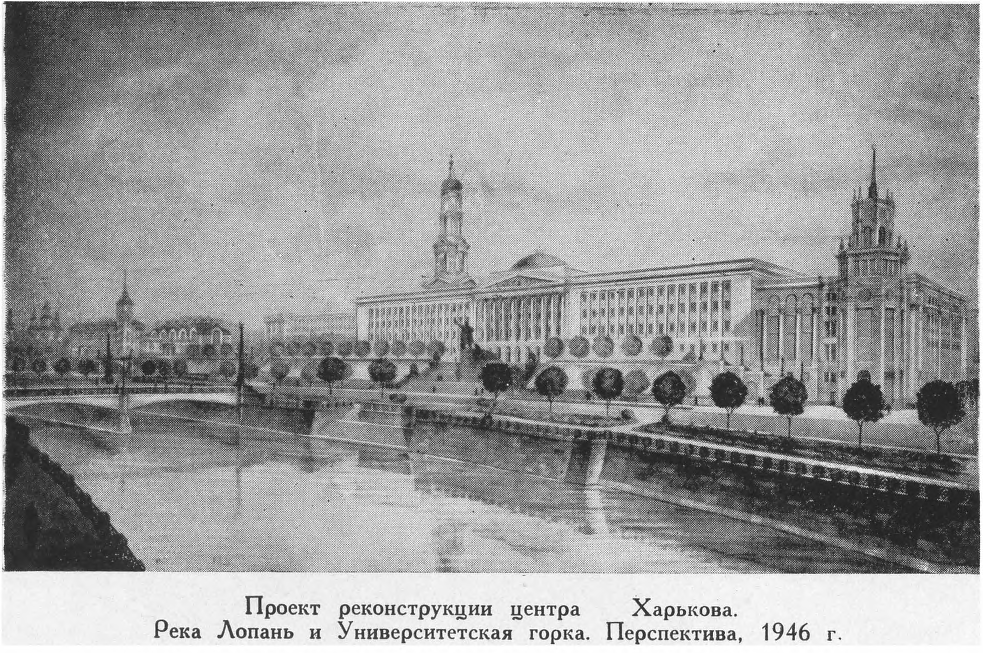
So let’s find out which buildings made it onto this “list of the best,” shall we?
So, at number 1 on the list, the compilers listed the central department store, which is now located at Pavlivska Square, 1/3. After the war, only the building’s shell remained. For this reason, architect A. M. Movshovich had to design the project literally from scratch. In 1952, construction was completed and the building was put into operation.
The large-scale columns supporting the massive semicircular arches and the huge display windows give the building a monumental, striking appearance and effectively convey its character. ‘The rich stucco decoration and white cement plaster give the building an elegant and attractive appearance,’ wrote the authors of the document. And indeed, at that time, the building looked truly beautiful.

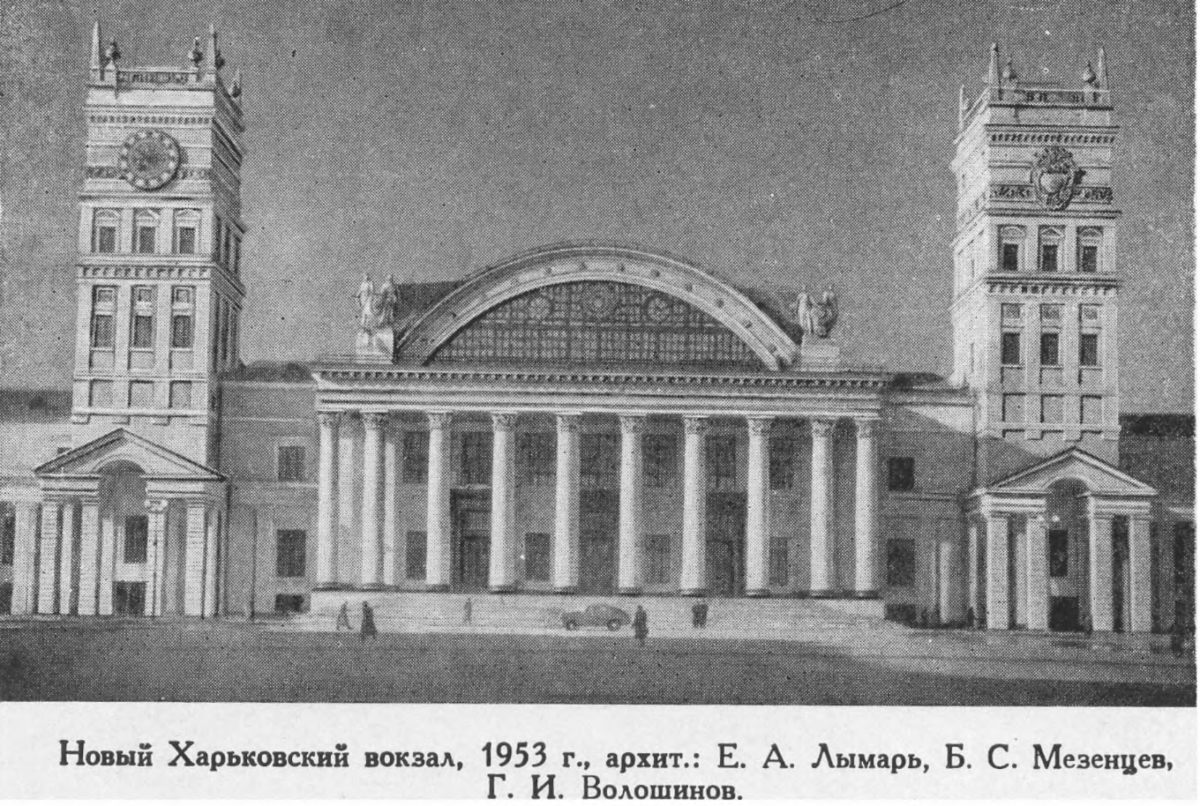
The Kharkiv Railway Station building, one of the largest in the country at the time, was completed in 1952. Designed by architects E. A. Lyamar, B. S. Mezentsev, and G. I. Voloshinov, the building perfectly complemented the image of a major city thanks to its central multi-column portico with two towers on either side and the large arch of the main hall. Marble, crystal, and bronze were used to finish the waiting rooms and the restaurant. The originality and richness of the decorative forms on the facades and inside were also particularly noted. And, of course, the scale of the spatial design.
Many of us, walking down Svobody Street today, don’t pay any attention to the building of General Education School No. 5. That’s a shame. After all, it is this very building—reconstructed on its old foundations in 1951 according to a design by architect G. I. Nechesenko—that is listed as number three. This is because “the building’s great expressiveness was achieved through simple means.”

Although construction of the new Kharkiv University building had only just begun at the time the list was compiled (1953), it is listed as No. 4 in the document. According to the design by architects V. P. Kostenko, A. M. Kasyanov, V. I. Lipkin, I. D. Yermilov, and others, “the most progressive features of capital city buildings were used in combination with elements of Ukrainian folk art.” The university’s towering silhouette was intended to dominate the city and lend it a distinctive architectural character.
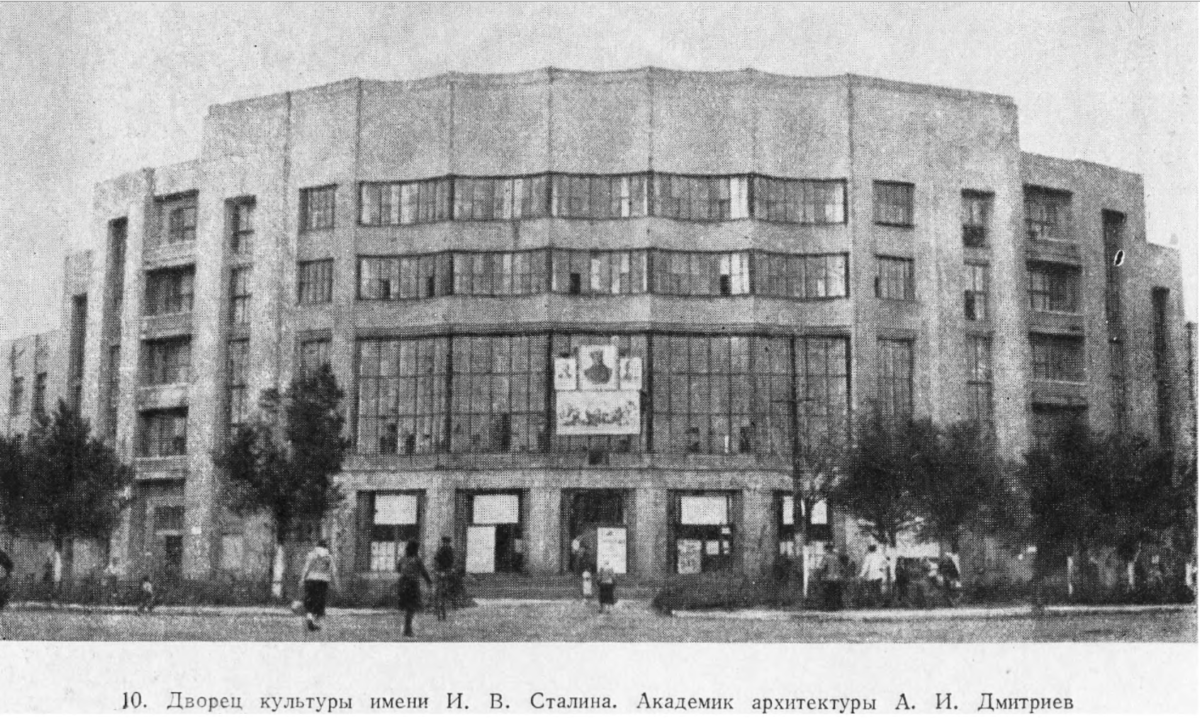
The building located near the train station at Velyka Panasivska Street, 83A is known as the Railway Workers’ Palace of Culture. However, this 1929 structure, designed by A. I. Dmitriev, was previously known to the city’s residents as the “I. V. Stalin Palace of Culture.” The building also made the list of the best. Much has been written about its architectural value, but a description from 1953 is far more interesting:
Despite the influence of Constructivist style, the building has a number of positive features—expressiveness, a good layout, and the use of paintings for decoration.
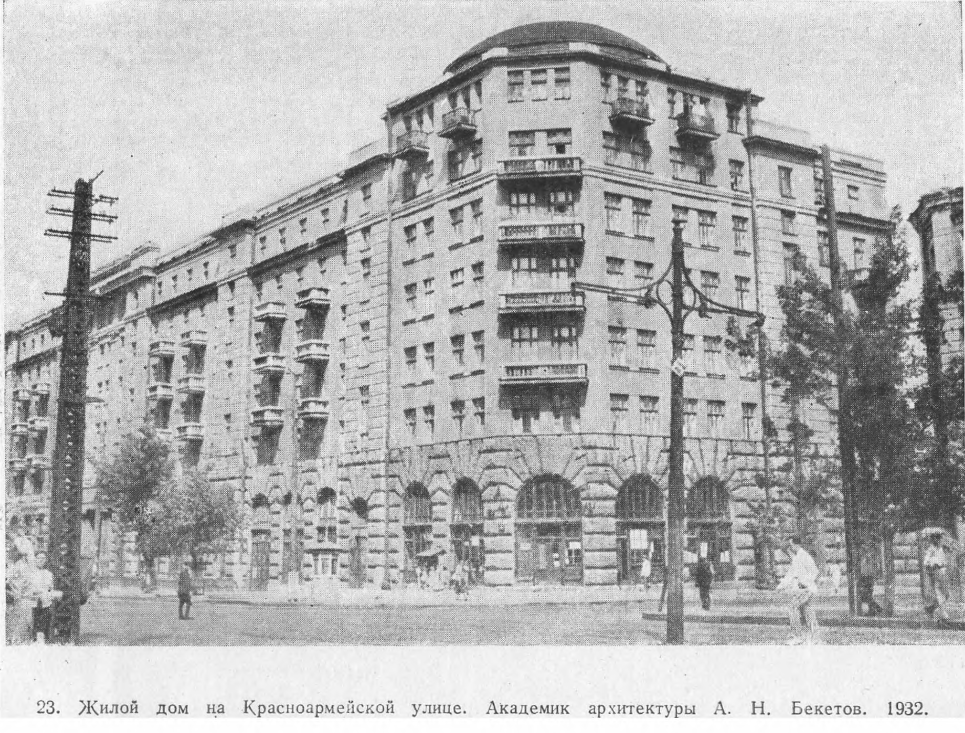
The seven-story building, designed by Academician Alexei Nikolaevich Beketov, with its main façade facing the station square, was also considered one of the finest. It was noted for its elegant forms, simple proportions, and the fact that “the building is monumental, yet has not lost the character of a residential house.” Anyone interested can admire this building by visiting Yevhena Kotliara Street, 8/10.
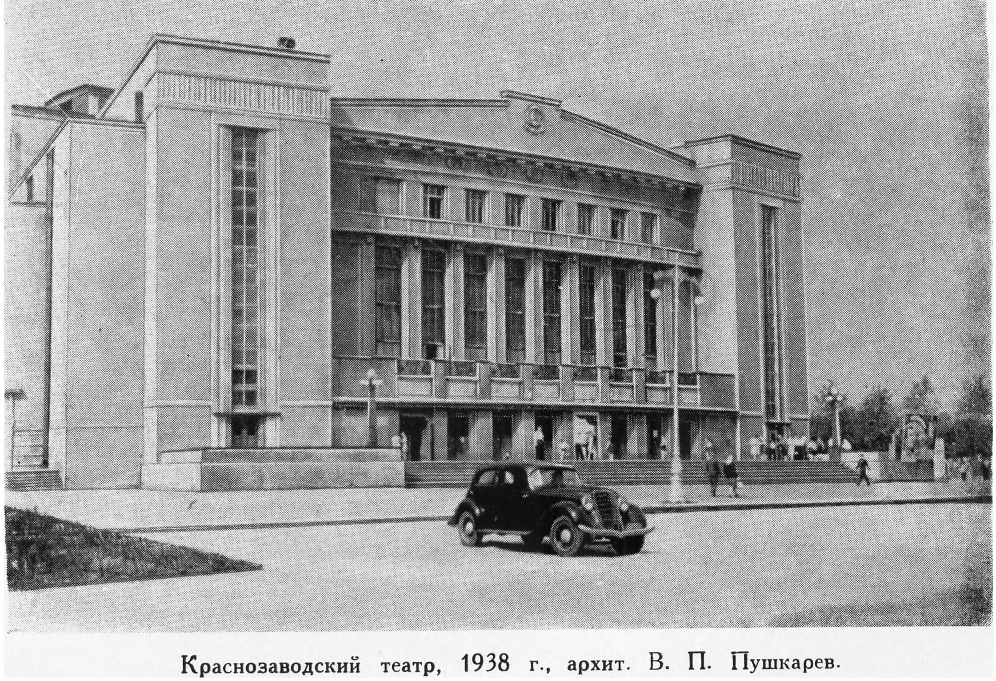
Built in 1938 on the site of the burned-down People’s House, the Krasnozavodsky Theater (now the KhEMZ Palace of Culture), located at Heroes of Kharkiv Avenue, 94, does not personally inspire any sense of wonder or admiration in me. During the war, the building suffered severe damage, and in 1952, architects Areshkin, Orekhov, and Donskoy developed a reconstruction project aimed at enhancing the architectural expressiveness of the facades and improving the layout. In the 1960s, the building was reconstructed based on a design by other architects. But, by all accounts, this did little to help it. Be that as it may, in 1953, people apparently liked it.
On the site of the Central Committee of the Communist Party of Ukraine (Bolsheviks) building, which had been destroyed by the German occupiers (the site had previously housed the Kharkiv Provincial Council), construction began in the postwar period on a building for the regional committee of the Communist Party of Ukraine (now the Kharkiv Regional Administration).
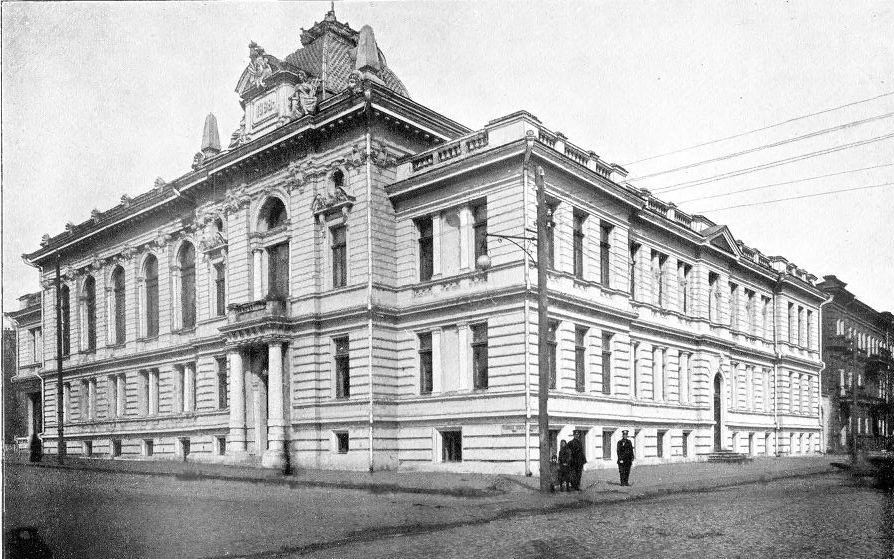
The new building was designed by architects Orekhov and Kostenko. Although construction had not yet been completed at the time “A Brief Description of the Best Buildings and Structures in the City of Kharkiv from 1917 to 1953” was written, it was nonetheless included in the list. The main facade of the building, facing Sumska Street, features large, monumental forms and is adorned with massive columns. It was noted that “the capitals and decor incorporated elements of national architecture.” But one of the building’s main values was that it framed the view from what is now Freedom Square, becoming an integral part of its ensemble.

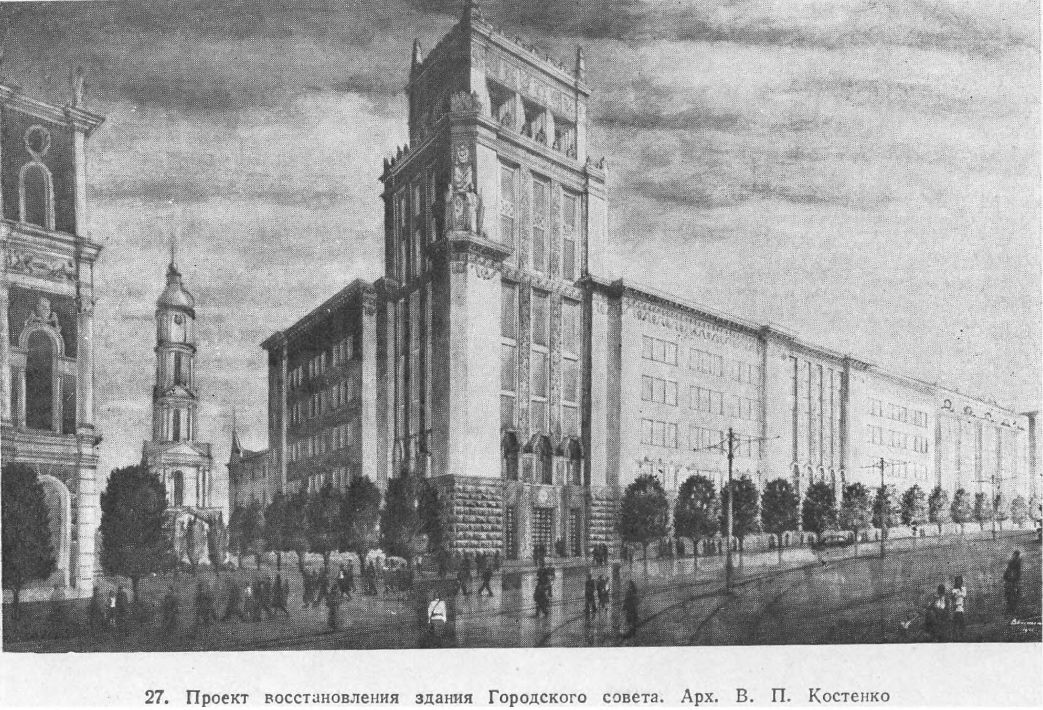
The renovation of the city council building, which had been constructed before the WWII, began in 1947. However, architect V. Kostenko’s creation was no longer a renovation but an entirely new structure, and upon its completion, it was described as follows: “Located in the central part of the city, among large buildings of old construction, the city council building stands out favorably both for its tall silhouette with a tower and for its original forms, designed in the motifs of Ukrainian folk architecture.”
Rounding out the top ten on the list was the current Kharkiv National University of Automobile and Highway Engineering, located at Yaroslava Mudrogo, 25. Like many other buildings, it suffered severe damage during the war. Therefore, in the 1950s, a reconstruction was carried out based on a design by Grigory Pavlovich Domshlag, utilizing classical architectural forms. A tall six-column portico with a triangular pediment was constructed in the central part. It was also noted in 1953 that “as a result of the reconstruction, the building’s appearance has improved, and its architecture has received positive reviews.” Many years have passed since then, but I fully agree with this assessment. The building is truly beautiful and pleasant.

Kicking off the second “top ten” is one of our city’s landmarks.
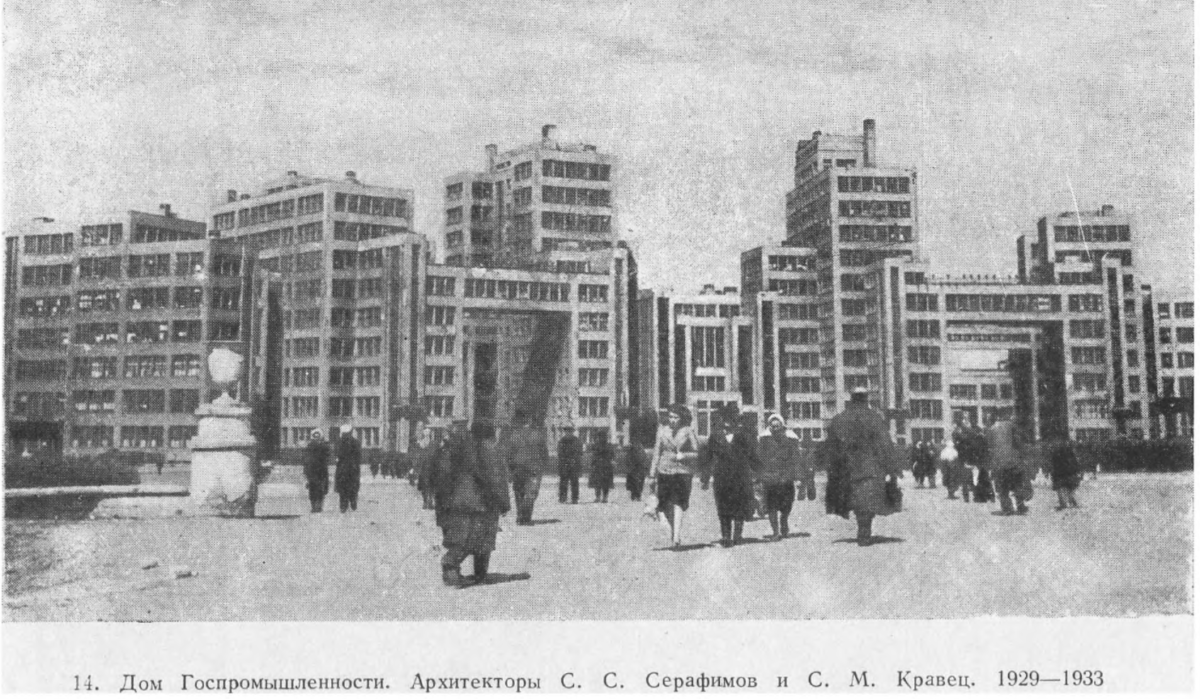
The State Industry Building (Derzhprom), constructed between 1926 and 1930 according to a design by architects Serafimov and Kravets, was described in the document as follows:
The first high-rise building in the USSR stands on Dzerzhinsky Square and forms the end of the square along its longitudinal axis. Despite its Constructivist forms, this building is of significant urban planning importance for the city of Kharkiv.
The building’s construction quality, specifically its reinforced concrete frame system, was also highly praised.
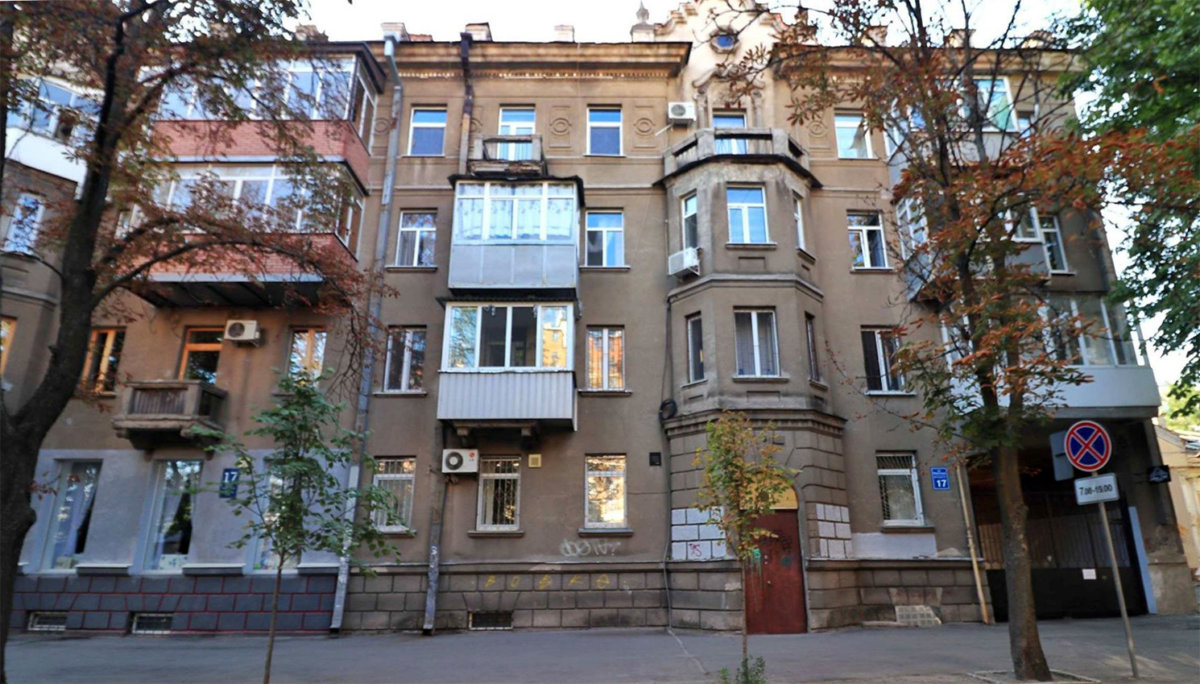
Sometimes, after work at the archives, I like to take a stroll down Myronosytska Street. It’s quiet, there are beautiful mansions, and I can even stop by for coffee with my colleagues from the history department along the way. To be honest, though, I’d never really paid much attention to the building at No. 17. What’s so special about it? It’s just another “Stalin’s era house.” But unlike me, experts in 1953 paid serious attention to this building, which was constructed in 1952 according to a design by architect V. S. Donskoy. The four-story building with a basement made it onto the list of Kharkiv’s best structures because “its modest decorative elements (the rusticated base, the panels on the upper-floor piers, and the picturesque gables aligned with the bay windows) perfectly matched the image of a residential city building.” And just like that, that was enough to land it in 12th place!
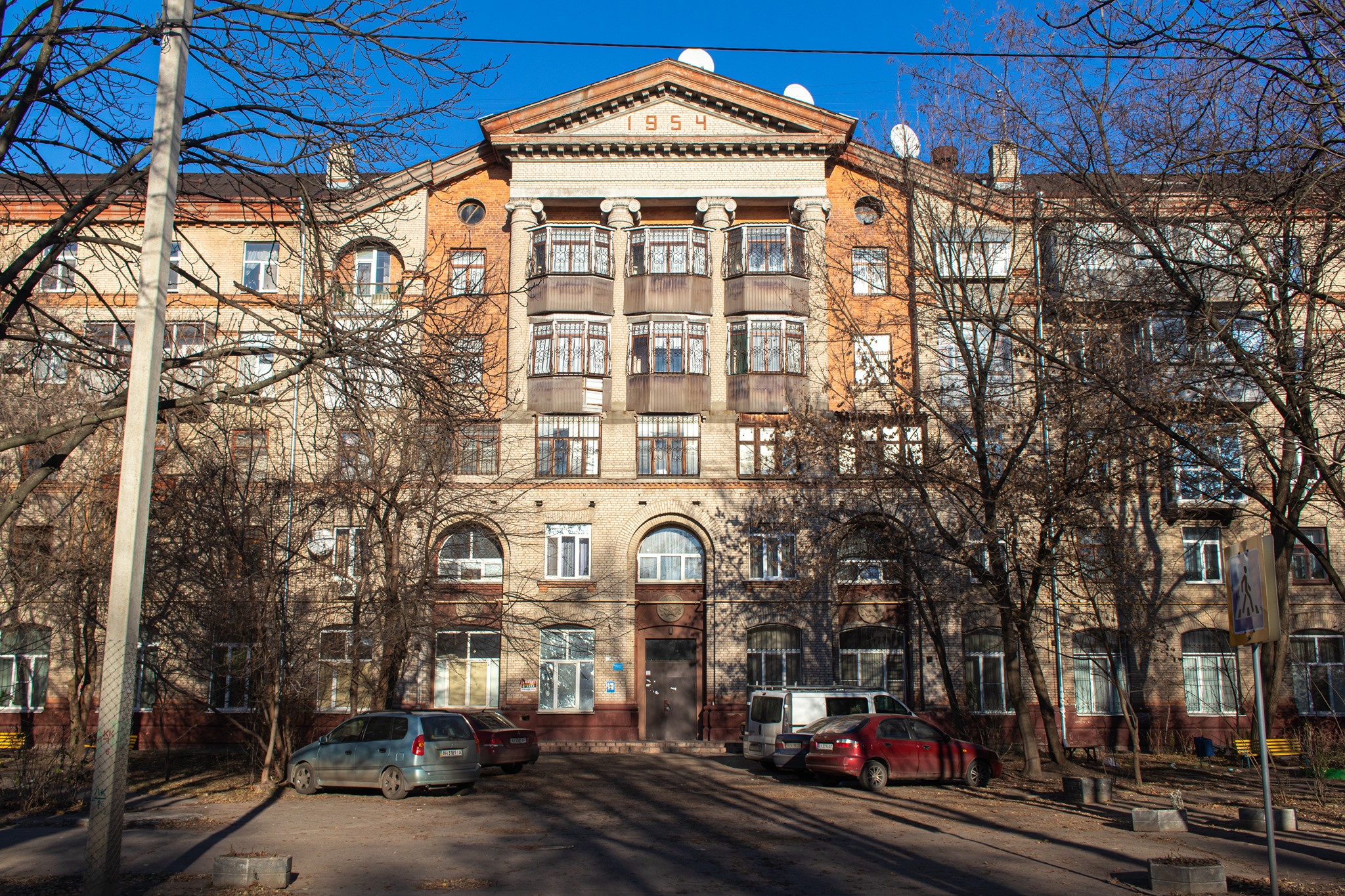
Ranked thirteenth on the list of the best was not a single mansion, but an entire complex of residential buildings in the KhTZ neighborhood. Among the positive aspects, particular note was made of the ensemble of six-story buildings, along with the landscaping and greenery of the surrounding area. The buildings themselves were constructed without plaster, using a combination of red and white brick.
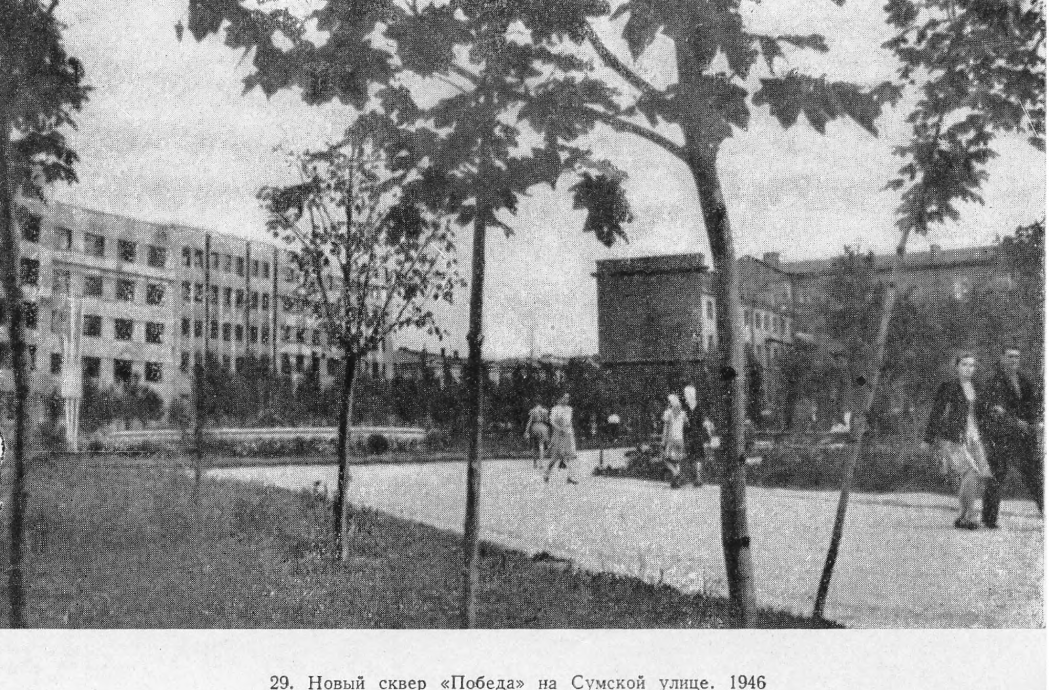
The beautiful Victory garden square, featuring a pool and the “Glass Stream” fountain, was created as part of the postwar reconstruction of Kharkiv.
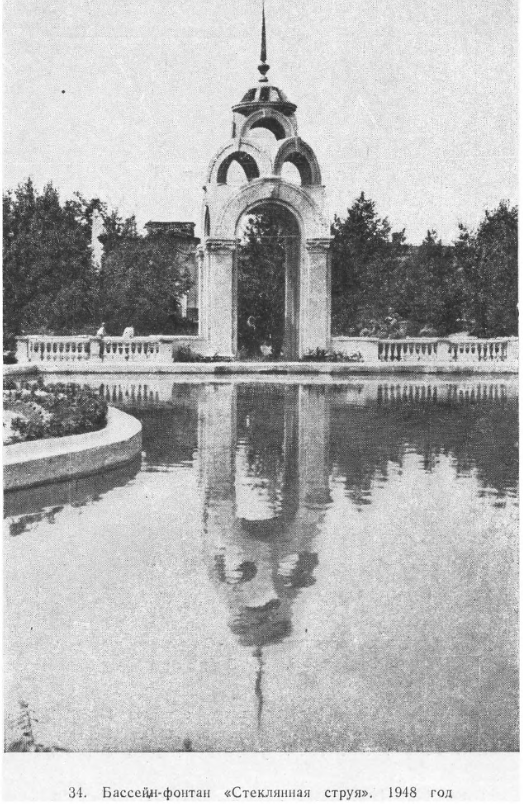
The water feature, beautiful landscaping, and small-scale architectural elements gave this place a lovely appearance. Even back then, the Glass Stream had become a favorite leisure spot for our city’s residents. And, of course, it made the list of the best buildings.
In 1951, a rose garden was erected in Shevchenko Park on the site of an old building that had been demolished. The structure consisted of a wooden gallery with pergolas (canopies), in front of which were flower beds and a fountain. The use of colorful vases to shape the greenery and naturally planted roses was extremely successful. The rose garden was rightly considered a gem not only of the park but of the city as well. It has not survived to this day, so one can only imagine how lovely it was to stroll through Shevchenko Park, fragrant with roses…
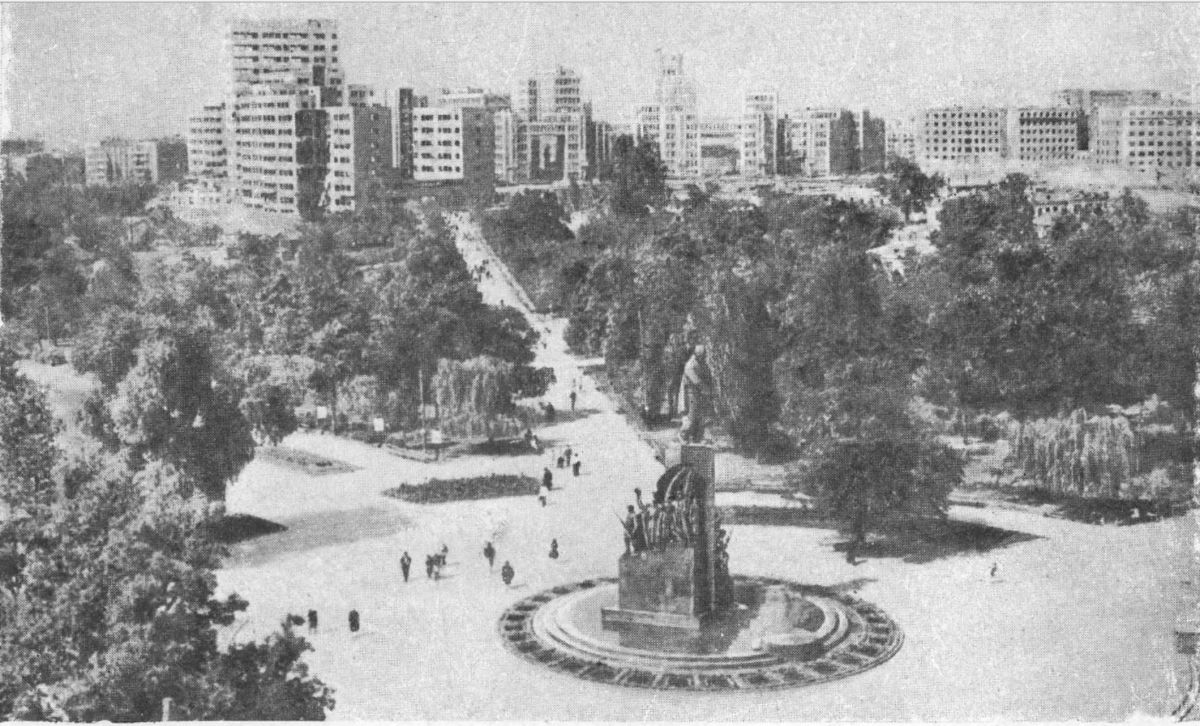
The monument to Taras Shevchenko was the only monument included in the document “A Brief Description of the Best Buildings and Structures in the City of Kharkiv from 1917 to 1953.” Even at that time, it was regarded as the finest depiction of the great Ukrainian poet.
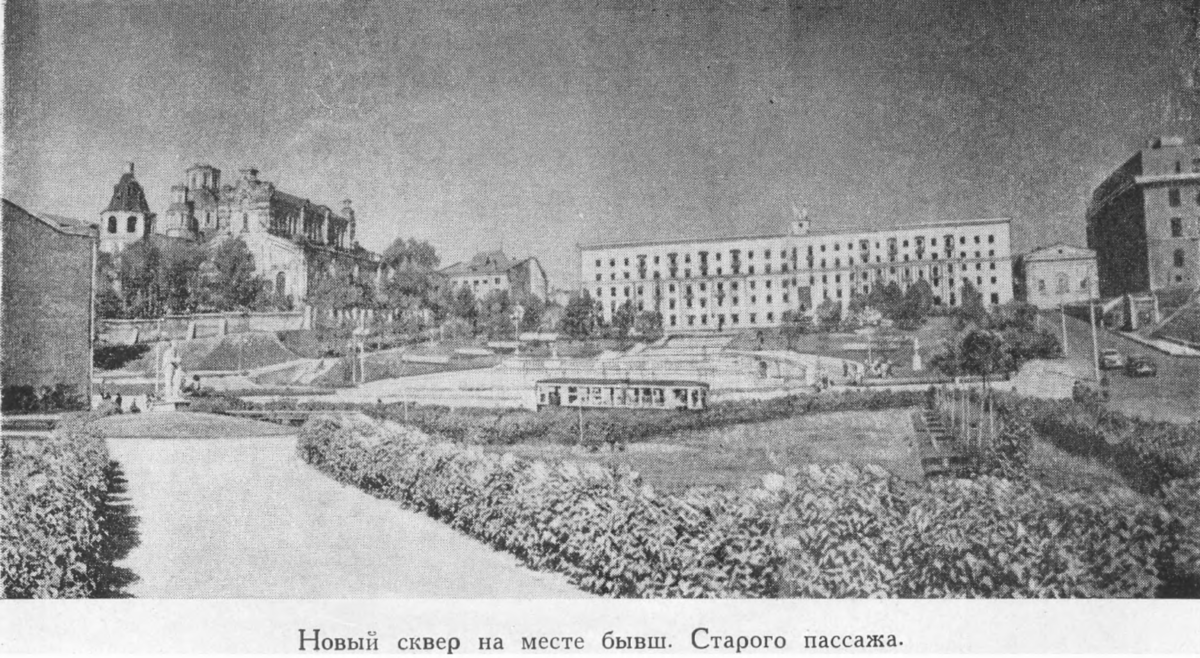
To this day, the terraced park on Sobornyi Descent remains one of our city’s residents’ favorite places to relax. It’s so lovely to sit on a bench by the fountain in the delightful shade of the trees in the historic city center… This park was laid out in 1952 on the site of old houses and warehouses destroyed during the war. The steep slope of the terrain led to its design as four terraces. A fountain was installed on each one, and the garden square itself was beautifully landscaped. Incidentally, great attention was paid to landscaping during the postwar reconstruction of Kharkiv.
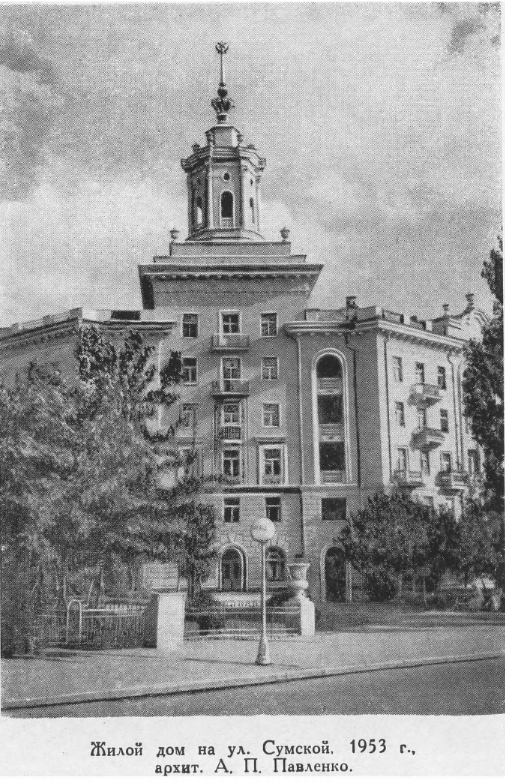
Practically directly across from the main entrance to Central Park at Sumska Street, 128 stands a residential building with a spire. It’s a real shame that many people overlook it during guided tours. Yet this creation by architects Pavlenko and Yermilov, built in 1953, also made the list of the best. Contemporaries wrote that the building stood out for the originality of its design and blended very well with the park. The corner section with the spire served as a striking entrance to Kharkiv. The apartments in the building were known for their comfort and amenities.
As it happened, in the 1950s, two buildings at the very beginning of Sumska Street collapsed. In their place, a new residential building was erected based on a design by architect Y. A. Blinder; it managed to blend in seamlessly with the surrounding architecture and was well received by the city’s residents. This is likely why the building at Sumska Street, 7/9 made it onto the list of the best buildings.

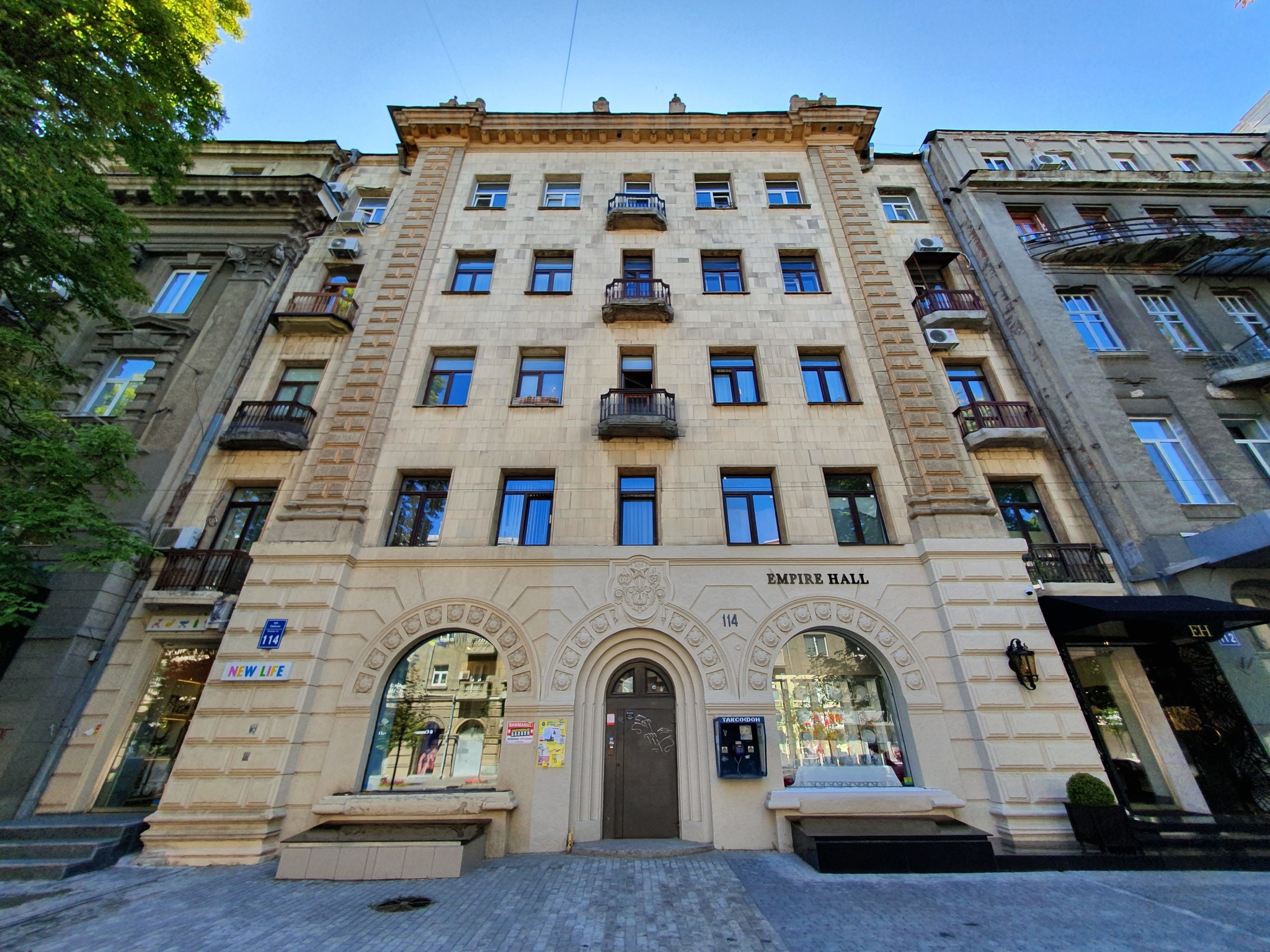
The document concluded with a small but extremely interesting residential building located at Sumska Street, 114. The building was constructed in 1950 based on a design by architect V. P. Kostenko.
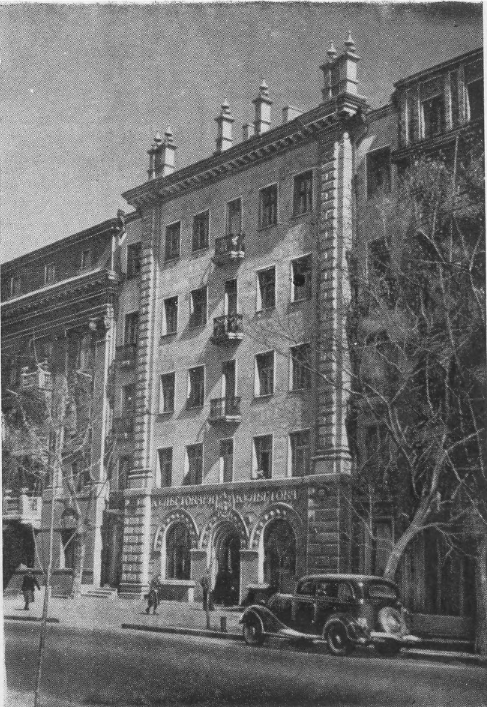
It turns out that when it was built, ceramic blocks were used for the first time in Kharkiv to clad the facade.
Undoubtedly, most of the structures included in the document “A Brief Description of the Best Buildings and Structures of the City of Kharkiv from 1917 to 1953” were built in the postwar period. This was a time when, after two occupations and its liberation in late August 1943, the city was rising from the ruins despite the devastation. Often, when walking down Sumska or Myronosytska Streets today, past buildings from the Soviet era, we (myself included) don’t always pay attention to them. Gray, ordinary, faceless—and certainly no match for the pre-soviet mansions. That is precisely why the main takeaway from reading the “top twenty list” is that it gives us a wonderful opportunity to see and understand the value of these buildings in a completely different light—both for the city’s history and for ourselves.

- About the military pilot school and the airfield in Kharkiv… - 04.11.2020
- Nikanor Savich—A Political Career by Mistake - 13.07.2020
- And once again, about the Cavalry Guards… - 21.01.2020