You often hear about Moisey Dikansky, this remarkable man, on guided tours of Kharkiv and read about him in books dedicated to our city’s history. And no wonder: after all, he is credited with designing more than a dozen magnificent mansions in Kharkiv from the first half of the 20th century. Among them are:
- Apartment building. Korolenka Lane, 19
- Nemirovsky Apartment Building. Teatral’nyi Lane, 5
- Dikansky Apartment Building. Chernyshevska Street, 80
- Silberberg’s office and residence. Donets’-Zakharzhevs’koho Street, 2
- Dikansky’s Office and Residential Building. Sumska Street, 96–98
- Zilberberg Printing House. Donets’-Zakharzhevs’koho Street, 6
- Medvensky Apartment Building. Yaroslava Mudrogo Street, 14
- The Nujievskaya Mansion. Myronosytska Street, 86
- Palace Hotel. Katsars’ka Street, 9
- The Dikanskaya Apartment Building. Korolenka Lane, 10
- The Shkaff Apartment Building. Sumska Street, 88
Moisey Dikansky is considered one of our city’s most enigmatic architects; to this day, his name remains shrouded in myth and speculation. The most intriguing thing is that there is not a single document confirming that he was, in fact, the author of those architectural designs.
I will certainly share my thoughts on whether he was an architect in a separate article. But today I’d like to write about the Dikansky merchant family: during my three years working at the State Archives of the Kharkiv Region, I’ve found quite a few documents about them.
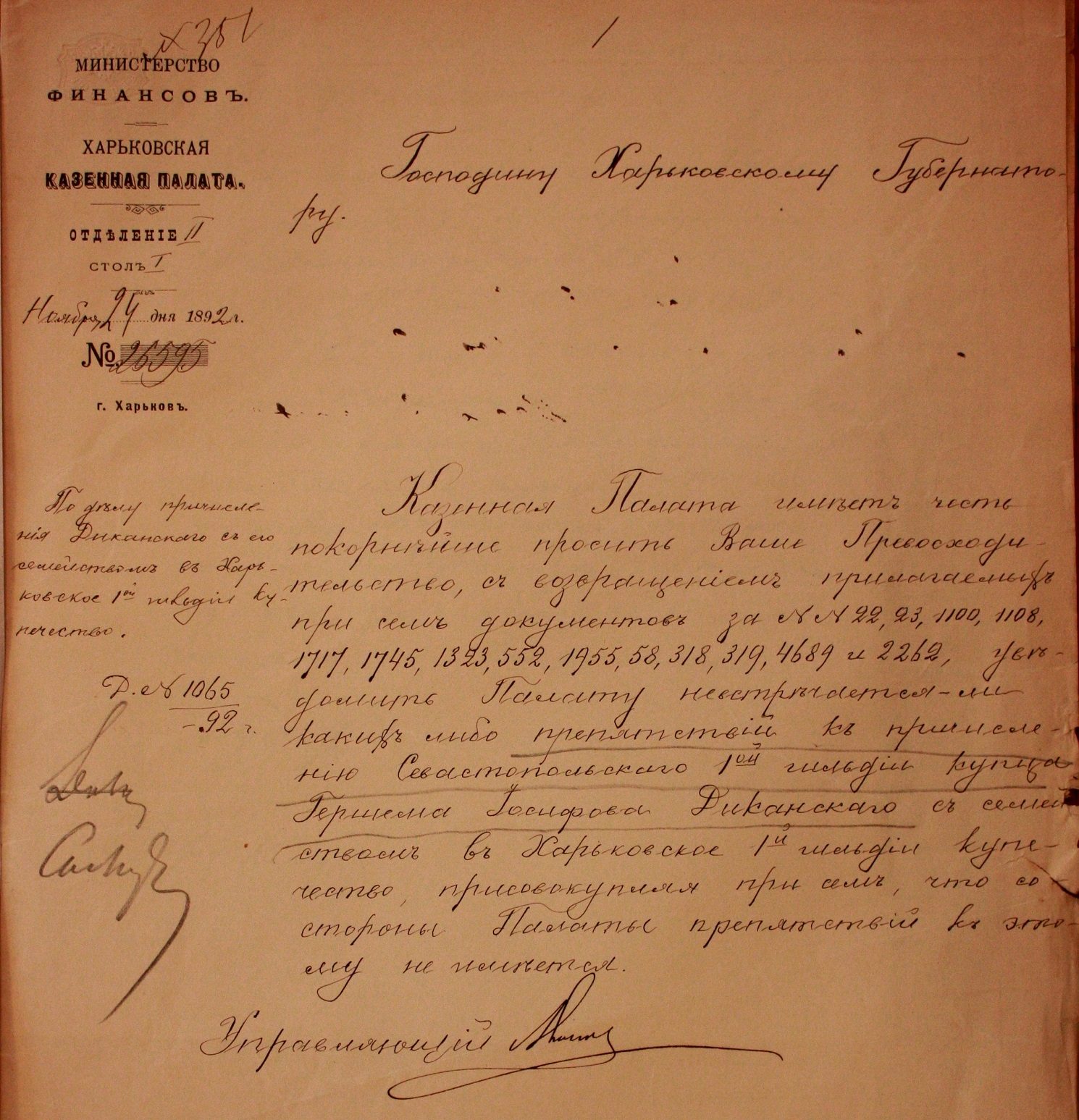
Where did this family come from, and when did it settle in Kharkiv? The answer to this important question is found in a file held in the archives of the Kharkiv governor. It turns out that in November 1892, Gersh Iosifovich Dikansky, a merchant of the First Guild from Sevastopol, was admitted along with his family to the Kharkiv merchant guild of the same rank.
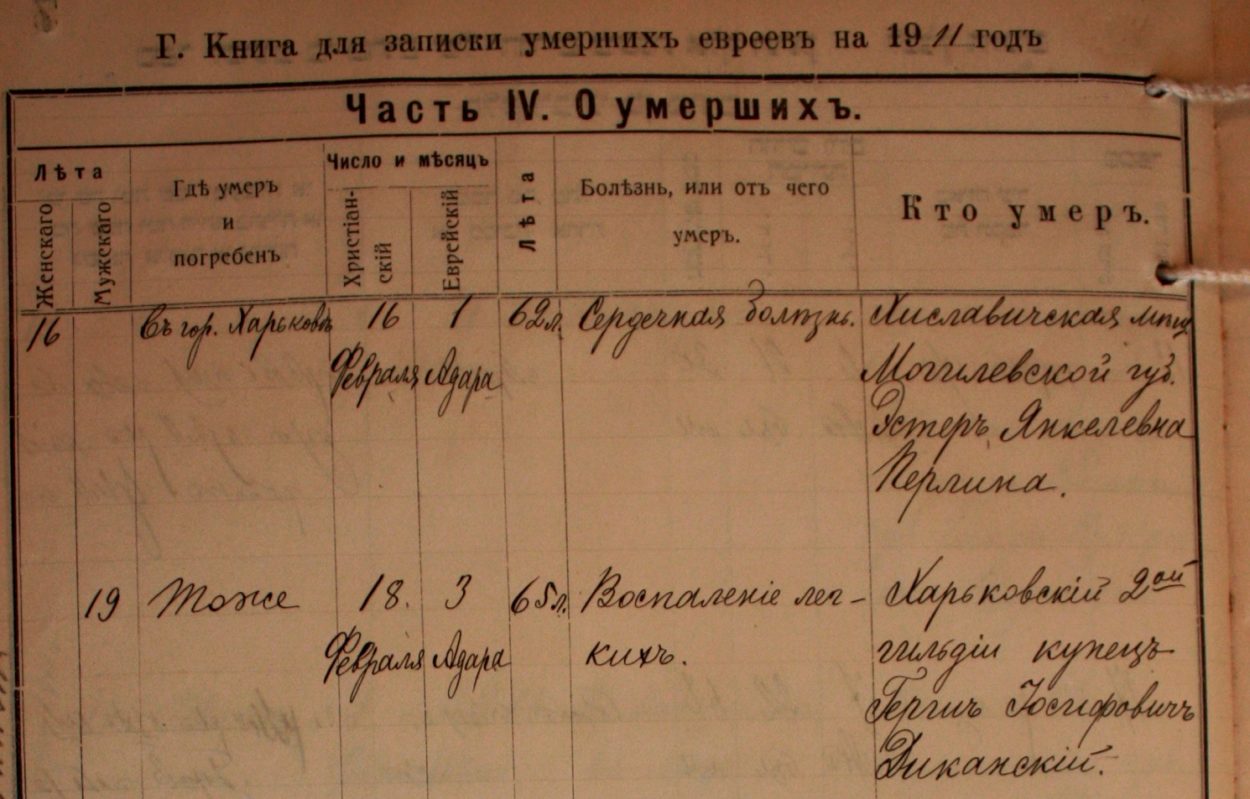
However, Sevastopol should not be considered the place of origin of the Dikansky family. After Gersh Iosifovich’s death on February 18, 1911, from pneumonia, references to birth certificates issued by a rabbi in Poltava can be found in the documents related to the settlement of his estate.
The surname “Dikansky” itself belongs to a type of surname derived from toponyms (geographical names). This was quite common among Jews in the Russian Empire. The Dikansky family likely traces its roots to the village of Dikanka. The family, originally from the Poltava Governorate, moved to Sevastopol for business reasons and then, in 1892, to Kharkiv.
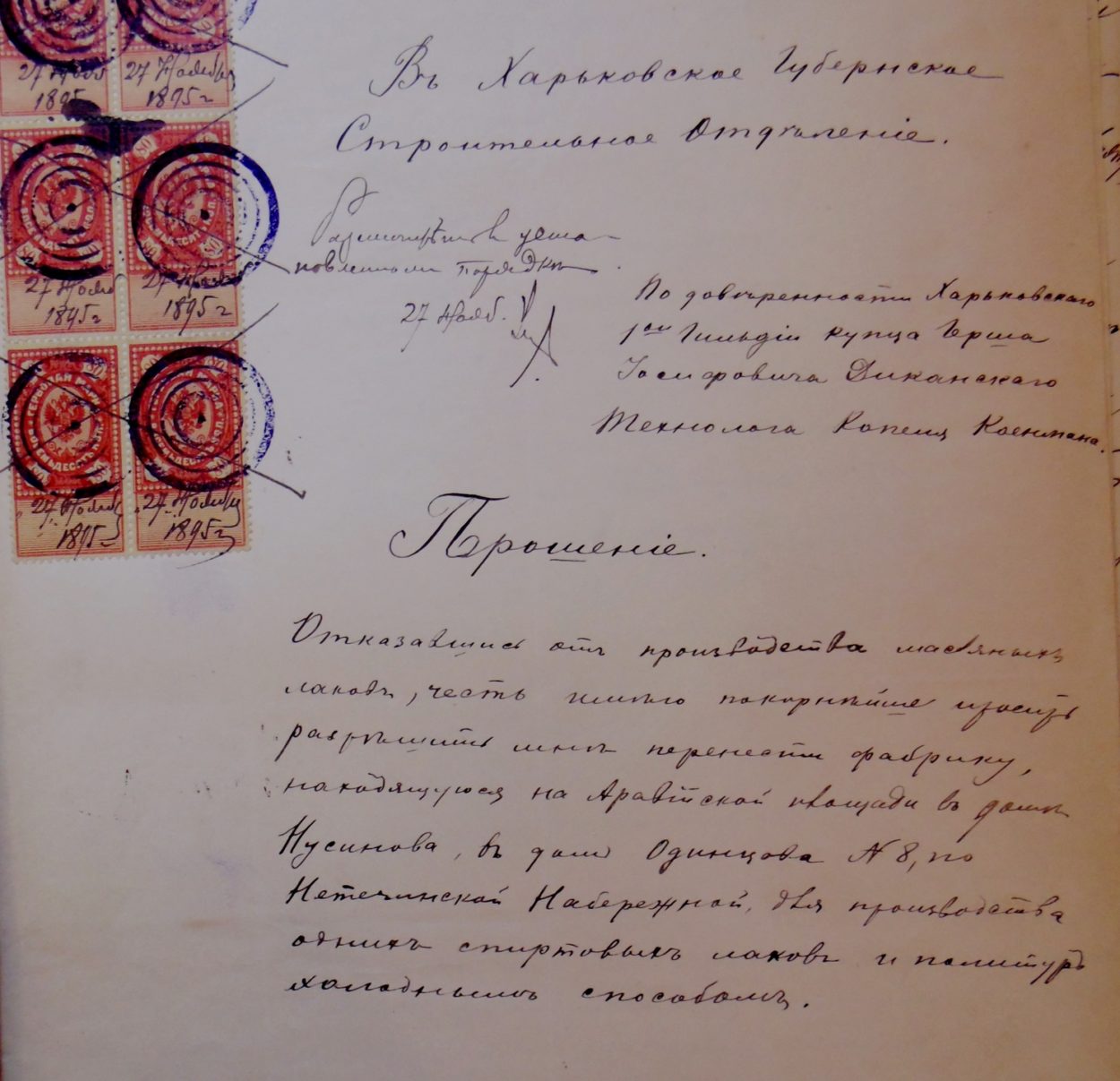
What exactly did the Dikansky merchants do after moving to Kharkiv? According to archival documents, upon arriving in the city, they opened a factory producing oil-based varnishes. It was located on Araviyskaya Square. However, in 1895, Gersh Dikansky decided to abandon the production of oil-based varnishes, focusing instead on alcohol-based varnishes and polishes. A factory for their cold-process production was opened in 1896 on Netechenskaya Street.
A number of scholars attribute the authorship of this book to Moisey Dikansky.

This makes sense, since the author is listed as M. G. Dikansky. I must admit, I used to think so too for a while. However, examining the composition of Gersha Dikansky’s family clarifies the situation and helps avoid future mistakes. In a 1909 document titled “Guild Lists of Merchants Who Have Renewed and Not Renewed Their Merchant Certificates,” we find the following individuals:
- Gersh Iosifovich Dikansky — 68 years old,
- his wife, Esther Leibovna—57 years old,
- his sons:
- 1) Abram — 42 years old,
- 2) Moisey — 40 years old,
- 3) Shlema — 19 years old,
- 4) Mordukhai — 17 years old,
- 5) Joseph — 15 years old,
- his daughter:
- 1) Freud-Rice — 21 years old,
- 2) Rachel — 13 years old,
- Abram’s wife, Sarah Isaacovna—40 years old,
- sons:
- 1) Mordukh — 17 years old,
- 2) Zalman — 14 years old,
- 3) Joseph — 7 years old,
- Moses’ wife, Gita Nasonovna — 44 years old,
- sons:
- 1) Anatoly — 7 years old,
- 2) Lev — 4 years old.

Thus, we can see that by the early 20th century, the Dikansky family living in Kharkiv was quite large, and the confusion regarding the initials M.G. is quite understandable.
No information has been found so far about Gersh Dikansky’s daughters, but we do know a few things about other members of the family. For example, Abram Dikansky, and later his son, owned a beautiful mansion at Staromoskovskaya Street, 87.
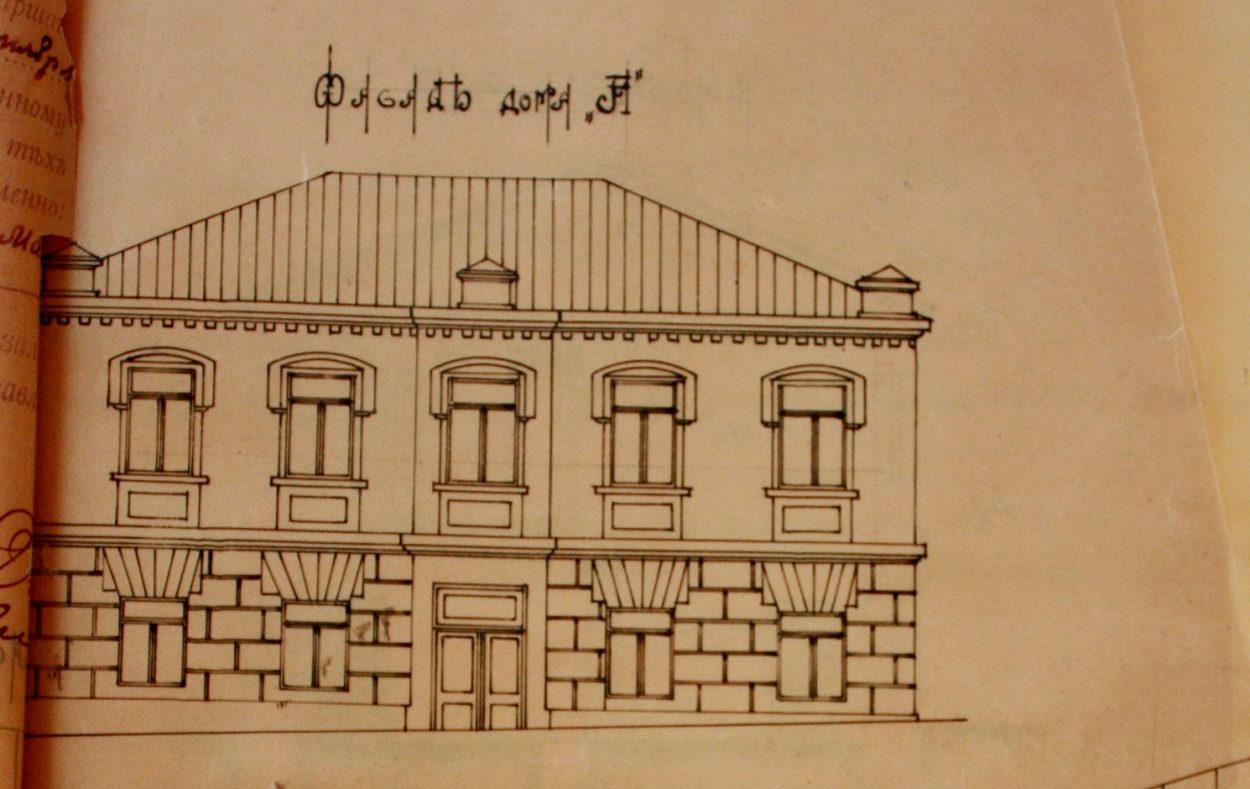
According to official records, Moisey Dikansky’s wife, Glafira Nikolaevna (née Ginsburg), owned the houses attributed to her husband. For example, the mansion at Chernyshevska Street, 80.
It is not known what the “architect” M. G. Dikansky looked like. However, two photographs were found in an archival file from 1906 concerning a lien on his property. Who knows—perhaps one of the people living at the mansion at Sumska Street, 96 was the owner of those photographs.
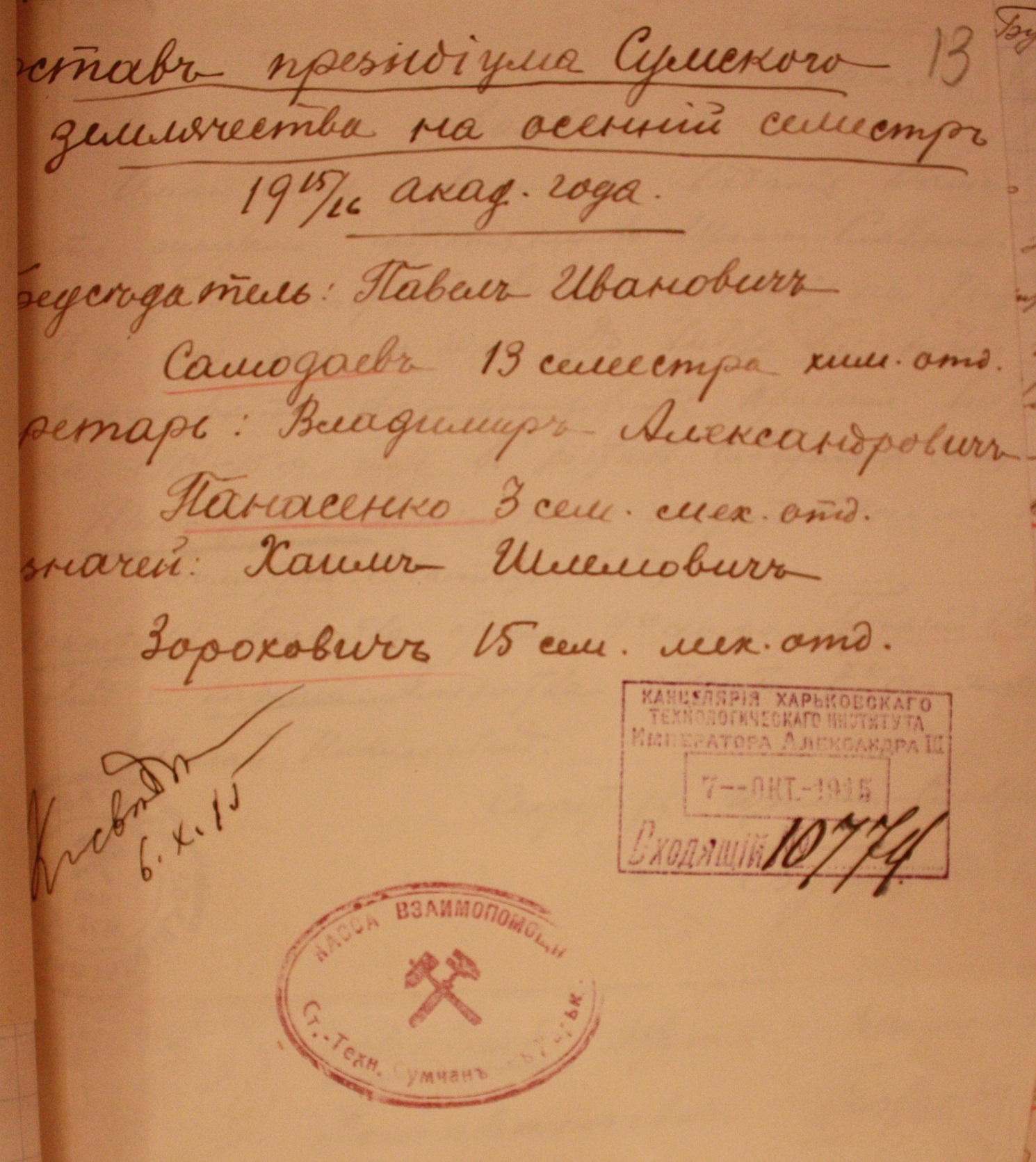

After graduating from the Third Kharkiv Gymnasium, Anatoly Moiseevich Dikansky enrolled at the Polytechnic Institute (now the National Technical University “Kharkiv Polytechnic Institute”).
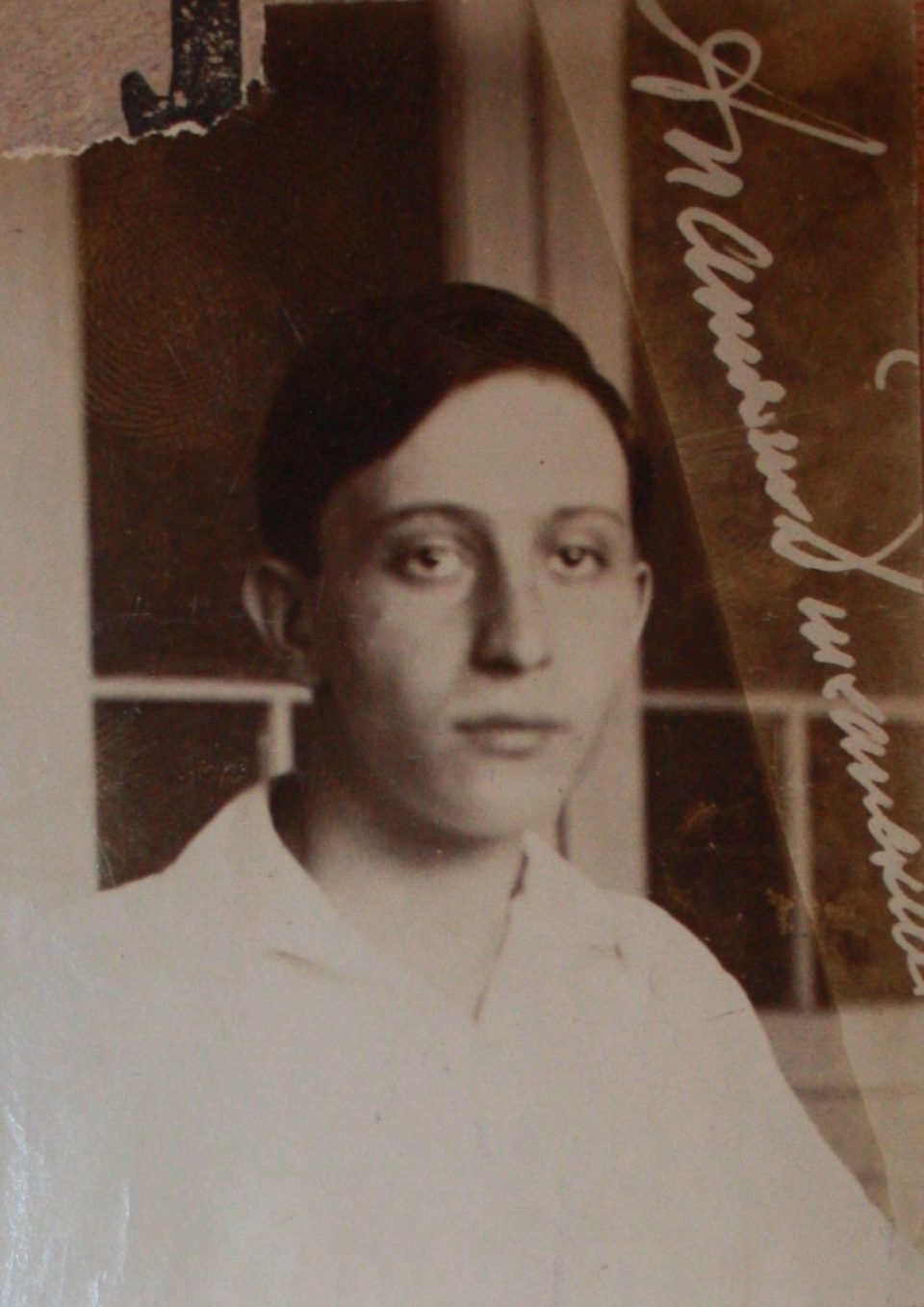
His uncle, Shlomo Gershovich Dikansky, had previously studied there; he was actively involved in the activities of a social democratic organization and, during World War I, volunteered to serve on the front lines.

We have uncovered quite a few interesting facts about Mordukhai Dikansky, who is often confused with his older brother. Like his brothers, he lived with his father in the Dikansky mansion at Staromoskovskaya Street, 87. From the fall of 1908 through 1912, Mordukhai studied in Germany: the first two years in Munich, then in Berlin and Heidelberg. Upon his return, he enrolled in the law school at Kharkiv University.
With an excellent education and a J.D. from Heidelberg University, Mordechai Gershovich opened a legal information and consultation office in Kharkiv in 1914.

This is the story of the Dikansky merchant dynasty. Undoubtedly, there are many gaps in the narrative, and much remains to be discovered. However, it is precisely these stories that make up our city’s past, and every family’s contribution to Kharkiv is invaluable.

- About the military pilot school and the airfield in Kharkiv… - 04.11.2020
- Nikanor Savich—A Political Career by Mistake - 13.07.2020
- And once again, about the Cavalry Guards… - 21.01.2020