Just recently, on May 16 of this year, at 7:15 a.m., we set out once again. During our last trip, we visited the beautiful estates of the former Bohodukhivy Uyezd. An article about the count’s estate in Lyutivka has already been published; I’m still gathering material on the other estates—I want to write about them in as much detail as possible, so stay tuned. Yes, this is a preview 🙂
Well, this time we decided to see what interesting things there are in the former Volchansky Uyezd.
As before, we set a clear goal: to document the current condition of the estates and churches through photos and videos in order to draw attention to them in the future and to show people their beauty. The heavy burden of photographing the sites fell on Maxim Gritsanenko and Inna Romenskaya. Alexei Mazurchuk was actively involved in filming. And Dmitry Krivulia not only drove the car but also captured stunning aerial footage of the sites using a quadcopter.
In total, our itinerary included 5 stops (two historic churches and 3 estates).
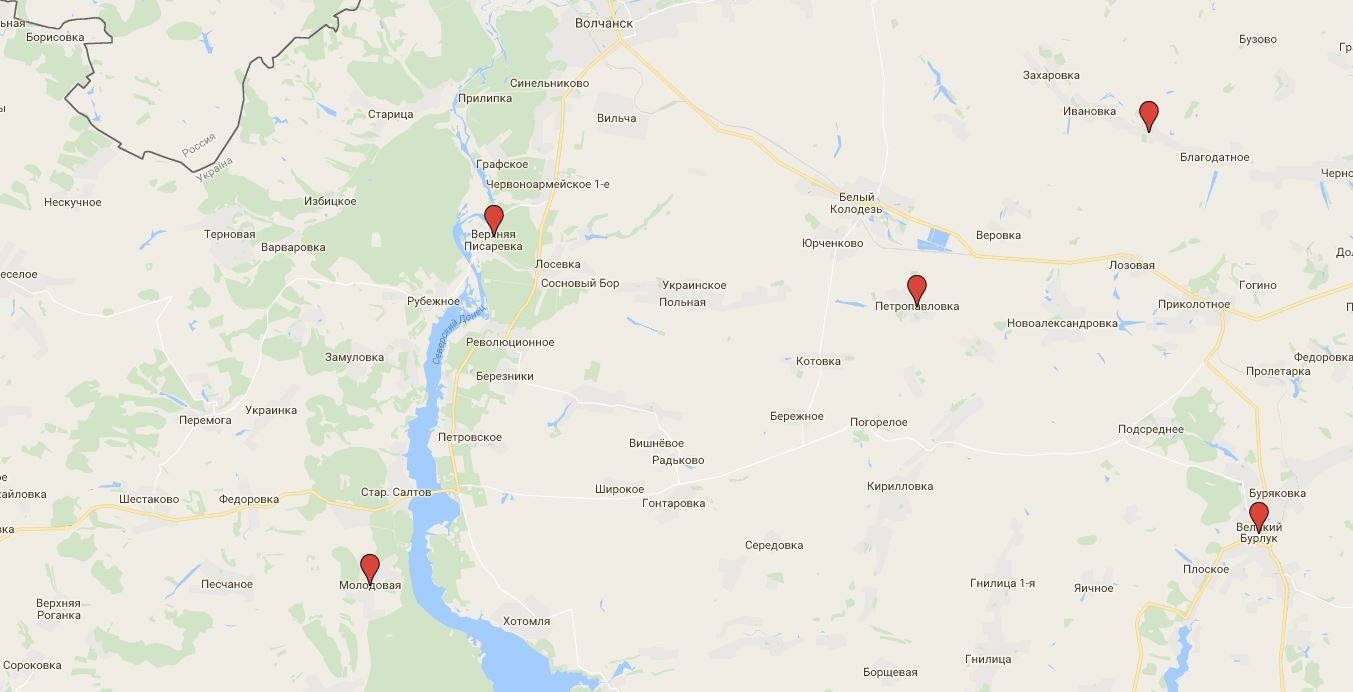
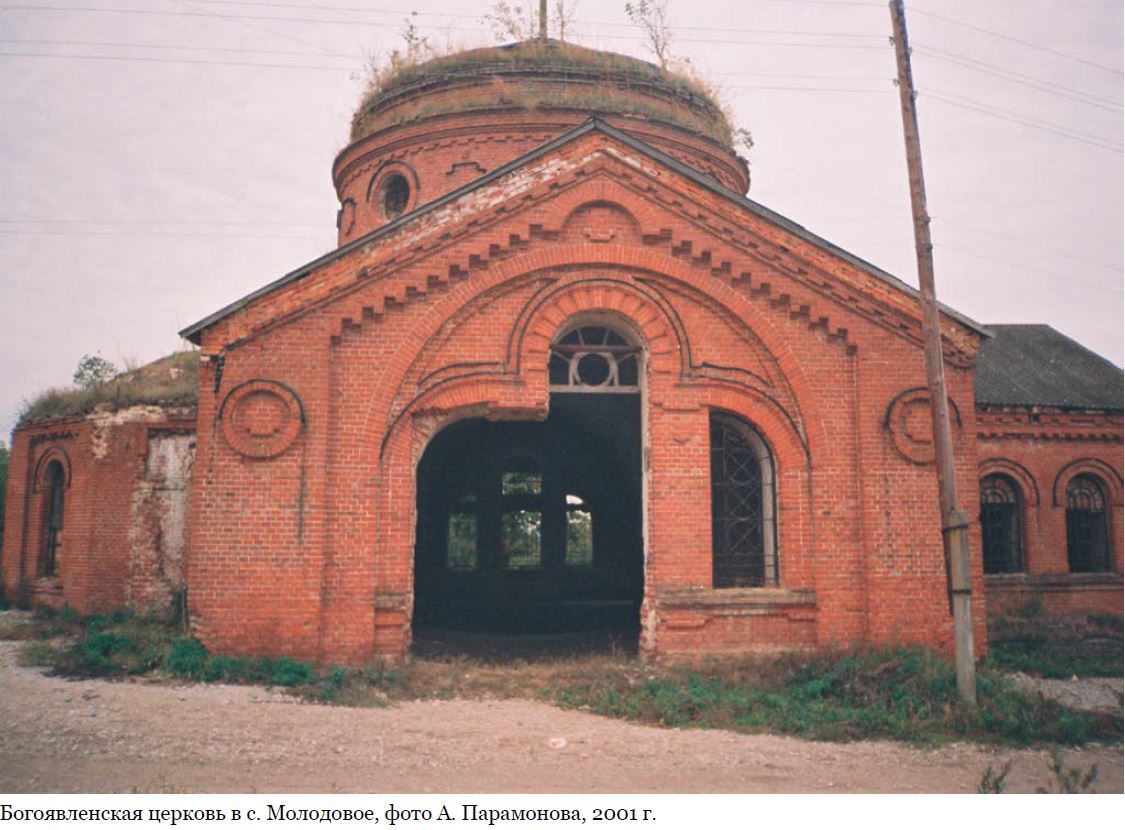
And here is the first stop on our journey—the village of Molodova.
As early as 1777, a wooden, single-altar Church of the Epiphany was built there with funds from the parishioners. However, in 1909—at the beginning of the 20th century—a stone church was erected on the site of the wooden one. The church was designed by the talented diocesan architect Vladimir Khristianovich Nemkin. This is what the church looked like back then:

There is another interesting story connected with this church. Platon Ponomarev, the rector of the rural church, also took part in the All-Russian Agricultural Exhibition in Kharkiv in 1887. There, in particular, he presented two beehives of his own design, placed side by side on a common stand and covered by a single lid. As a result, the priest-beekeeper was awarded second prize—a small silver medal “for practicing beekeeping using improved methods and for the excellent quality of the honey on display.”
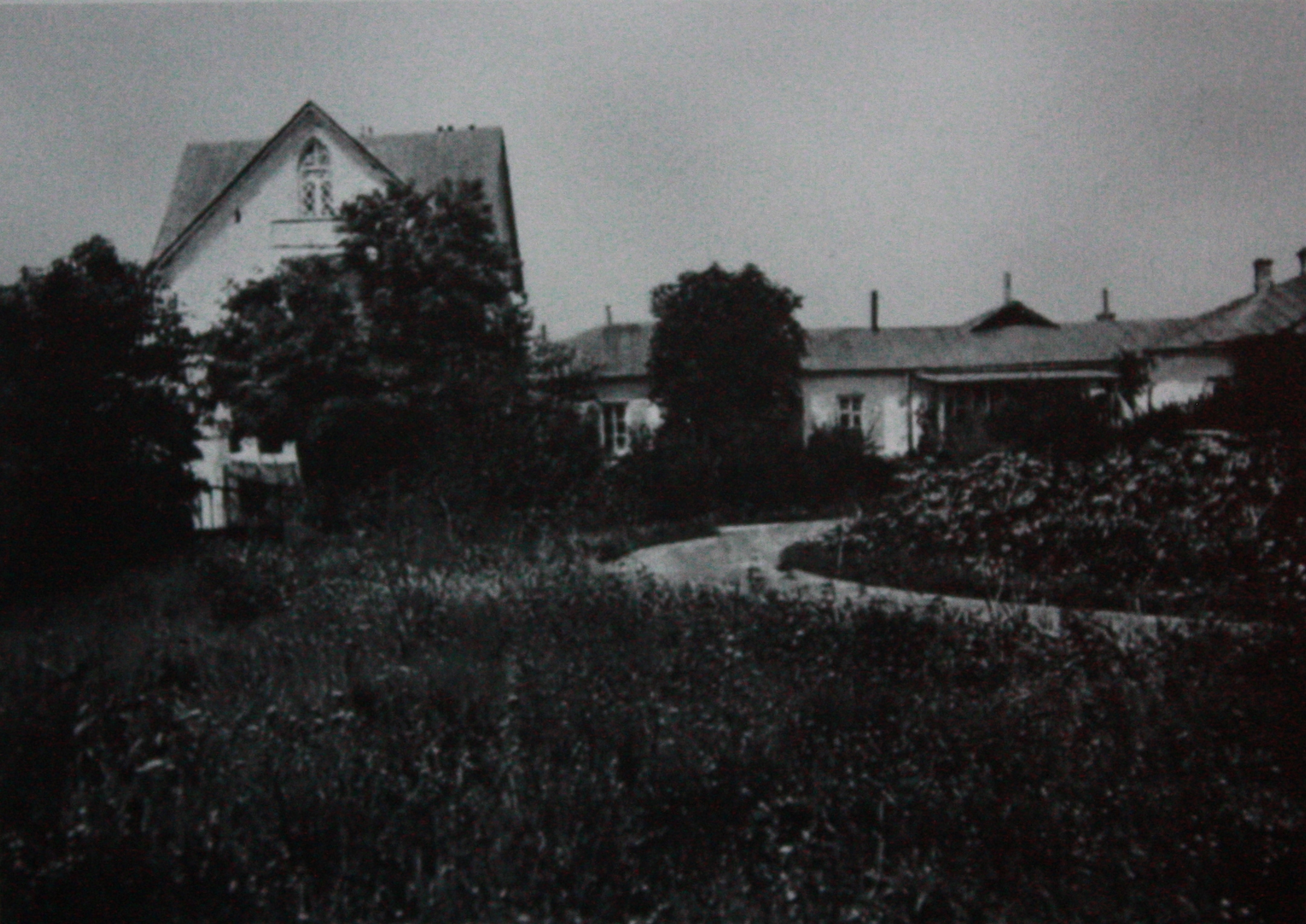
Next, after crossing the Siverskyi Donets Dam near Staryi Saltiv, we head to Verkhnya Pysarivka. Documents from 1860 indicate that this village, like the village of Pokrovske, was owned by Dmitry Kolokoltsov. In the book by Grigory Lukomsky and Nikolai Kleinmichel, *Ancient Estates of the Kharkiv Governorate*, we read the following:
Pysarivka, the estate of V. A. Kolokoltsov, is an historic manor house that has, unfortunately, been marred by later renovations. Only a portion (the two-story section) has survived; it is now uniquely roofed with four gables (similar to the old churches of Pskov), but features lancet windows.
The Kolokoltsovs themselves came from an ancient family (traceable back to 1380) and had their own coat of arms.
The *General Armorial of Noble Families of the All-Russian Empire*, begun in 1797 (Part I, p. 63), states the following:
The Kolokoltsov family left the Golden Horde for Russia even before the time of Tsar and Grand Prince Ivan Vasilyevich. Descendants of this family—two brothers, Vasily and Boris Kolokoltsov, sons of Skrypeev—are recorded in the Suzdal class register, in a book titled “Tens” from the year 7082/1573. The Kolokoltsovs descended from them served the Russian throne in noble capacities and were granted estates and ranks by the sovereigns. This is evidenced by extracts from the class register archive, the Estates Department, and the Kolokoltsov family tree, all preserved in the Heraldry Office.
However, the member of another branch of the Kolokoltsov family who is best known to most people is Vasily Grigoryevich Kolokoltsov—a renowned patron of the arts, public figure, and politician, and chairman of the Vovchansk Zemstvo Council.
To this day, few people have done as much for Volchansk as Vasily Grigoryevich was able to accomplish during his lifetime.
The fact that, upon learning that his father had wronged the peasants after the abolition of serfdom, he distributed his lands among them speaks to this man’s crystal-clear honesty and integrity. His fate turned out to be quite tragic.
After the revolution, Kolokoltsev immigrated to France. In Paris, he fell ill and took his own life on September 29, 1934.
In 2007, the city administration erected a bronze monument to him in Vovchansk’s central square.

The settlement of Verkhnya Pysarivka also had its own stone church. The Church of the Intercession was built in 1812 with funds provided by the landowner Roman Filippovich Poklonsky. By 1904, it had a congregation of about two thousand people of both sexes. Unfortunately, this church has not survived to the present day.
From Velyka Pysarivka, our journey took us to Petropavlivka, which happened to be one of the estates belonging to the Kolokoltsovs’ neighbors.
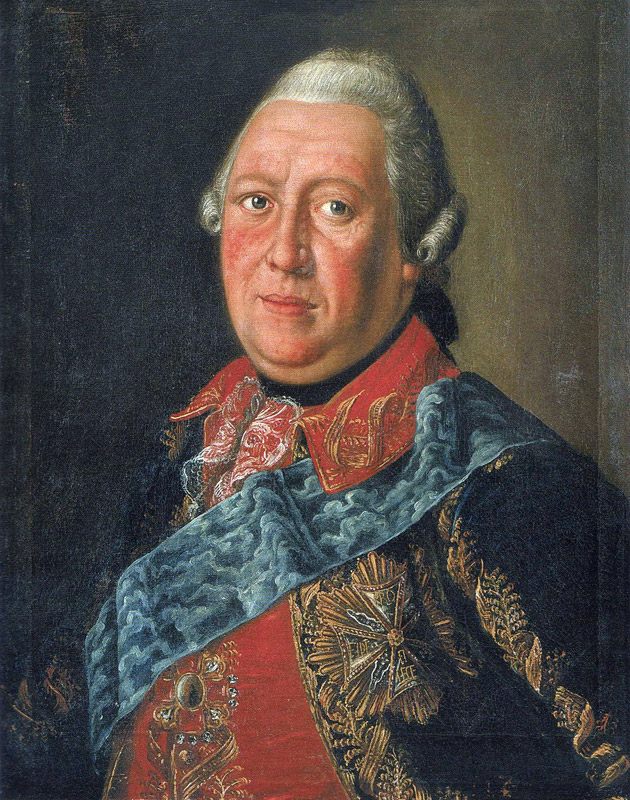
In 1742, Empress Elizabeth elevated her cousins to the rank of count. The newly minted counts, incidentally, were the children of Simon Hendrik (Heinrich, 1672–1728) and Christina (1687–1729), the sister of Empress Catherine I. As we recall, Catherine herself did not come from particularly noble origins either, though this did not bother Tsar Peter I.
The Counts of Hendrikov received from Empress Elizabeth extensive estates in Sloboda Ukraine, particularly in the Vovchansky and Zmiyevsky districts, and were entered into the fifth section of the Kharkiv Governorate’s genealogical register. Count Ivan Simonovich Hendrikov (1719–1778), a general-in-chief and nephew of Empress Catherine I, owned a magnificent estate in Rubizhne.
According to a document from 1860 titled “Excerpts and Conclusions from Descriptions of Estates with 100 Souls or More,” the Counts Hendrikov owned more than 10 such large estates in the Vovchansky District.

Among them, the most beautiful estate in Hrafske was considered the jewel of the collection. Here is how Grigory Lukomsky, who visited the count’s estate in 1914, describes it.
The estate now belongs to Count P. A. Gendrikov. It is situated in an exceptionally picturesque area on the banks of the Donets River; although it lies on the low-lying riverbank, it is positioned in such a way that the estate offers a view of the magnificent mountainous shore, which is still covered by a centuries-old oak forest…
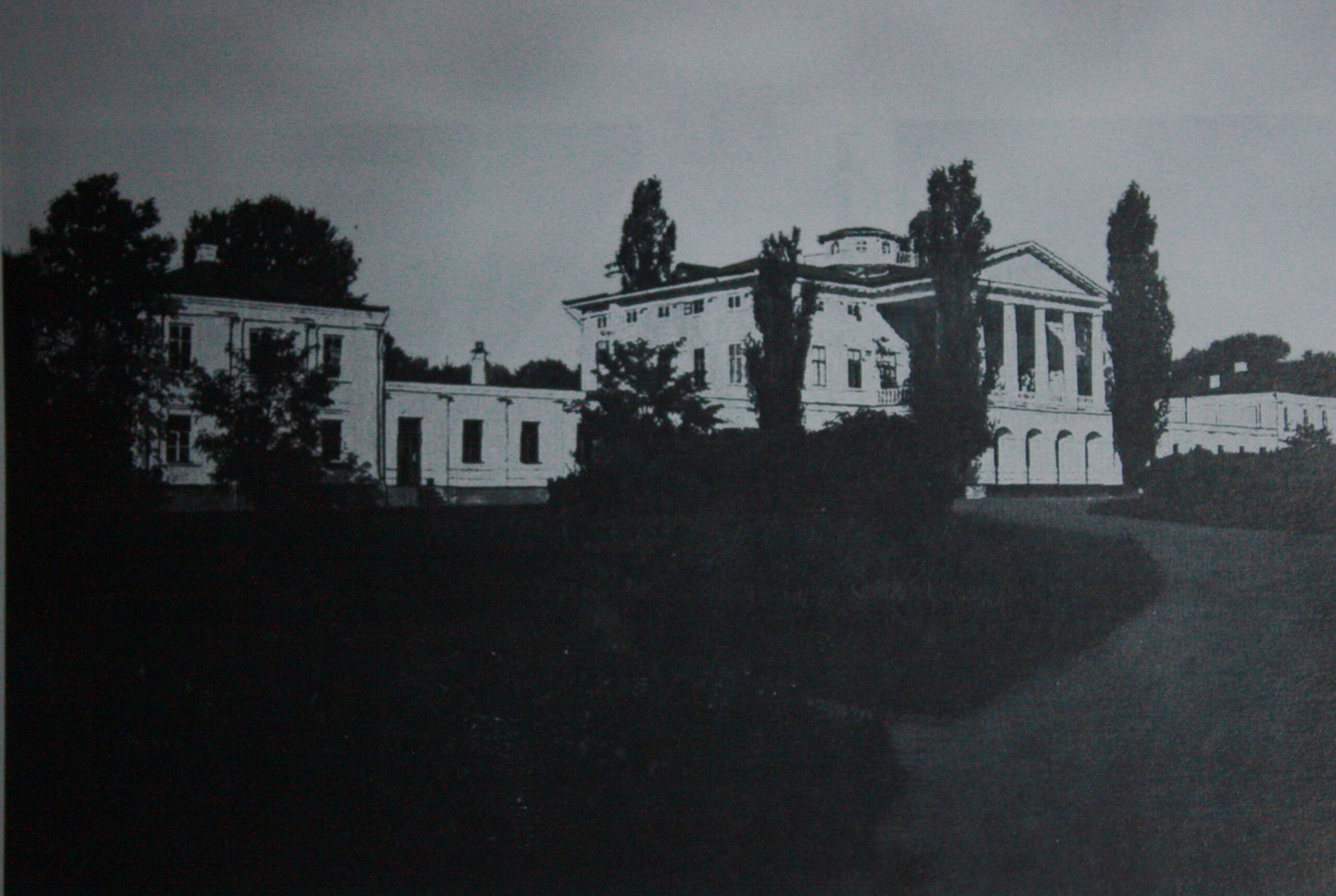
After crossing a low bridge over the full-flowing river—whose banks are overgrown with reeds and reflect the dark green of an oak grove that reaches right down to the water in places— the Donets River—along a long street lined with service wings—we enter the estate’s courtyard through a Gothic gate. The estate itself actually begins earlier, from the moment one enters the world of the service buildings, for everything here was built according to a design, constructed in accordance with a general plan, in harmony with the main house…
The house consists of a main three-story building with a portico and a small dome, two outbuildings connected to it by wings, and a row of one-story outbuildings set perpendicular to the main house on both sides of a spacious courtyard. In the center of the courtyard is a circular flowerbed planted with greenery. In front of the house, pyramidal poplars are arranged very decoratively, their silhouettes blending beautifully with the columns and the architecture as a whole.
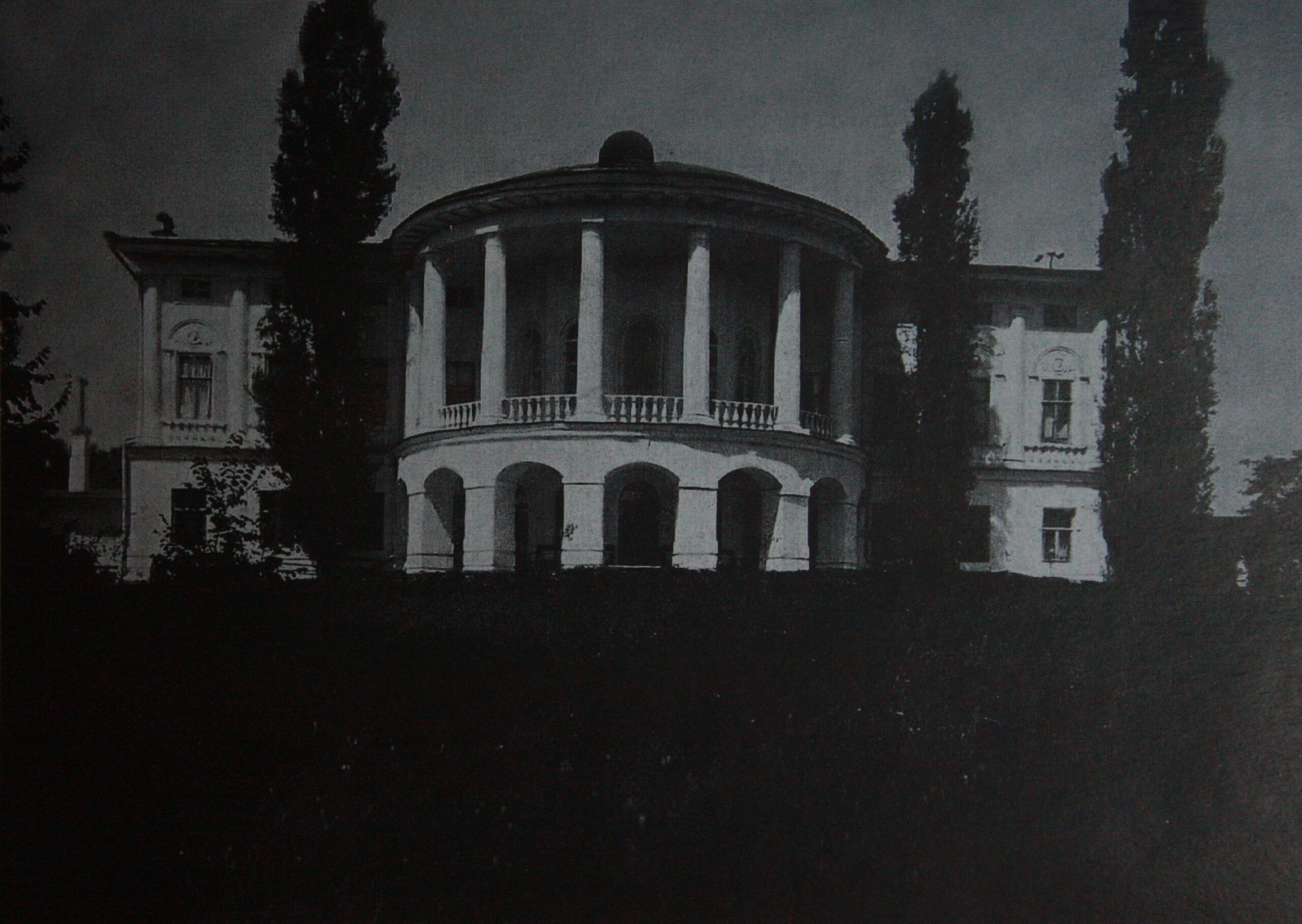
The main house, rectangular in plan, is adorned on the entrance side by a portico of Doric columns set on a high arcade and projecting significantly forward. The portico protrudes so far that a carriage can drive freely under the arches. For this reason, low ramps lead up to the portico. The second floor is quite spacious, while the third floor resembles a mezzanine… Stepping out of the gate onto the street, we see a whole cluster of outbuildings. Some of them serve as residences and are well preserved.
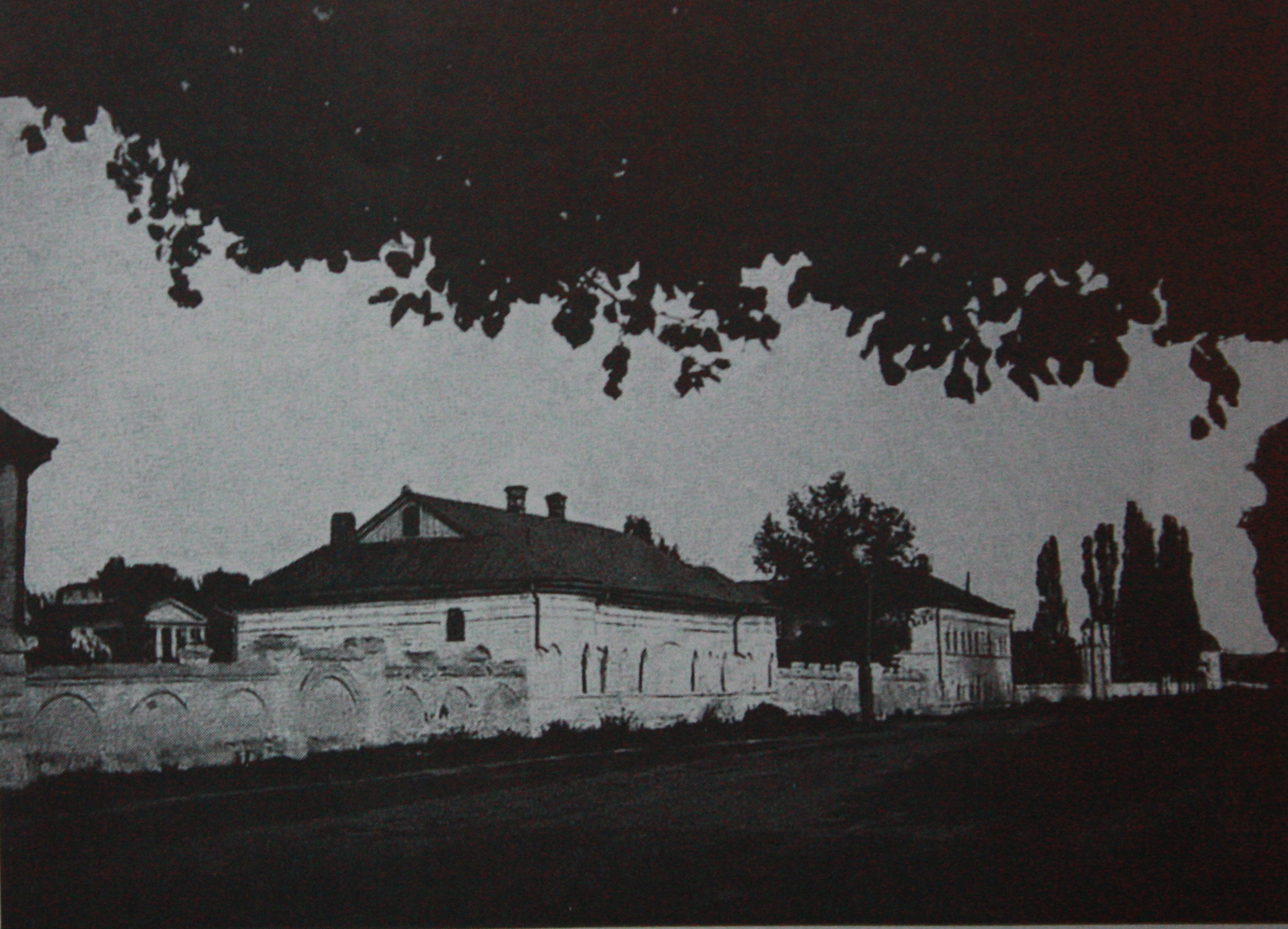
Some are abandoned or completely ruined… The church in Hrafske—with six Doric columns, pilasters, and a charming apse. But its domes are Baroque in style.
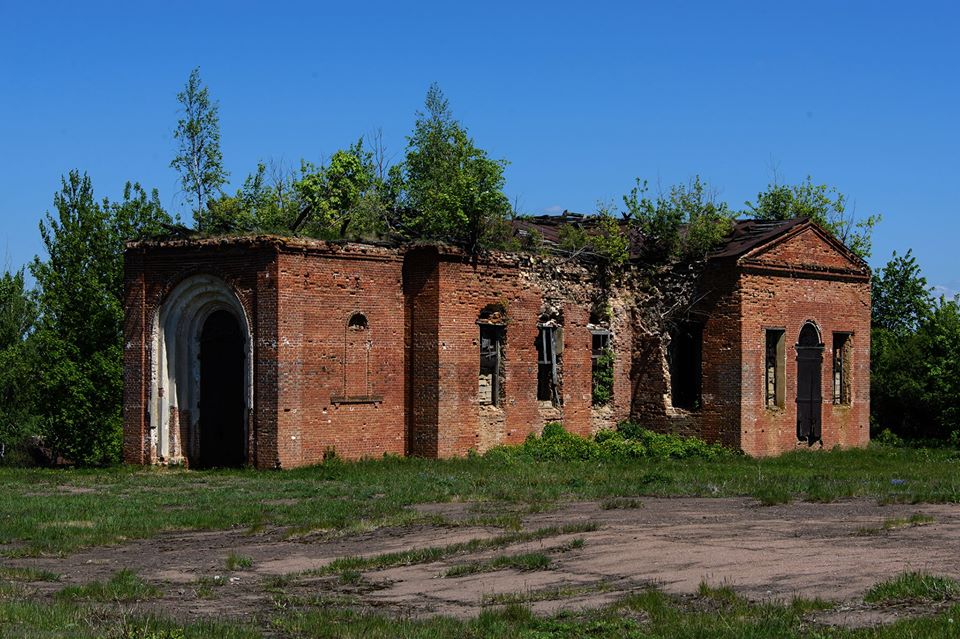
In 1876, the Counts Hendrikov built a stone church of the same name on their estate—the settlement of Petropavlivka. Funding for the church was provided by Countess Evdokia Vasilyevna Hendrikova (née Gudovich) and local residents. The church was designed by Fyodor Ivanovich Danilov, the diocesan architect of Kharkiv. Evdokia Vasilyevna’s granddaughter, Countess Anastasia Vasilyevna Hendrikova—who had served as a lady-in-waiting to Empress Alexandra Fyodorovna since 1910— was brutally murdered by Chekists in Perm on September 3, 1918, along with a group of prisoners. Incidentally, she was canonized by the Russian Orthodox Church Abroad in late October 1981.
Her brother, the last Count Alexander Vasilyevich Gendrikov, died on May 23, 1962, in Paris.
Today, not a trace remains of the noble estate and family mausoleum in Hrafske. Only the majestic walls of the still-beautiful church in Petropavlivka serve as the sole reminder in Sloboda Uklraine of the former grandeur of the noble and wealthy Hendrikov family.
From there, our journey continued to the Bekaryukovs’ estate (Vasilyevka) and the Zadonskys’ estate (Veliky Burluk).

- About the military pilot school and the airfield in Kharkiv… - 04.11.2020
- Nikanor Savich—A Political Career by Mistake - 13.07.2020
- And once again, about the Cavalry Guards… - 21.01.2020