Leaving what used to be known as the Bekaryukov estate in Vasilivka, we headed for the final destination of our journey—Veliky Burluk. In the mid-19th century, it was written that “the lands of Burluk are considered the most fertile in the region.” Whether because of this mysterious fertility or “in atonement for the sins of our fathers,” the Zadonsky estate has, by some unimaginable miracle, survived.

The lands around present-day Veliky Burluk were transferred to the estate of Colonel Konstantin Grigoryevich Donets and were confirmed for his sons by a tsarist decree of 1693 as a reward “for the many services of their grandfather, Colonel Grigory Donets, and for the service and death of their father, Konstantin Donets,” who was killed in battle against the Azov Tatars.
After the marriage of Elizaveta Andreevna Donets-Zakharzhevskaya to Lieutenant General Voin Dmitrievich Zadonsky, a veteran of the wars against Napoleon, the estate passed to the Zadonsky family. Here is how Grigory Lukomsky describes this estate in his book:
Construction of the wooden house was begun by him and completed by General Voin Dmitrievich Zadonsky (around 1835), who was married to Elisaveta Andreevna Donets-Zakharzhevskaya, the daughter of the church’s builder. Construction of the house began during the lifetime of Andrei Yakovlevich’s father, Yakov Mikhailovich… The general layout of the estate is easy to discern. Directly opposite the house—which is oblong and relatively large—aligned with it along the same axis but situated farther away on a hill, clearly visible, stands the church. Evidently, the site, well chosen, was selected in relation to the house. The house and the church are the two endpoints of the axis. The entrance gate, stone, somewhat rough-hewn but typical, is also situated along this line.
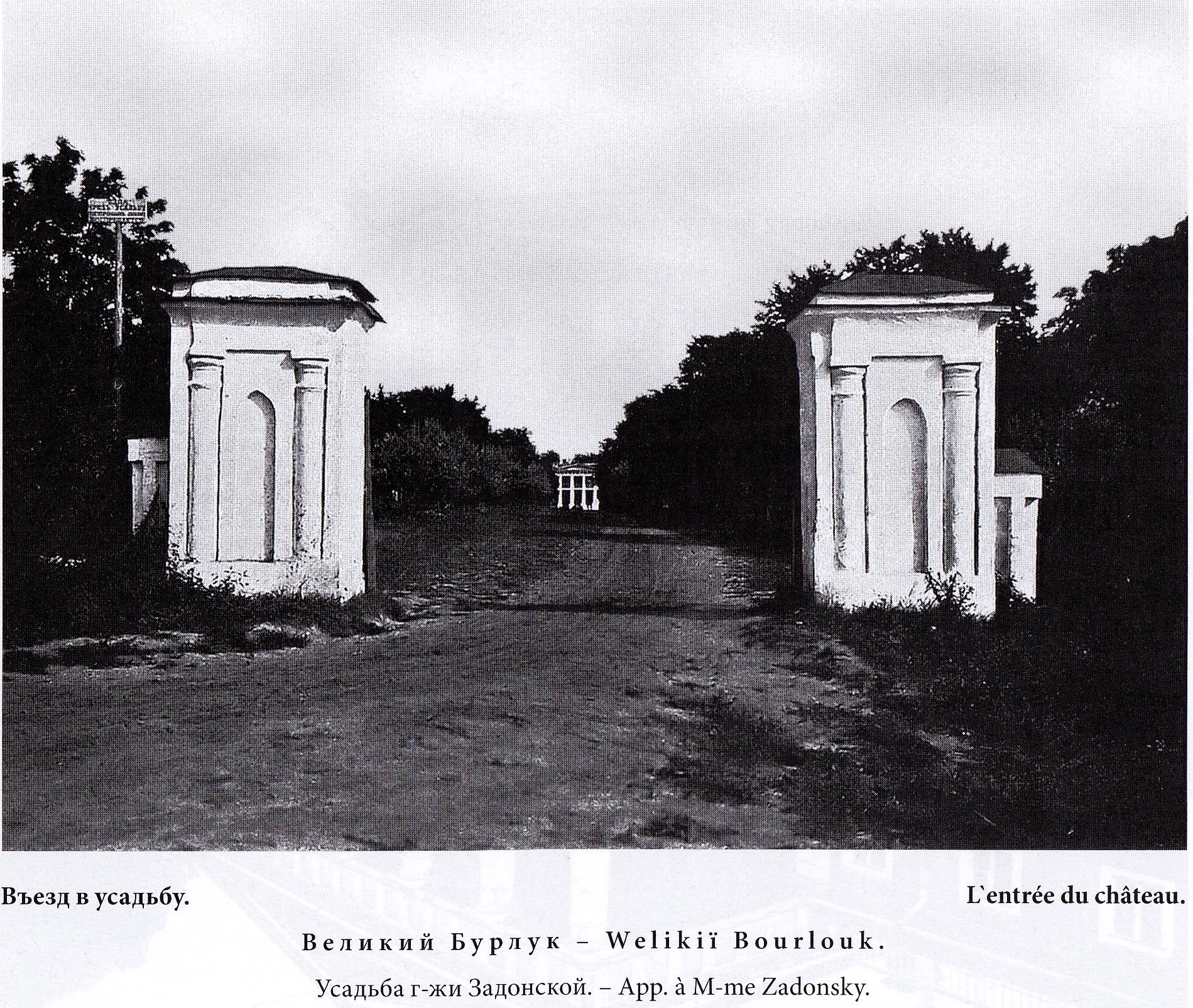
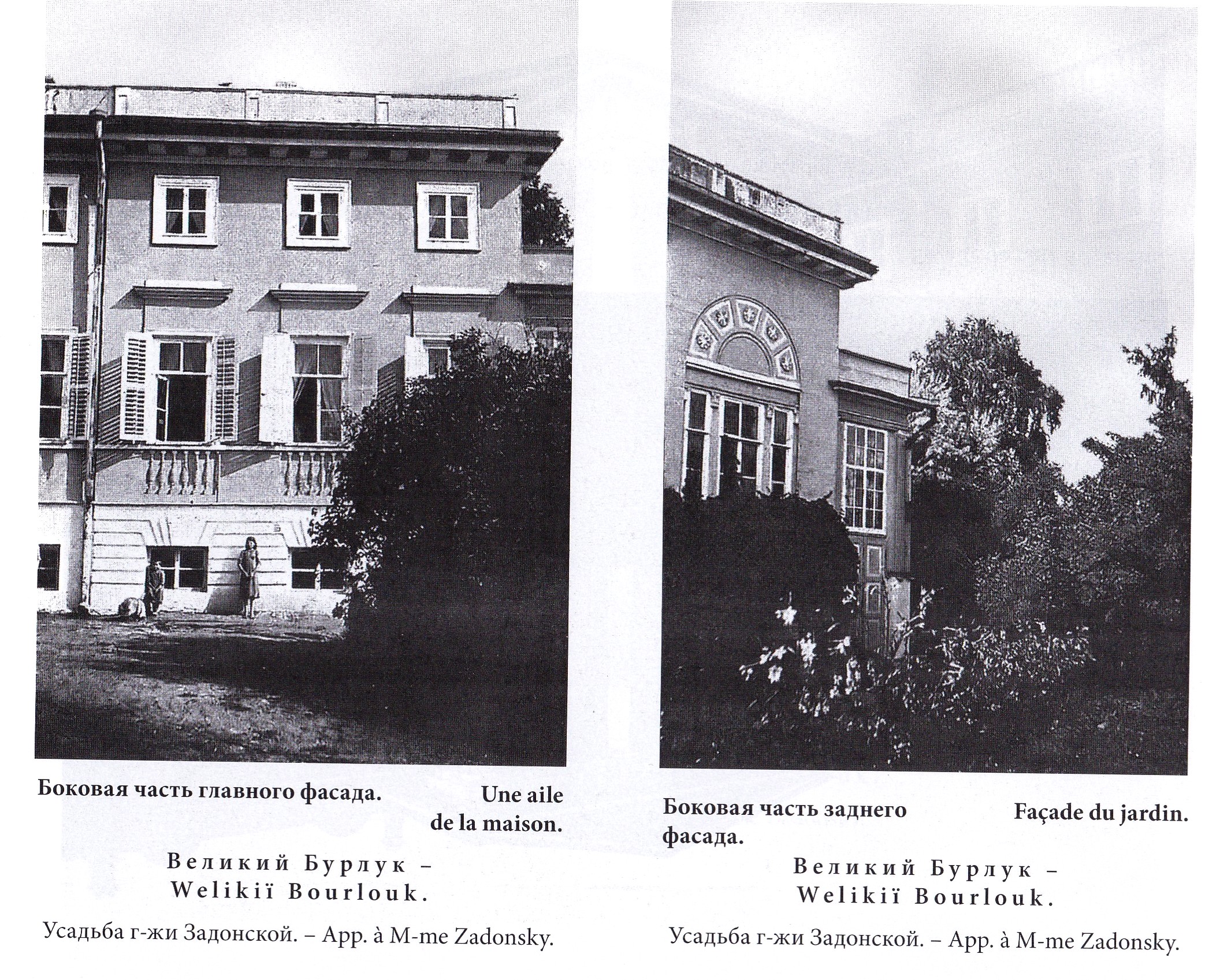
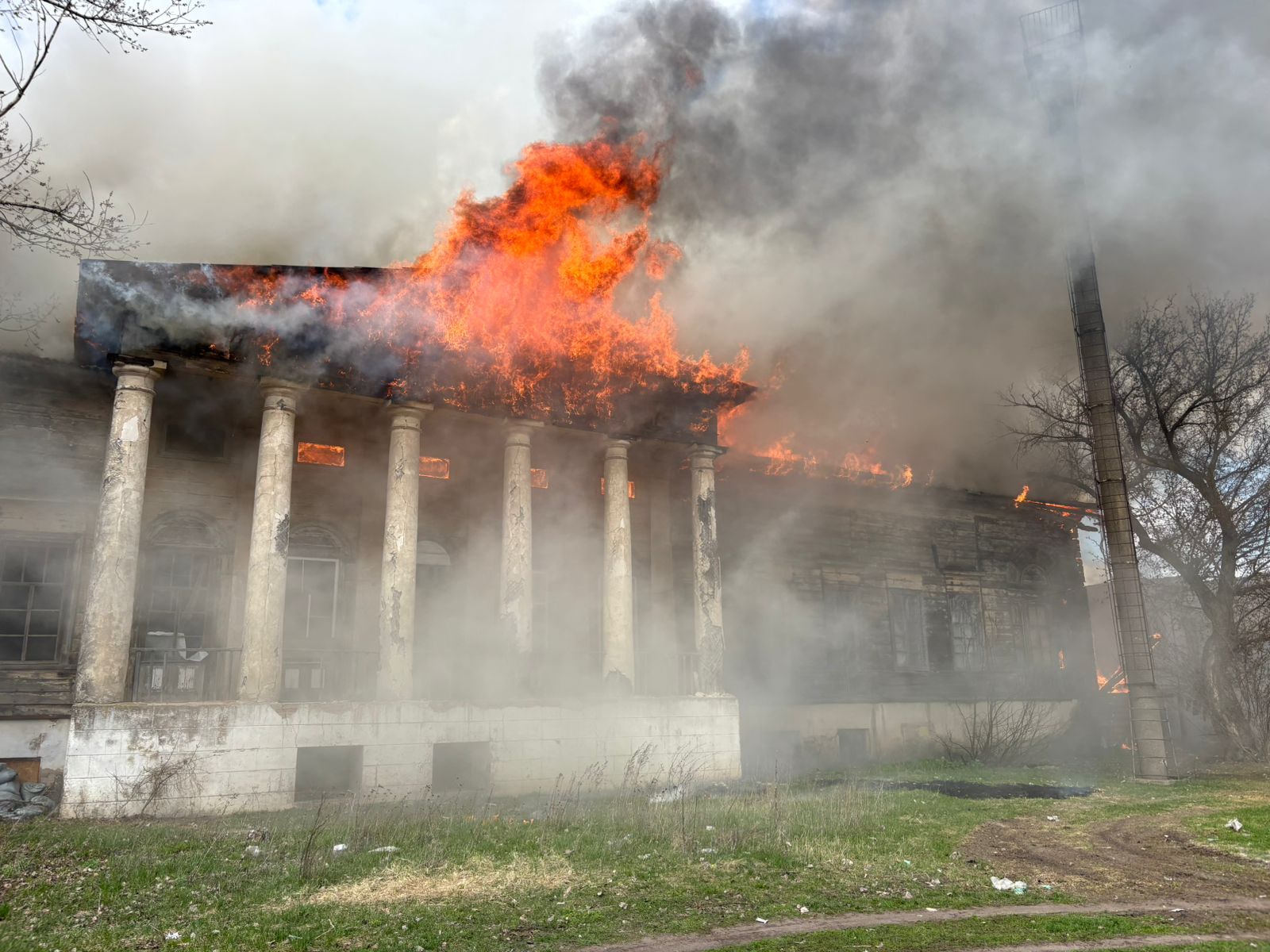
To the left of them is the gatehouse (Gothic style). Near the house, on the right, is the greenhouse (set at an angle to the main axis), and on the left are various service buildings. Behind the house lies a beautiful garden. The entrance to the estate used to be through the gate, as a postal road—which has since lost its significance—still runs through here. Later, with the construction of the railroad, the entrance to the estate was moved closer, and a gate was built on the side; thus, the approaching observer can no longer experience the same impression felt by those approaching the estate from the main road… The wooden house gives the impression of built from stone, so perfectly fitted are the cladding boards; such carefully selected, clean timber was used for it. Its only ornament is the portico. Its columns stand on a high pedestal. A balcony is placed in the center. The pediment is formed by the beautiful lines of the cornices with modillions. The frieze is perfectly divided by triglyphs. All the profiles of the two-story house are drawn delicately and not only correctly but even exemplarily. An original detail is the shutter-blinds, almost never used in our buildings and clearly brought from Paris or Italy. An iron balustrade with a fine design stretches along the top of the house in the form of an attic. Also made of iron, but even more delicate and slightly Gothic in style, the balcony’s small balustrade is placed between the columns. Everything is so simple, smooth, and serene that even the windows are framed by the simplest, smoothest window frames. Only on the side sections of the house are the second-floor window frames more ornate: with a cornice at the top and balusters at the bottom… The base of these sections is designed in such a way that beautifully crafted lintels with keystones are formed above the windows.

The view of the portico’s colonnade up close is particularly striking, especially when the underside of the terrace, finished with caissons, is visible. The imposing entrance, set in a niche with columns behind the portico’s columns, is magnificent. If you look up from the entrance steps, a beautiful view opens up of the garden, the flowerbed, and the church in the distance, amidst the trees of the entrance alley that seem to part. The facade facing the garden is also very harmonious. Here, the portico of columns and corresponding pilasters (there is no loggia) has a slightly different appearance than from the entrance side, since the base is lower. All the windows have casings. There are no mezzanine windows—and the smooth wall harmonizes beautifully with the white portico. The side sections are adorned with triple “Venetian” (or rather, Vicentine, Palladian) windows, above which is a semicircle decorated with coffered rosettes.
The house is painted in a light brown shade that complements the white columns perfectly.
Inside, the rooms are spacious, bright, yet cozy. The dining room features portraits of V. N. Zadonsky and his wife, E. A. The private chapel was built in the 1840s. The greenhouse resembles two towers connected by the greenhouses themselves. Its forms are very simple, yet charming…
Near the estate, the owners had a beautiful church built, which later served as their family burial place.
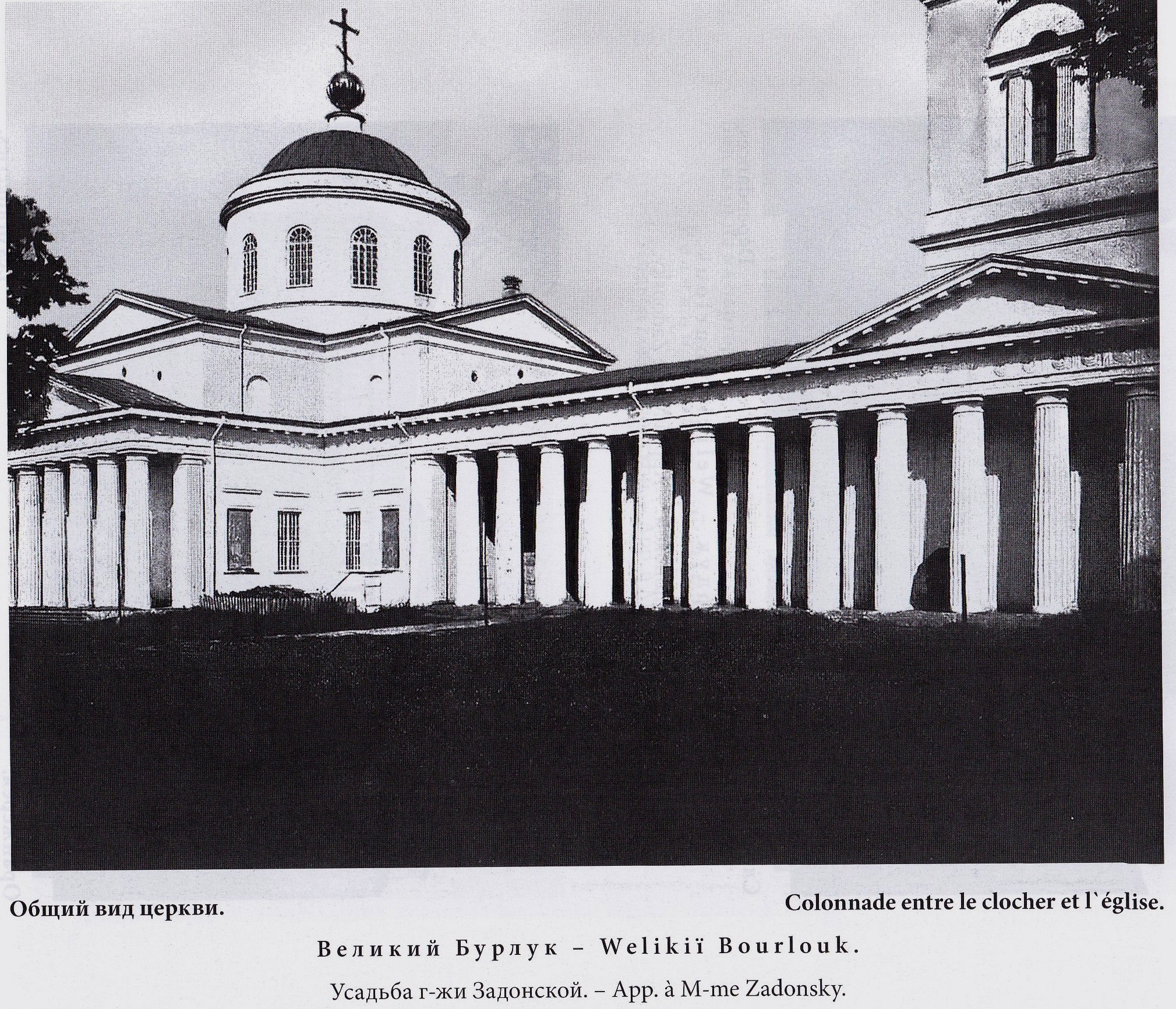
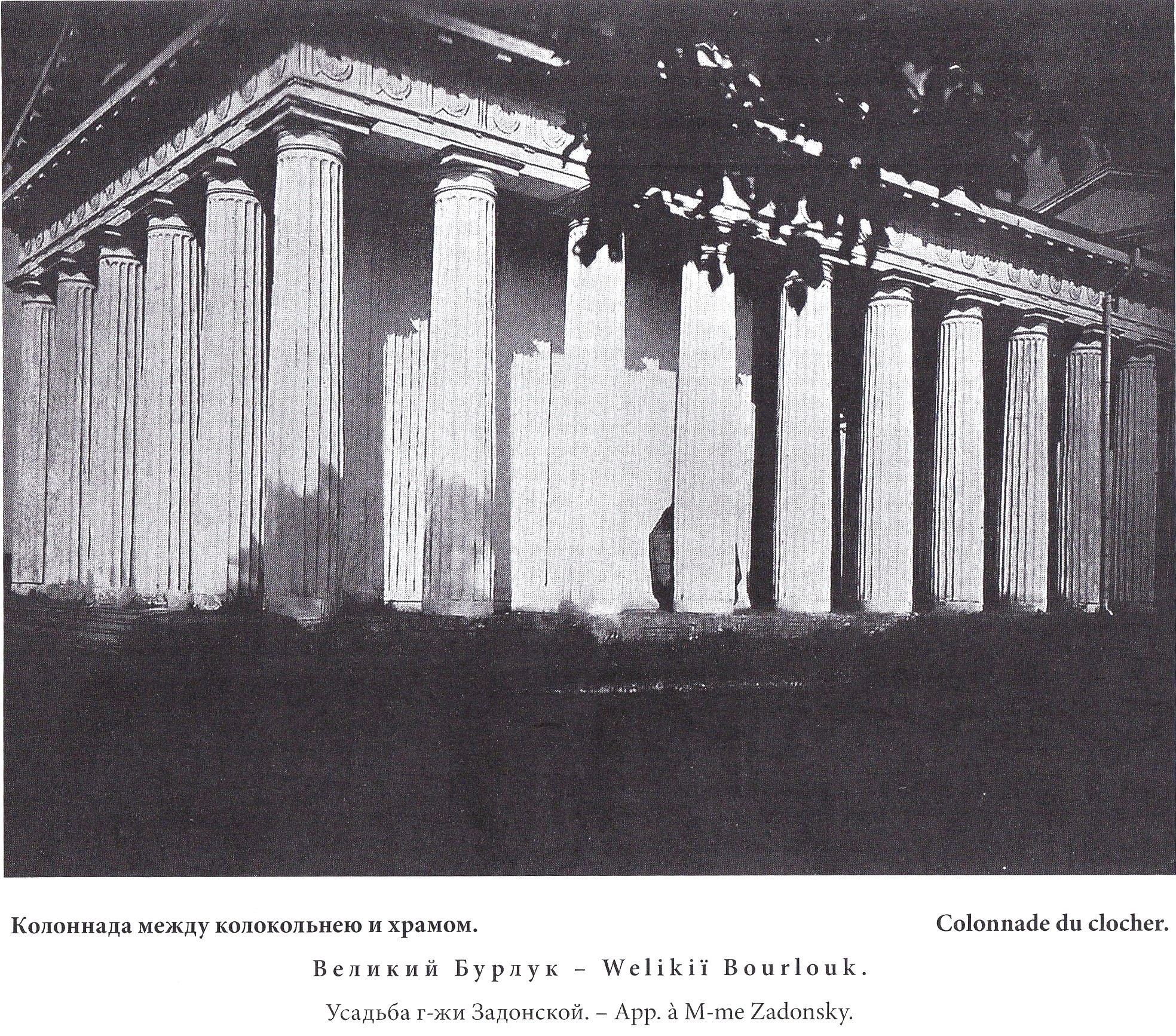
…High on the hill, visible from all directions, stands the Church of the Transfiguration… The Church of the Transfiguration consists, in fact, of the main church building, a bell tower connected to it by a colonnade, and, in addition, two service buildings located behind the altar area, at the corners of the plot occupied by the church. From the facade, the bell tower—three-tiered and quite slender, though less successful than the rest of the church—features a Doric six-column portico with a beautiful pediment, and from the sides, Doric columns are also visible in profile… Approaching the church, one can fully appreciate the charm of the portico’s colonnade. The columns are executed with remarkable care and durability. In nearly 100 years, not a single bas-relief image has deteriorated; the cornices in the metopes are crisp and elegant in their lines. But one must approach from the side to see the church in all its splendor. The colonnade of the bell tower’s side portico transitions into the colonnade connecting the bell tower to the temple, and here, together with the columns of other rows—which also connect the temple and the bell tower—it forms a veritable forest of columns. Interrupted to make room for the church’s windows, the columns reappear as the church’s side (north and south) porticos. The church itself has a cruciform plan with pediments on the projecting sections, topped by a dome on a tall, smooth drum pierced by semicircular windows, into which exquisite mullions are set. On the dome is a huge apple with a cross: everything is simple and imposing.
However, the Zadonsky estate was famous not only for its manor house and church.
In Archpriest N. Laschenkov’s late 19th-century study, “House Churches in the Residences of Ukrainian Noble Landowners,” there is a wonderful story about a church located right on the estate grounds.
The Trinity Church in the settlement of Veliky Burluk, Volchansky District. Lieutenant General Voin Dmitrievich Zadonsky and his wife, Elizaveta Andreevna, née Donets-Zakharzhevskaya, were known for their wealth, high standing among the nobility, and piety. On all their estates, they built very beautiful and ornate churches and loved to attend services themselves. The parish church dedicated to the Transfiguration of the Lord was located near the manor house, but it was cold, which for Zadonsky’s wife—a woman no longer young (43 years old) and, moreover, in poor health—served as a significant obstacle to attending church during the winter. His Eminence Filaret, who had a special fondness for the Zadonsky household, subsequently, following his wife’s petition of December 10, 1849, petitioned the Holy Synod for permission (Synod Decree No. 317 of February 7, 1850) to establish a private chapel in her own quarters. General Zadonskaya devoted more than two years to improving the church’s interior…
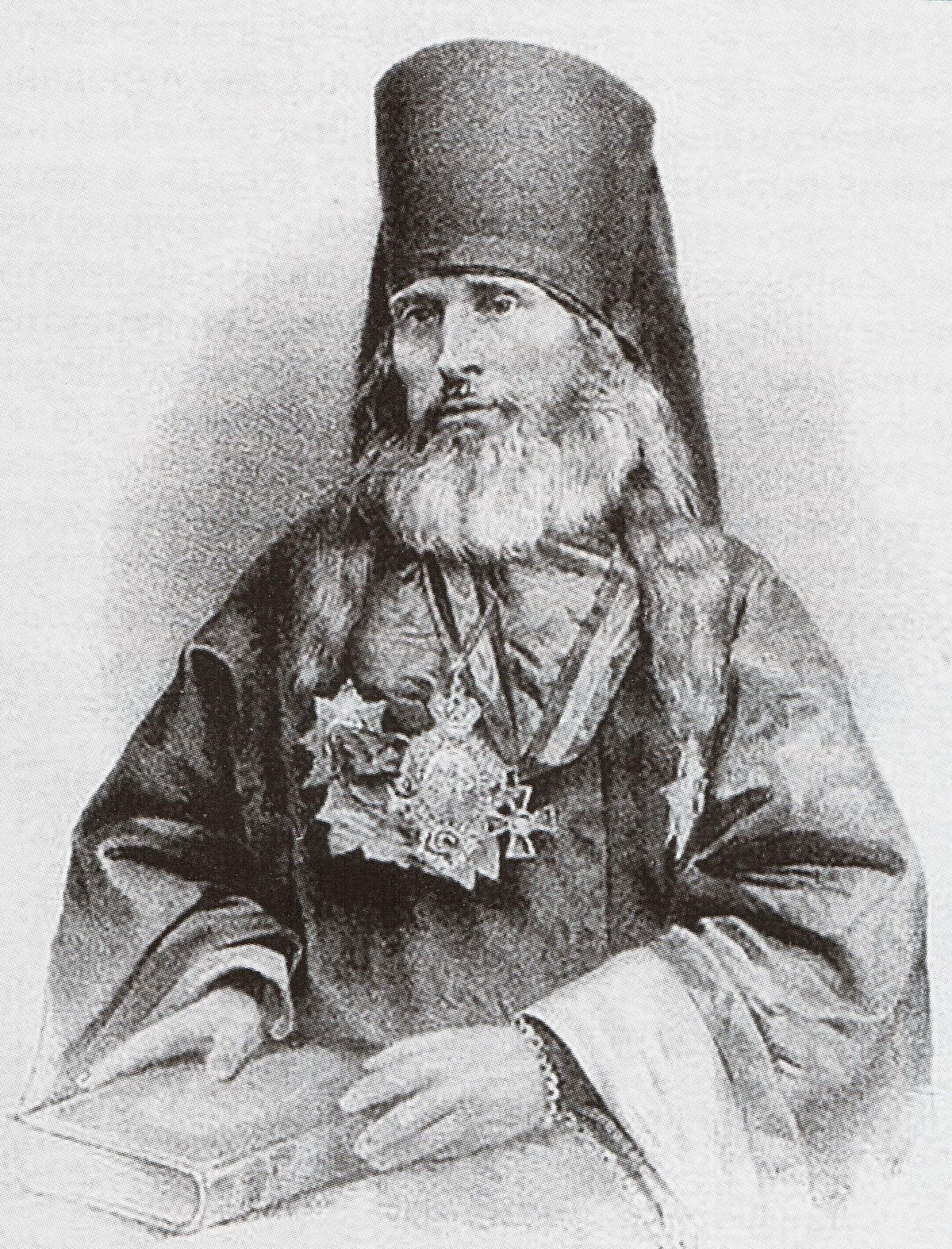
…His Eminence Filaret arrived at the Zadonsky residence and consecrated this church in honor of the Holy Trinity on July 29, 1851. During his diocesan inspections, on each of his visits to the Volchansky District, he would visit the Zadonsky residence and serve in this church. It was here in 1855, when the church’s founder’s husband, General Zadonsky, a veteran of 1812 war, passed away, that the priest performed the funeral service and honored the deceased with a eulogy. Left a widow, Elizaveta Andreevna lived for more than 30 years finding joy in her children and grandchildren, strengthening her soul through prayer in her beloved church.


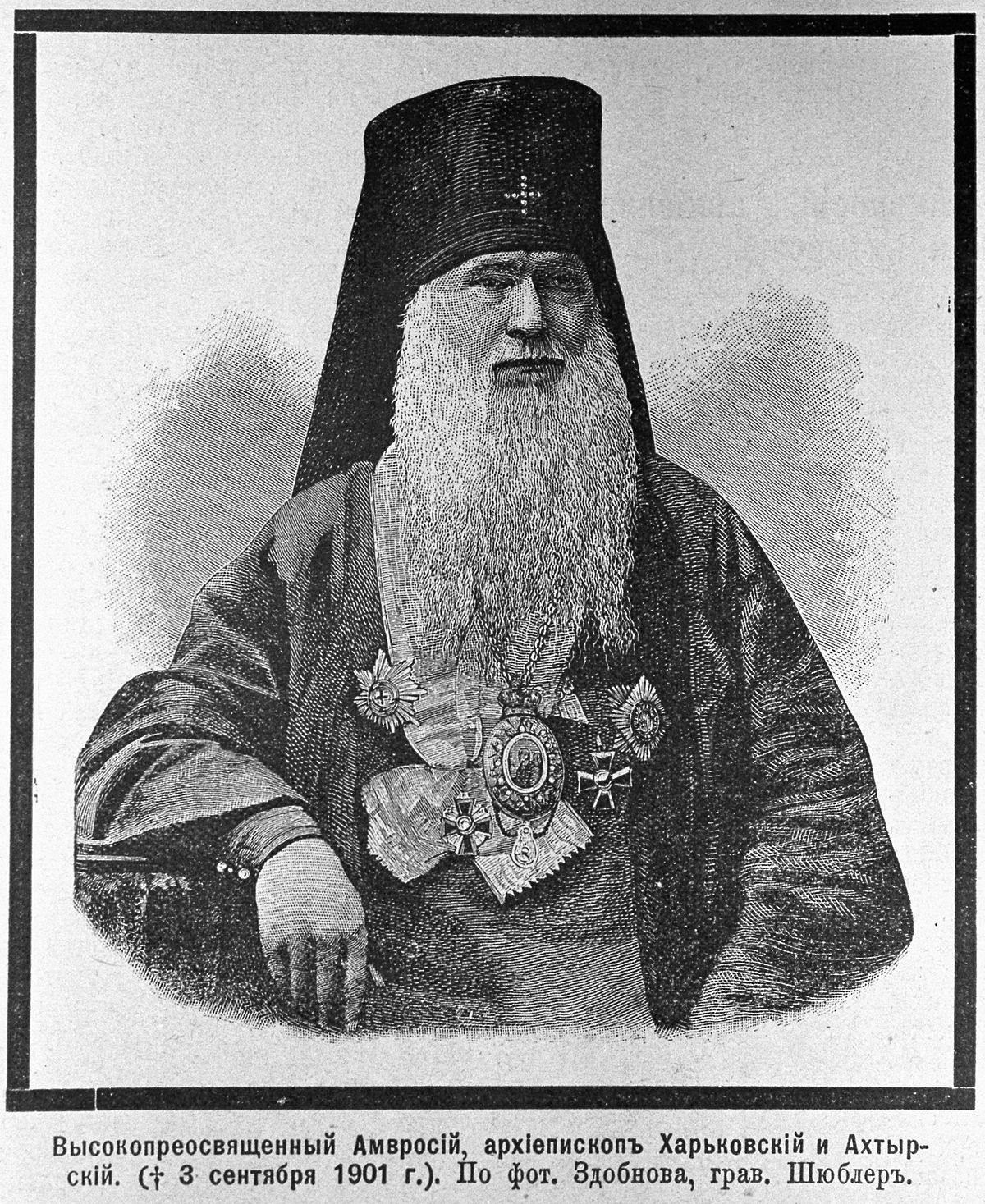
The Troitskaya House Church still exists today, largely thanks to the pious devotion of the daughter-in-law of the late widow, Ekaterina Vasilyevna Zadonskaya (née Neklyudova), wife of Staff Captain Zadonsky. “After my mother’s death,” she wrote in her petition to His Eminence Ambrose, “the house, in which a church dedicated to the Holy Trinity has stood since 1851, passed to me, and I regard this church with special love and reverence, as a sacred place and a cherished memory of my mother; therefore, this year I have embellished it and restored the sacristy; However, to close it in accordance with the note to Article 49 of the Statutes of the Holy Synod, of the Code of Spiritual Law, pursuant to which the existence of a house church is permitted only until the death of the person for whom its establishment was authorized, would be a family tragedy for us, since all of us—the children and grandchildren of the late Generaless Zadonskaya, numbering 20 souls—are accustomed to offering prayers to the Lord in this church during our family joys and sorrows. Therefore, trusting in your general love for the churches of God, I dare to ask Your Excellency to permit the continued existence of the house church on the previous terms until my death, especially since there are two priests in the settlement of Veliky Burluk, and they can celebrate the liturgy in the house church without detriment to the parish church or the parishioners. For my part, I undertake to maintain the house church in proper splendor, befitting a holy place.
His Eminence the Archbishop granted permission for the church to remain open.
Who knows whether the fate of the estate’s last inhabitants would have been so terrible if it weren’t for this house chapel? No one knows. On the night of November 25 (December 7), 1918, a bloody tragedy unfolded at the estate.
— Ekaterina Vasilyevna Zadonskaya (Neklyudova), 84 years old;
— Yulia Vasilyevna Gagarina (Neklyudova), 73, widow of a major general, sister of E. V. Zadonskaya;
— Cecilia Valerianovna Hendrikova (Shirkova), 73, widow of a captain, friend of E. V. Zadonskaya;
— Alexander Ivanovich Vadbolsky, 53, former district chief;
— Olga Andreevna Vadbolskaia (Zadonskaia), 55, owner of an estate in the village of Ekaterinovka;
— Andrei Alexandrovich Vadbolsky, 19, law student;
— Vladimir Alexandrovich Vadbolsky, 15 years old, law student
— Miss Lee, an Englishwoman and companion to C. V. Hendrikova.
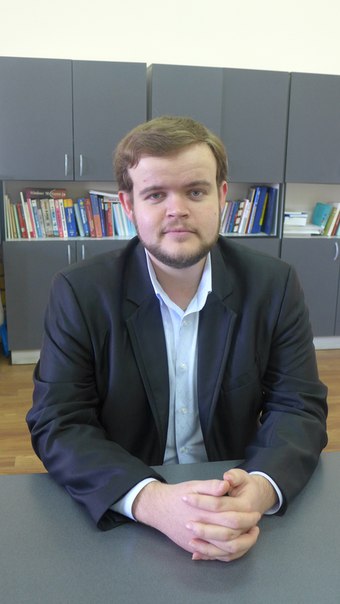
According to my colleague at the archives, a researcher of the Sloboda Ukraine region and Candidate of Historical Sciences Sergei Sergeyevich Kushnarev:
The unfortunate victims were led into the house chapel, candles were lit, they were ordered to kneel and pray, and then they were hacked to death with sabers. All this was orchestrated by the gang of the Bolshevik-anarchist Sakharov, who had been terrorizing the entire Volchansky district with his atrocities at the time. Afterward, the estate, which had been ransacked by the bandits, was plundered by local peasants for several days…
Thus, as Ekaterina Vasilyevna Zadonskaya noted above, the house church did indeed remain in existence until her death.
The beautiful Transfiguration Church stood until the late 1930s and was literally dismantled brick by brick by the locals.
Contemporaries wrote extensively about the Zadonskys themselves and their estate (of which only the manor house remains today). Quoting these accounts in full would take more than a single page in this publication. The former house chapel now serves as a storage room. However, despite everything, the manor house—associated with so many illustrious names and the site of such a terrible atrocity—still stands in Veliky Burluk. Only God knows for how long. After all, the difference between the two photos—from 1914 and 2017—is quite obvious…


Following the second expedition with the nakipelo.ua project, this wonderful video was created. So today, we invite you to enjoy the enchanting beauty of our region
Update: The Donets-Zakharzhevsky estate was destroyed and burned down on April 7, 2026, as a result of a Russian drone strike.

- About the military pilot school and the airfield in Kharkiv… - 04.11.2020
- Nikanor Savich—A Political Career by Mistake - 13.07.2020
- And once again, about the Cavalry Guards… - 21.01.2020