One of the best-preserved sections of Kharkiv’s historic underground structures is located at the intersection of Kvitky-Osnov’yanenka St and 2nd Universytetskyi Lane.
In our view, the construction and initial use of this underground facility are directly linked to the Gostiny Dvor (Trading Court), built in the city by architect P.A. Yaroslavsky between 1785 and 1786.
Originally, the Gostiny Dvor occupied an entire city block, featuring single-story stone commercial buildings with extensive basements that housed storage areas and components of the heating system.

In the 1820s, architect E.A. Vasilyev added a story to the Gostiny Dvor complex to expand its retail, storage, and residential spaces. Subsequent alterations and improvements to the complex—or specific parts of it—commissioned by owners and tenants resulted in the block acquiring a rather motley, eclectic appearance. Four-story structures featuring more refined architectural forms even intruded upon the once-uniform row of austere two-story trading ranges, a feature visible in photographs from the early 20th century.
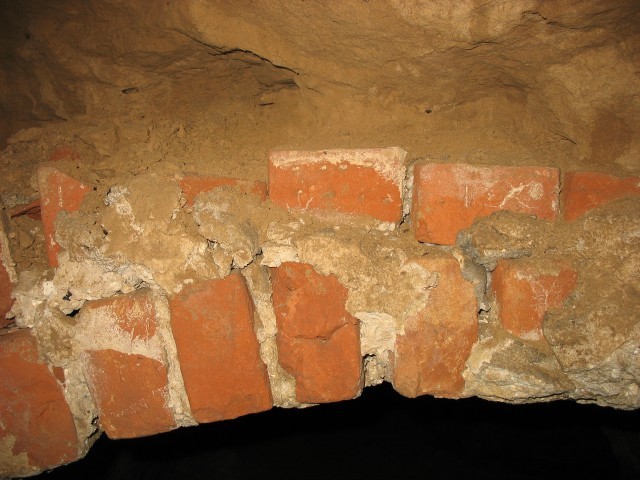
The above-ground structures, destroyed during the occupation of Kharkiv by Nazi invaders between 1941 and 1943, were completely dismantled after World War II. To date, the only surviving elements are a series of basement chambers in the southeastern corner of the former Gostiny Dvor (Trading Court) and a system of underground galleries beneath Kvitky-Osnov’yanenka Street and 2nd Universytetskyi Lane.
The emergence of the first scholarly study dedicated to Kharkiv’s underground passages is linked to preparations for the 12th Archaeological Congress, held in the city in 1902. In our view, this study takes the form of a letter from Professor I.P. Shchelkov—former rector of the Imperial University of Kharkiv—to Dmytro Bahalii, chairman of the preliminary committee organizing the congress; the letter was published in the committee’s proceedings alongside an article by M. Levakovsky titled “On the Underground Passages of the City of Kharkiv.” Levakovsky’s article had previously appeared in the Kharkivski Vedomosti newspaper and served, in essence, as a direct response to Bahalii appeal to Kharkiv residents to share any information they possessed about the city’s underground structures with the preliminary committee.
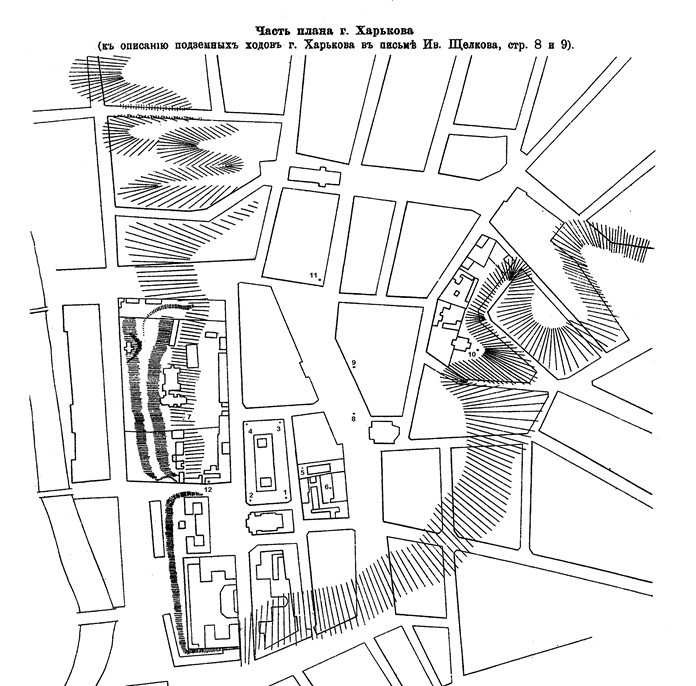
It is from a letter by I.P. Shchelkov that we first learn of the existence of several large underground structures beneath the Gostiny Dvor complex. Of particular value is the map of Kharkiv accompanying the letter, which marks the locations where these ancient underground passages were discovered.
The author notes that the best-preserved underground passages are located “near the Zheverzheev cellars,” at the southwestern and southeastern corners of the Gostiny Dvor building (points No. 1 and 2 on the map). They extend both eastward—beneath Goriainovsky Lane (now Kvitky-Osnov’yanenka Street)—and westward, beneath the Square of Administrative Offices (now a public garden on University Hill featuring a monument to the heroes who gave their lives for Ukraine’s independence and freedom). A small cellar (point No. 3) was situated beneath the northeastern corner of Gostiny Dvor. I.P. Shchelkov was particularly intrigued by a passage beneath the northwestern corner (point No. 4); running perpendicular to Universytets’ka Street, it descended steeply toward the courtyard of the Holy Intercession Monastery. The increasing frequency of ground collapses and the discovery of ancient underground structures during excavation and construction work in the early 20th century led the Kharkiv City Administration to establish two units dedicated to studying the city’s underground space:
- The Department for the Management of Underground Structures and the Approval of Underground Works (part of the Technical Department of the Kharkiv City Administration);
- The Commission for the Investigation of Underground Passages in the City of Kharkiv.
The history of the department’s activities can be traced through documents held in the State Archives of Kharkiv Oblast, covering the period from April 11, 1913, to November 27, 1914.
A comprehensive picture of the commission’s work can be obtained from its minutes—published in the Bulletin of the Kharkiv City Duma and covering the period from July 24, 1913, to July 2, 1914—as well as from numerous reports in the Kharkiv periodical press from 1913 to 1914.
The discovery of new sections of underground passages in the center of Kharkiv in the summer of 1913 prompted the City Administration—acting on the governor’s proposal No. 2199 dated July 2, 1913—to task City Engineer B. Kustersky and City Architect A. Linnik with investigating the newly revealed subterranean spaces. Additionally, Administration member Z. Kharmansky was charged with forming a commission to study these passages, involving staff from relevant municipal departments.
At the commission’s very first meeting, discussions focused on conducting a large-scale archaeological study of Kharkiv’s underground passages and mapping both the known and suspected routes onto the city plan; the aim was to warn property owners and builders of the need to take precautions when constructing building foundations and walls.
The underground passages beneath Nikolaevskaya Square and Soborny and Goryainovsky Lanes, inspected by commission members in July 1913, were deemed safe (at least for the next 10–15 years), and a decision was made to include them on the city map.
The question of the purpose of the underground passages sparked lively debate.
Representatives of the Imperial University of Kharkiv—V.I. Savva, E.M. Ivanov, and A.S. Fedorovsky—pointed out that the construction of the passages was a public undertaking, intended for defense and to provide a potential escape route for the population during Tatar raids.
Professor Fedorovsky also noted that underground passages are quite common as historical monuments; similar structures are known to exist in Kyiv, Poltava, and Chernihiv.
City architect G. Pavlovsky held a completely different view, arguing that the passages were built for commercial purposes and that the underground structures were the work of merchants or tax farmers who used them to store their goods.
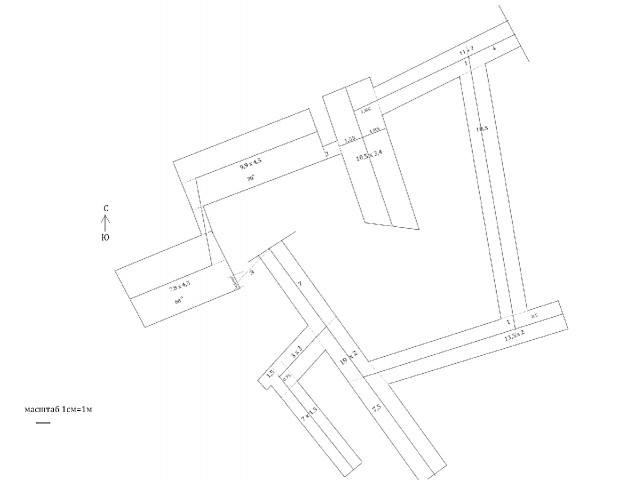
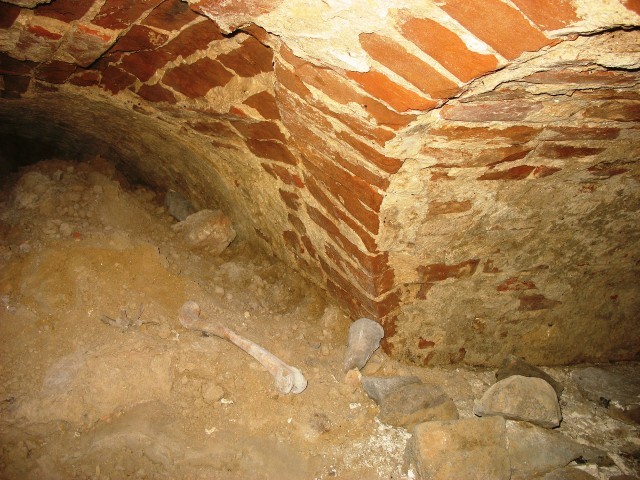
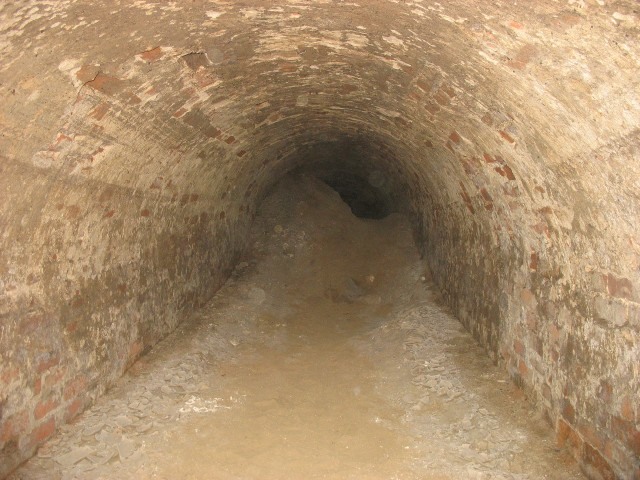
Currently, the only underground structure accessible to researchers is the one marked as No. 1 on I.P. Shchelkov’s plan. Since its inception in 2005, the research group from the “Children of the Underground” Charitable Foundation (Kharkiv Region) has been monitoring the condition of this site and clearing it of debris.

- The Architectural Evolution of the Kharkiv Theater - 26.09.2026
- 1st Kharkiv Gymnasium - 17.09.2026
- The Oldest Movie Theater in Ukraine - 24.08.2026