The building of the Kharkiv Academic Ukrainian Drama Theater named after T. Shevchenko is one of the main architectural landmarks on Sumska Street. This building is much older than it appears and is the oldest theater building in Ukraine. It opened on August 15, 1841—seven months before the completion and opening of the current M. Zankovetska Theater building in Lviv.
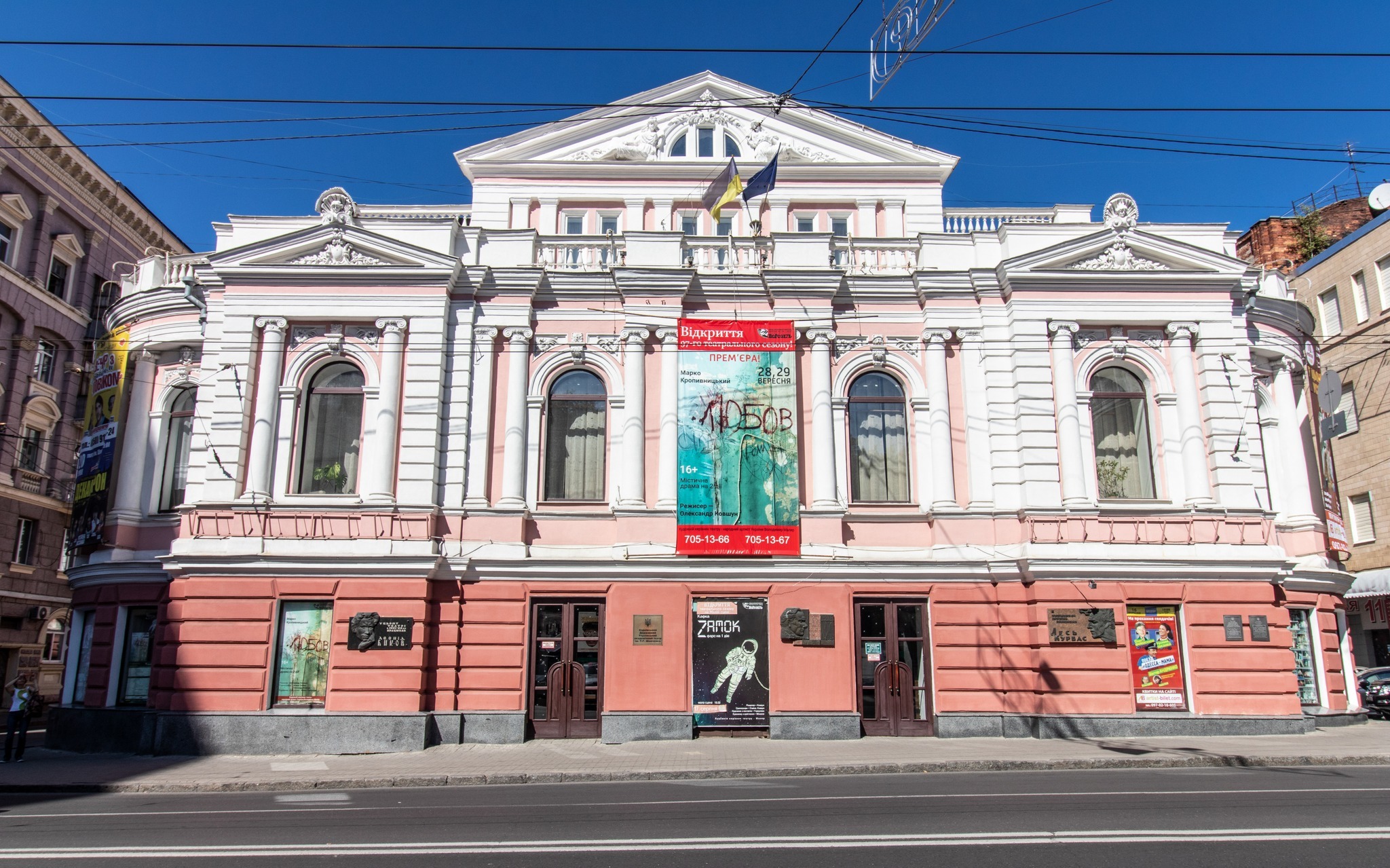
The walls of the Shevchenko Theater in Kharkiv have borne witness to a rather complex architectural evolution, one that is worth recalling.
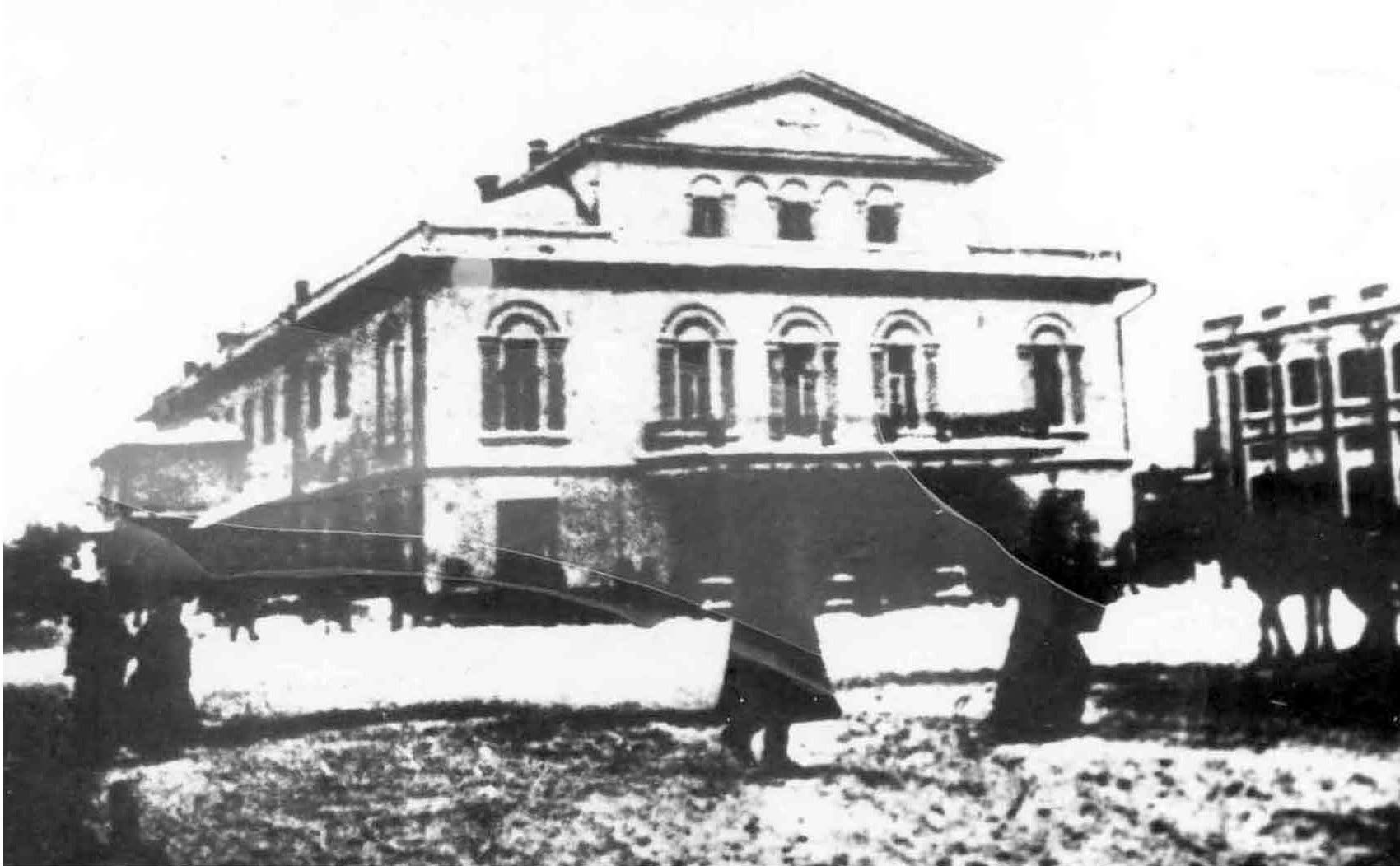
The Kharkiv theater, which traces its history back to the 1780s, was home to numerous competing troupes. The first performances were held in an annex to the Governor’s Palace, as well as in various rented and temporary structures, including makeshift stages. The “permanent” theater building, owned by impresario Ivan Shtein, was constructed in 1816 on the opposite side of what is now Poetry Square, near Hryhoriia Skovorody Street, 24. The theater was quite large, with three tiers, but essentially consisted of a “mix” of wooden and mud-plastered structural elements borrowed from traditional Ukrainian architecture. The building had no heating, and its ventilation and lighting left much to be desired; nevertheless, it stood for 25 years—until 1841.
By the summer of 1841, construction of the current stone theater building, owned by impresario Ludwig Mlatkovsky, had been completed on the opposite side of the square, at Sumska Street, 9. The design was created by architect Andrei Ton in the Neoclassical style and was not particularly ornate, although the new theater certainly looked better than the old one and was quite impressive compared to other provincial theaters of the first half of the 19th century.
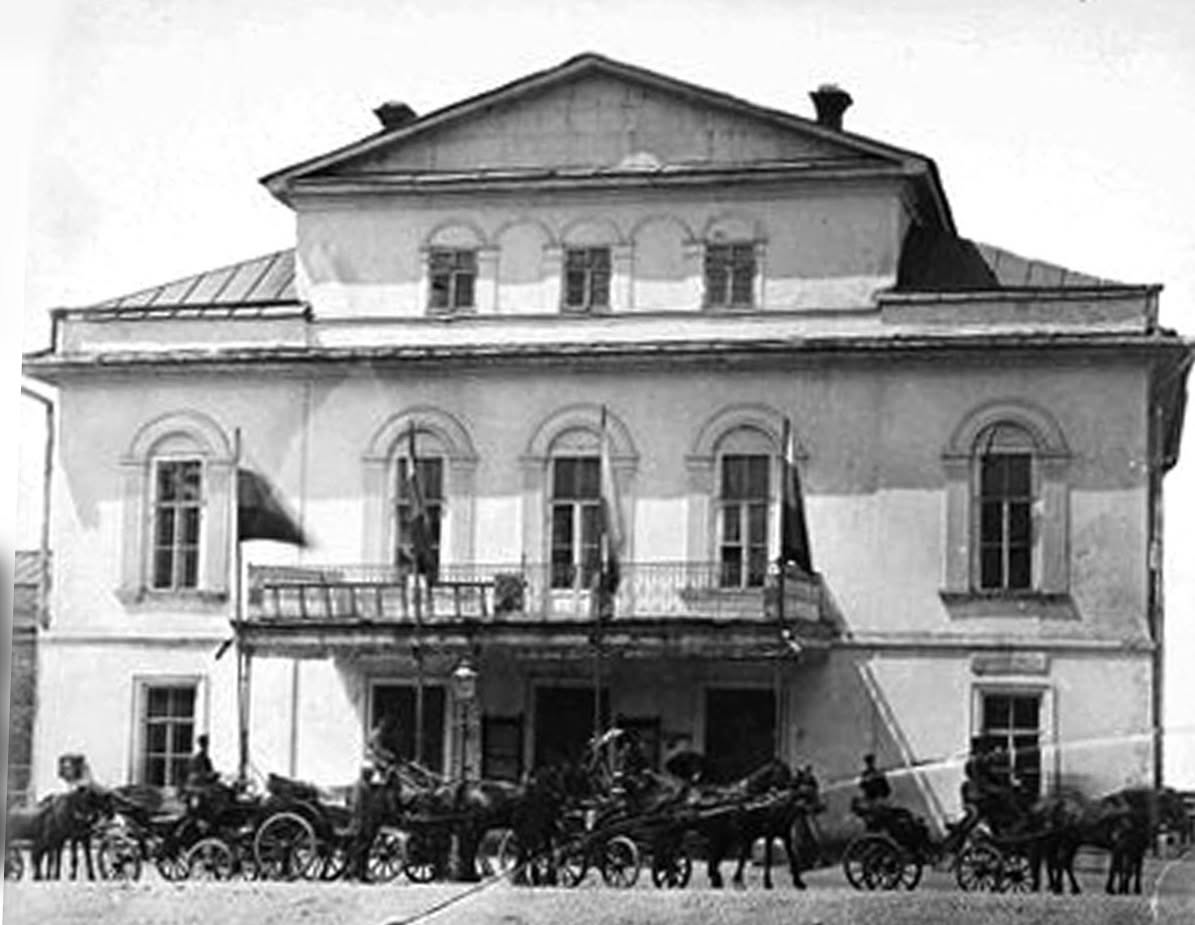
The building was two stories high, with a mezzanine; it was slightly smaller than the previous one, but it already had heating. The large auditorium, with four tiers (including the gallery), could seat up to 800 spectators; however, its acoustics left much to be desired.
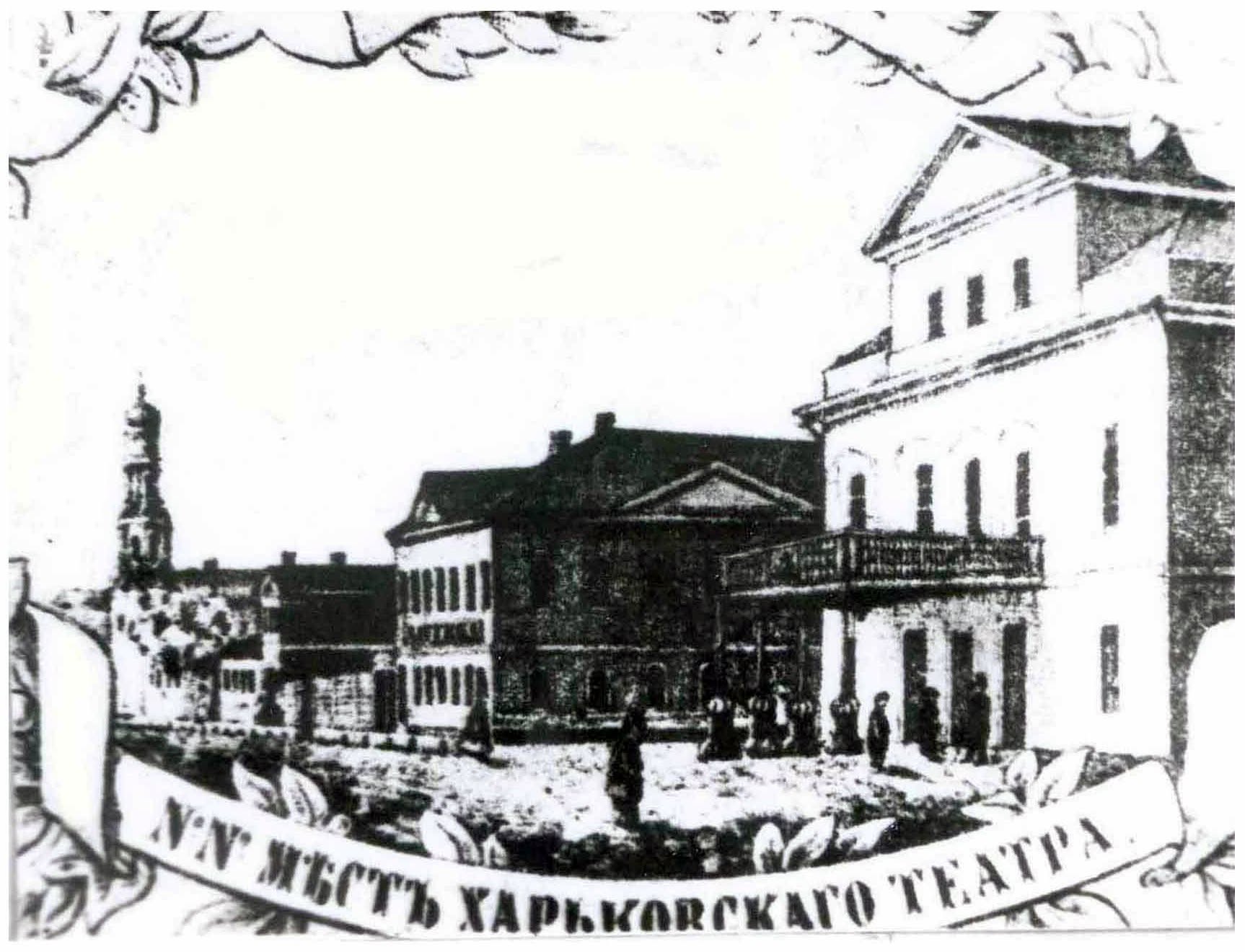
The staircases and hallways were too narrow, the theater had no lobby, and the rooms for the troupe were too small.
In 1892–1893, when the theater was already owned by Mlatkovsky’s daughter, Vera Dyukova, a major renovation was carried out based on a design by architect Bolesław Michałowski, with the participation of architect Zdzisław Harmanski. The theater began to look much “more opulent.” Its opulent, eclectic forms, featuring Neo-Renaissance elements, were accentuated by four domes and numerous sculptures, although the silhouette of the original 1841 structure was still discernible in the building’s proportions and the structure of the pediment. The theater was not as large as those in Kyiv, Odesa, and Lviv, but it was not far behind them in terms of grandeur.
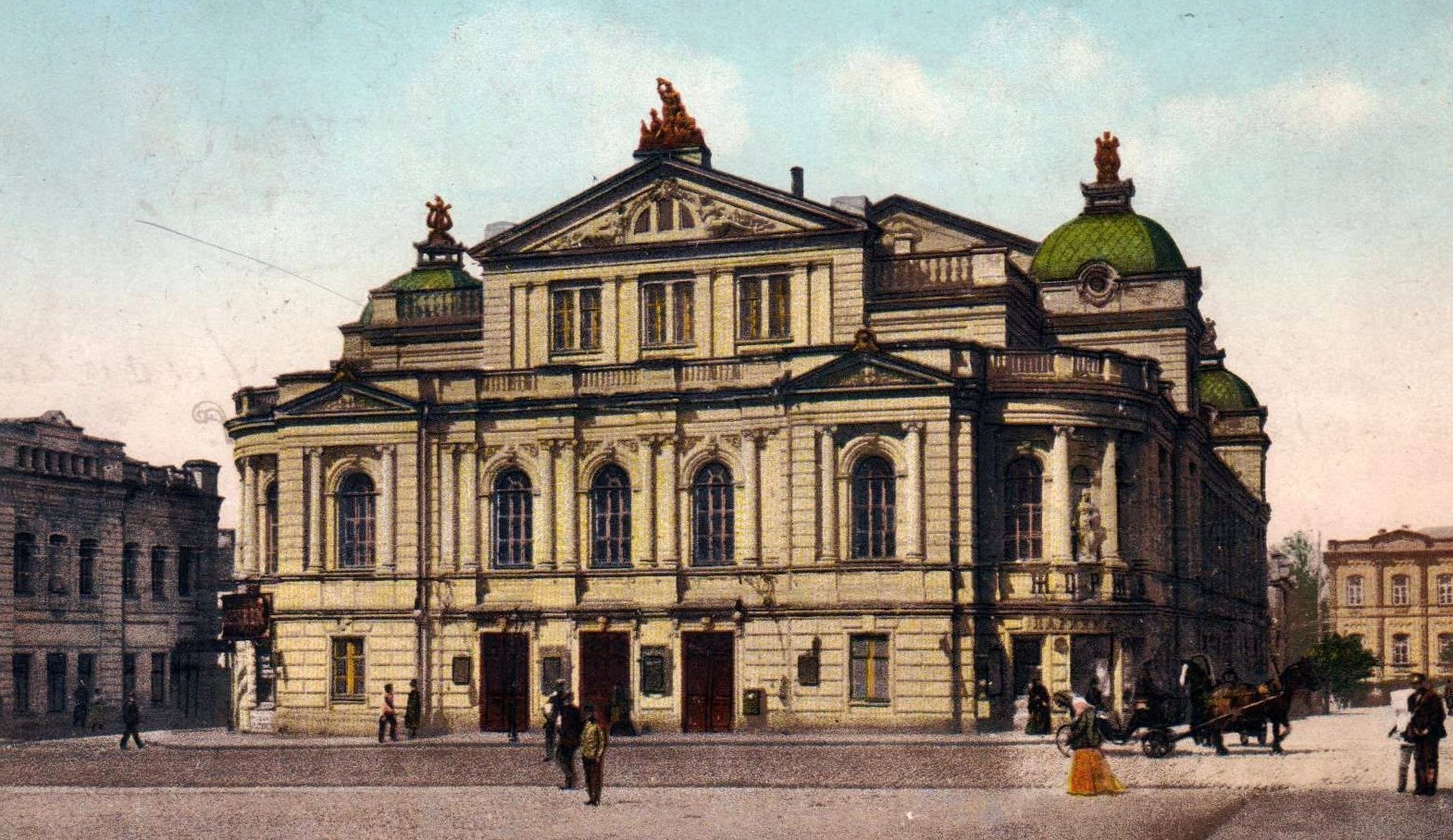
The interior spaces were improved; according to research by A. Paramonov, the heating system was replaced with a steam-water system in 1894, and electric lighting was installed.
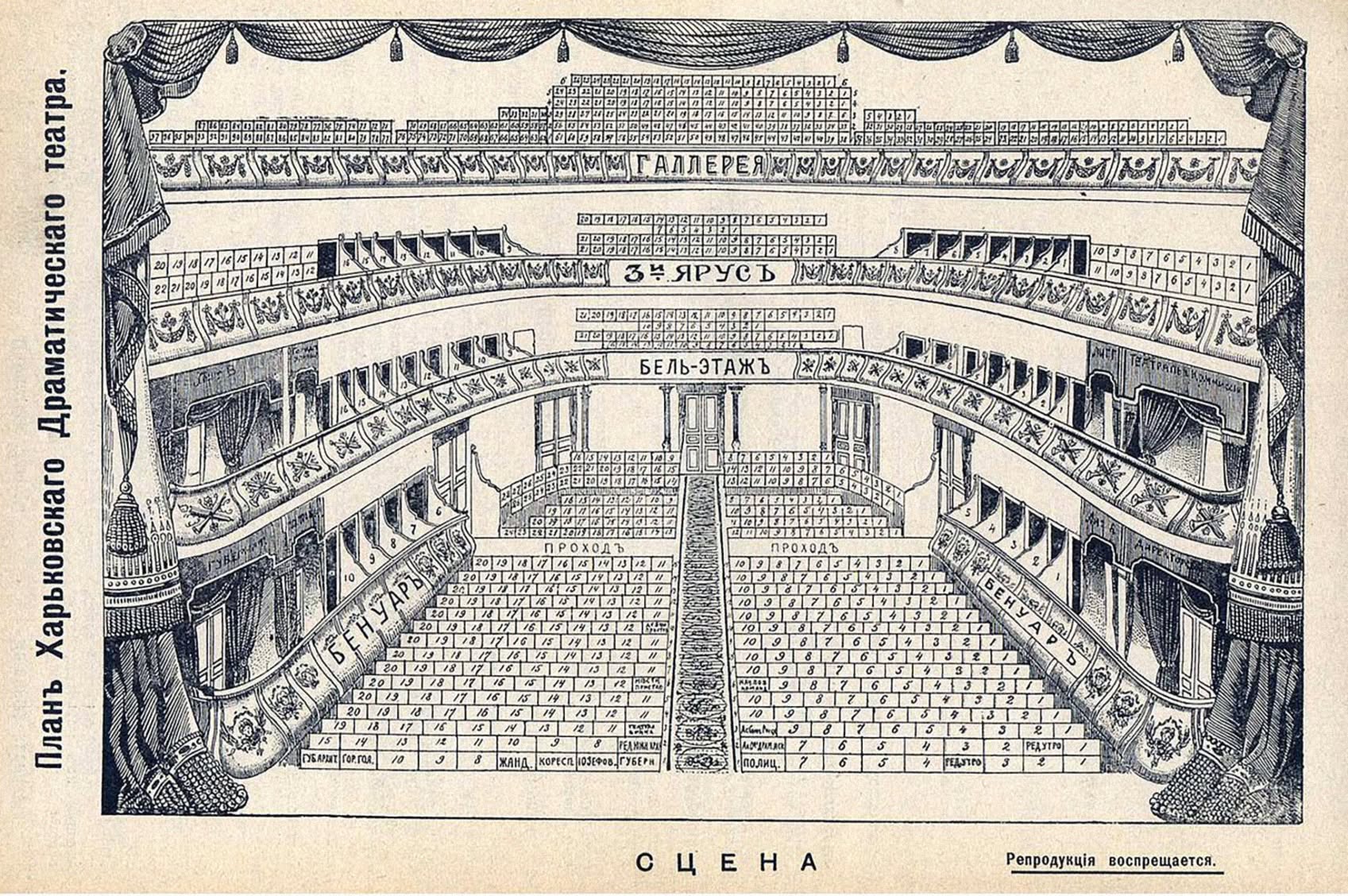
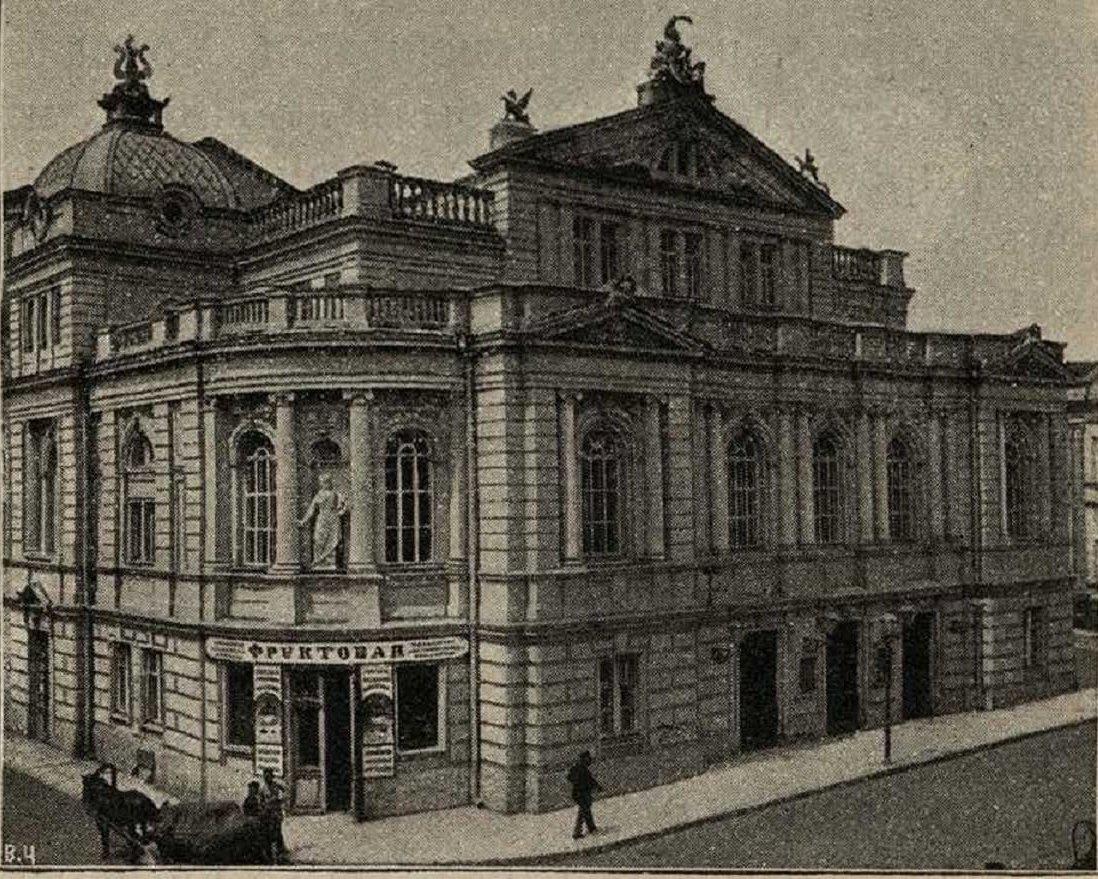
At first, electricity was generated by a portable steam locomobile connected to a generator; starting in 1901, the theater had its own power plant and a set storage facility—both were located in a new addition on the side facing Rymars’ka Street. The ground floor housed shops; in the photo below, you can see the sign for a fruit shop in the left wing.
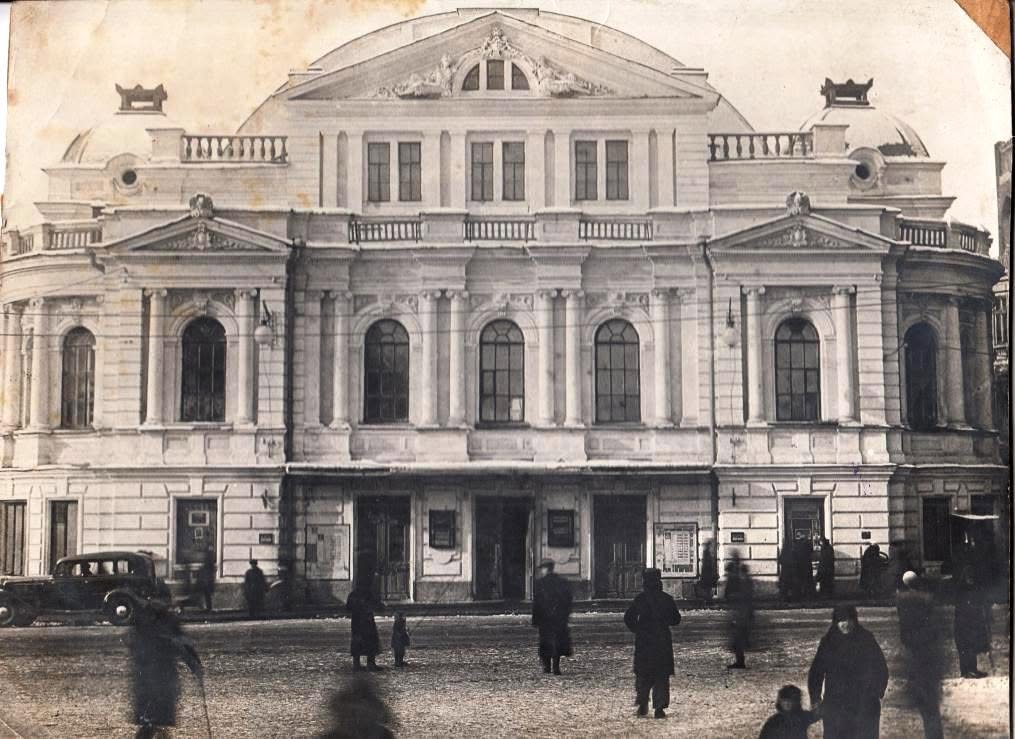
Starting in 1926, the building became the home of the Ukrainian theater “Berezil” under the direction of Les Kurbas. The sculptures were removed from the facade, and in 1928, the theater’s interiors were partially renovated in the Constructivist style based on a design by architect Veniamin Kostenko and artist Vadym Meller. The top of the stage box, which had previously been sloped, was reshaped into a semicircle.
Kurbas was persecuted in 1933; in 1935, “Berezil” was renamed the T. Shevchenko Theater.
The building’s appearance was most severely altered in the 1960s during a renovation carried out in 1961 by “Kharkivproekt” (architects Boris Klein and Yevgeny Svyatchenko). The auditorium and stage were renovated—the rear domes were demolished to enlarge the stage box. The rectangular silhouette of the stage box came to dominate the view against the backdrop of the theater’s main, lower facade facing Sumska Street.
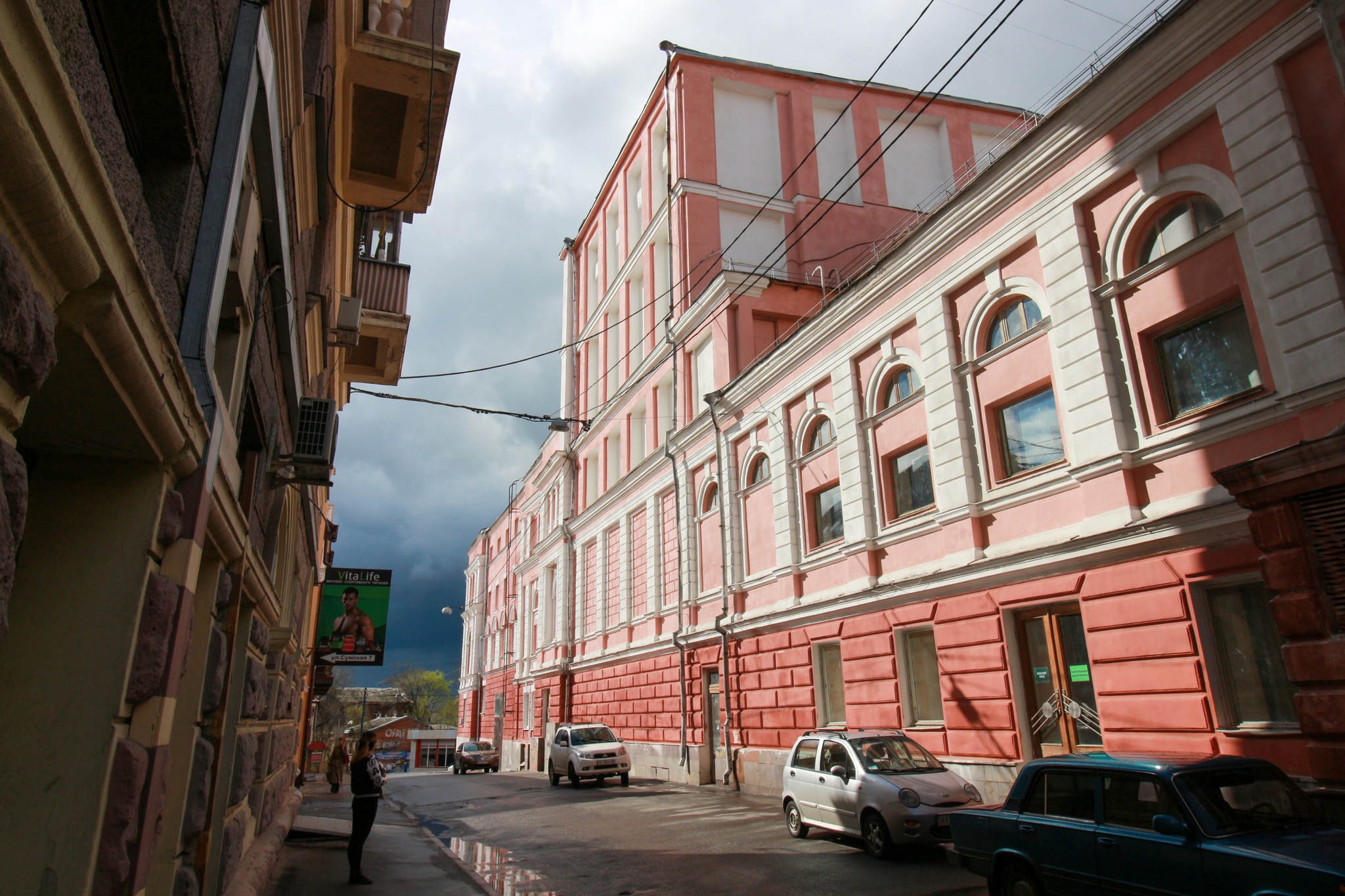
A five-story service wing was built on the side facing Rymars’ka Street—the theater completely enclosed the block. In 1964, as a result of a renovation by Nina Furmanova and Boris Klein, the original and Constructivist interiors were replaced with new ones in the style of Soviet Modernism.
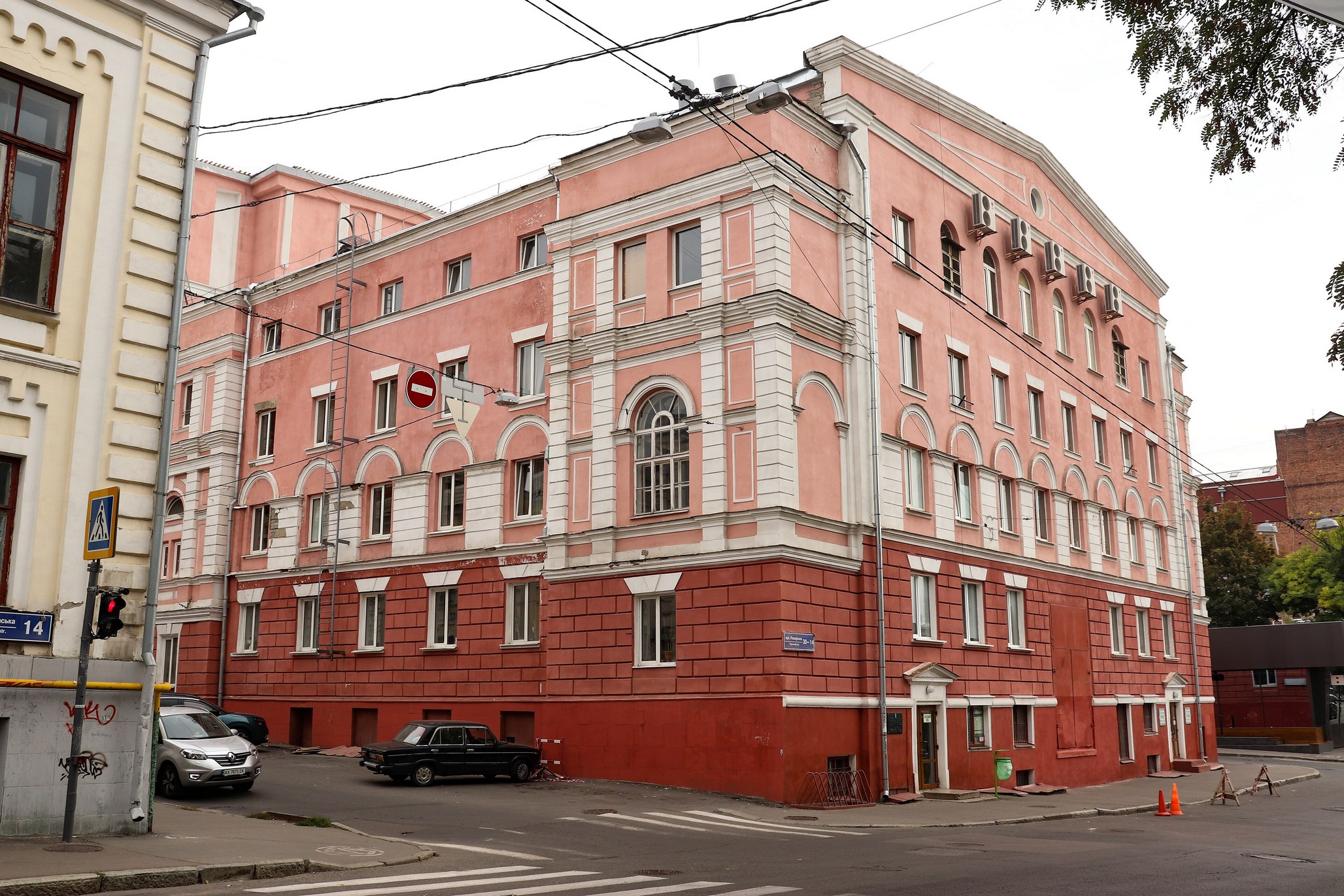
The color of the facades has changed many times—it has been white, yellow, beige, pink… During the Soviet era, the original window frames were also lost, which had a significant impact on the theater’s appearance.
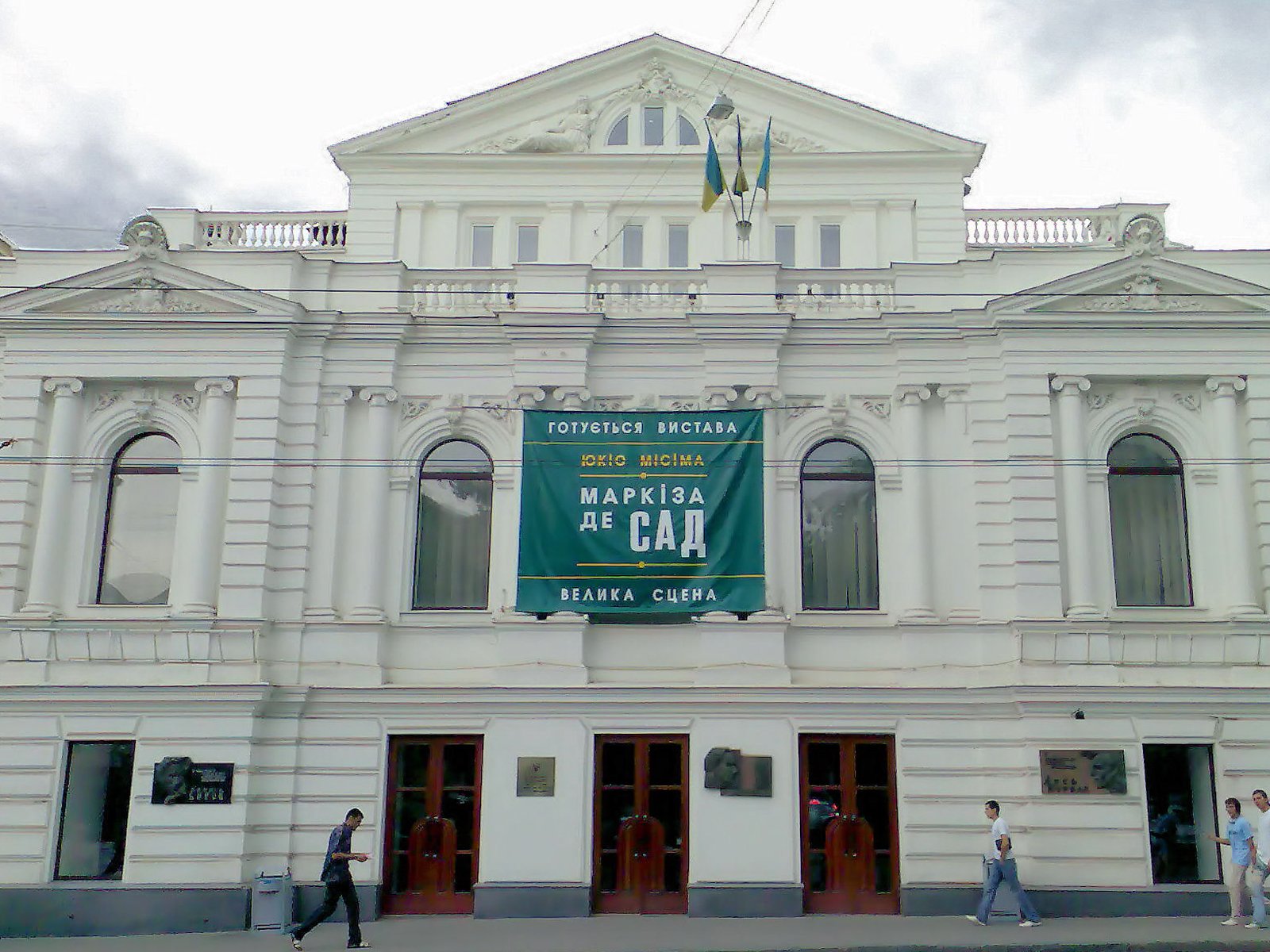
In 1987, a small theater stage named “Berezil” was opened in an annex on the Rymars’ka side.
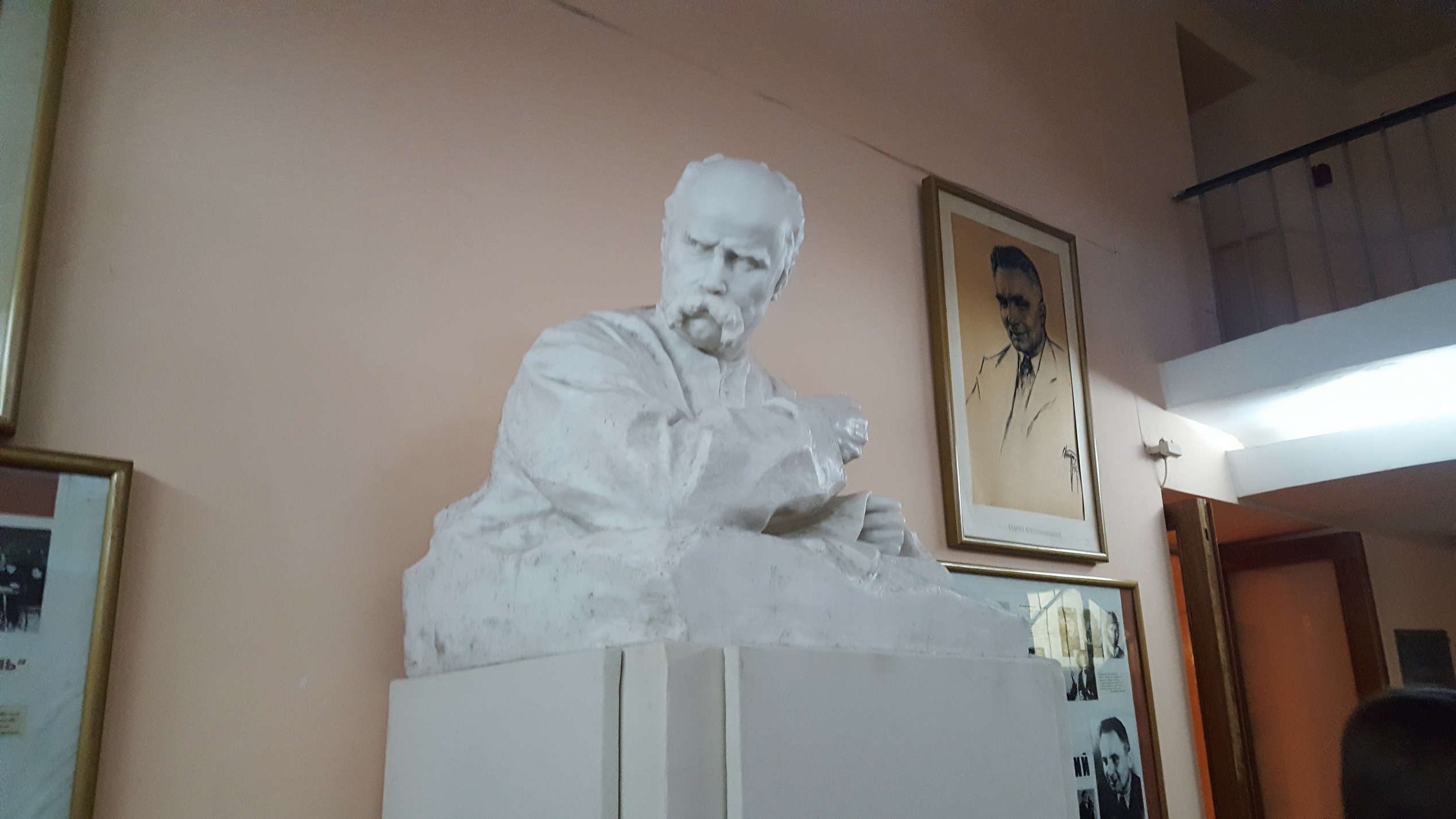
Alas, the Kharkiv theater once looked much better than it does now. However, its appearance can be partially restored—restoring the original window frames design is fairly straightforward, while restoring the sculptures is more difficult, though certainly feasible. Restoring the auditorium’s interiors to their original appearance, however, will be a very challenging task, given that the interior layout of the auditorium itself has changed. That said, the example of the Kharkiv Philharmonic shows that anything is possible with the right resources.
The theater’s roof and windows were damaged as a result of Russian shelling in 2022. In December 2025, the building of the T. Shevchenko Kharkiv Academic Ukrainian Drama Theater was added to the international list of cultural heritage sites under enhanced protection by UNESCO.

- Danylevs’koho Street, 19 - 13.10.2026
- Debunking the myth about one of the most famous Kharkiv photos - 12.10.2026
- The Architectural Evolution of the Kharkiv Theater - 26.09.2026