More stories about the first Shevchenko monuments in Kharkiv.
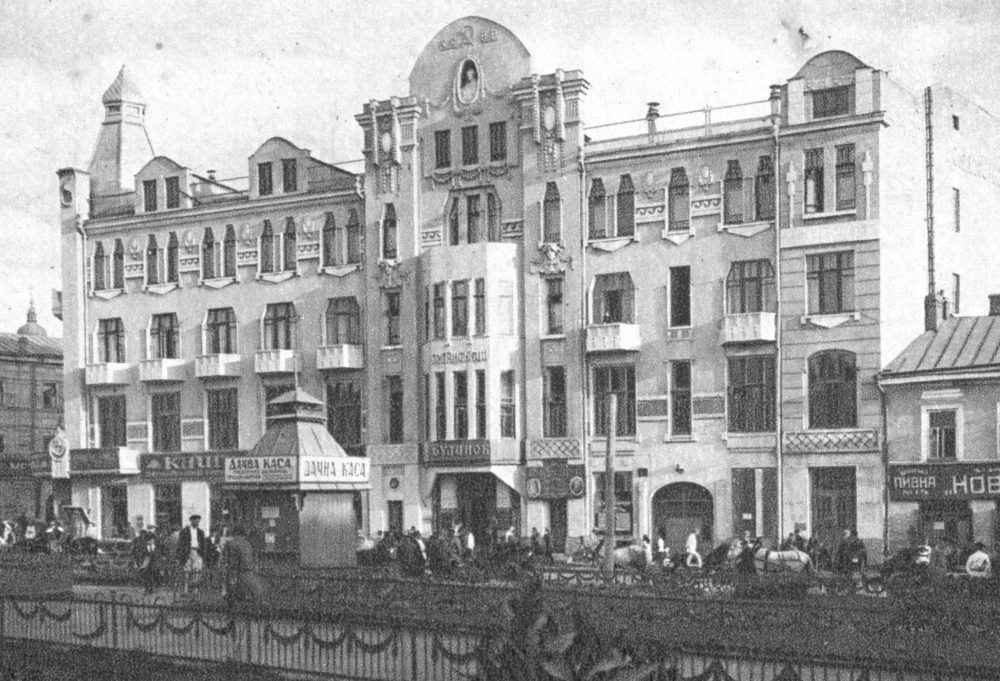
In 1912, an apartment building designed by B. Kornienko for Adam Piotrowski was constructed at the corner of Universitets’ka Street and Torgova Square.
In the early 1920s, the building became the Central Peasants’ House. It also housed the newspaper *Selianka Pravda*. The “Ukrainian Art Nouveau” style was a perfect fit for this building. The narrow, trapezoidal windows were one of the most distinctive features of Ukrainian Art Nouveau. Often, these windows alone are enough to identify a building as belonging to this style, even if it has been rebuilt and lost its facade decorations, towers, and original roof shape.
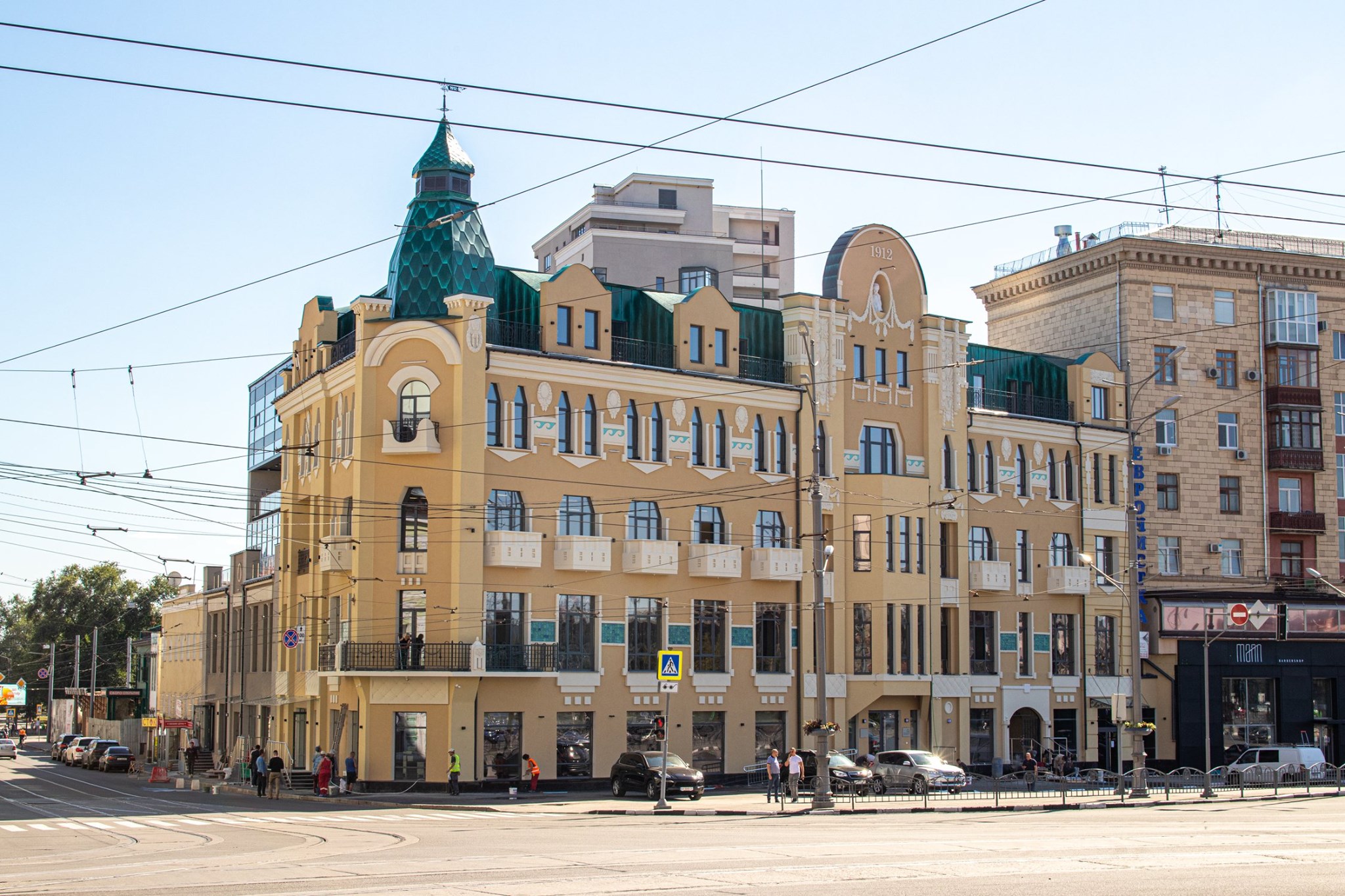
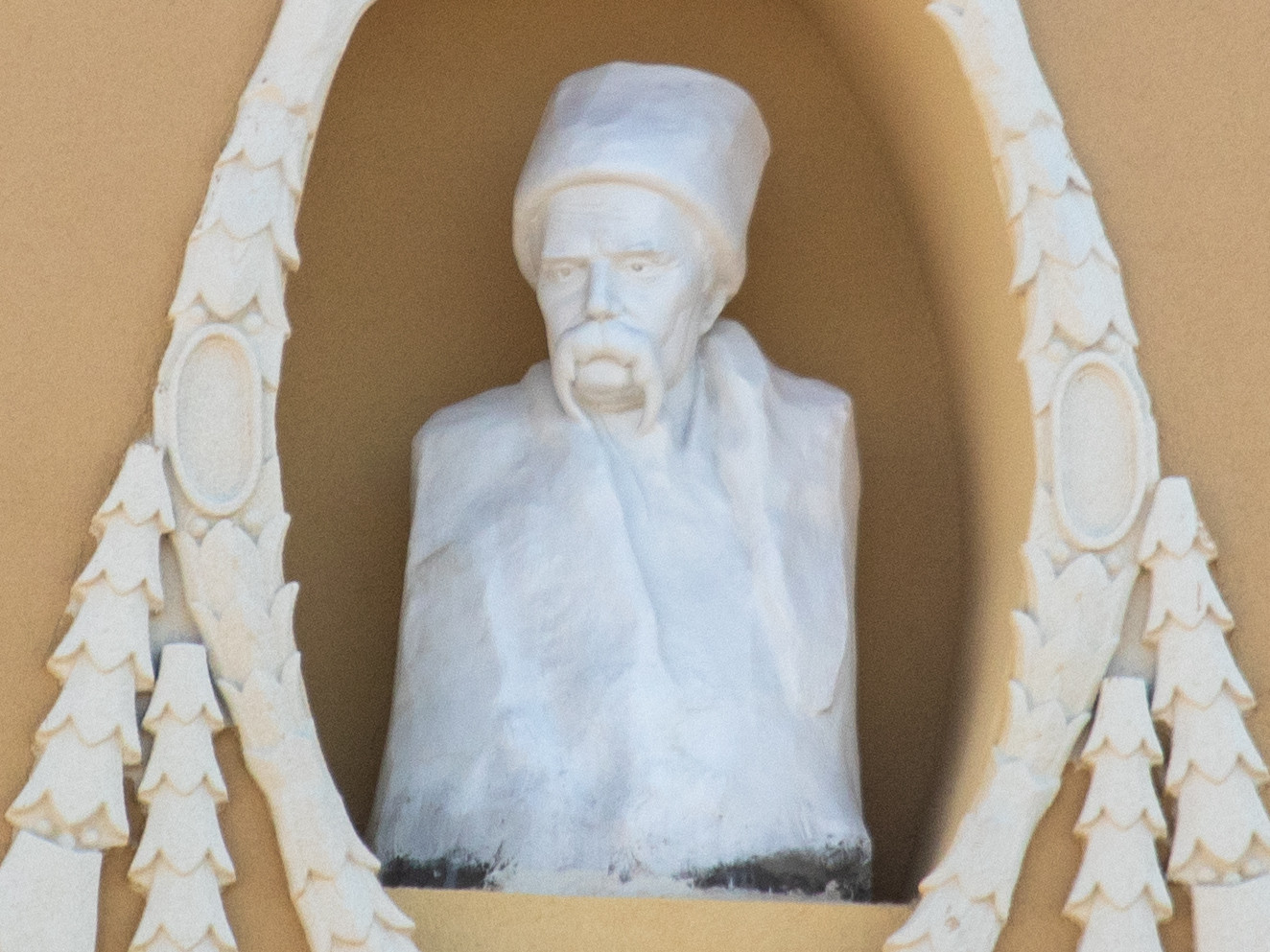
At the same time, a bust of Taras Shevchenko was installed in a special niche of the decorative portico at the top of the central part of the building. History has not preserved the sculptor’s name, but the bust has survived to this day, even though it has lost some of its detail over the past 100 years or so due to numerous layers of plaster. The peasant house housed not only a hotel but also a dining hall and classrooms.
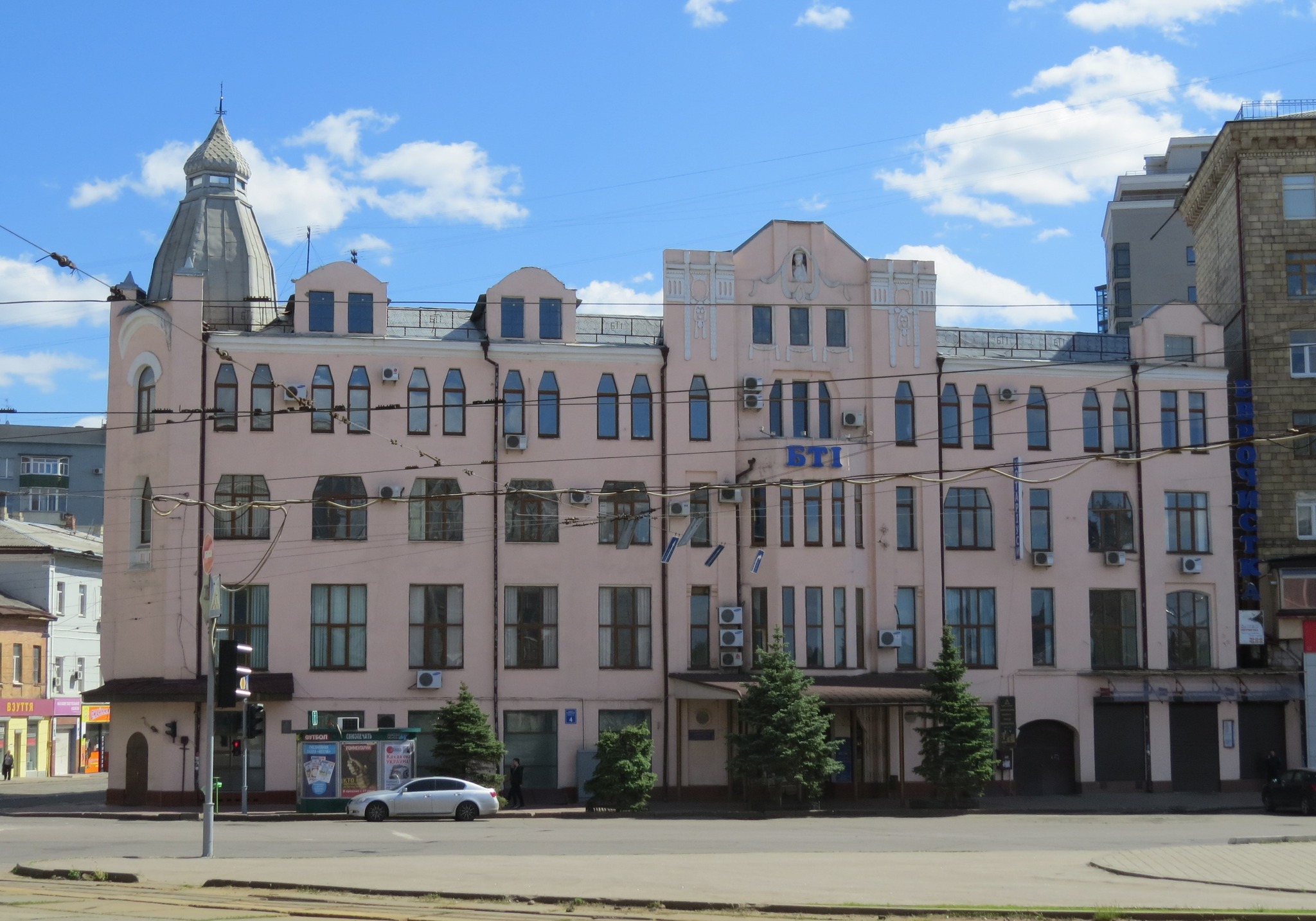
Today, the building is home to the BTI office. Unfortunately, the house lost its small balconies and the stucco work on the facade, but these were restored following a renovation that was completed in 2020.
At the beginning of the 20th century, Taras Shevchenko was deeply revered in Kharkiv, and contrary to the prevailing modern view, local authorities played a significant role in fostering this reverence. For example, Taras Shevchenko Street appeared in Kharkiv as early as 1911, marking the 50th anniversary of the poet’s death (during the Soviet era, it was renamed Pravdy Street, and later Oles Honchar Street). The Ukrainian section of the city library also bore Taras Shevchenko’s name, and the 11th City School was named in his honor. In 1911, a proposal was submitted to the city council to establish the Shevchenko Fund in the amount of 2,000 rubles to award prizes for “the best student essays on Ukrainian history, the history of Ukrainian literature, and the ethnography of Ukraine” (Yuzhny Krai newspaper, February 3, 1911). Also in 1911, a solemn memorial service was held, attended by a huge crowd, and evenings in memory of the poet were held at the same time. In 1912, a proposal was considered to erect a large monument on a high site—Kholodna Hora or the Zhuravlevski Hills (so that it would be visible from afar).

You can judge for yourself from the photos whether the sculpture looks better after restoration.
Unfortunately, it was damaged along with the building as a result of a Russian missile strike in August 2022.
By the way, there is a bust of a kobzar in Malaya Danilovka, which, according to legend, was erected before 1917. But that—like the monument in Kulichichi—is a story for another time.

- "Noah's Ark" - 21.10.2026
- Blackie’s House on Maksymilianivska St - 19.10.2026
- Danylevs’koho Street, 19 - 13.10.2026