The KhTZ neighborhood, one of the first in Kharkiv to feature prototypes of microdistricts, is of particular interest as an urban planning landmark.
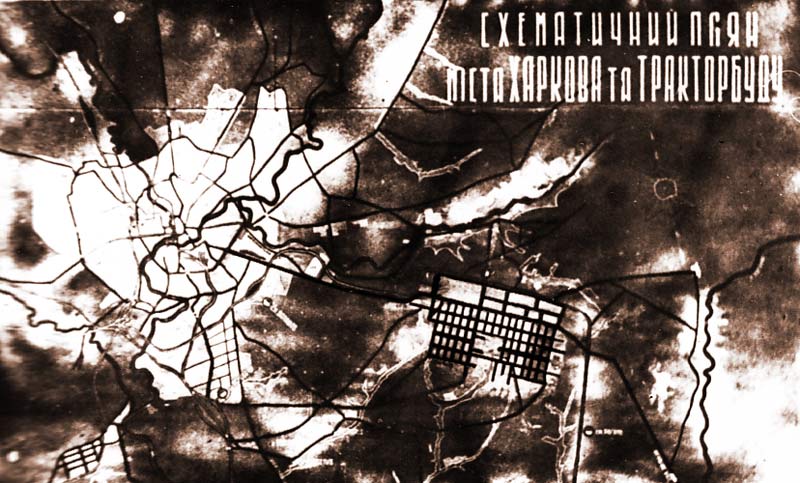
Officially, on maps from the 1930s, it is listed as Traktorobud. It was also known as the “New Kharkiv” socialist town—the settlement was separated from Old Kharkiv by the fields of a Agricultural Experimental Station (in the 1960s, the Novi Budynky neighborhood would be built on that site).
The preliminary design for Traktorobud was completed in just three months in early 1930 by the Design and Consulting Bureau under the NKVD of the Ukrainian SSR, led by architect Pavlo Alyoshin. Incidentally, an entire avenue in the KhTZ district is named in honor of this outstanding Kyiv architect. In April 1930, the documentation for the project’s refinement and implementation was transferred to the Kharkiv branch of the Dipromisto design institute. In “New Kharkiv,” the city of the future that grew up in the Losevo village area, workers from both the Kharkiv Tractor Plant and 14 other promising factories were to live under the new conditions of socialist life. The early buildings of Traktorobud were in the Constructivist style.
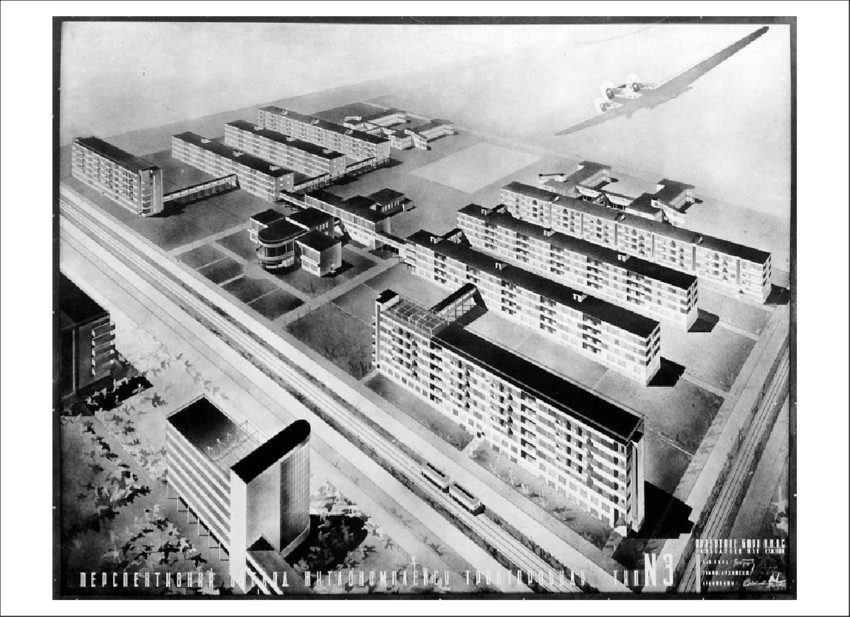
The New Kharkiv project called for 36 zhylkombinat’s (microdistricts) of four different types, each designed to house 2,730 residents. To relieve them of the “burden of daily life,” residents were required to eat only at the community dining halls located in the center of each neighborhood, which is why the apartments had no kitchens.
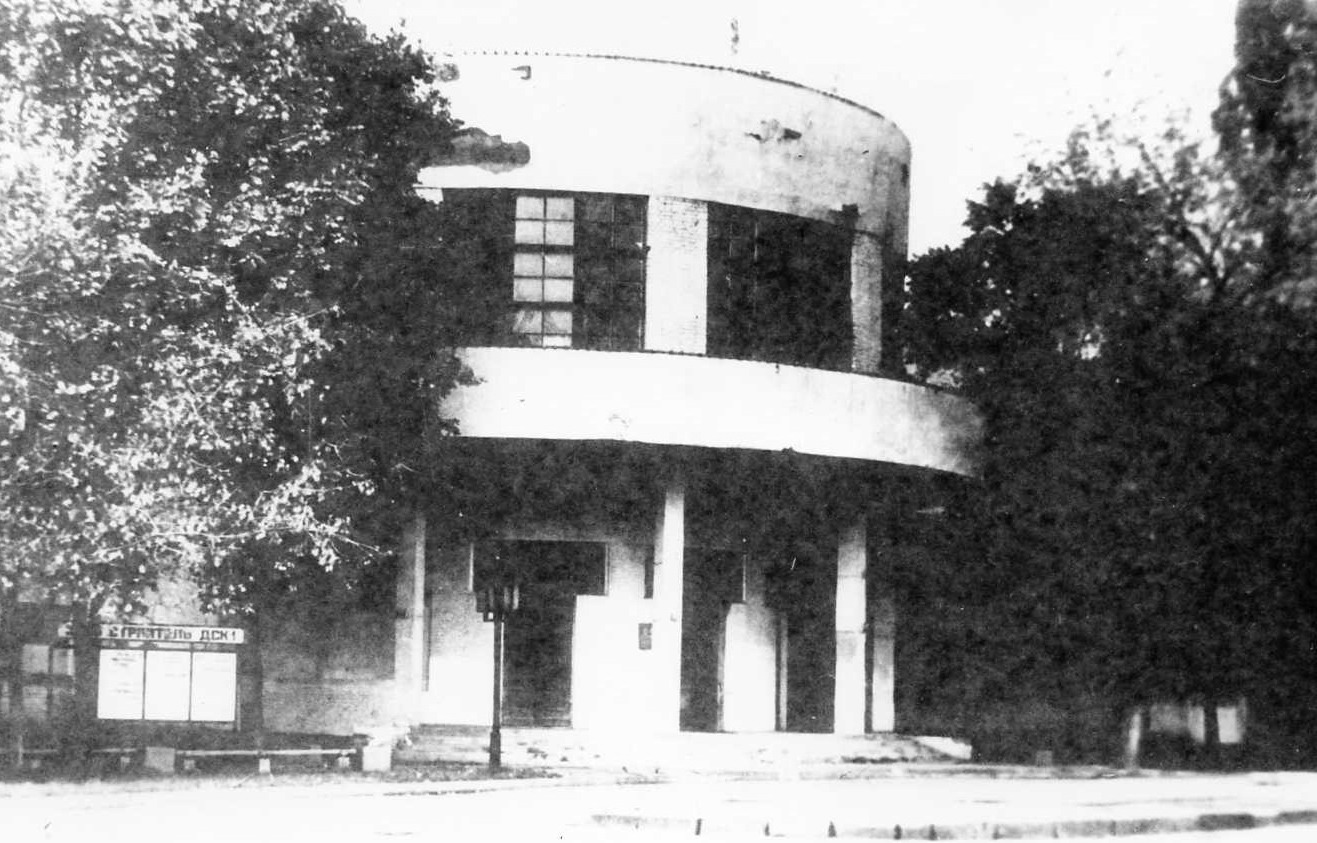
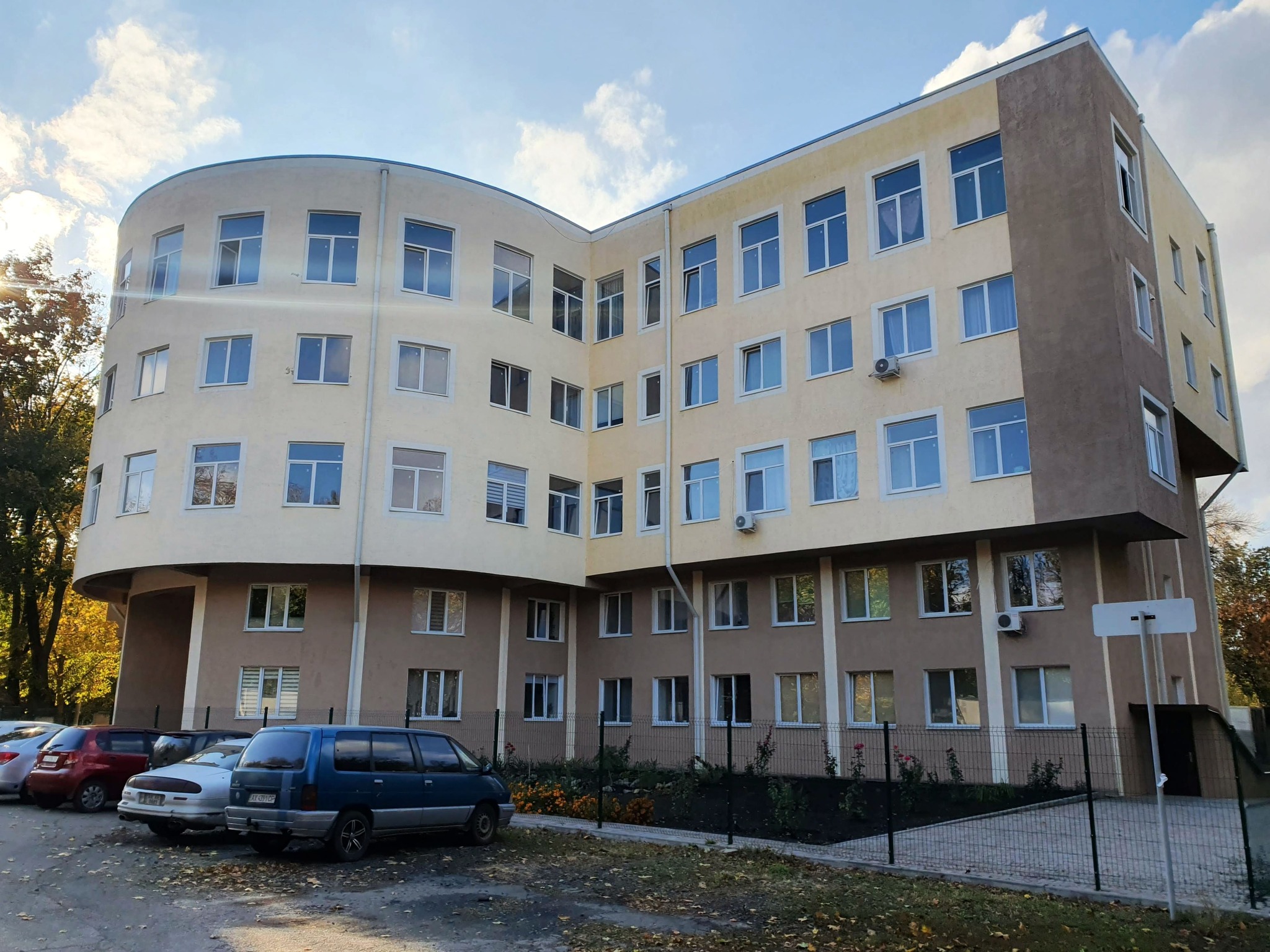
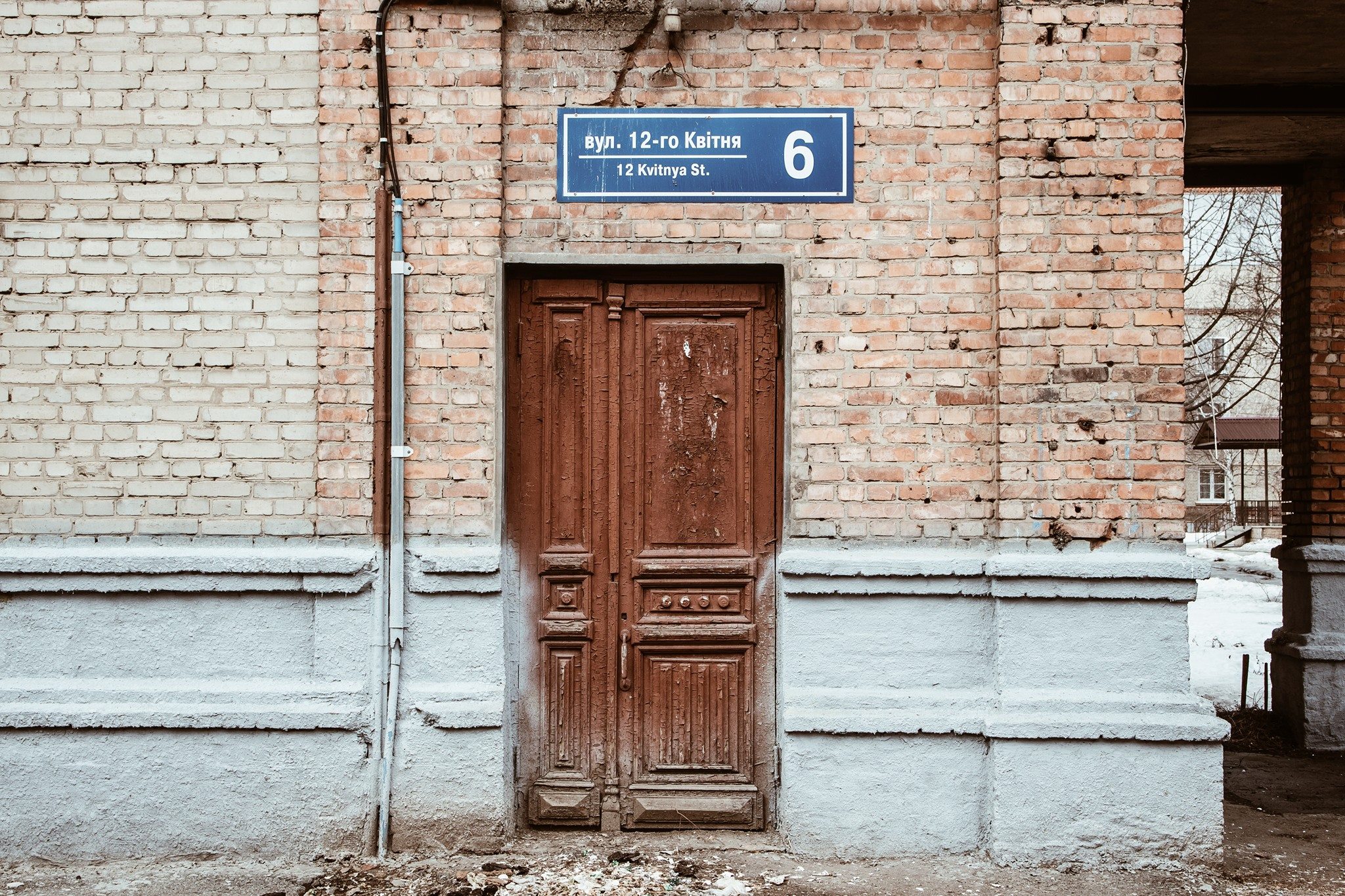
The clubhouse and dining hall at Industrialnyj Avenue, 6 was renovated in the late 2010s; it is now the “Industrialny” residential complex.
Residents had to bathe and do their laundry at public bathhouses and laundries.
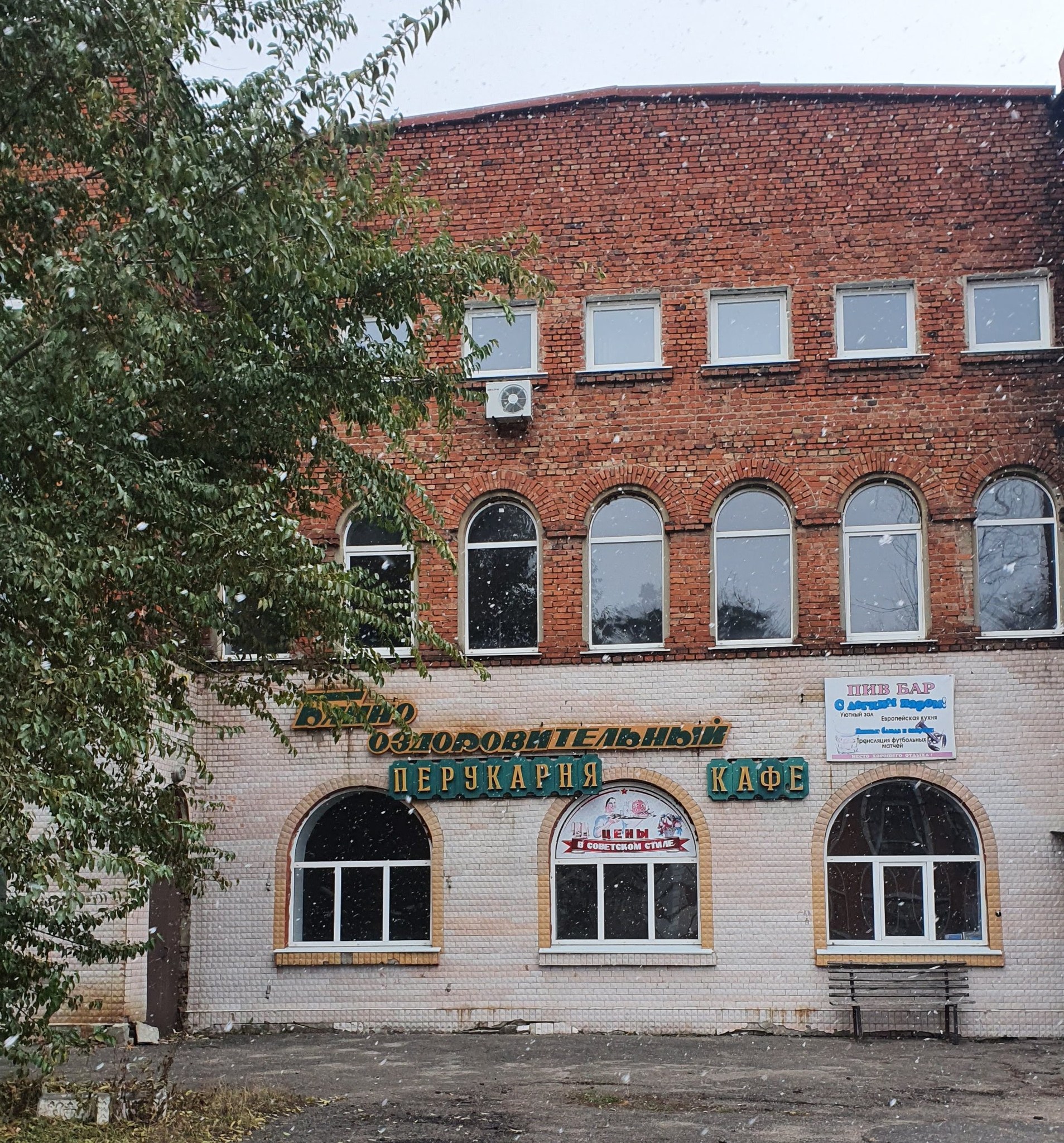
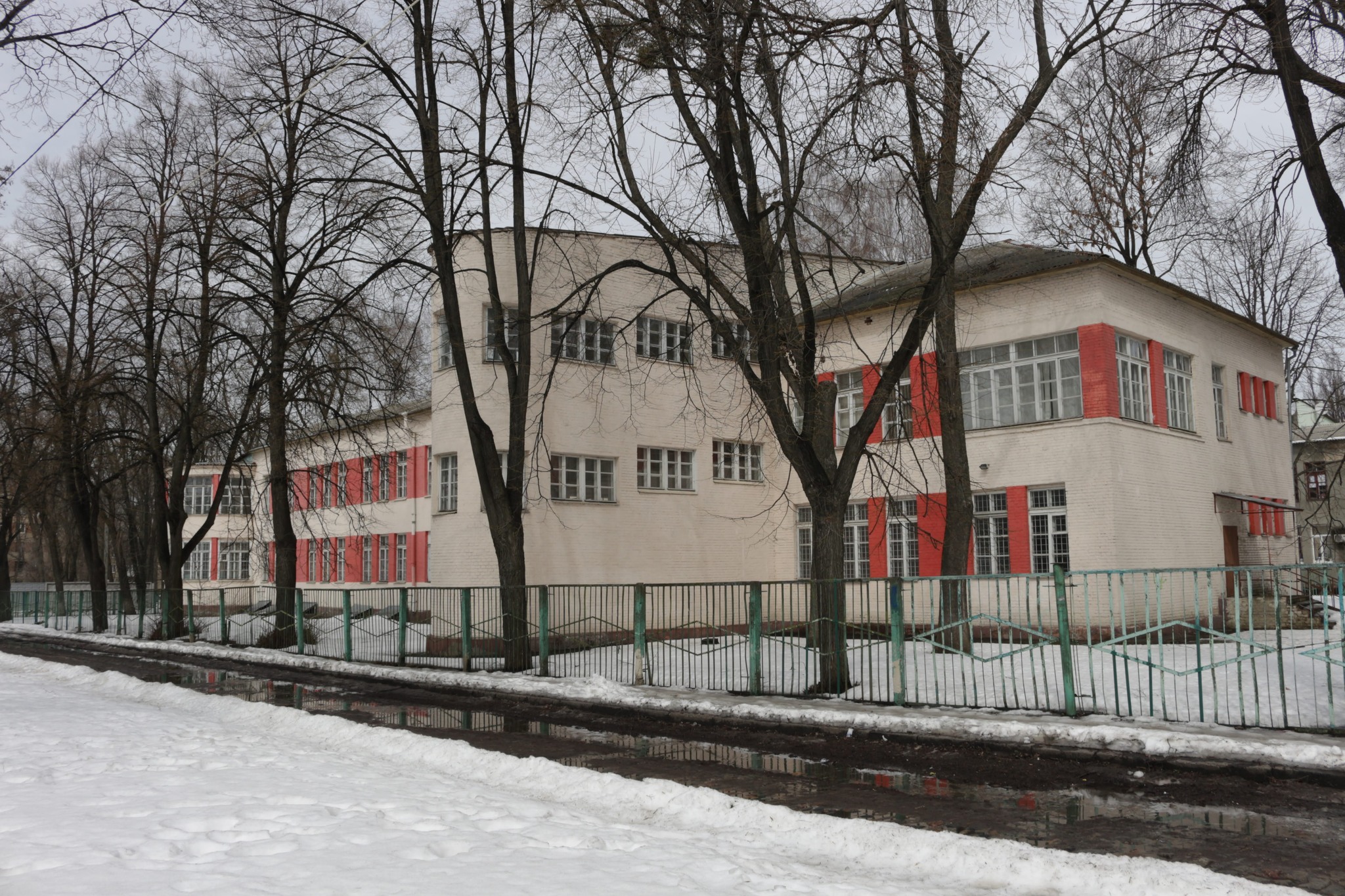
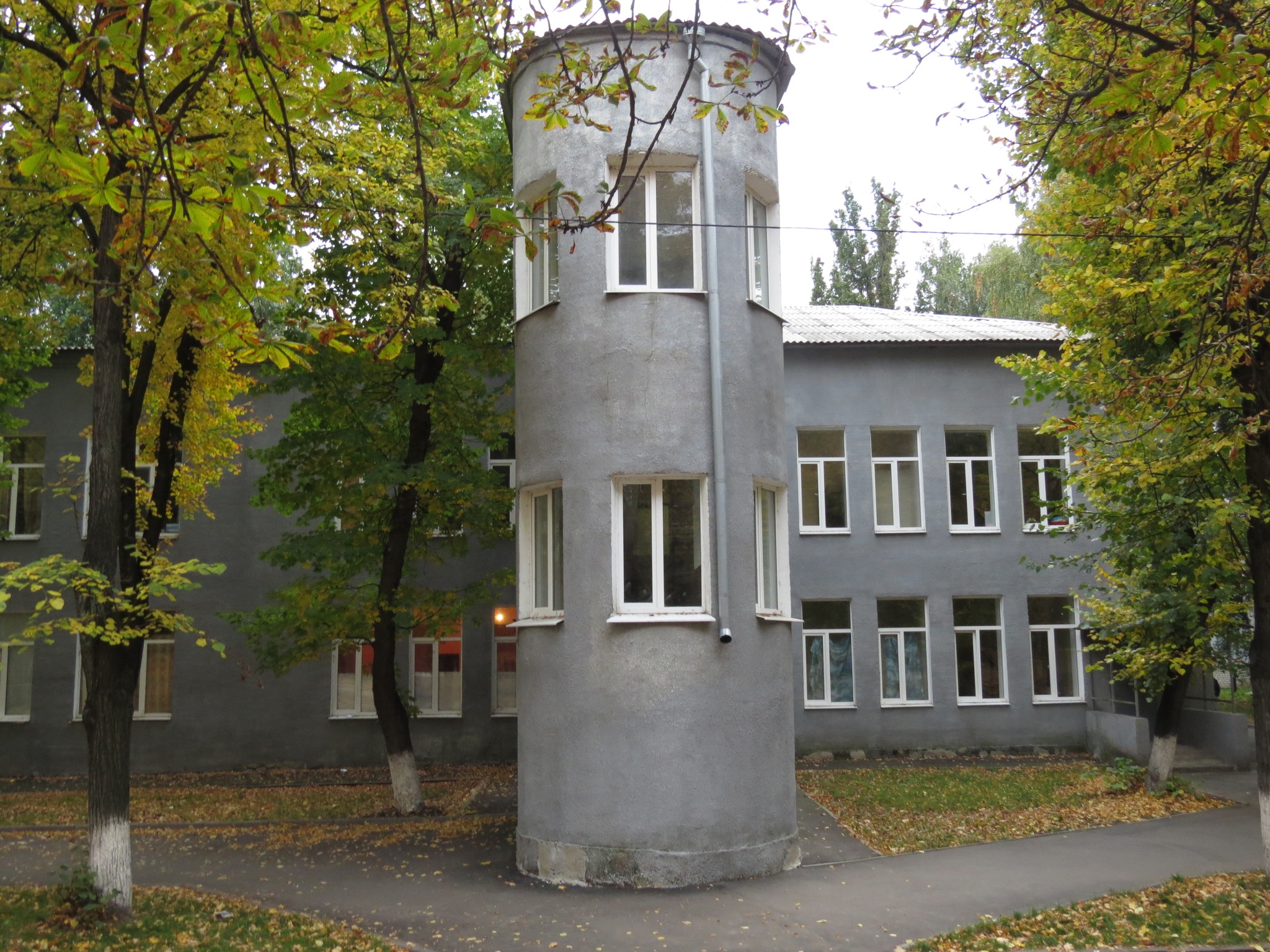
Each zhylkombinat (microdistrict) included a school, kindergartens, and crèches.
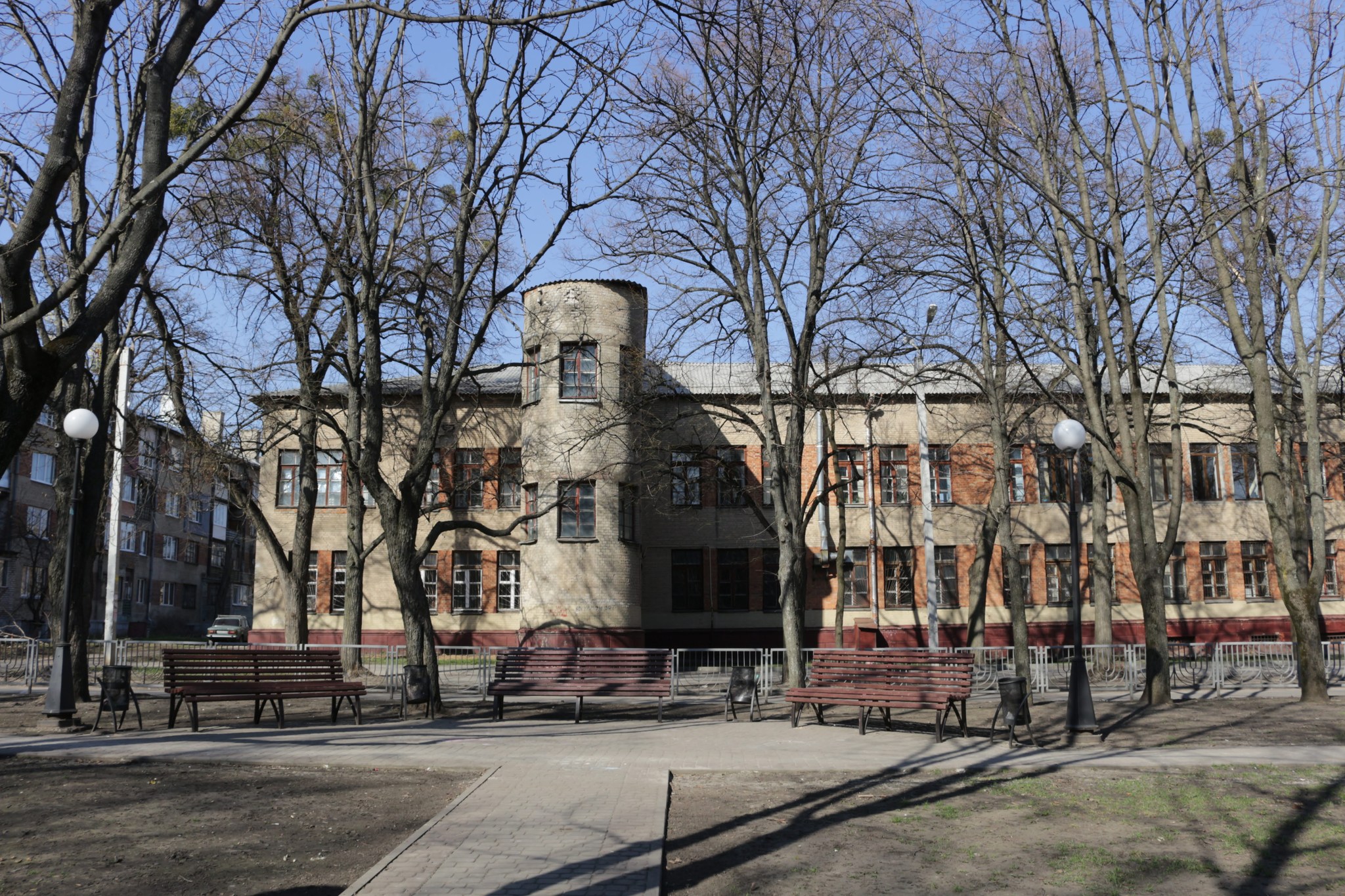
A distinctive feature of the crèches was its annexes with covered ramps, which made it easy to take strollers up to the second floor without having to struggle with the stairs.
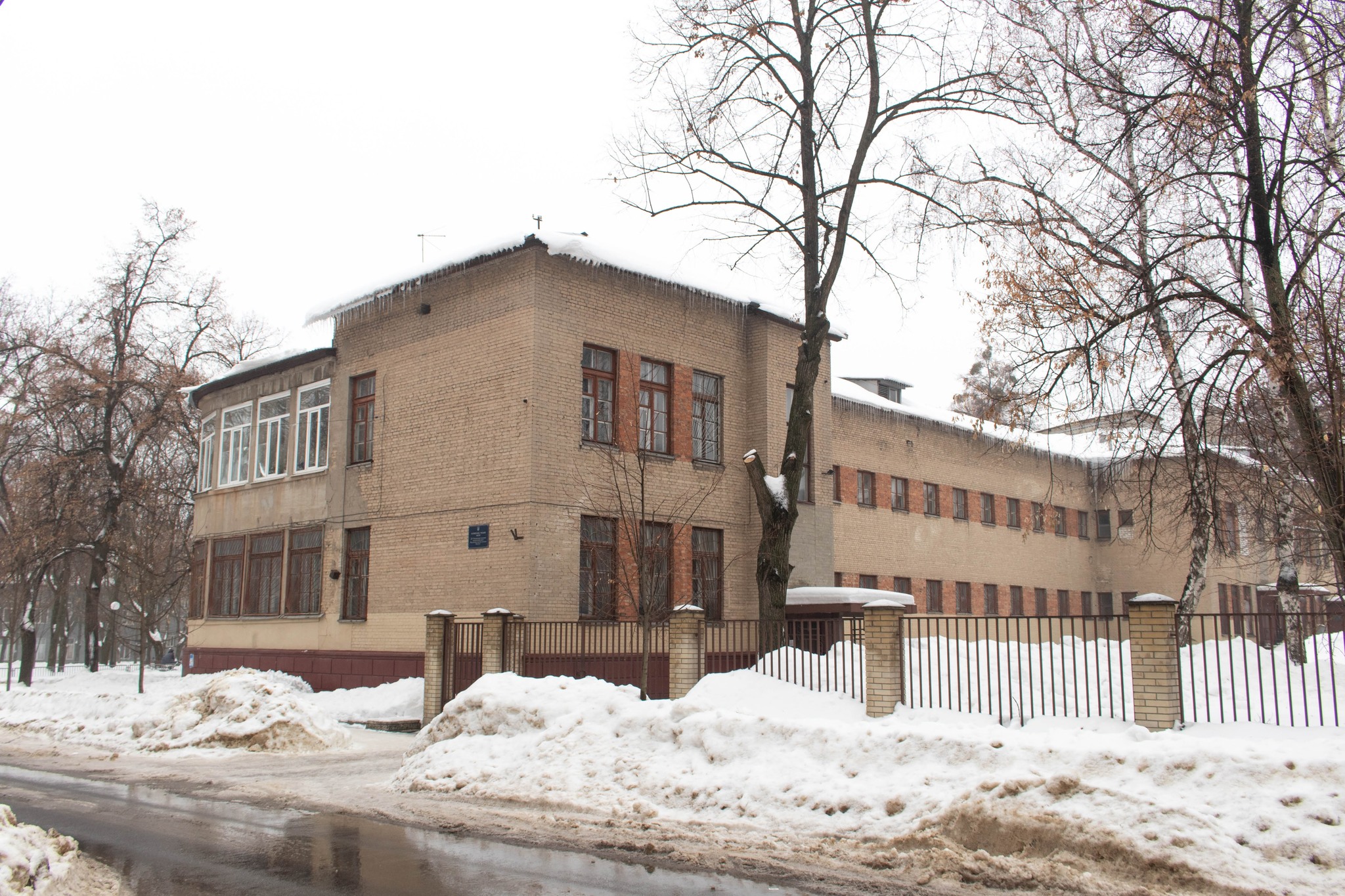
This former kindergarten with crèches now houses the Kharkiv Institute of the MAUP.
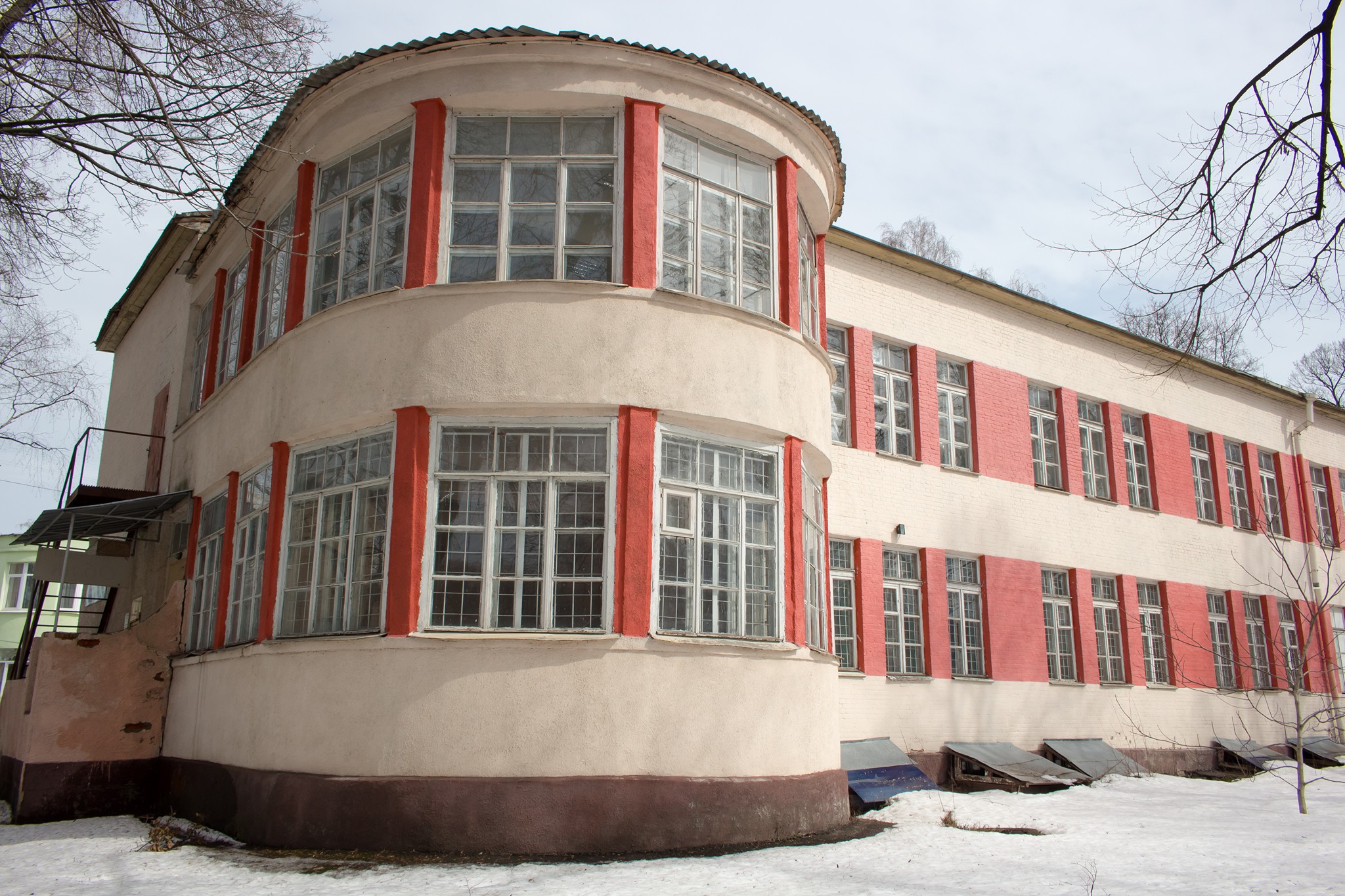
In general, in the constructivist-style buildings of the Kharkiv Tractor Plant from the 1930s to the early 1930s, the bands of red brick between the windows were practically the only decorative element.
The layout of the houses was designed to maximize sunlight and account for wind patterns. Although the housing was specifically built near the tractor factory to save commuting time, the neighborhoods were separated from it by a 500-meter-wide strip of greenery intended to “filter” emissions from the KhTZ. One of the district’s main innovations was the “row” housing development, now commonplace, in which the houses were oriented with their ends perpendicular to the street, with large gaps between them. This development layout was a rather bold idea that spread to projects for socialist cities built alongside new Soviet factories.
The “row” layout improved air circulation between buildings, reduced noise, and freed up a significant amount of space for landscaping (up to 30%). This was a truly unusual solution, opposing the customary, solid block development where buildings were arranged closely together in a “wall,” forming an enclosed courtyard. The stagnant air in such neighborhoods, during the era of coal and wood heating and the lack of sewage systems, was blamed for the deterioration of residents’ health—and there was a rational basis for this. Apparently, the KhTZ hospital complex was built in the far southern part of the district for this very reason—to maximize the distance from the factory. The more modern 25th Hospital was established in the 1950s, closer to the heart of the district.
However, there were exceptions to the “row” layout. For the elite of the Kharkiv Tractor Plant—its engineering and technical staff—a massive building was constructed between 1930 and 1933 Myru Street, 20, complete with all amenities, shops, a tailor’s shop, a library, and so on (architect Yevhen Lymar). Together with the postwar building at Biblyka Street, 19, they occupy an entire city block.
All residential buildings, dining halls, kindergartens and schools within the housing complexes were required to be connected at the second-floor level by heated, covered walkways.
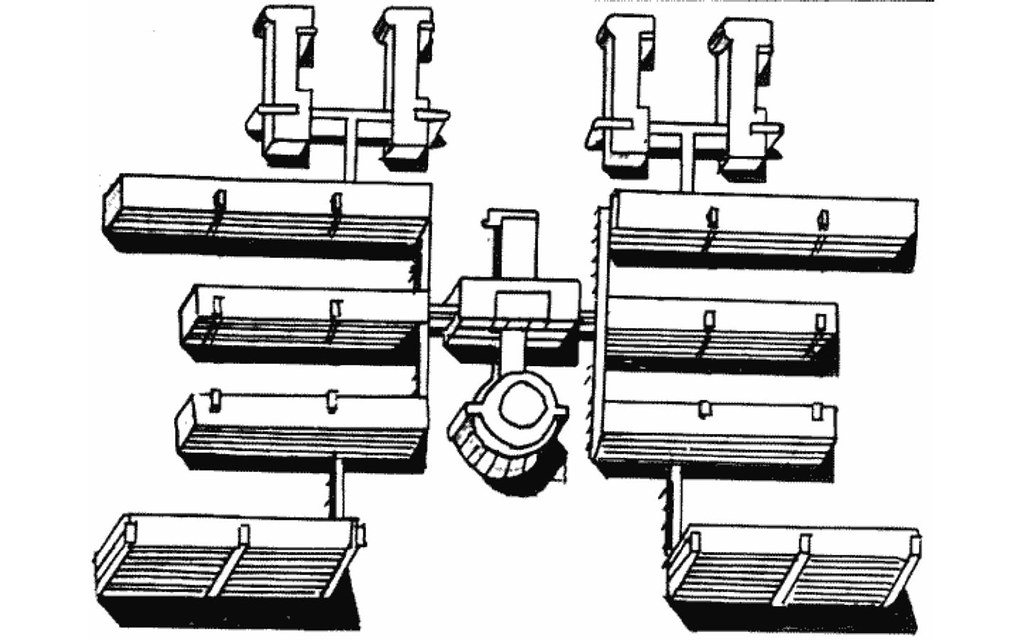
In theory, parents wouldn’t have to spend time getting dressed in cold or rainy weather just to take their child to daycare and the dining hall.
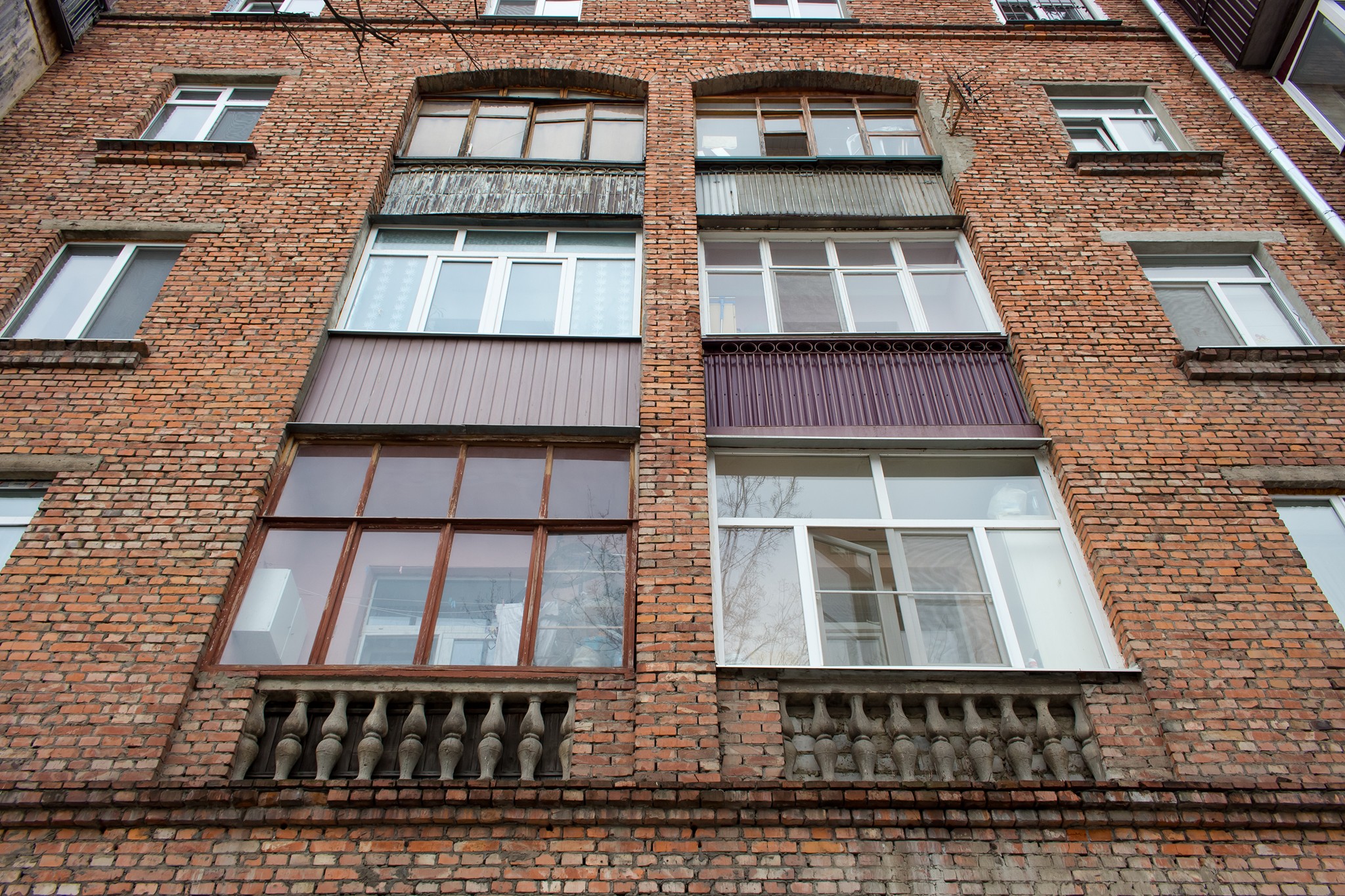
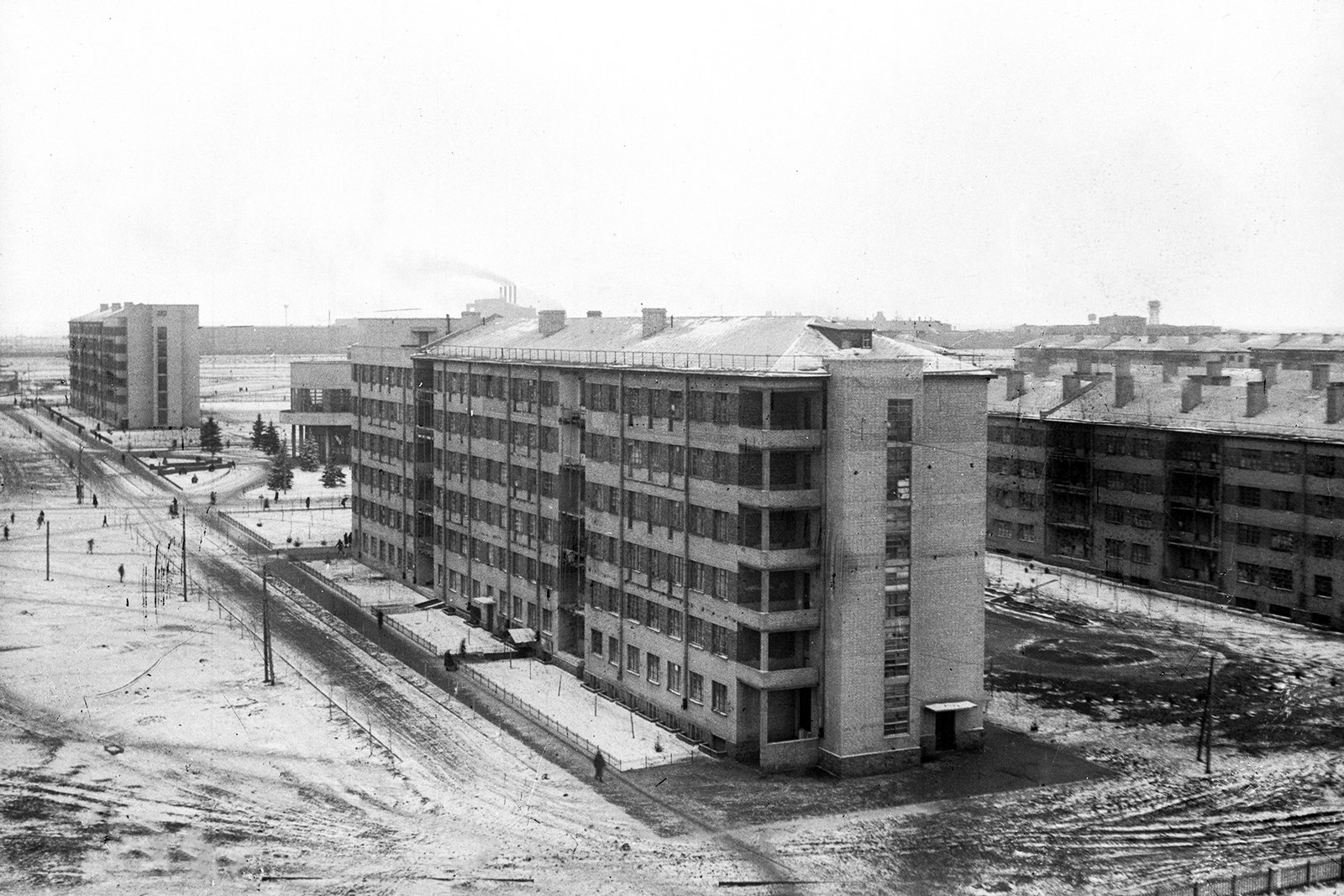
Single workers lived in six-story communal apartment buildings (known as “Titanics” because of their massive, imposing appearance), with shared facilities on each floor.
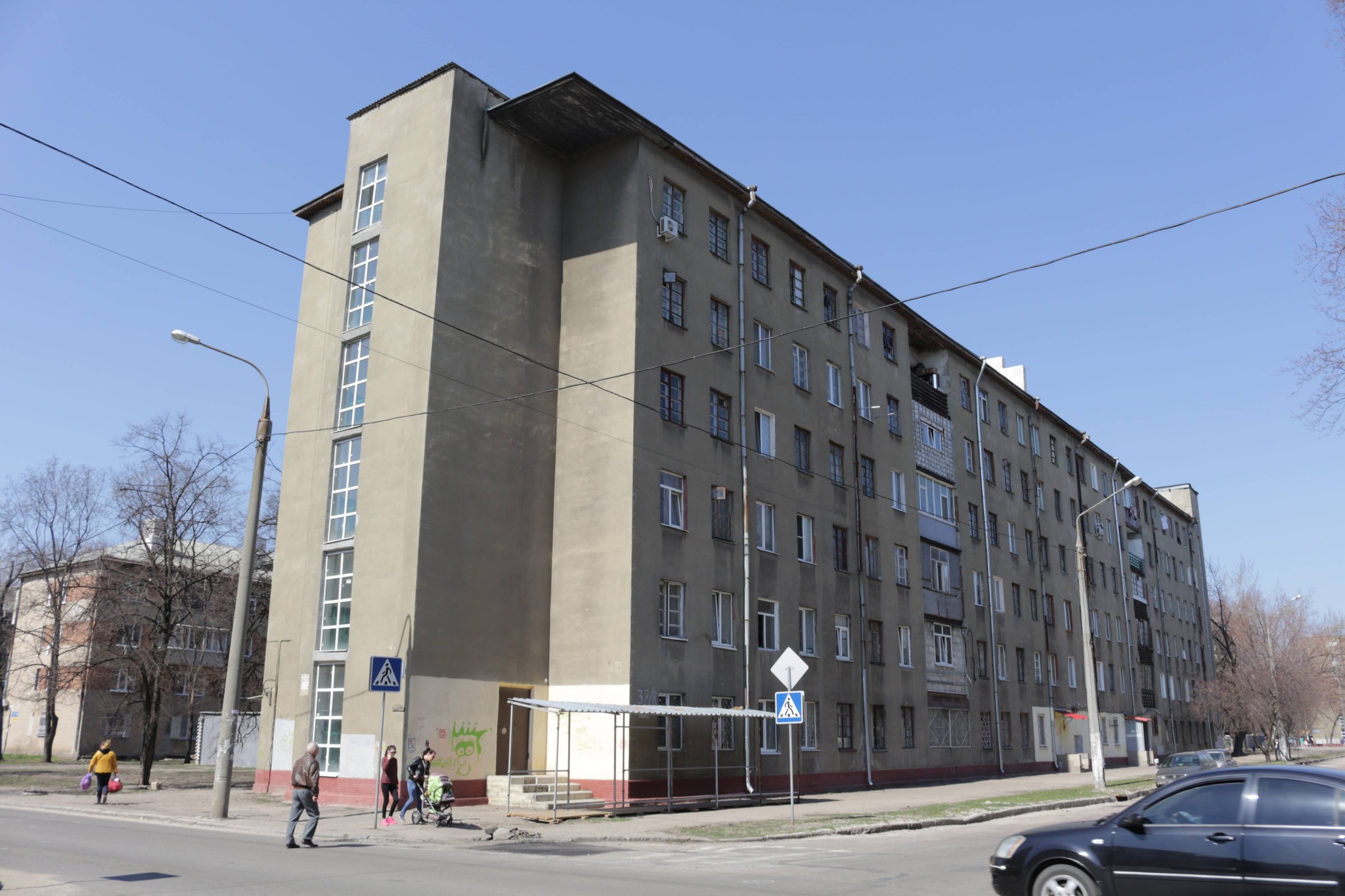
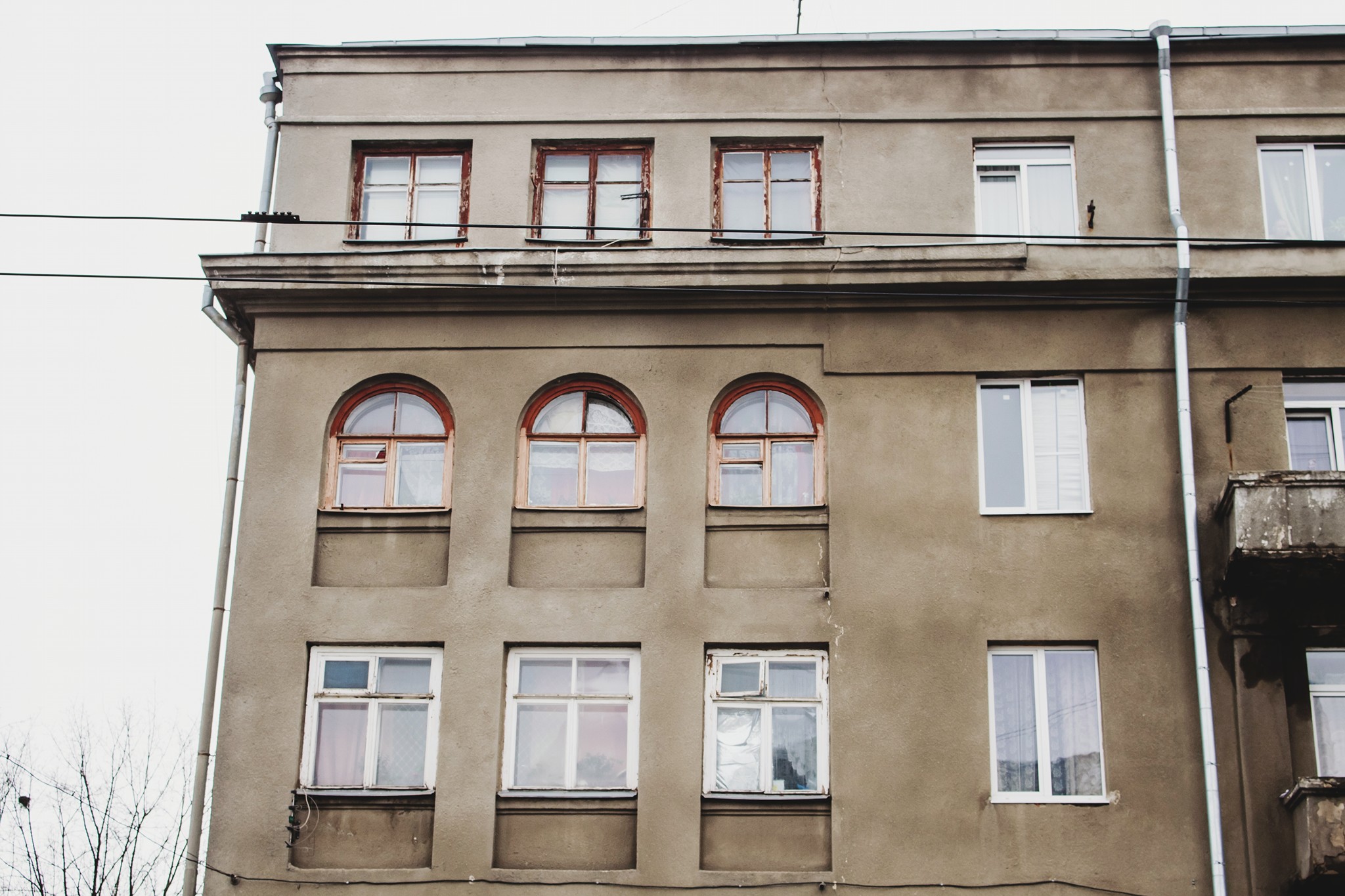
One of the “Titanics” at Myru Street, 14. Notice the windows near the corner of the building, beneath which you can see metal sheets and new brickwork.
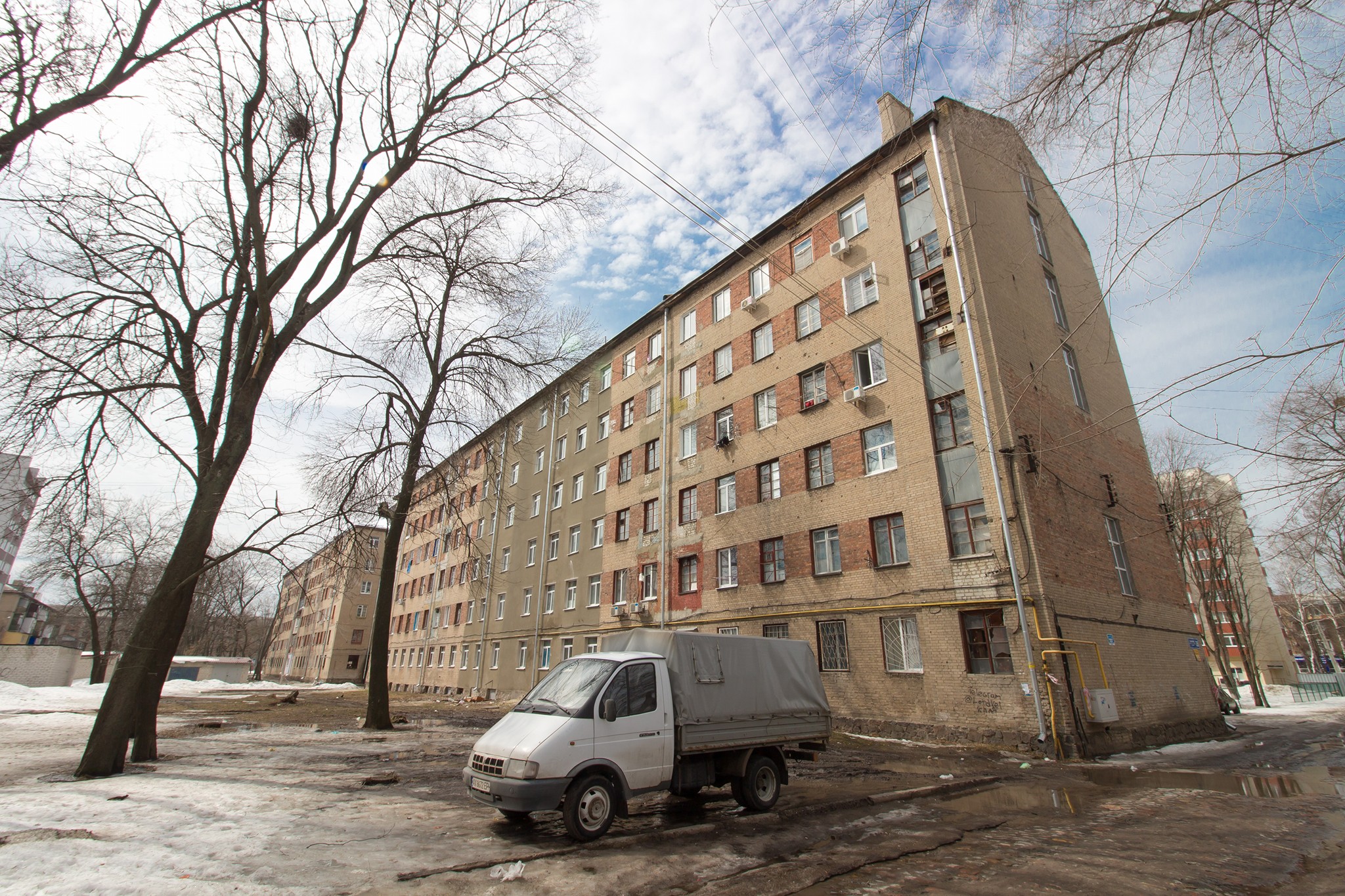
Archival photos from the 1930s show what a similar “Titanic” building looked like—the house at Biblyka Street, 9. In a similar spot, at the corner of the building, there used to be unglazed verandas, which were later bricked up as well. Today, most of these “Titanics” are in extremely dilapidated condition, but people continue to live in their communal apartments.
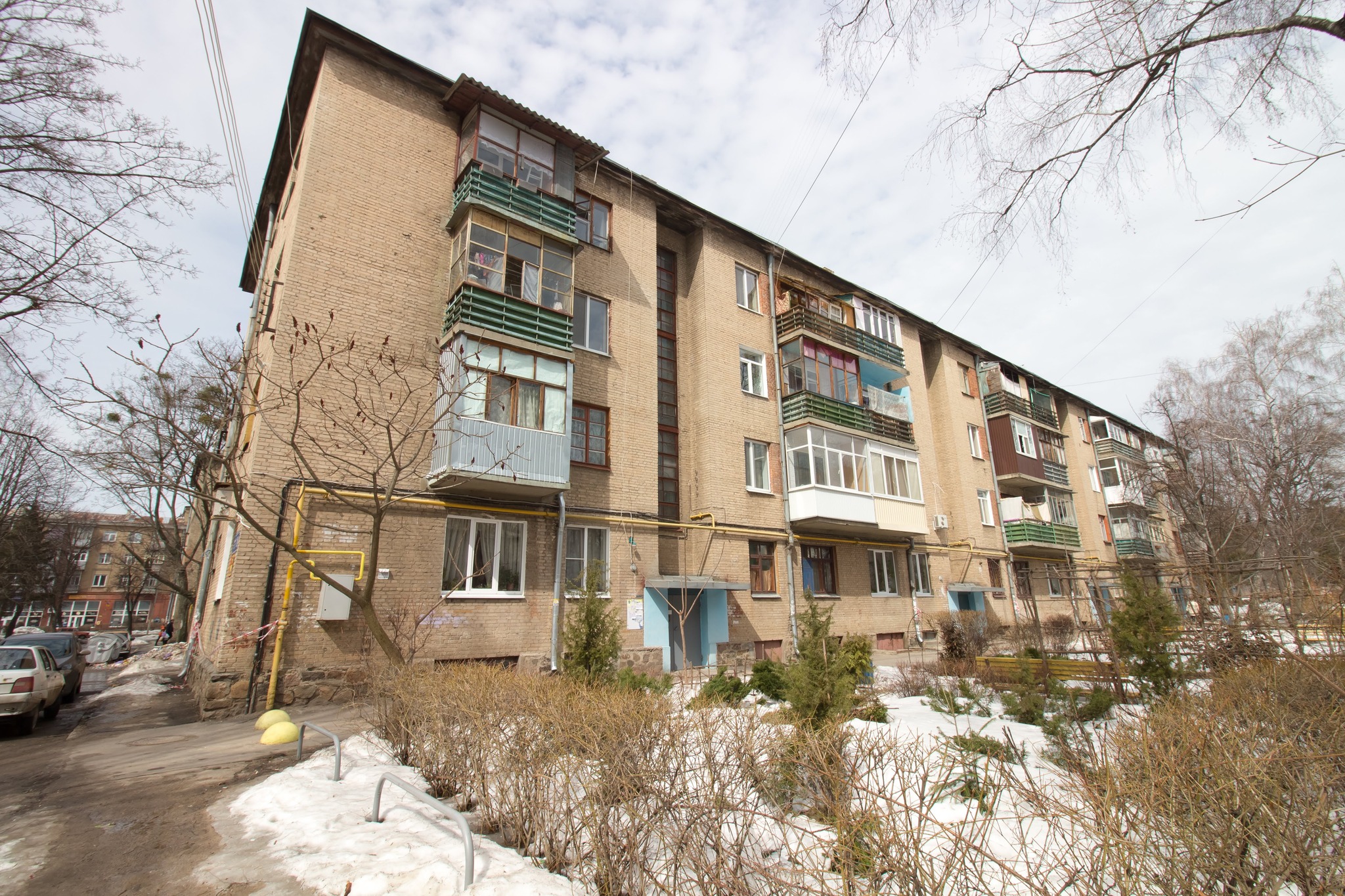
After starting families, the workers were required to move from the “Titanics” to more comfortable four-story buildings.
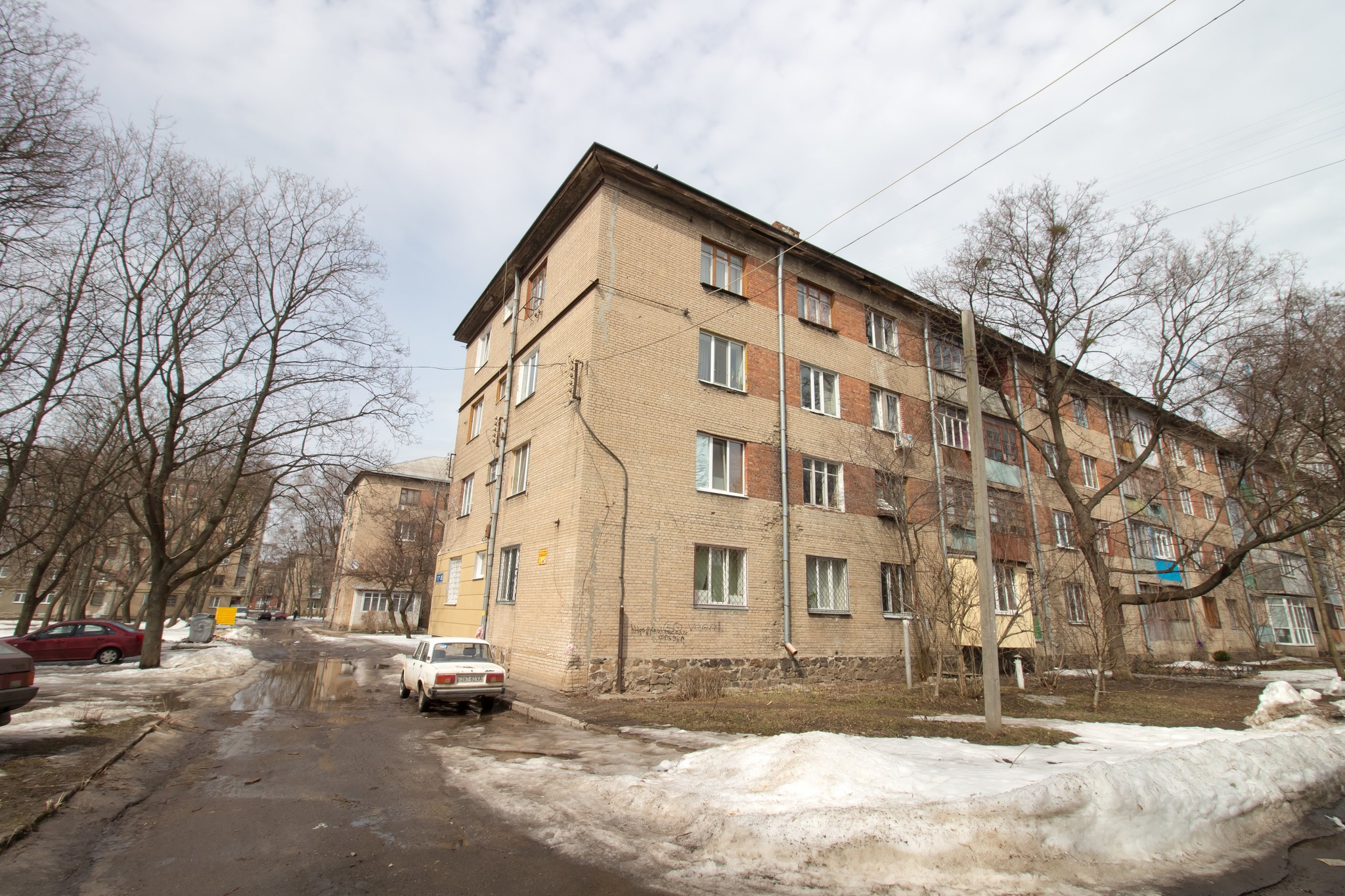
For unknown reasons they were called “American-style” buildings; the apartments in these buildings had 2.7-meter-high ceilings, bathrooms, and stove heating, but still lacked kitchens.
Incidentally, the KhTZ settlement is one of the earliest examples of the use of white silicate brick in the Kharkiv city, dating back to the early 1930s. Although individual buildings made of this material appeared in Kharkiv as early as the beginning of the 20th century, it wasn’t until after World War II that it began to be used on a truly large scale.
The KhTZ factory invested heavily in improving the neighborhood; some of the roads were paved with cobblestones, which can still be seen today. Near the building at Biblyka Street, 21 another interesting artifact has survived: an “American” fire hydrant.
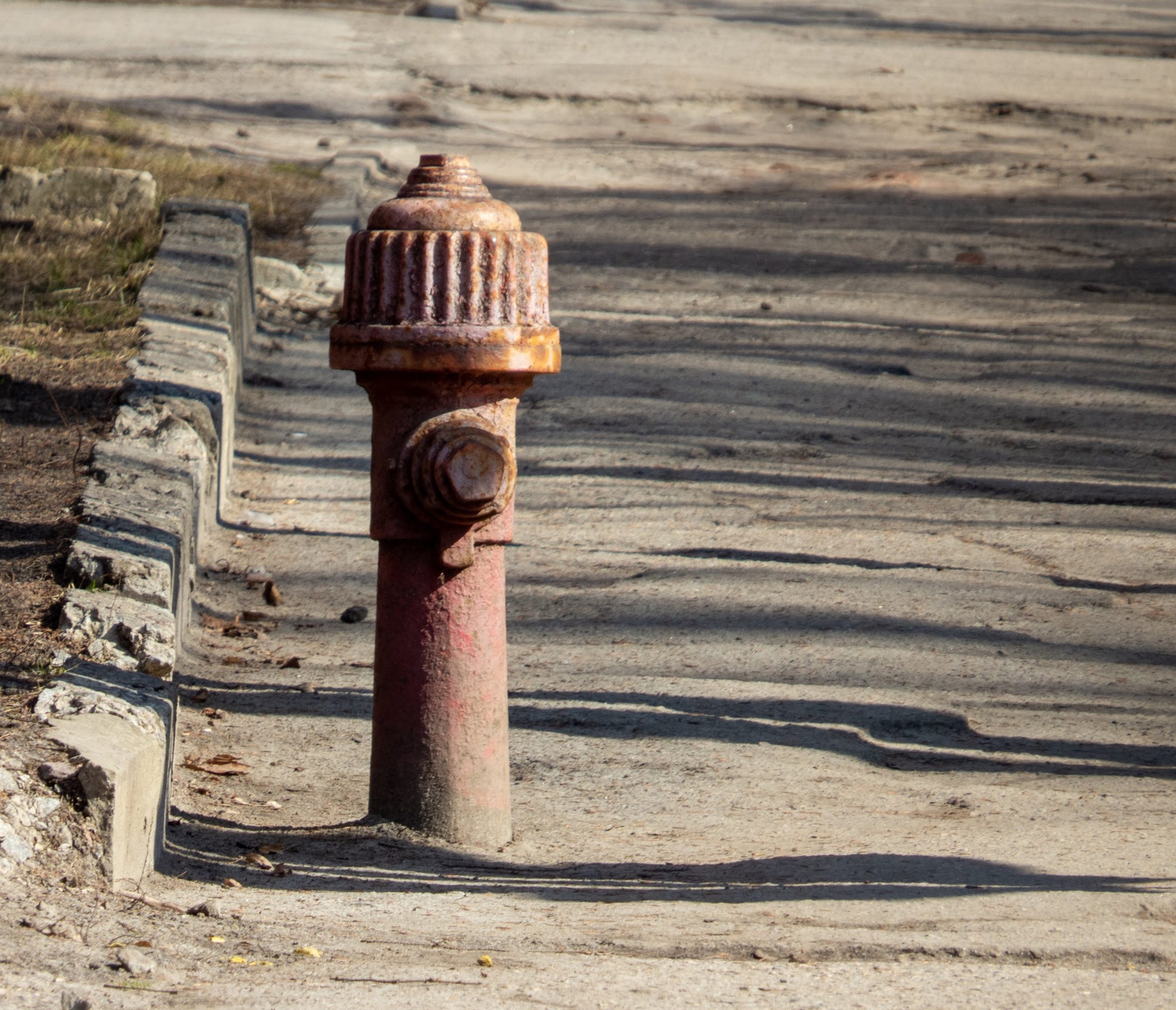
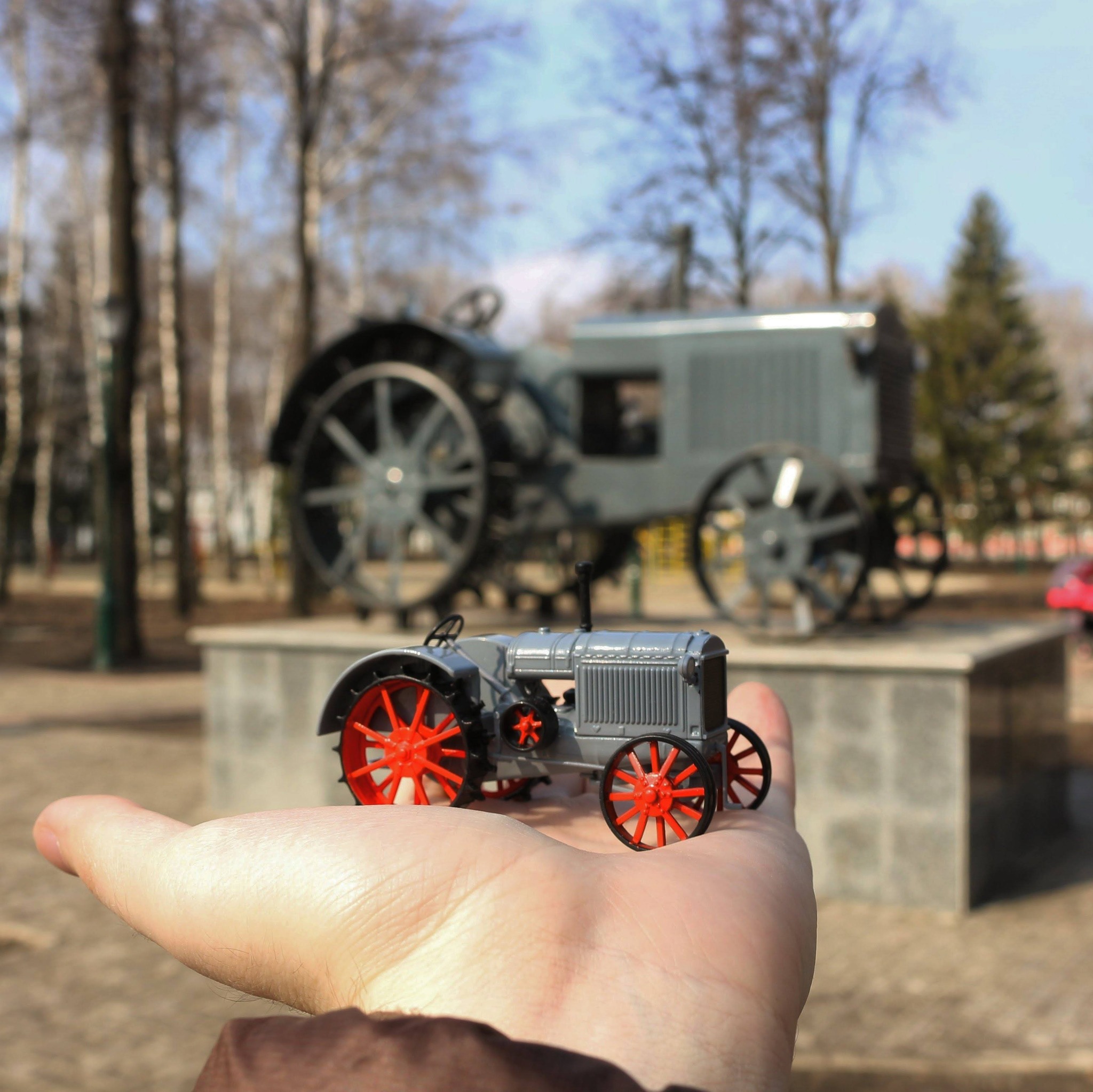
Of course, it wasn’t the Americans who built the residential neighborhood, although they did participate in the launch of the KhTZ plant itself, which was modeled after an American facility. The first tractor was a licensed version of the McCormick-Deering 15-30, manufactured by International Harvester—a monument to it stands in Traktorozavodsʹkyy Skver.
Not all of the ideas for the KhTZ socialist city project were implemented. For instance, the walkways connecting the buildings were never built, even though recesses had been cut into the facades for them. Historians say that the main reason was not only the complexity of the project, but also the fact that a significant portion of the state’s resources had been redirected toward the development of the military-industrial complex. There were simply no funds left for complex, utopian socialist cities amid the intense industrialization and militarization of the economy in the 1930s. Moreover, collective living clearly did not align with reality—people quickly began installing kitchens in apartments where none had existed originally. However, the idea of “autonomizing” neighborhoods—complete with their own clubs, kindergartens, clinics, and schools—from pre-war socialist cities carried over into mass post-war Soviet housing development, where people could go months without traveling to the city center, since everything they needed was within walking distance.
In fact, construction of the socialist city proceeded according to the original plan only until 1932. Instead of the planned 36 microdistricts, only four were fully completed, and two others were only partially finished. These six pre-war blocks are included in the current protected zone of the KhTZ socialist city as a landmark to urban planning and architecture.
After 1932, the KhTZ plant itself took charge of construction and urban development, this time based on more traditional and custom designs. Notable among these are the building of the Industrial-Pedagogical Technical School, School No. 119, and School No. 88, as well as the house at Myru Street, 48/1. Their style transitions smoothly from Constructivist to early forms of socialist classicism.

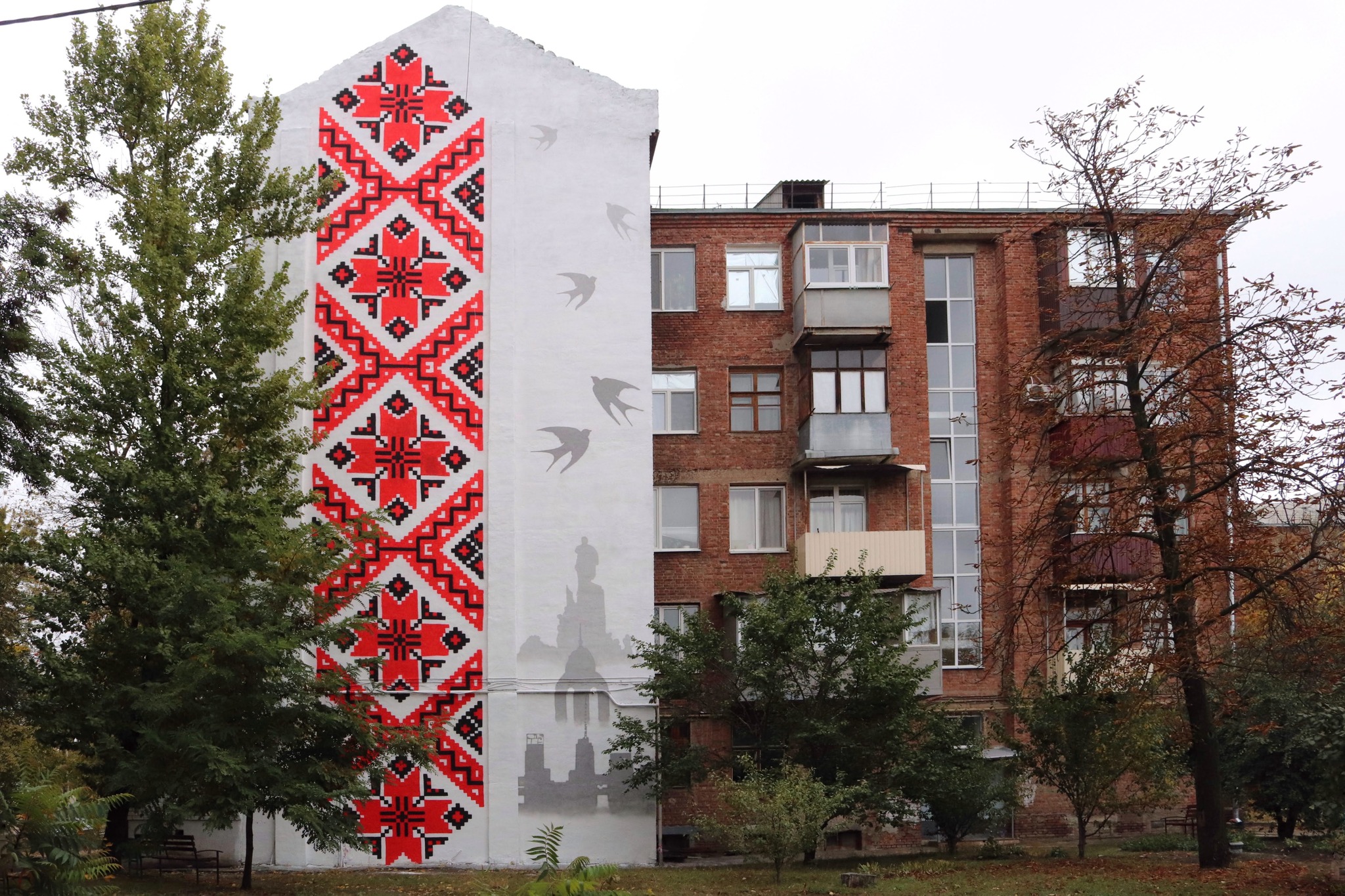
Unfortunately, the building at Myru Street, 48/1 was heavily overbuilt with oversized “tsar balconies” in the 1990s, and it is now difficult to tell what the original facade looked like. In 2019, it was adorned with a mural depicting a vyshyvanka.
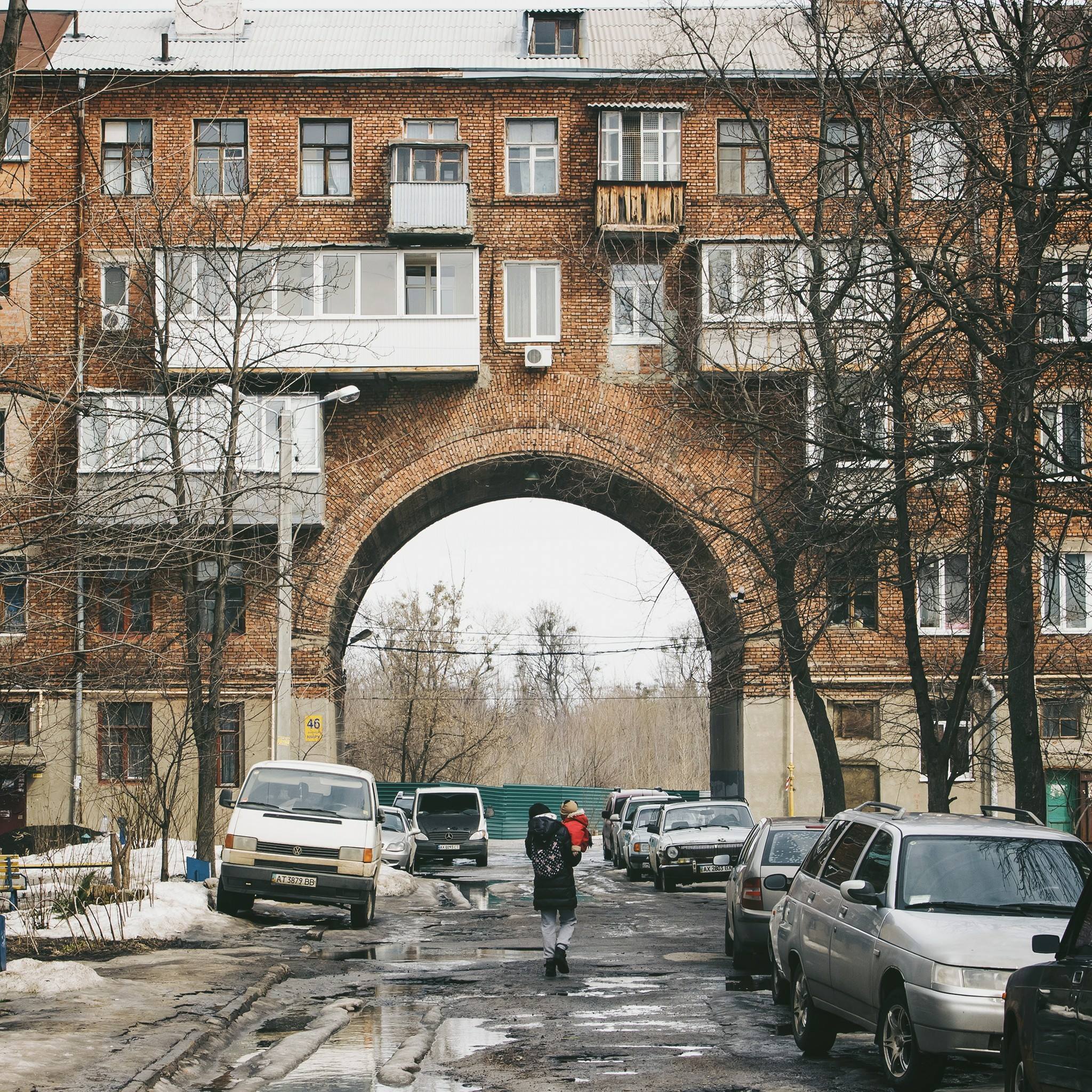
Its neighbor, built around the same time in the 1930s, is the building with the huge arch at Myru Street, 46.
In 1939, the population of Traktorobud stood at 65,000 out of a planned 113,000. At the same time, a significant portion of the workers continued to live in temporary barracks, clusters of which can be seen in a 1941 photograph taken south of the residential complexes.
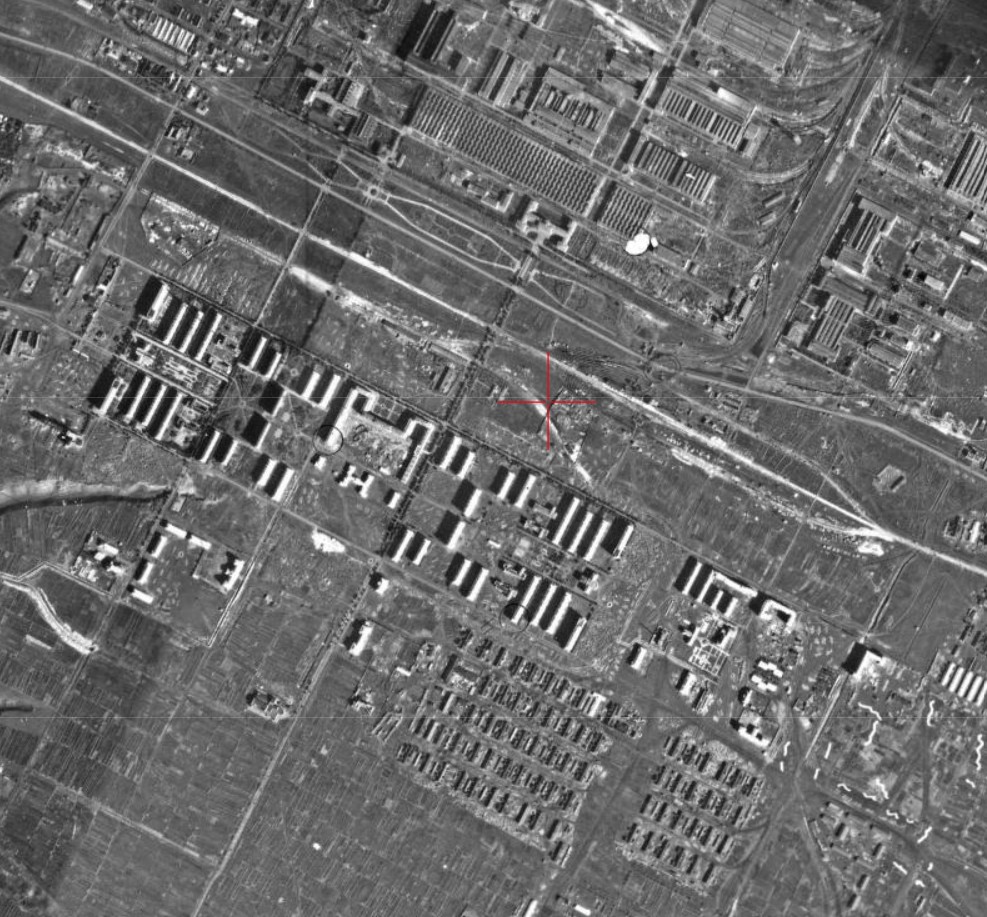
A significant portion of the 97 structures built in the KhTZ neighborhood were destroyed or damaged during WWII.
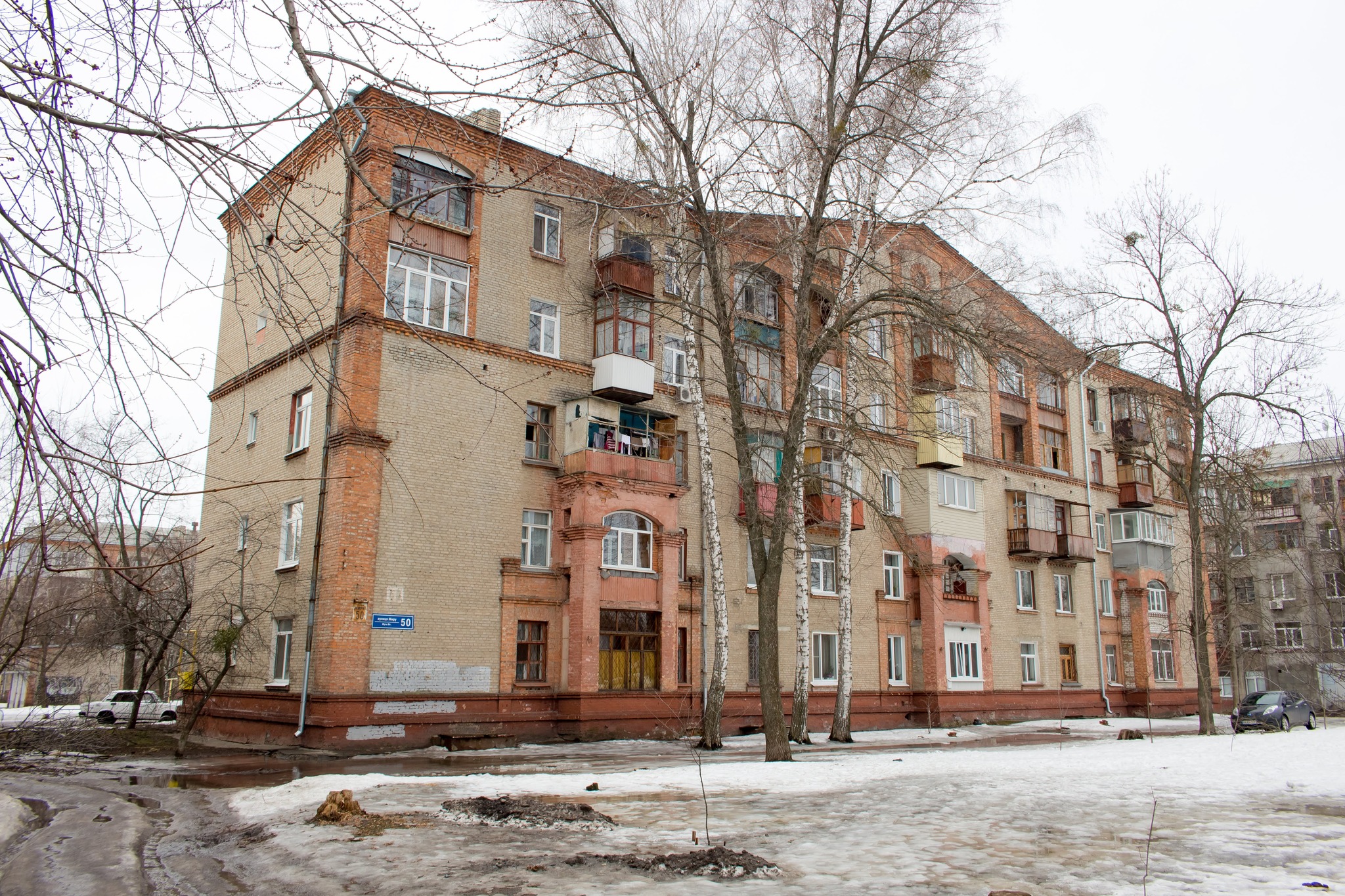
Post-WWII development in the area proceeded at a more rapid pace.
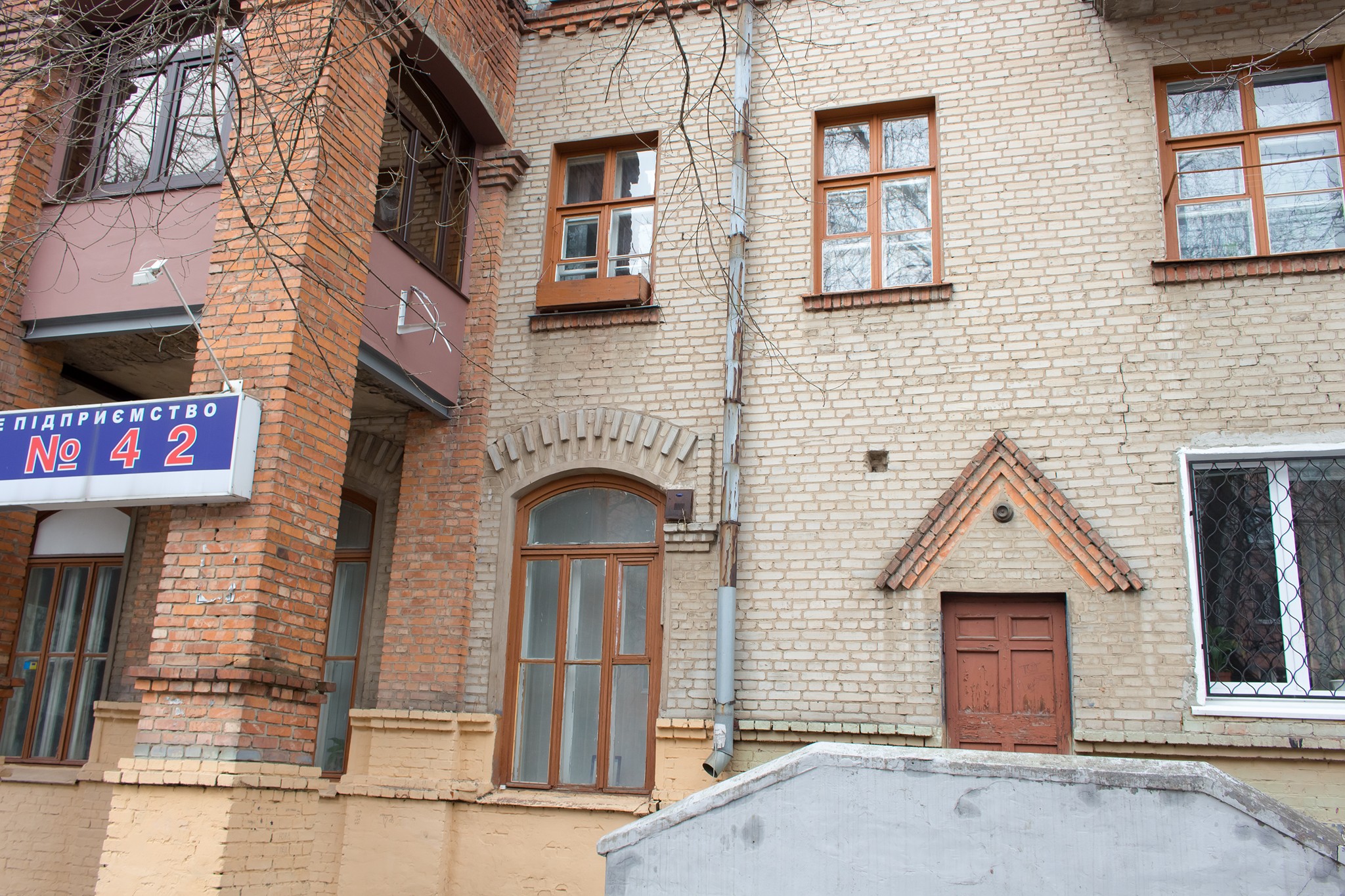
To save money, the houses were built in a simplified socialist classicism style with modest “brick” detailing and no plaster.
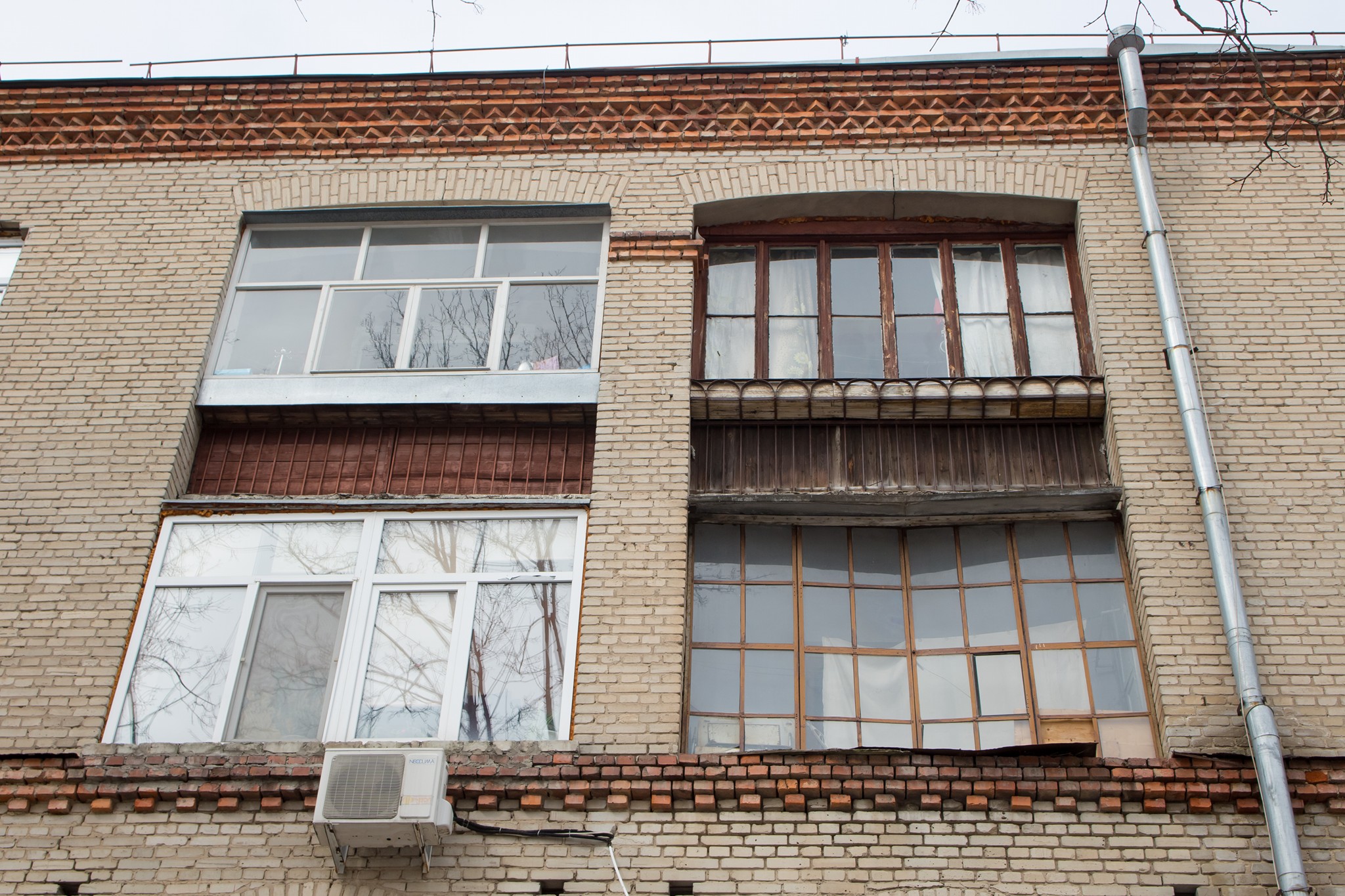
The architects behind the postwar development projects were A. Motorin and V. Montlevich.
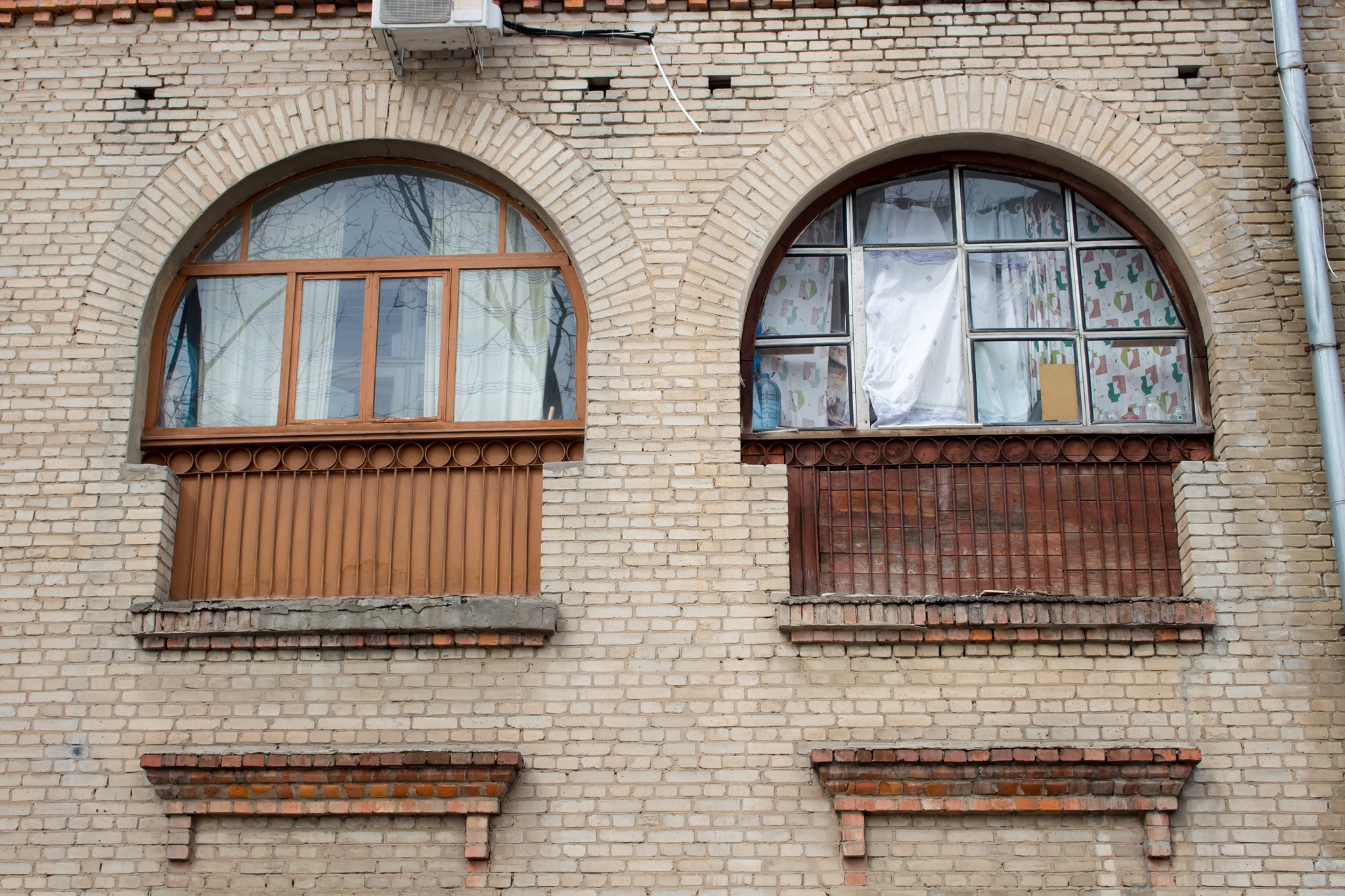
Most of these 4- to 5-story buildings were constructed between 1949 and 1954.
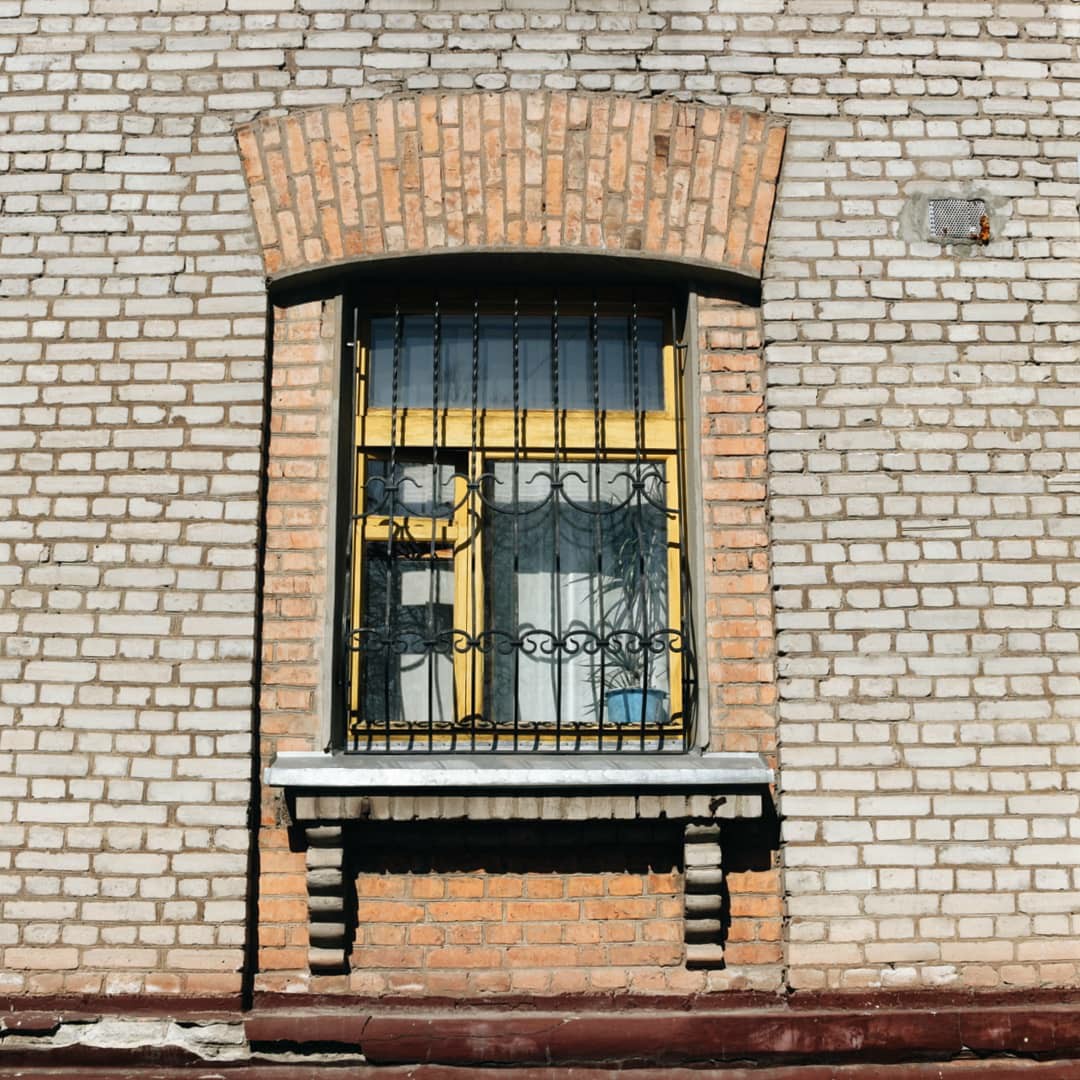
A rare example of an unglazed balcony.

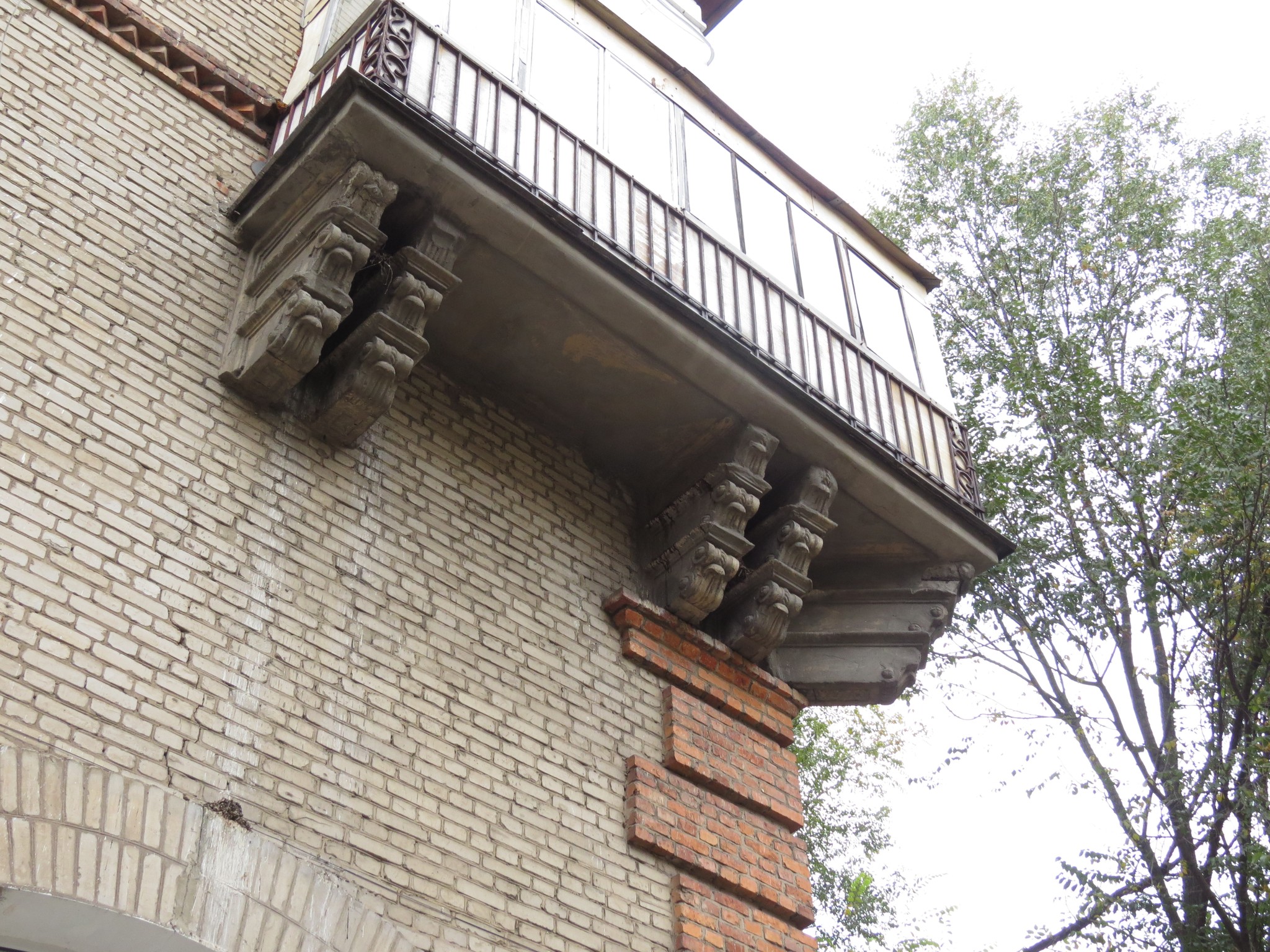
The “cast” balcony supports, with their intricate patterns, clearly stand out against the “bare” brick walls—they were a mass-produced element.
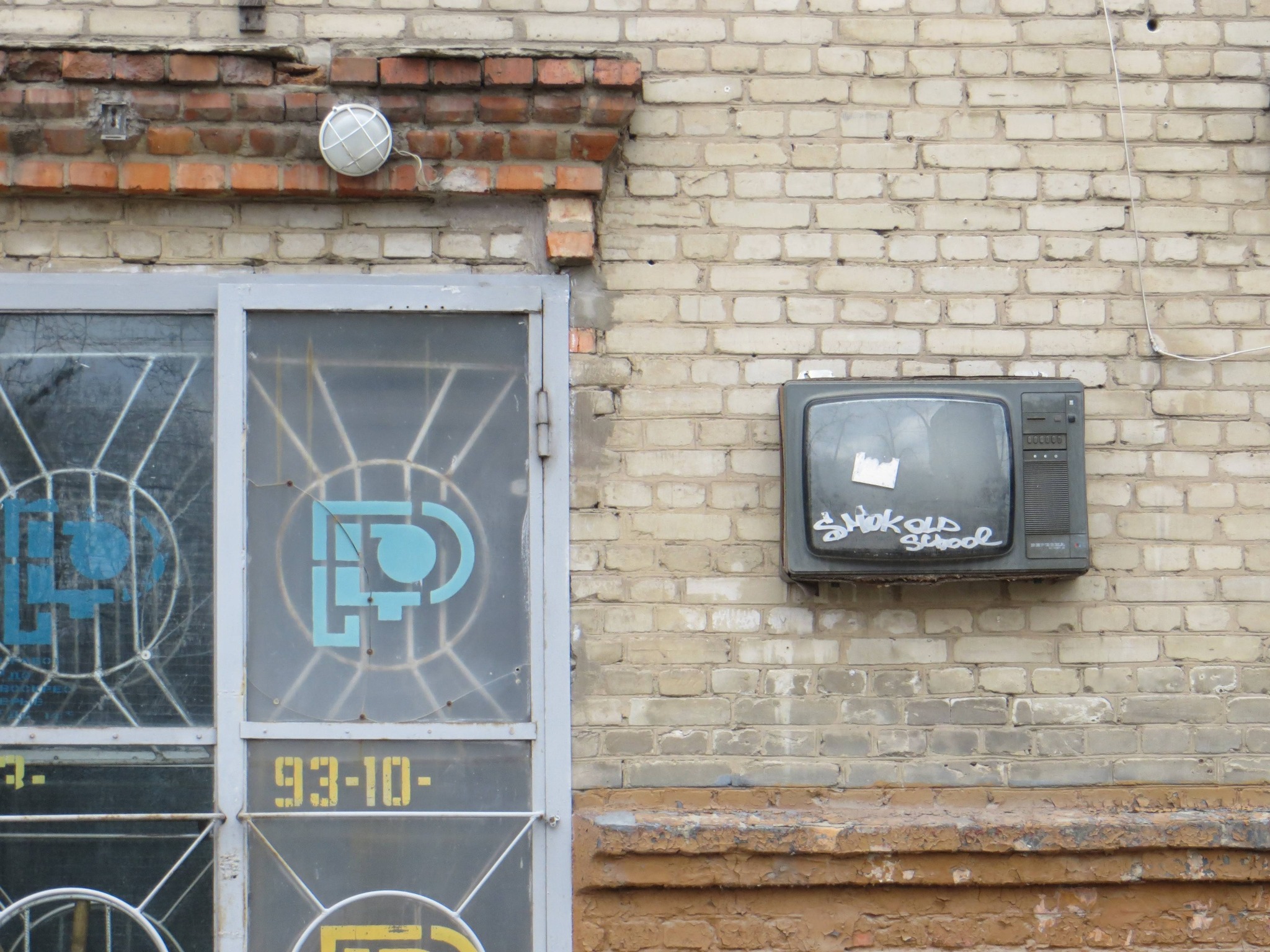
Here’s an interesting detail: an advertisement for a TV and radio repair shop in the shape of a television set, which could still be seen on the wall of one of the buildings in 2013. You could also find outdoor thermometers on walls here and there back then.
Starting in 1961, the 1-464 series of five-story large-panel apartment buildings appeared at the KhTZ neighborhood—the first of their kind in Kharkiv. By 1976, a total of 864 such buildings had been constructed in the city. In 1966–68, the KhTZ Cultural Center, featuring a 1,200-seat auditorium, was built in Traktorozavodsʹkyy Skver (standard design by architects F. Kovalenko, E. Belman, and I. Samokhvalov).
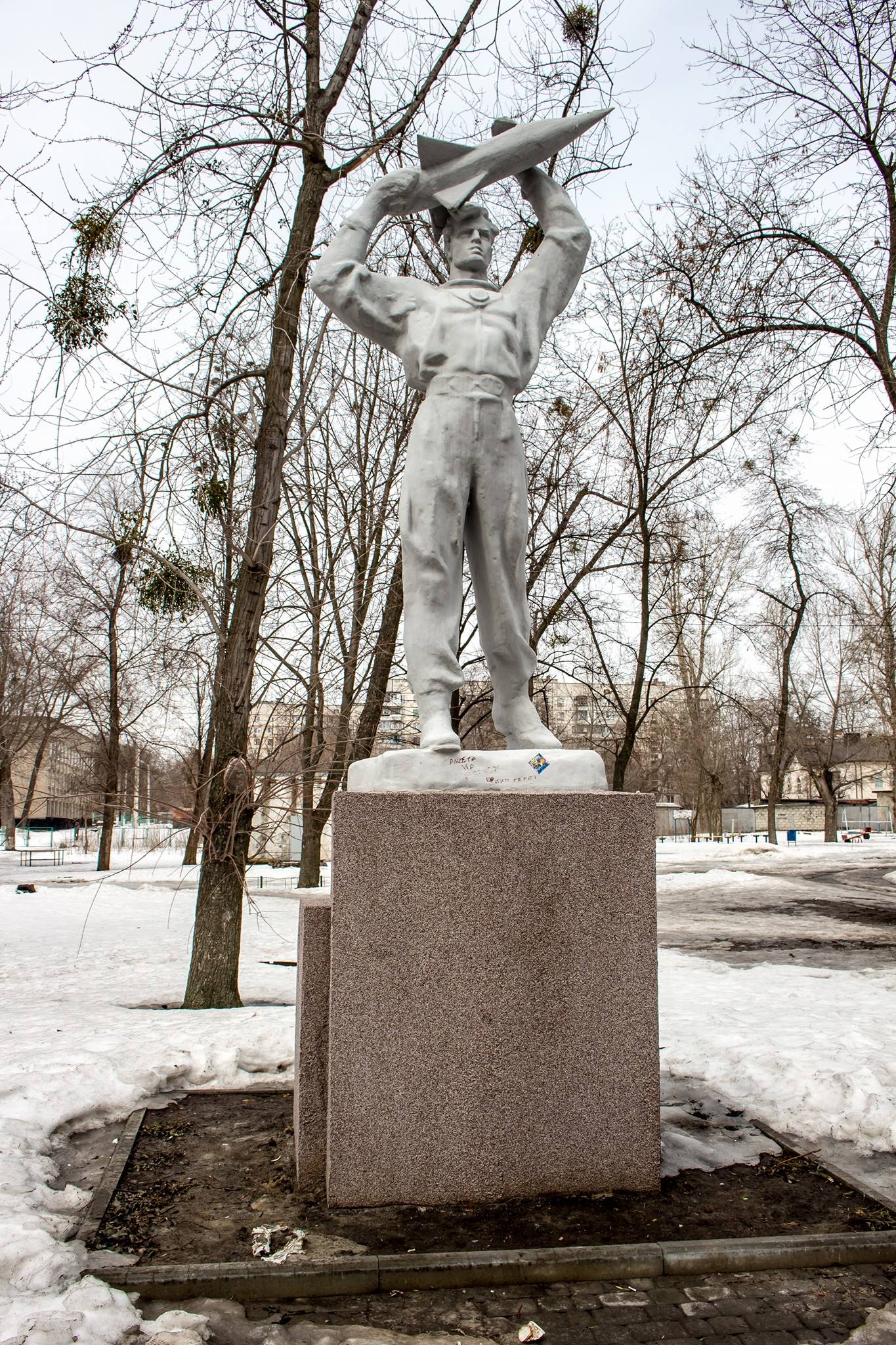
The sculpture of a cosmonaut with a rocket, located between buildings 6 and 8 on 12 April Street, was installed around the early 1960s, when Birobidzhan Street was renamed 12 April Street in honor of Yuri Gagarin’s flight. Over time, the cosmonaut “lost” his rocket, but the sculpture was restored in the second half of the 2010s.
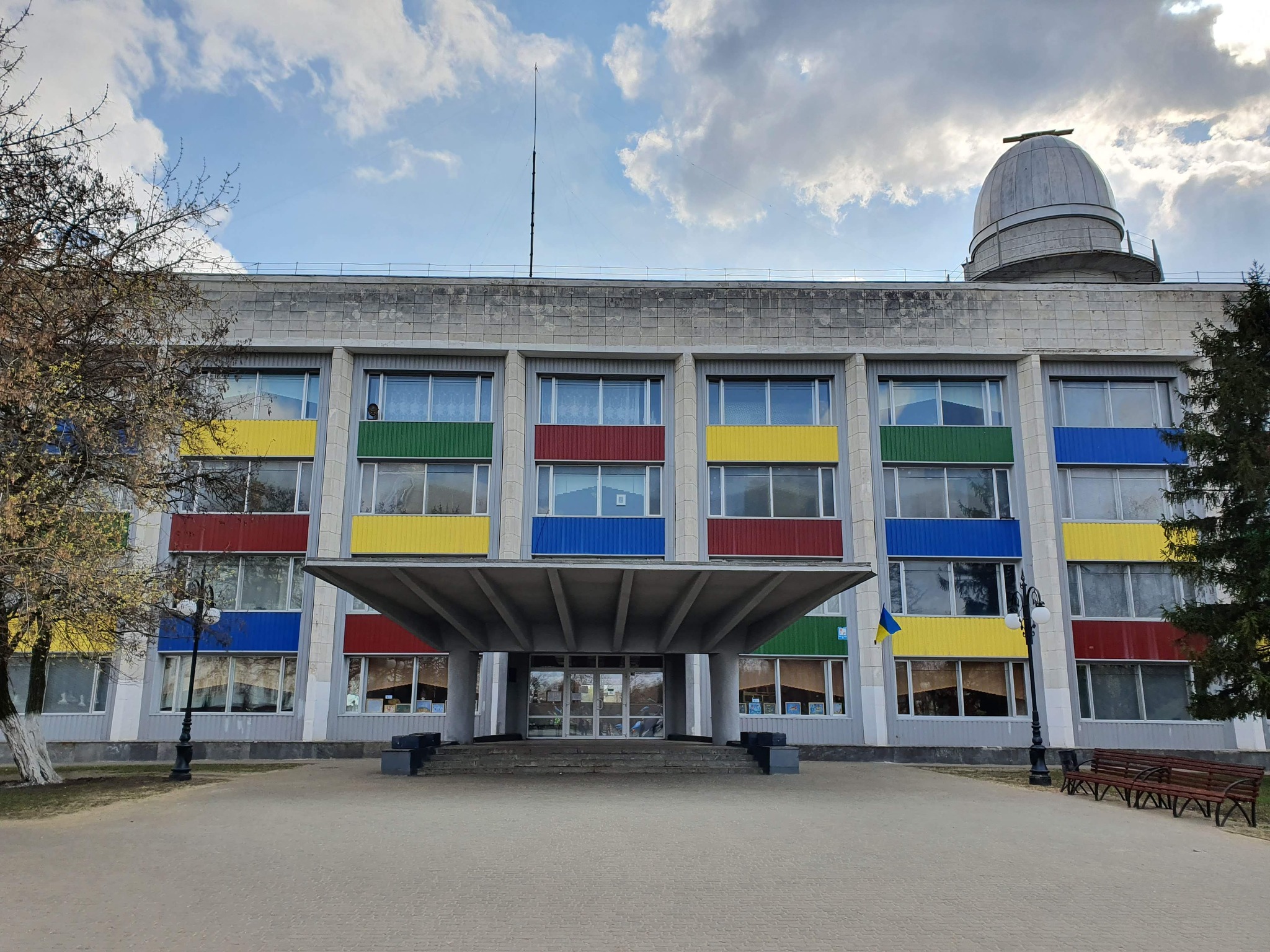
In 1972, the Palace of Pioneers, featuring a dome-shaped observatory, was built (architects B. Zeitlin and G. Rakitskaya). Today, it houses the “Istok” Palace of Children’s and Youth Creativity. The building is also notable for its enormous “overhanging” canopy.
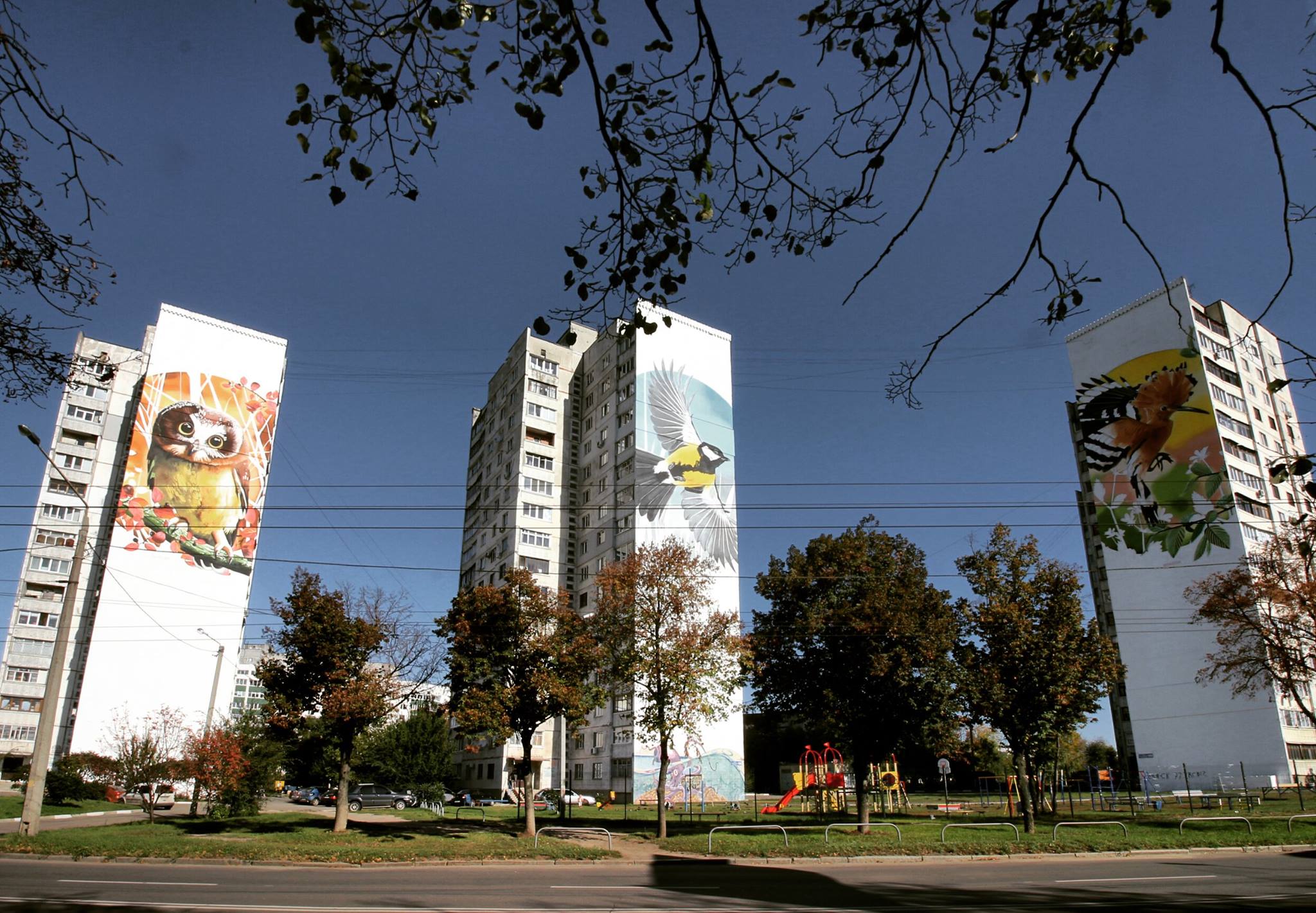
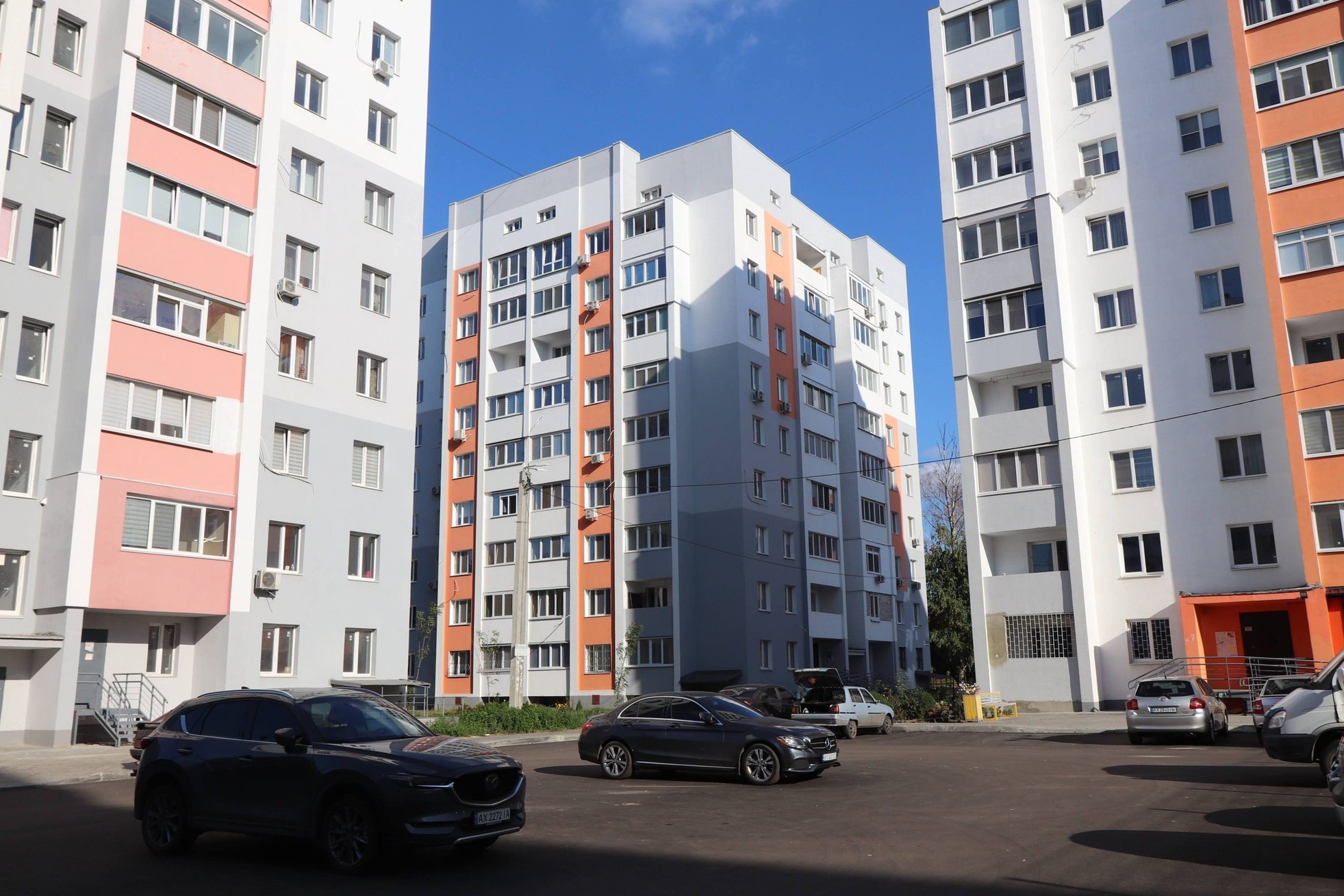
In the 1970s and 1980s, residential neighborhoods consisting of 12- and 16-story buildings began to appear in KhTZ.
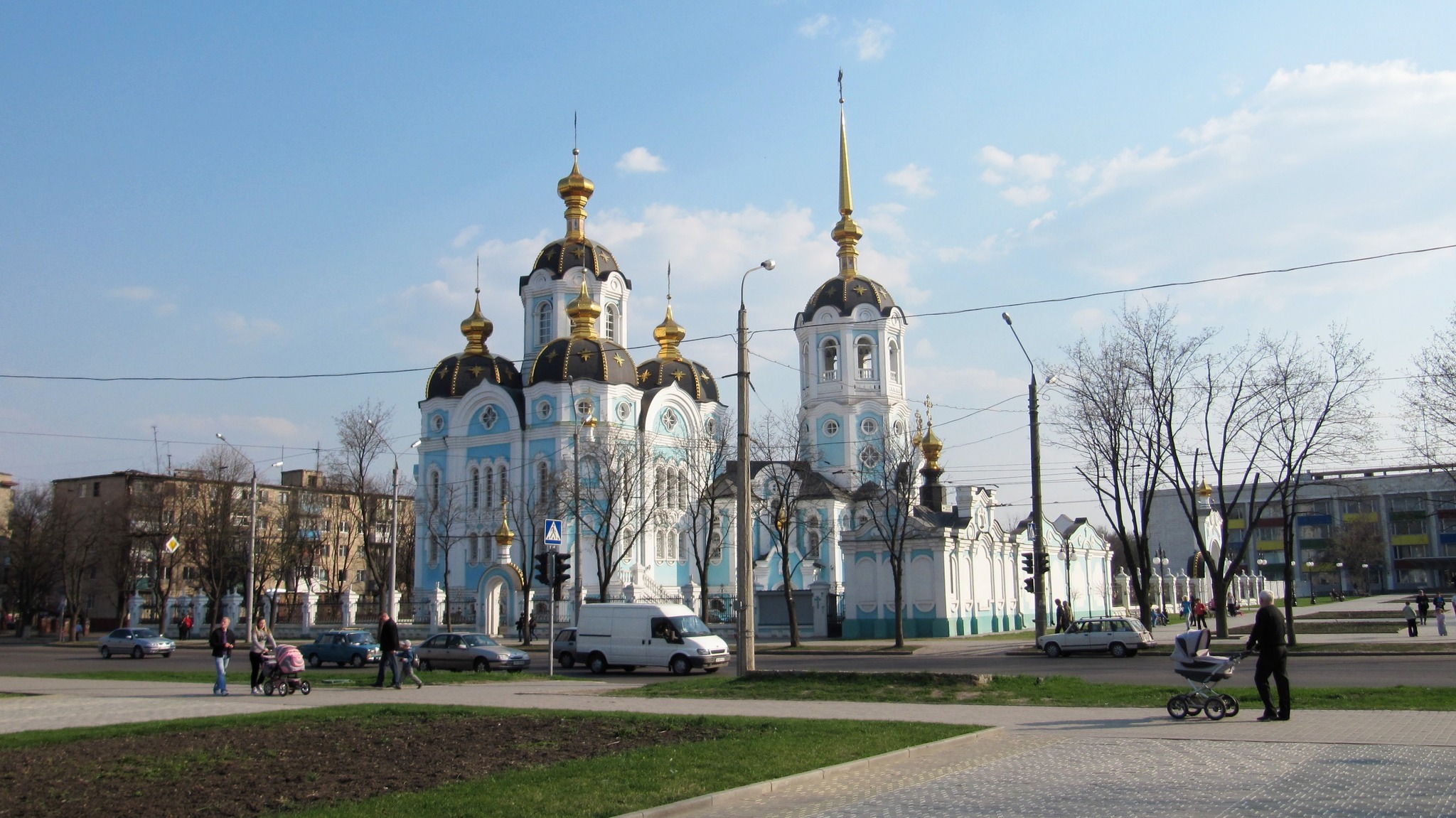
Among the most recent landmarks, the Church of St. Alexander the Martyr is particularly noteworthy; it was designed in a contemporary interpretation of Ukrainian Baroque (architects P. Chichelnitsky, Y. Shkadovsky, and A. Kireev, 2004).
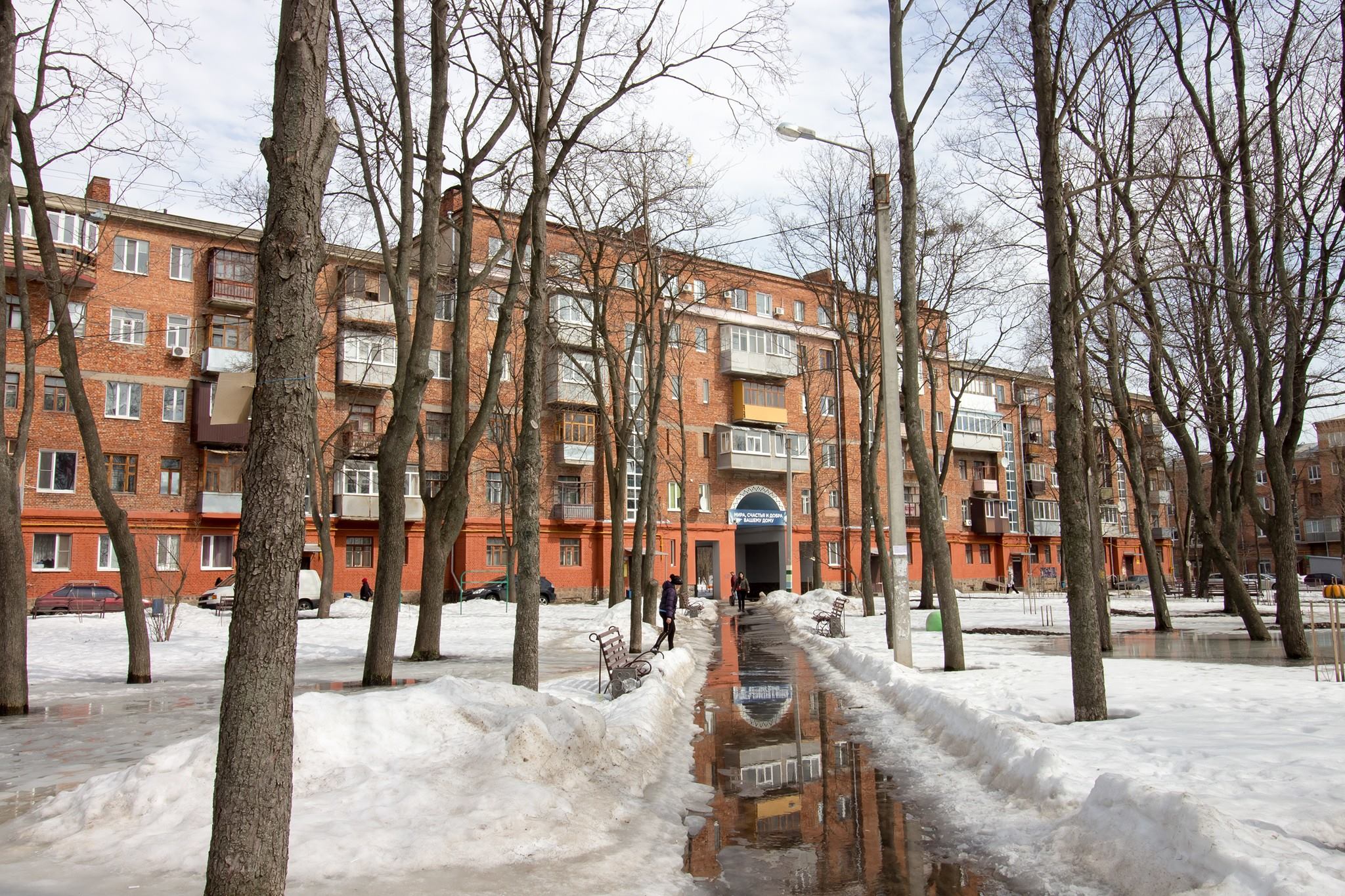
In the 2010s, north of Mira Street, half of the greenbelt that had protected the neighborhood from the factory’s emissions was cut to make way for the construction of four blocks of the “Mir” residential complex. The only “consolation” is that by that time, the KhTZ factory was producing far fewer vehicles, and its emissions were not as heavy as they had been before…
It is interesting to note that the concept of elevated walkways connecting multiple buildings has been partially implemented in other countries. For example, in some northern cities in the United States and Canada, people can walk several blocks without stepping outside in the cold thanks to these skyways. In China, it has become a common sight to see factories connected by walkways to offices, dormitories, and cafeterias for workers, who can go months without stepping outside.
Many residential buildings in the KhTZ district have been damaged by repeated Russian missile and drone strikes during Russia’s full-scale invasion of Ukraine, which began in 2022.

- Danylevs’koho Street, 19 - 13.10.2026
- Debunking the myth about one of the most famous Kharkiv photos - 12.10.2026
- The Architectural Evolution of the Kharkiv Theater - 26.09.2026