As those who have read the article about the notes of early 20th-century journalists will recall, Kharkiv is the city where, in the words of Crimean columnist Alexander Grigoryevich Bezgin, “the chief fat Mongol can express himself in both French and German, with a sprinkling of English phrases.”
Indeed, at that time, people of various nationalities could be seen on our streets. However, Germans, French, Austrians, Latvians, Estonians, Poles, Jews, and others not only lived in our city but also had their own various community organizations. In addition to providing financial assistance to their fellow countrymen, numerous national societies helped people preserve their language and culture.
In this regard, the existence and activities in Kharkiv during the first half of the 20th century of one of our city’s oldest ethnic communities—the Jewish community—is a particularly interesting topic. It is precisely this topic that I would like to touch upon, albeit briefly, in this article. However, given the abundance of documents preserved at the State Archives of the Kharkiv Region, I fully realize that a separate book on this topic is bound to appear in due course.
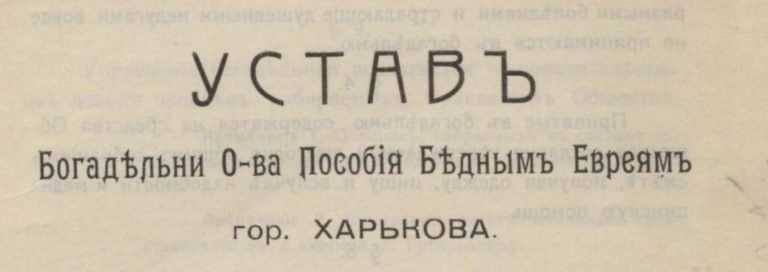
Starting on April 27 (Old Style) 1905, the “Society for the Relief of Poor Jews in the City of Kharkiv” existed in our city.
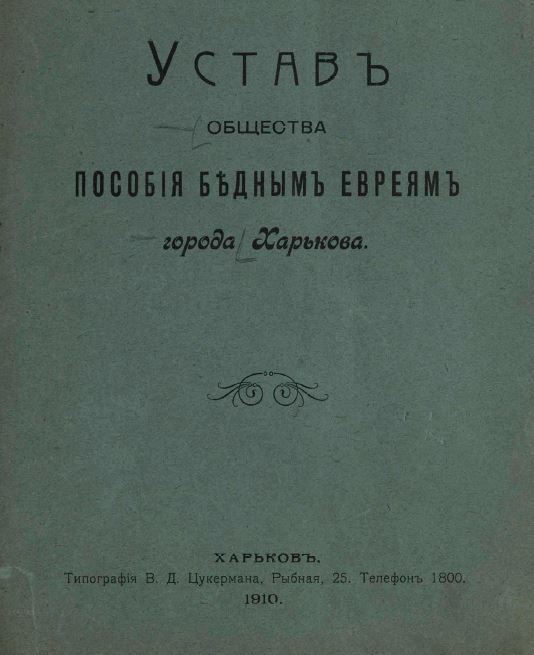
Its founders were:
Rabbi S. B. Epstein, Lev Yakovlevich Rubinstein, Manus Evseevich Volovnik, Nukhim Moiseevich Kompaniets, V. S. Goldberg, Moisey Davidovich Moldavsky, Solomon Iosifovich Dobkin, M. I. Levit, M. D. Ginzburg, L. D. Moldavsky, M. V. Feinberg, K. T. Gotman, M. L. Khatskel, M. Broido, T. S. Babus, L. Ortenberg, G. Ya. Buras, Sergei Efimovich Tsetlin, V. F. Basin, M. D. Levinson, Moisey Iosifovich Vainshtik, X. Sh. Abramov, E. G. Shmundak, Yakov Natanovich Shulman.

Among the founders was Pyotr Yakovlevich Buras (also known as Pesach Yakimovich), about whom I would like to tell you in more detail. He was born in the Tambov Governorate in 1844 and was educated at home.

In 1879, Buras opened a small tobacco factory in our beloved city, which employed just 30 people.
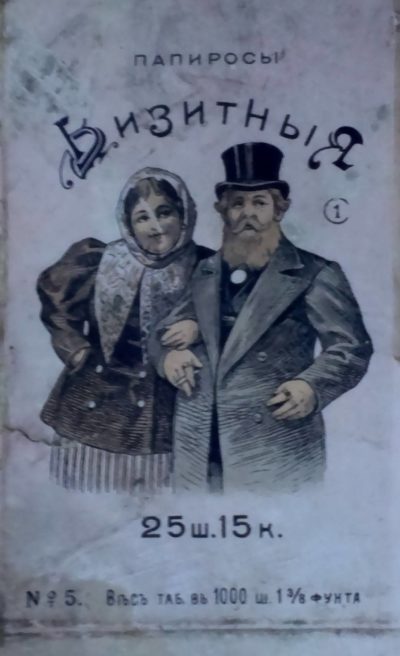
However, as early as the beginning of the 20th century, the products of the Kharkiv trading house “Buras & Co.” were considered among the very best in the entire empire and received numerous awards at exhibitions, including international ones.
The tobacco factory’s products were in high demand and enjoyed great success not only in the Russian Empire but also abroad. After all, “Buras & Co.”’s motto was: “The very best tobacco at the most reasonable price.”
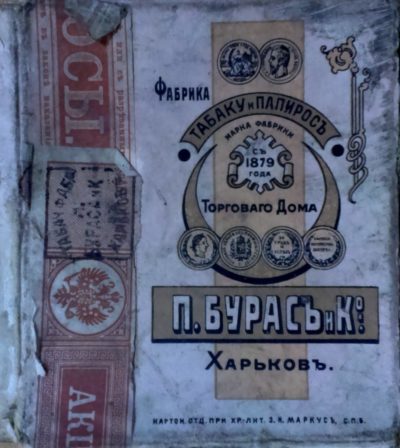
It is worth noting that the business was a family enterprise. Pesach Yakimovich was assisted in running the business by his two sons: Israel and Aaron.
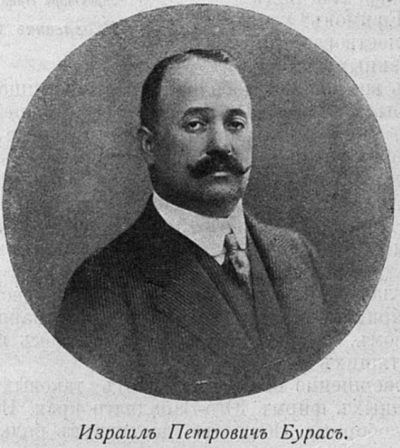
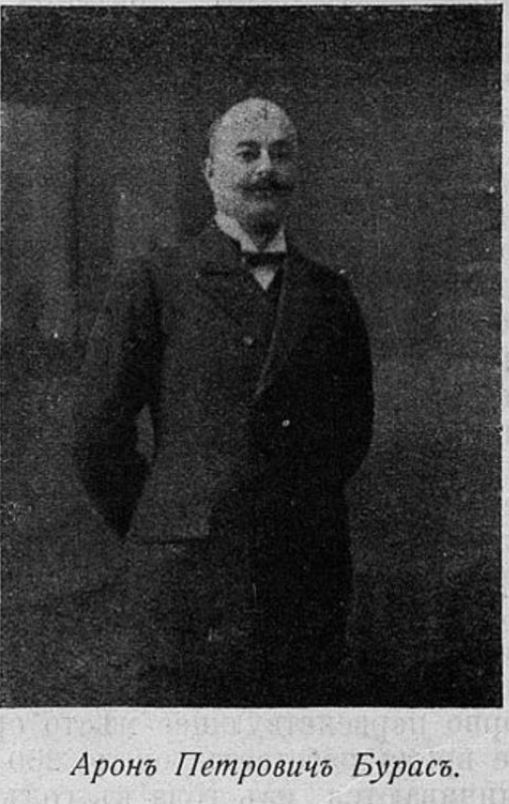
Enjoying considerable respect and wealth, Pyotr Yakovlevich Buras was also renowned in Kharkiv as a generous philanthropist. Naturally, he did not forget his ethnic community, taking an active part in various Jewish organizations.
Paragraph 1 of the “Objectives of the Company” section stated:
The purpose of the Society is to provide the means to improve the material and moral well-being of poor Jews residing permanently or temporarily in the city of Kharkiv, regardless of gender, age, rank, or social status.
However, in a footnote, the founders added:
Whenever possible, the Society provides assistance to people of non-Jewish faiths as well.
Paragraph 4 also stated: “Society consists of an unlimited number of individuals of both sexes, of all ranks, social classes, and religious denominations.”
Section 2 is also quite interesting, as it outlined exactly how the organization could help poor Jews.
a) Providing the poor with clothing, food, and shelter if they are unable to obtain these through their own labor, as well as providing them with cash assistance in extreme cases.

c) Providing medical supplies to indigent patients, ensuring they receive medical care at home under a doctor’s supervision, admitting such patients to hospitals at the Society’s expense, and assisting with the burial of the deceased.
(e) Providing assistance and establishing means for the care and upbringing of orphans and children of indigent parents or of unknown parentage.

(g) providing the means for indigent persons to return to their home country.

To implement the foregoing, the Company was granted the right, as its resources grew, to open:
— public cafeterias
— tea rooms
— low-cost apartments
— night shelters
— refuges
— shelters
— dormitories
— workhouses—
Talmud Torahs
— hospitals
— clinics
— reading rooms
— libraries, and similar institutions.
However, all of this was permitted only upon special authorization from the competent authority and in strict compliance with all applicable laws and government regulations on the matter.
As a result, in 1909–1910, organizations such as the following appeared in our beloved city:

Hebraica and Judaica
When discussing the national and cultural life of the Jews of Kharkiv in the early 20th century, one cannot fail to mention *Hebraica et Judaica*.
Preparations for the establishment of the “Hebraica et Judaica” department began at the Kharkiv Public Library (now the V. G. Korolenko Library) as early as 1903 under the direction of M. S. Shlyaposhnikov.
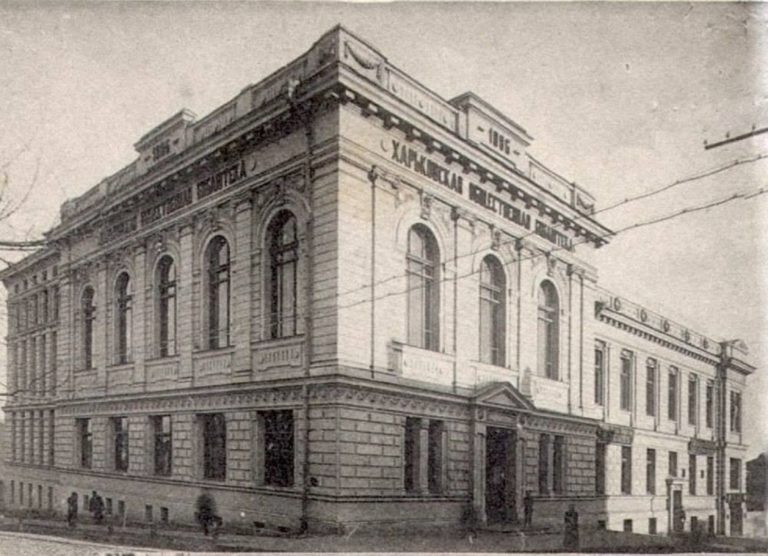
The plan was to collect publications in Hebrew and books simply devoted to Jewish culture.
The department opened on September 24, 1904—its collection at that time consisted of 1,200 volumes.
In early 1905, the first catalog of the department’s books and journal articles was published.
To expand the collection, the “Hebraica et Judaica” department organized charity events (such as musical concerts and movie screenings at theaters) at which donations were collected.
In October 1909, representatives of the “Hebraica et Judaica” department became members of the Jewish Historical and Ethnographic Society.
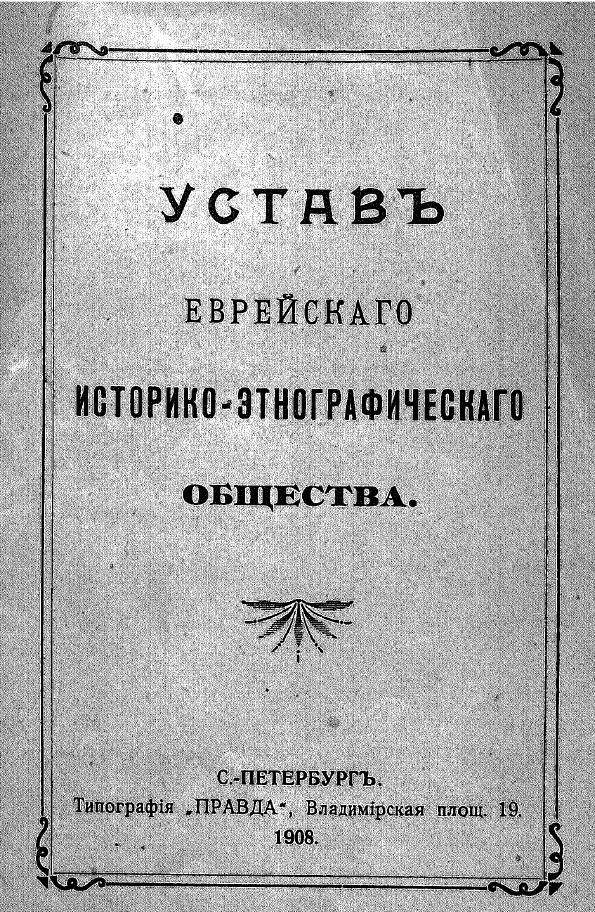
This entitled the department to receive the organization’s publications free of charge. Specifically, this included the society’s quarterly journal, *Jewish Antiquities*. This publication appeared from 1909 to 1916 and contained the following sections: Research and Essays, Memoirs and Correspondence, Materials and Reports, Criticism and Bibliography, and Appendices.

Over time, the department also compiled and published a catalog of children’s literature.
In 1913, the Society for Jewish Folk Music opened branches in Moscow, St. Petersburg, and later in Kharkiv.
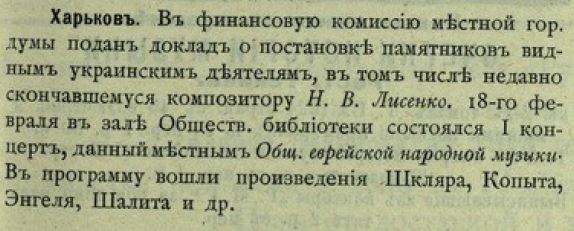
Newspapers of the time reported:
The First Concert of the Jewish Folk Music Society.
On February 18, the first concert presented by the local Jewish Folk Music Society took place in the hall of the Public Library. The program included works by Shklyar, Kopyt, Engel, Shalit, and others.
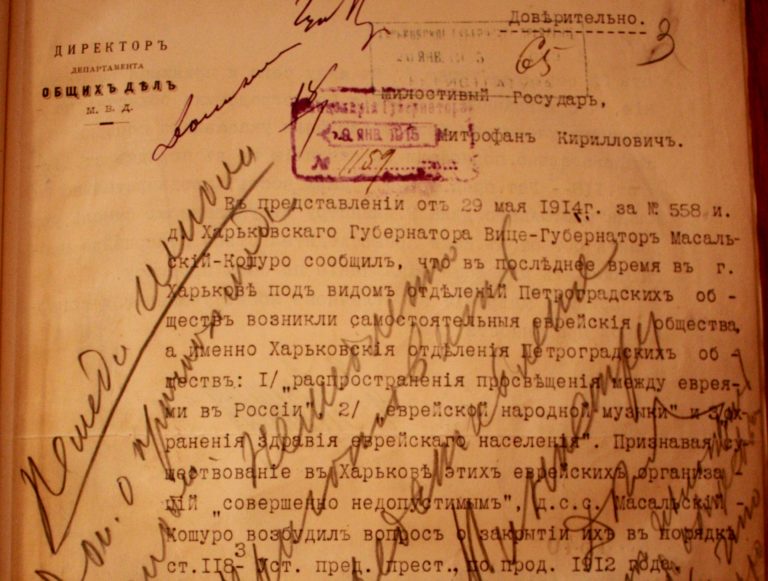
In May 1914, the authorities called into question the legality of a number of Jewish organizations in Kharkiv.
However, none of this prevented the “Jewish Society for the Promotion of the Arts” from opening its third branch (after St. Petersburg and Moscow) in our beloved city in early February 1916.
During World War I, the Jewish community of Kharkiv was also active.
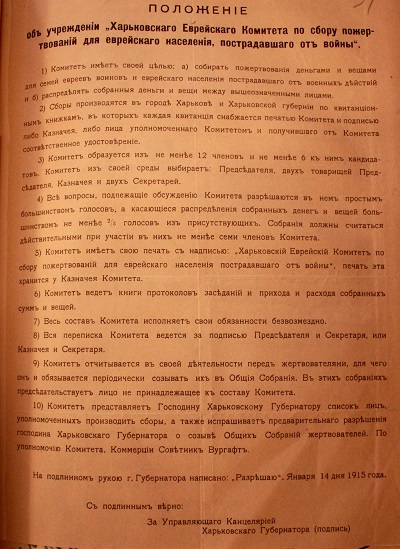
As early as January 14, 1915, the city registered the “Kharkiv Jewish Committee for Collecting Donations for the Jewish Population Affected by the War.”
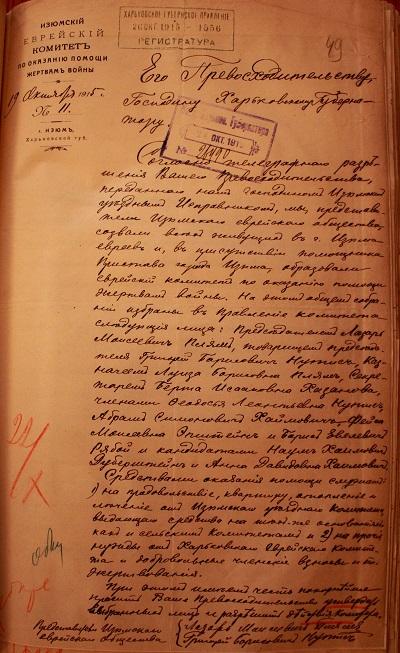
However, such organizations were established not only in Kharkiv but also throughout the province—for example, in Izyum.
And back in the early 20th century, our beloved city was home to:
— Jewish Sports Association
— Society of Lovers of the Hebrew Language
— Jewish Consumers’ Association
— Jewish Livestock Slaughter Association
By all accounts, the social and cultural life of the Jewish community at that time was extremely vibrant and rich.
But that’s a whole different story…

- About the military pilot school and the airfield in Kharkiv… - 04.11.2020
- Nikanor Savich—A Political Career by Mistake - 13.07.2020
- And once again, about the Cavalry Guards… - 21.01.2020