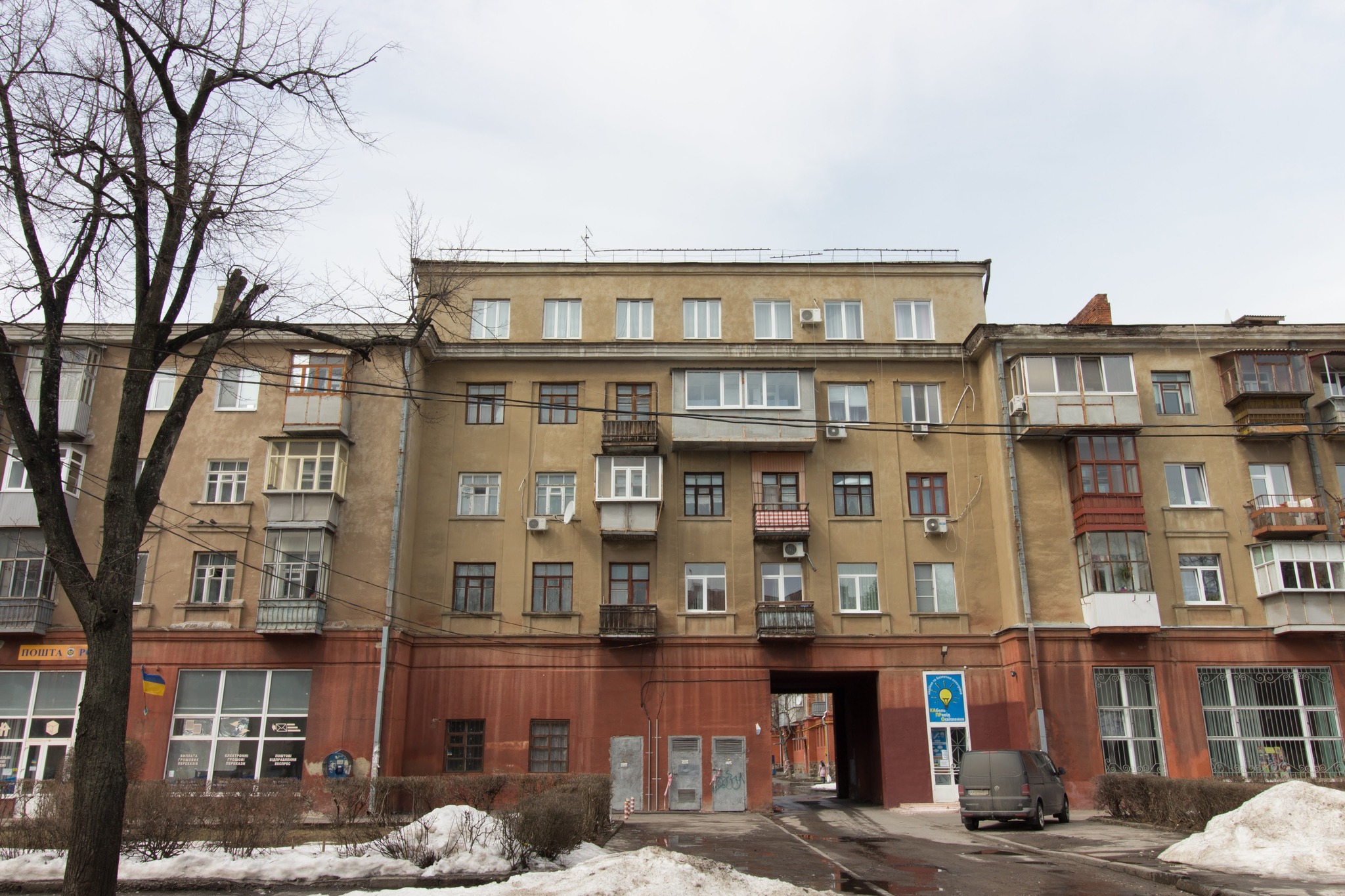
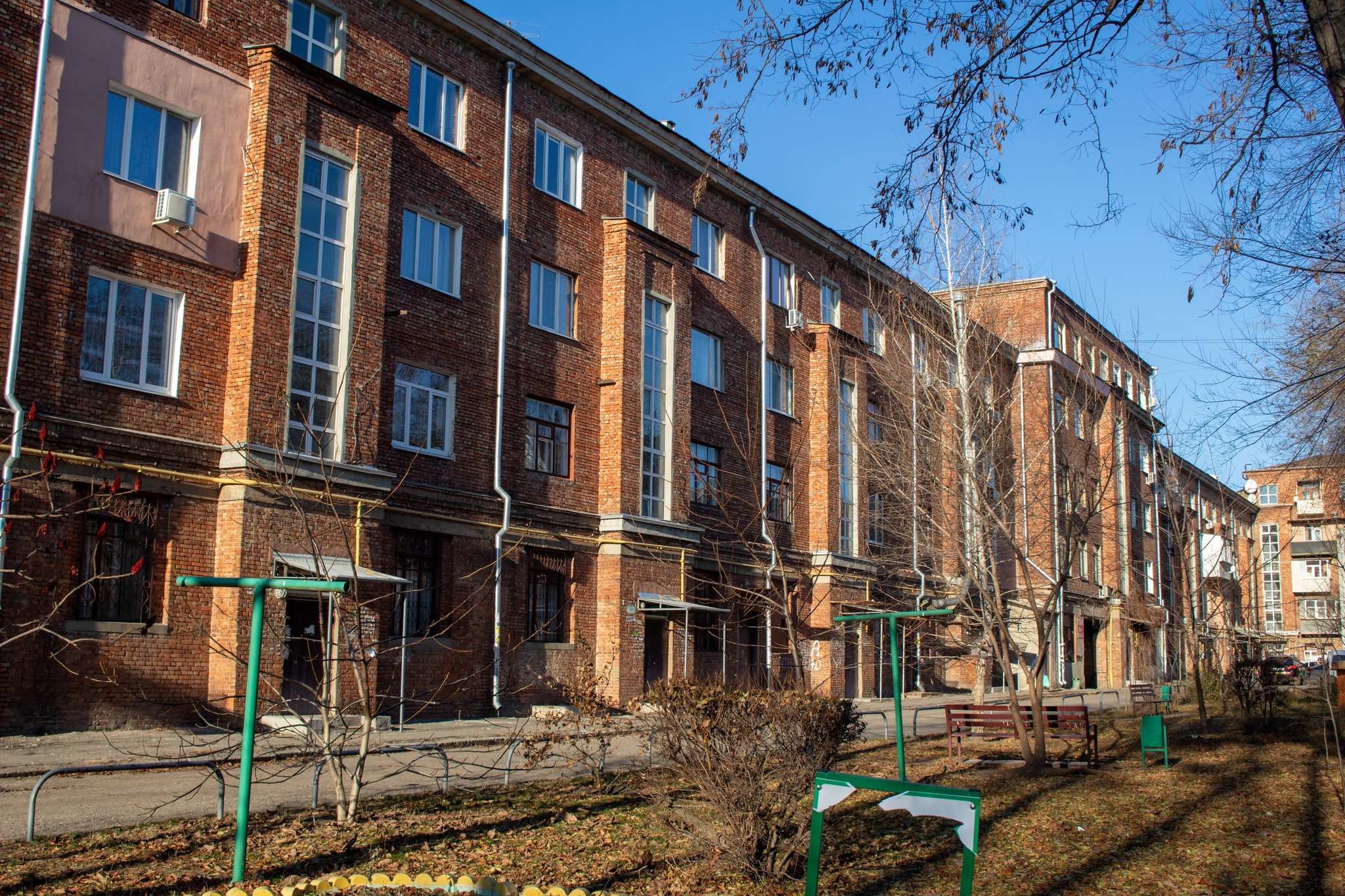
The massive building at Myru Street, 20, together with the building at Biblyka Street, 19, takes up an entire block.
The administrative building of the Kharkiv Tractor Plant was originally part of the “New Kharkiv” socialist city project, which was carried out in 1929–1930 by the Kyiv Design and Consulting Bureau under the NKVD of the Ukrainian SSR, led by architect Pavel Aleshin.
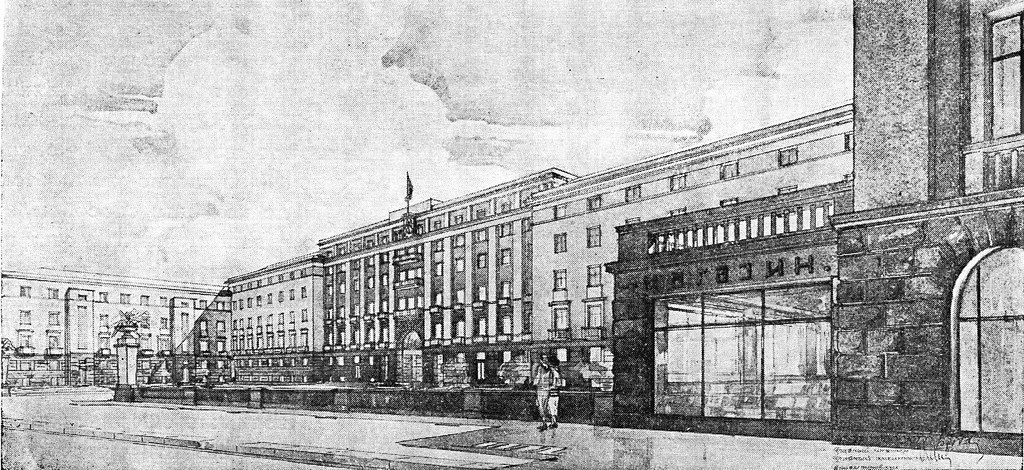
This building was built in 1930–1933 (according to other sources, construction was completed in 1935). It features eclectic elements of Constructivist style with minimal socialist classicism style decoration. The third block, which included the house, stands as an exception to the typical layout of the socialist city (where the buildings stood perpendicular to the street). Researcher G. Nikolsky calls the architect of the third block E. A. Lymar.
Since this building was originally designed for the engineering and technical elite of KhTZ, its apartments—unlike those in the neighboring “Titanic” and “American” buildings—boasted 3-meter-high ceilings, private bathrooms, and kitchens. The apartments had 2 to 4 rooms (the two-room apartments measured 60 square meters, and the three-room apartments measured 80 square meters). The building, divided into 4-, 5-, and 6-story sections, originally housed all the amenities its residents needed—shops, pharmacies, and a library.
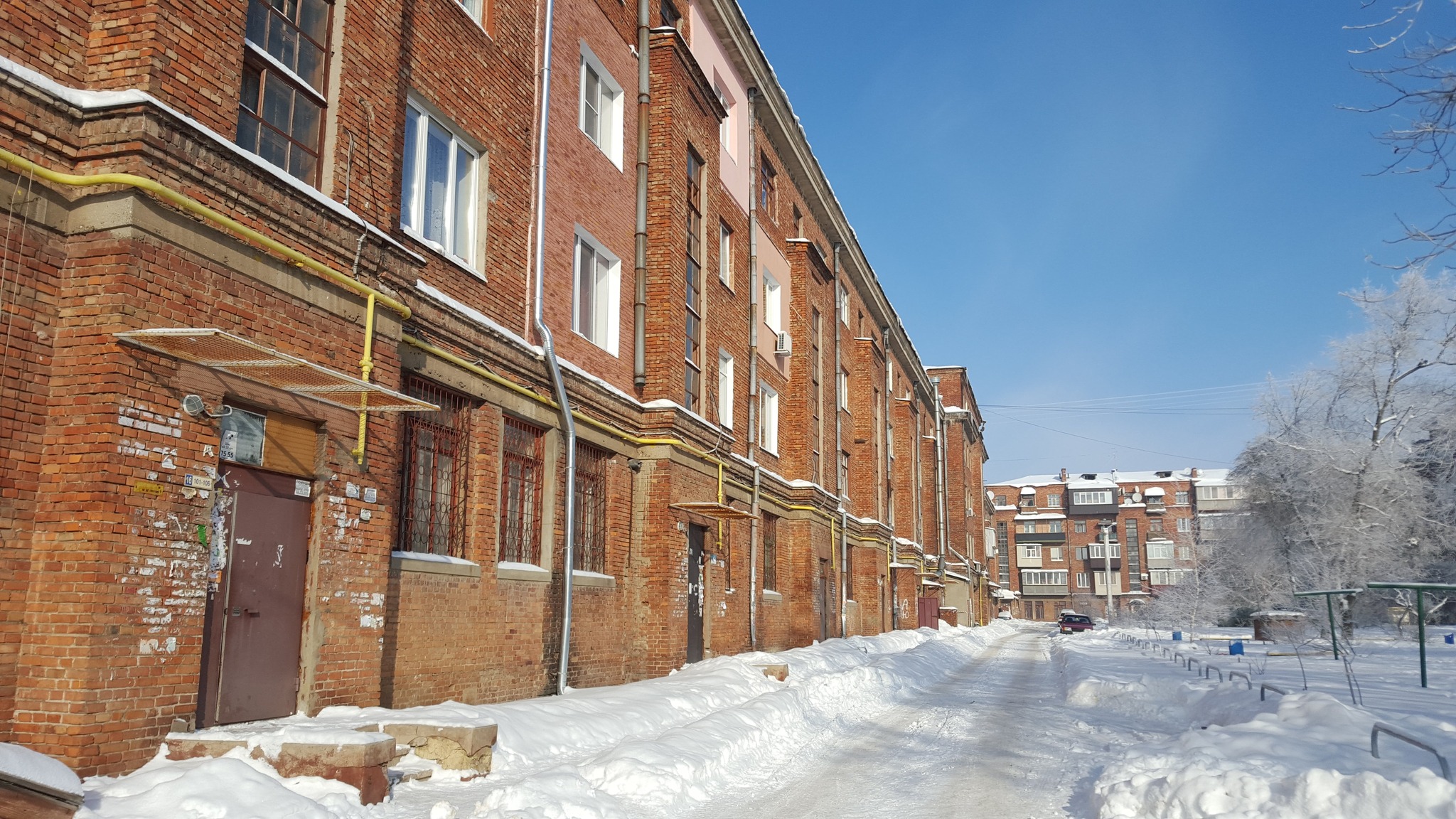
In total, there are 288 apartments at Myru Street, 20, and a city-record 38 building entrances. It is also the “longest” residential building in Kharkiv. If you measure its facade with a “ruler” on Google Maps along the three streets, it comes to 645 meters—longer than the prefab giant at 321/20 Ak. Pavlova Street (the latter is also known as the “Great Wall”).
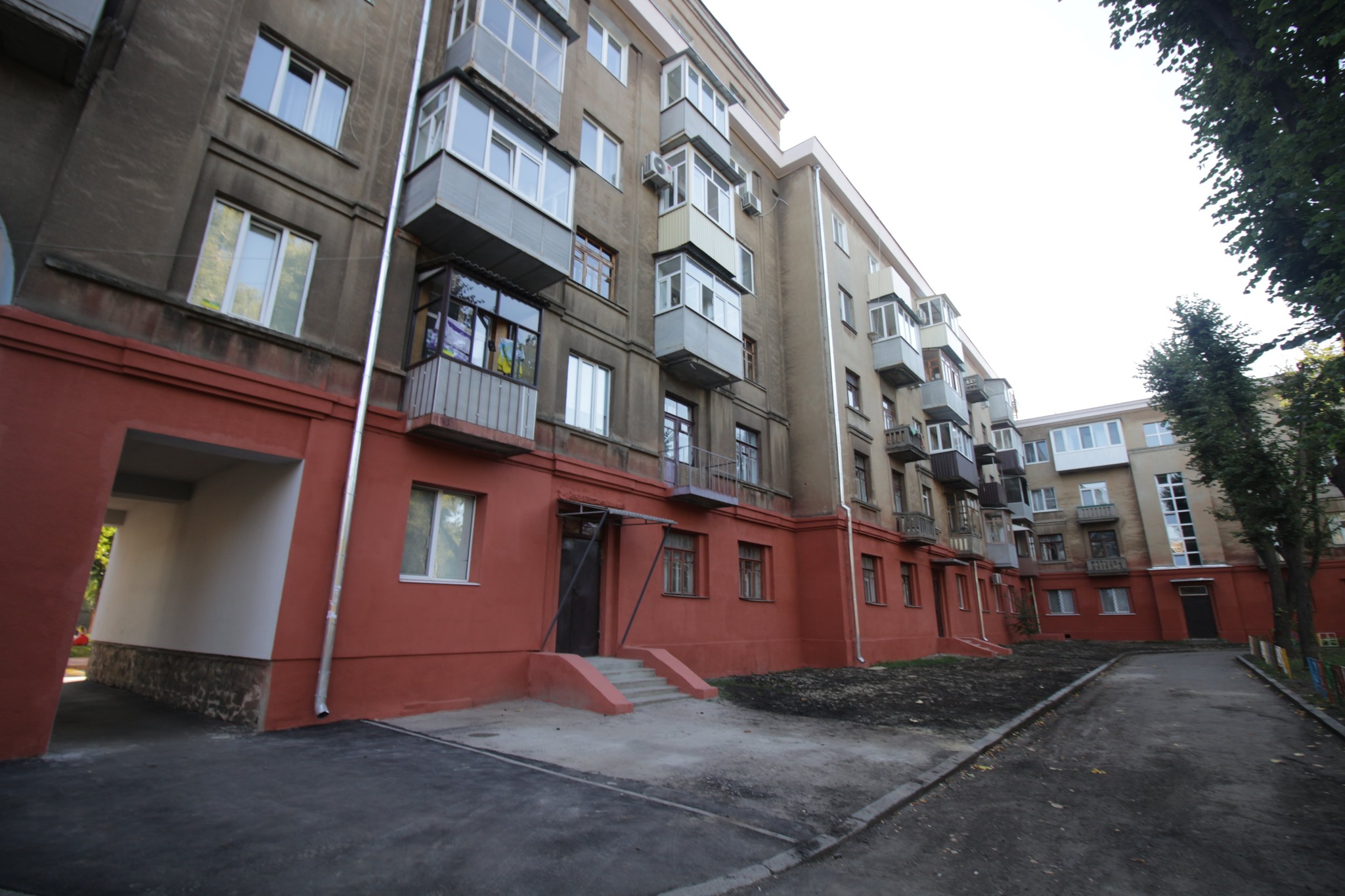
In 1936, a nursery with 180 places was built in the courtyard based on a standard design by the People’s Commissariat of Health (architect A.Y. Dunaevsky); the building is currently unused.
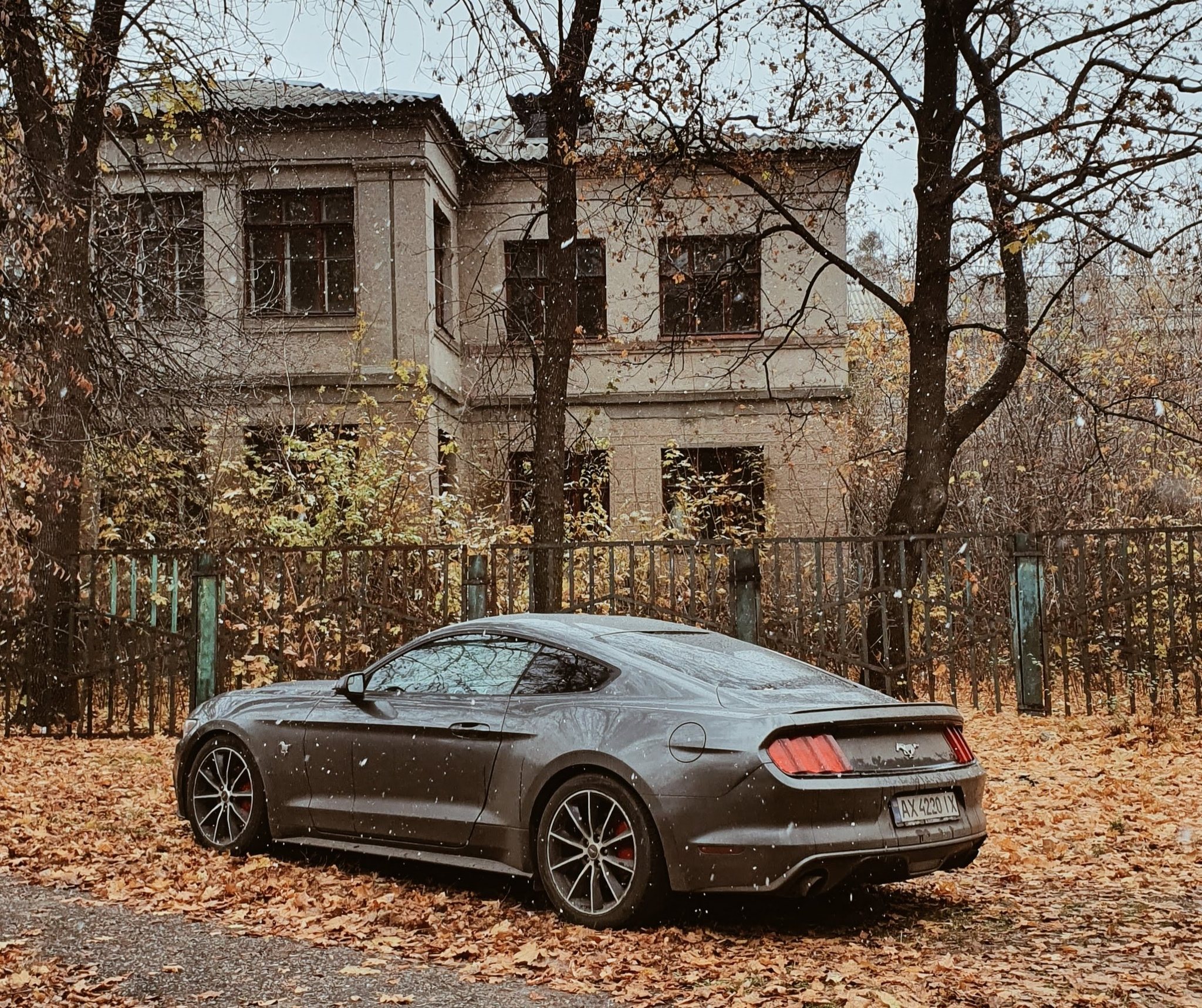
According to unconfirmed reports, during the Nazi occupation of 1941–1943, the building at Myru Street, 20, housed an Orthodox church.
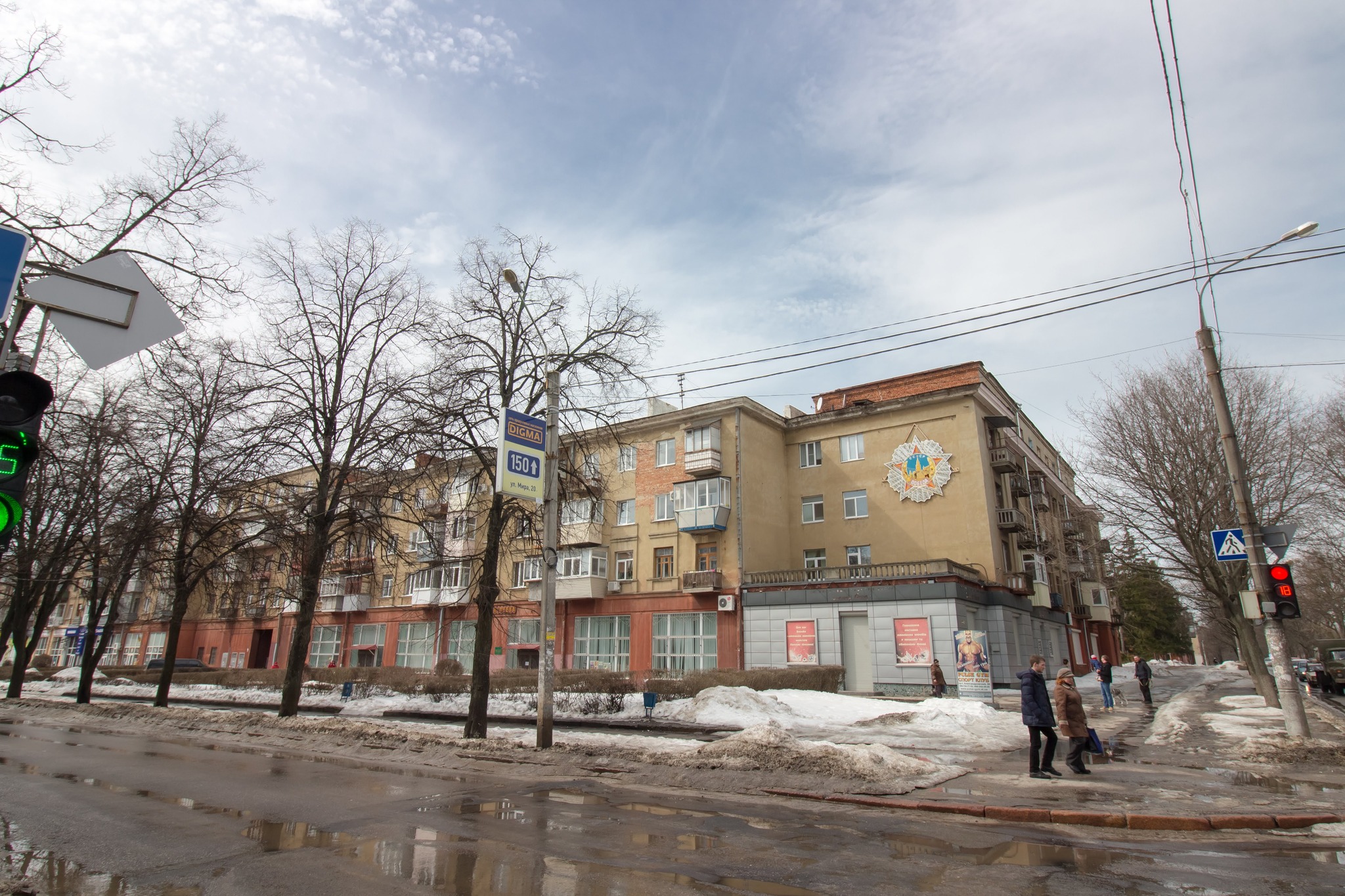
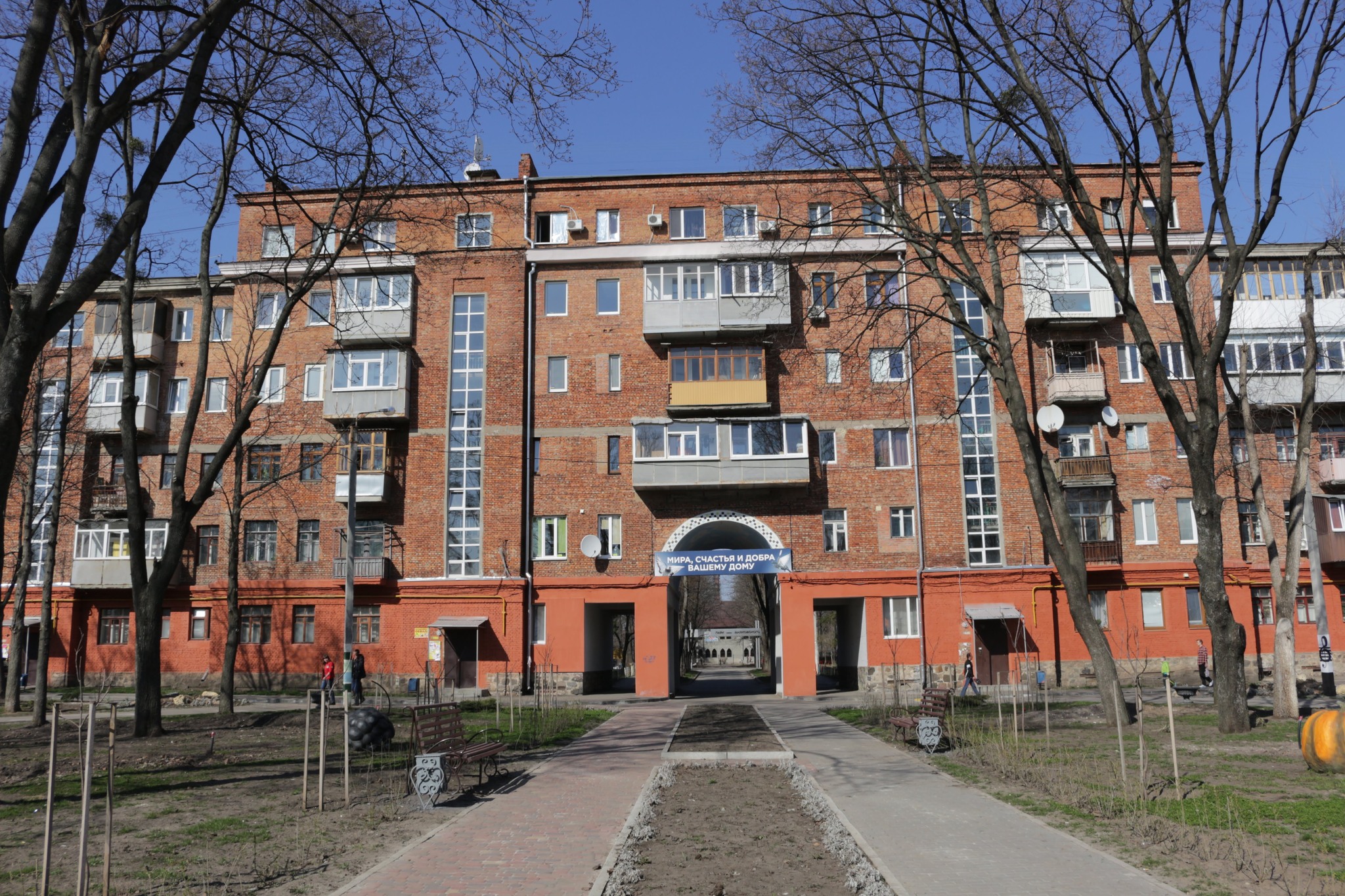
The numerous balconies, which were enlarged and enclosed by the residents—mostly in the 1990s—have significantly altered the building’s appearance.
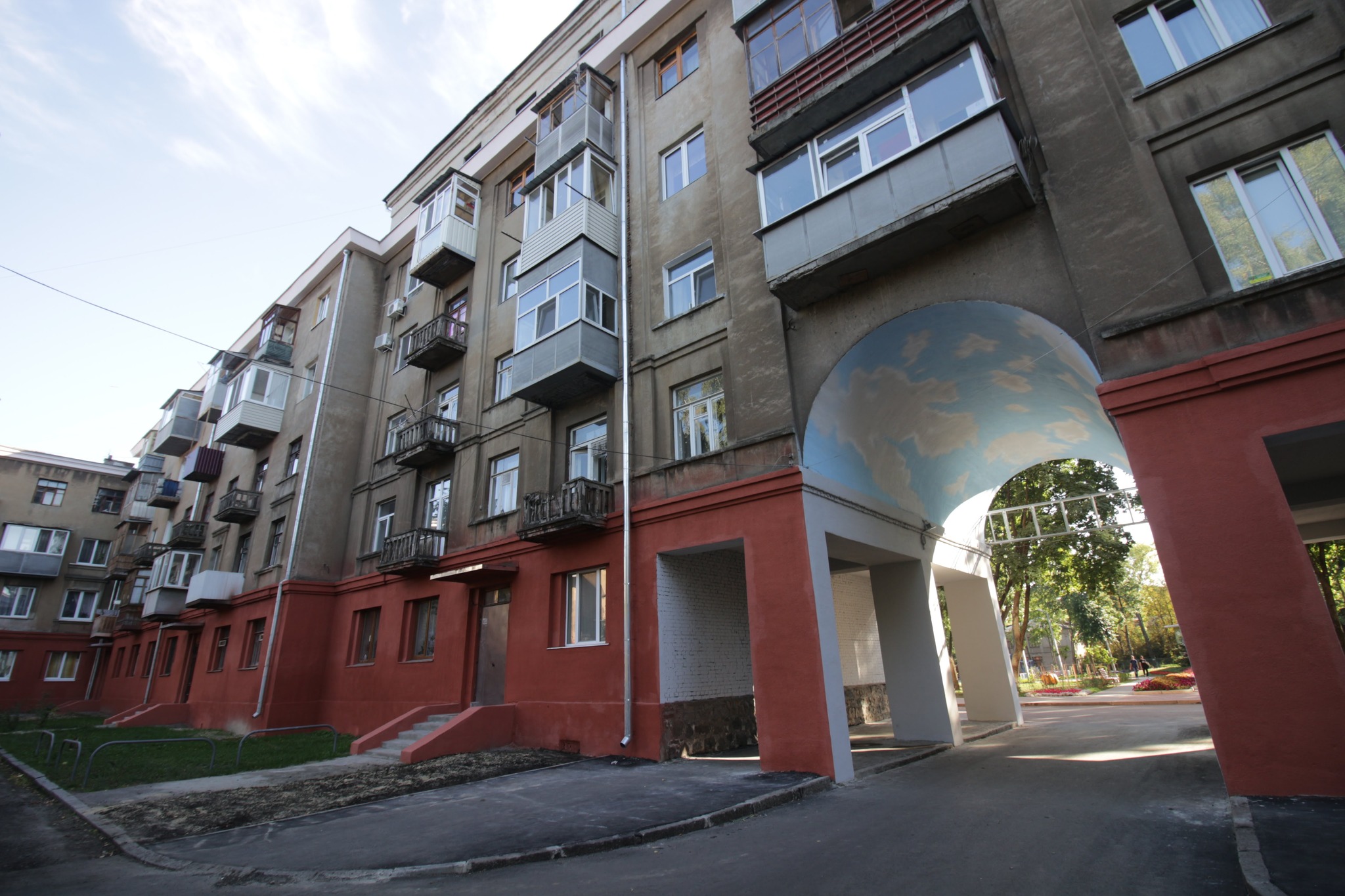
However, they highlight a problem common to both the KhTZ district and Kharkiv, as well as Ukraine as a whole: the lack of designated storage spaces for residents’ belongings in urban planning and a virtually nonexistent system of penalties for damaging the facades of architectural monuments. This building is part of the protected area of 6 quarters of the KhTZ Social City, which is an architectural and urban planning landmark.
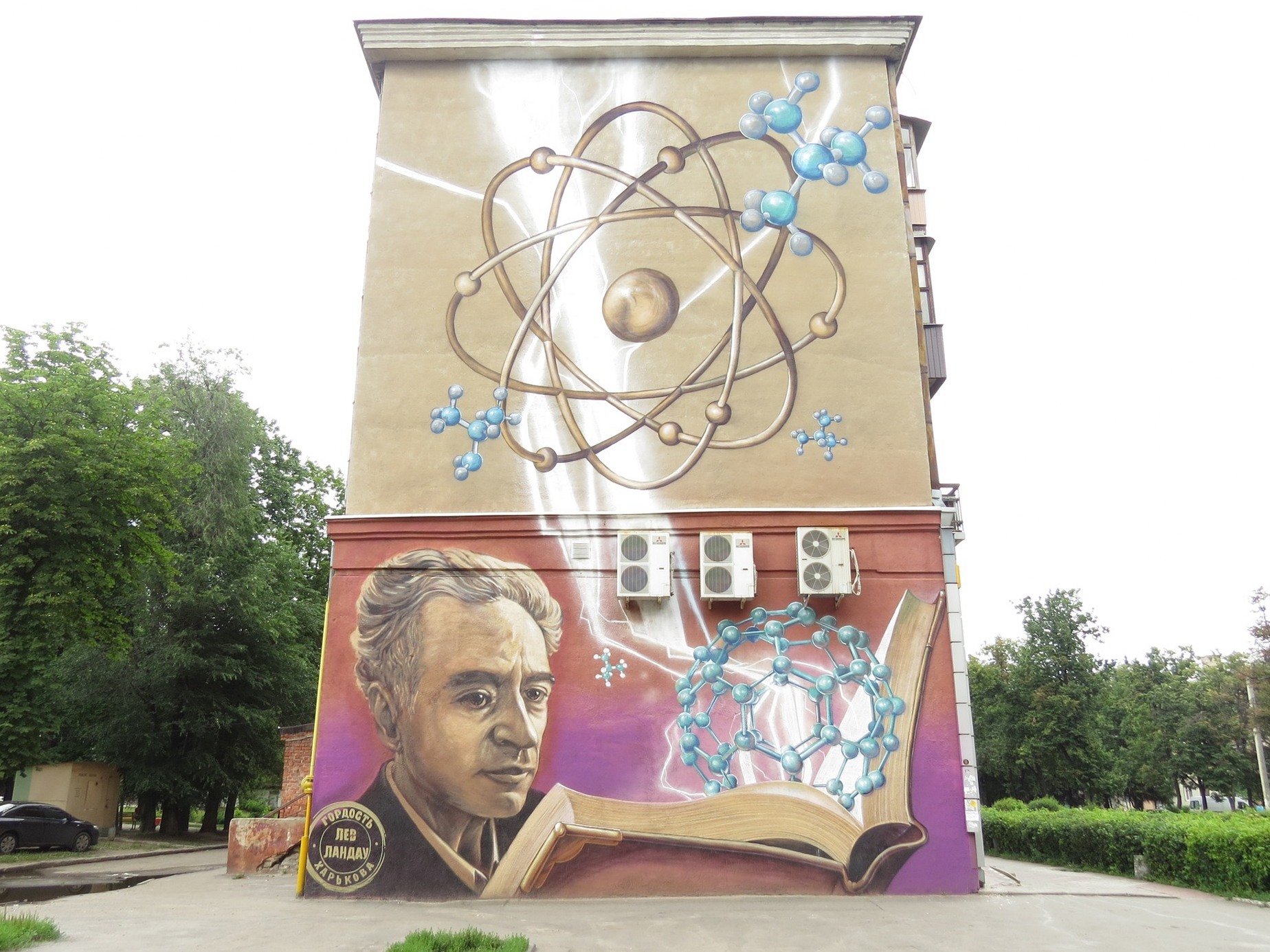
In 2013, a mural from the “Pride of Kharkiv” series was painted on the end of the building facing Architect Alyoshin Avenue in honor of Nobel laureate and physicist Lev Landau (art studio KU2).
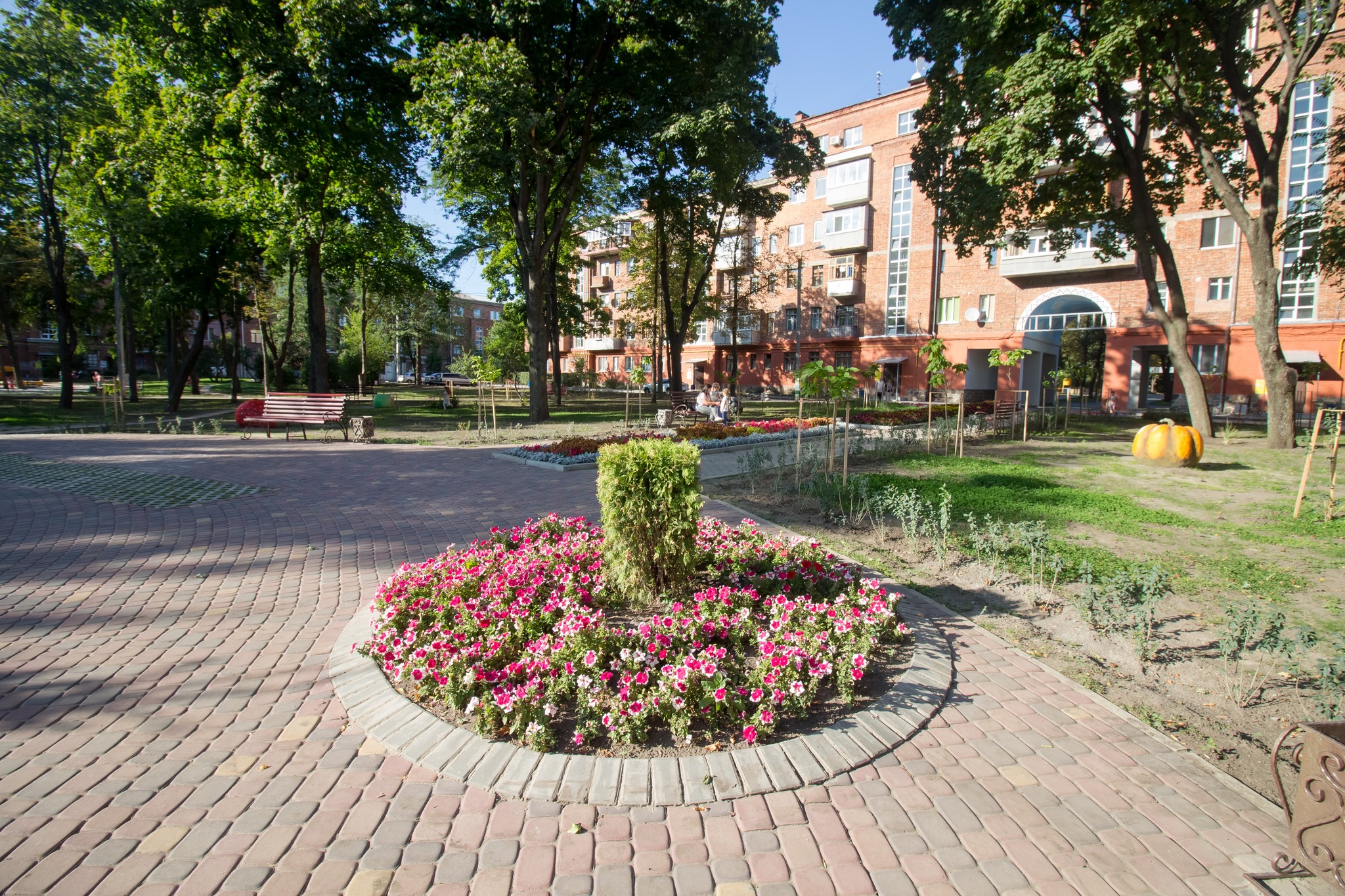
In 2017, city officials improved the building’s courtyard, paving it with tiles and decorating it with flowers and sculptures.
An image of the sky with clouds appeared in the main archway leading to Mayakovsky Park.
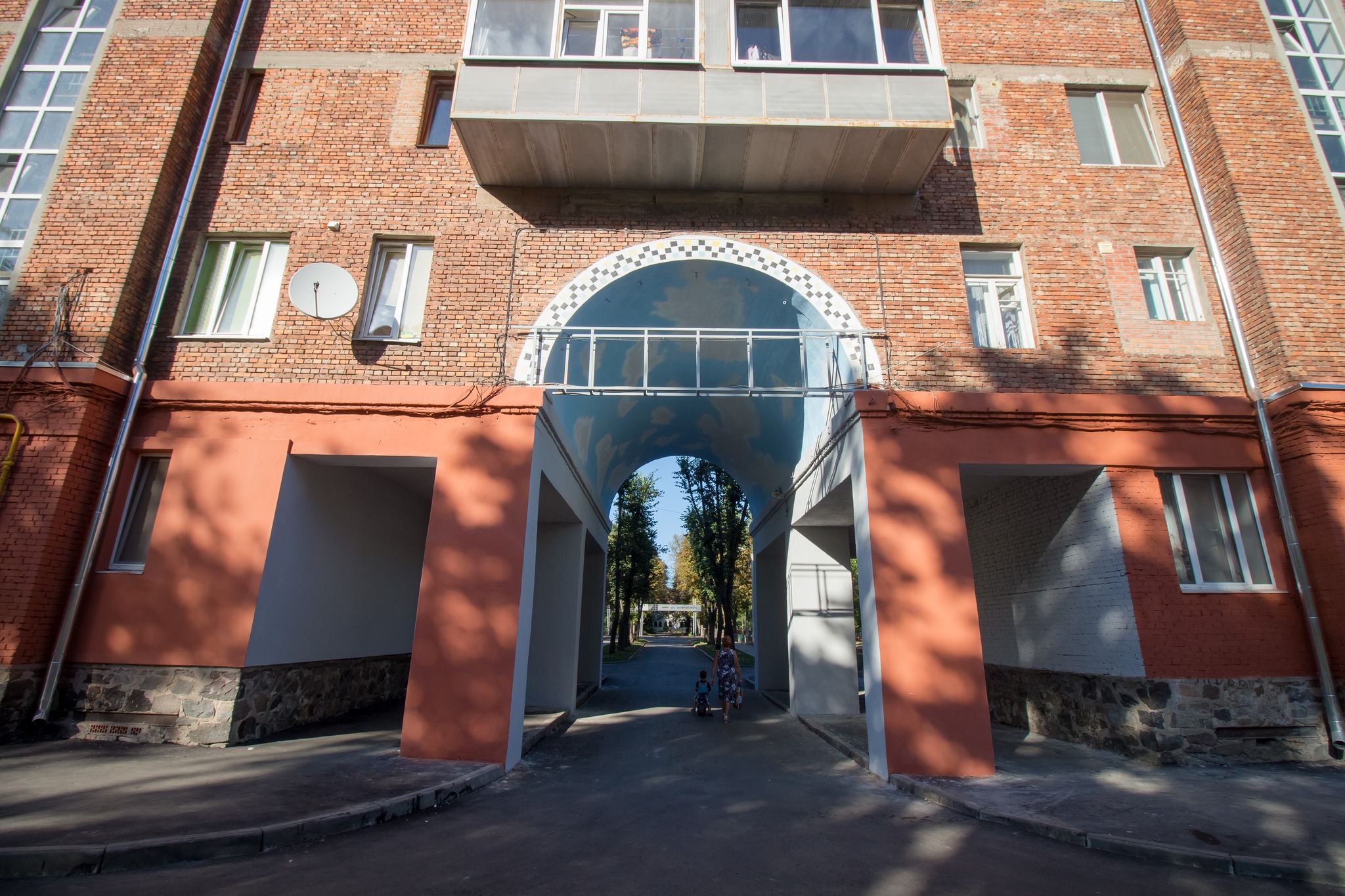
However, according to the residents, these decorations have had no effect on the condition of the building itself; roof leaks are a common problem.

- 1st Kharkiv Gymnasium - 17.09.2026
- The Oldest Movie Theater in Ukraine - 24.08.2026
- The Alkhovsky Estate - 14.08.2026