On April 29, 1918, the All-Ukrainian Congress of Grain Growers was held in Kyiv. It was at this congress that supreme power in the country was transferred to Pavlo Skoropadskyi, who was proclaimed hetman there. The Ukrainian People’s Republic was renamed the Ukrainian State, and the Central Rada was declared dissolved. The Hetmanate regime was established in Ukraine.
People living in the fragments of the former empire were free to accept Ukrainian citizenship or to renounce it.
So what was the situation regarding Ukrainian citizenship in our beloved city back in 1918?
The collections of the Kharkiv Regional State Archives contain some surprisingly interesting documents.
Let’s start with those who chose not to accept citizenship.
As we know, between 1915 and 1918, numerous refugees found shelter in Kharkiv. It goes without saying that sooner or later they planned to return to their homes. For this reason, they refused to accept Ukrainian citizenship.
Among them were residents of the Livonian Governorate:
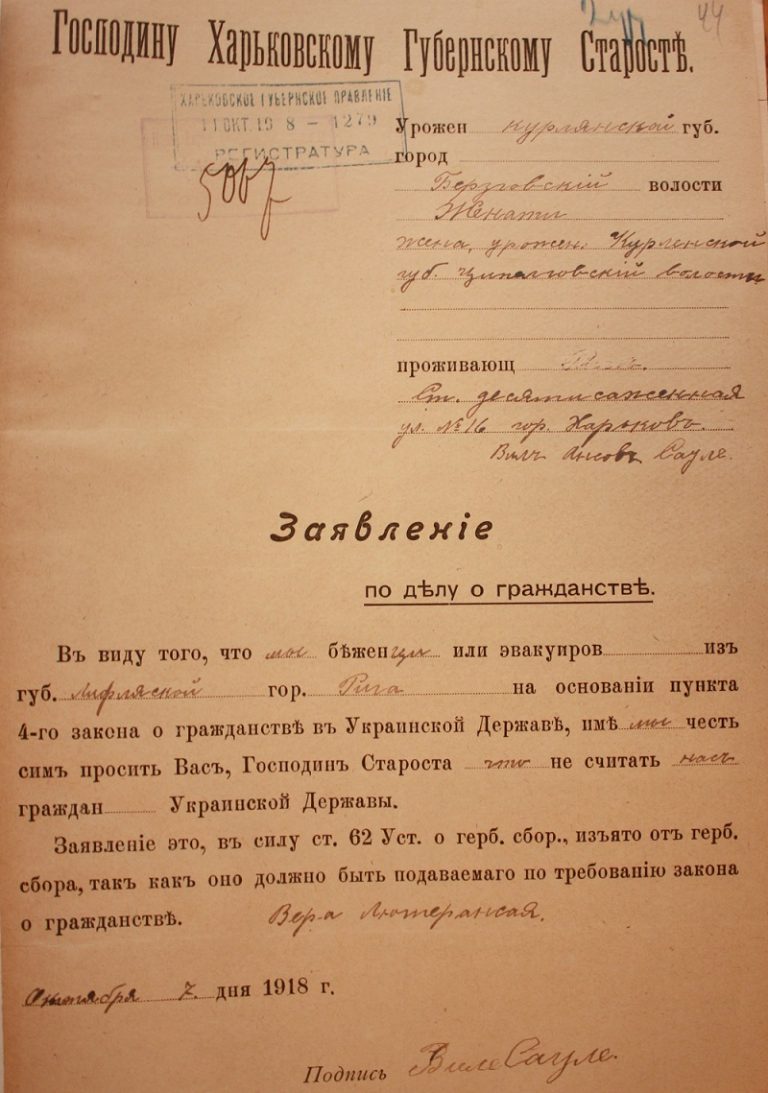
And the Poles, who dreamed of returning to their homeland:
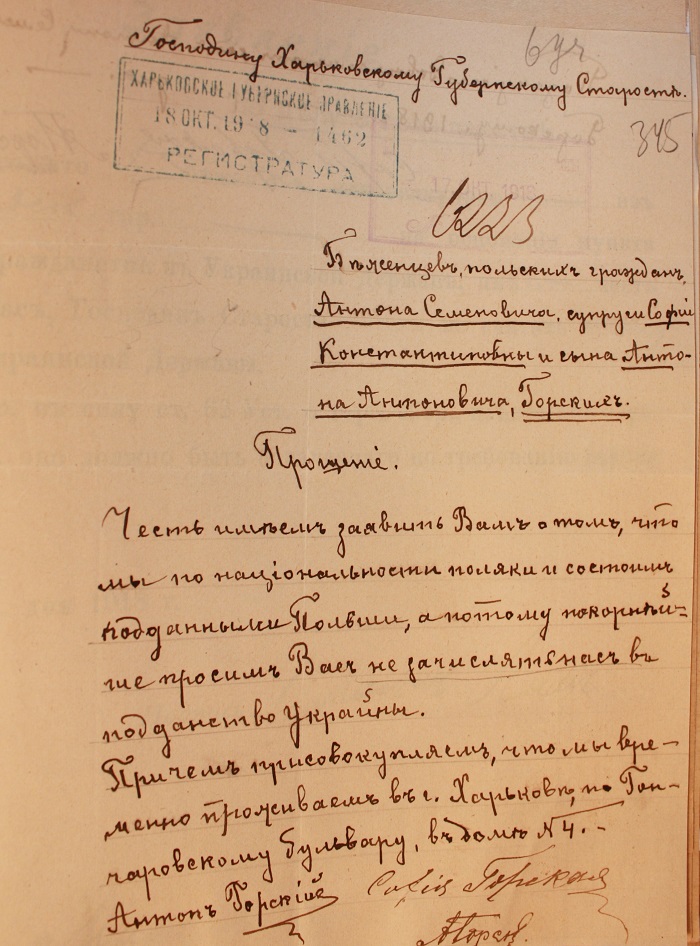
For the most part, these were all official and completely emotionless statements.
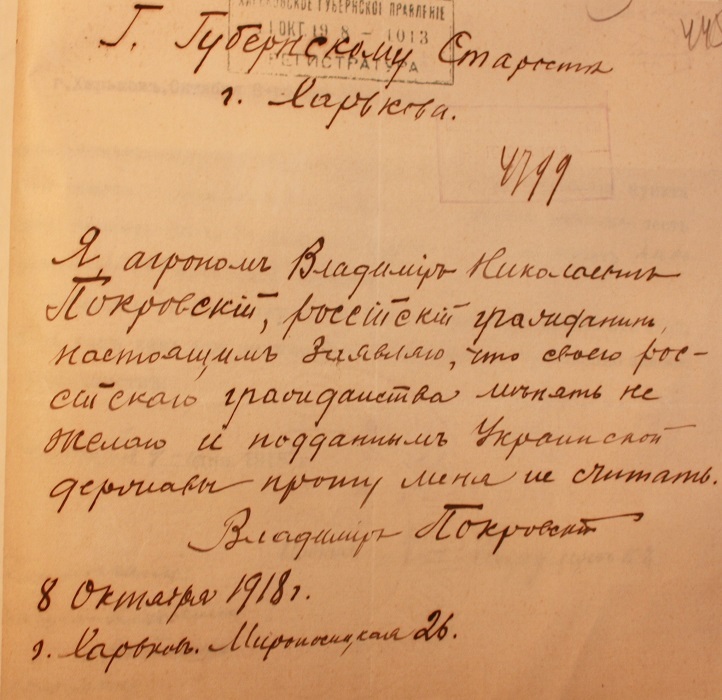
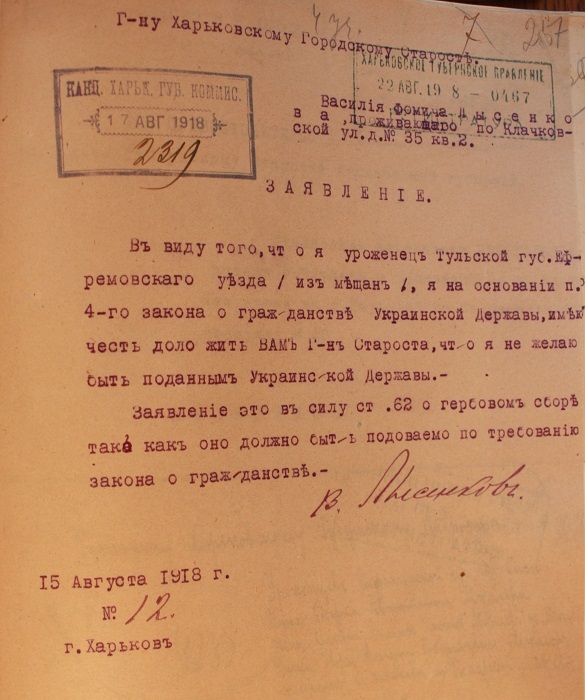
The rejections written by Russians, on the other hand, are less formal and more categorical.
“I, Vladimir Nikolaevich Pokrovsky, an agronomist and Russian citizen, hereby declare that I do not wish to change my Russian citizenship and request that I not be considered a subject of the Ukrainian state.”
“Given that I am a native of the Yefremov District of the Tula Governorate (of the townspeople), pursuant to paragraph 4 of the Law on Citizenship of the Ukrainian State, I have the honor to inform YOU, Mr. Starosta, that I do not wish to be a subject of the Ukrainian State.” (The author’s spelling and punctuation have been preserved.)
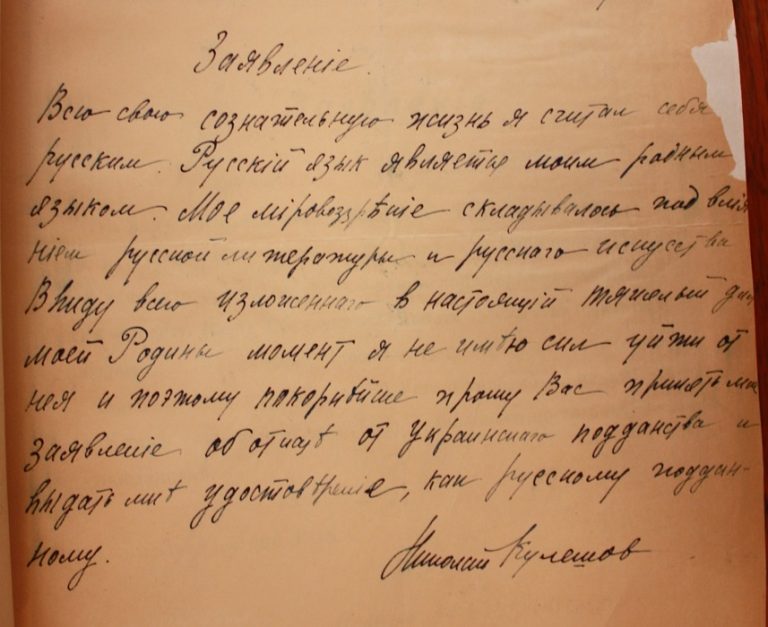
“For as long as I can remember, I have considered myself Russian. Russian is my native language. My worldview was shaped by Russian literature and Russian art. In light of all that has been stated, at this difficult time for my homeland, I do not have the strength to leave it, and therefore I humbly ask you to accept my application to renounce Ukrainian citizenship and issue me a certificate as a Russian citizen.”
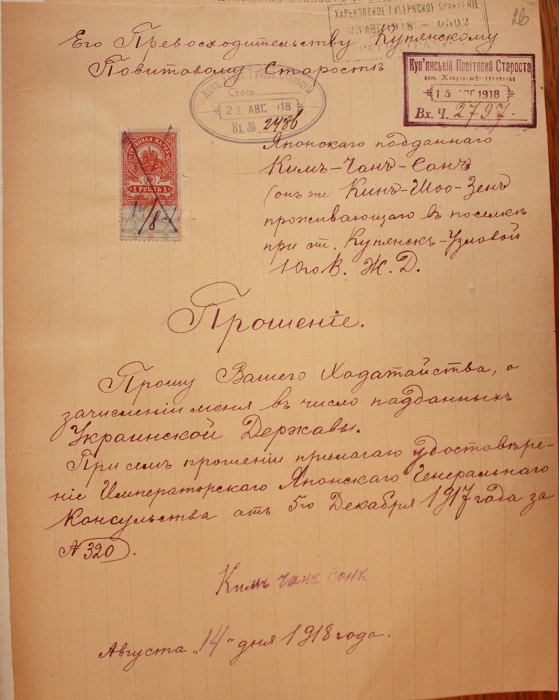
But Kim-Chang-San, a Japanese man (also known as Kin-Shoo-Zen, a name that sounds so beautiful to Slobozhansky ears), who lived in a village near the Kupyansk-Uzlovaya station, Ukraine appealed to him so much that he decided to become a citizen and wrote a petition:
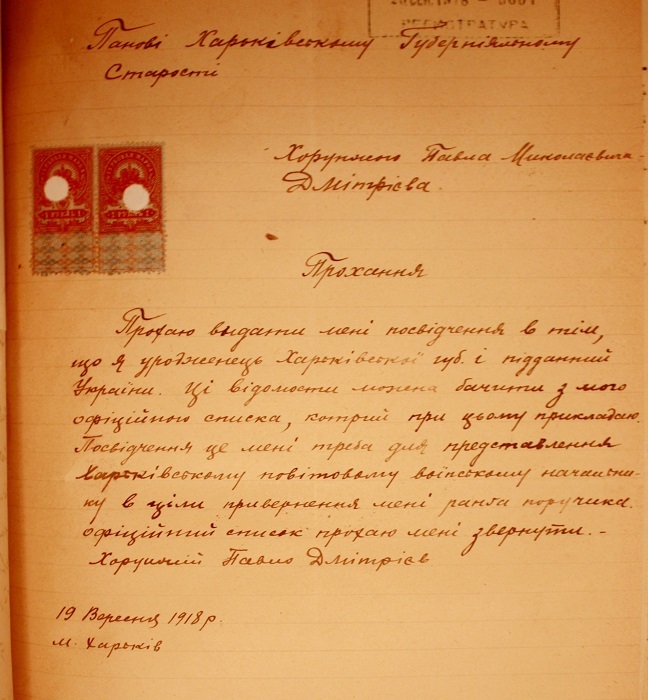
Applications from residents of our city for Ukrainian citizenship were often written in Ukrainian.
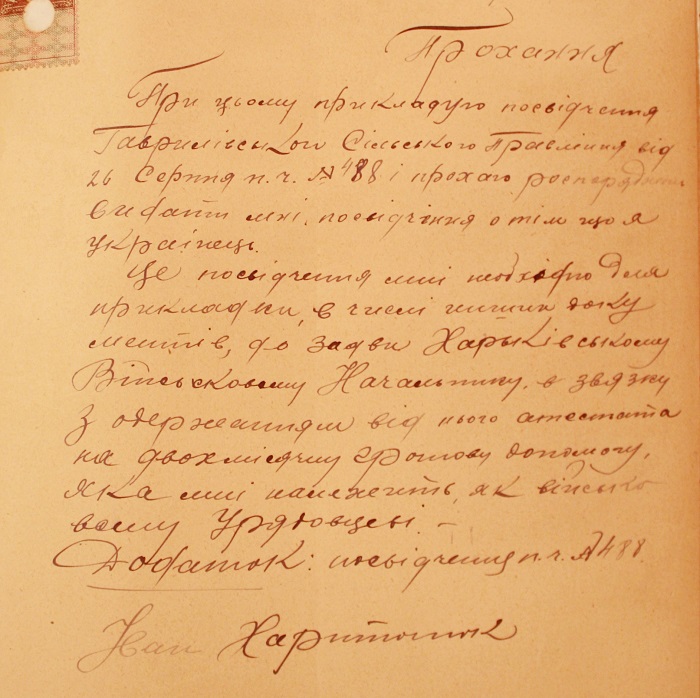
It is extremely interesting that, in documents of this kind, the phrase “I am a Ukrainian” was often used instead of “subjects of Ukraine.” This fact speaks volumes.
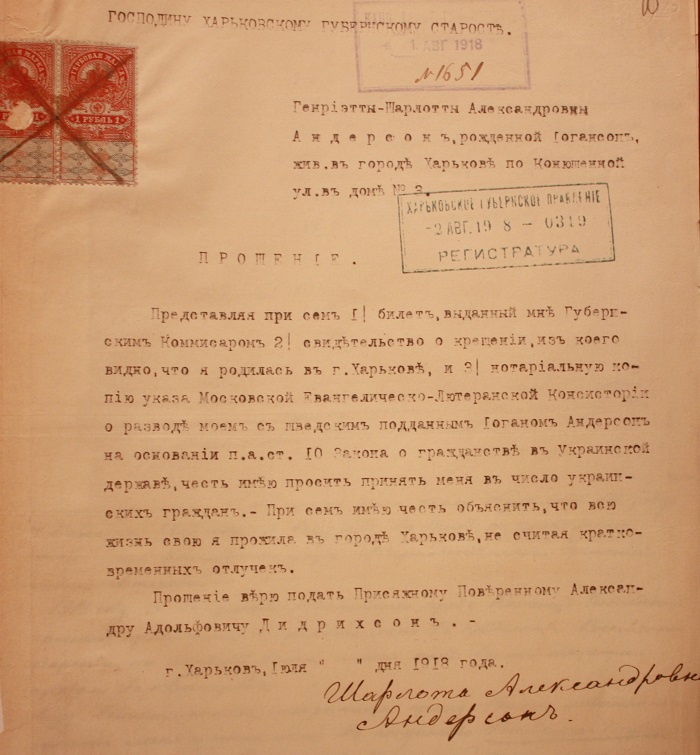
As for Henrietta-Charlotte Alexandrovna Anderson, who lived her entire life in our city, she apparently loved Kharkiv so much that she simply “had the honor of asking to be accepted among Ukrainian citizens.”
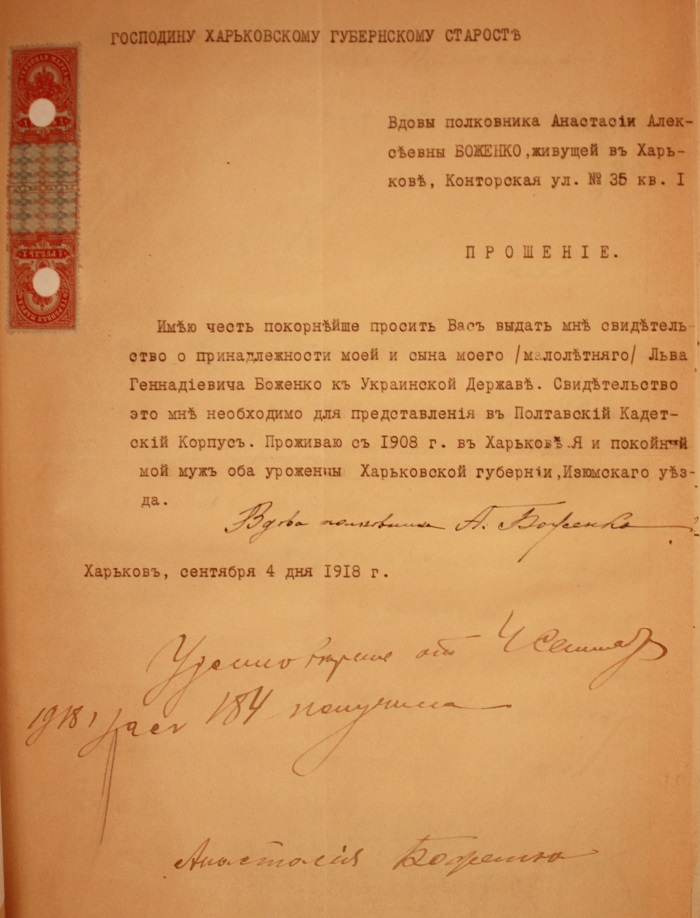
For Colonel Bozhenko’s widow, Anastasia Alekseyevna Bozhenko, a certificate confirming that she and her son were citizens of the Ukrainian State was necessary for “enrollment in the Poltava Cadet Corps.”
Be that as it may, the greatest value of such statements lies in the fact that they are written honestly, even if at times they are emotional. The people who wrote them candidly explained the reason why they accept or refuse to accept Ukrainian citizenship.
This was the situation in Kharkiv a little less than 100 years ago.

- About the military pilot school and the airfield in Kharkiv… - 04.11.2020
- Nikanor Savich—A Political Career by Mistake - 13.07.2020
- And once again, about the Cavalry Guards… - 21.01.2020