Back in late 1912, the name of Kharkiv was making headlines in many newspapers of the time. This is hardly surprising, since the idea of creating a unique “city of science” in our beloved city had captured the imagination of many. The two projects were striking in their grandeur and had the potential to completely transform the face of Kharkiv.
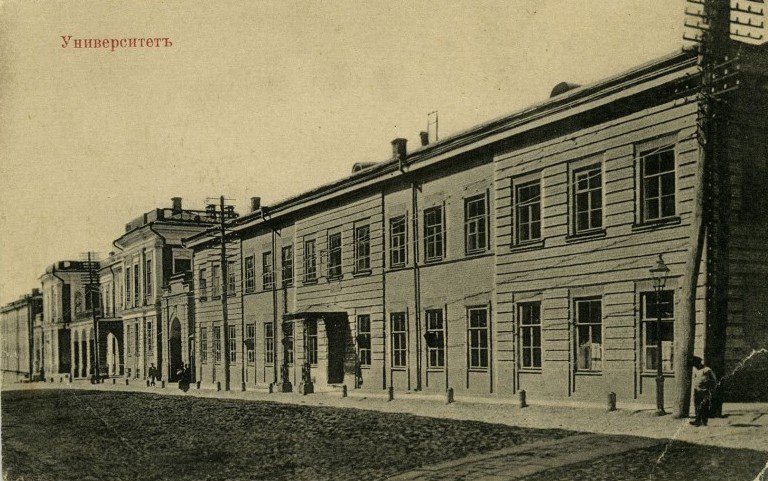
In issue No. 46, dated November 11, of “Zodchiy,” the leading architecture magazine of the time, we find the following:
Kharkiv. There is lively discussion in university circles regarding a proposal put forward by a group of members of the Finance Committee of the Faculty Council to create a special “city of science” in Kharkiv, which would bring together all the educational and support institutions of all four faculties.
The fact is that with the increase in the number of departments in the Faculty of Philology and the establishment of a number of new auxiliary institutions (seminars) within the Faculty of Law, the housing crisis at the university has reached a critical point. Meanwhile, the foundations of the existing university buildings cannot support the addition of new floors, and the university grounds at this location are almost entirely built up.
In light of this, a group of professors is proposing a plan to sell all of the university’s properties (2+ desyatinas) in the city center and to build a “university campus” on land owned by the university (about 100 desyatinas) near the Sumsky Highway. The value of the existing buildings, together with the land in the city center—estimated by the authors of the proposal at no less than 4,500,000 rubles—is quite sufficient to implement this idea.
If the proposal is adopted by the university council and approved by the ministry, the plan is to secure a loan from the government for an equal amount, with the understanding that this loan will be repaid immediately upon the sale of the university’s central properties. The authors of the proposal point out that the consolidation of all university facilities into a single complex will result in significant savings for the university in terms of cleaning, heating, lighting, staff salaries, and other expenses.
At the same time, there are plans to petition the city administration to route a circular tram line through the square in the planned campus. In addition, there is another project, also based on the sale of the university’s central properties, that involves the construction of new buildings in the so-called university garden.
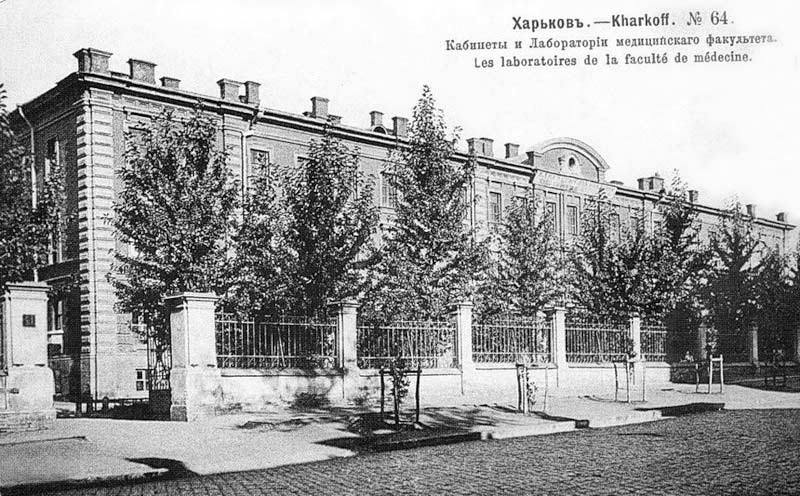
As for the second project, we can learn about it from an earlier article published in the local Kharkiv newspaper *Utro* on October 27, 1912. There, the idea of creating a “city of science” is described in greater detail in some places. We invite you to read the information that was not published in “Zodchyi”:
…The old buildings still house the faculties of philology and law—which are constantly at odds with each other over available classrooms—the university library, the museum, and the university’s administrative offices (the administration, the council, faculty and general student offices, the archives, the academic district office, etc.). Lectures on chemistry and physics for medical students, mathematicians, and natural scientists are also held here.
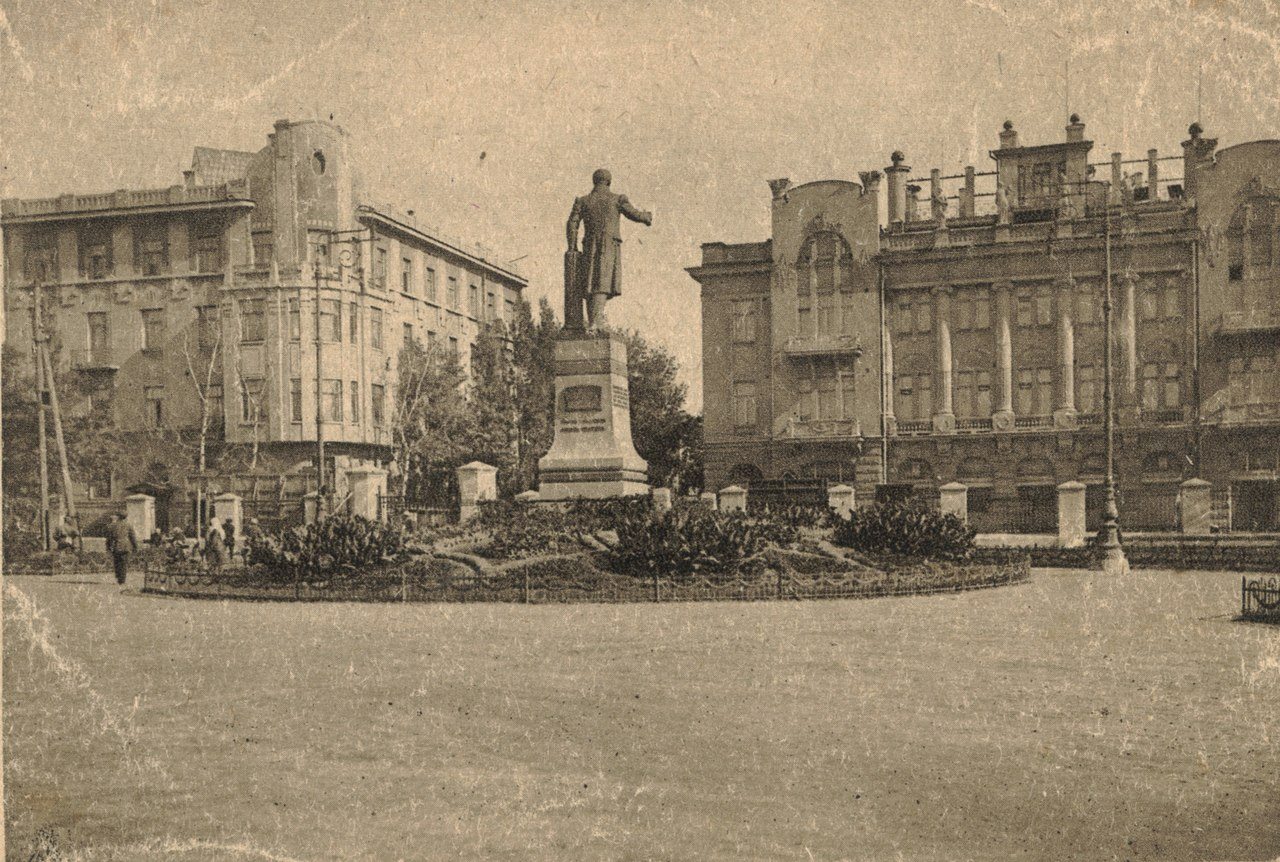
…if the project is implemented, the university will submit a request to the city administration to build a circular tram line from Klochkovskaya Line to Pushkinskaya. The loop line, crossing the “university campus” square, would significantly improve transportation for students, faculty, and university staff. To examine the matter in detail, members of the finance committee, together with representatives of the city administration, will conduct an on-site inspection of the university’s property and the proposed route of the future tram line in the coming days.
Alongside this, there is another proposal that is also based on the sale of the university’s central properties. Under this proposal, the new university buildings would be relocated to the University Garden. The main building complex will stretch from the Institute for Young Ladies to the Veterinary Institute. Other university buildings will be located partly along the wall adjacent to the Commercial Garden and partly on the open space between the Veterinary Institute. Thus, it will be possible to preserve the entire University Garden almost entirely intact; moreover, it is planned to fill in the existing moats in the garden and give the entire garden a more refined appearance befitting its name.
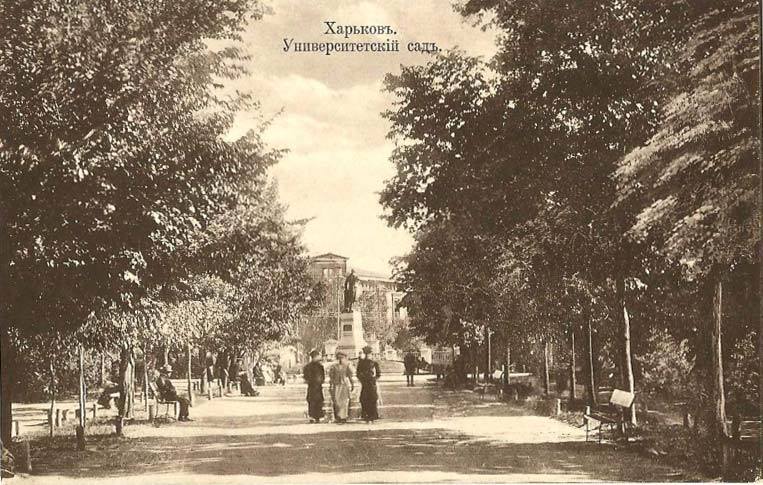
“The main building is to be erected a few sazhens behind the Karazin monument. A semicircular entrance will be constructed between the monument and the facade.”
Both of these projects are undoubtedly impressive in their grandeur. At the same time, it must be said that this grandeur stems from the very nature of university life and its ever-expanding needs. On the other hand, the implementation of either project will completely transform the entire character of the city. The prospects opening up in this direction, of course, cannot be fully assessed at a glance—and we will address them in a series of special articles devoted to this topic.
Unfortunately, the project was never carried out. Maybe it’s for the best. After all, if it had been, Kharkiv would be a completely different place for you and me. It might still be just as dearly loved, but it would be different nonetheless…

- About the military pilot school and the airfield in Kharkiv… - 04.11.2020
- Nikanor Savich—A Political Career by Mistake - 13.07.2020
- And once again, about the Cavalry Guards… - 21.01.2020