In the article “The Monster Concert and Other Charity Events,” we learned a little about the public lectures and concerts that charitable organizations held in our beloved city in the early 20th century. Today, we’ll take a look at the charity events organized by ethnic communities.
Incidentally, the authorities did not usually interfere with this. The Poles, who were the most organized and united among the parishioners of the Roman Catholic Church in Kharkiv, periodically held their own events in our city. For example, on February 12, 1901, a charity evening was held in the halls of the Commercial Club (now the Philharmonic) to benefit the Roman Catholic charity for the poor. The evening’s program included, in addition to dances and “living pictures,” a fable and a comedy in Polish.

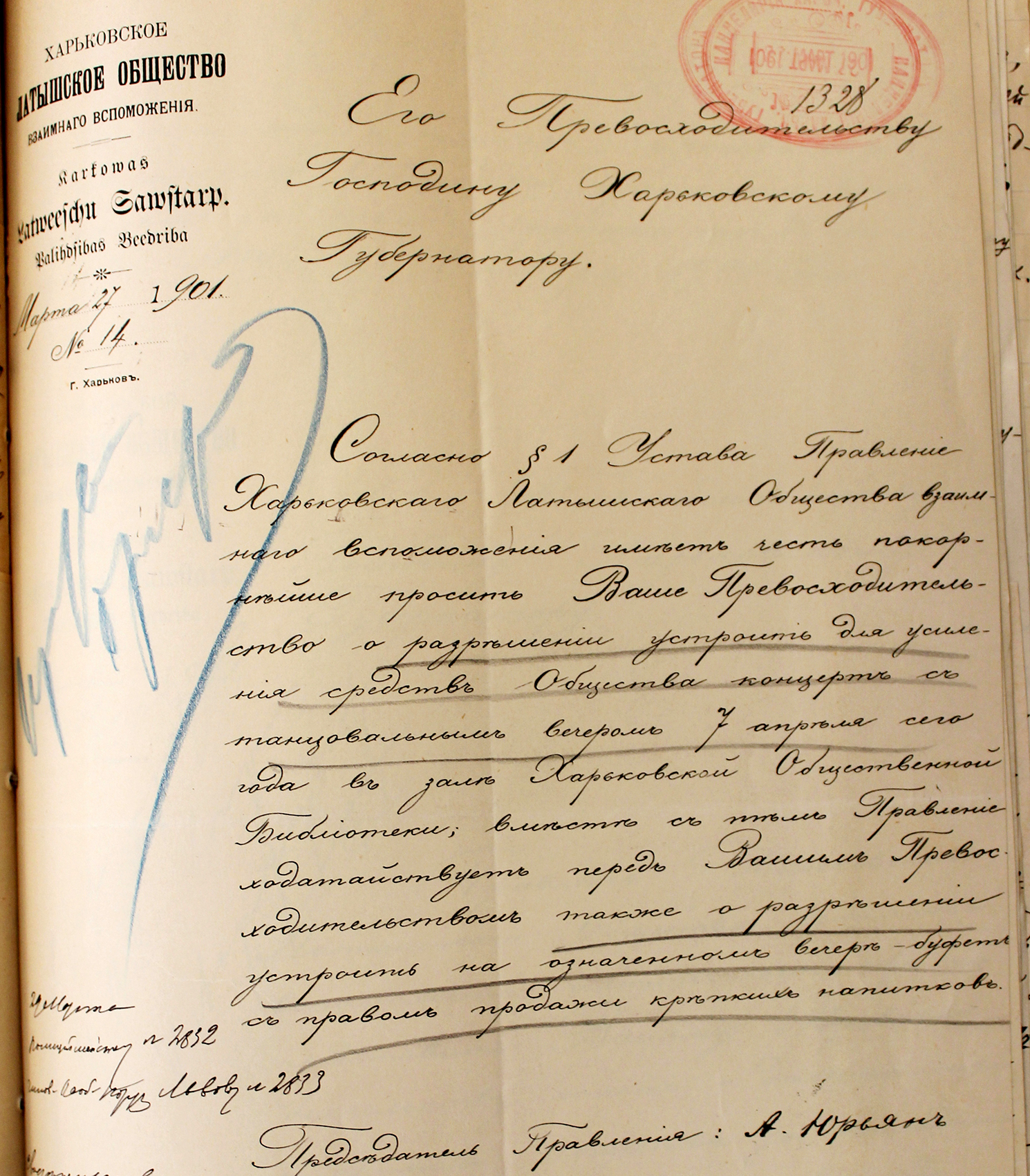
On April 7, the Kharkiv “Latvian Mutual Aid Society” hosted a dance evening with a buffet in the halls of the public library. The net proceeds totaled 219 rubles. The organizer of this event, as well as many others, was Andrejs Jurjāns, who, without exaggeration, can be called the heart of Latvian national and cultural life in Kharkiv in the late 19th and early 20th centuries.
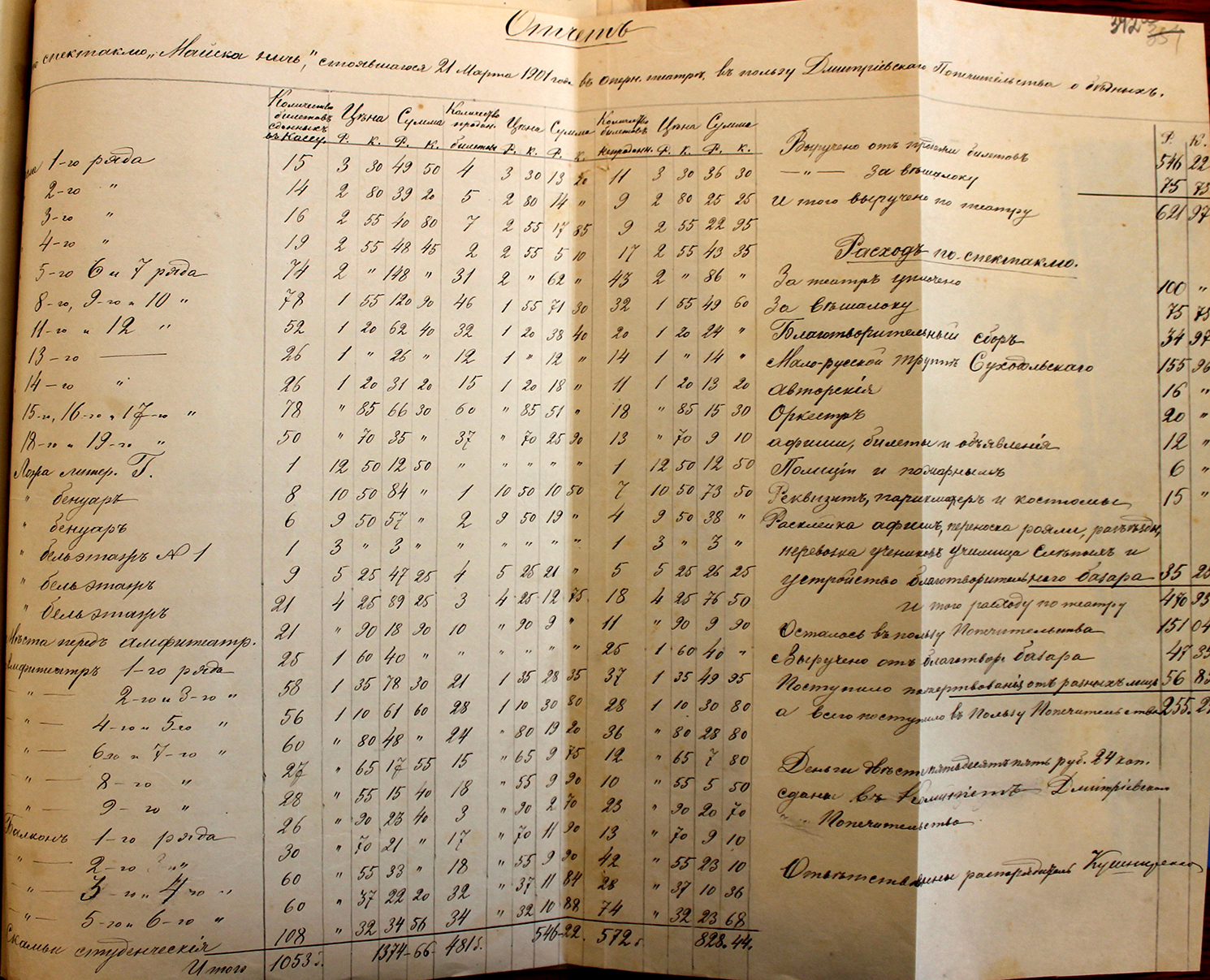
The parishioners of St. Demetrius Church set the tone for Ukrainian cultural life. For example, on January 31, 1901, the Committee for the Care of the Poor of the St. Demetrius Parish organized a performance at the Nikitin Brothers’ Circus. The play *Khmara*, performed in Ukrainian by Alexei Lvovich Sukhodolsky’s troupe, was quite a success. This is not surprising, since this very troupe was considered one of the finest examples of Ukrainian theater at the time.

Then, on March 13, the same committee staged the play *Mayska Noch* once again—this time at the Opera House—with the participation of Sukhodolsky’s troupe.
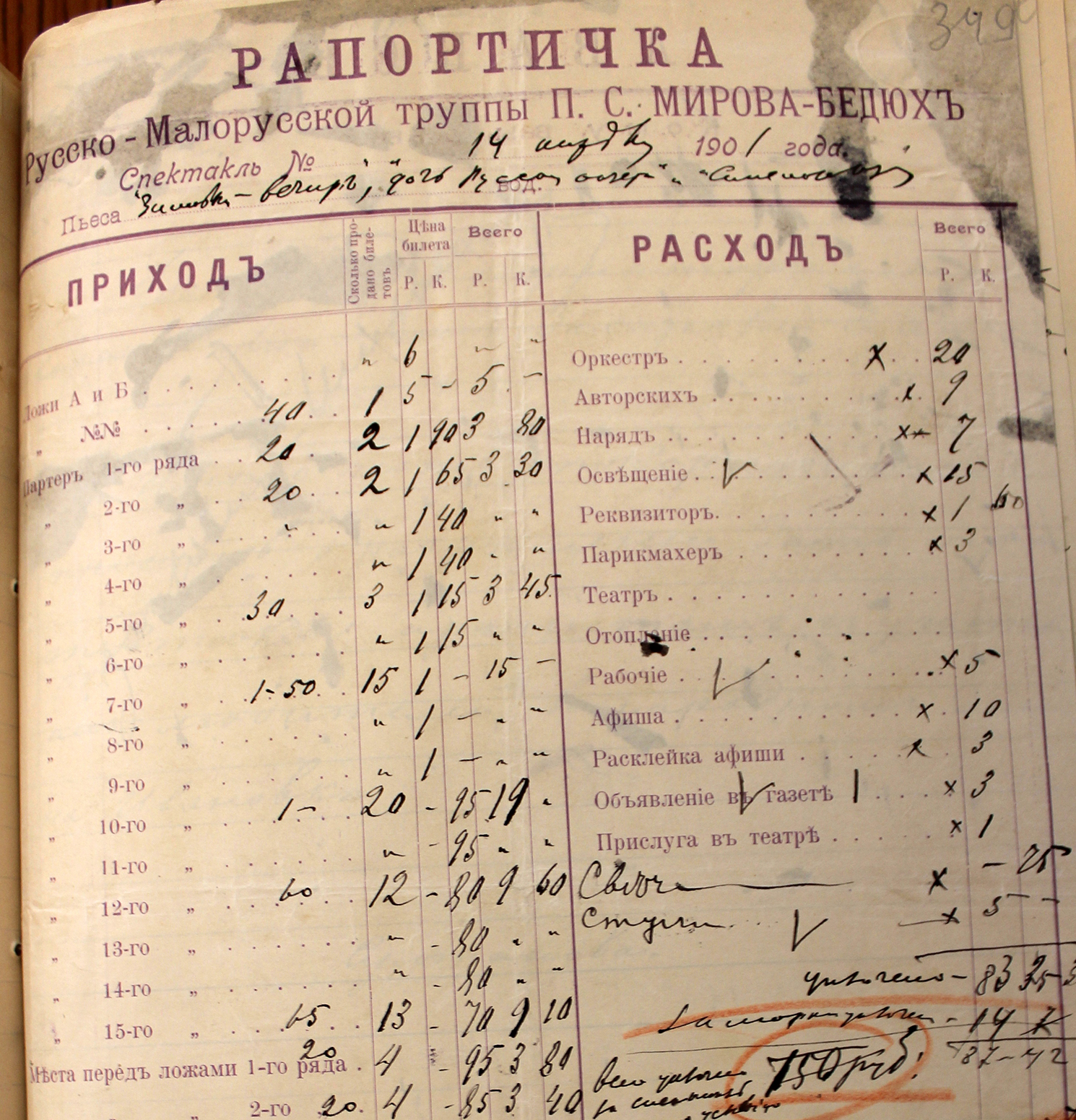
Other organizations in our city kept pace with the Dmitrievsky Parish. In March of that same year, the “Clerk Mutual Aid Society” organized a performance by artists from the “Little Russian Group” in the halls of the Commercial Club. And the “Mutual Aid Society of Typesetters” staged a performance by the Russian-Little Russian troupe of Mirov and Bedyukh at the Nikitin Brothers’ Circus. This was the very same troupe about which, as early as 1891, after a performance of *Nazar Stodolia*, the newspaper *Smolensk Vestnik* wrote that “the local audience was beside itself with admiration for the actors’ performances.”
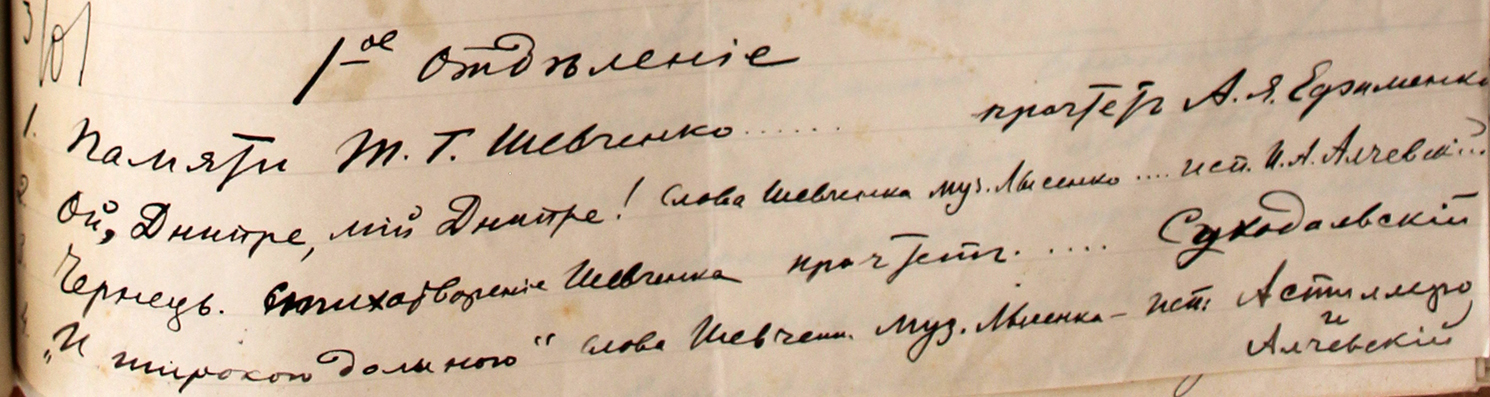
However, life in our city during the Ukrainian period was not as easy and straightforward as it might seem at first glance. Second Lieutenant (Reserve) Nikolai Ivanovich Mikhnovsky, who lived at Rymars’ka Street, 23, submitted a petition addressed to the governor of Kharkiv in early 1901. In it, Mikhnovsky asked the authorities for permission to hold a literary and vocal evening on March 11 at the Opera House in support of the “St. Petersburg Charitable Society for the Publication and Distribution of Useful and Inexpensive Books,” in memory of the poet Taras Shevchenko. In addition to Mykhailo Mikhnovsky himself, the event was to feature historian Oleksandra Yakovlevna Yefimenko and the brilliant opera singer Ivan Oleksiyovych Alchevsky.
Judging by the detailed program for each of the two parts, the evening—which was set to begin at 8:00 p.m.—had every chance of becoming the finest Ukrainian national and cultural event of the entire year 1901.
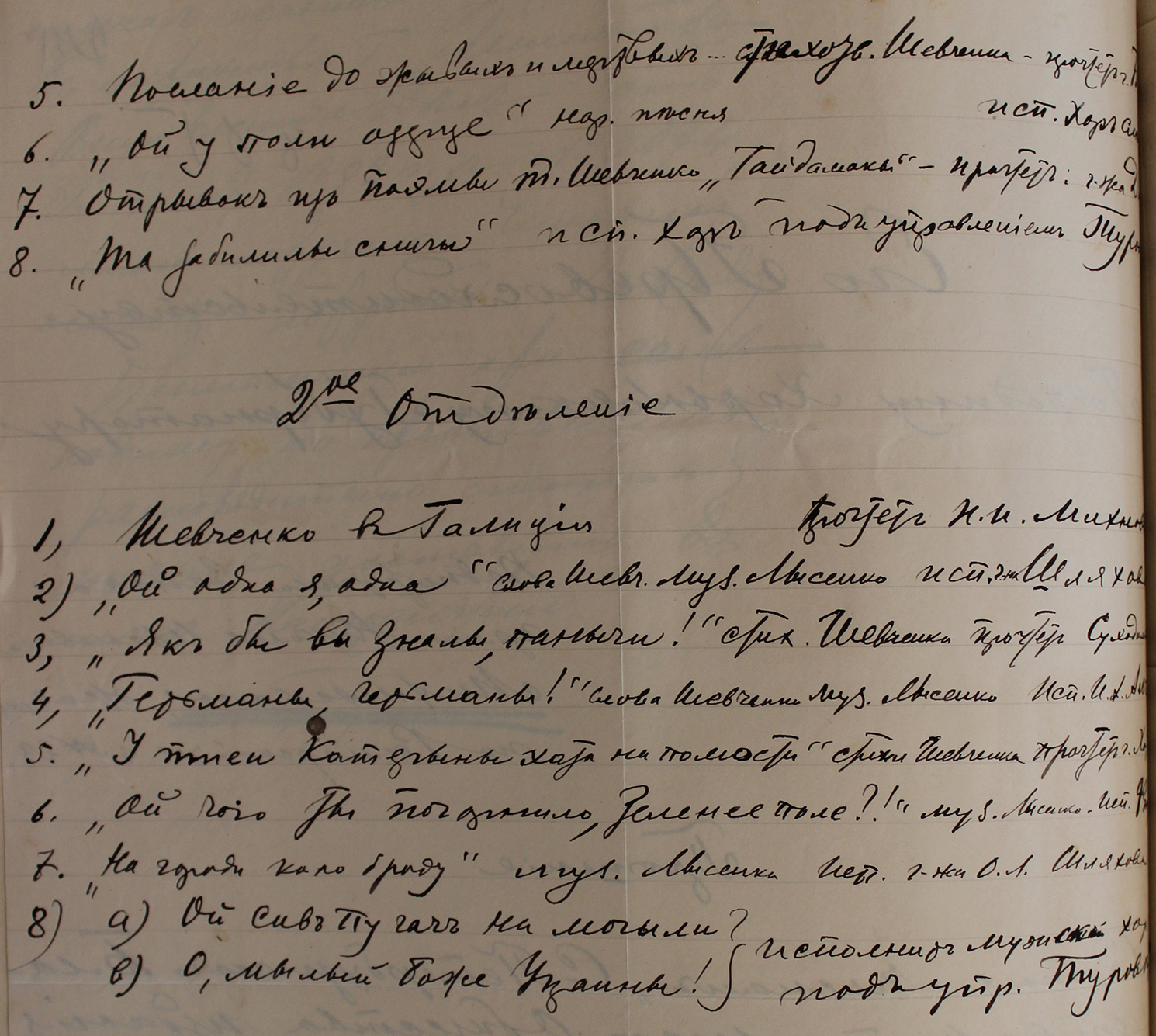
On March 1, the governor of Kharkiv replied as follows: “Inform the aforementioned Mikhnovsky that I have determined it is not currently possible to grant his request.”
Thank God that these days, the authorities don’t respond to such events in that way. Probably because the price paid for them in the past was too high.

- About the military pilot school and the airfield in Kharkiv… - 04.11.2020
- Nikanor Savich—A Political Career by Mistake - 13.07.2020
- And once again, about the Cavalry Guards… - 21.01.2020