Mykola Lysenko, born in 1842 in the Poltava region, is considered one of the founders of Ukrainian classical music. The composer’s life and work were closely tied to Kharkiv.
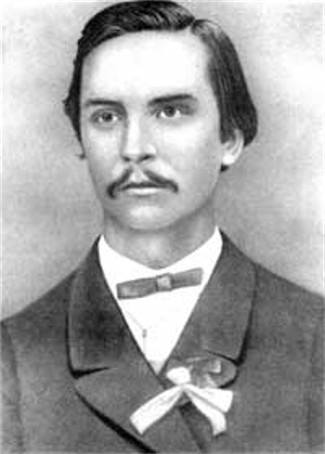
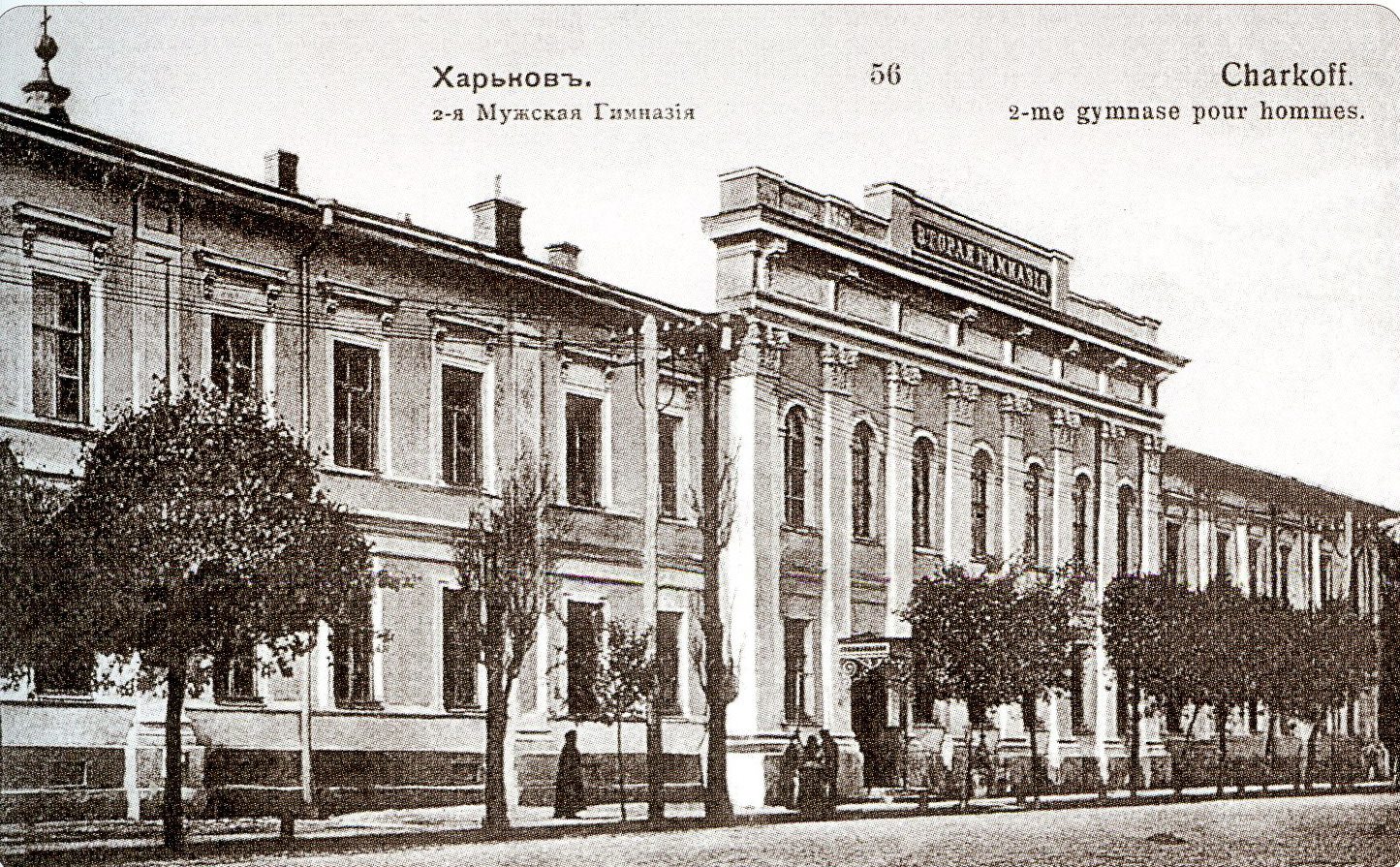
It was in our city that he spent five years, having enrolled in 1855 at the Second Boys’ Gymnasium, where, incidentally, he studied alongside Mechnikov.
At the age of 6, the boy was already impressing adults with his excellent piano playing, a skill that improved even further during his studies in Kharkiv. Among Nikolai’s teachers in Kharkiv was the renowned pianist Nikolai Dmitriev. While the young musician was still a student, he was often invited to perform at balls and soirées.
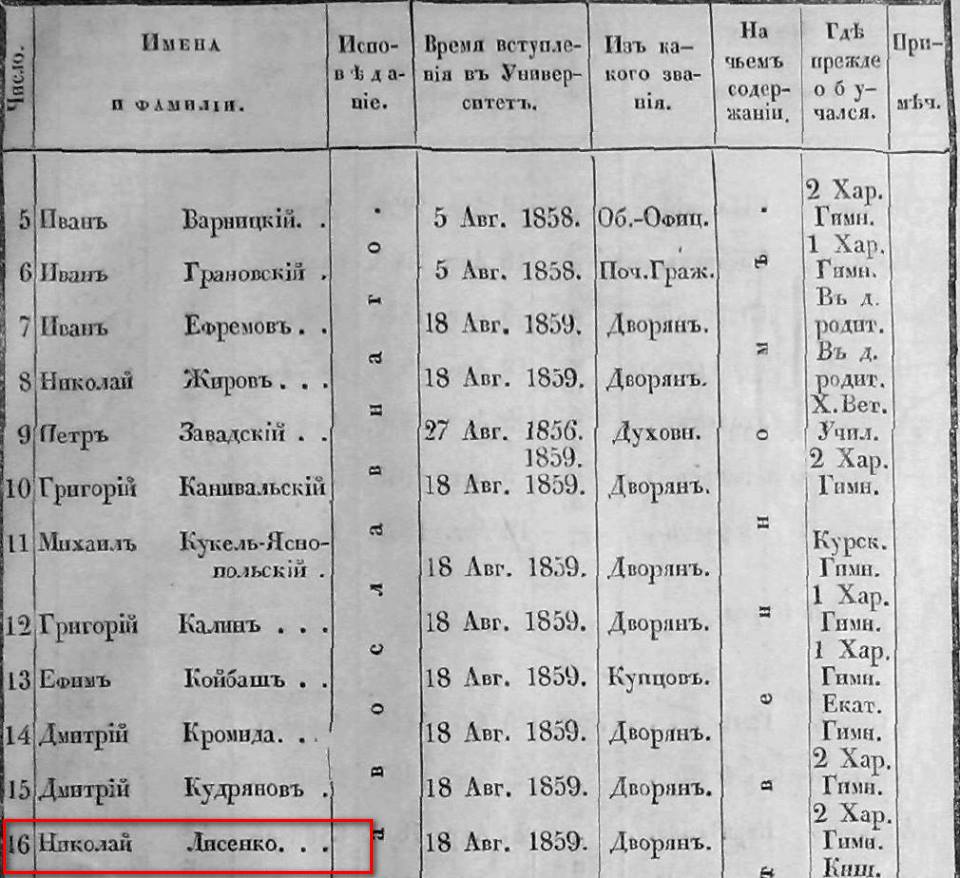
In 1859, Nikolai graduated from high school with honors and enrolled at Kharkiv University, where he studied for only one year.

In 1860, Lysenko moved to Kyiv with his parents; nevertheless, he returned to Kharkiv on more than one occasion.
On June 1, 1882, the Kharkiv Drama Theater hosted the premiere of the first major musical stage work written by Lysenko back in 1873—the operetta “The Black Sea Sailors.” The cast included Marko Kropyvnytskyi, Mykola Sadovskyi, and Maria Zankovetska. The libretto, replete with comic episodes, was written by M. Staritsky based on Y. Kukharenko’s play “Black Sea Life in the Kuban,” which told the story of the Zaporozhian Cossacks who settled in the Kuban after the destruction of the Sich in 1775.
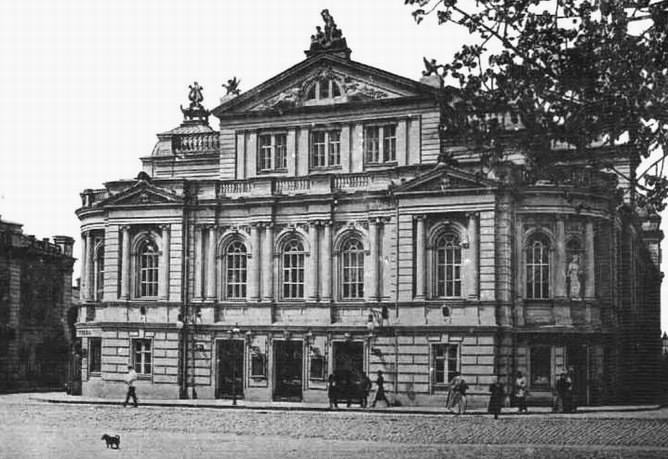
Six months later, on January 27, 1883, the opera *Christmas Eve*, based on the work by Nikolai Gogol, premiered once again—this time in Kharkiv. The opera was a great success. Mykola Lysenko took an active part in the production—he paid meticulous and careful attention not only to the actors but also to the costumes and sets, which faithfully recreated the everyday life of a Ukrainian village.
In 1885, at the premiere of the opera *The Drowned Woman*—based on works by Gogol and also held in Kharkiv—a full symphony orchestra was featured, and “the women’s choir alone consisted of 40 singers,” as the press reported.
It was in Kharkiv, on October 3, 1924—after the composer’s death and the revolution—that the famous opera *Taras Bulba* premiered…
As we can see, the Kharkiv National Academic Opera and Ballet Theater is quite rightly named after Mykola Lysenko.
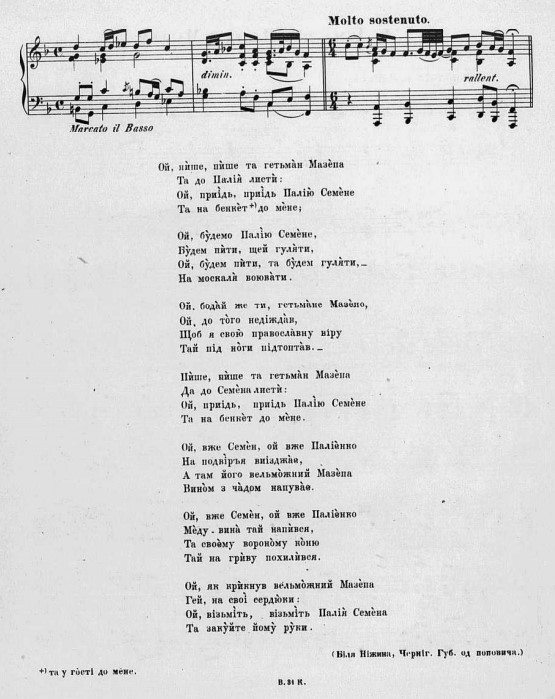
In the meantime, you can read (or sing) Ukrainian folk songs collected and arranged by Mykola Lysenko. The book was published in 1868 in Kyiv and was, as expected, “approved by the censors.”

You can download the book in PDF format here:

- Blackie’s House on Maksymilianivska St - 19.10.2026
- Danylevs’koho Street, 19 - 13.10.2026
- Debunking the myth about one of the most famous Kharkiv photos - 12.10.2026