The Kontorska Street area has long been a true example of Kharkiv’s multiculturalism—peaceful and synergistic. The Cathedral Mosque at Yaroslavska Street, 31 although a modern building, embodies a whole layer of Kharkiv’s Muslim history.
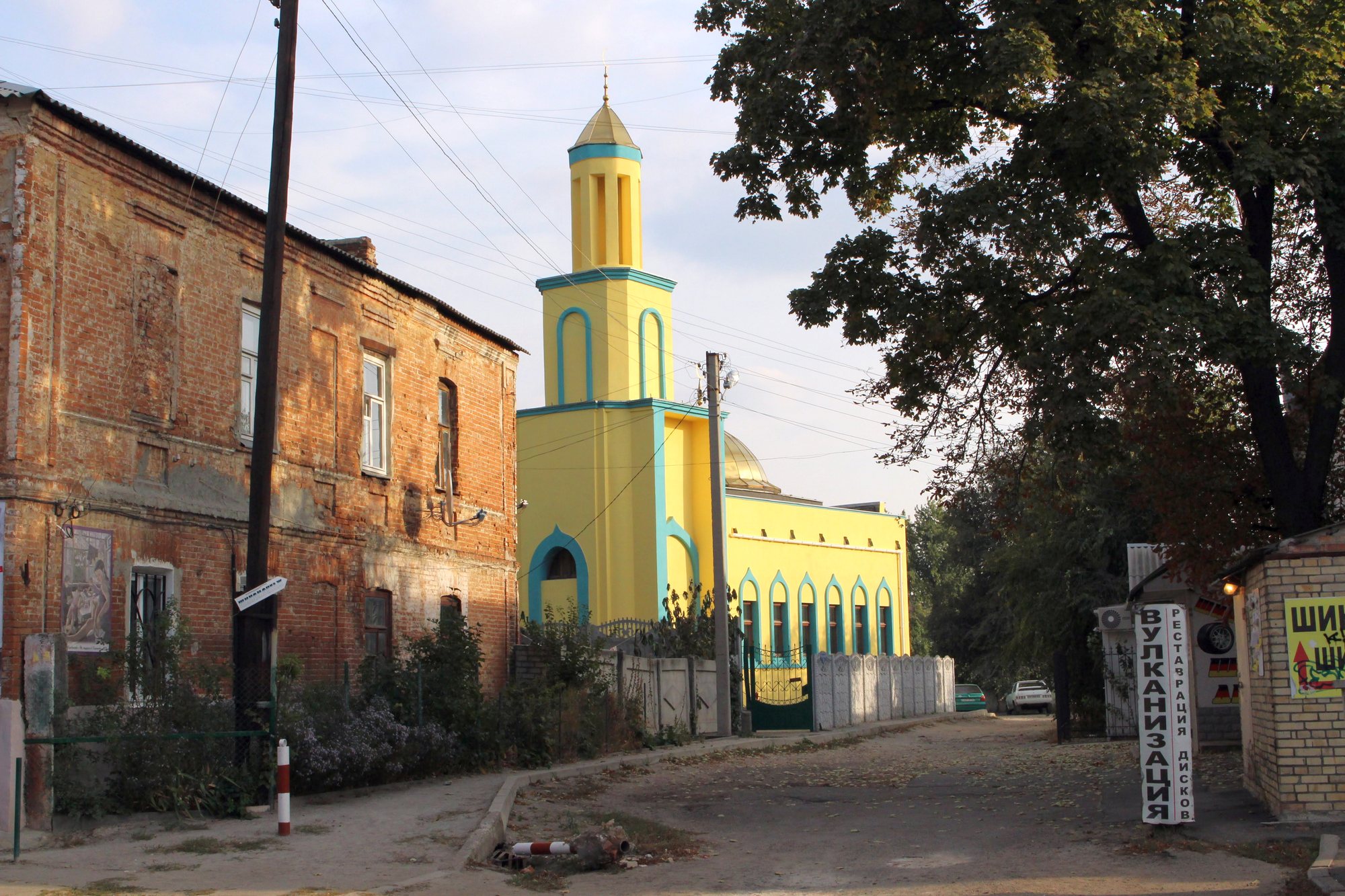
The modern mosque was erected near the site of the first Mohammedan cathedral mosque, which opened in August 1906. Local authorities mandated the construction of a reinforced concrete ceiling and minaret. The Tatar community built the mosque in record time—four months.
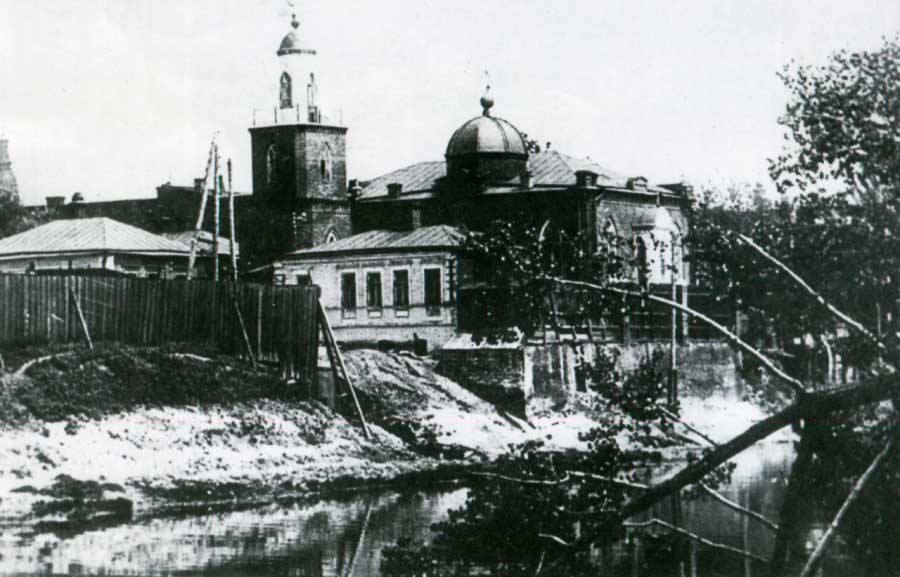
A religious school (maqteb) was also located next to the mosque. The mosque was Sunni, but even Shiites (to which the Persians and Azerbaijanis belonged) also came there on special holy days.

The mosque’s mullah, Rahim Uzbyakov, was also the military mullah of the entire Kyiv Military District, which encompassed most of Ukraine. In Kharkiv, several hundred Tatar soldiers were quartered in the Moskalivsky barracks (now the site of the former Radiodetal factory on the other bank of the Lopan River, opposite Kontorska).

Uzbyakov was highly respected in Kharkiv; he also held the title of akun, a spiritual scholar and arbitrator among the Muslims of the Kharkiv province.
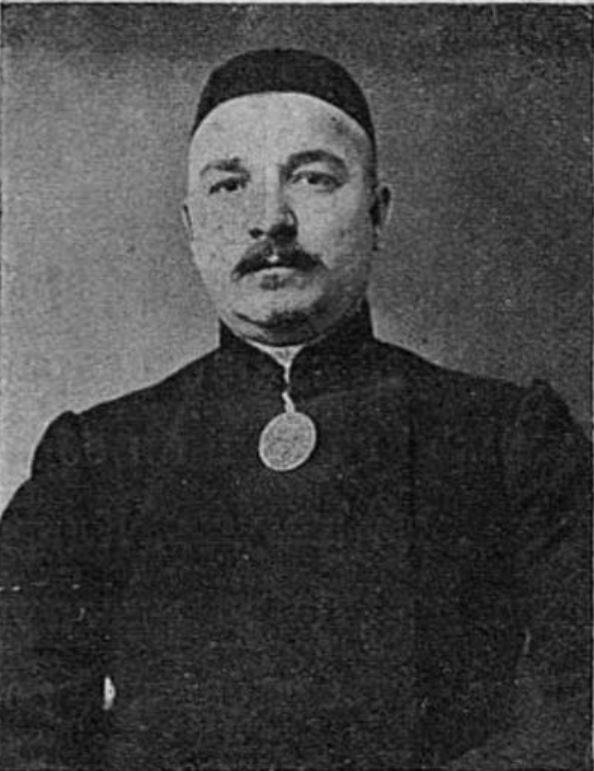
After coming to power, the Bolsheviks gradually began to repress all religious organizations. The religious school (mekteb) was converted into a Tatar language school. In 1933, Rahim Uzbyakov was repressed and died after interrogation. The mosque was closed, and its wall was used as a shooting range.
In 1936, the mosque was completely demolished – the formal reason was “the expansion and improvement of the Lopan riverbed.”
The walls were successfully torn down, but attempts to erase the Muslim community’s memory of its traditions and history were in vain. They continued to live in the houses surrounding the destroyed mosque. They prayed in the vacant lot near the former cemetery where the Turboatom plant was built, and in Muslim apartments, sometimes in the presence of police.

The society was officially revived in 1991. Many families who had fled the horrors of the war in Ichkeria (Chechnya), as well as many students from Muslim countries, appeared in Kharkiv, but there was still no mosque.

The Cathedral Mosque was built between 1998 and 2006 according to the design of Ilyas Muratov, although decorative work continued for several more years.

The mosque’s foundation partially overlaps that of an older mosque, discovered during excavation work. Stones from the old mosque were incorporated into the new mosque, emphasizing its historical continuity.


- The Architectural Evolution of the Kharkiv Theater - 26.09.2026
- 1st Kharkiv Gymnasium - 17.09.2026
- The Oldest Movie Theater in Ukraine - 24.08.2026