Not long ago, on August 5, the city of Chuguev in the Kharkiv region hosted festive events marking the 172nd anniversary of artist Ilya Repin’s birth.
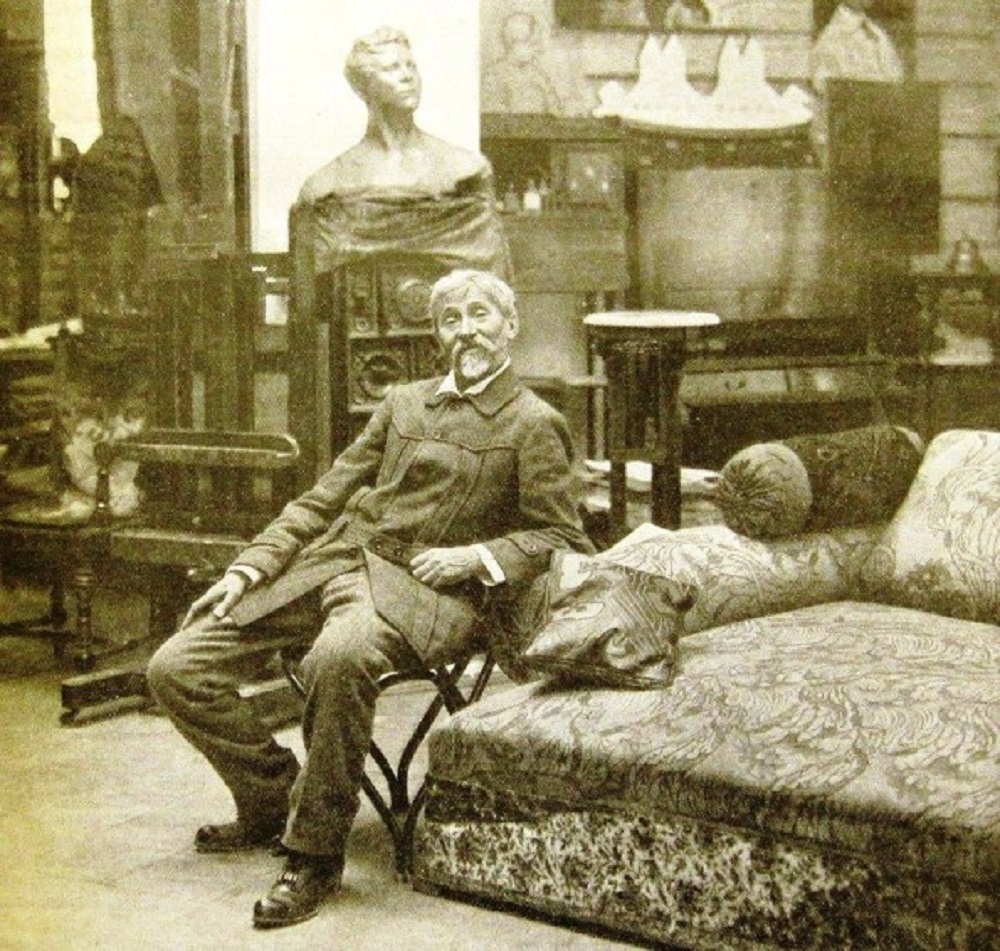
Of course, one could talk endlessly about Ilya Efimovich Repin and his work, and the very memory of him is something we take for granted and consider part of our everyday lives. However, today I would like to remember the man who became a close friend and colleague of the great master and supported him during his final 12 years—the man to whom we owe much for the preservation of Repin’s legacy and his memory.
In 1899, Ilya Repin purchased a plot of land in the village of Kuokkala (now Repino), where he later built the “Penaty” estate. It was there that he spent the last 30 years of his life. After 1918, Kuokkala became part of Finland. That same year, 1918, Ilya Yefimovich had a truly fateful encounter that radically influenced the rest of his life. Vasily Filippovich Levi arrived at “Penaty.”

V. F. Levi was born in Kharkiv on September 17, 1878. He attended the First Kharkiv Gymnasium and graduated with a silver medal. He studied at the Law School of Kharkiv University from 1899 to 1905. In the 1910s, he served as a sworn attorney for the St. Petersburg District Court and was a successful lawyer. In 1916, he left his position and moved to Terioki (now Zelenogorsk) near St. Petersburg. After the October Revolution, Terioki found itself within Finnish territory.
However, Vasily Levi’s true passion was by no means law, but painting. Although Levi was a student of the renowned Kharkiv artist Schrader, he is still considered an amateur painter.
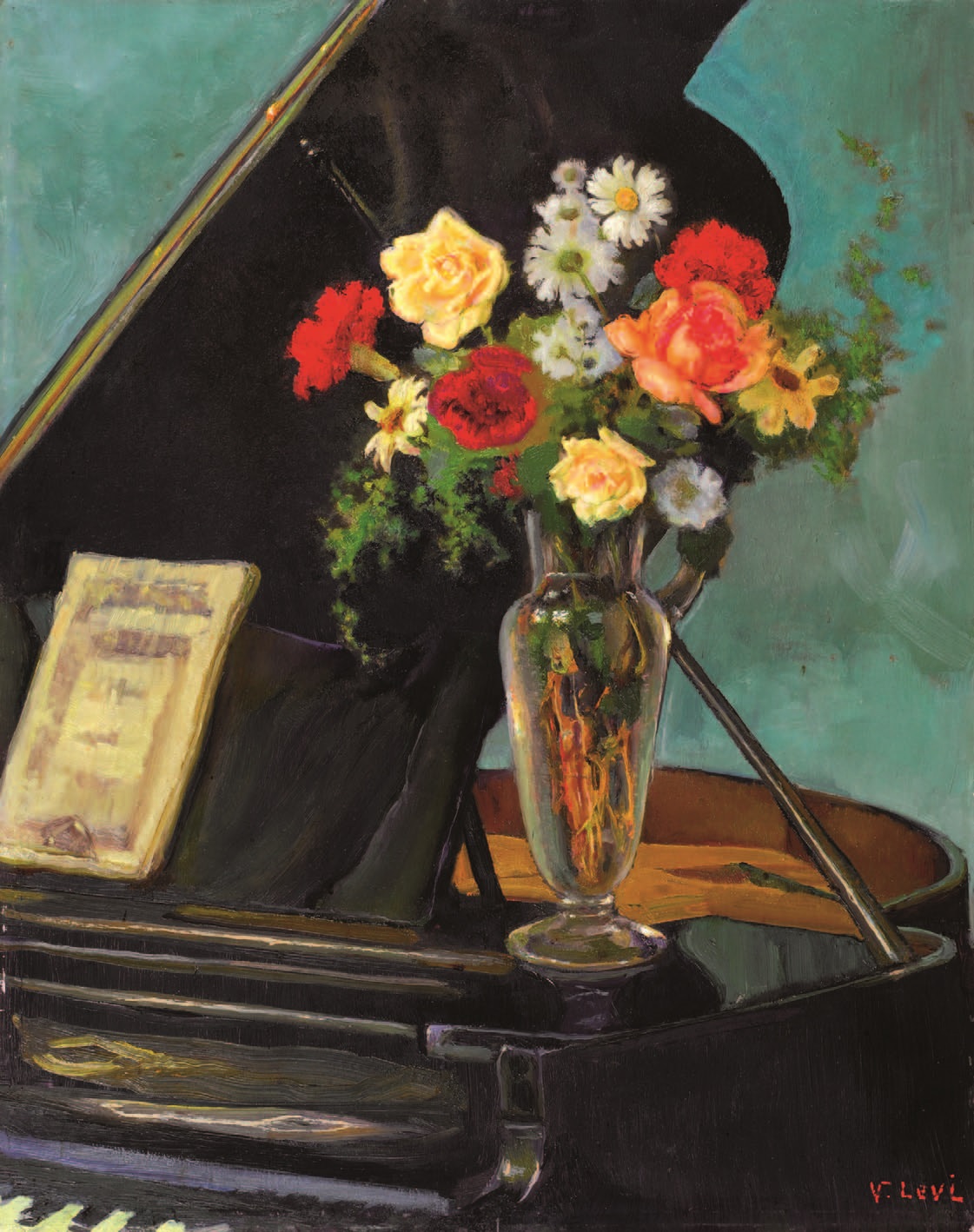
After moving to Terioki, Levi built a house based on his own design so that he could devote himself to his art in comfort and peace. For Levi, Ilya Repin was an idol. Vasily Filippovich himself admitted that he had literally idolized Repin since his youth, admiring not only his artistic mastery—which he considered indisputable—but also the civic stance of the artist, who championed justice, honesty, and human dignity. It was not far from Levi’s dacha in Terioki to Repin’s Kuokkala. On the advice of his friend Joseph Brodsky, Levi finally decided to show his works to Ilya Repin. Upon arriving at Penaty, a disheartening sight met Levi’s eyes. During those years, the great Repin lived in abject poverty; there were even rumors that the great master had died of starvation. Here is how Levi himself recalls his first meeting with Ilya Efimovich:
Finally, I was led into a low-ceilinged, sweltering little room. A piano stood against the wall. There, I was warmly greeted by a small, lively, agile, and slight old man with a picturesque head of gray hair and a gray, unkempt beard. This was Ilya Repin, who had captivated my imagination since childhood. He was wearing a strange outfit: a frock coat from the time of Alexander I with a high stand-up collar, trimmed with braid and adorned with medals. I was taken aback. What an eccentric sight! Later I learned that this uniform was part of the props for the painting *Pushkin at the Lyceum Exam* and had been intended for Derzhavin. Repin would sometimes wear it during these idle days, just like some of the other strange costumes from the extensive collection of props. The refreshments consisted of weak tea and stale, poorly baked rolls. As it turned out, there was nothing left to host with. As I later learned, there had been almost no money left in the house since the border had been closed. Still, the refreshments and the tea seemed more delicious to me than ever before.
Vasily Filippovich was deeply shocked to learn that the great master was so lonely and helpless that he had virtually no means of support. In his memoirs, Levi recalls:
In 1918, shortly after meeting Repin, I learned that he was indeed in need of money. I was very flattered when he simply and bluntly told me this and asked to borrow a small sum from me—200 marks, I believe. After that, my wife and I began offering to lend him money ourselves. This led to a situation where, when the debt reached 1,000 marks (which was 1,000 rubles at the exchange rate, or approximately 143 dollars) Ilya Efimovich suggested that I paint a portrait of my wife to settle the debt…
“Portrait of Beatrice Levi” was painted in the summer of 1918.
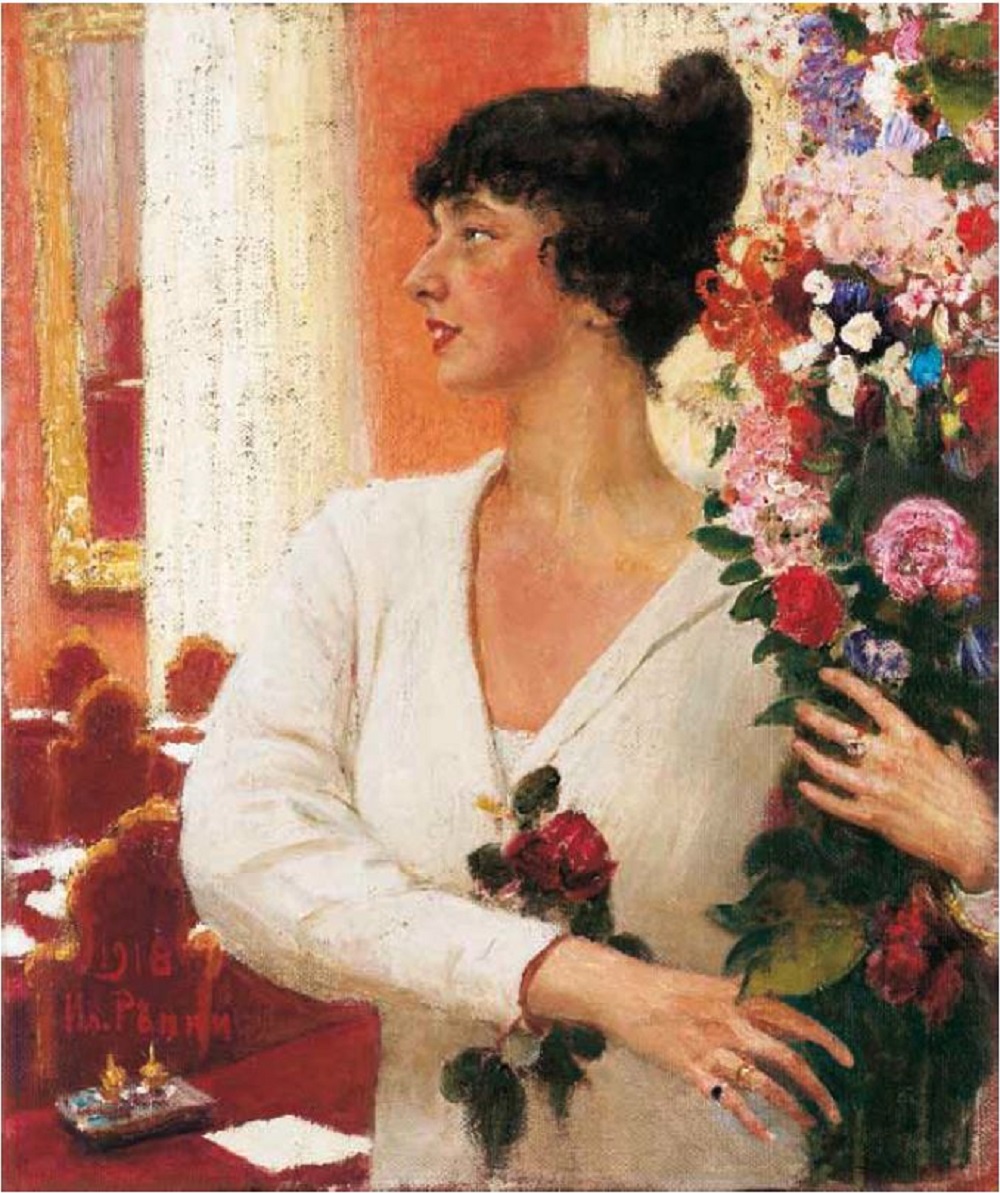
When discussing him, the following points should be noted:
- The portrait was painted not on canvas, but on linoleum.
- The painting has become a symbol of the affirmation of beauty and femininity, which triumph in spite of the terrible upheavals of the surrounding world engulfed in war. The same innovative artistic principles that the artist applied in *Portrait of Beatrice Levi* embody Repin’s new painting style and make *Portrait* an outstanding work among Ilya Efimovich’s paintings.
After some time, Levi became Repin’s trusted associate. Possessing superb organizational skills, Vasily Filippovich organized more than 50 exhibitions of Repin’s work between 1919 and 1930 in Helsinki, Prague, The Hague, Hamburg, Nice, Cannes, Paris, and other European cities, thanks to which Ilya Yefimovich’s financial situation improved significantly.
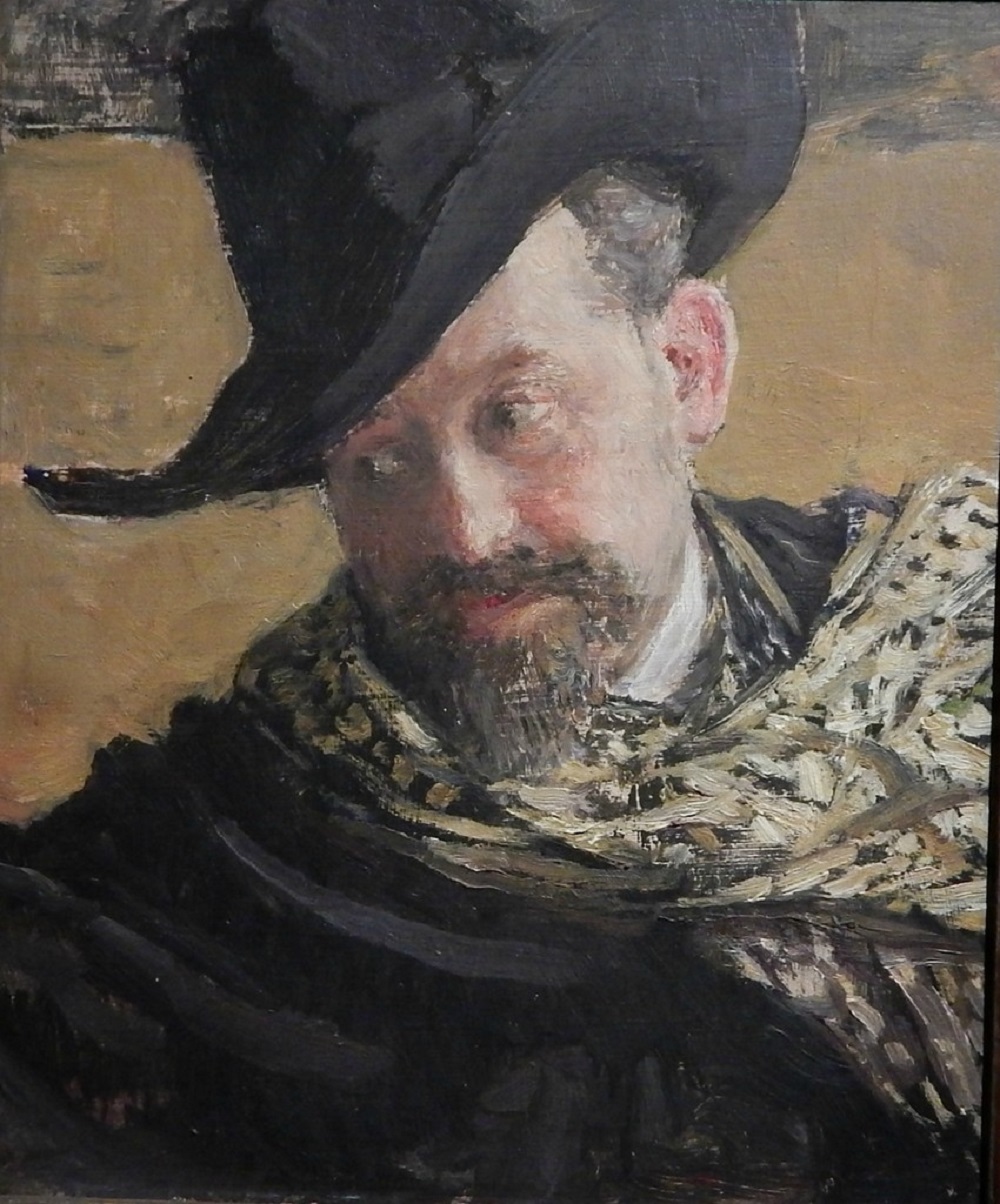
In the 1920s, Repin painted the stunning portrait “Man in a Hat,” which depicts Vasily Levi.
In addition to his collaboration with Repin, Levi himself continued to paint actively. In 1930, he took part in the Exhibition of Russian Masters in Amsterdam, and in 1931, he became one of the organizers and participants in an exhibition of Russian artists at the d’Alignan Gallery.
It got to the point where the press began referring to Vasily Filippovich as “Repin’s student.”

In the 1930s, the artist lived in Paris; he then moved with his family to Stockholm, where he continued to paint, creating academic landscapes and, in the final years of his life, lyrical still lifes.
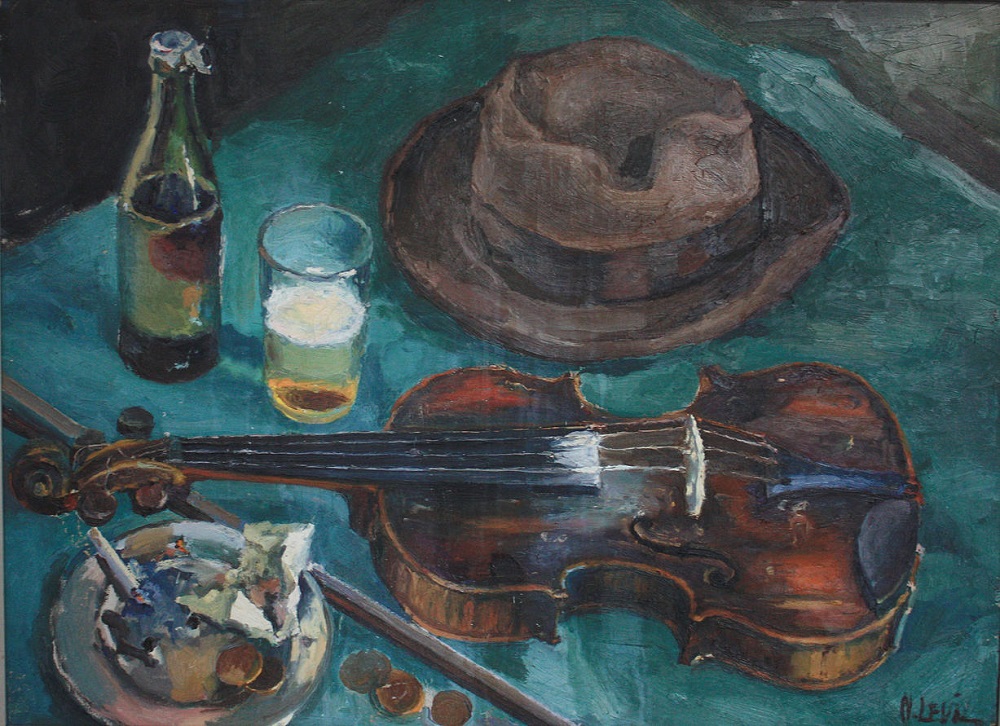
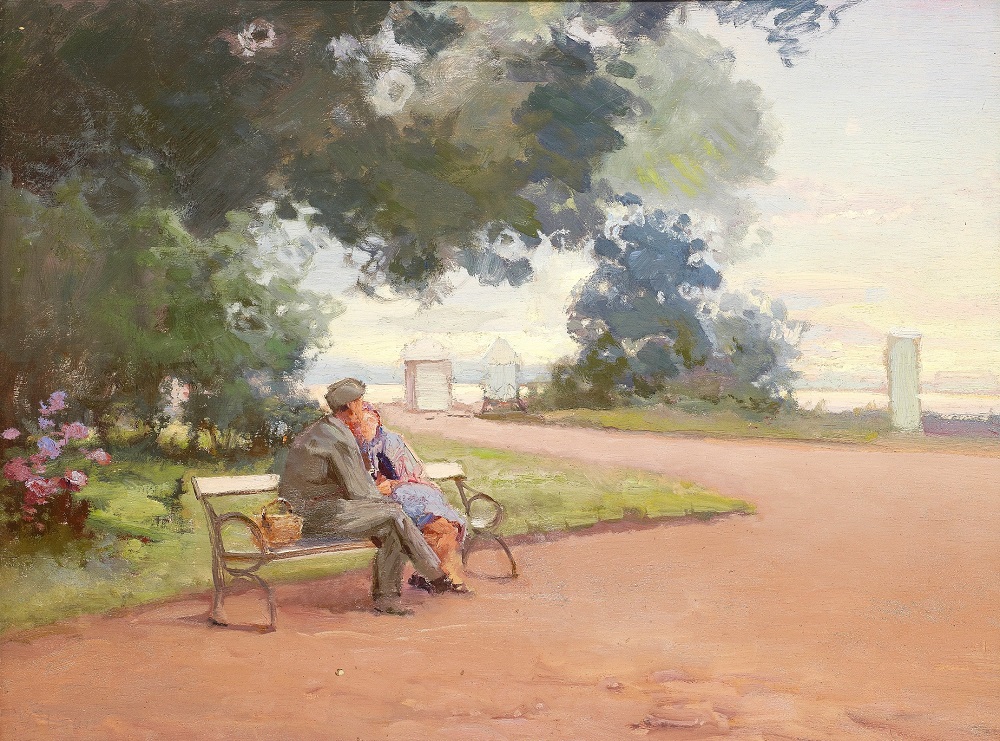
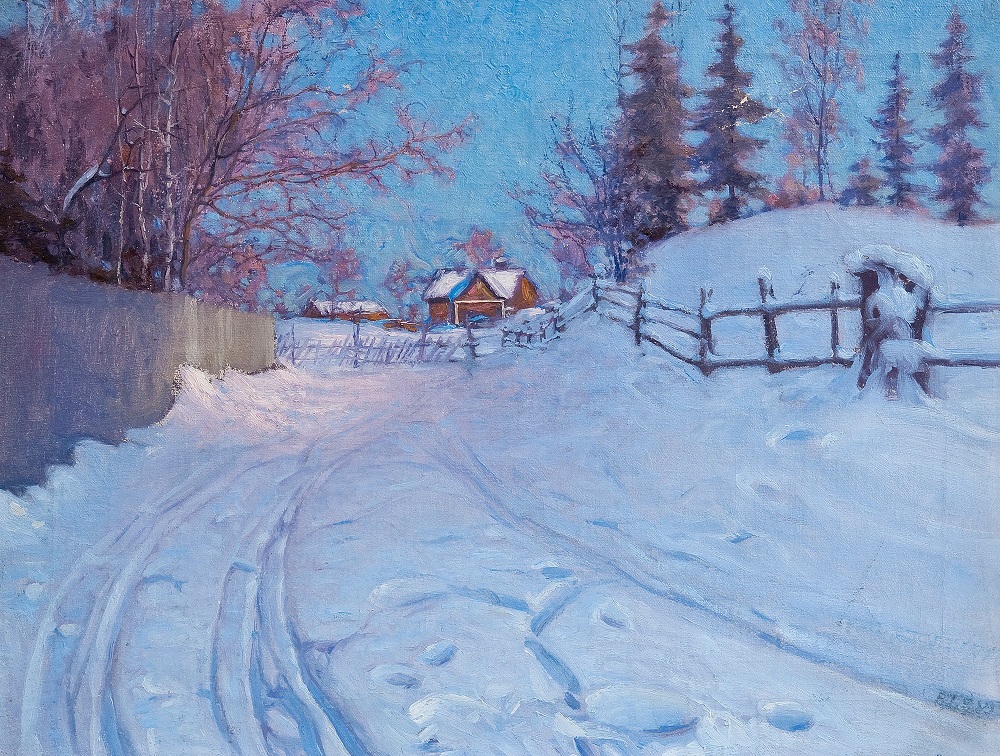
In 1945, V. F. Levi donated to the State Literary Museum in Moscow 160 letters that I. E. Repin had written to him, a manuscript of memoirs titled “Materials for Commentary on the Correspondence Between I. E. Repin and his former attorney V. F. Levi,” and his copy of Repin’s painting “The Futurist Poet” (a portrait of K. Olimpov). In 1946, he donated two of Repin’s sketches for the famous “Zaporozhye Cossacks” to the State Tretyakov Gallery.
Our distinguished fellow townsman passed away on February 13, 1953, in Stockholm.
One of his daughters, Nina, became a very famous artist in Sweden.
Vasily Filippovich’s works are housed in state museums in France, Russia, Sweden, and Finland. His landscape painting “Snow Under the Sun” was acquired by the Luxembourg Museum in Paris. His paintings are also in high demand at art auctions.
In 2015, the St. Petersburg television channel “Zaliv TV” aired a three-part documentary (15 minutes each) dedicated to Vasily Levi as part of the series “The Present Past.”
Alas, in the city where he was born and raised, few people remember him today.

- About the military pilot school and the airfield in Kharkiv… - 04.11.2020
- Nikanor Savich—A Political Career by Mistake - 13.07.2020
- And once again, about the Cavalry Guards… - 21.01.2020