To be perfectly honest, we really didn’t want to leave the beauties of Lyfyne behind. However, time was slipping away relentlessly, and there was still so much waiting for us ahead!
The next stop on our journey is none other than a lake featured in the “Top 7 Most Beautiful Lakes in Ukraine.” This comes as no surprise at all. After all, Lake Shelehivske, located near the village of Mezhyrich in the Lebedyn District, is the true pride of our Sloboda Ukraine region. It is, after all, the oldest lake in our country.
In theory, crowds of tourists from all over Ukraine and other countries should be flocking to such an iconic and simply enchantingly beautiful place! But, alas, due to the complete lack of roads, there are practically no tourists there. And there are also certain challenges when it comes to finding your way there.
I don’t know how to get to Lake Shelehivske from Mezhyrich (some online sources say that locals might give you a ride on a tractor), but we, curious residents of Kharkiv, drove from the Lyfyne Estate. The locals explained the route to us like this: “Leave Lyfyne. Then go straight, straight ahead. And when the paved road starts, there’ll be a right turn, and there’s a sign there with an inscription.” Well, as they say, a simple task isn’t hard, so we set off. At first, we were driving on a dirt road. The sandy-clay dust kicked up by the vehicle ahead of us forced us to close the windows and dream of gas masks. Then the gravel began. There were quite a few turns along the way, and we took a wrong turn about five times. The landmark sign itself, as it turned out, looked like this:

There it is, so small and unassuming, off to the side… However, even if you do manage to reach that long-awaited turn, that’s still no guarantee you’ll get to see the lake’s beauty. When we returned there two weeks later for the second time during a road trip organized by the UAR (Ukrainian Automobile Movement), we couldn’t even reach the lake in our rugged Nissan Patrols—the road had been so badly washed out by the rain.
So, in bad weather, enemies won’t be able to reach the landmark. Neither will we, for that matter.
But the “Nakipelo Expedition” got lucky: the sun was shining and it was dry. So we made it to the lake, surrounded by forest, without any trouble. The flora and fauna there are extraordinarily rich: birches, willows, and alders grow there, along with plenty of wood sorrel, blackberries, and hops. There are many wild animals (wild boars, vipers, beavers, red crucian carp, loaches, and crayfish).
There are several beautifully furnished gazebos along the shore. One of them is located in the southern part on a small island and is connected to the shore by a wooden bridge. That’s where we decided to take a break. An information stand nearby told us that:
Lake Shelehivske is a hydrological natural monument of national significance, formed during the Ice Age. Massive mountain shifts blocked the path of meltwater and created a glacial lake covering an area of 7 hectares. To this day, the lake has retained the cold it inherited from the glacier. It was here, in the mid-17th century, that Cossack settlers from the Right Bank, led by Centurion Shelekhovsky (from whom the lake derives its name), to later found the fortress town of Mezhyrich, which subsequently became one of the centers of Ukrainian pottery. From a bird’s-eye view, Lake Shelehivske resembles an unfurled horseshoe.
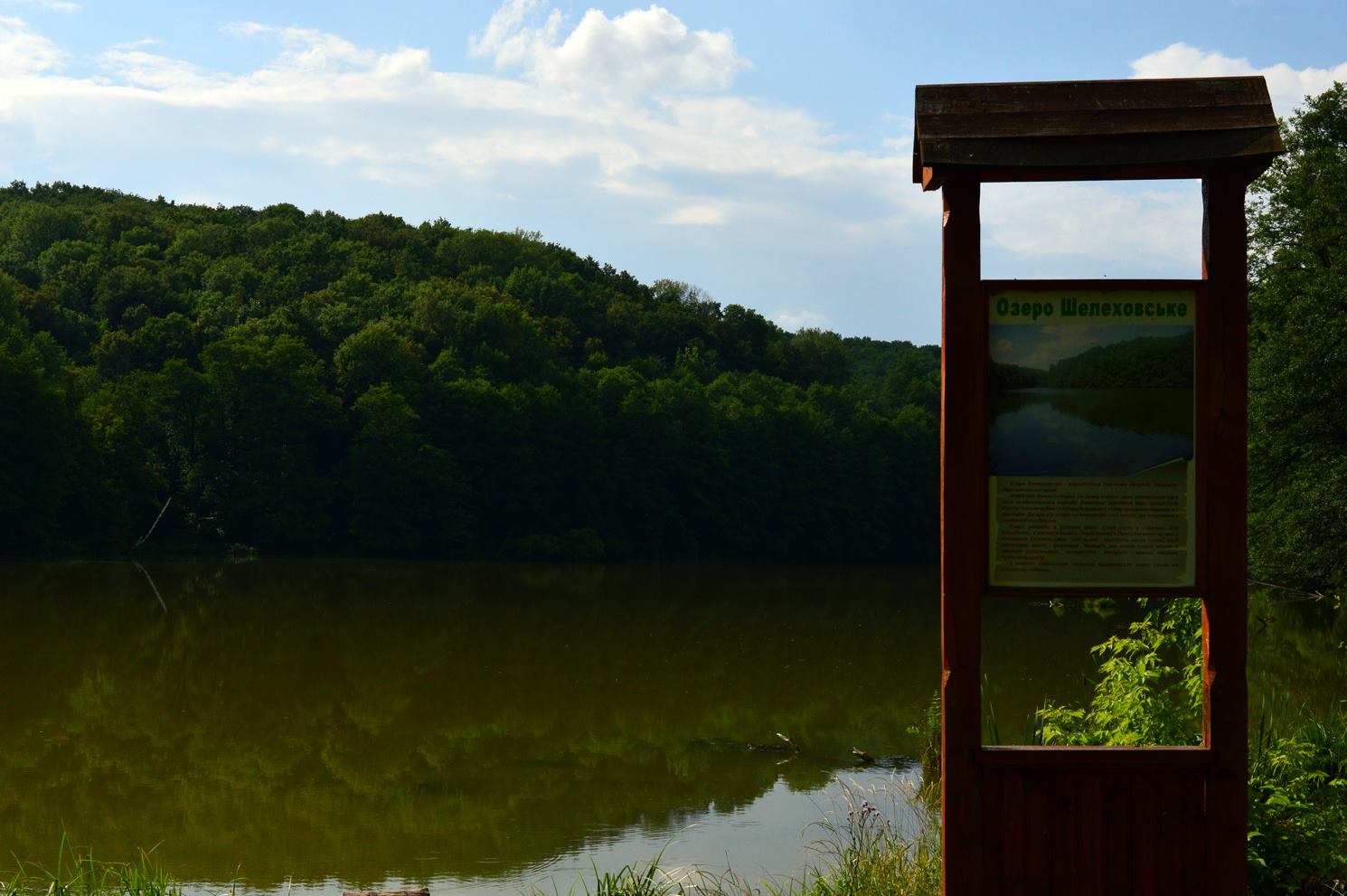
This lake is just as ancient as Lake Baikal, Lake Ladoga, Lake Onega, and Lake Victoria. Just think—the oldest lake in Ukraine is our very own Sloboda Ukraine Lake, the pride and beauty of our region! It’s simply beautiful there. If it weren’t for the terrible condition of the roads, I’d say that every Slobozhan should visit there at least once in their life. Although, perhaps it’s precisely because of the lack of tourists that it’s perfectly clean there.
After resting for a while—and, for some, swimming to our hearts’ content—we set off again for Mezhyrich.
After wandering around for a while in the former centurion town of the Sumy Regiment, founded in 1642, the expedition finally reached its main attraction.
The Church of the Dormition is located above the village, on a large terrace on the right bank of the Psell River.
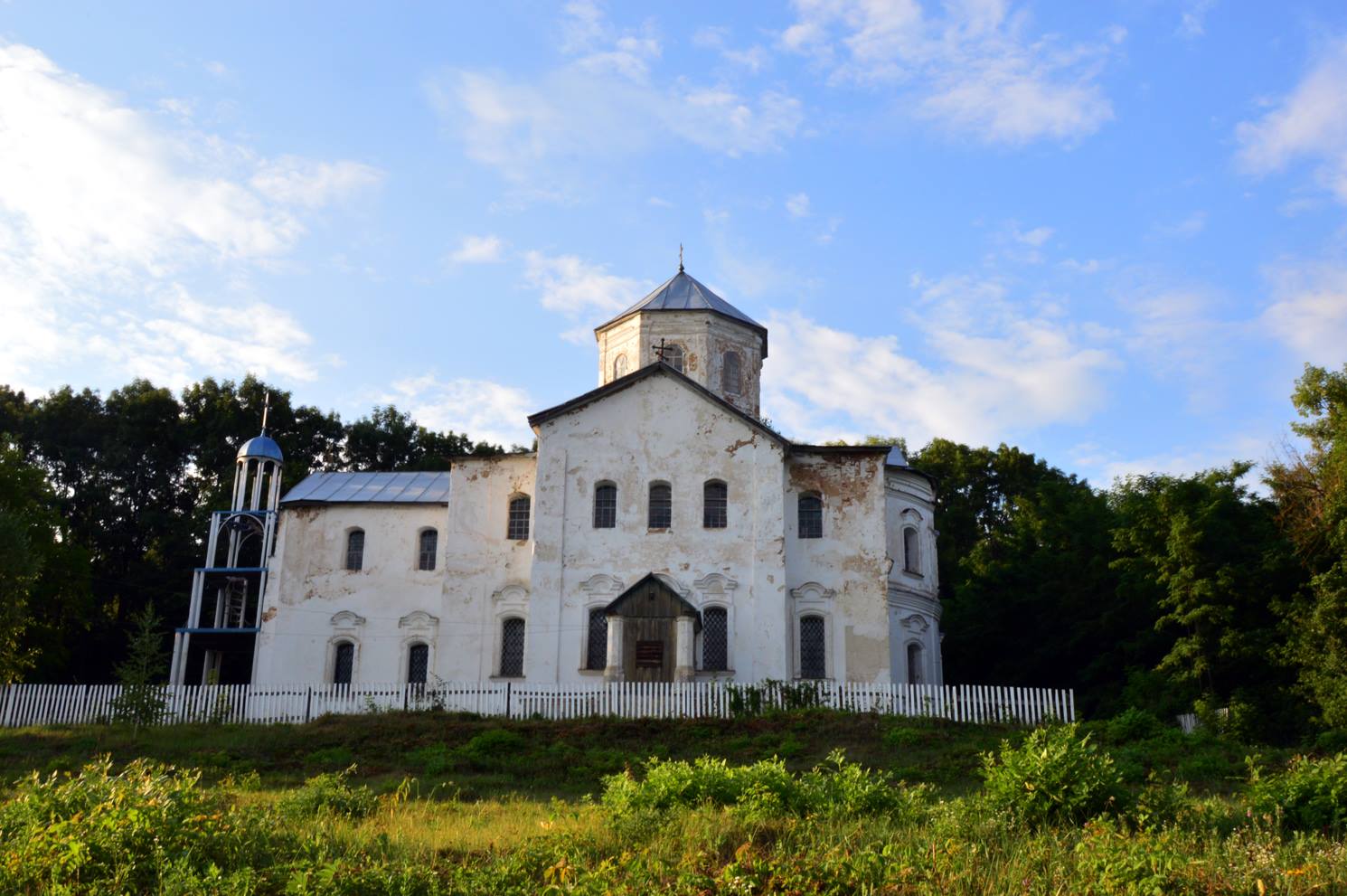
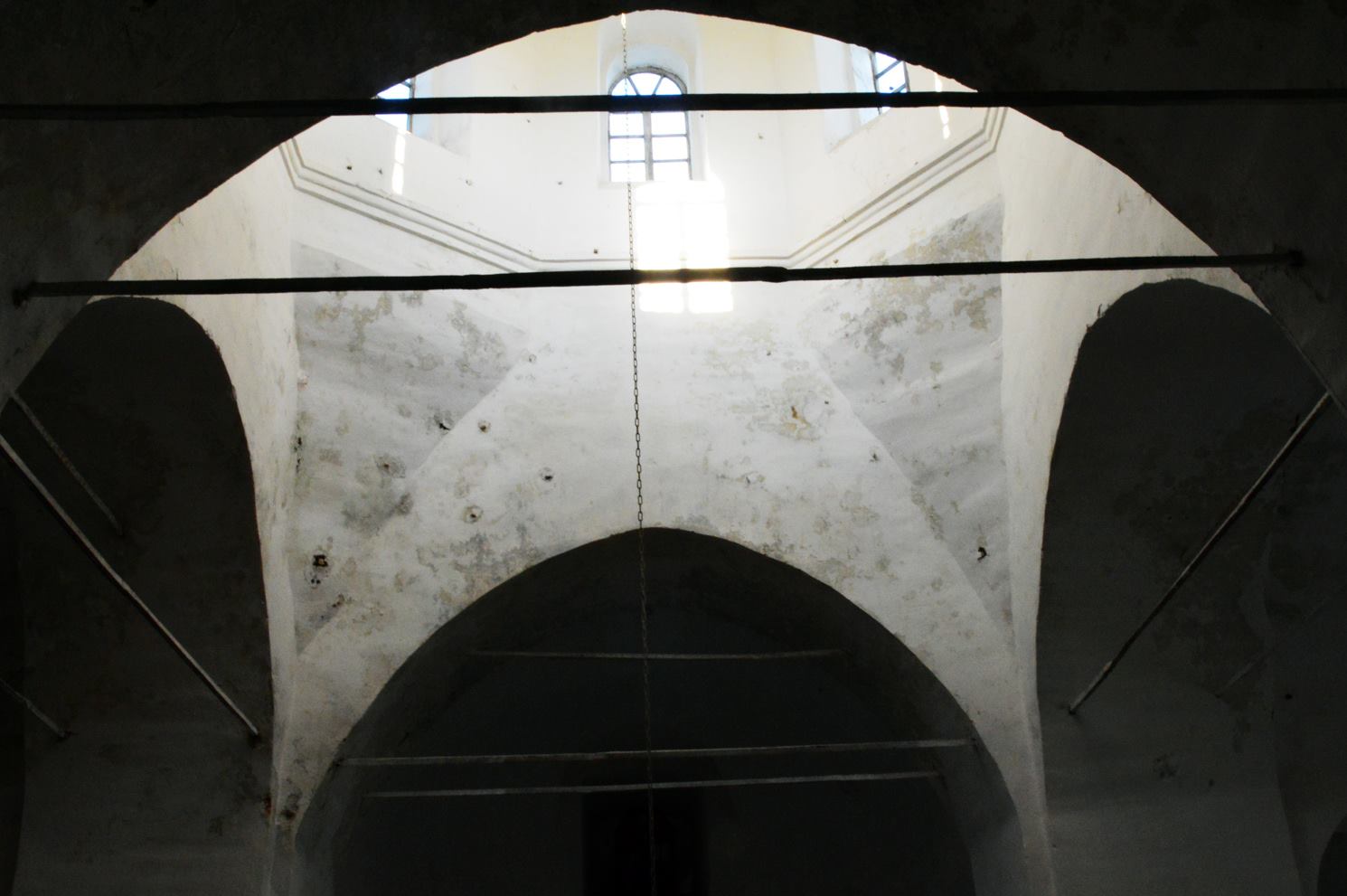
It was founded in 1759 at the request and expense of L. Belous, a native of Mezhyrich who later became archimandrite of the Kyiv-Pechersk Lavra. It is believed that the Assumption Cathedral in Okhtyrka, which has not survived to this day, served as the model for the construction of this church. The interior of the church is bright and pleasant.
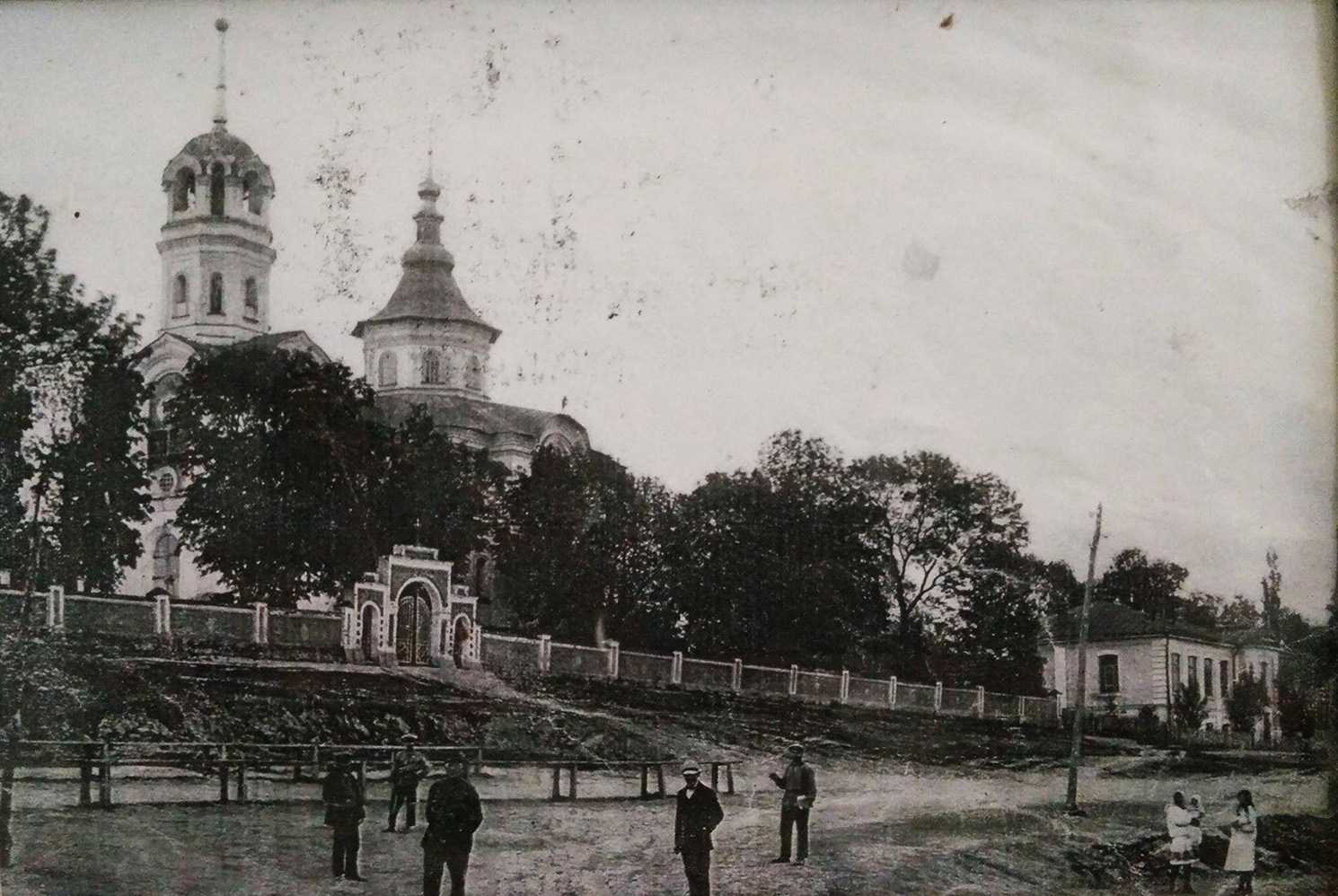
The local sexton lovingly shows us a carefully preserved old photo of the church.
What immediately catches your eye is the large tourist information booth standing in front of the church. It’s clear right away that the locals know their history and are proud of it.
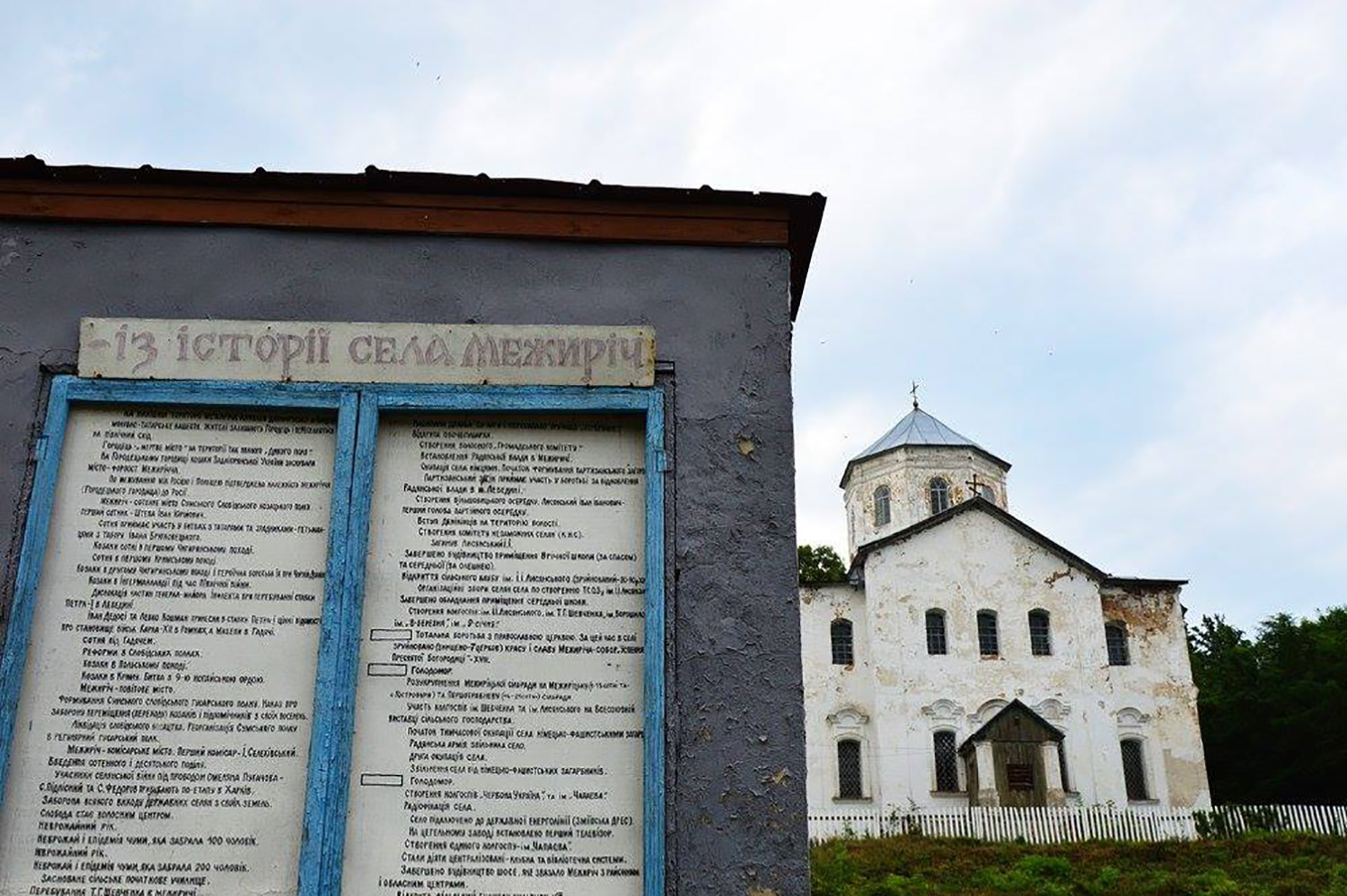
Incidentally, the village streets are still named after “sotnias” in memory of its Cossack past. In his “Historical and Statistical Description of the Kharkiv Diocese,” Filaret (D. G. Gumilevsky) writes that in 1777 there were eight churches in Mezhyrich: the Cathedral of the Dormition, St. Nicholas, and Holy Trinity churches within the town ramparts; outside the ramparts—the Intercession, Exaltation of the Cross, Archangel, Transfiguration, and Resurrection churches. However, by the mid-19th century, the St. Nicholas, Holy Trinity, Resurrection, and St. Michael’s churches had been decommissioned. At the beginning of the 20th century, in addition to the Cathedral of the Dormition mentioned above, there were three other churches in Mezhyrich, which, alas, have not survived to this day.
— Church of the Exaltation of the Cross, a wooden single-altar church built in 1744.
— Church of the Transfiguration, a wooden single-altar church built in 1745.
— Pokrovska Church, a wooden single-altar church built in 1774.

In 1902, Dmitry Petrovich Miller, a distinguished historian of Sloboda Ukraine, wrote in his study “Archives of the Kharkiv Governorate,” wrote that the only volost archive in our region containing surviving 18th-century records is located in Mezhyrich. The population there at that time was about 12,000 people, of whom more than 100 were potters who produced ceramics of such beauty that they can still be seen today in many museums throughout our country.
A Cossack heritage, a church that looks more like a fortress, a 300-year-old mulberry tree, the reputation as one of the centers of Ukrainian pottery, and the oldest lake nearby. What else is needed for Mezhyrich to become one of the tourist hubs of Slobozhanshchyna? Perhaps only a miracle. Oh, and roads, too. It always comes down to them…
The sun was inexorably sinking toward the horizon. Ahead of us lay the final destination of our journey—the estate in Mykhailivka.

- About the military pilot school and the airfield in Kharkiv… - 04.11.2020
- Nikanor Savich—A Political Career by Mistake - 13.07.2020
- And once again, about the Cavalry Guards… - 21.01.2020