I’m sure there are quite a few residents of our beautiful city who, in their free time, enjoy reading (in addition to books and articles about Kharkiv’s history) works of fiction in the so-called “alternative history” genre. The action in such works takes place in a reality that could have existed if, at one of its turning points (known as bifurcation points or crossroads), history had taken a different course.
Indeed, the question “What if…?” is extremely interesting. I remember how, in my younger years, it was hard to tear me away from Harry Harrison’s *Stars and Stripes*, in which the American Civil War ends with the Yankees and Confederates joining forces against a common enemy—Britain—and the subsequent defeat of the British. I wonder, what would have happened if Napoleon Bonaparte hadn’t died, but had escaped from Saint Helena and attempted to establish a powerful empire in Africa?
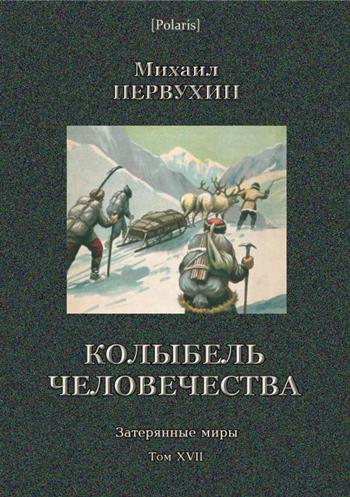
Incidentally, this very topic was the subject of the first work in Russian literature in the “alternative history” genre. The novella, titled *The Second Life of Napoleon*, was published in 1917 in *The Adventure Journal*. Its author—now, alas, a completely forgotten fellow countryman of ours—

So who is he, this “Sloboda Ukraine Herbert Wells,” one of the most prolific science fiction writers of the early 20th century, who wrote under numerous pseudonyms and across various genres? Like the names of many of Kharkiv’s greatest residents, the name of the highly talented writer, journalist, and translator Mikhail Konstantinovich Pervukhin (1870–1928) was ruthlessly erased from memory and consigned to oblivion. Almost his entire rich body of work remained scattered across periodicals and was never republished in his hometown, despite the keen interest shown in it by foreign scholars.
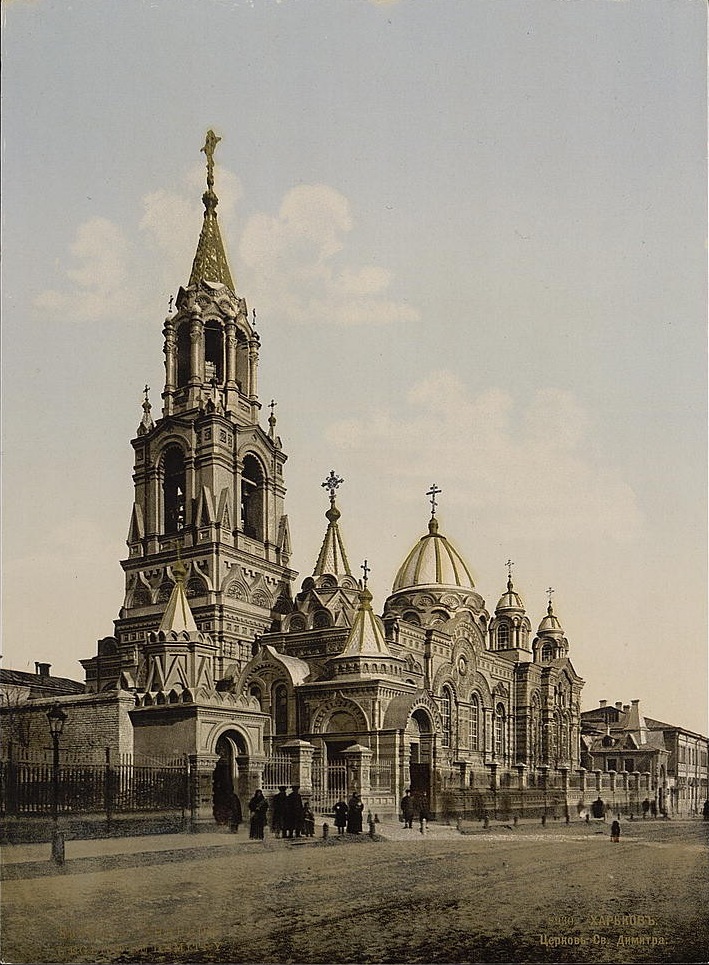
Mikhail Konstantinovich Pervukhin was born on September 6, 1870, in Kharkiv, to Konstantin Pavlovich Pervukhin, a district official in the land survey office, and Maria Andreevna (née Dmitrieva). The future great writer was baptized at St. Demetrius Church. His godparents were Lev Matveev, a collegiate registrar, and Olympiada Andreeva, the daughter of the provincial secretary; the sacrament of baptism was performed by Archpriest Pavel Dakhnevsky.
In addition to their two sons (Mikhail and Konstantin), the Pervukhin family also had a daughter, Lydia, about whom nothing else is currently known.
After graduating from the Real School in 1890, Mikhail Konstantinovich enrolled at Kharkiv University, from which he was expelled because of his political beliefs. He then spent nine years working for the Kursk-Sevastopol Railway Administration. In 1896, he began publishing in the *Kharkiv Vedomosti* under A. Efimovich. In this newspaper, he published “Eastern legends” in the spirit of another writer known to us, Nikolai Karazin. However, in 1899, Mikhail Konstantinovich fell ill with tuberculosis and moved to Yalta. There, he soon became the founder and editor of the *Crimean Courier*, which he later headed from 1901 to 1906. In 1900, Pervukhin published his first collection of short stories, *By the Very Shore of the Blue Sea*. He also wrote for the newspaper *Odessa News*. In 1902–1903, his short stories and essays were published in the magazines *Obrazovanie*, *Russkaya Mysl*, *Mir Bozhiy*, *Nauka i Zhizn*, and others. While in Yalta, Mikhail Konstantinovich met A. P. Chekhov and L. N. Tolstoy, and A. I. Kuprin, about whom he would later write numerous memoirs published in various magazines and newspapers of the Russian émigré community. The distant year of 1906 marked a turning point in Mikhail Pervukhin’s life. On the orders of General Dumbadze, he was expelled from Crimea as a “dangerous rebel.” Mikhail Pervukhin traveled to Germany and began working in Berlin as a correspondent for the Moscow newspaper *Utro*. There, in 1907, he wrote and published his first major work in the magazine *Probuzhdenie*—a short novel titled *The Golden Anchor*, which depicts everyday life at the eponymous tavern. A year later, after visiting Bavaria and Austria, he moved to beautiful Italy, a country with which he would spend the rest of his life. At first, Mikhail Konstantinovich stayed in Venice, where his brother and close friend—the artist Konstantin Konstantinovich—was living at the time. Later, Nikolai lived in Naples, spent two years on the island of Capri (where he met A. M. Gorky and his circle), and finally settled in Rome in 1910. In 1911, under the pseudonym M. De-Mar, he wrote the wonderful short story “On Land and at Sea,” set in the Solomon Islands, where plesiosaurs still live to this day.

While living in Italy, Nikolai Konstantinovich worked as a correspondent for such Russian publications as *Birzheviye Vedomosti*, *Russkaya Mysl*, *Novosti Dnya*, *Sovremenny Mir*, *Obruzovanie*, and *Probuzhdenie*. He traveled extensively throughout the country, visiting the regions of Calabria and Sicily; he experienced a powerful earthquake that devastated Messina and traveled to the shores of North Africa. All of this served as the impetus for writing numerous essays on Italy. Subsequently, he became the editor of F. I. Blagov’s *Russkoe Slovo*, *Rech*, and *Russkie Vedomosti*.
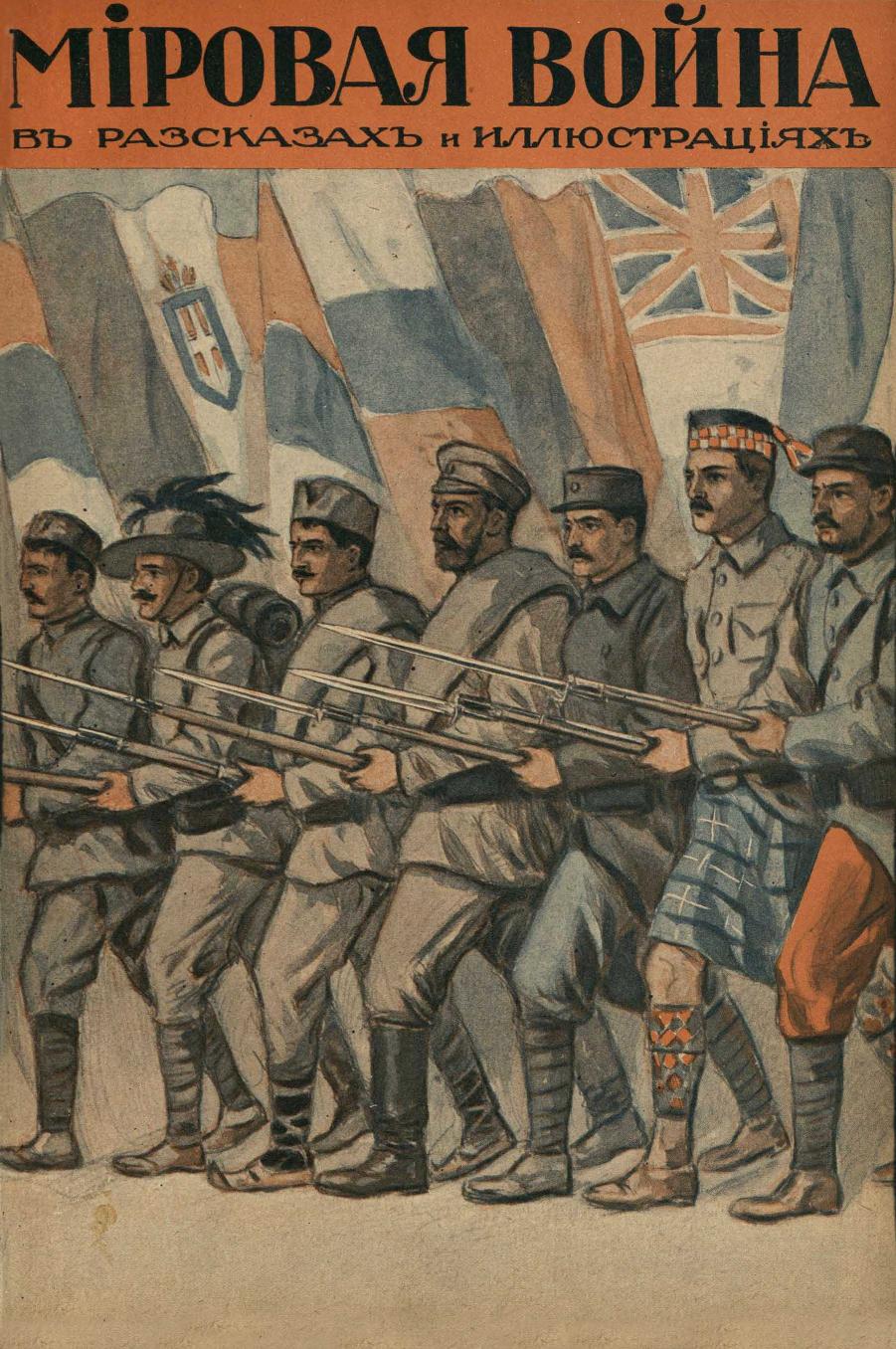
The author actively publishes his short stories in the Moscow-based monthly illustrated anthology *The World War in Stories and Illustrations*. Among writers, Mikhail Konstantinovich was considered “an artist of the Chekhovian school who was able to convey the sorrow of an ordinary life.”
In addition to his real name, Pervukhin used the following pseudonyms: Mark Volokhov, K. Alazantsev, M. De-Mar, M. Zamyatin, and Staroverov.
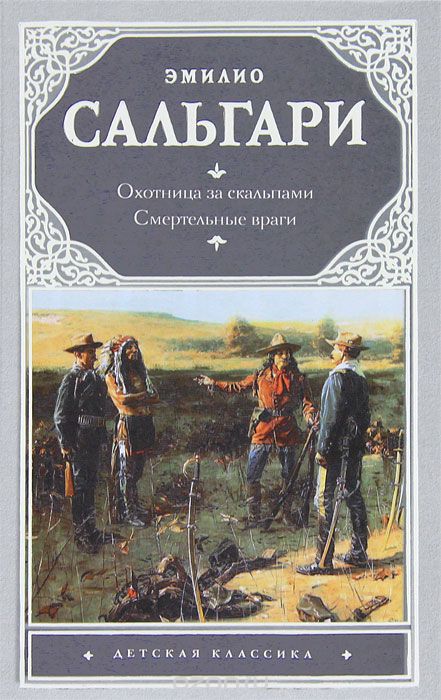
Pervukhin was also involved in translation. It was thanks to him that the wonderful works of Italian writers Emilio Carlo Giuseppe Maria Salgari and Luigi Pirandello were translated from Italian into Russian.


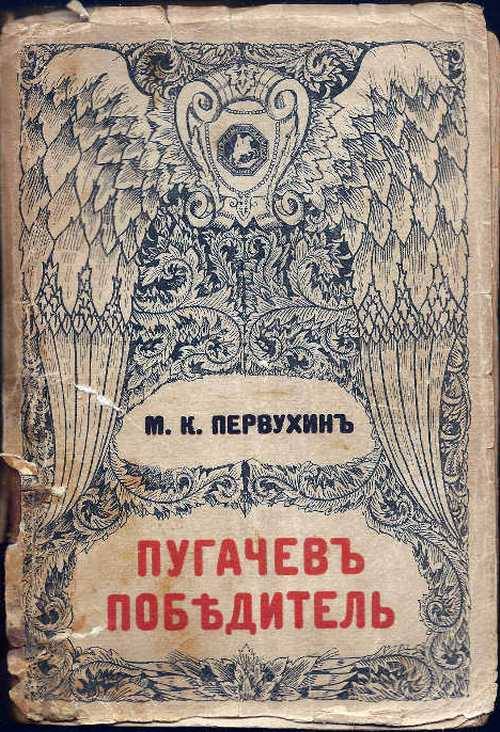
After the victory of the October Revolution in 1917, virtually all the publications where Pervukhin had worked were shut down, and his literary ties with his homeland were severed. During this time, Nikolai became an active opponent of Bolshevism; his ideological stance was close to that of the Russian publicist Vladimir Lvovich Burtsov (1862–1942), with whom he collaborated until his death. Pervukhin wrote the novel *Pugachev the Victor* in 1924, also in the “alternative history” genre. Its content is no less captivating than that of *The Second Life of Napoleon*. The author presented the peasant leader’s ascension to the throne to the reader as a national disaster, vividly describing all the horror and chaos that would have ensued had Pugachev triumphed.
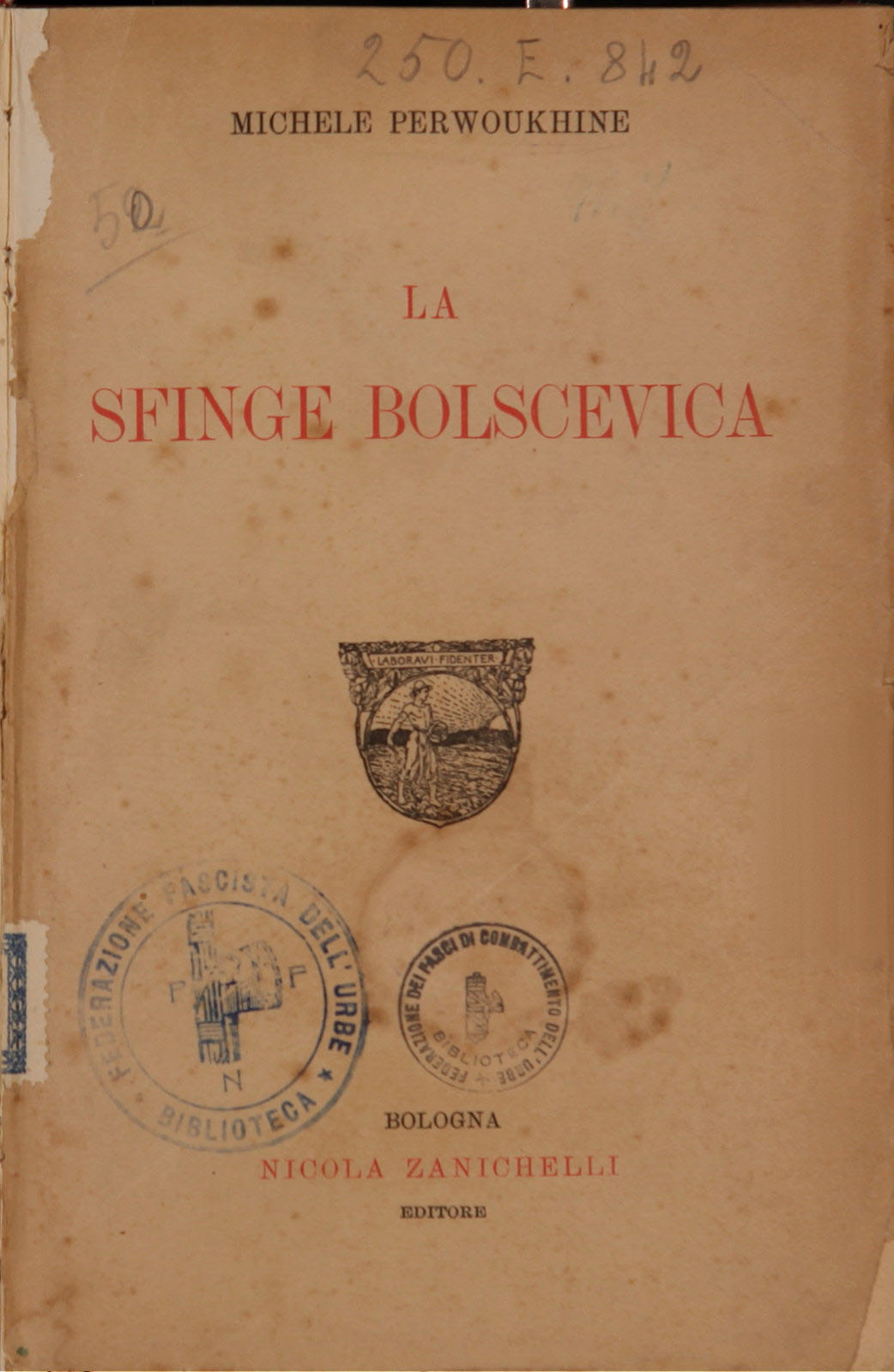
In the mid-1920s, Pervukhin began to sympathize with early Italian fascism, which he saw as an ideology of national revival and a means of resisting Bolshevism in both Russia and Italy. Consequently, in September 1927, he published a kind of manifesto titled “Thoughts on Fascism,” which permanently erased his name from the history of Soviet literature.
Pervukhin’s last novel, *The Pearl Necklace: From the Life of the Bohemians,” published in 1928, was scandalous and pornographic in the spirit of early-20th-century Russian fiction. And the occult novel *The Earthly God* remained unfinished.
The writer, who was dying of tuberculosis, died in Rome on December 30, 1928, in utter poverty. He was buried in the Testaccio Cemetery, a non-Catholic cemetery for foreigners in Rome.
Shortly before his death, Nikolai Konstantinovich wrote in a letter to Vasily Ivanovich Nemirovich-Danchenko (1848–1936), a writer who was popular at the time:
We—my wife and I—eat once a day, and even then, not enough to feed a sparrow…
Today, however, the names of the two brilliant and remarkably similar Pervukhin brothers, Mikhail and Konstantin, have been shamefully forgotten in their hometown.
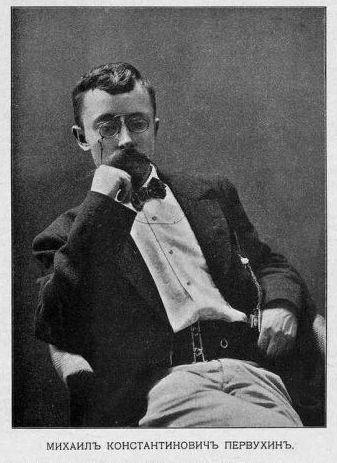
After all, in Kharkiv, which takes such pride in its “greats,” there is absolutely nothing to remind people that a wonderful artist and a world-renowned, brilliant writer—who became the founder of the alternative history genre in modern literature—were once born and lived there…

- About the military pilot school and the airfield in Kharkiv… - 04.11.2020
- Nikanor Savich—A Political Career by Mistake - 13.07.2020
- And once again, about the Cavalry Guards… - 21.01.2020