One might wonder what could possibly connect the infamous Grigory Rasputin to the Kharkiv Governorate. At first glance, absolutely nothing. However, many books about him mention a rather interesting detail.
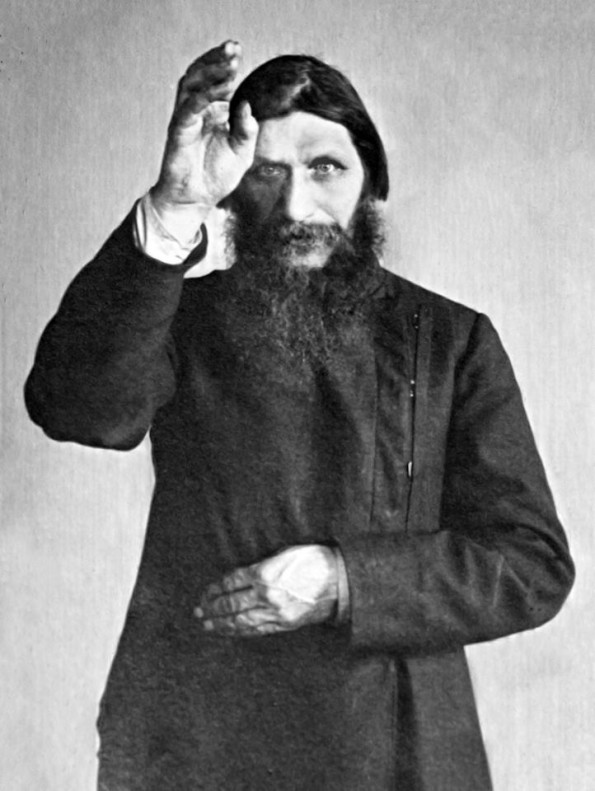
Journalist E.P. Sazonov (who at one time belonged to Rasputin’s inner circle) testified during the investigation:
Our servants, whenever Rasputin happened to spend the night with us or visit us at our country house, would say that Rasputin didn’t sleep at night—he prayed instead. When we lived at our country house in the Kharkiv Governorate, there was an incident where the children saw him in the forest, deeply engrossed in prayer. This report from the children piqued the interest of our neighbor, the general’s wife, who could not bear to hear Rasputin’s name without disgust. She didn’t hesitate to follow the children into the forest, and sure enough, even though an hour had already passed, she saw Rasputin, deeply immersed in prayer.
From this, we can conclude that Grigory Rasputin did, in fact, visit our lands.
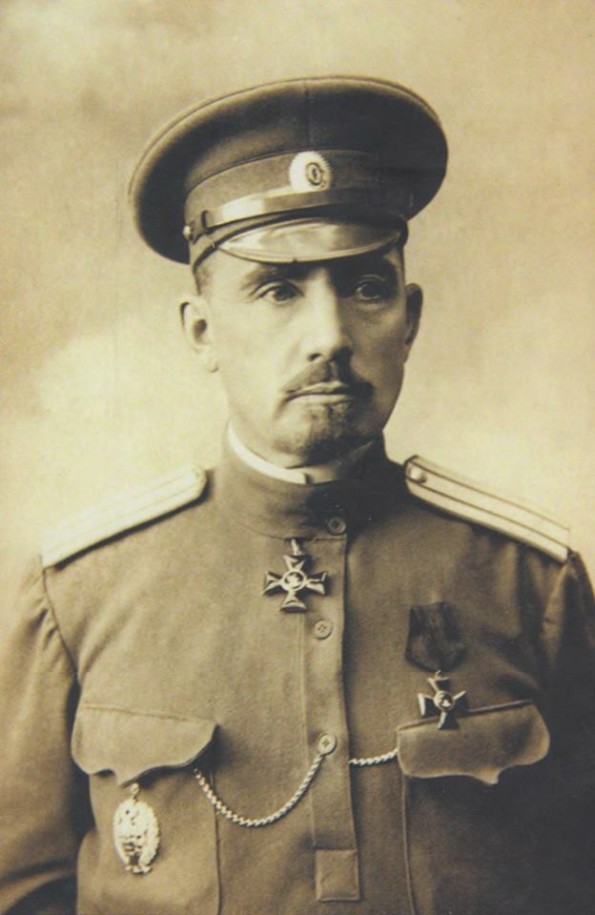
However, it is Roman Romanovich von Rauppach’s memoirs that are of the greatest value and interest to us in this matter. In tsarist Russia, von Rauppach was a lawyer, a military investigator, and a colonel. He is best known for the fact that on November 17, 1917, while effectively serving as chairman of the commission established to investigate the circumstances surrounding the case of General Kornilov, the former Supreme Commander-in-Chief of the Russian Army, he issued to an officer sent from Headquarters a fictitious decision by the commission to release all participants in the Kornilov mutiny who were imprisoned in Bykhov, thereby enabling Kornilov, Denikin, Markov, and a number of other generals and officers held in prison to flee to the Don and create the Volunteer Army—the foundation of the White movement in southern Russia during the Civil War. In December 1917, he left for Finland, where he lived until the end of his days.
In his memoirs, *Facies Hippocratica (The Face of the Dying)* (which were first published in Russia in 2007 and subsequently became a significant source on the history of the 1917 Revolution), von Raupach describes an interesting fact that cannot be found anywhere else:
Rasputin appeared in St. Petersburg about six or seven years before the revolution, having come there from the Kharkiv Governorate, where for three years he had been a disciple of a high-ranking clergyman known throughout Russia for his high moral character and impeccable purity of life. At that time, this figure spoke of Rasputin as a man of great strength, deeply religious, and capable of the ascetic feats so highly valued by the Orthodox Church…
Well, whether it’s true or not, only time will tell…

- About the military pilot school and the airfield in Kharkiv… - 04.11.2020
- Nikanor Savich—A Political Career by Mistake - 13.07.2020
- And once again, about the Cavalry Guards… - 21.01.2020