At the National Museum of Folk Architecture and Folkways of Ukraine in Pyrohiv, Kyiv, you can find unique examples of folk architecture from all over Ukraine. These include wooden churches, huts, and farm buildings that were moved to the museum in the early 1970s. The museum also showcases the folk architecture of Sloboda Ukraine.
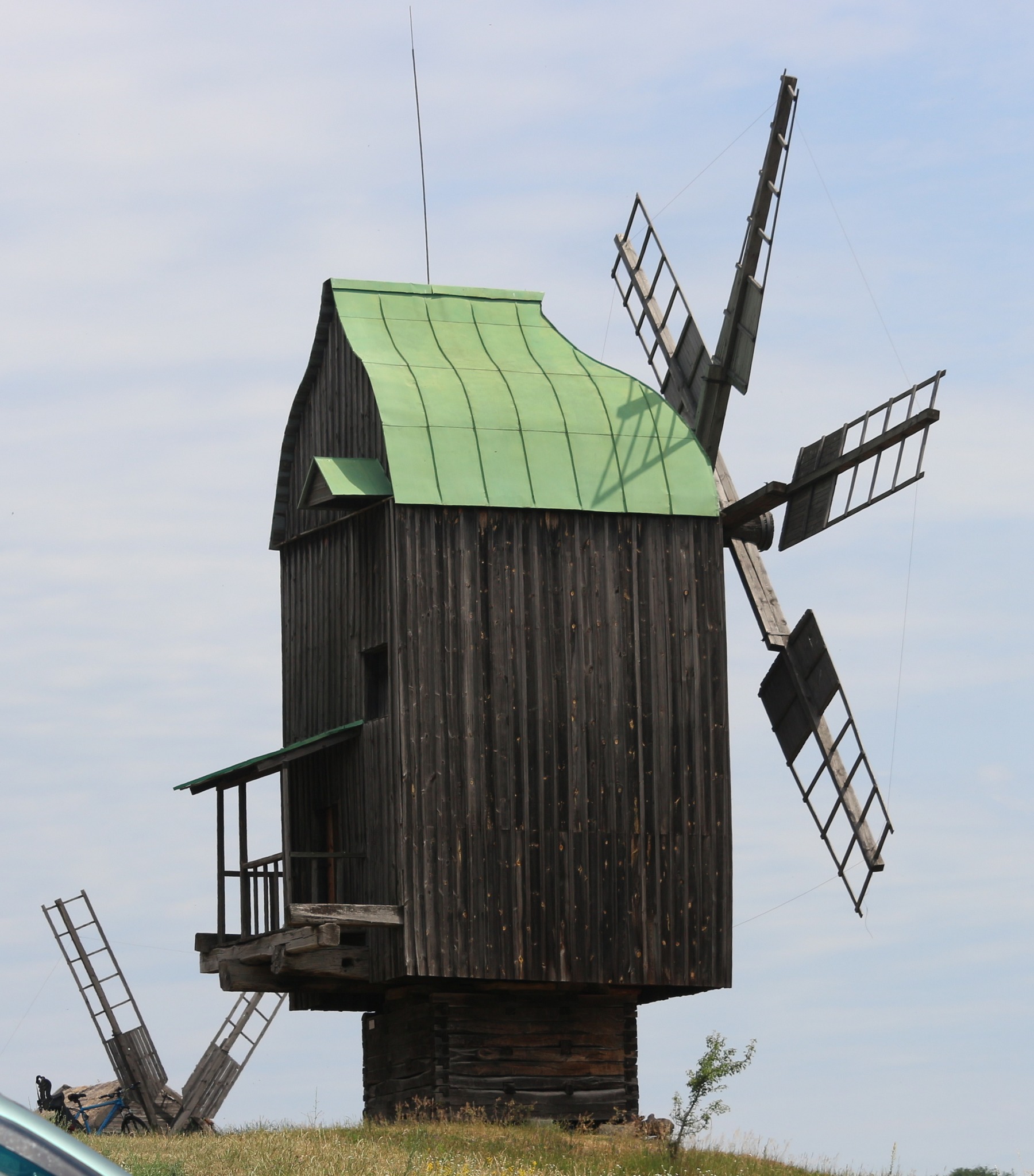
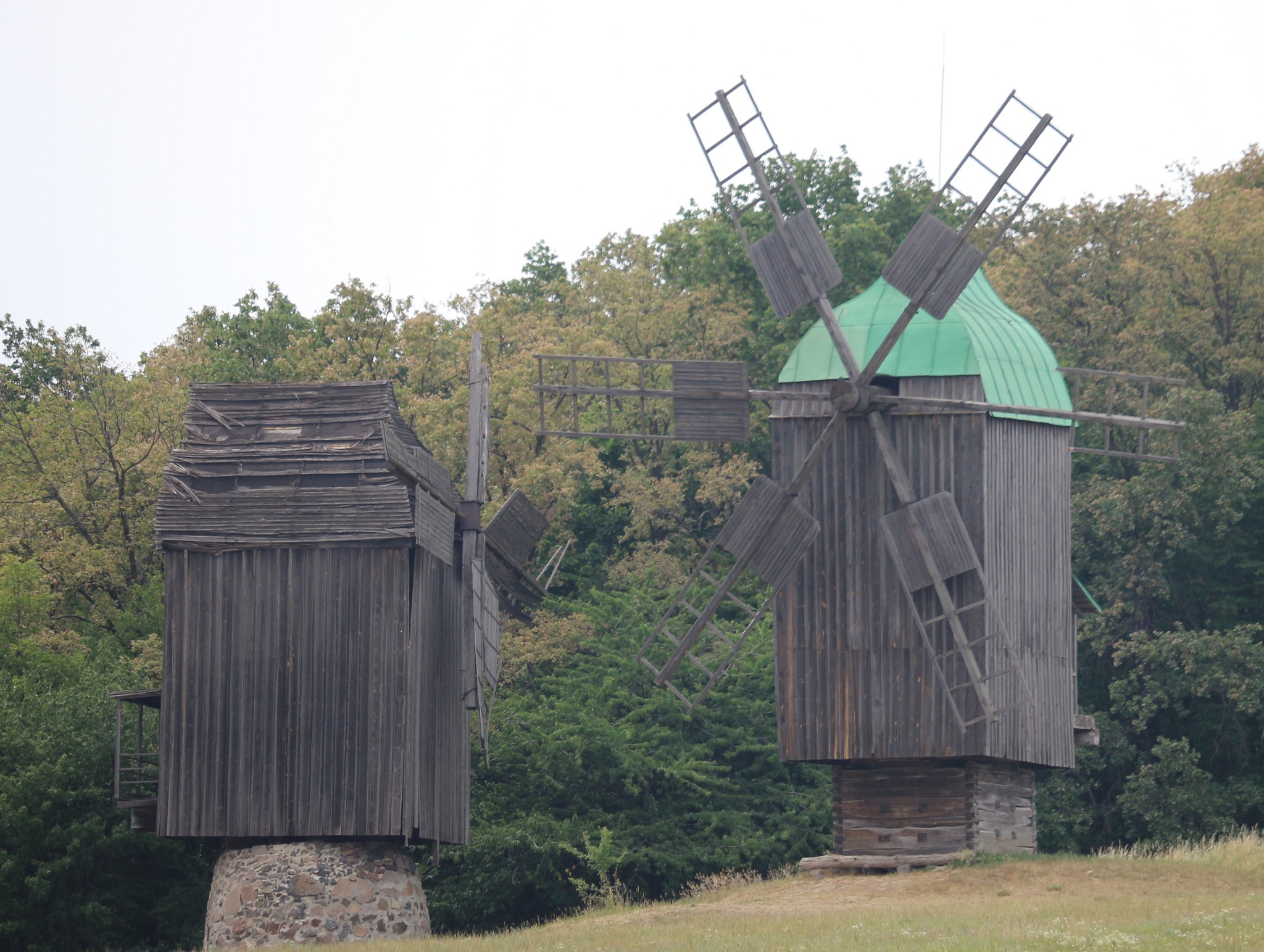
For example, of the one and a half dozen windmills from across Ukraine dating from the 19th and 20th centuries on display at the museum, the windmill from the village of Nurovo (Izyum District, Kharkiv Oblast) is, in the opinion of many, the most elegant.
This beautiful windmill with a green roof was built in 1907 in the village of Sukhyi Yar by craftsmen from Izyum, K. Ulezsky and T. Ulezsky. In 1931, the windmill was moved to the neighboring village of Nurovo, where it operated until the 1950s. It was moved again and reassembled at the museum in 1983.
The structure next to it in the photo on the left is a windmill built in 1861 in the village of Blahovishchenka, Zaporizhzhia Oblast.
The museum also features a Sloboda Ukraine peasant farmstead with a cottage and outbuildings.
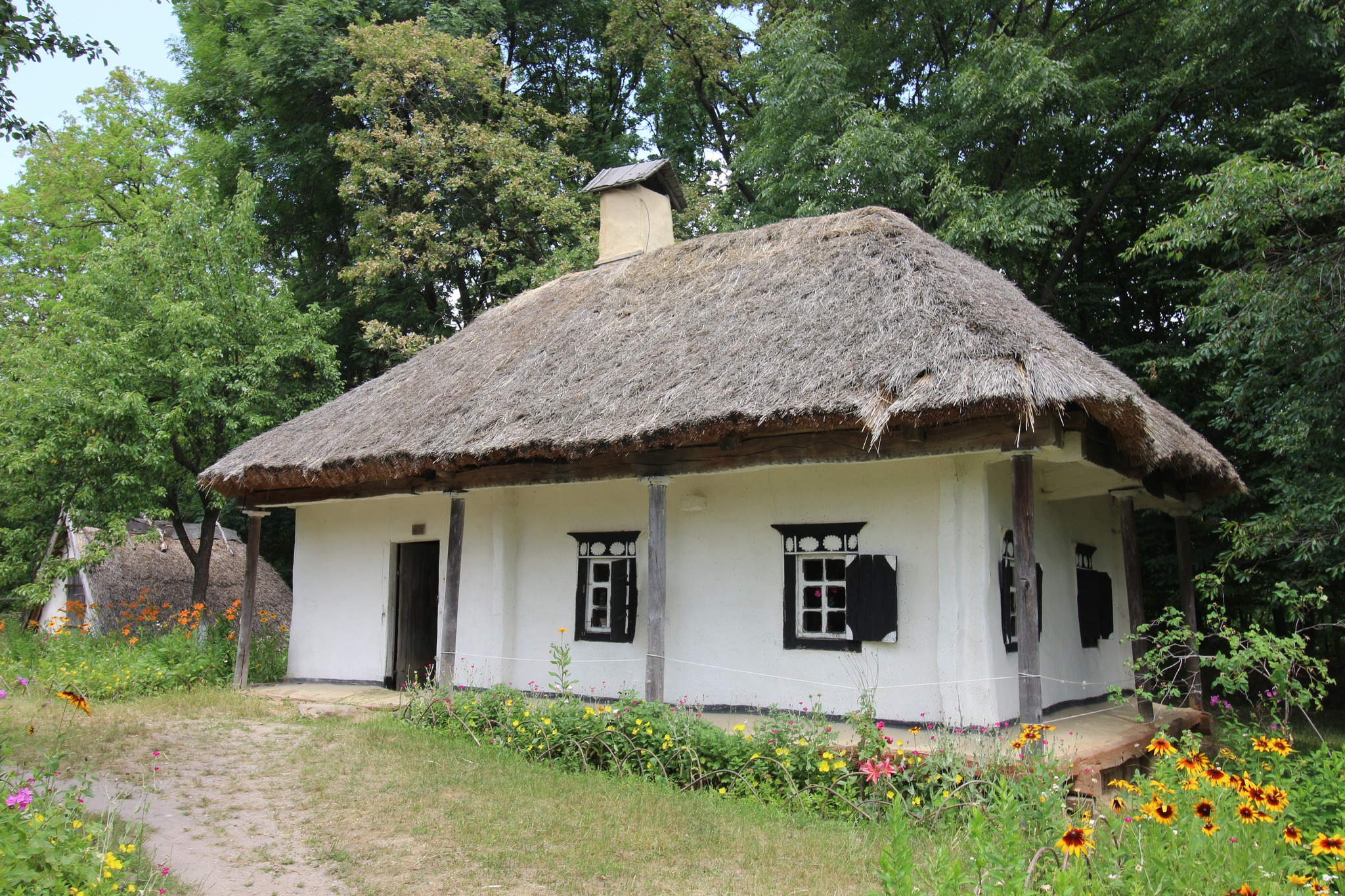
This 19th-century hut was moved to the museum from the village of Chervonopopivka in the Kremenka District of Luhansk Oblast. Although it resembles a mud hut, it is actually a log cabin made of oak logs, with walls that were coated with clay and whitewashed both inside and out. Log cabins were more commonly built in forested areas; they were more durable than mud huts, and in the steppe regions, only wealthy peasants could afford them. It was practically impossible to transport mud-walled huts to the museum because, unlike log cabins, they are essentially “non-demountable.”
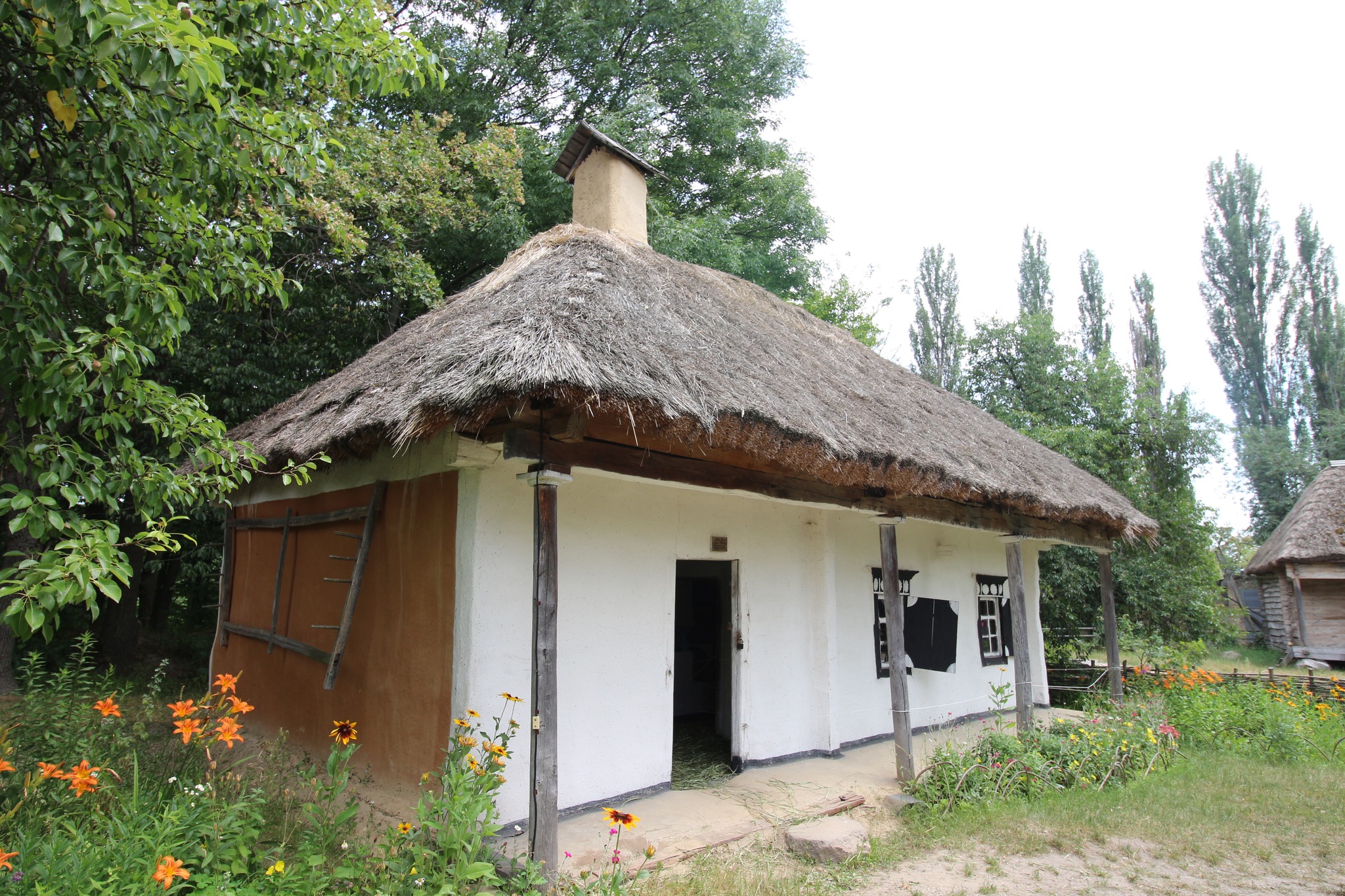
Frames painted black with white ornamentation were typical of the region where the hut was brought from.
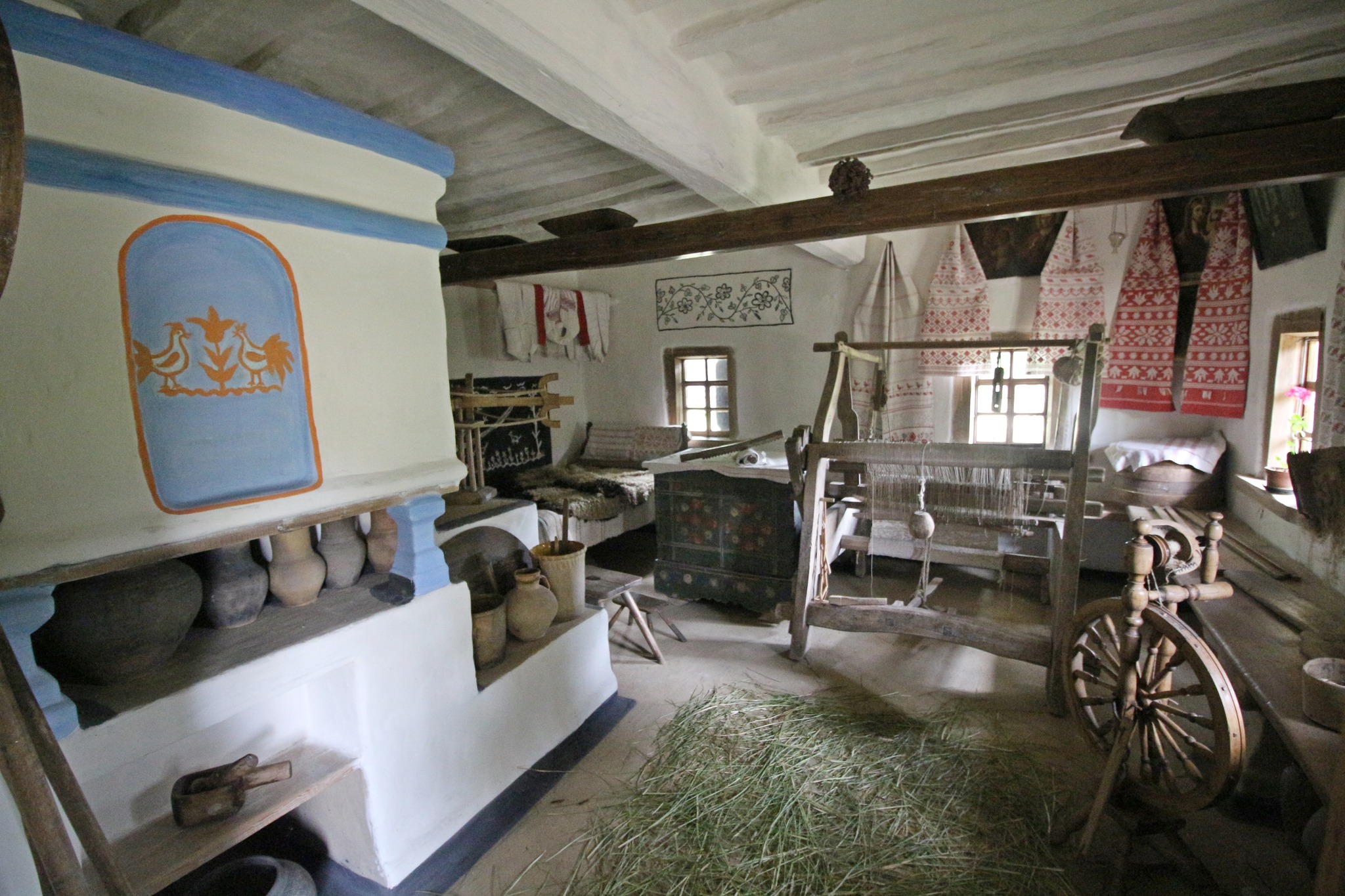
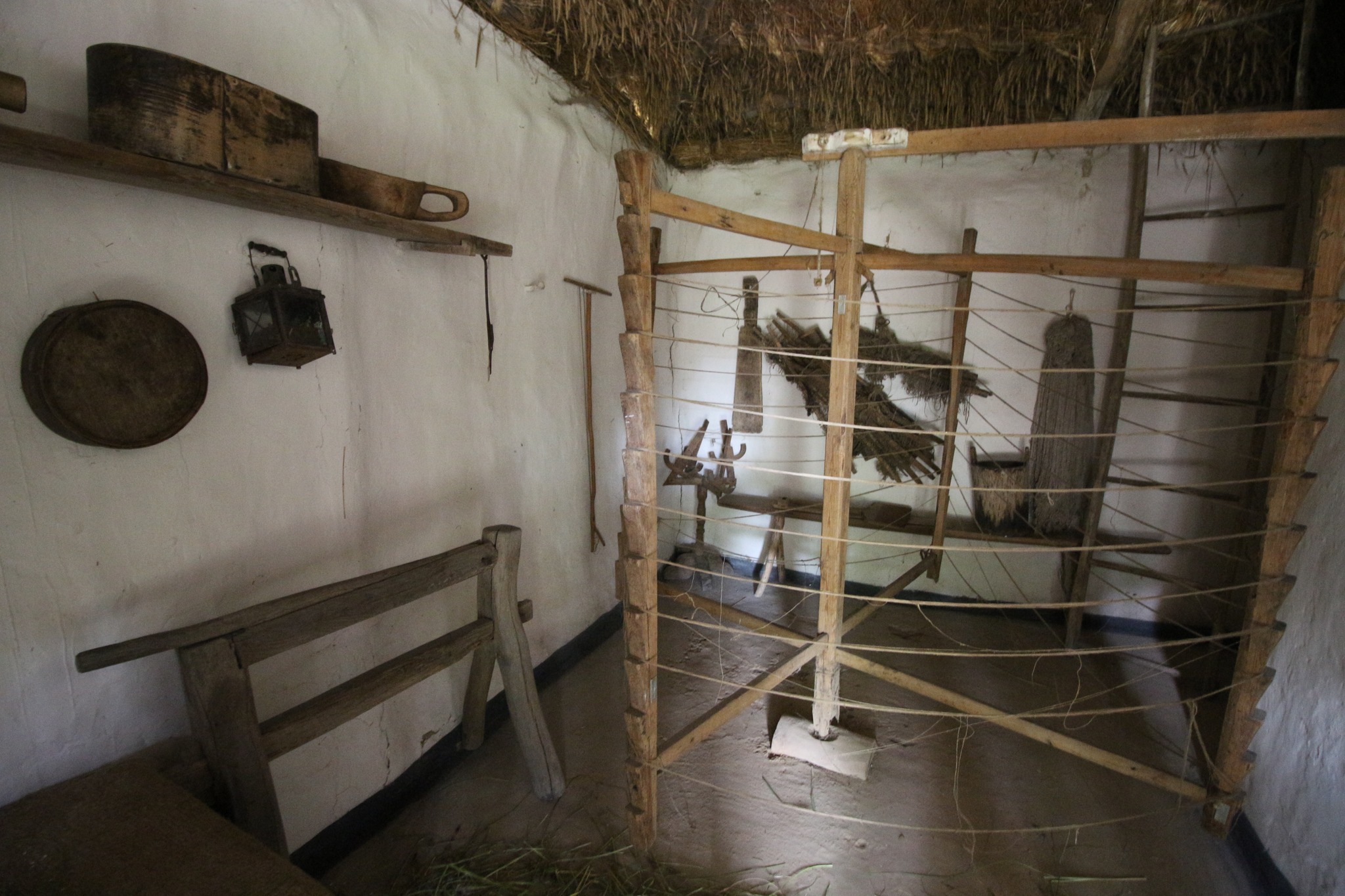
The hut has two sections; its interior consists of a vestibule, where the stove’s chimney was located, and the main living area with a stove, benches, and a bed. The hut displays many items from early 20th-century peasant life, including a loom and a spinning wheel.
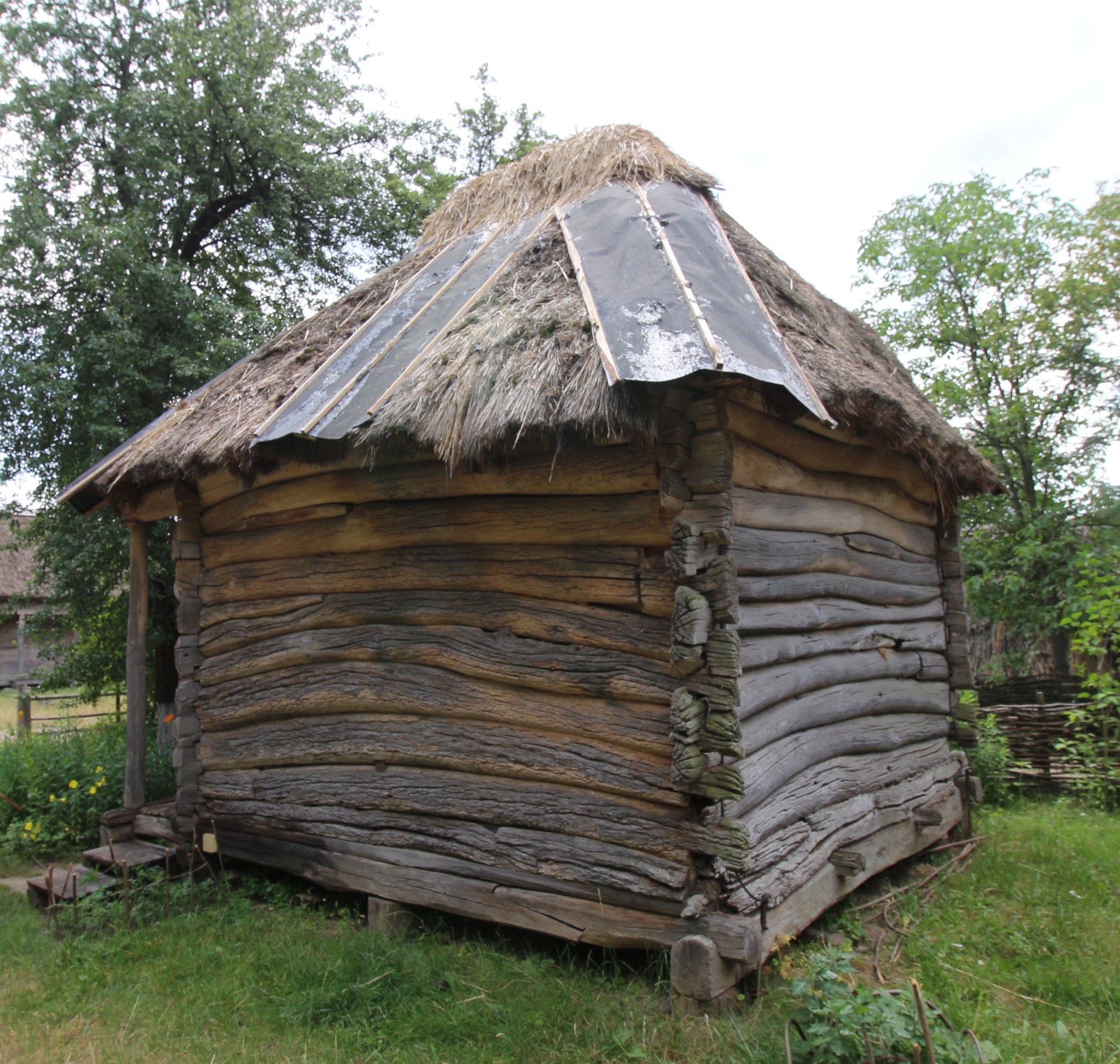
In the courtyard, you can also find an authentic granary—a farm building used for storing grain.

- Danylevs’koho Street, 19 - 13.10.2026
- Debunking the myth about one of the most famous Kharkiv photos - 12.10.2026
- The Architectural Evolution of the Kharkiv Theater - 26.09.2026