Hoholya Street has always been a model of Kharkiv’s multiculturalism. Along its 330 meters, dating back to the 19th century, one could find the Roman Catholic Cathedral of the Assumption of the Blessed Virgin Mary, a Lutheran church with a Lutheran school, and the street ended at Myronositska Square with its Orthodox Church of the same name. But there was also a fourth denomination, directly connected to the building at Hoholya Street, 3: the Karaites. Representatives of this Turkic people, whose traditions and religion (a form of Judaism) originated during the Khazar Empire, arrived in Kharkiv from Crimea in the 1840s. The Karaites were primarily involved in the tobacco business in the city and built several cigarette factories. They also had their own church, the Karaite Kenesa, which remains in the Kharkiv Podil district. Mangubinska Street (now Novo-Virinskaya Street) in the Dacha Rashke district was named after one of the Kharkiv Karaite families, the Mangubis. Among the Karaites were engineers (such as Ilya Kazas, who designed the sewer systems of Kharkiv, Poltava, and Mykolaiv) and many doctors.
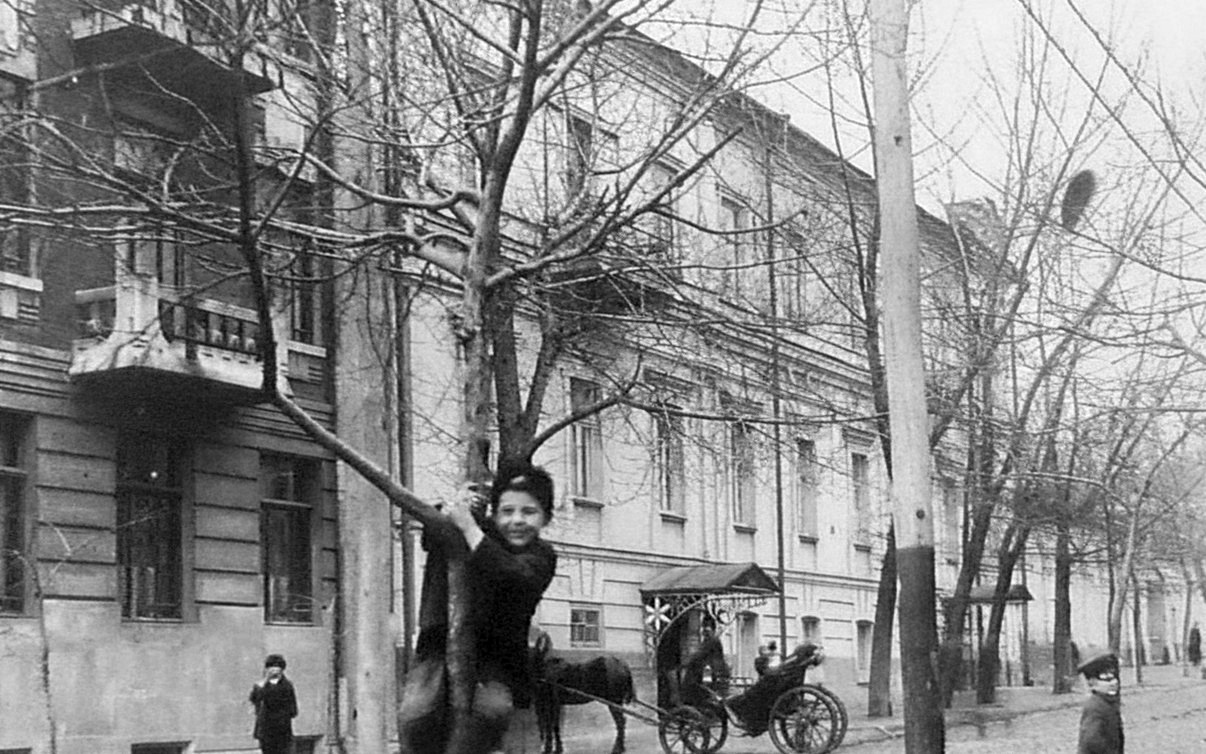
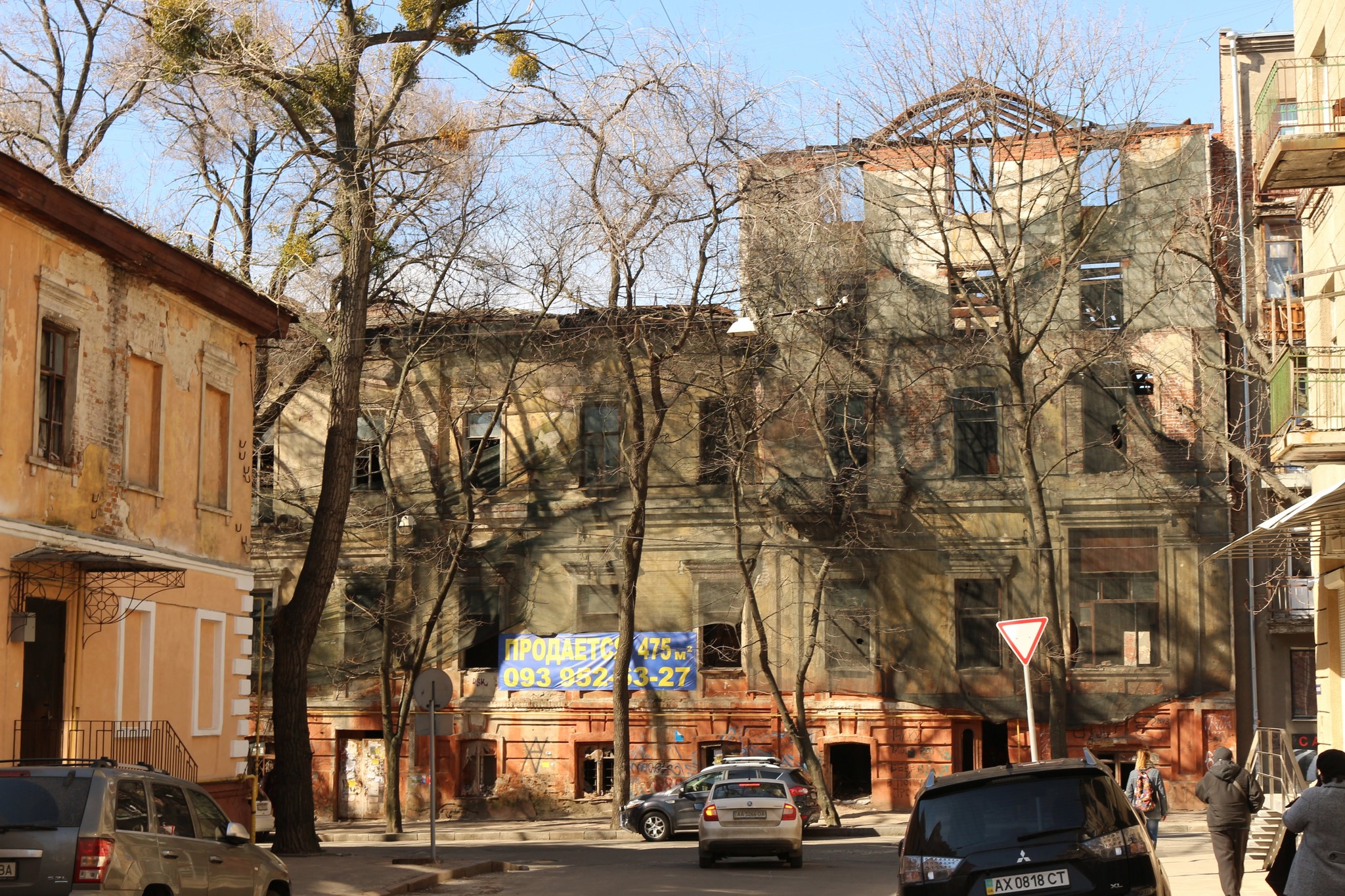
This house, the oldest on the street, was built approximately in the mid-19th century in an eclectic style with strong neoclassical influences. This style includes rustication of the basement with “fan” locks above its windows, cornice-style second-floor windows, and a triangular portico crowning the right side of the façade. All these elements were presented in the “Collections of Facades” of the early 19th century, which were used to construct “typical” classical houses, with slight variations over the decades.
In the 1900s, surgeon S. V. Mangubi acquired a plot of land at Hoholya Street, 3, which housed the private hospital of obstetrician M. Ryasnyansky. Mangubi expanded the building and established a clinic with a hydrotherapy center there.
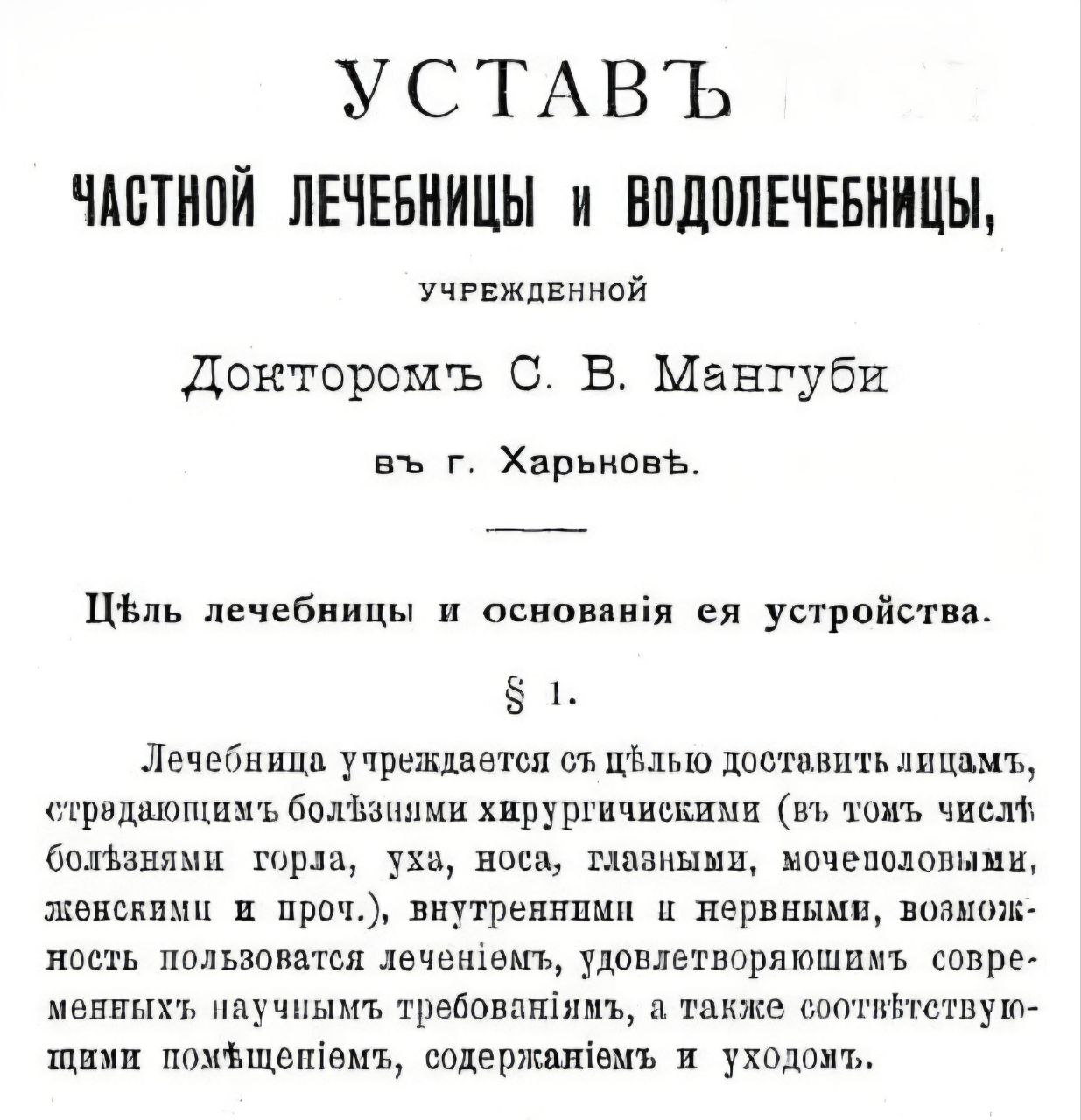
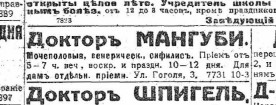
Although the clinic’s charter specifies its general purpose, advertisements in the Kharkiv press more often mention urology, with a separate waiting room for women.
The building also housed the Karaite Charitable Society, headed by Mangubi.
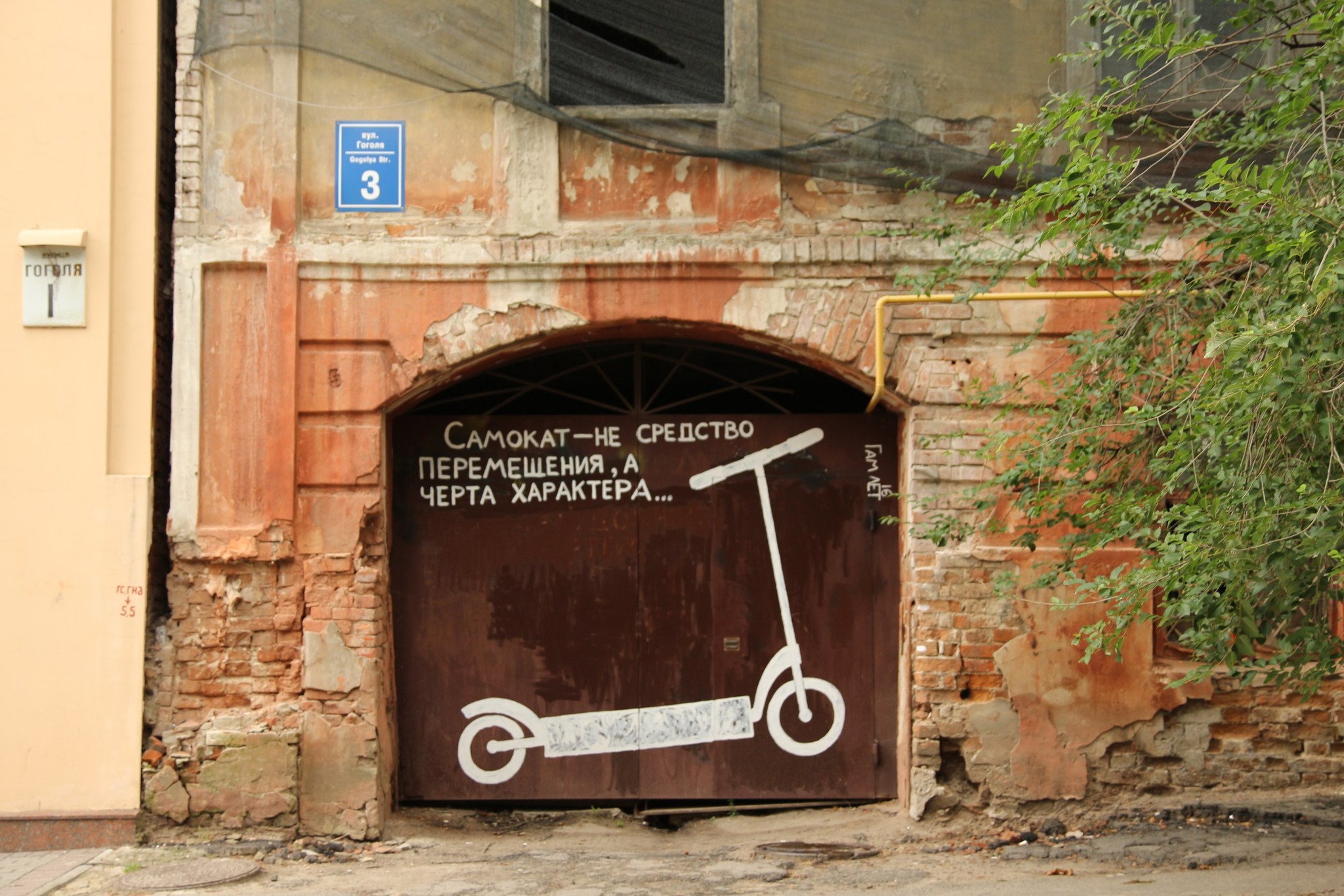
At Hoholya Street, 3, one could receive medical treatment and rent apartments or rooms with all the amenities and board, including electric lighting and hot water heating. Advertisements for the apartments and clinic can be found in newspapers as late as 1918.
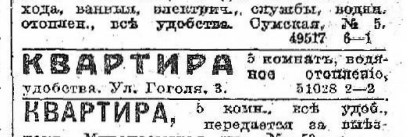
The building had a carriage entrance to the courtyard on the left side, two entrances with delicate metal canopies, and two balconies overlooking the street. Originally, it was two stories high, with a semi-basement on the ground floor. Later, a third floor was added to the building, as evidenced by the differences in the brickwork. Then, a three-story extension was built in the courtyard, perpendicular to the main building. Mangubi himself completed the expansion of the complex in 1912, when a three-story outbuilding in the courtyard was built in a modest brick Art Nouveau style, designed by Nikolai Kolodyazhny. The outbuilding enclosed the site, creating a courtyard-like well.
During Soviet times, the complex also served a multifunctional purpose – it housed both residential buildings and institutions.
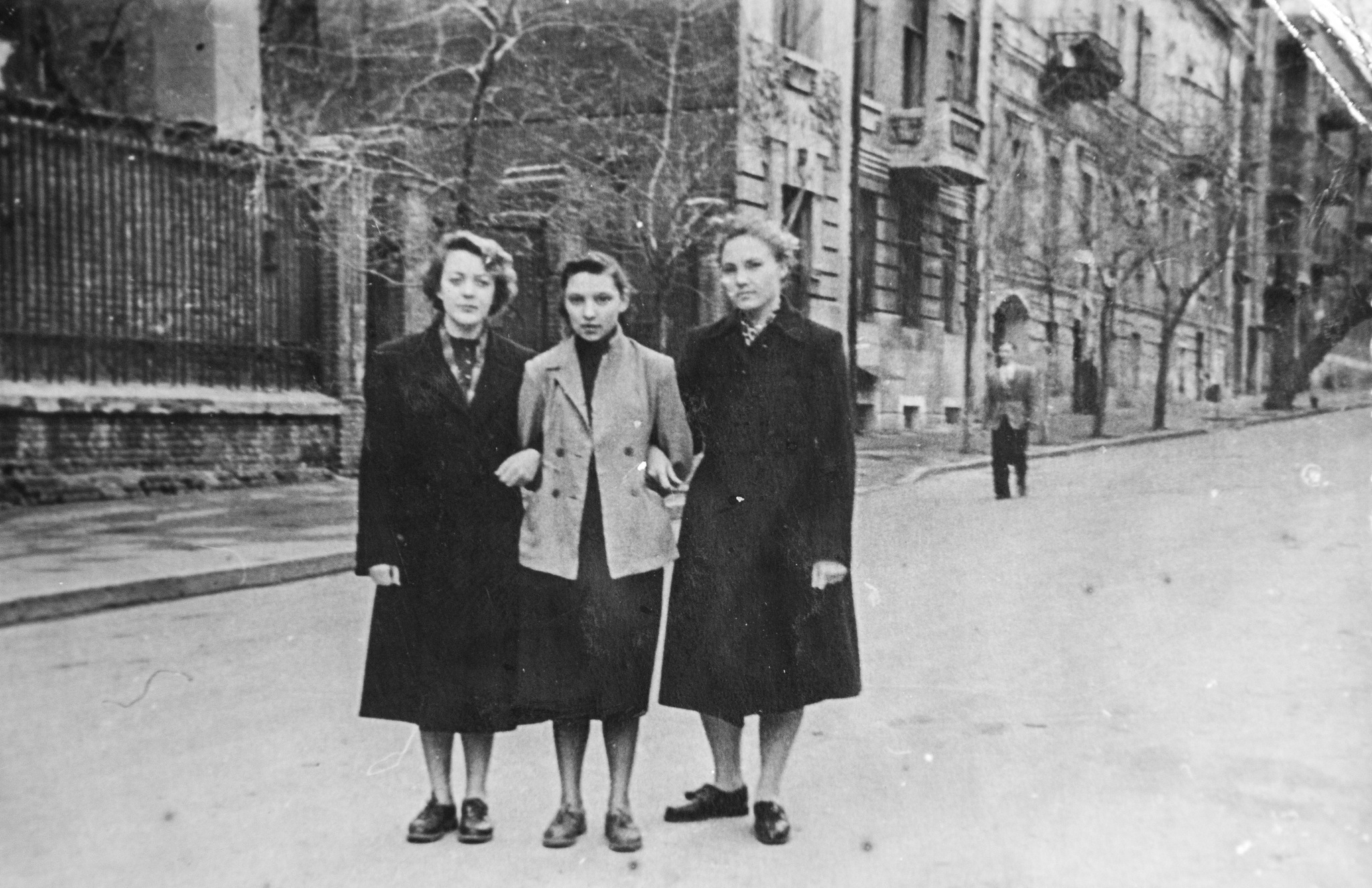
In recent decades, the buildings of the Mangubi Clinic were abandoned. In the early 2000s, an attempt was made to add an extension to the clinic, but it was abandoned again.
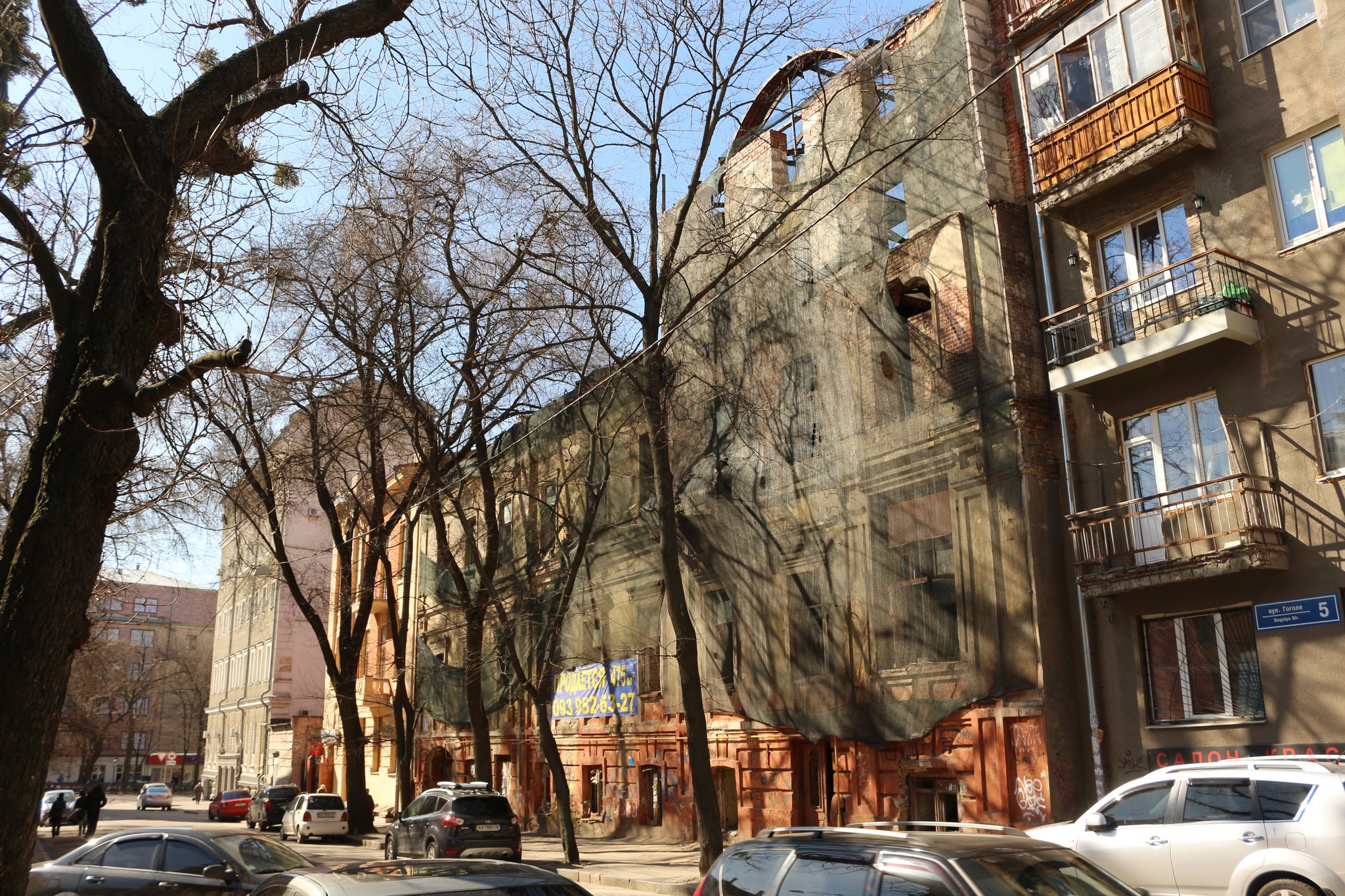
In 2017, the Kharkiv-based architectural firm O.S.A. presented a project for the reconstruction of the building for the GOGOL Hotel, partially preserving the façade, but it was not approved. In 2021, O.S.A. presented a new project for the reconstruction of the site for the company Alter Development. The new project envisages varying degrees of preservation of the original three buildings of the former Dr. Mangubi complex to create a modern multifunctional complex.

- Danylevs’koho Street, 19 - 13.10.2026
- Debunking the myth about one of the most famous Kharkiv photos - 12.10.2026
- The Architectural Evolution of the Kharkiv Theater - 26.09.2026