The Art Nouveau buildings on Hryhoriia Skovorody Street, 92 and 92A have different addresses, but they have the same number of the list of architectural landmarks (108) as one complex of 2 buildings, built simultaneously according to the design of the same architect.
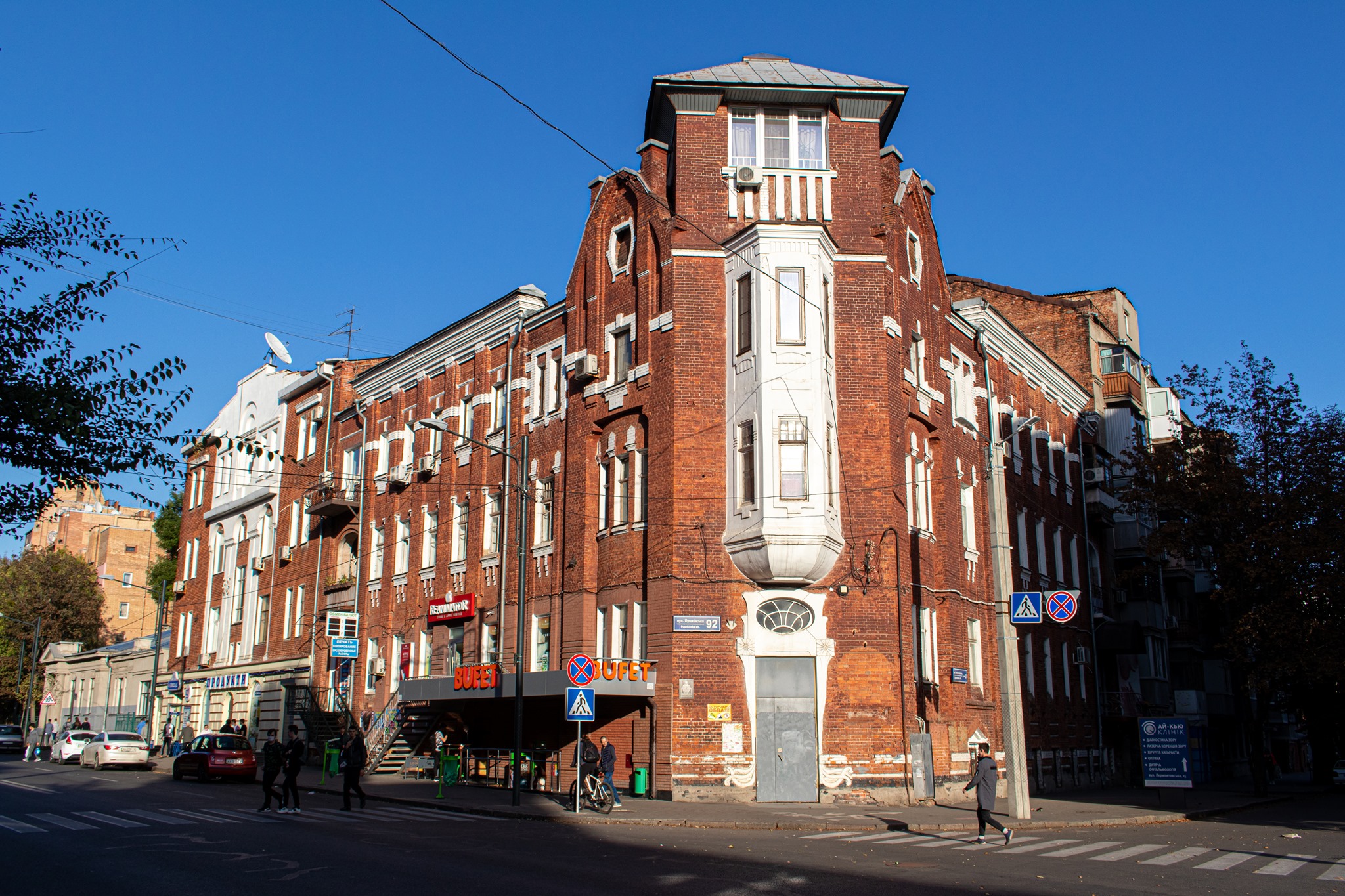
The 92nd section of the street in the list of homeowners in 1909 is listed under the name of merchant Semen Yakovych Tolkachov – he was a famous patron and owner of brick factories, in his honor this historical area is still called Tolkachivka.
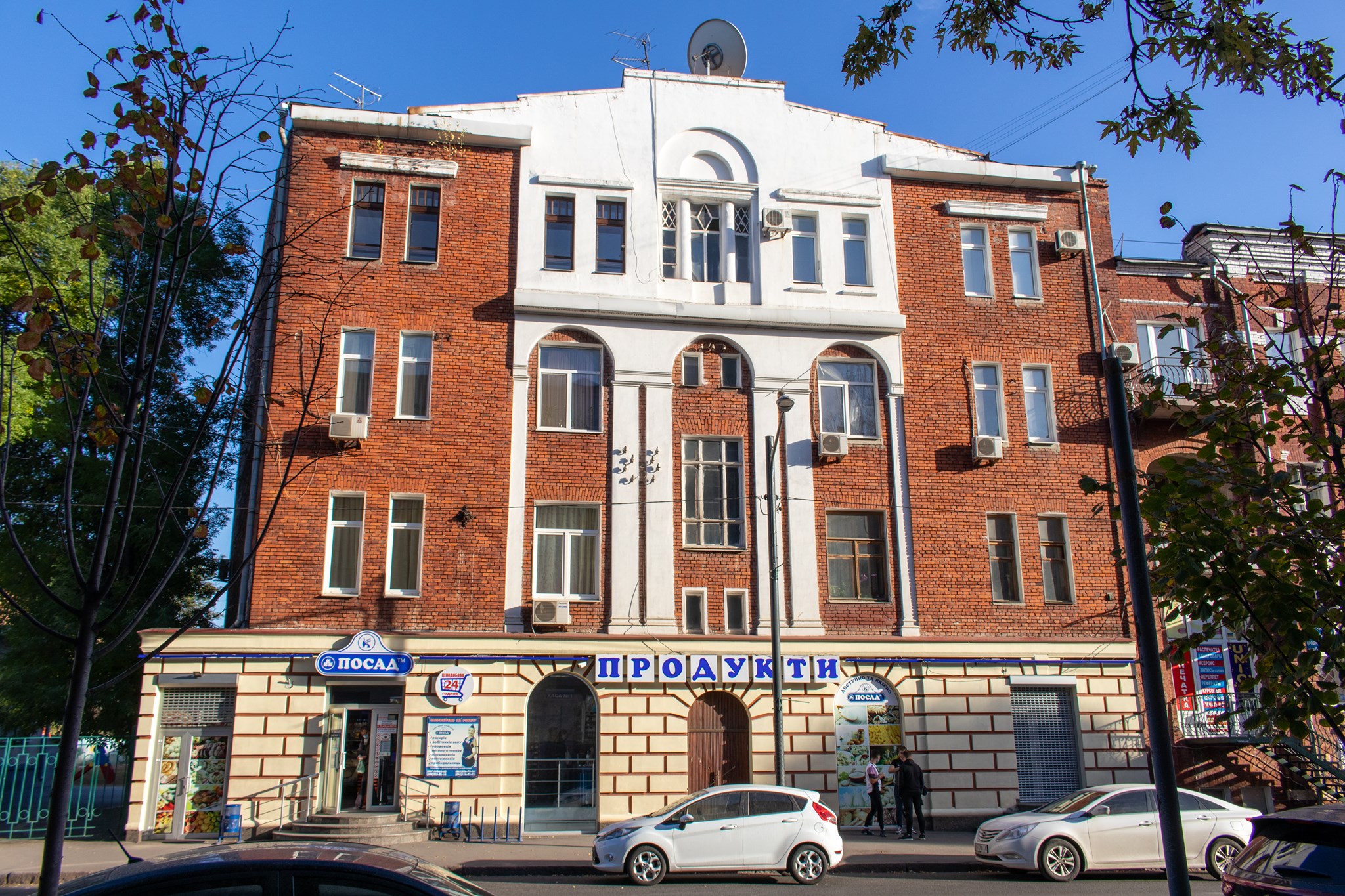
These houses are one of the main decorations of the upper part of Hryhoriia Skovorody St. and are not very typical for Kharkiv Art Nouveau in that they have a minimum of plastering.
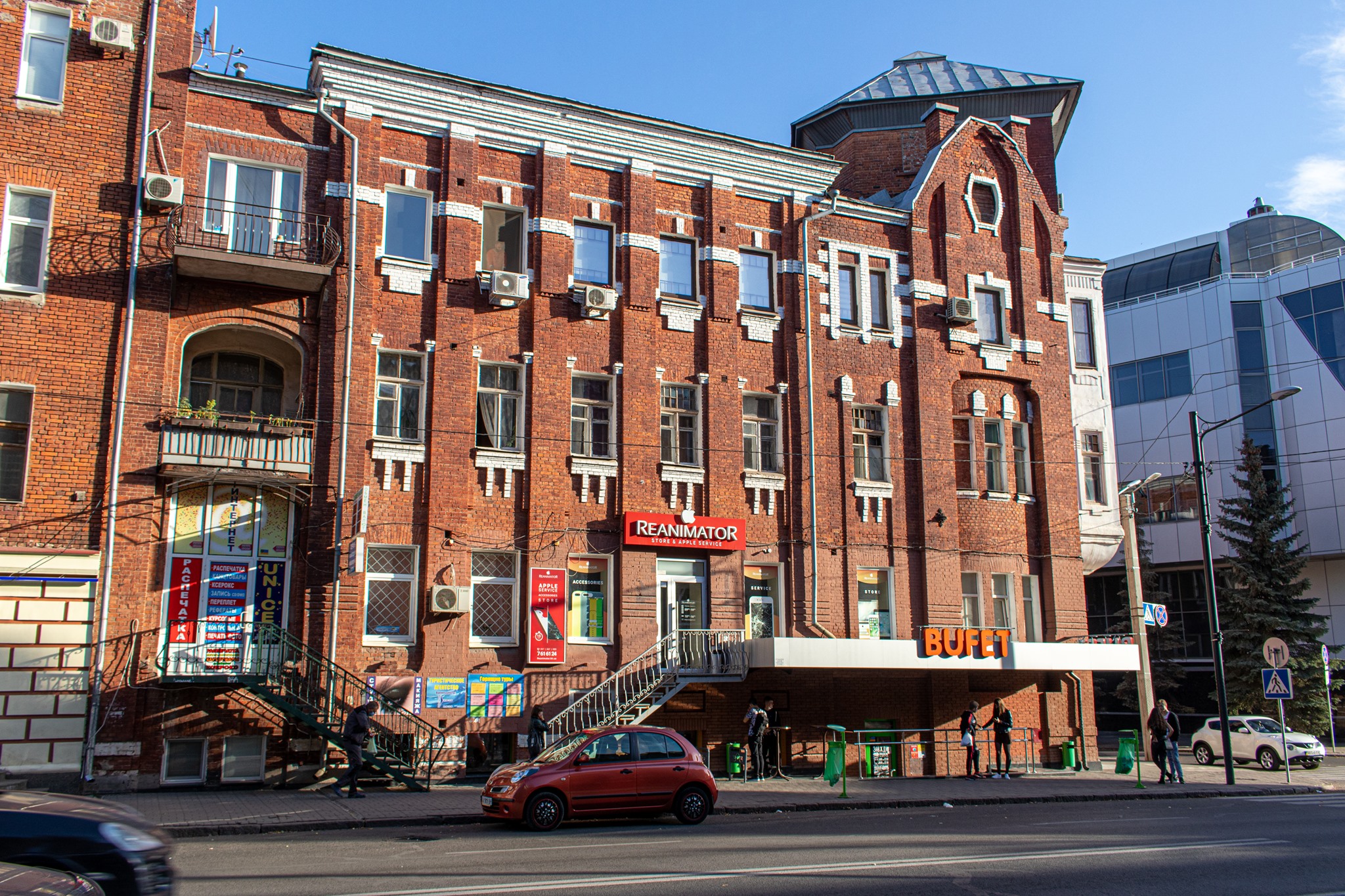
They were built (according to the landmark protection sign on the house) by architect M.F. Piskunov in 1910-1912.
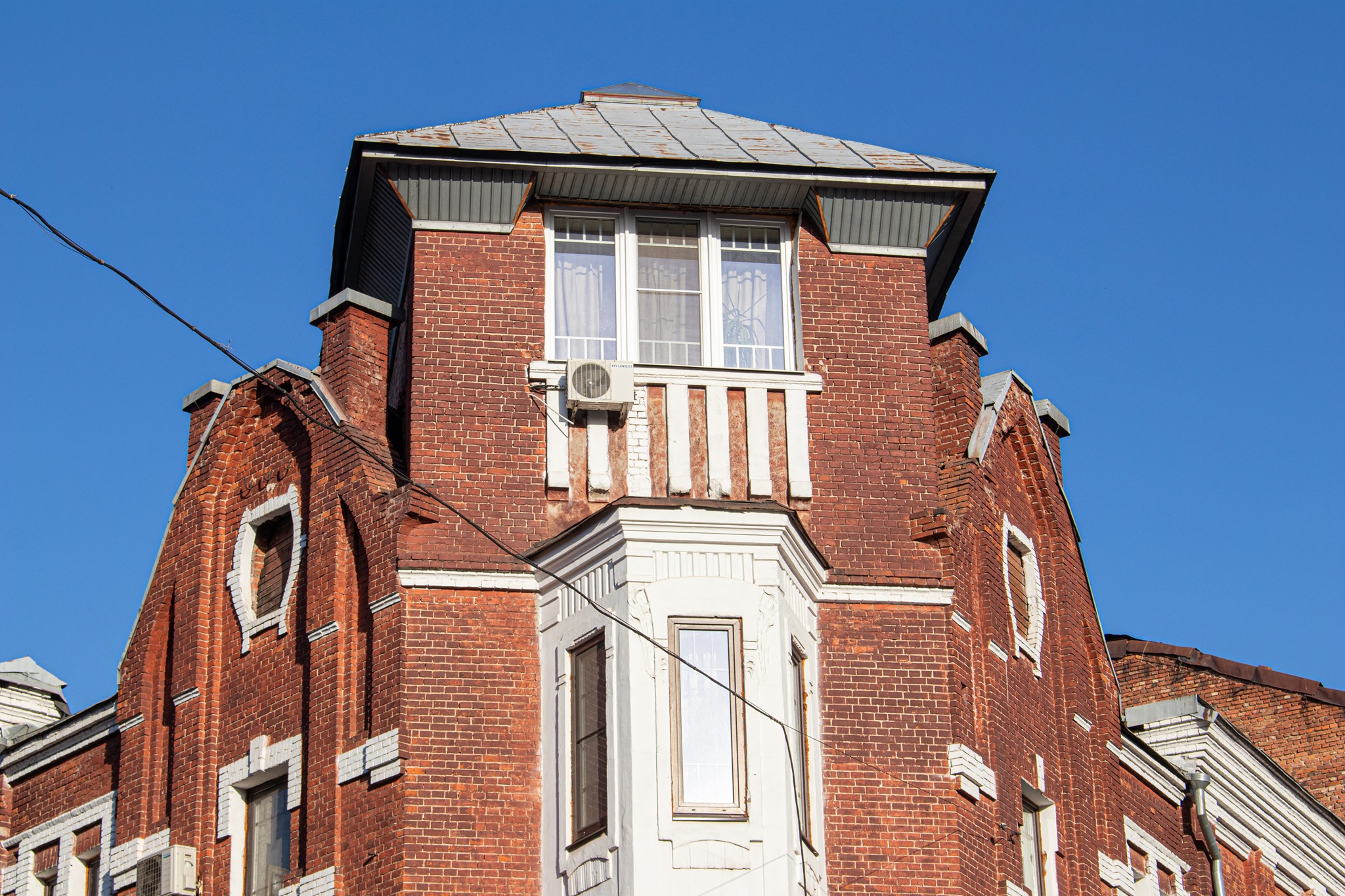
One window has preserved the original and intricate glazing bars.
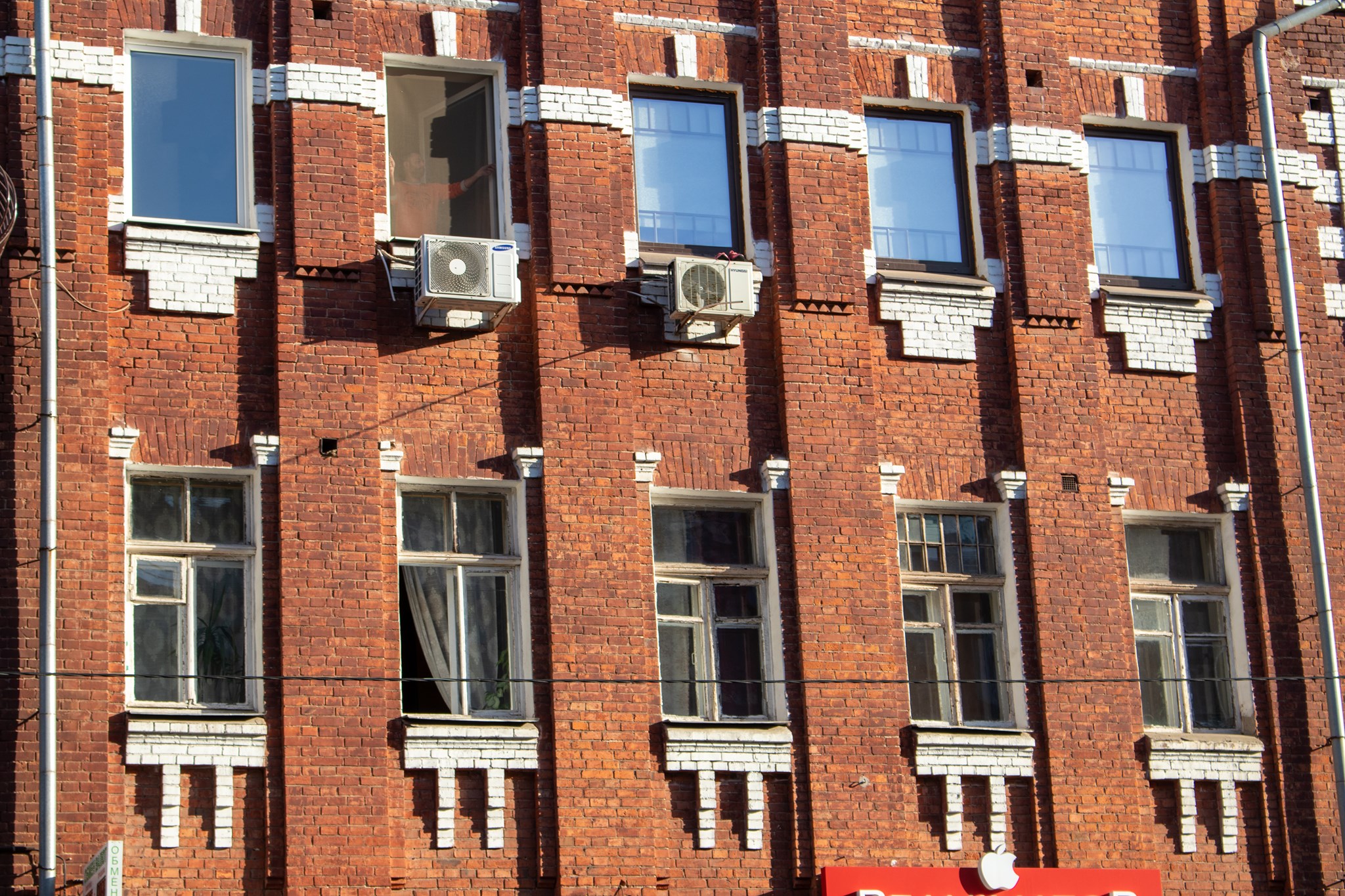
In the 1920s and 1930s, officers lived in this house – such as the first Chief of Staff of the Red Army, General Pavlo Lebedev.
But the story of another resident of the house is even more interesting – Julian Gojiw, a cornet legion of the Ukrainian Sich Riflemen. He was a native of the city of Snyatyn (now Ivano-Frankivsk oblast), who went to the front of the WWI as a volunteer. On May 4, 1915, Julian was wounded and captured during the battles for Mount Makivka in the Carpathians. In captivity, he became friends with Yevhen Konovalets and Vasyl Porayko, with whom he lived in the same barracks. But, unlike Konovalets, he joined the Red Ukrainian Galician Army in 1920, and then the Red Army.

Julian Gojiw lived in this building from 1924 to 1937, in apartment number 13. He rose to the rank of major, chief of the armored fleet of the 23rd Rifle Division. His wife was a surgeon, Olena Timofeyevna Gojiw-Rybalko, from Slovyansk. The couple had no children.
Julian Gojiw was repressed and shot in 1937. His burial place is unknown. The same fate befell his captured compatriot from the Ivano-Frankivsk region, Vasyl Porayko, who became the People’s Commissar of Justice of the Ukrainian SSR.
Rehabilitated by the National Rehabilitation Commission (meeting No. 35 of 04/29/2025) at the request of historian Andriy Boyda.
Thanks to Julian’s assistance, in 1928 his brother Omelyan moved from Czechoslovakia to the Kharkiv region. He was also repressed. In the mid-1950s, after 15 years in the prison camps, he returned to the Kharkiv region, where he lived in the village of Pokotylivka at Tymyryazeva Street, 39. His grave has not yet been found.

- "Noah's Ark" - 21.10.2026
- Blackie’s House on Maksymilianivska St - 19.10.2026
- Danylevs’koho Street, 19 - 13.10.2026