I’ve written about this remarkable man before: Vladislav Andreevich Frankovsky, a wonderful doctor and a man of immense generosity, was the driving force behind the creation of the first children’s hospital in Kharkiv. Incidentally, it was not only the first in the city but also the very first children’s infectious diseases hospital in the provinces of the Russian Empire.
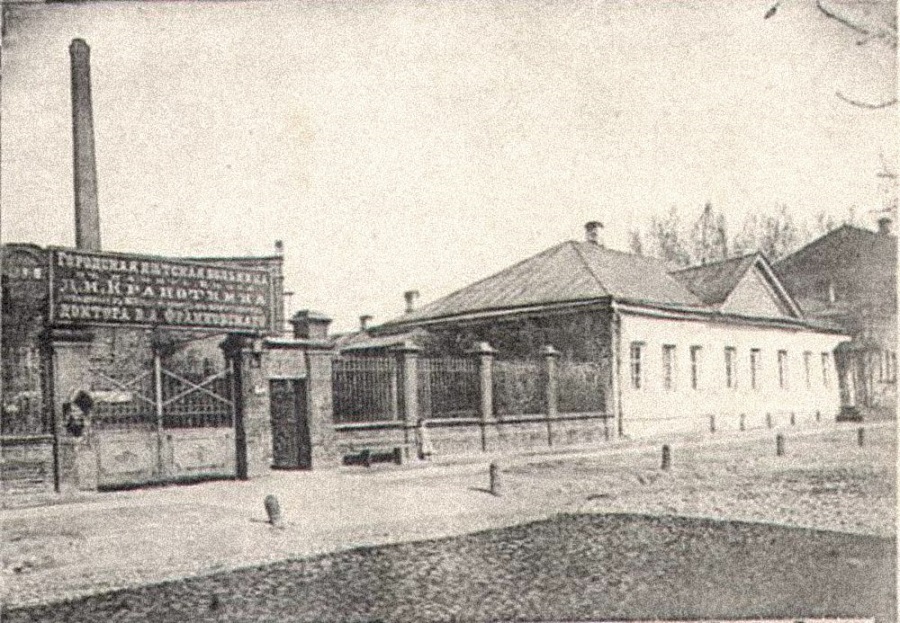
Vladislav Frankovsky himself had a reputation as an outstanding diagnostician. Yet he lived on only a modest salary, spending the rest of his income on the needs of impoverished patients. He was one of the founders of the Kharkiv Medical Society and the author of its charter. Come rain or shine, he would travel to the outskirts of Kharkiv to treat the poor, who were deprived of medical care. Frankovsky’s clinic was the only place where indigent patients were willingly accepted. In 1892, for his outstanding service to the residents of Kharkiv, he was named an honorary citizen of our city. And in 1894, a street was named in his honor, which still exists today. When this outstanding man passed away on April 12, 1895, it turned out that he had absolutely no savings. The City Council held an emergency meeting at which it resolved, in recognition of the deceased’s service to Kharkiv, to cover the costs of his burial at the city’s expense and to erect a monument at his grave using city funds.
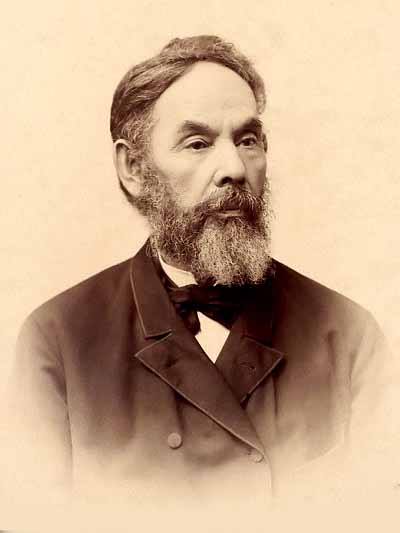
For example, in one of her letters to Fyodor Mikhailovich Dostoevsky, dated April 19, 1876, Khristina Danilovna Alchevskaya writes:
“Why do doctors send you to Essentuki instead of the Crimea? Here in Kharkiv, we have an excellent doctor, Frankovsky—a man of impeccable integrity, truthful, well-educated, widely read, experienced, and long-lived. He has been everywhere—abroad, in the Caucasus, and in the Crimea—and he finds that nothing can compare in its benefits to the seaside air, sea bathing, and grape therapy for any body, no matter what ailment it may suffer from.”
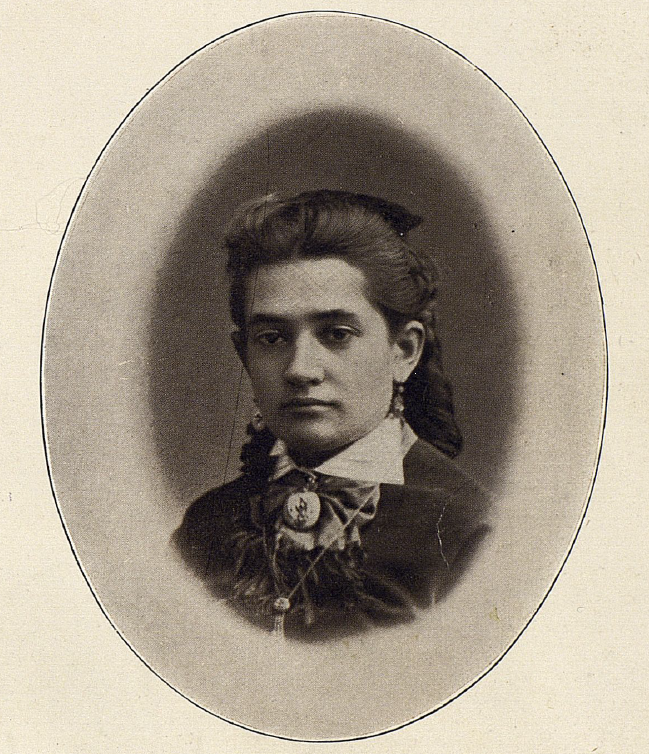
The renowned historian and ethnographer Nikolai Fedorovich Sumtsov also mentions Frankovsky on more than one occasion in his works, noting that the latter
…did not recognize distinctions based on rank, class, position, or wealth; treated everyone in need of his help and wise counsel with equal humanity, selflessness, and altruism, whether it was the poorest of the suffering or the youngest of his fellow doctors.
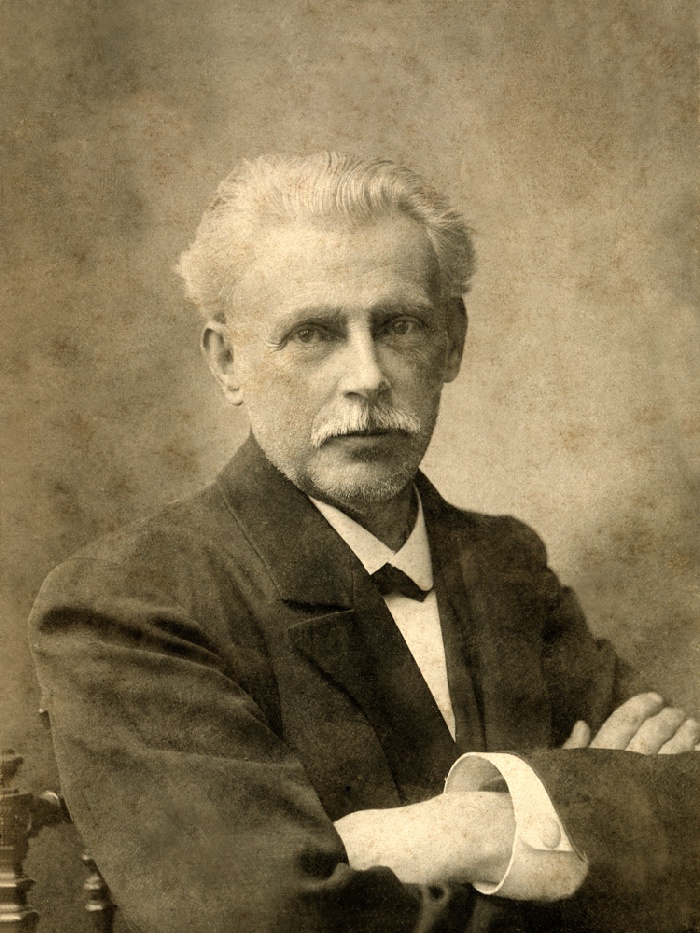
And in the book by D. I. Bahalii and D. P. Miller, *The History of the City of Kharkiv Over Its 250 Years of Existence*, we read:
Vladimir Andreevich Frankovsky—the city’s most popular doctor for several decades—was a true “friend of humanity,” and his memory is revered with equal reverence by both the rich and the poor.
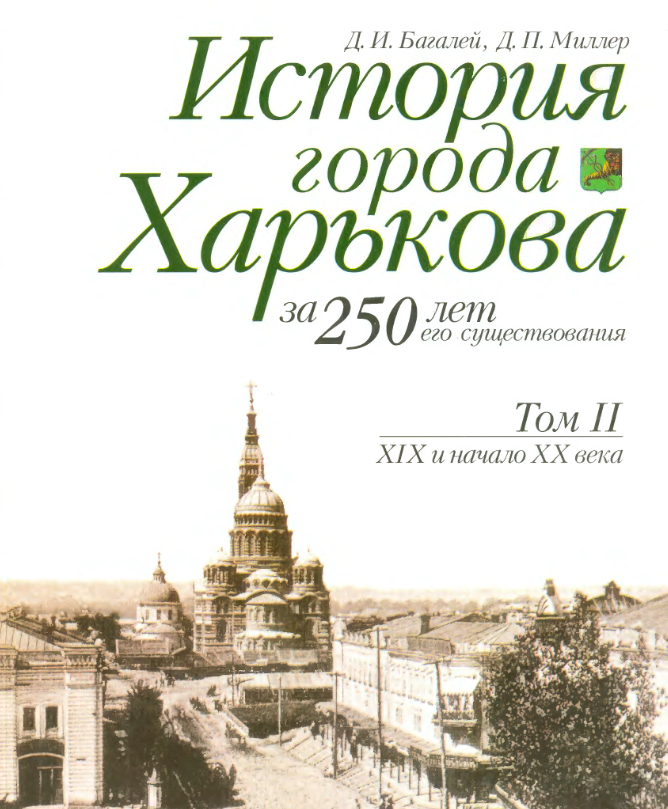
It is estimated that over the course of his 55-year career, Vladislav Frankovsky treated approximately 200,000 patients in his office. If we add to that the number of people he treated while working elsewhere (for example, as a student doctor and a resident at the university clinic), the total comes to about half a million. In Kharkiv, people used to joke that “there isn’t a single house in the city that Frankovsky hasn’t visited at least once.” In short, back then, without exaggeration, everyone in our city knew and remembered Vladislav Andreevich. Nowadays, after many years of obscurity, interest in Vladislav Frankovsky is reviving. Researchers are writing academic articles about him, and tour guides are taking people on tours, telling the wonderful story of an amazingly kind man who, quite literally, saved Kharkiv. One of the sites featured on these tours is the mansion at Frankivska Street, 4/2.
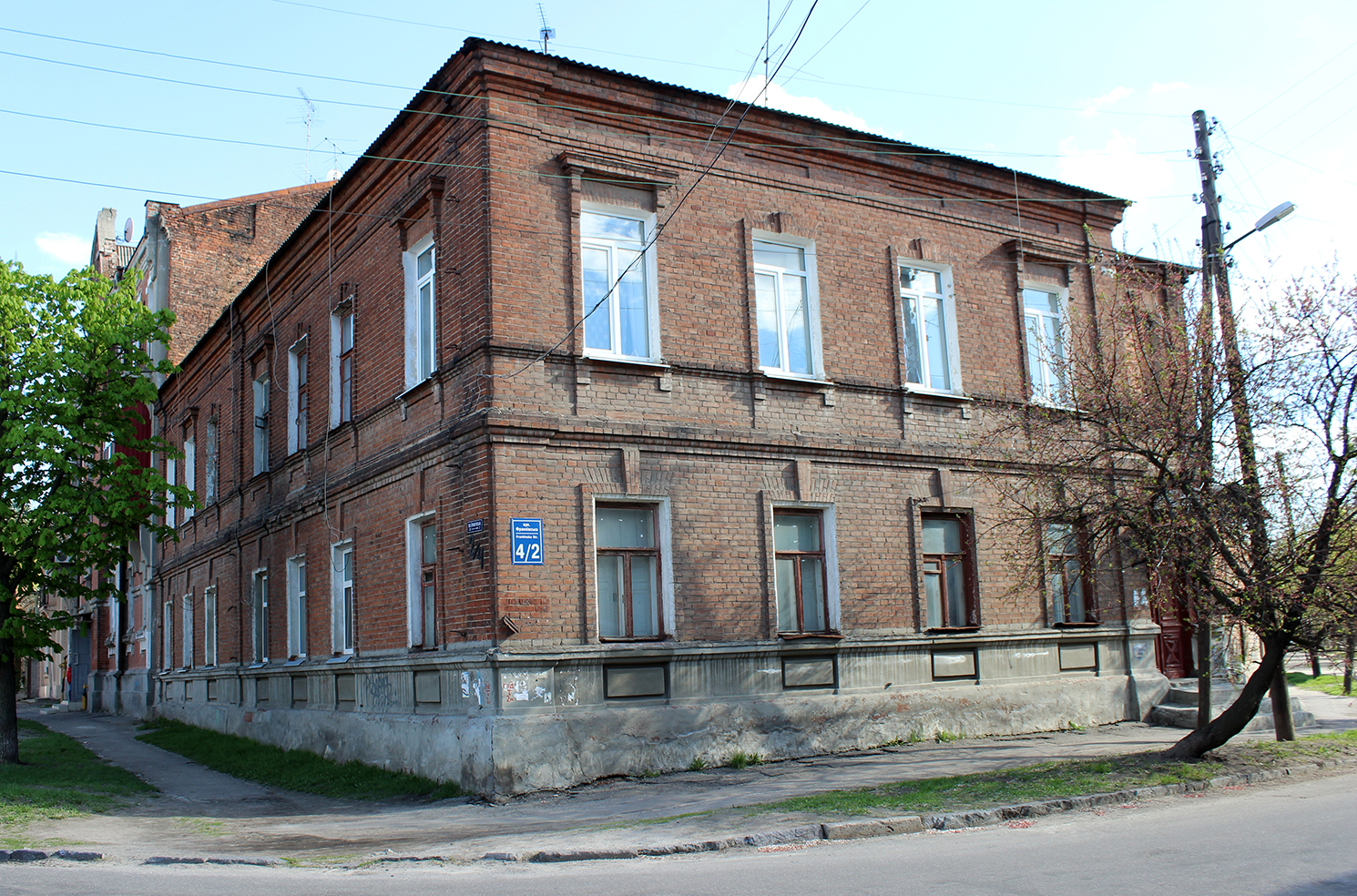
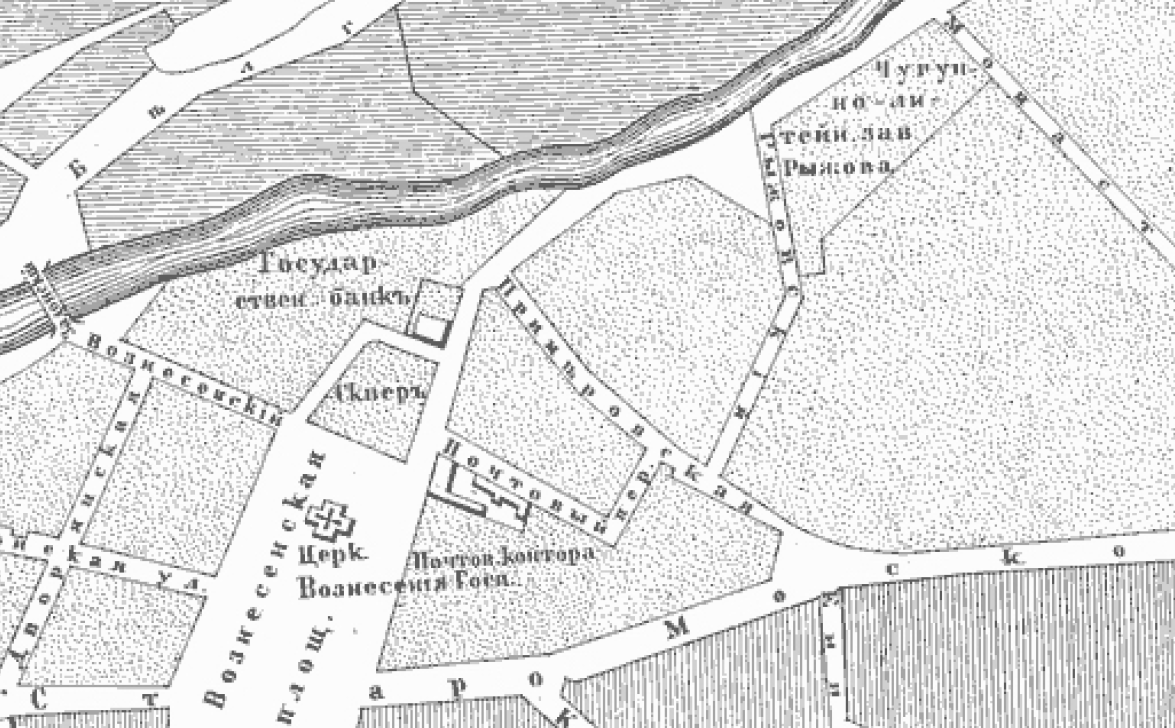
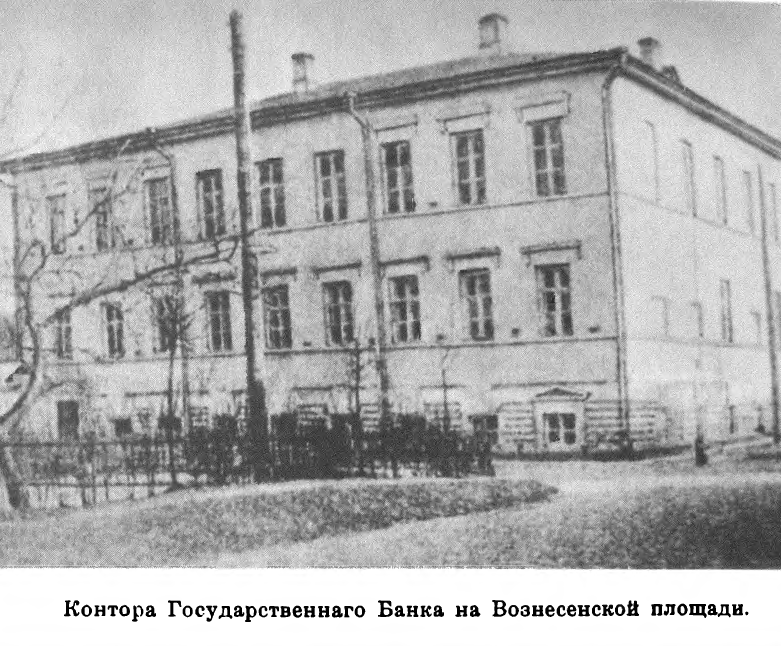
To be honest, this house was also dear to my heart. However, things turned out to be much more complicated with it. As we recall, by a decision of the Kharkiv City Council, Bakhmetievsky Lane was merged with Ryzhovskaya Embankment and renamed Frankivska Street (since Vladislav Andreevich lived in that very neighborhood). Various reference books from that time list a single address for Frankovskyi’s residence: Voznesensky Square, Building No. 2. A note in parentheses clarifies that it was “behind the State Bank office.”
In 1872, this area appeared on the city map as follows:
In the 1882 list of homeowners in Kharkiv, we read:
“Bakhmetievsky Lane (right side), Part 1, Section 1, Block
1, No. 2, Vladislav Andreevich
Frankovsky, No. 4, government-owned building of the State Bank.”
On April 24, 1889, Vladislav Frankovsky submitted a document to the Kharkiv City Council regarding the reconstruction of some of the buildings on his property in Bakhmetievsky Lane, where he again specified: “behind the bank.”
The same file also contains a plan of the courtyard itself. It shows that, in addition to the residential building and outbuildings, there was a garden nearby that opened onto the riverbank.
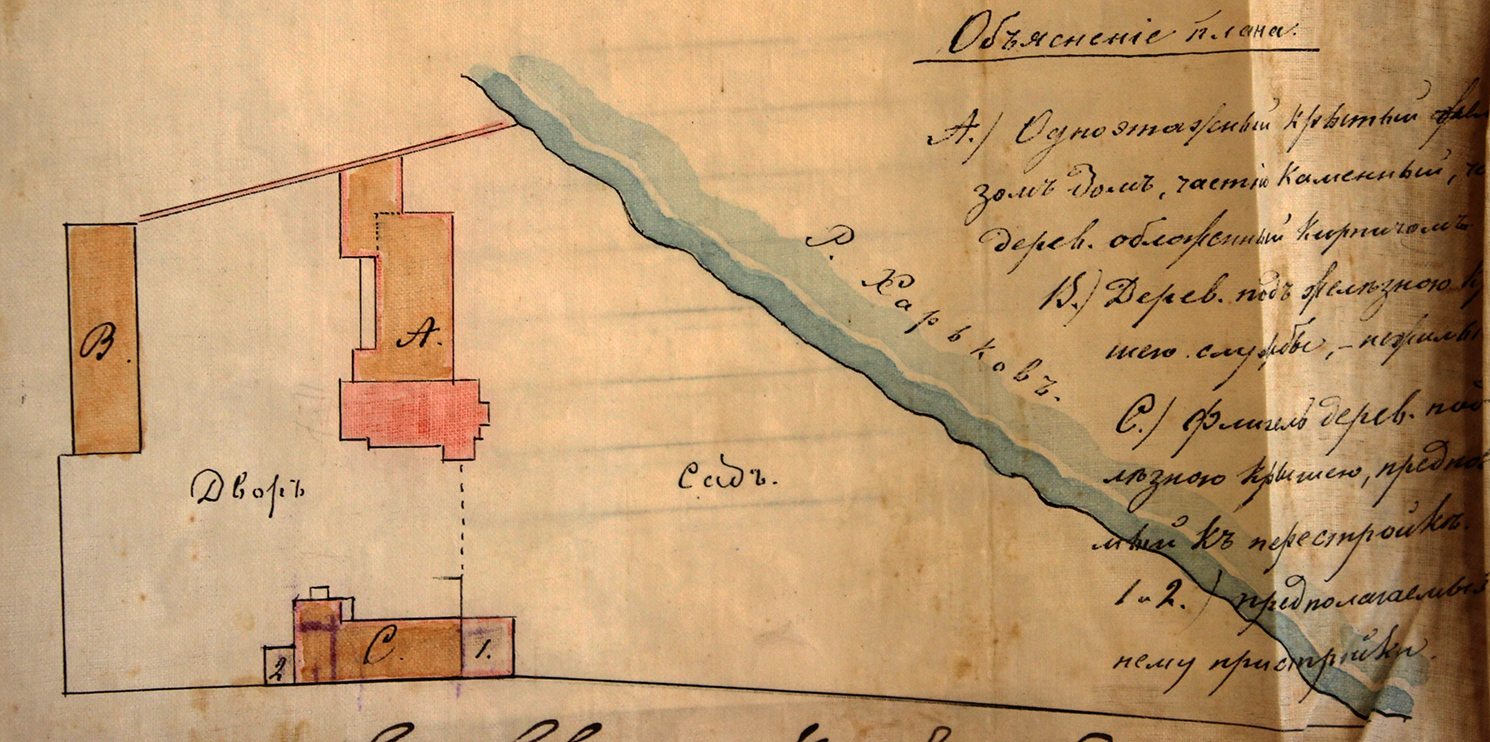
Here’s what this place looked like in 1895:
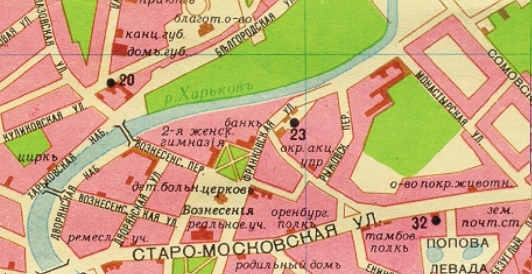
Today, the building that once housed the state bank is located at Oboronnyi Val Sq, 10. And there is no house in the vicinity that resembles Frankowski’s mansion (and we know for certain from archival records what it looked like).

Thus, it is highly likely that Vladislav Andreevich’s actual house was located on a vacant lot at the very beginning of the street, where the auto repair shop is now located.

Right now, the place looks completely neglected. But if you wander around there, you might come across piles of old bricks, evidence that there used to be buildings there.
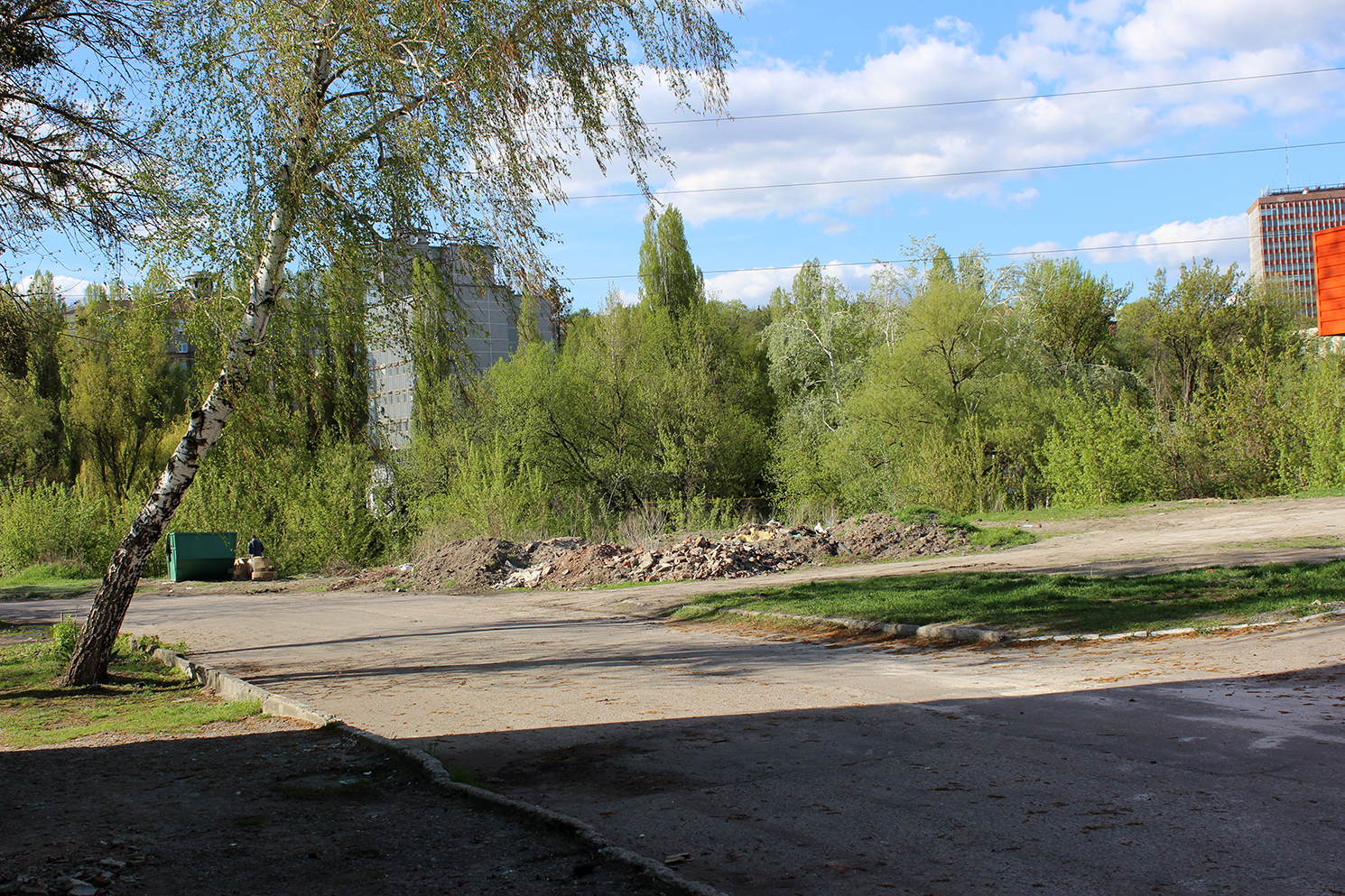
Why, then, is it believed that the philanthropic doctor lived specifically in the mansion at Frankivska Street, 4/2? This may be due to the fact that in the “List of Kharkiv Property Owners” for 1909 and 1913, the numbering on Frankivska Street changed, and Vladislav Andriyovych Frankovskyi was still listed as the owner of house No. 4.
So, based on documents found in the State Archives of the Kharkiv Region, I must say with great regret that, alas, the mansion on Frankovskaya Street, 4/2 has absolutely no connection to the “kind doctor,” and the actual house where V. A. Frankovskyi lived has, alas, not survived to this day.
Whether that’s a good thing or not, who knows. I can say one thing: in my opinion, it’s much more important to simply remember this great man and not forget everything he did for our city.

- About the military pilot school and the airfield in Kharkiv… - 04.11.2020
- Nikanor Savich—A Political Career by Mistake - 13.07.2020
- And once again, about the Cavalry Guards… - 21.01.2020