During the reconstruction of Kharkiv in the late 1940s and early 1950s, many buildings originally constructed in the Constructivist style were rebuilt in the style of Socialist Classicism. Constructivist was deemed too “cosmopolitan” and a marginal style, but the campaign against it had begun even earlier—as early as the first half of the 1930s.
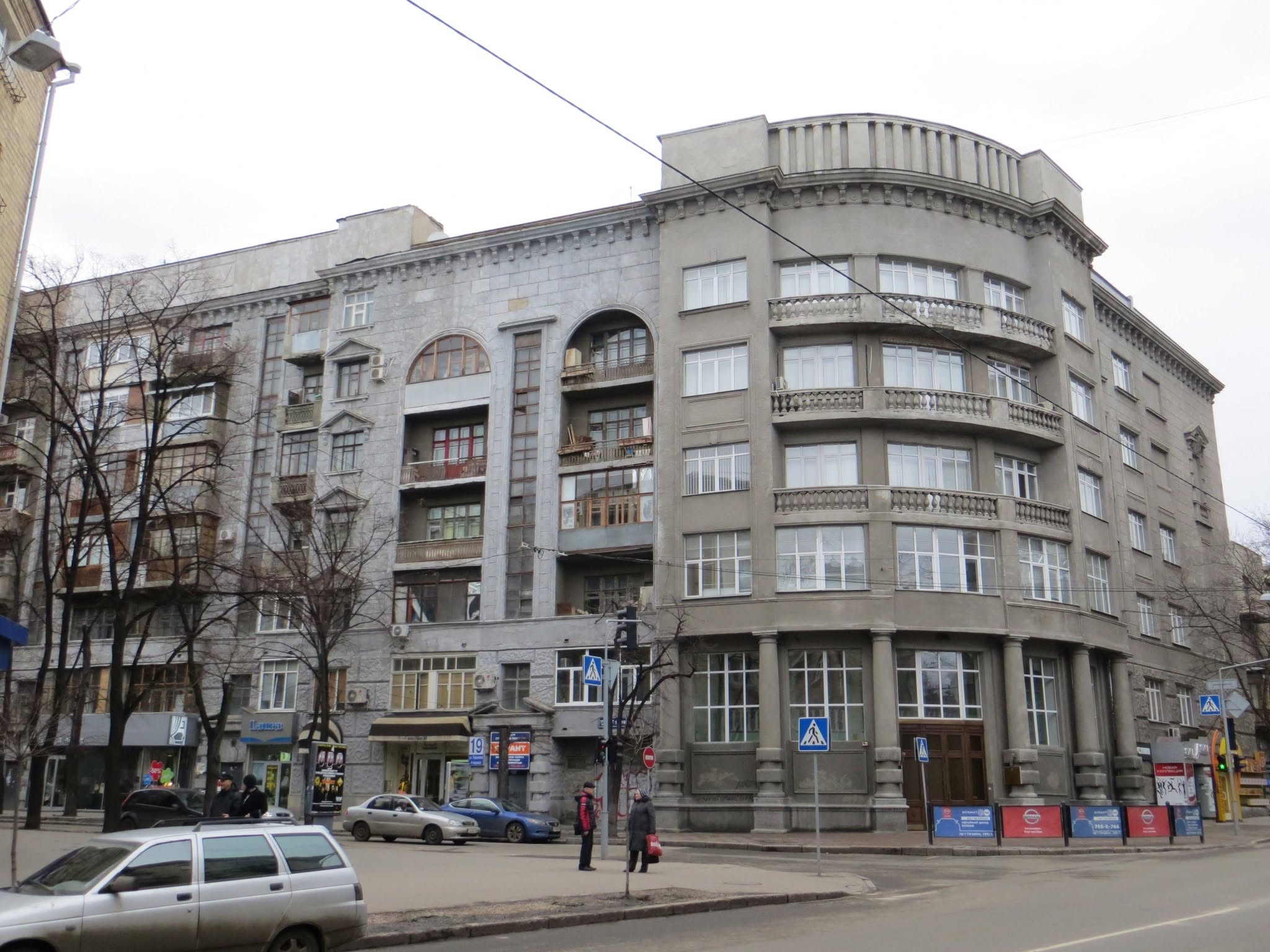
Some building projects that were initially started in the Constructivist style were eventually completed with Classicist features—as was the case with A. Beketov’s Littera house near the “Kharkiv-Passenger” train station. Some designs had to be revised during construction, and decorative elements—porticos, stucco moldings, and columns—were hastily added. But the trained eye of an architecture enthusiast will still recognize a “Constructivist” building even behind this decoration. This was the case with the building constructed for the Kharkiv branch of the Society of Former Political Prisoners and Exiles.
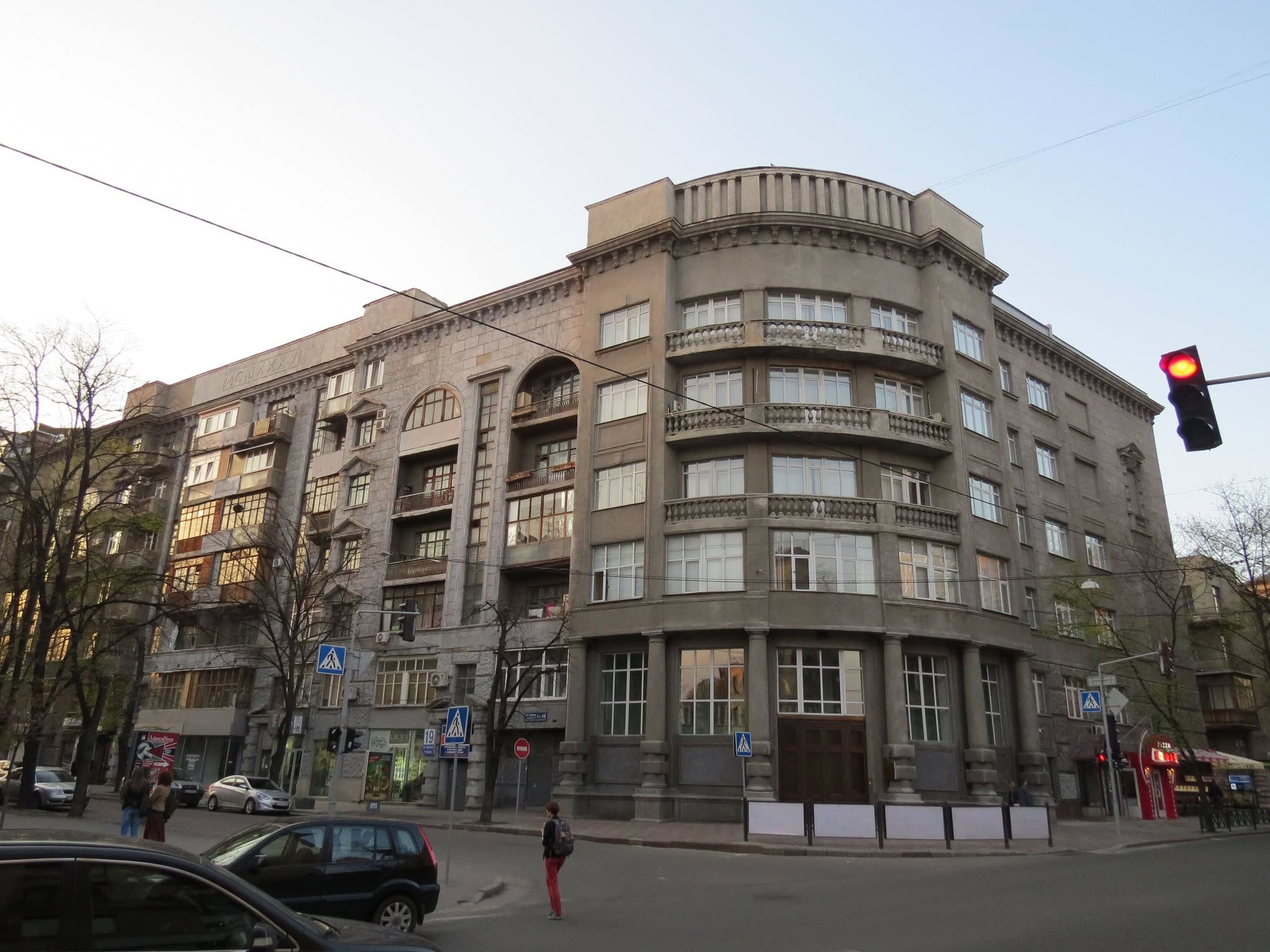
Architect Noe Podgorny designed the building in 1932 in the Constructivist style. The house was completed in 1935 with abundant Classicist-style decoration, which was added to the design after the fact, so it may even seem somewhat chaotic. Some researchers see Art Deco features in the house.
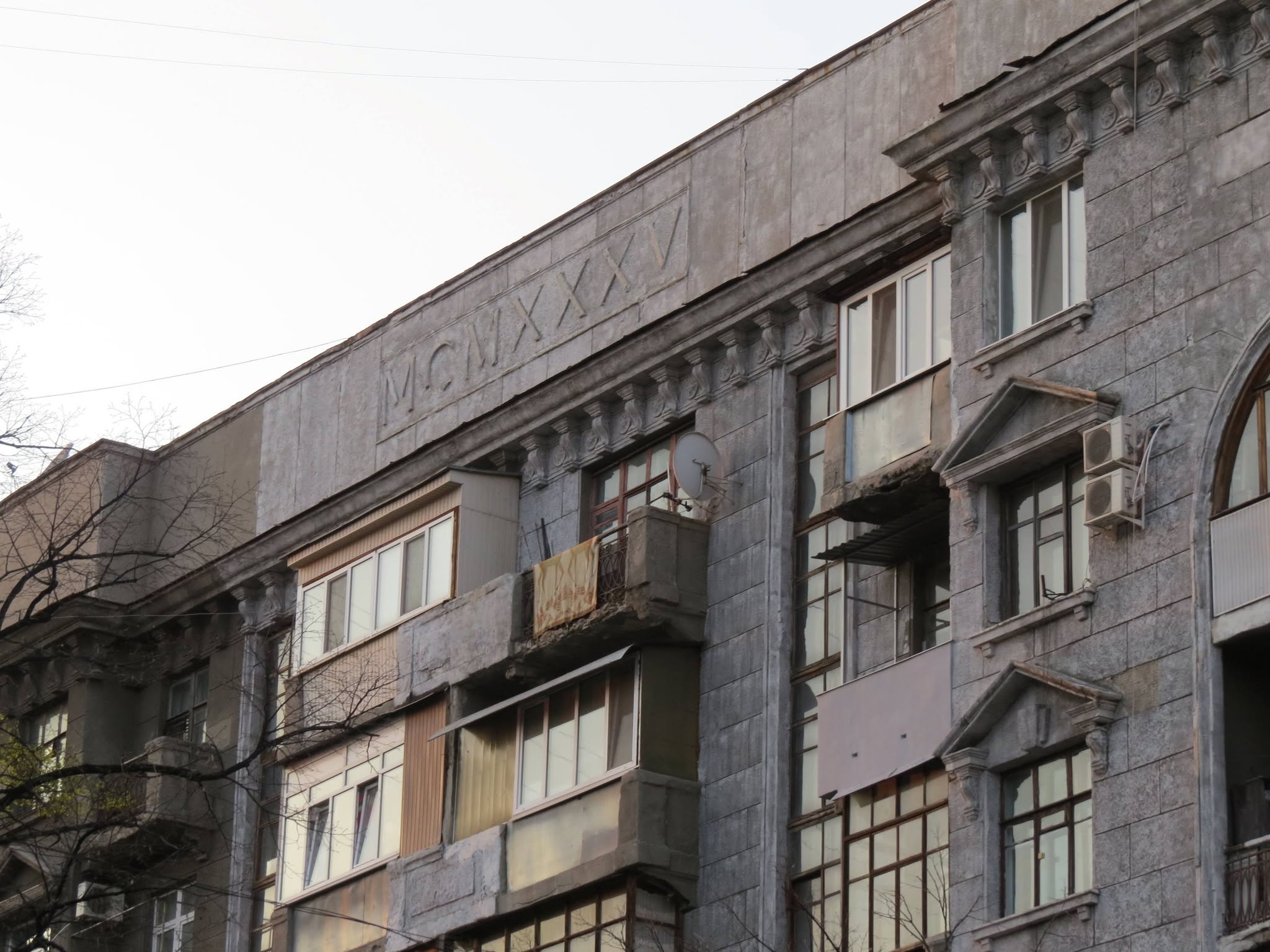
The 6-story administrative section (Hryhoriia Skovorody Street, 49) is distinguished by its characteristic “Constructivist” ribbon balconies, disguised by Classicist decor, a balustrade-topped attic, alas, it has become “blind” over the years. On the end facade, one can see several decorative “blind” windows, framed by stucco moldings for symmetry. The 7-story residential section (Hirshmana Street, 19) is adorned with an attic featuring Roman numerals, MCMXXXV, denoting the year of construction, 1935.
The administrative (corner) section housed a library, a dining hall, a lecture hall, and a club for political prisoners. The building was also home to former political prisoners—Bolsheviks, Mensheviks, Socialist Revolutionaries, and other revolutionaries who had suffered during the pre-revolutionary years in the struggle against the tsarist regime. Their civic organization was founded in 1921; it engaged in research, educational, and publishing activities dedicated to the struggle against the tsarist regime. As early as 1935, the association of political convicts was dissolved; one of the main reasons was the overly active stance of its members in favor of abolishing the death penalty in the USSR. In general, during the second half of the 1930s, a significant portion of the “old revolutionaries” fell out of favor with the new authorities and were repressed. The building was named “Noah’s Ark” not only because of the architect’s name but also because of its residents, who had become a “dying breed.”
By the way, the house is also connected with the theatrical page of Kharkov’s history – Les Kurbas’ wife, actress Valentina Chistyakova, and actor Ivan Maryanenko lived in it.
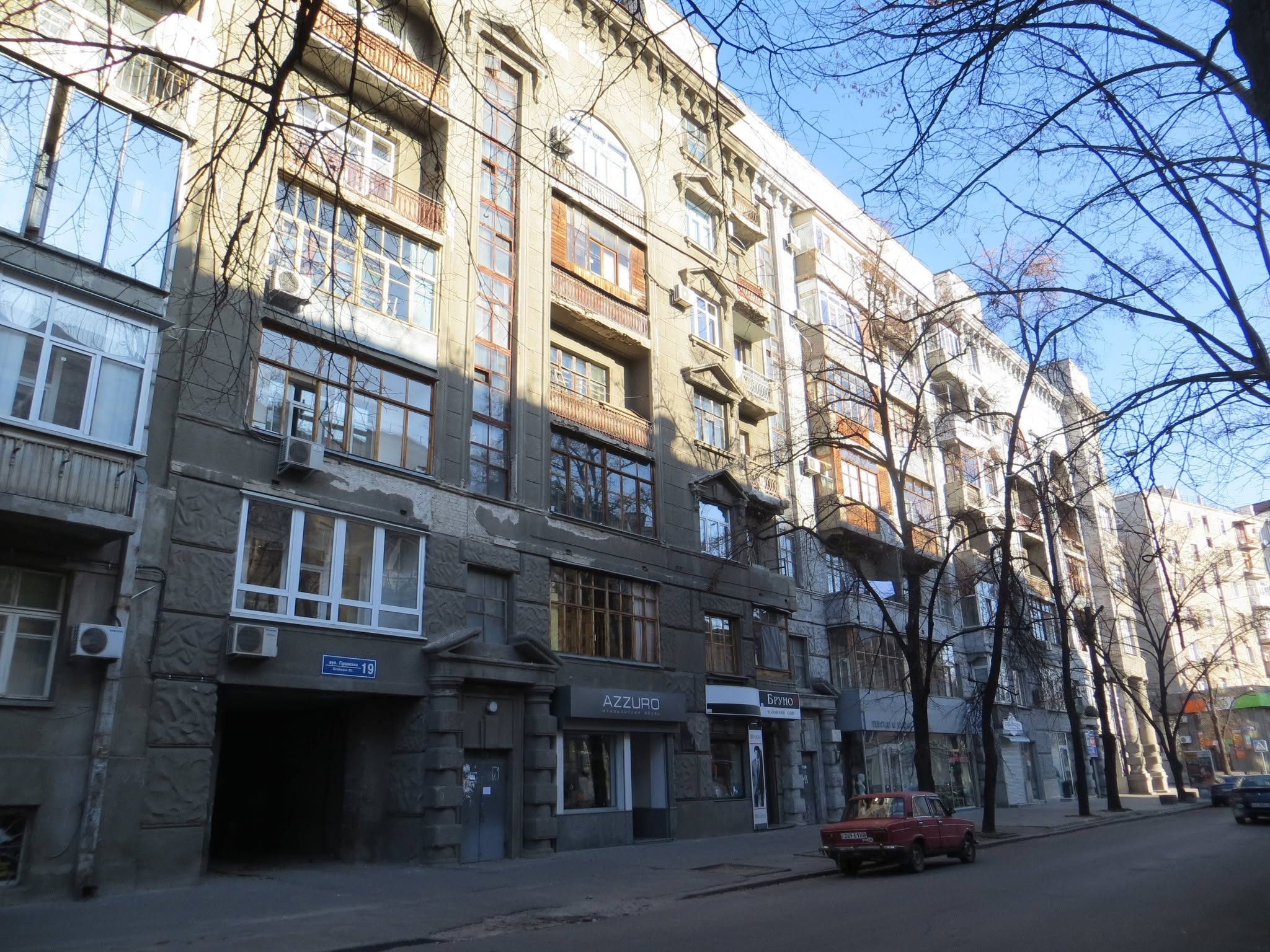
In the postwar years, the building housed the Institute of Marxism-Leninism, which included a museum; it was later replaced by the Faculty of Physical Education of the Kharkiv branch of the Kyiv Institute of Physical Culture. Starting in the 1990s, the building housed the Ukrainian branch of the International Slavic University. Today, the administrative wing is home to the Academician V. V. Stashysa Research Institute for the Study of Crime Problems of the National Academy of Legal Sciences of Ukraine.

- "Noah's Ark" - 21.10.2026
- Blackie’s House on Maksymilianivska St - 19.10.2026
- Danylevs’koho Street, 19 - 13.10.2026