The history of the architectural monument located at Maksymilianivska Street, 22 has been a very eventful one. It was built in 1912–1913 based on a design by V. G. Gausch for Henry Blackie. Although some researchers attribute the design to architect Alexander Rzhepishevsky, it was V. Gaush who built the house for his brother, the British Vice-Consul Charles Blackie, which can be found at the current address of Darvina Street, 11. Both houses are stylistically similar—they are examples of Northern Art Nouveau—and Gaush is listed as the architect of both buildings in Kharkiv’s list of architectural monuments.
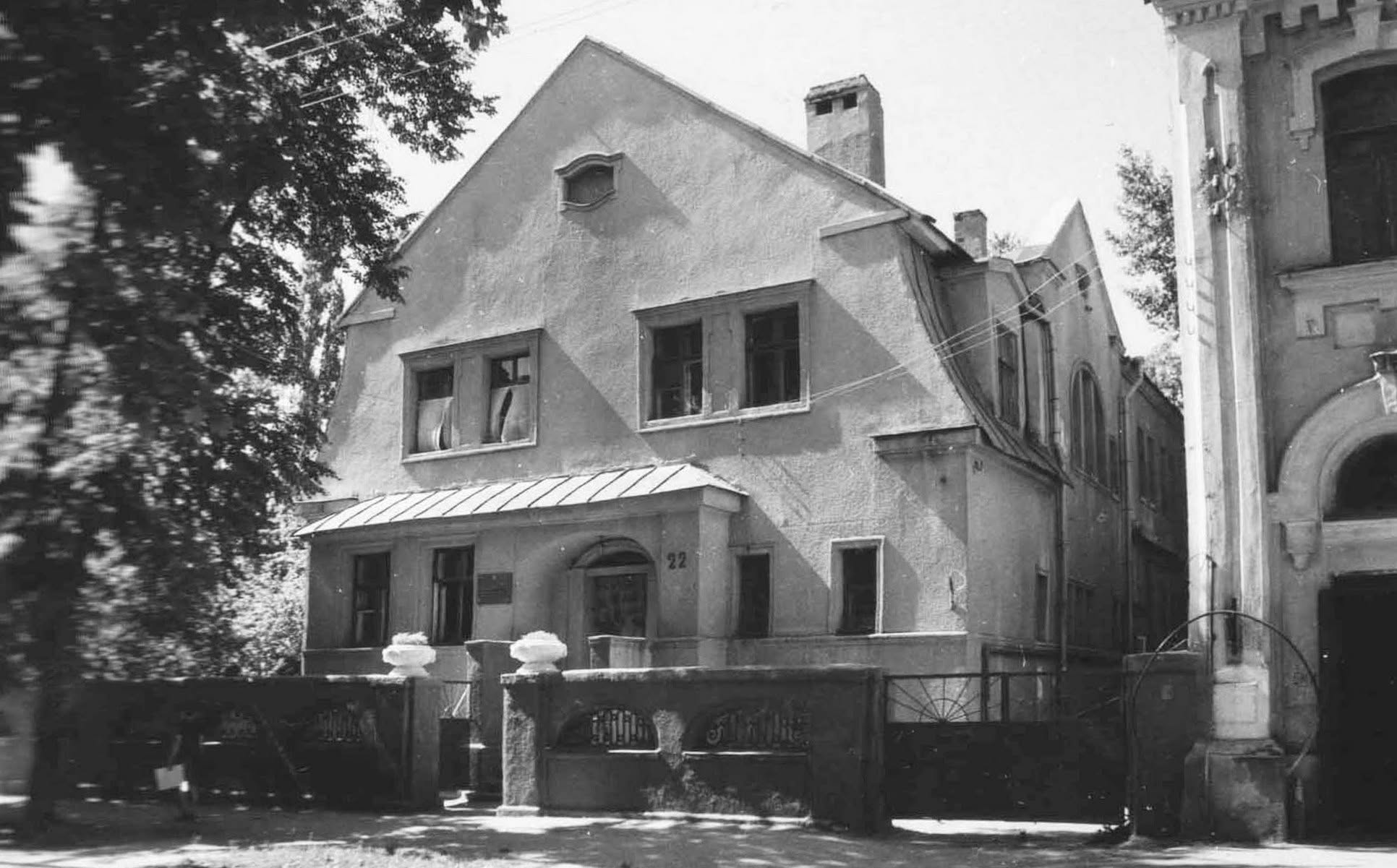
Alas, Henry Blackie himself (or, as he was more commonly referred to in the press of those years, Harry) did not live long enough to enjoy the house; he died in September 1913 of typhus at the age of 43. Like his brother Charles, Harry worked in the management of the “Helferich-Sadé” partnership, one of Kharkiv’s largest industrial enterprises. The factory produced agricultural machinery, plows, and other implements and tools for agriculture. In 1913, the “Helferich-Sadé” partnership employed about 1,800 workers and staff; the partnership had 46 branches in various cities, and the factory itself occupied an area of 26 hectares. Charles and Harry’s father, Georgy (most likely George), came to Kharkiv from Lincolnshire, England, where he had worked at a similar factory, Clayton & Shuttleworth.
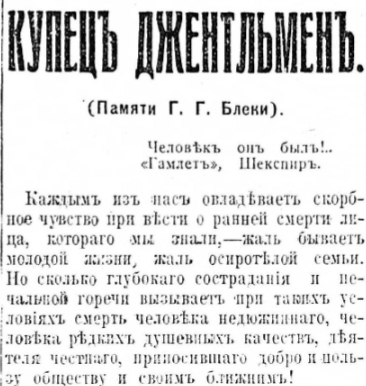
Henry Blackie worked at the “Helferich-Sadé” partnership for 23 years and became its managing director. He was held in high esteem both at the factory itself and among Kharkiv’s commercial and industrial circles. In his obituaries, he was described as a “gentleman merchant,” and his philanthropy and support for the Lutheran orphanage were highlighted.
Henry was married to the daughter of Kharkiv professor Georgy Fedorovich Shulz and lived with his wife and three children in the professor’s house at Chernyshevska Street, 13 —a building that has not survived to the present day. The new house on Maksymilianivska Street was inherited by his sister, Elizabeth Blackie, who lived there until 1917.
In the 1920s, Konstantin Maximov, chairman of the Supreme Council of the National Economy of the Ukrainian SSR, lived at Maksymilianivska Street, 22; later, the head of the People’s Commissariat of the Ukrainian SSR (the government), Vlas Chubar, who is infamous as one of the architects of the 1932–1933 Holodomor. Maximov and Chubar were executed during Stalin’s purges of 1937–1939.
Longtime residents recall that during World War II, a German officer lived in the house and planted a vegetable garden in the yard—hungry children would occasionally steal vegetables from it until a gallows was erected in the yard.
After the war, the building housed a hospital for premature infants, a cardiac rehabilitation center, and a children’s rheumatology rehabilitation center.
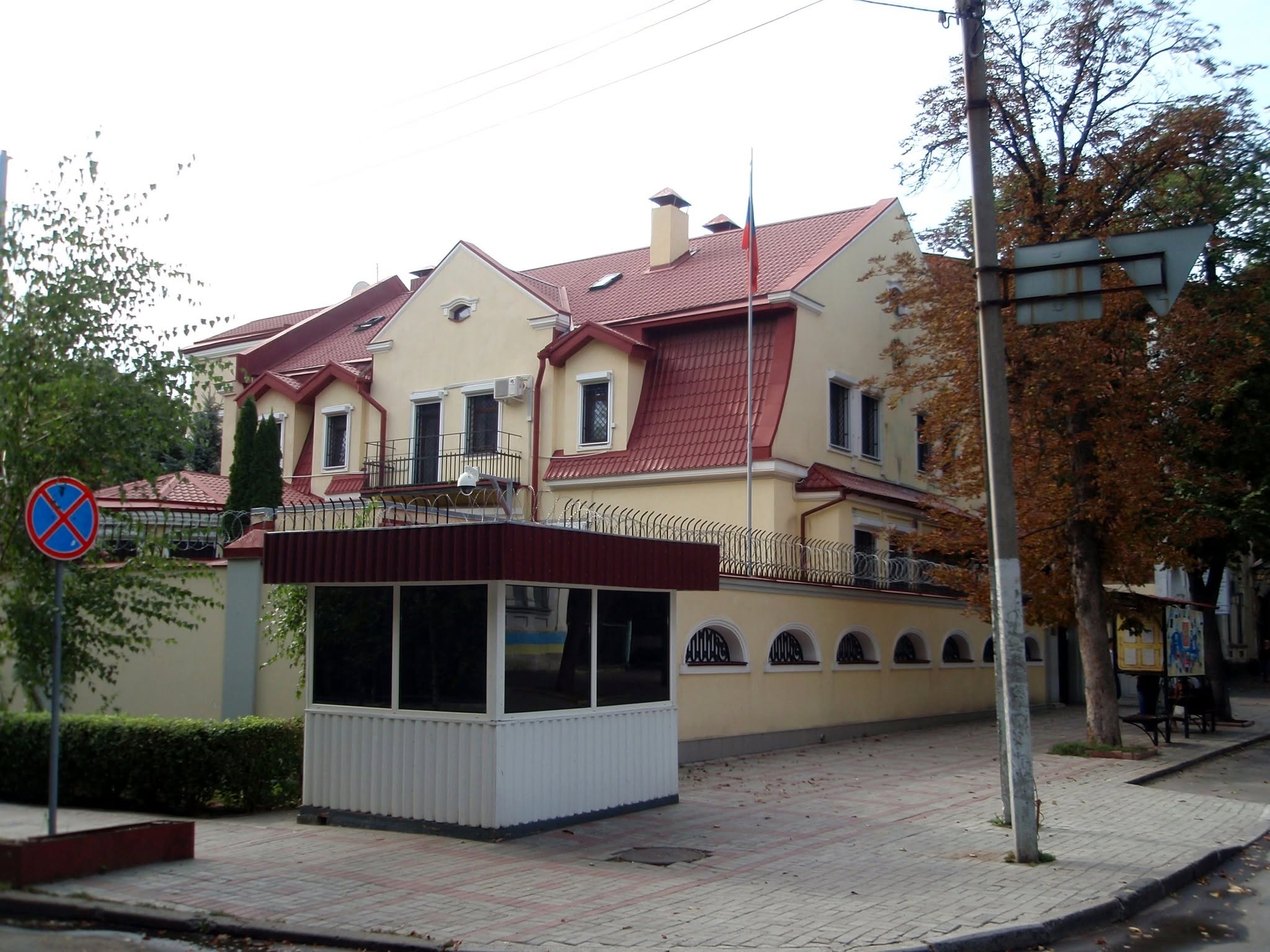
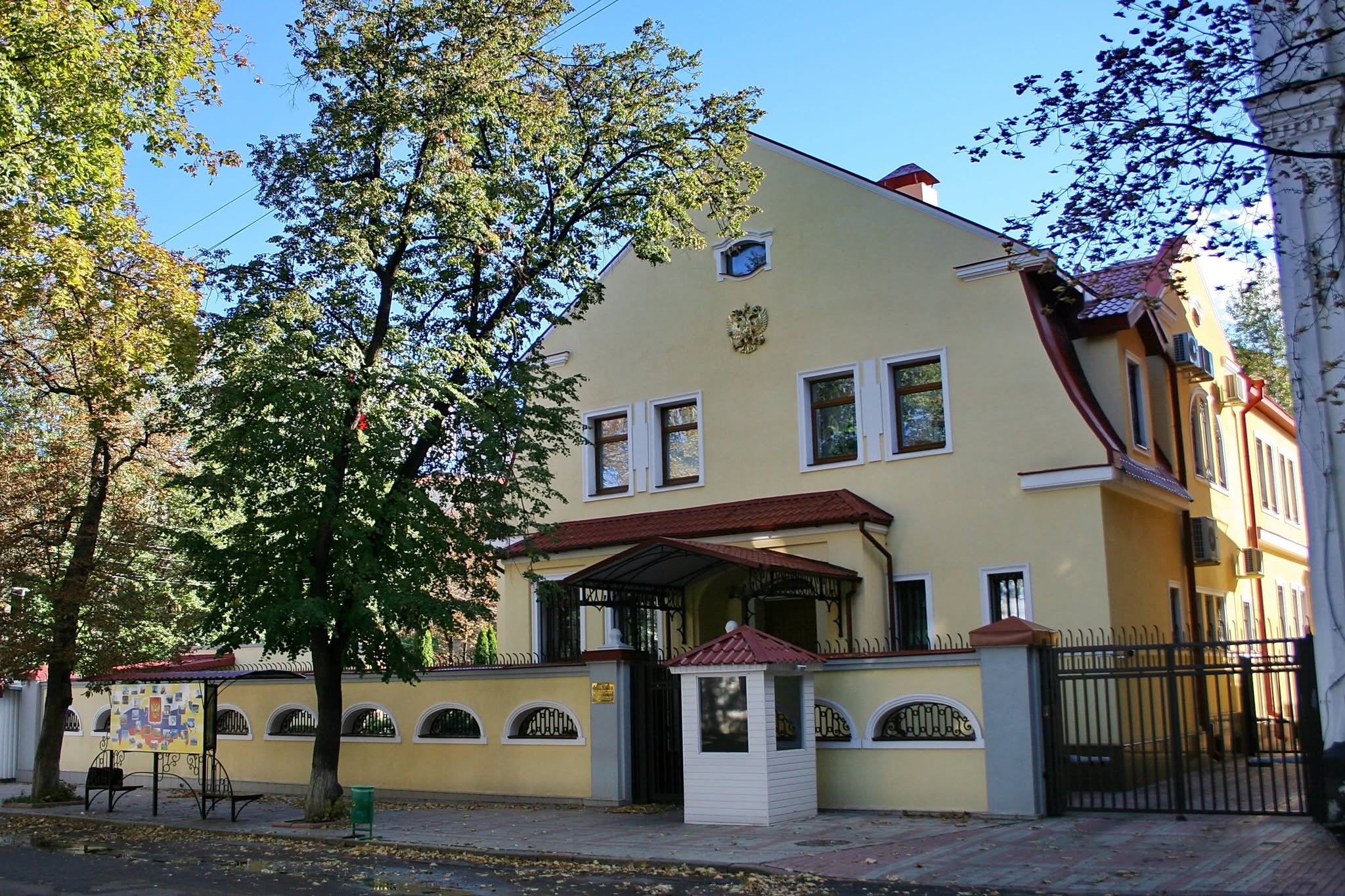
In 2002, the building was transferred to the Russian consulate, which opened on January 15, 2003. The roof, entrance, and windows of the building were simplified, making it easy to mistake this architectural landmark for a new construction. The consulate operated until Russia’s full-scale invasion of Ukraine on February 24, 2022, after which the building was abandoned.

- Blackie’s House on Maksymilianivska St - 19.10.2026
- Danylevs’koho Street, 19 - 13.10.2026
- Debunking the myth about one of the most famous Kharkiv photos - 12.10.2026