I decided to start with the “S.Y.T.” brick stamp, which is one of the most common in Kharkiv and can be found almost everywhere in older buildings. Because the manufacturer didn’t skimp on the additional costs of producing the stamp matrices for its brick molds, a sufficient number of bricks bearing his initials have survived to this day.
The owner of this hallmark was Semyon Yakovlevich Tolkachev, a merchant of the First Guild—a patron of the arts and guardian of children’s orphanages. He was born on February 15, 1850. The street where his factory was located bore his name during his lifetime; under Soviet rule, it was renamed Krasnoye Studencheskoe Street, and later simply Students’ka Street. This historic neighborhood is still known as Tolkachevka. In 1910, he built a mansion here based on a design by architect Velichko, which he donated to serve as a sanatorium for osteotuberculosis in 1913. According to the 1909 lists of Kharkiv property owners, Tolkachev had two residential addresses: the corner of Hryhoriia Skovorody Street, 90, and Maika Yohansena, 1, as well as Petropavlovsky Lane, 21.

His first mechanized brick factory was founded in 1873 and had two Hoffman kilns for firing bricks, which he installed at the very end of the 19th century. The factory was located at Nemetskaya Street, 88—which became Pushkinskaya Street, 96 after 1899—right next to the city cemetery. Semyon ran his brick business together with his brother Peter, who is listed in many statistical sources of that time as the plant manager.
The brick-making business was doing well, and Semyon Yakovlevich decided to build a second plant, which he successfully launched in 1889. A new address was established: Petropavlovsky Lane, 19. According to data from 1897, the plant operated 123 days a year and had two steam engines, each with a capacity of 10 l.s. It consumed 14,750 rubles worth of mineral fuel and 400 rubles worth of vegetable fuel, and employed 185 people. Brick production amounted to 75,000 rubles per year.

The opening of the second plant allowed Semyon Yakovlevich to increase total brick production to 8 million bricks, which represented an annual turnover of about 120,000 rubles. The number of workers reached 320, who worked in two 12-hour shifts. There was a clinic with a doctor on duty every day. Plans were also in place to open a hospital.
In 1897, Tolkachev also leased another factory owned by A.Y. Gabay, which was located near the Staromoskovsky farmstead.
In the years that followed, Tolkachev’s production saw a certain decline, likely due to the growth of brick manufacturers in Kharkiv, which led to increased competition in the industry. According to the report covering the period from May 1, 1909, to May 1, 1910, 6.8 million ordinary and building bricks were produced, with a total value of 82,075 rubles. Clay and sand were purchased in the amount of 2,260 cubic sazhens for 18,080 rubles; coal was primarily used for firing. Prisoners were employed throughout the plant’s 125-day operating period, working to transport clay to the clay-grinding machine and performing various loading and unloading tasks.
According to the Tegel website, after 1917, Tolkachev emigrated to Germany, where he died on July 12, 1923, at the age of 74. Semyon Yakovlevich was buried in Berlin at the Tegel Cemetery.”

We also recommend checking out the photos of bricks from Viktor Ivanov’s collection taken at the “One Street Day on Universytets’ka Street” event, which took place in 2016


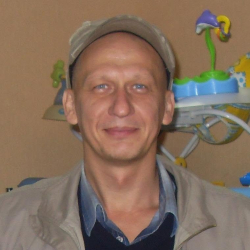
- Talking Bricks with Viktor Ivanov - 20.12.2016