Sometimes it seems to me that cats have taken over the world. They’ve always been a part of the visual arts and are everywhere.
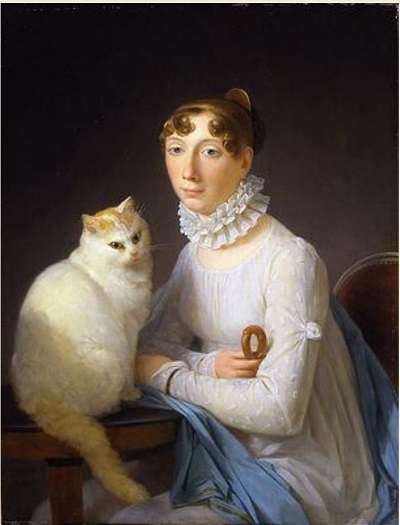
In the paintings of French artist Marguerite Gérard (1761–1837)
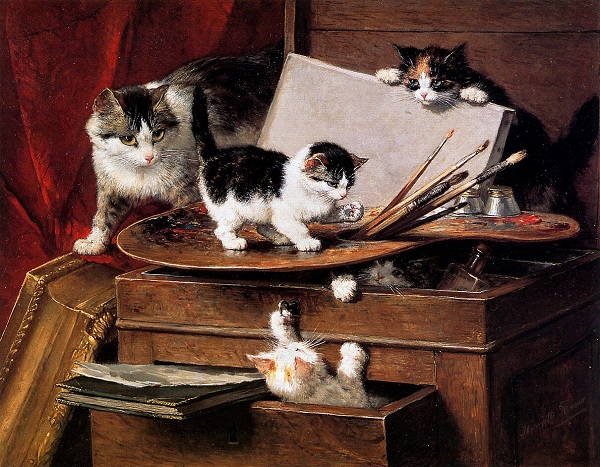
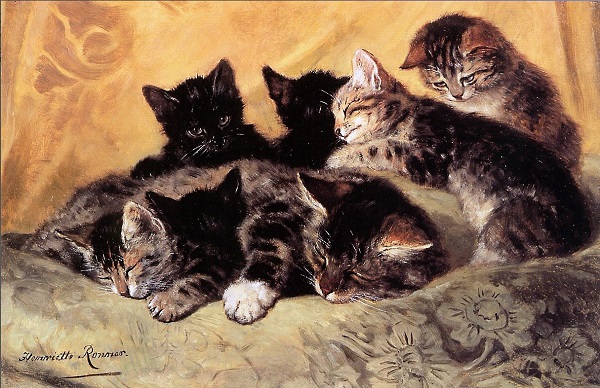
Dutch animal painter Henrietta Ronner-Knip (1821–1909) also loved painting these animals, and in my opinion, she did an excellent job of it.

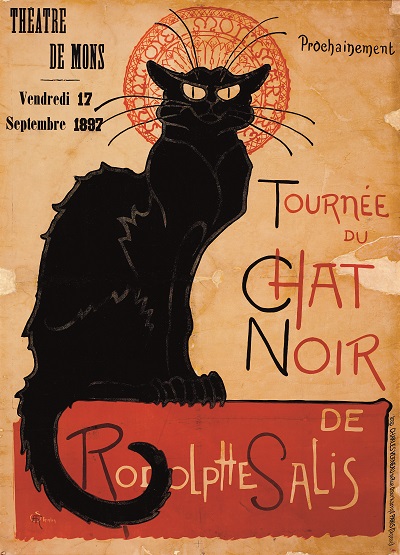
Cat paintings, in particular, the “Black Cat” poster for the Parisian cabaret of the same name, brought fame and renown to the French painter Théophile-Alexandre Steinlen (1859–1923).
One could go on forever listing the artists who have depicted cats in their paintings.
However, the title of “the Raphael of cats” quite rightly belongs to the Swiss artist Gottfried Mind (1768–1814). This master of the brush did nothing but paint kittens constantly.
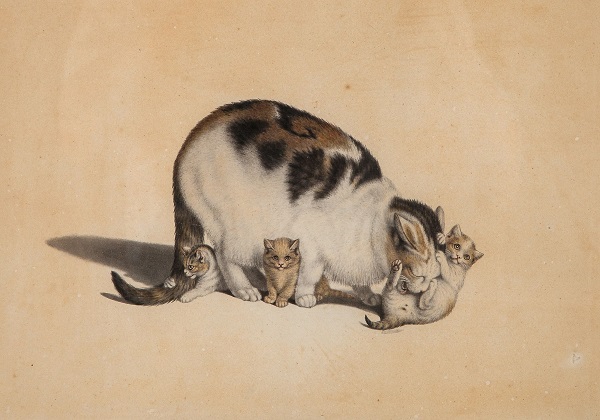
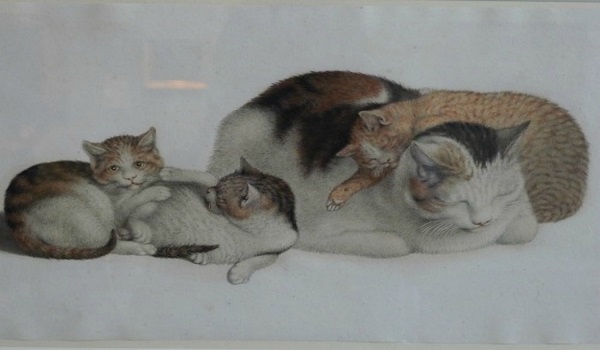
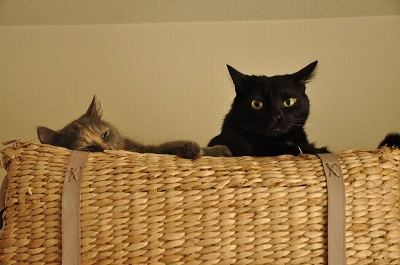
With the advent of the internet, social media, and digital cameras, cats have continued to capture the hearts and minds of humanity. Photos of them are EVERYWHERE and shared by so many people. They rack up a huge number of views, likes, and shares.
In 2009, the website of the Kyiv newspaper *Den* featured a most intriguing article:
“Cats—A Source of Inspiration. On the Life of Kyiv Artist Valerian Yablochkin.”
The author, Oksana Lamonova, wrote about the only “cat” artist in the entire Russian Empire at that time—Valerian Alexandrovich Yablochkin.
To this day, very little is known about the life of this talented artist. In the second volume of F. I. Bulgakov’s *Our Artists* for the year 1890, we find a brief entry that does not even specify his year of birth: “Valerian Alexandrovich Yablochkin—an amateur artist who specializes in painting scenes featuring cats—has exhibited at academic exhibitions: 1869, ‘Study of Cats’; 1873: ‘Cat with Prey,’ ‘A Kitten’s Antics’; 1886: ‘The Runaway’; 1887: ‘The Playful Cat,’ ‘Cat with Mice.’”
Thanks to the 1907 book *Memoirs of an Old Teacher*, written by Nikolai Ivanovich Murashko, the founder and director of the Kyiv School of Drawing, we learn the following about Yablochkin:
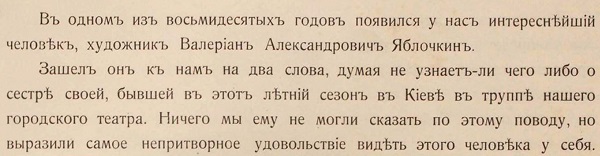
“Instead of two days, he stayed with us for two years… I wasn’t able to get him to teach at the school; with such a sweet smile, he said, ‘Writing about cats isn’t much of a challenge, and I don’t really know how to do anything else…’”
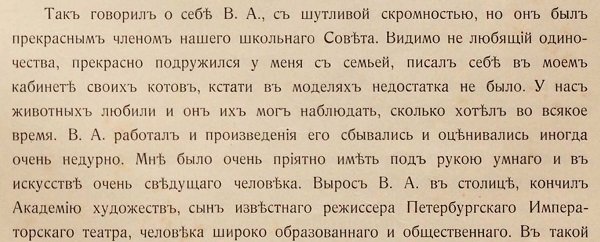
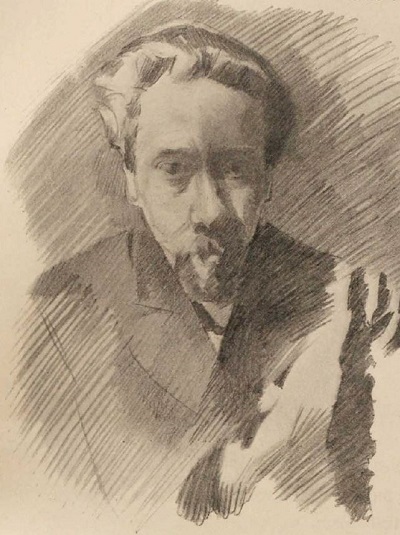
In addition to interesting stories about the artist’s time in Kyiv and the fact that he referred to himself as the “Raphael of Cats,” the aforementioned book featured several of his works and a portrait of him painted by Mikhail Vrubel.
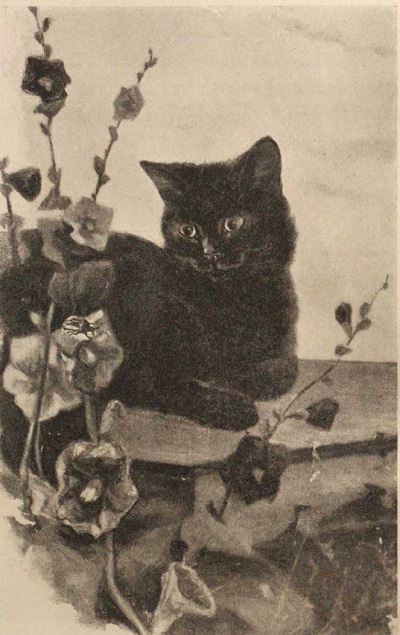
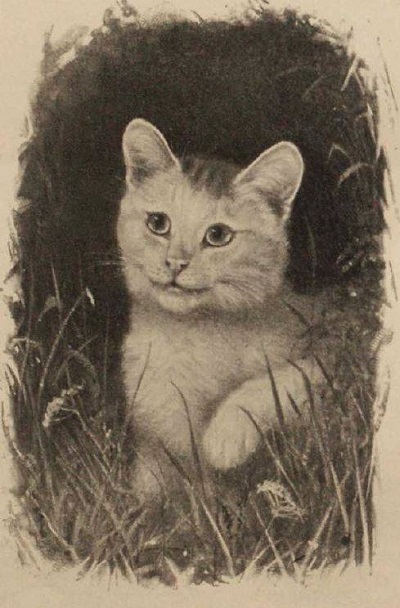
Apparently, this is why the authors of the article “Cats—A Source of Inspiration” called Valery Yablochkin the “Raffaello of Kyiv.”
But is he really from Kyiv?!
In Volume 4 of the *Kharkiv Collection* (a literary and scholarly supplement to the “Kharkiv Calendar” reference book) for the year 1890, one can find an extremely interesting article by Mikhail Georgievich Khalansky titled “A Few Words About the Artist Yablochkov.”
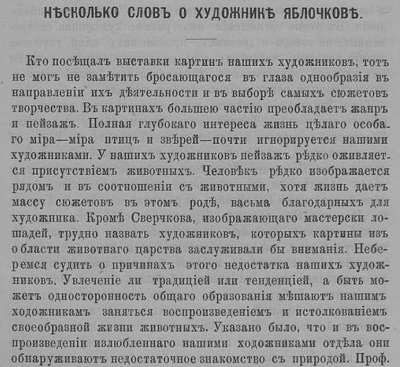
Anyone who has visited exhibitions of our artists’ paintings could not help but notice the striking uniformity in the direction of their work and in the choice of their creative subjects. Genre and landscape painting predominate in most of their works. The life of an entire, unique world—the world of birds and animals—which is of such profound interest, is almost entirely ignored by our artists. In our artists’ landscapes, animals rarely bring the scene to life. People are rarely depicted alongside or in relation to animals, even though life offers a wealth of subjects of this kind that would be highly rewarding for an artist. Apart from Sverchkov, who masterfully depicts horses, it is difficult to name artists whose paintings from the animal kingdom deserve attention. Whether it is a passion for tradition or a prevailing trend—or perhaps the one-sided nature of general education—prevents our artists from engaging in the depiction and interpretation of the unique lives of animals. It has been noted that even in their depictions of the subject matter so beloved by our artists, they reveal an insufficient familiarity with nature…
The author goes on to mention that between 1877 and 1883 he himself met an artist in our city “whom many Kharkiv residents probably know better” than he does.
…It is all the more pleasant to encounter an exception and a departure from the general trend. One such exception was the artist Yablochkov, whom I met in Kharkiv between 1877 and 1883 and whom, in all likelihood, many Kharkiv residents know better than I do. Those who remember Yablochkov will likely recognize him in the following, albeit somewhat idealized, portrayal of the artist Gelfreich in the late V. Garshin’s story “Nadezhda Nikolaevna.”
Khalansky’s mention of “Nadezhda Nikolaevna” is by no means coincidental.
The writer and poet Vsevolod Garshin—after whom one of Kharkiv’s streets is named and whose likeness is so masterfully captured in the paintings of Ilya Efimovich Repin—visited our city during the period mentioned above. It was then that the paths of the brilliant writer and the artist crossed.
The story “Nadezhda Nikolaevna” was first published in 1885 in the magazine *Russkaya Mysl*. Moreover, the name “Gelfreich” itself is clearly a variation of the surname of the well-known Kharkiv industrialist and public figure Maximilian Gilferich.
Garshyn writes:
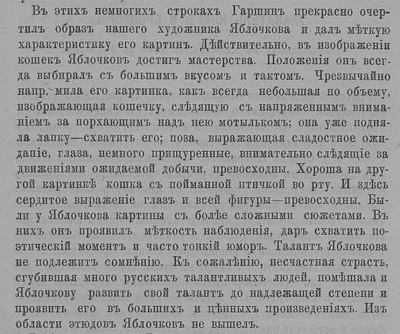
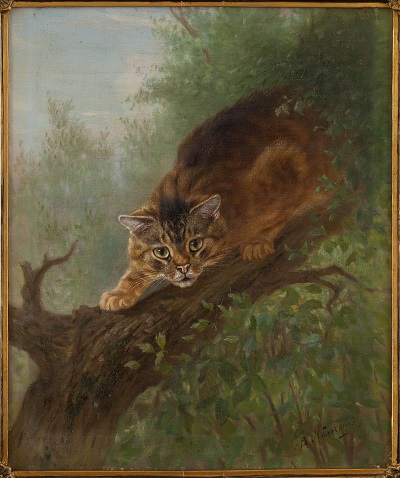
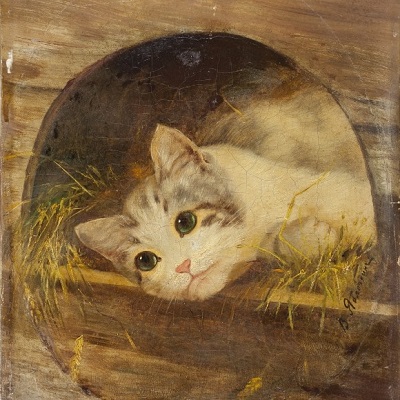
Imagine skinny, crooked legs, a massive torso weighed down by two humps, long, thin arms, shoulders hunched high as if expressing eternal doubt, and a young, pale, slightly puffy but pretty face on a head tilted back. He was an artist. Art lovers are very familiar with his paintings, most of which depict the same, slightly varied subject. His subjects were cats: he painted sleeping cats, cats with birds, cats arching their backs—Gelfreich even once depicted a drunken cat with cheerful eyes, sipping a glass of wine. He achieved near-perfection in his depictions of cats, but never attempted anything else. If a painting contained any accessories besides cats—such as greenery from which a pink nose and golden eyes with narrow pupils were meant to peek out, or some drapery, a basket holding an entire family of kittens with enormous, transparent ears—he would turn to me. He achieved fame with his cats within two years. Neither before nor since have I seen such mastery in depicting cats of all ages, colors, and poses…
Khalansky goes on to write:
“Copies of Yablochkov’s paintings can be found in some of our illustrated magazines from the 1970s. It would be helpful to compile a catalog of his paintings and sketches. It would be interesting to know at least some brief biographical details about the artist. The resources available at Kharkiv libraries did not allow me to do this. Perhaps someone who knew Yablochkov better and more closely than I did will be able to do so.”
Unfortunately, Mikhail Georgievich’s dream was never destined to come true, neither then nor now. At best, one can find a few isolated works by the “Raffaello of Cats,” who lived and worked in Kharkiv and Kyiv, scattered across the internet—which is a pity. After all, not only Kyiv’s but also Kharkiv’s numerous Barsiks and Murkas have been immortalized on the canvases of this brilliant self-taught artist, who “achieved the highest possible perfection in painting cats.”

- About the military pilot school and the airfield in Kharkiv… - 04.11.2020
- Nikanor Savich—A Political Career by Mistake - 13.07.2020
- And once again, about the Cavalry Guards… - 21.01.2020