Charitable institutions in Kharkiv and Sloboda Ukraine in the first half of the 19th century existed solely through private initiative.
On December 27, 1839, Emperor Nicholas I issued the decree “Regulations on Children’s Shelters.” Under these regulations, provincial, district, and village boards of trustees were established to oversee institutions for homeless children, funded by private charitable contributions. Each orphanage was headed by a trustee (male or female), a director, an honorary foreman (who was responsible for material support), a matron, and her assistant (who was usually also a teacher and caregiver). Initially, these institutions provided children with temporary shelter and a basic education. In 1846, overnight stays were permitted, and in 1847, permanent residence was also allowed (“orphan wards”).
Established on March 28, 1842, in accordance with the “Regulations on Orphanages,” the Kharkiv Provincial Board of Trustees began the process of founding the first children’s orphanage in our city. And although the initiative came from the government, the opening of this institution was made possible by a donation from General of Cavalry Count Orlov-Denisov of a sum that was enormous for those times—10,000 rubles.
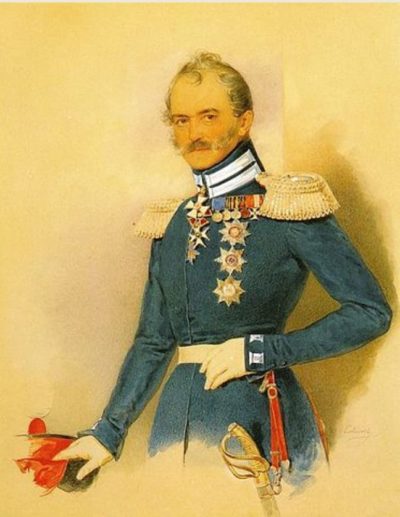
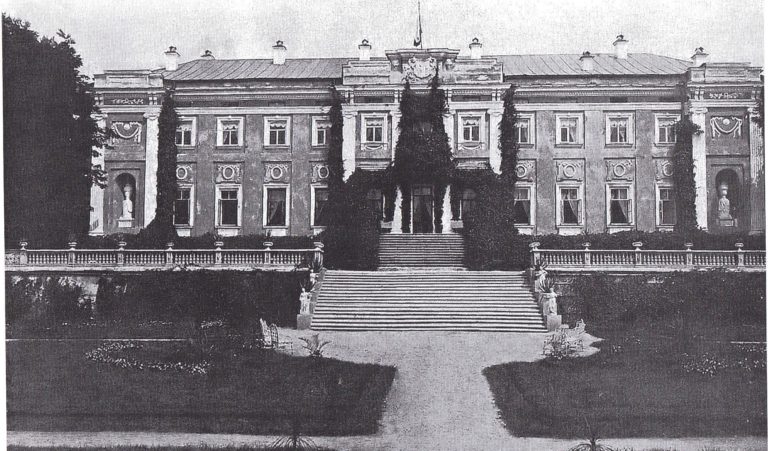
After retiring, the dashing general and hero of the War of 1812 lived near Kharkiv. His son, Nikolai Vasilyevich Orlov-Denisov, was married to Natalya Alekseyevna Shidlovskaya, who owned an estate in Stary Merchik. Incidentally, these days the house has fallen into such a state of ruin, reeking of garbage, that it’s almost too embarrassing to even show photographs of it.
Here is what his contemporaries had to say about him:
Hospitable, cheerful, and kind among his comrades, he was reserved with those he did not know well. He did much good, built churches, helped the poor, and founded the first children’s orphanage in Kharkiv. A Cossack through and through, he sincerely loved his Don Cossacks and considered them invincible, while the Cossacks idolized him and feared his stern gaze.
According to the donor’s wishes, the provincial board of trustees could spend only 5,000 rubles of the specified amount to open the orphanage and ensure its continued operation. These funds were deemed insufficient, and the trustees appealed to the district leaders of the nobility and the mayor of Kharkiv with a request to enlist the support of nobles and merchants — both to make one-time donations to the children’s orphanage and to accept the titles of honorary members of the board of trustees.
As a result, the following amounts were raised for the shelter over the course of 3–4 months:
— from various benefactors, through subscriptions: 4,942 rubles in banknotes;
— the Kharkiv Merchants’ Association donated 1,021 rubles in banknotes;
— 1,070 rubles in banknotes were raised from a masquerade ball held at the Noble House;
The total amount raised was 7,033 rubles. Including the donation from Count Orlov-Denisov, the total amount collected came to 17,033 rubles.
A private house was rented for the company at a rate of 428 rubles and 57 kopecks in silver per year.
After purchasing furniture, educational materials, and other supplies, the orphanage in Kharkiv, designed to accommodate 30 children of both sexes, opened on July 1, 1842. Its first trustee was Princess S. A. Golitsyna, the wife of the provincial leader of the nobility.
In the fall of that same year, 1842, the nobility of the Kharkiv Governorate, wishing to mark His Imperial Majesty’s stay in the city with an act of charity, donated 3,000 rubles in banknotes to a children’s orphanage on September 14–15.
In addition to interest on the endowment, the institution’s continued operation was supported by annual membership dues from honorary members and honorary elders, donations from private individuals, various lotteries, concerts, masquerades, and club collections.
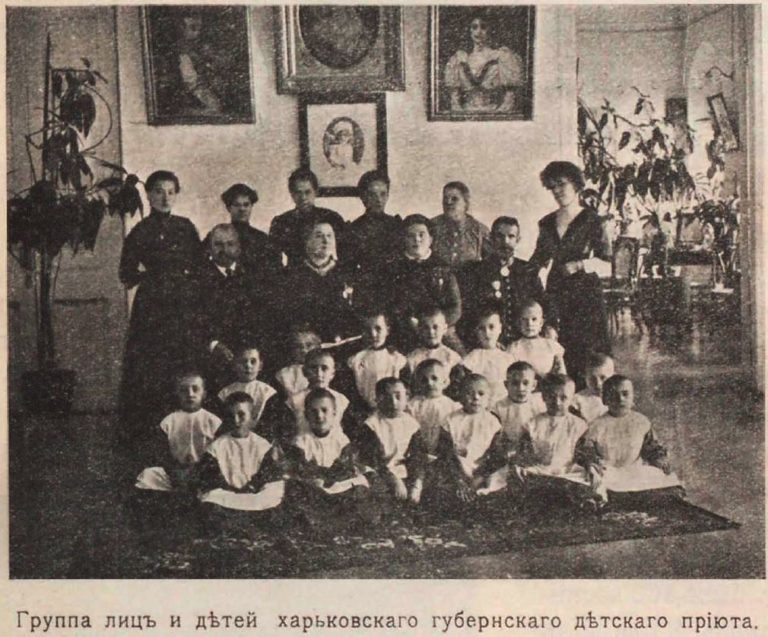
Thanks to this, by 1843 the number of children in the orphanage had increased to 68 (32 boys and 36 girls aged 3 to 10). All of them were day students and, in addition to full board, were provided with standard-issue outerwear; the poorest among them were also given warm clothing during the winter.
The subsequent donations to the shelter were quite interesting.
For example, in 1847, the following was obtained:
— from Colonel Lenev: 1,638 rubles and 15 kopecks in silver
— pursuant to Captain Kuzin’s last will and testament dated December 9: 3,000 rubles.
In 1867, pursuant to the testamentary will of Collegiate Councilor Borisov, one-third of the income from five stone shops he had donated to the city was allocated to the orphanage, which provided the orphanage with up to 800 rubles annually. In 1869, the Kharkiv City Society allocated 500 rubles annually from the profits of the City Merchant Bank, setting aside from this sum the amount necessary to educate one girl from the city’s middle class, as selected by the Society.
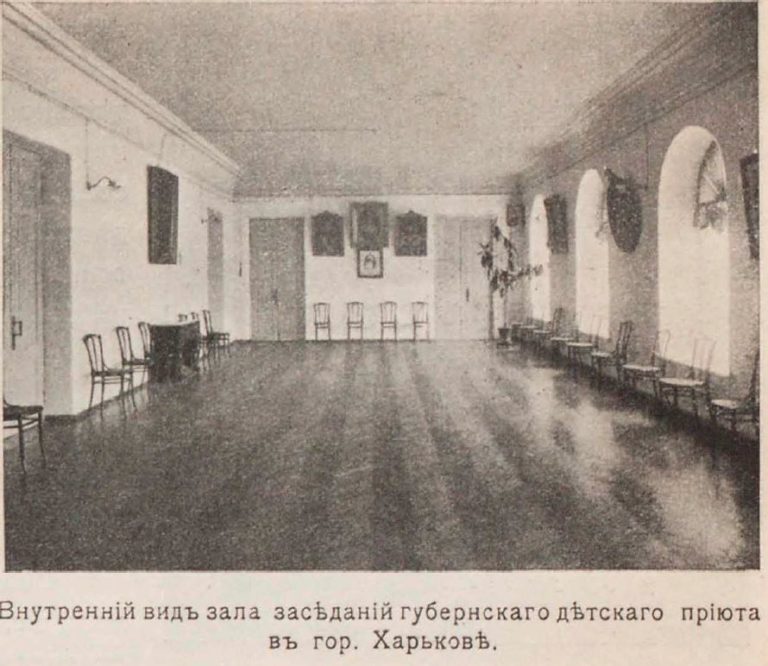
However, renting a building for the shelter’s needs was not entirely convenient.
In 1847, the same Kharkiv City Society donated land to the shelter so it could build its own facility. The building’s design was approved by the emperor on February 24, 1849; that same year, the provincial board of trustees launched a fundraising campaign for the construction, which raised approximately 2,500 rubles.
A contract was signed with the merchant Lukin, under which he undertook to build a house using his own materials for 9,900 rubles. Construction was completed at the end of 1850. After the architects accepted the building from the contractor in early 1851, the orphanage was moved to its new location, a three-story stone building. At that time, it was located at 24 Nemetskaya Street.
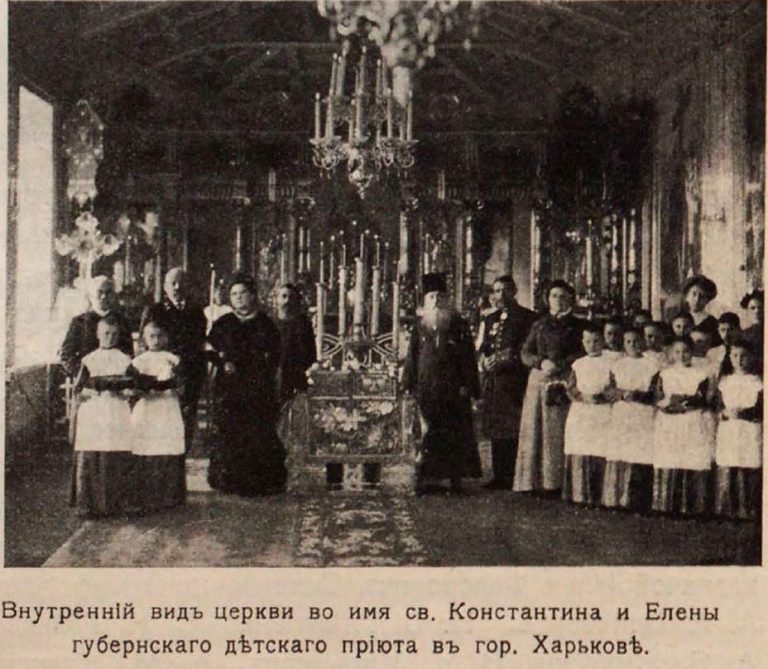
As early as 1848, Mr. Kostyurin, a merchant and former honorary elder of the children’s orphanage, expressed a desire to include a chapel in the orphanage’s design and façade; Mr. Kostyurin paid for the chapel’s interior decoration out of his own pocket. The Church of Saints Constantine and Helena continued to be maintained through private donations. In 1881, Onufriy Potapenko, an honorary citizen, donated 10,000 rubles to the church. This sum, in particular, made it possible to commission a new iconostasis and purchase priestly vestments.
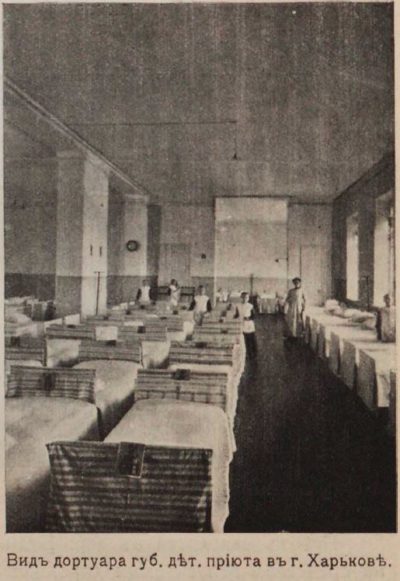
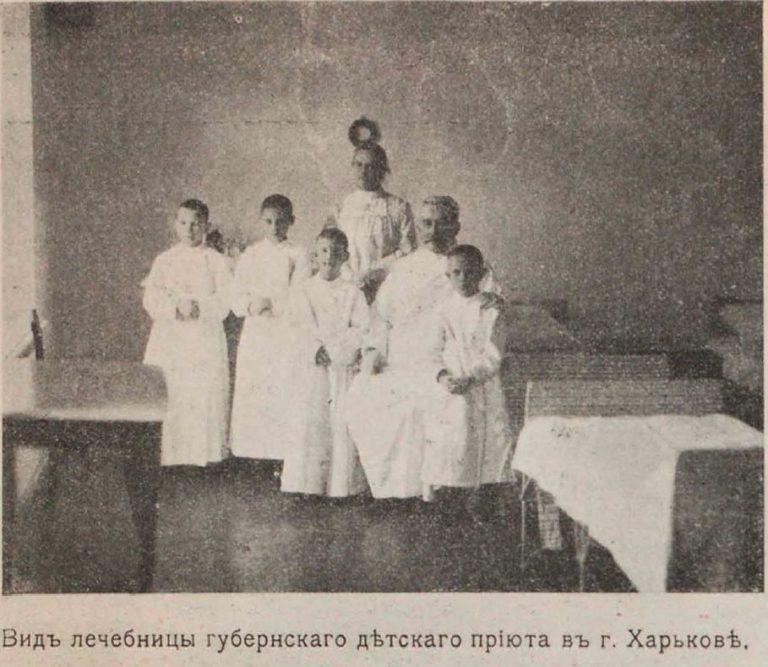
Initially, the shelter did not have a dormitory. It was established on January 1, 1860, and was designed to accommodate only 15–20 beds for the girls’ permanent residence there. Only girls aged 6 and older were admitted, primarily those from poor families or who were complete orphans. The girls were fully supported until the age of 12, after which they returned to their parents or relatives, or were placed in workshops with the assistance of the administration.
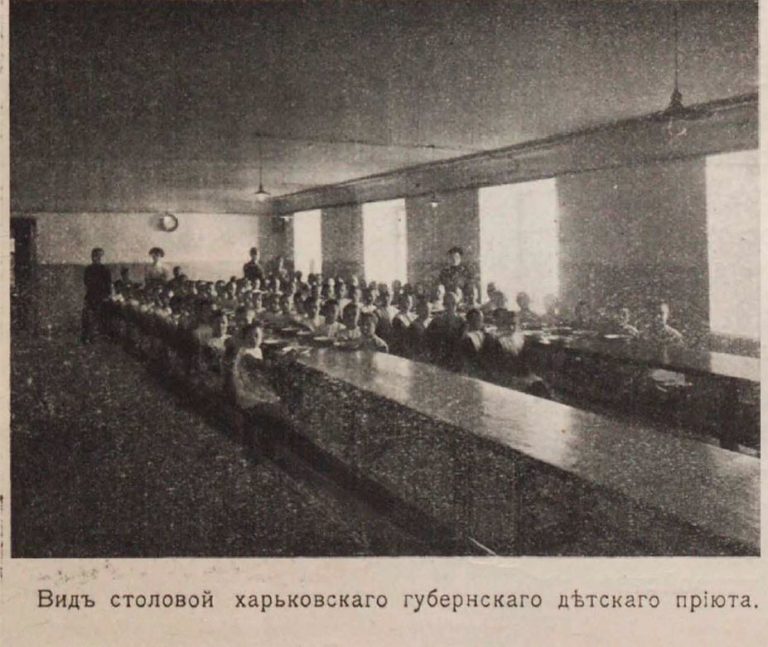
Initially, the cost of supporting the girls was 65 rubles per person per year.
This fee was required to be paid by honorary members of the provincial board of trustees and honorary elders. The girls were referred to as boarders of the individuals who paid the fee on their behalf.
However, donations from Kharkiv philanthropists continued to come in. As of January 1, 1889, the orphanage’s capital amounted to 51,296 rubles (35,770 for the day program and 15,526 for the residential program). These funds made it possible to support more than 126 children (43 boarders living at the orphanage and 83 day students).
Since the opening of the overnight shelter for girls, the number of boys coming to the orphanage had gradually decreased, and in 1870, their admission was finally discontinued.
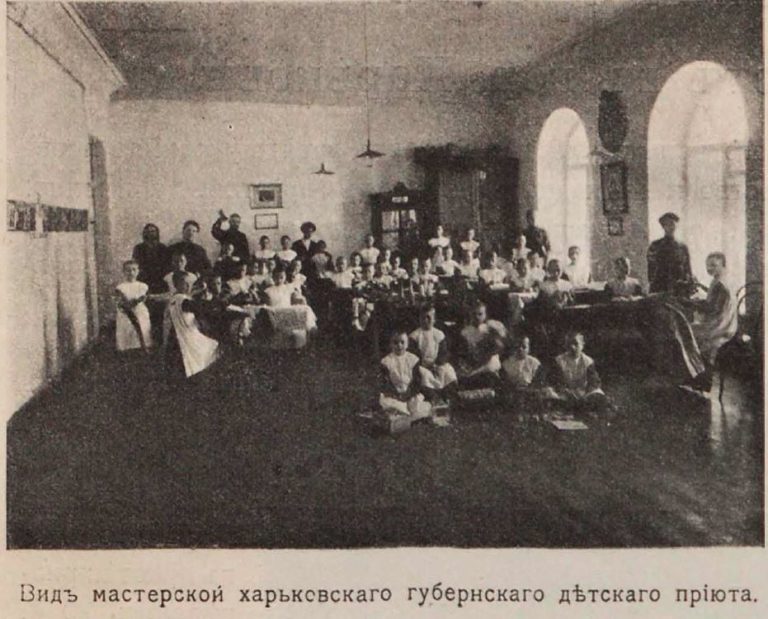
In addition to literacy and the subjects taught in the public school curriculum, the children were primarily taught sewing and needlework. Thanks to this, the girls made their own stockings, bed linens, and dresses. For about 7 to 10 students who had reached the age of 12 and successfully completed the courses, the prospects were better than for the rest. To continue their education, they were transferred to the school of the Kharkiv Charitable Society, where they remained until the age of 17.

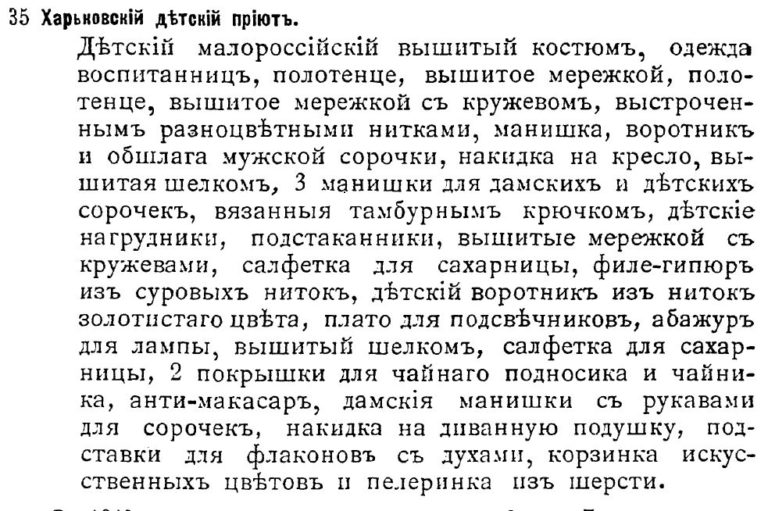
This growth in the handicraft industry enabled the orphanage to participate in various exhibitions. At the 1896 All-Russian Industrial and Art Exhibition in Nizhny Novgorod, for example, the girls presented the following handmade items:
In 1900, there were more than 80 charitable organizations of various kinds in Kharkiv. In the Kharkiv Governorate, there were 122. Those who ran them donated money and loved not only our city and the Slobozhanshchyna region, but also the people.
This is by no means the whole story of philanthropy in Kharkiv. And how I’d love to write: “The most interesting part is just beginning…”

- About the military pilot school and the airfield in Kharkiv… - 04.11.2020
- Nikanor Savich—A Political Career by Mistake - 13.07.2020
- And once again, about the Cavalry Guards… - 21.01.2020