Don’t look for memorials to this artist in Kharkiv—there aren’t any. It’s pointless to try to find an image of this painting on any souvenirs related to our city—it’s nowhere to be found, you can be sure of that.
At the same time, Kharkiv played a crucial and decisive role in the life and career of Alexander Alexandrovich Kiselev, a professor at the St. Petersburg Academy of Arts and an outstanding landscape painter.
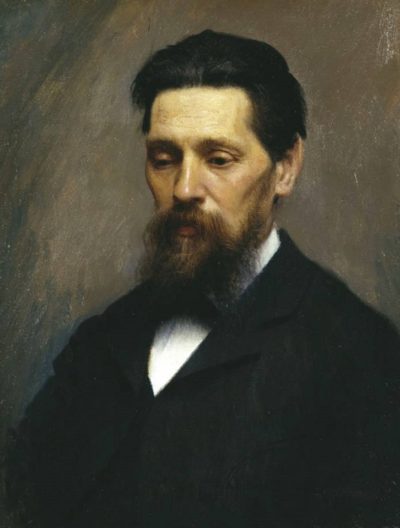
In 1865, while still a young graduate of the St. Petersburg Academy, he arrived in Kharkiv with a fellow university classmate.
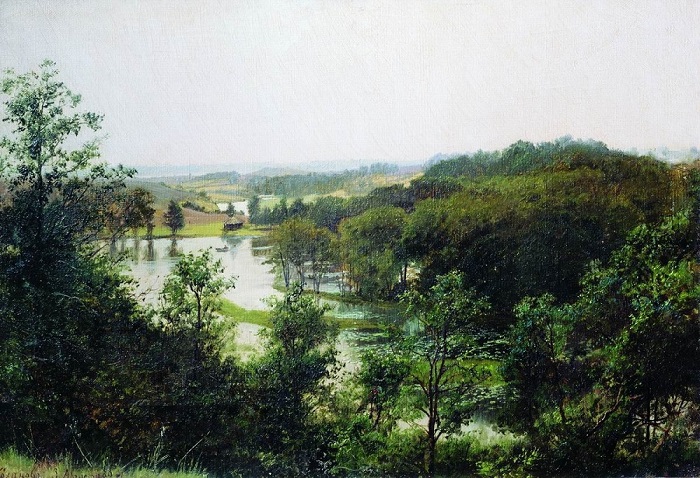
The artists’ goal was extremely simple—to explore Ukraine’s natural beauty in order to find inspiration for new paintings. At that time, the outskirts of Kharkiv were literally awash in greenery, so the young people rented a room in one of the houses on the outskirts of the city.
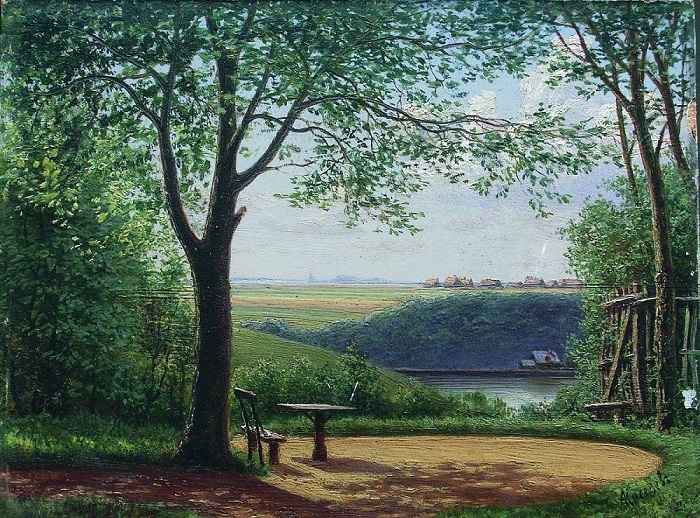
It was here that Alexander also met the love of his life. The daughter of Professor Protopopov of Kharkiv reciprocated the young artist’s feelings and became his wife.
She would later become the mother of his seven children. This was Kharkiv’s first gift to him.
After all, in every man’s life, it’s extremely important to meet that one and only woman.
However, as a budding artist, he couldn’t support his family through painting alone. Alexander tried his hand at just about everything in Kharkiv! He studied icon painting, wrote articles for local magazines, and gave private art lessons. Eventually, he managed to get a job at the Land Bank.
This job provided a steady income, but, alas, it only allowed him to paint in his spare time. His coworkers, when they found Alexander at his easel, would laugh indulgently at his hobby.
In 1875, no changes—other than career advancement—were on the horizon for the stable life of an ordinary bank clerk in Kharkiv, who by that time had three children…
One day, upon returning home from work, Alexander Kiselev finds a note on his desk in which the famous artist Myasoedov announces the arrival of a traveling exhibition in Kharkiv and asks him to stop by. After much deliberation, Alexander Alexandrovich agrees.
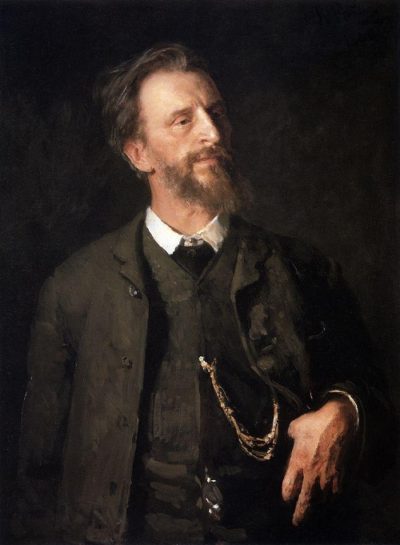
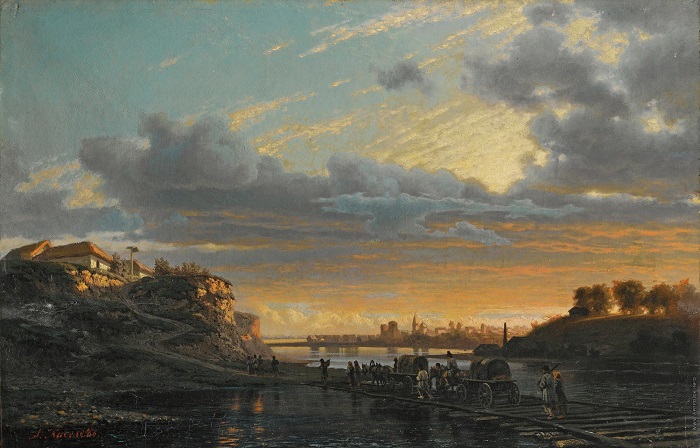
After visiting Grigory Grigoryevich Myasoedov and the Peredvizhniki exhibition, Kiselev decided to return to art and devote the rest of his life to painting. Finding no support among his family and friends, he took a desperate step—he submitted one of his paintings to the jury of the Peredvizhniki Society for evaluation. It was a landscape that had everything: mountains, forests, buildings, water, the sun, and fiery light.
The painting, submitted by Alexander in 1875, was not only approved by the Society but also accepted for inclusion in its traveling exhibitions. It was titled “View in the vicinity of Kharkiv.”
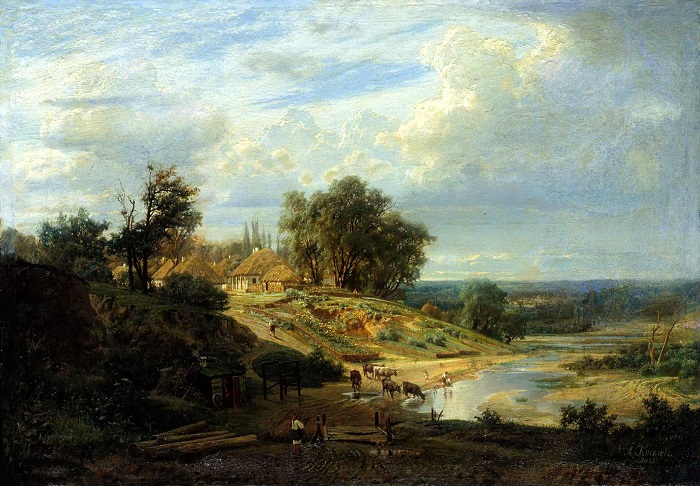
It was precisely this painting—in which the brilliant artist celebrated the beauty of our land’s nature—that played a decisive role in the rest of his life.
After all, as early as March 7, 1876, Alexander—who was still an artist in Kharkiv at the time—was unanimously elected a member of the Society, and from that time on became a regular participant in the Peredvizhniki’s annual exhibitions. And in 1877, after leaving his position at the Kharkiv Land Bank, he moved with his family to Moscow.
In 1890, Alexander Alexandrovich was awarded the title of academician. In 1893, he became a full member of the Academy of Arts. In 1897, following the departure of Professor A. I. Kuindzhi from the Academy, Kiselev was elected and confirmed as professor and head of the landscape painting studio, a position he held until the end of his life.
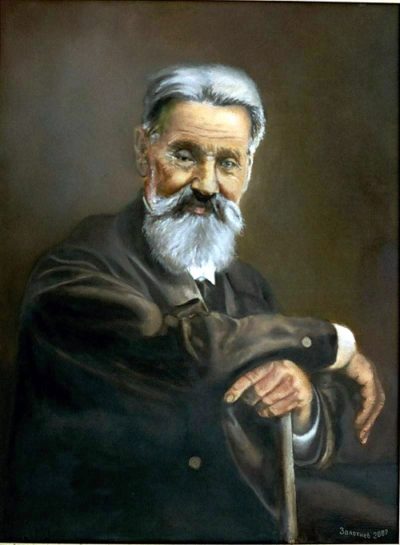
Alexander Alexandrovich, a renowned and universally acclaimed artist, died while working on January 20, 1911. Who knows whether his life would have turned out the same if the painting “View of the Kharkiv Environs” had never been created? This is our city’s second gift to the talented artist.
It is said that millions of brilliant musicians and scientists died in obscurity simply because their hands spent their entire lives holding a plow and never touched an instrument or a pen.
In our lives, it is extremely important not only to find our true calling and mission, but also to carry it through all hardships and deprivations. We must not renounce our gift, no matter how easy and rewarding other paths may seem. In my view, this was precisely the third and most important gift that Kharkiv bestowed upon Alexander Kiselev.
No one can tell us about this better than he himself did in a letter to the editor of the magazine *Zhivopisnoe Obozrenie*, published in Issue No. 4 of 1885.
A glimpse into the artist’s life.
(Letter to the Editor of *Zhivopisnoe Obozrenie*).
I imagine you’ve long since given up waiting for the story I promised—about how I deserted the world of art for nearly 10 years to enter the world of banking, and how the first traveling art exhibition pulled me out of that world, which was so foreign to me, and reconnected me with what had been my calling since my youth. But I hesitated to write for the following reasons. It has always seemed to me that this—a very significant event in my personal life, one that could be called a true “Renaissance” within the context of my biography—is unlikely to interest anyone enough to warrant elaboration. On the other hand, if one were to view this fact of my life as an example of the beneficial influence that a traveling exhibition has had on our province, even then its benefits might seem highly questionable to many…
For many, the question will remain unanswered: When did I make a mistake—when I joined the bank, or when I left the bank to pursue art?
Be that as it may—whether it’s a delusion or not—I feel much happier with a paint palette in my hands than with a pen, and this satisfaction with my current career, which grows with each passing year, fills me with such a deep sense of gratitude toward the traveling exhibition that I do want to tell you—albeit in just a few words—the story of this turning point in my life. I cannot forget a single moment—the starting point of my transformation. It still shines brightly in my memory.
I came home from work that evening and found a note from the artist M. on my desk. He was informing me of the arrival of the First Traveling Exhibition and asked me to stop by his place the next day… This was in the province, in X., where I had been living for eight years, and where an art exhibition was an almost unprecedented event. I hadn’t yet met M. in person. His note surprised me quite a bit. Why was I
being invited? Could it really be as an artist? So, did people still remember me? No, that couldn’t be right! What kind of artist am I now?But there was a time when I, too, walked along this happy… no, this unhappy road.
After all, I came here about eight years ago for no other reason than to get to know the nature of Little Russia as a landscape painter.
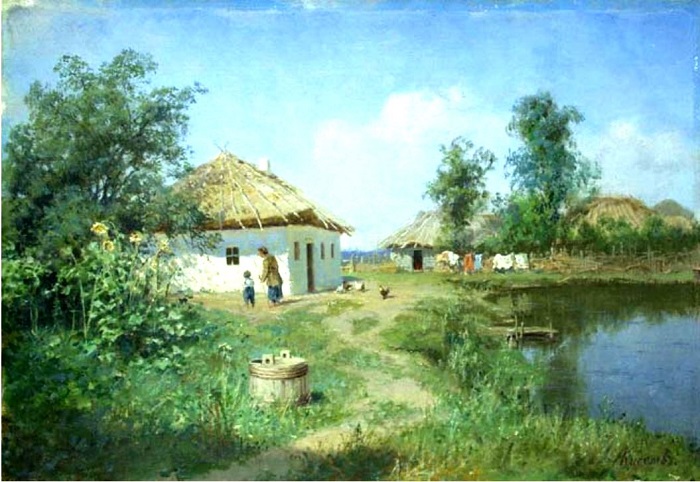
What kept me here back then? After all, in St. Petersburg, people had taken notice of me and predicted a bright future for me. F. F. Lvov, the Academy’s conference secretary, and D. V. Grigorovich at the permanent exhibition—though a bit condescending—still took an interest in me. And here, too, I seemed to be well-received at first: local patrons tried to win me over; I even managed to sell five or six paintings. I remember that I had just hidden behind the bed canopy and sent a servant to say I wasn’t home when Prince G. sent a carriage for me, to take me to his place for dinner—an invitation I had accepted and where they planned to introduce me to the local aristocracy.
All that is long past…
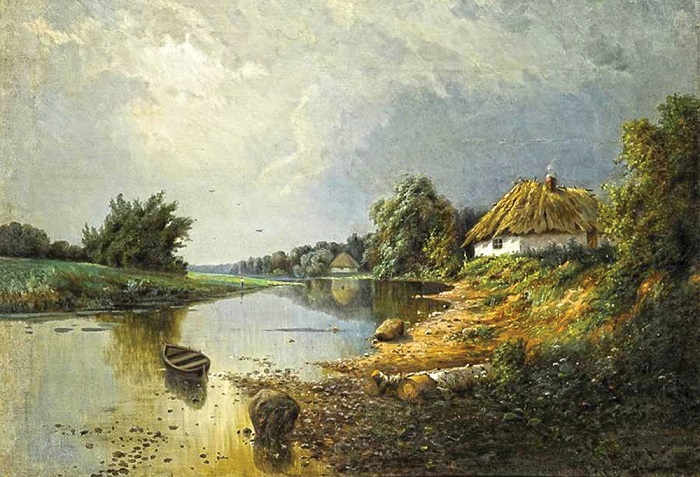
And then what? What a difficult, difficult time that was! Art classes, a lack of funds… then glimpses of a different kind of happiness; followed by marriage, a sick child, and… sheer poverty! Oh, how hard it was to escape it! What, what didn’t I try! I remember my attempts at literature, icon painting, erotic art—even the legal profession. Where did the landscape painter in me go? Why didn’t my talent save me from my troubles? After all, I wasn’t lazy; in my spare time, I still sketched little landscapes. But I do remember how some very intelligent people—and close friends of mine—would, upon finding me at my easel, mock my passion with a touch of sympathy. Yes, it was a passion, not a business venture, because no one was buying my works anymore; yet I had to foist them on people, pay my bills with them, and even raffle them off. It’s dreadful to recall that ordeal of poverty. It’s clear why people are so ashamed of it! And I’m truly glad that I didn’t specialize in art from a young age; and so, though slowly and with great difficulty, I’ve finally managed to find my way. I’ve been working at a bank for three years now; everyone’s happy with me, I have everything I need, my family is well-off, and I’m happy… True, this job isn’t particularly appealing, and it doesn’t really suit me deep down. But hey, what can you do!
Sacrifices are necessary in life, and I’m glad I’ve overcome this destructive passion for art—once and for all. Now I’ll never give in to it again, never! And why should I go to M.? What haven’t I already seen there? Besides, I can’t even take time off from my work duties…
But at the same time, I felt like I was lying. The next day was a holiday, and I was looking forward to it so I could fly off to accept the invitation. A pile of bank papers lay right there on the table, and you can’t imagine how insignificant they seemed compared to that precious little note! Pacing impatiently around the room, I found myself taking my little drawings off the walls and, dusting them off, examining them closely by lamplight. It was as if someone had whispered to me that I would have to show them to him—the artist.
I even had chills, just like before an exam. What if he smiles sympathetically, too? No, I’d better hide all this away so he doesn’t even see it. But then again, why? Haven’t I given up painting once and for all? Doesn’t it matter to me what he says? On the contrary: let him see what bank officials do for fun in their spare time, and let him finally dissuade me from my ridiculous utopian dreams. Oh, I see and feel that they haven’t been completely eradicated yet… What if I start again…? How foolish and imprudent that would be! What else do I need? In short, I struggled, argued, and got angry, but in the end I found myself, early in the morning, entirely at the Ministry’s disposal, joyfully carrying out all its instructions for organizing the exhibition, and from the day of its opening, I lived for nothing else but it. The vague awareness of my backwardness in art, which had troubled me before, now became as clear as day at the sight of the beautiful works by my former comrades. This realization weighed heavily on me, and the impossibility of returning to my work under the conditions of my job made me a true martyr. I was left with one of two choices: either, with a final effort of will, to completely stifle my passion for active art, or to quit my job—and with it, my financial security—and once again seek happiness where, in my best years, I had sought it long and in vain. You know that I chose the latter. With a large family, of course, this was a desperate step, and I found no sympathy for such a decision among those around me. The bank where I worked was a new institution that, judging by its early performance, promised enormous profits in the future; as a result, employee salaries and profit-sharing bonuses grew year after year. As a secretary, thanks to my good relations with the board and my diligent work, I could confidently expect to have a decent financial future in the near term. Understandably, when I announced at the bank my intention to resign, people began to look at me as if I were crazy. My family and friends, who knew my weakness, were seriously angry and predicted my certain ruin. I was deeply aware that they were right, and I could say nothing in my defense. Hardly anyone understood what was going on inside me. However, I decided to postpone my resignation for another year. Lacking confidence in myself, I hoped that during this time either reason would prevail, or my love for art would express itself more tangibly, if I devoted all my free time to artistic pursuits and produced something extraordinary. Yes, something extraordinary! Looking at the landscapes of Shishkin, Savrasov, Klodt, and others, I was simply burning with the desire to reproduce nature. It seemed to me that I understood their relationship with nature perfectly, that there was nothing simpler, clearer, or more beautiful than this task, and that all I had to do was work hard enough, and I, too, would be able to do what they did.
Need I tell you that this year was one of the most agonizing years of my life? I continued to work, but my growing aversion to the job—accompanied by my superiors’ complete loss of interest in me—and then a severe nervous breakdown made it clear to me that I could no longer be a good employee here. On the other hand, on my days and hours off, I endured the pangs of a woman in labor, sitting before a huge canvas on which the misshapen parts of my brainchild gradually took shape. Of course, there were happy moments amid these torments! But I was completely alone and had no one with whom to share those moments: everyone looked at me gloomily and askance. However, this work sealed my fate. The child turned out not to be so ugly that it couldn’t survive, and it was accepted into the exhibition. True, the painting turned out to be amusing. It was a landscape in which one could find everything: mountains, forests, buildings, water, the sun, and fiery light. As one of our eminent landscape painters rightly observed, it combined all the seasons and all the hours of the day at once. It was clear that the artist had simply let loose and poured into the painting everything that had built up inside him over years of inactivity. But my colleagues treated me warmly, encouraged me, and simply advised me to paint from life more often…
In the end, I quit my job, went to Crimea to sketch, and then moved to the capital.
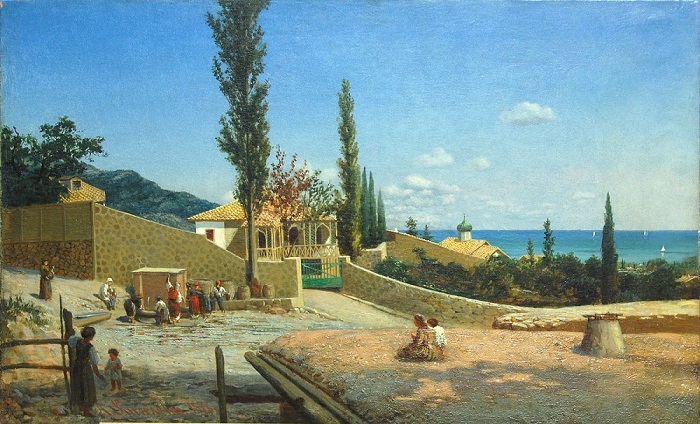
No matter how eagerly I set to work on new pieces, diligently studying the laws of drawing and color in nature, the many years I spent as a bureaucrat—during my period of apostasy—continue to take their toll to this very day. Often, when I’m working and encounter insurmountable difficulties, and despair takes hold of me, I throw down my brushes and recall my entire past. What a deep chasm this banking period of my life represents in my artistic career! But the memory of the First Traveling Exhibition and my return to the circle of artists calms me and gives me new energy. My most reliable source of strength, however, comes from the realization that, no matter how my fortunes may change, I will never feel not only regret over having left my former position, but not even the slightest desire to stray from the path I have chosen…
For a long time, the painting “View in the vicinity of Kharkiv” was housed at the Donetsk Art Museum. Its current whereabouts are completely unknown. However, no matter what happens to it, for me this magnificent painting was, is, and will always be one of the relics and symbols of our city. After all, there have been very few such truly mystical and fateful paintings in history. We must remember them, and the story of how Kharkiv radically changed people’s lives is worth telling…

- About the military pilot school and the airfield in Kharkiv… - 04.11.2020
- Nikanor Savich—A Political Career by Mistake - 13.07.2020
- And once again, about the Cavalry Guards… - 21.01.2020