Every people, city, and country has traditional holidays and customs that attract the attention of many with their uniqueness and spectacle.
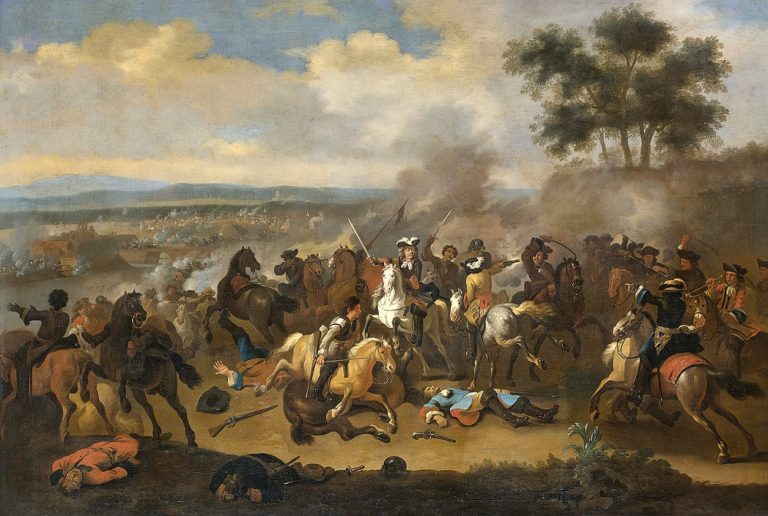
In cities across Northern Ireland, for example, the so-called “Orange Order parades” are held annually on July 12. During these parades, participants march through the city streets to the beat of drums, dressed in a distinctive uniform—bowl cuts, white gloves, orange collars, and sashes. In this way, the Protestants of Ulster have been celebrating the 326th anniversary of the Battle of the Boyne, in which the Protestant forces of William III defeated the army of James II, the last Catholic king of England.
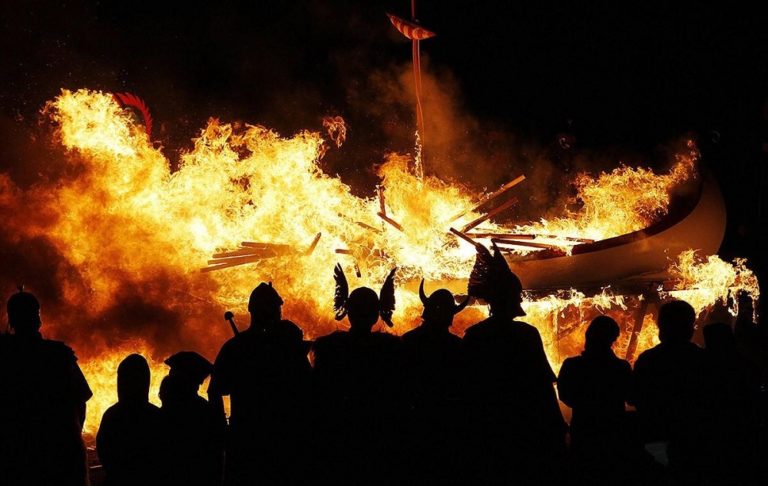
In the 9th century, Vikings landed on the Shetland Islands, off the coast of Scotland.
Over time, the Scandinavians assimilated so well into the culture of these islands that the local residents still consider themselves their descendants. For this reason, the Up-Helly-Åa festival, traditionally held on January 26 in Lerøyke, the islands’ main town, is dedicated to this very important event.
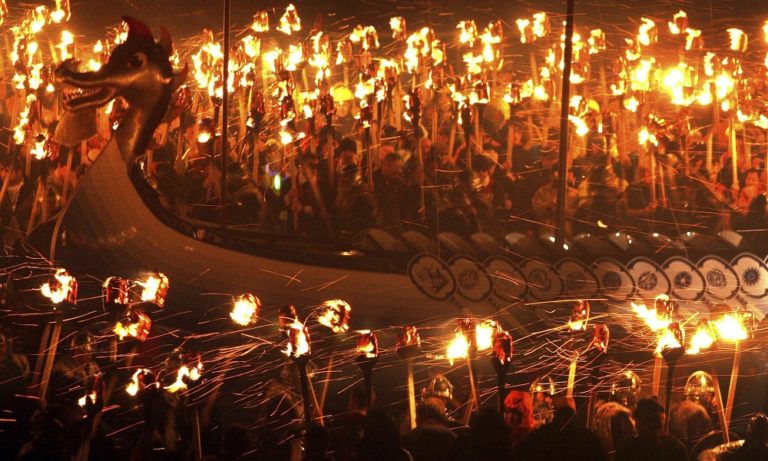
Every year, a model of a Scandinavian ship with a dragon on its prow is built for the festival. Anyone wishing to take part in this event dresses up as a Viking or in clothing typical of the 9th century. Blowing war horns, a band of Vikings solemnly carries the ship through the entire city to the sea, where, in the evening, following an ancient custom, they set it ablaze by throwing torches onto it.
It is precisely because of the torchlight procession and the throwing of torches onto the ship that this festival is considered the largest fire festival in Europe.
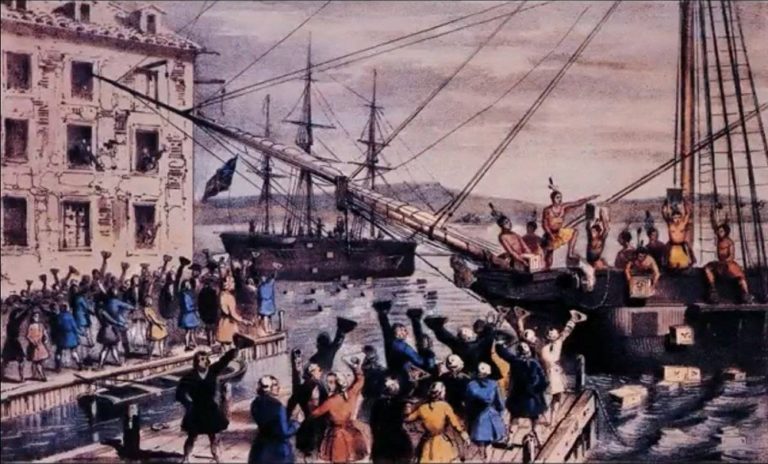
On December 16, 1773, American colonists staged a protest against the British government in the United States, which resulted in the destruction of a shipment of tea belonging to the British East India Company in Boston Harbor. This event, later known as the “Boston Tea Party,” marked the beginning of the American Revolution. At that time, a group of 30 to 130 people, dressed in Native American costumes, boarded the British ships and, over the course of three hours, threw 342 chests of tea into the water. In memory of this event, there is now a museum ship in Boston.
In addition to the tour, you can dress up in Native American attire and throw a fake box of tea overboard.
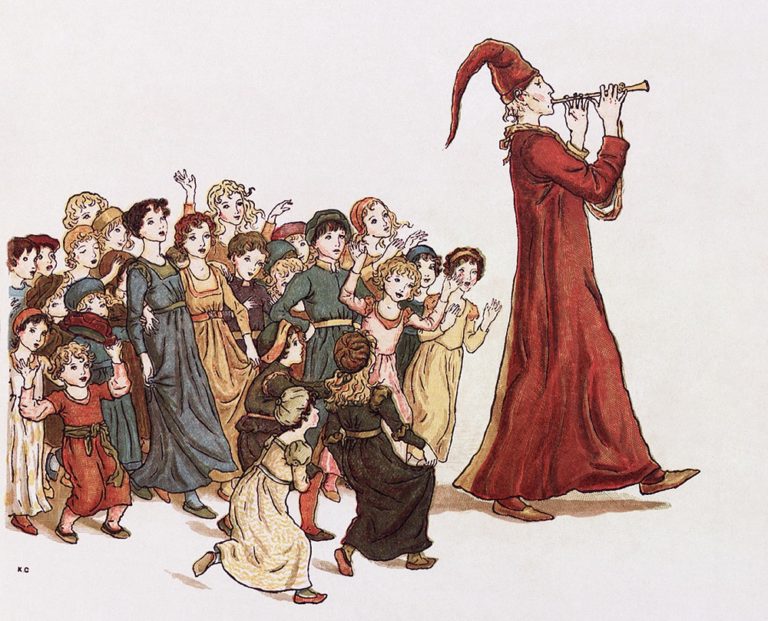
The town of Hamelin, located in Lower Saxony, is associated with the famous legend of the “Pied Piper of Hamelin.”
According to her, in the 13th century the city was simply overrun with rats, and there was no escape from them.
In desperation, the local authorities announced a reward for anyone who could help rid the city of rats. And so, on June 26, a flute player came to them. After receiving a promise from the magistrate to pay him “as much gold as he could carry” as a reward, he took out a magic flute. Playing the flute, the mysterious rat-catcher lured all the city’s pests out of their burrows, led them out of the city, and drowned them in the river. However, the city authorities did not pay the promised money. In retaliation, the aggrieved musician played the flute again, casting a magical spell over all the city’s children. He led them out of the city and vanished with them, never to return.
Today in Hamelin, in addition to a wide variety of souvenirs featuring the flute player and the rats, there are guided tours led by the Pied Piper.
And on June 26, 2009, to commemorate the 725th anniversary of the events described in the legend, the city hosted a large-scale Rat Catcher Festival.
The list could go on and on. However, the fact remains that all these memorable events—which have left their mark on the history of the country or the city—attract crowds of tourists and significantly boost the local budget. Alas, despite our city’s rich history, we still lack such “urban highlights.” It’s a shame. And the problem here isn’t a lack of unique facts that set Kharkiv apart from other places, but a total unwillingness to study and learn about our true history.
For example, at the beginning of the last century, the famous animal trainer and circus performer Vladimir Leonidovich Durov used to visit our city.
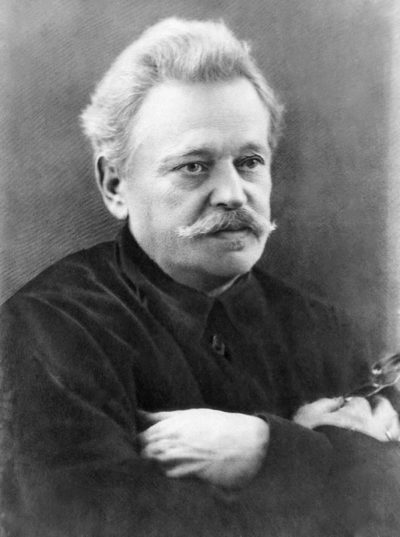

In his book *My Four-Legged and Feathered Friends: A Zoopsychological Essay*, published in 1912, he vividly describes an incident that happened to him in Kharkiv.
But on another occasion when I rode a wild boar, not only did I not receive any thanks, but I even ended up in court. Let me tell you about this curious incident. It happened in Kharkiv. Just for fun, I put a pig in a little cart and drove down Yekaterinoslavskaya Street. A whole cavalcade followed me—a crowd of cab drivers, a horse-drawn tram stop—and the crowd began to applaud. The police intervened. They drew up a report. When the police officer asked why I was riding a pig, I replied that I didn’t have a horse. Nevertheless, legal proceedings were initiated against me. The police charged me with three counts:
1) for riding a pig;
2) for disturbing the peace;
3) for unauthorized advertising.
In my defense, I put forward the following arguments:
1. The law does not prohibit riding on pigs;
2. My pig didn’t oink even once and behaved quite decently. I was riding on the side of the street where it’s permitted;
3. There was nothing promotional about my ride: there were no slogans on the stroller or the pig, and I wasn’t wearing a clown costume.
The bailiff then put forward his final argument, which was not legal in nature at all: People know Durov, so there must have been advertising.
I had to respond by saying that, in that case, I wouldn’t be allowed to set foot on the street at all, because that would constitute unauthorized advertising. The court acquitted me.
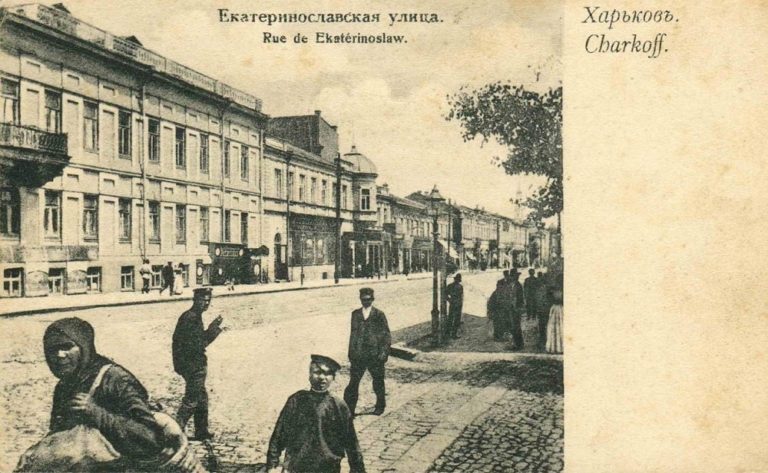
The great circus performer made that joke in only two cities—Nizhny Novgorod and Kharkiv.
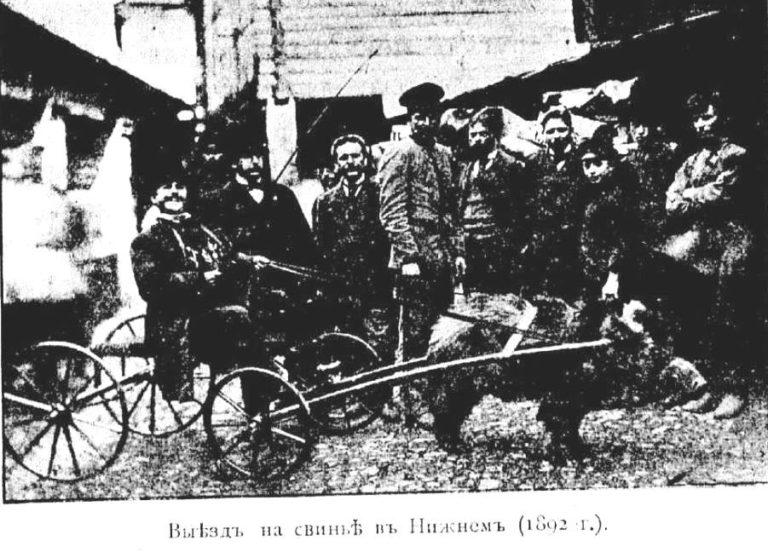
It goes without saying that for our beloved city, its residents, and indeed the entire empire at that time, this incident was a truly remarkable and momentous event.
Unfortunately, no one in Kharkiv has ever repeated that joke. Nor are there any souvenirs related to this extremely funny event. Undoubtedly, there will be those who say that the example cited above is far from the best one. Of course, if you look hard enough, you can find other events that are just as memorable. However, I sincerely believe that one day—whenever that may be—some daredevil will hitch a pig to a cart and, without breaking any traffic laws, amidst the enthusiastic applause of the crowd—just as was done over 100 years ago—will ride down Poltavskyi Shliakh Street, if only as a tribute to Vladimir Leonidovich Durov. Perhaps this will even become one of our city’s traditions, one that many people will come to see.

- About the military pilot school and the airfield in Kharkiv… - 04.11.2020
- Nikanor Savich—A Political Career by Mistake - 13.07.2020
- And once again, about the Cavalry Guards… - 21.01.2020