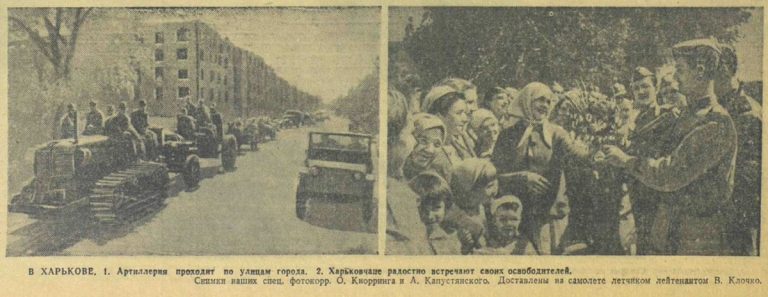
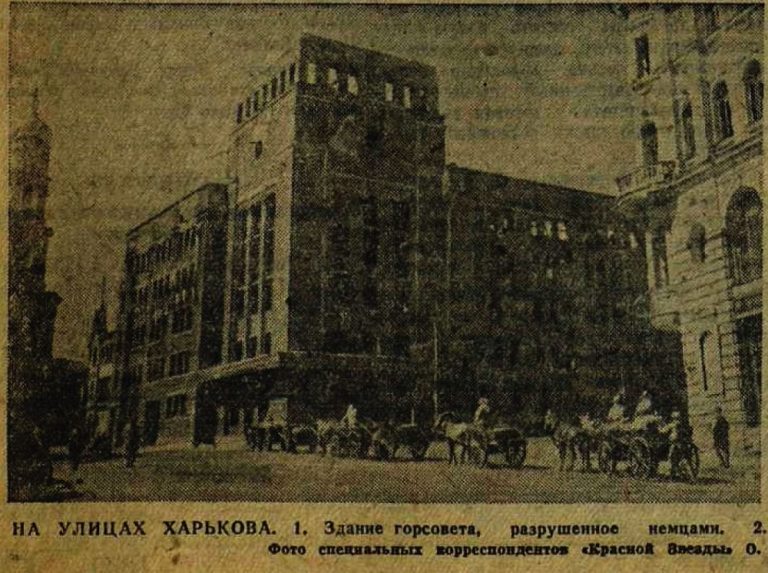
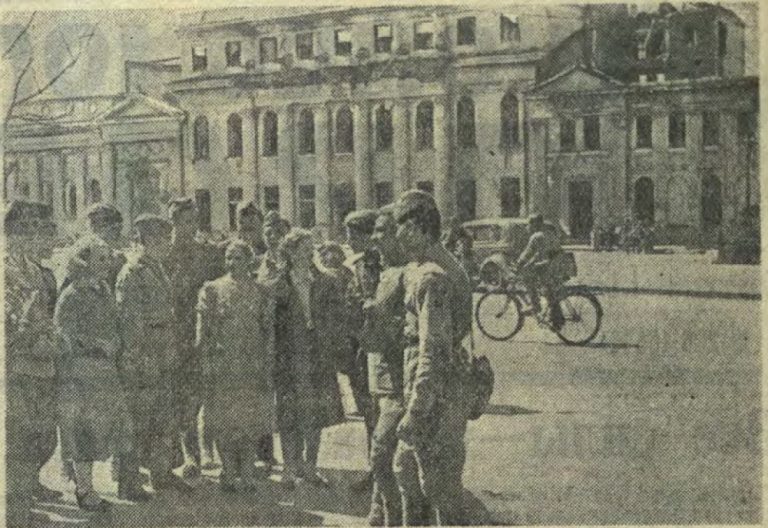
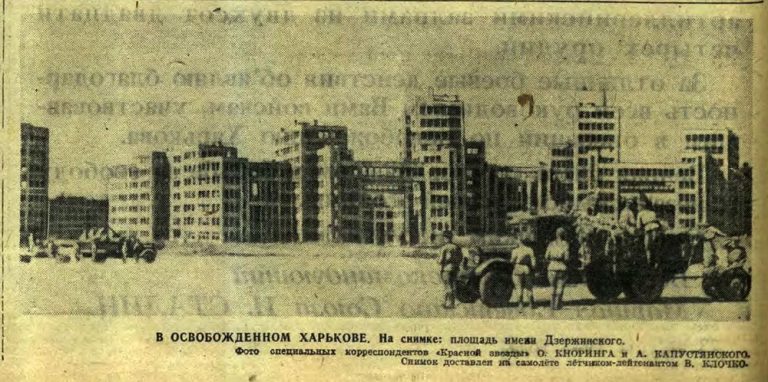
It was back in August–September 1943. Our city had been liberated, and peace and tranquility were gradually returning to it.
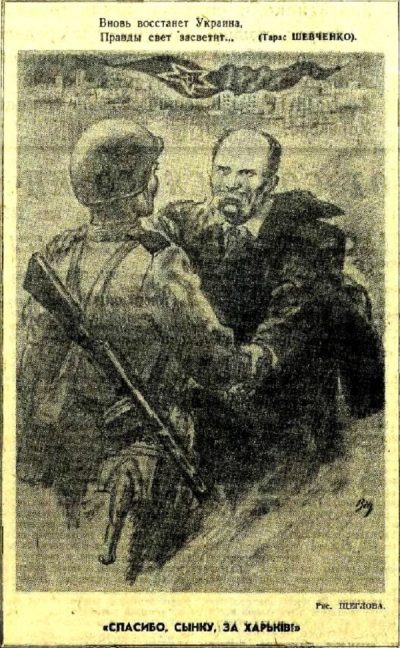
Here is how Lyudmila Markovna Gurchenko, a well-known native of Kharkiv who survived the German occupation, recalls this in her memoirs:
Acacia doesn’t bloom in August, but for some reason, I associate the second liberation of Kharkiv with the taste and scent of acacia. From all over, residents brought the soldiers large bouquets of pink and white acacia. There’s a lot of it in Kharkiv. It’s sweet, especially the wild variety. I know. When I was hungry, acacia went down a treat. The sun and the scent of acacia hovered over our liberated city. I was lucky enough to ride on a tank all the way to Tevelev Square—right on top of the gun! Now there’ll never be a curfew again, no one will be executed, people will stop being afraid of one another—now we’ve driven the Germans out! And soon I’ll go to school and start studying! Best of all—now my dad will finally be able to send us a letter. After all, now the whole country will know that Kharkiv has been liberated! On September 1, 1943, I went to school. In exactly one week, the school was cleaned, washed, and the classes were organized. There were no desks, no blackboards, no books or notebooks, no chalk—but classes began anyway!
The horrific atrocities committed by the Nazis, which little Lyudmila witnessed with her own eyes (she was only 7 years old at the time of liberation), remained forever etched in her childhood memory:
The “Second Germans” kept coming up with new and increasingly brutal acts of violence. Anyone even remotely suspicious was hanged right on their balconies! The police were on a rampage. Especially those who had returned to the city with the “second Germans.” And the Germans watched with delight as the police shot their own people. Now the roundups began. They took place in the most crowded places—mostly at the market.
The Germans quietly formed a ring around a certain section of the crowded area. Then, on a command, they suddenly began to tighten the ring, pushing people away from the counters and throwing the “merchandise” to the ground. With rifle butts to their backs, they were pushed closer and closer together. My God, what a panic it was! Heart-wrenching, drawn-out cries—“Mommy!” “Oh God!” “Help me!” “Ra-tu-u-te!”—intermingled with abrupt German shouts: “Schnell!”, “Weck!”, “Scheiße!”, “Farflukter!” And when the ring had tightened so much that people were standing right up against one another, the Germans would break the ring open on one side… And on the opposite side of that ring, they’d release the German shepherds. All the screams merged into one terrifying cry: “O-o-o! And for a moment, there was silence. As if everyone were holding their breath at the same time. Those damned clever, trained animals took care of the rest on their own. They drove the crowd of terrified, bewildered people in a precise direction—toward the black, closed-up trucks—the “death vans.” The cars were packed with people, and they drove off. Those lucky few who didn’t fit into the car were let go. It often happened that a mother was in the car, while her daughter remained outside! Those left at liberty would later curse that freedom for the rest of their lives. Exhaust fumes were pumped into these “death vans.” And by the time the vehicle reached the outskirts of the city, the people inside were suffocating. Then they were dumped into pits and buried alive. And in the winter—to Lopan. That was the “roundup.” That’s how it happened in our Kharkiv, at the Blagoveshchensky Market. And the next day, rumors spread throughout the city that partisans were active in Kharkiv. The roundup was, as it were, the Germans’ revenge for the partisans’ actions. Over time, the people of Kharkiv came to know the mechanics of these roundups like the backs of their hands. As soon as a black car or a German with a German shepherd appeared at the market, the word spread through the rows—as if by telephone—at first quietly, then louder and louder, and finally as a shout: “Raid!” “Raid!”. The entire market would instantly descend into chaotic movement. Sometimes the Germans’ operation would fall through. But more often than not, there were slow-witted village women who, not thinking things through and afraid to part with their sacks, would willingly run toward the black cars…
But back in the fall of 1943, it seemed that the worst was already behind them and that, although difficult, a bright and by no means frightening future lay ahead. However, the reality was quite different.
I first came face to face with the truth about life in liberated Kharkiv while I was still in school.
During one of our classes, an elderly Ukrainian language and literature teacher who had survived the occupation of Kharkiv told us about things that people don’t usually write about.
According to her, after our city was liberated, the liberating soldiers began raping the women of Kharkiv. The rapists’ logic was simple: if she lived under the Germans, she must have slept with them; if she slept with them, she was a “German whore” with whom they could do whatever they wanted. Because of this, many women in our city were simply too afraid to go outside.
In the memoirs of Lyudmila Gurchenko, whom we mentioned earlier, there are no such terrifying recollections. Instead, there are others that are no less chilling and speak more than eloquently about the attitude toward the residents of our city who had endured all the horrors of the German occupation:
People began returning to Kharkiv from evacuation—not only Kharkiv residents, but also people from other cities. Everyone had to be provided with housing. Those who had remained under occupation were looked upon with suspicion. They were the first to be moved from apartments and rooms on upper floors down to the basements. We waited for our turn. In the classroom, the new arrivals declared a boycott against those who had stayed behind under the Germans. I didn’t understand any of it and agonized over the thought: if I’d been through so much, if I’d seen so many terrible things, shouldn’t they, on the contrary, understand me, take pity on me…? I began to fear the people who looked at me with contempt and called after me, “Little Shepherd.” Oh, if only they knew what a real German Shepherd was like. If only they had seen how a German Shepherd drives people straight to their deaths, straight into the gas chambers… those people wouldn’t have spoken that way… And only when films and newsreels began to appear on the screens, showing the horrors, executions, and massacres committed by the Germans in the occupied territories, did this “illness” gradually begin to subside, fading into the past.
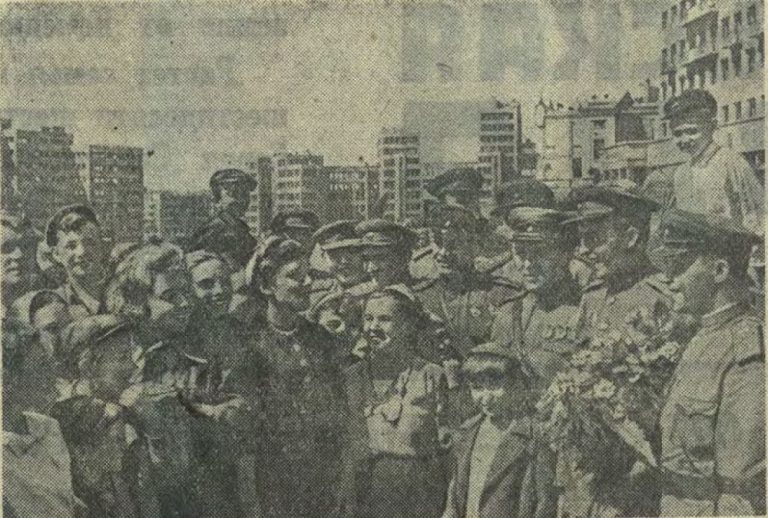
That’s a very good point—in my view, this “disease” is a terrible one. What do we know about it today?! To this day, it remains completely unclear to us just how widespread the rapes of Kharkiv women by “liberating” soldiers were. Was the violence, forced displacement, and abuse suffered by those who survived the horrors of the occupation a local or a widespread phenomenon?! Or perhaps these were merely isolated incidents?!
However, the fact remains that this “terrible disease” did exist, and we must remember it and talk about it.
History teaches us many things, including never to repeat the mistakes of the past.
I sincerely hope that in our time there will be no “sheep” or “lackeys,” because not everyone living under occupation is a traitor.

- About the military pilot school and the airfield in Kharkiv… - 04.11.2020
- Nikanor Savich—A Political Career by Mistake - 13.07.2020
- And once again, about the Cavalry Guards… - 21.01.2020