It has always been the case that everything secret and mysterious has fascinated humanity since time immemorial. Over the course of several centuries, one such topic—Freemasonry—has become increasingly shrouded in myths and surrounded by experts on the subject.
It’s hard to count the number of myths about how the Order of Free Masons influenced our hometown. In Kharkiv alone, “those in the know” will likely point out a dozen or so “Masonic houses” to you. For example, you might be surprised to learn that the former mansion of Alexander Yosefovich, publisher of the newspaper *Yuzhny Krai*, was apparently built in the shape of King Solomon’s Temple. I’m extremely curious to know on what basis some contemporary publications make such claims.
But what I know for sure is that the Kharkiv Regional Archives contain a wonderful and fascinating case file from 1822 concerning the closure of Masonic lodges. I can even show you some of the pages from it.
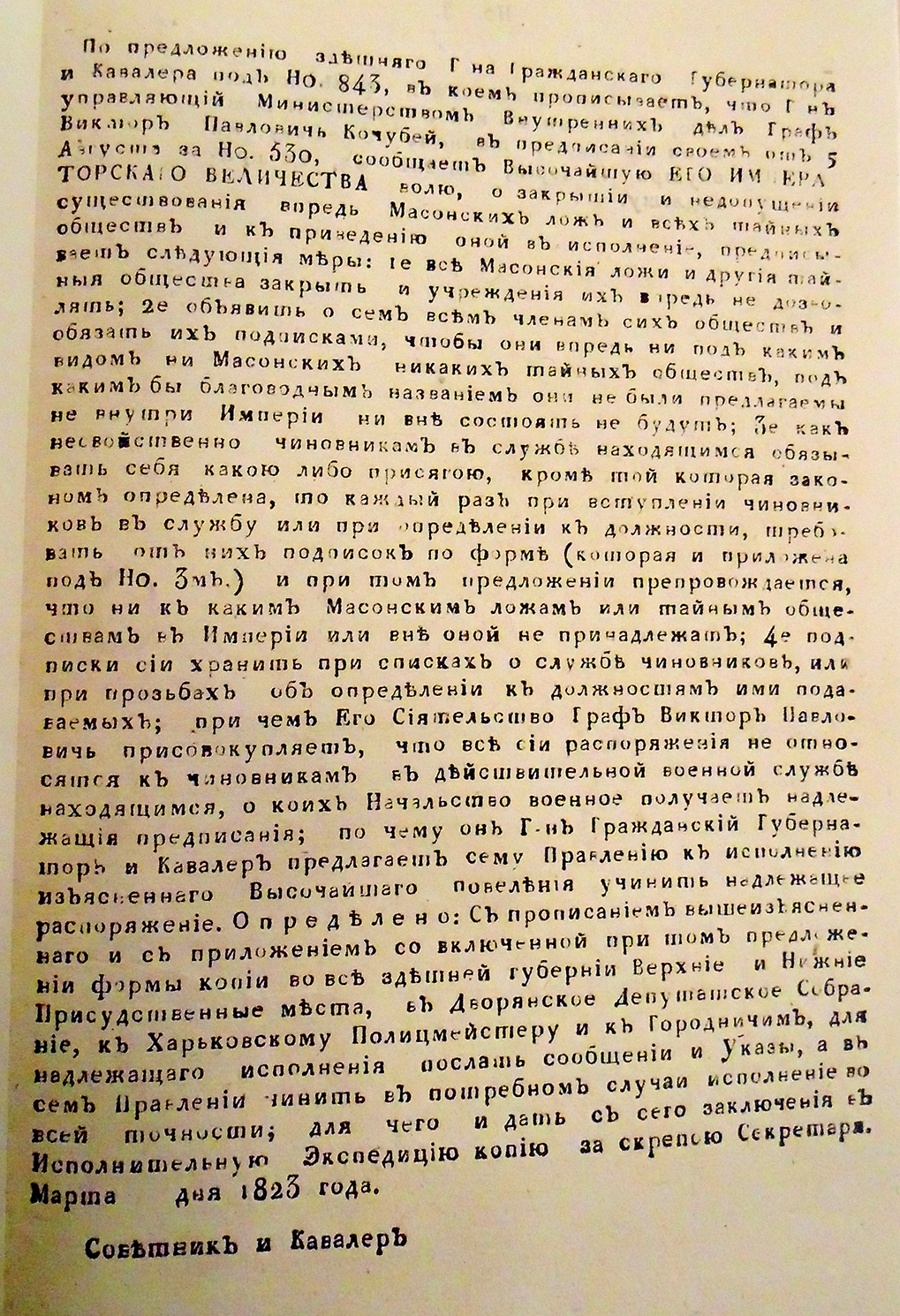
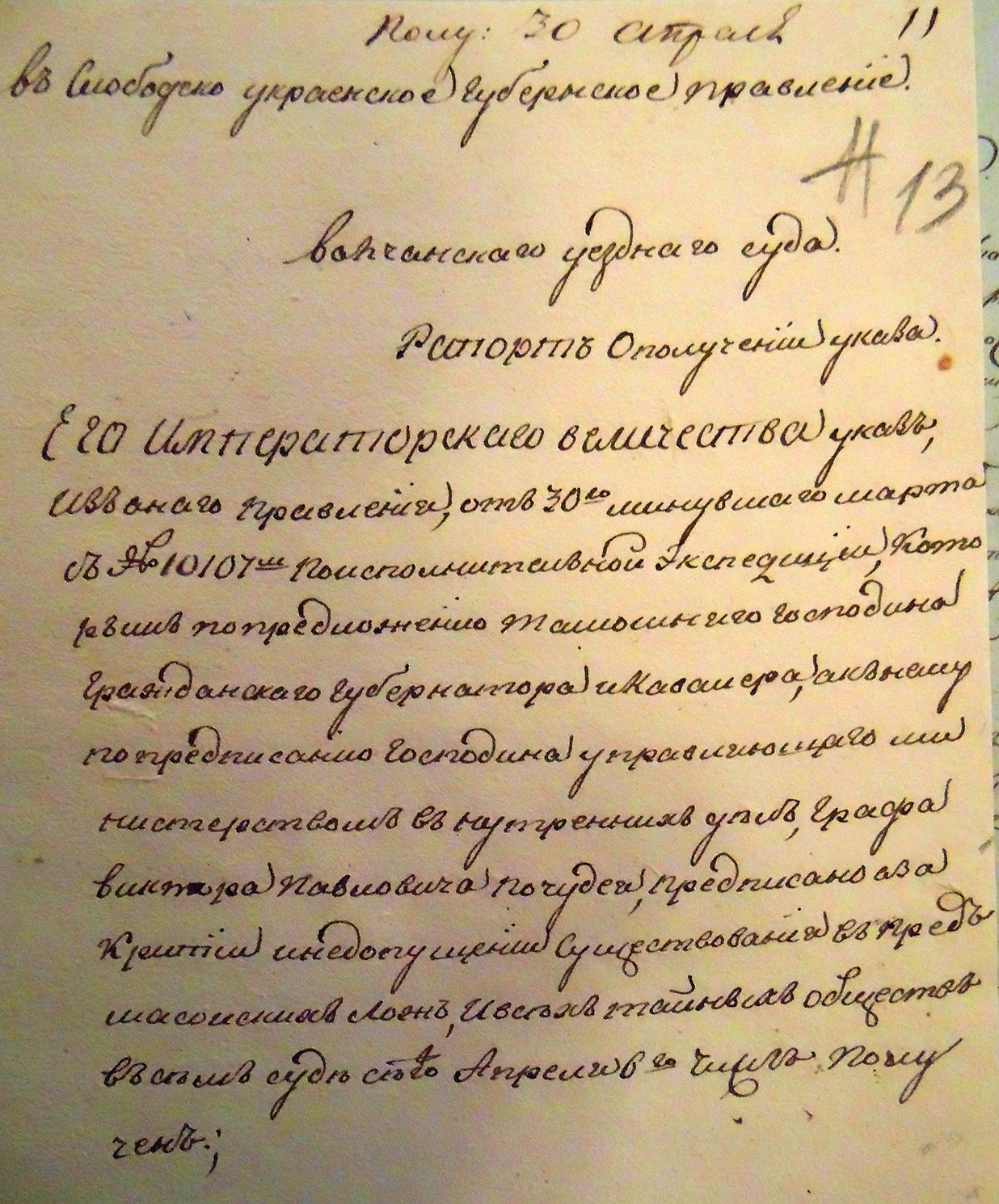
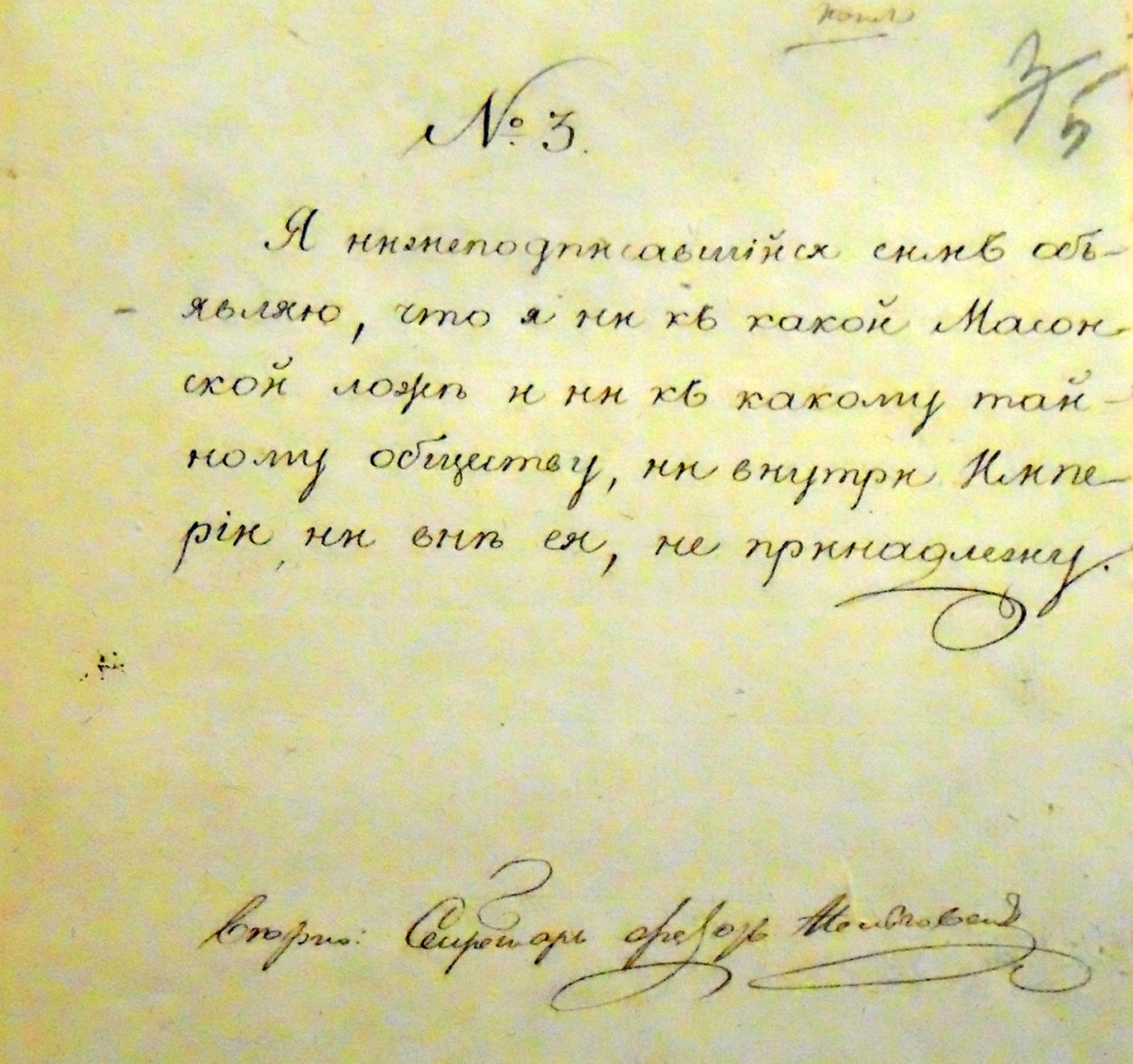
To be honest, I didn’t specifically search for such records in the archives. Unique facts and information about Kharkiv’s Freemasons can sometimes be found in completely unexpected works. Sometimes these works devote only a couple of sentences to our city. For example, a number of contemporary authors cite the 1932 book *Year Book of World’s Free Masonry*, published in Bern, in their research.
Lodges were also established in the Little Russian provinces. In 1900, the Grand Lodge of Ukraine was organized on the basis of a previously existing lodge abroad (according to other sources, the Grand Lodge was founded in 1902 in Geneva). This lodge coordinated the activities of a number of subversive, radical-nationalist lodges that advocated for the separation of Russia’s historical territories from the Russian Empire. The Grand Lodge of Ukraine included the “Scattered Darkness” Lodge in Zhytomyr, the “Osiris” Lodge in Kamianets, the “Shevchenko” Lodge in Kharkiv (founded in 1901), “Immortality” in Kyiv, “Pontus Euxinus” in Odesa, “Love and Loyalty” in Poltava, and “Brotherhood” in Chernihiv (founded in 1904).
Unfortunately, aside from its name and the date it was founded, I don’t know anything else about the mysterious “Shevchenko” lodge in Kharkiv.
Sensationalists have attributed membership in the Kharkiv Masonic Lodge to just about everyone: the philosopher Grigory Skovoroda, the trustee of the Kharkiv Educational District Severin Pototsky, and the writer Pyotr Gulak-Artemovsky. Yet the most well-known and reliable Kharkiv Freemason in every respect is not listed there. It’s a shame—after all, his name appears in many books devoted to the Brotherhood of Free Masons. His surname, Rubishtein, is very well known in our city. Even based on what we know about him now (alas, very little), one can judge just how exceptional a man he was.
Yakov Lvovich Rubinstein was born on August 16, 1879. After graduating from the 3rd Kharkiv Gymnasium in 1897, he enrolled in the law school at Kharkiv Imperial University.

After graduating, he worked as a lawyer in our city, and later became a sworn attorney for the Kharkiv Judicial Chamber. He was a member of the Social Democratic Party, and in 1917 he became chairman of the Kharkiv City Duma.
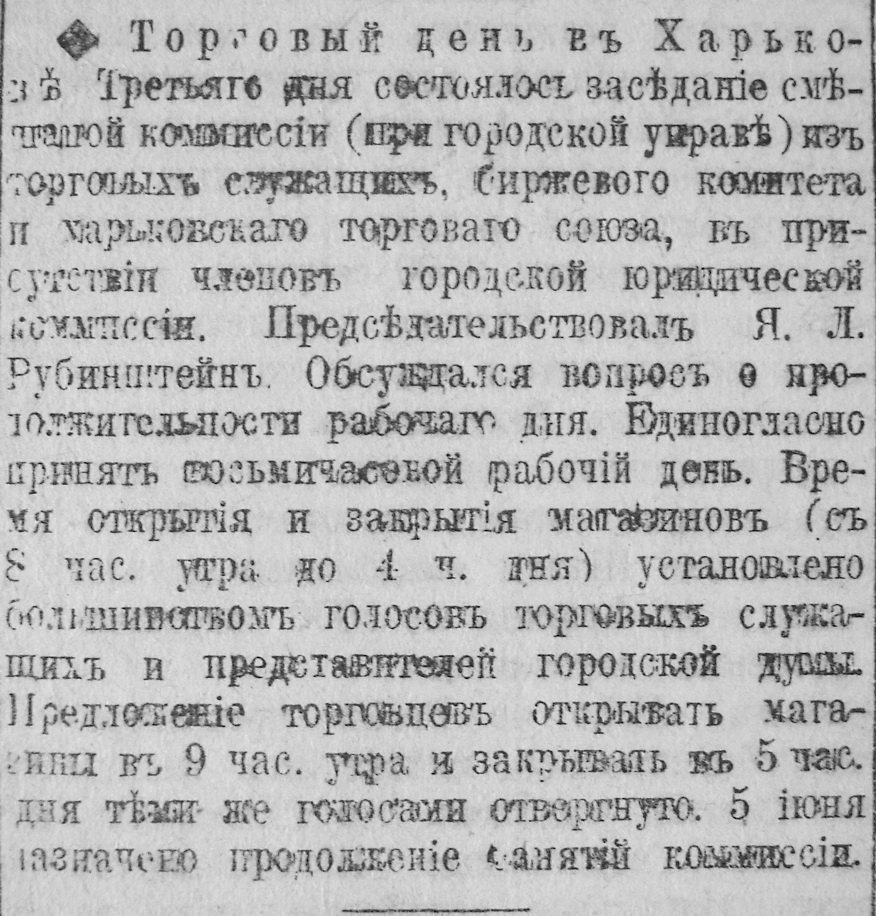
Like many of our compatriots, Rubinstein emigrated to France during the Civil War. It should be noted that Yakov Lvovich was a Freemason with pre-revolutionary experience, as he had been a member of the “Grand Orient of the Peoples of Russia” lodge while still in Kharkiv. In his 1985 article “Political Freemasonry in Russia, 1906–1918: A Discussion of the Sources,” researcher Nathan Smith quotes an extremely interesting statement by Rubinstein. Yakov Lvovich compares the activities of the Kharkiv organization to a candle whose flame was extinguished by the storm of events in 1917: “The candle continued to flicker—what did its flame mean amid the constant flashes of lightning?!”
Consequently, in 1919 in Paris, Yakov Lvovich was among those in exile who attempted to reestablish the Grand Orient of the Peoples of Russia. However, due to the Grand Orient’s lack of contacts with foreign Masonic organizations, the meetings eventually ceased.
It is interesting to note that in the book *Freemasonry in the Russian Diaspora* by N. Svitkova, published in Paris in 1932, the author, among other things, provides an extensive list of émigré Freemasons. Yakov Lvovich is also mentioned there.
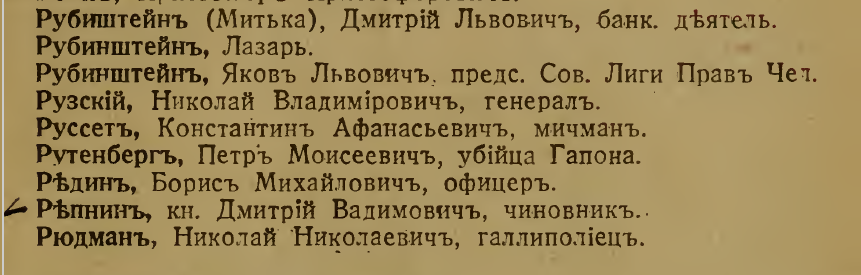
However, that was not the only thing for which he was famous abroad. While living in France, Rubinstein embarked on a whirlwind of activity—enough to fill ten lifetimes for some people.
In the 1920s, he became one of the three general secretaries of the “Russian Society for the Defense of the League of Nations,” founded in Paris, and a member of the Council of the Association of Russian Local and Municipal Leaders Abroad. By 1921, he was already a member of the Public Committee for Aid to the Famine Victims in Russia. From 1924, he served as chairman of the Russian League for the Defense of Human and Civil Rights. From 1929 onward, he served as chairman of the Commission on the Legal Status of Russian Refugees under the Zemstvo-Municipal Committee. From 1931 onward, he was a founding member of the Russian Musical Society Abroad, as well as a member of the Administrative and Financial Committee of the Russian Conservatory in Paris. From 1931 to 1934, Yakov Lvovich served on the board of the Russian Commercial Institute in Paris, and was also vice-chairman of the Kharkiv Regional Association (of which he had been an honorary member since 1930).
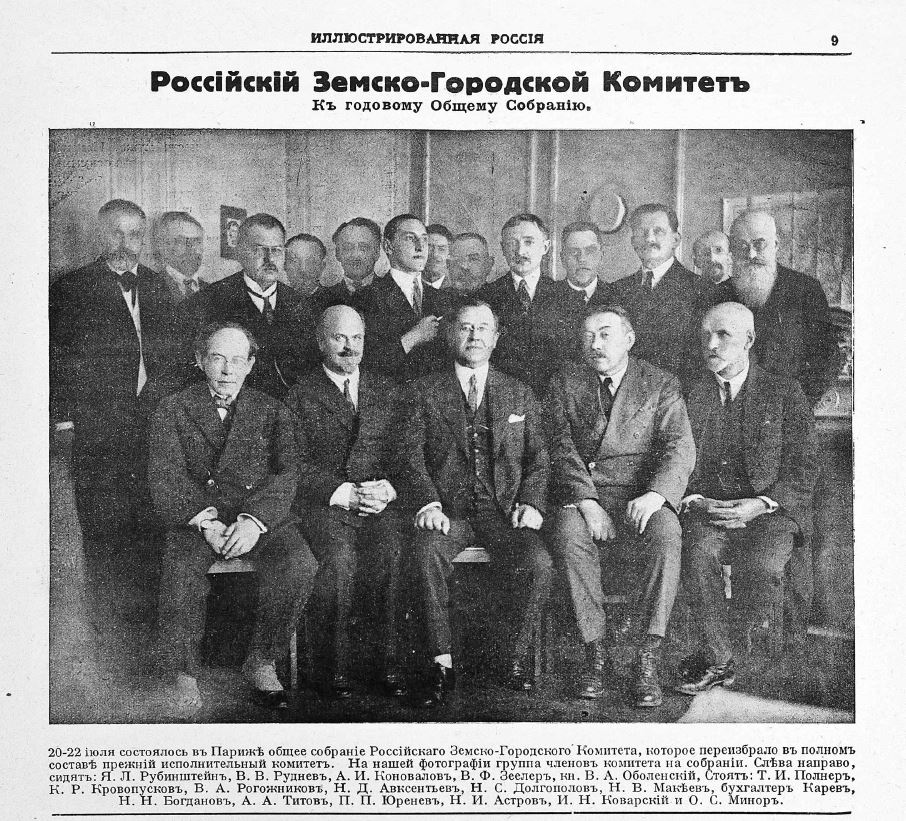
Since 1933, Rubinstein has been working for the Committee for Aid to Needy Jews in Russia. Also in 1933, he served on the Committee for Honoring S. V. Rachmaninoff on the occasion of the composer’s 60th birthday and 40th anniversary of his creative career, as well as a member of the Central Pushkin Committee in Paris (1935–1937).
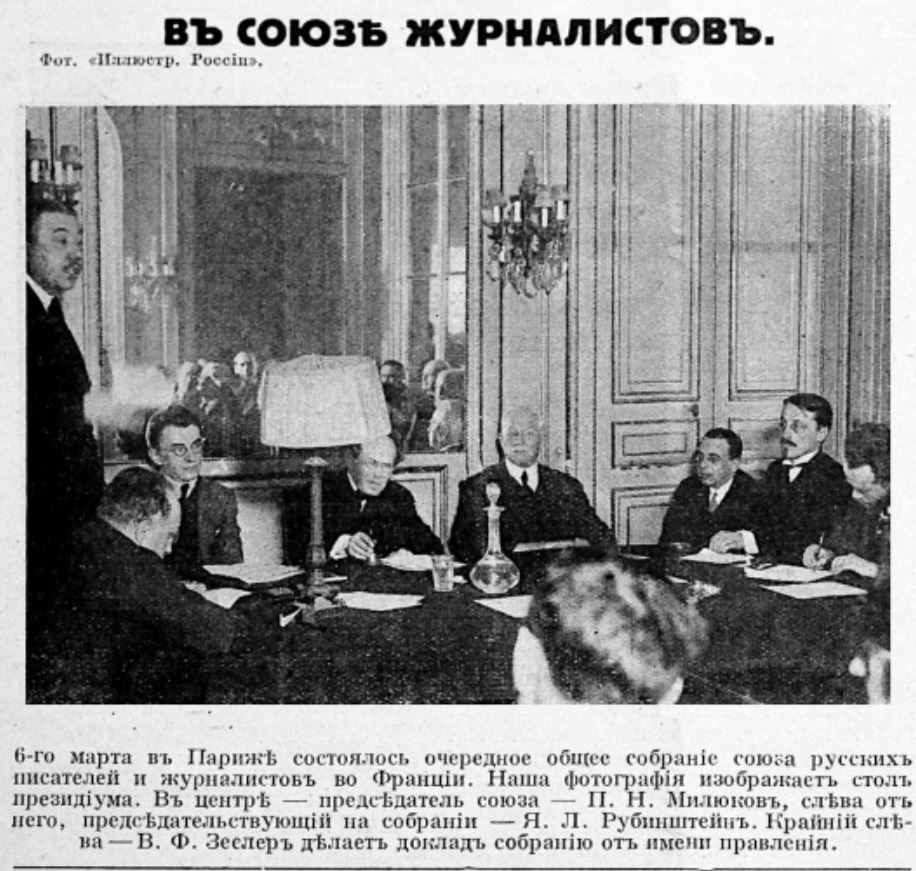
In 1935, he served as an expert on the League of Nations’ Nansen Committee on Refugee Affairs. Beginning in 1935, he served as a representative of the Council of Public Organizations on the Emigrant Committee in Geneva. From 1938 onward, he was a member of the board of the Society of Friends of Russian Dramatic Art in Paris. Our hero was also a member of the Russian Emigrant Committee in France and the Union of Russian Writers and Journalists in France. During the Nazi occupation, Rubinstein was arrested by the French authorities and sent to a camp. After his release, Yakov Lvovchi lived in Lyon. In 1945, he joined the board of the Association of Russian Emigrants for Reconciliation with Soviet Russia, as well as the Society for Aid to Russian Refugees and the “Quick Aid” Society. He was one of the key participants in the Geneva conference that drafted the current International Convention of July 28, 1951, on Refugees and Stateless Persons. He also made substantial donations to émigré organizations and was involved in charitable work.
A Kharkiv Freemason passed away at the age of 85 on December 2 in Paris. The Russian State Military Archive contains a collection designated “F.121 k.” It consists of 8 items and covers the period from 1911 to 1940. These are the personal biographical documents of Yakov Lvovich Rubinstein, which were discovered by Soviet troops during World War II and transported to Moscow.
The Kharkiv period in the life of this outstanding alumnus of our university—a lawyer, Freemason, and public figure well-known throughout Europe—has also been studied very little. So I think the most interesting part is just beginning. After all, Yakov Lvovich Rubinstein surely deserves to be remembered in the city with which he had so many ties.

- About the military pilot school and the airfield in Kharkiv… - 04.11.2020
- Nikanor Savich—A Political Career by Mistake - 13.07.2020
- And once again, about the Cavalry Guards… - 21.01.2020