Of all the surviving historic estates in the Kharkiv region, I’m particularly fond of Hyivka (now part of the city of Lyubotin). Maybe it’s simply because Hyivka is such a lovely and beautiful place. Or maybe it’s because this estate is a living reminder of how our glorious past can be ruthlessly destroyed. If you type “Hyivka tours” into the all-knowing Google with the setting “show results from the past year,” you’ll get information something like this:
- Until 1881, the estate was owned by an unknown person.
- In 1881, it was purchased by the Svyatopolk-Mirsky princes.
- That is why the estate is referred to everywhere as the “Svyatopolk-Mirsky Estate.”
We’re so proud of our Ukrainian past, and we love to brag about it and make things up so much that we often overlook the actual facts.
In 1816, Vasily Maslovich, a poet and fable writer from Kharkiv, began publishing the satirical magazine *Kharkiv Democritus* in our city. At that time, it was the first and only purely satirical publication in the entire Russian Empire. The magazine featured wonderful humorous poems, literary parodies, satirical sketches, epigrams, and a number of humorous works on local Kharkiv themes, written by Vasyl Maslovych in colloquial Ukrainian. Thus, this was the first instance of the Ukrainian language being used in periodicals. Although *Kharkiv Democritus* was published only from January through June 1816, its significance in the literary life of Sloboda Ukraine—and indeed of all Left-Bank Ukraine—is immense. In 1821, Vasyl Maslovych inherited an estate in Hyivka. Later, he—and then his son—improved and completed the construction of the stone manor house. For those interested in the details of this story, I recommend reading Andriy Paramonov’s study, based on documents from the State Archives of the Kharkiv Regional State Administration, titled “From the Forgotten Figures: The Kharkiv Fable Writer V. G. Maslovich.”

And in 1881, Nikolai Vasilyevich Maslovich sold Hyivka to Prince Dmitry Ivanovich Svyatopolk-Mirsky. Very few estates belonging to counts, barons, and princes remained in Sloboda Ukraine. This is likely why we now read about “Baron König’s estate” and “the palace of the Counts of Shidlovsky,” even though their owners did not actually hold such titles. It is very strange, however, to see the modest “Hyivka. The Svyatopolk-Mirsky Estate” in the descriptions on tourism websites.
There is an extremely interesting story associated with this princely title and the new owners of the Maslovich estate (which is, after all, the more correct name for Hyivka). Originally, none of the members of this family of Belarusian service men (known, incidentally, since the 16th century)—who were by no means among the largest landowners—associated themselves with the titled nobility or used the name Svyatopolk. In the 18th century, the Mirskys first began to claim that their family descended from Prince Svyatopolk the Accursed. Later, the Mirskys claimed kinship with the Svyatopolk-Chetvertynsky princes (princes of the Grand Duchy of Lithuania) and began calling themselves Svyatopolk-Mirsky.
In 1821, Tomasz Bogumil Jan Mirski, drawing on family tradition, secured recognition of the princely title for his family from the Senate of the Kingdom of Poland. By a personal Imperial decree dated April 30 (18), 1861, he, his sons, and their descendants were permitted to use the title of prince.
However, it was specified that this was “without the presentation of documents attesting to this title, which were lost during the Polish Uprising of 1831.” Apparently, it was precisely because of this fateful “loss” of documents that the princely title granted to this branch of the family did not extend to other branches of the Mirsky family. Most researchers of noble families, however, classify the Mirskys as “pseudo-princes.”
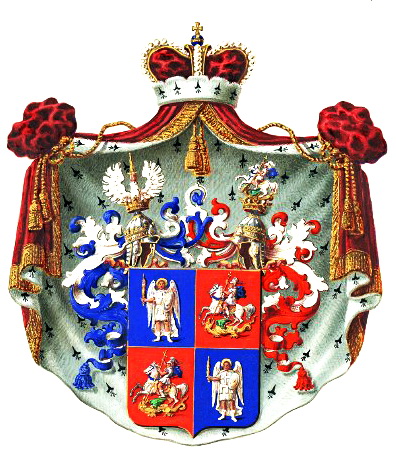
There is also a view that, despite the lack of documentation, Dmitry Ivanovich Svyatopolk-Mirsky’s personal merits and standing contributed to his receiving the princely title in 1861.
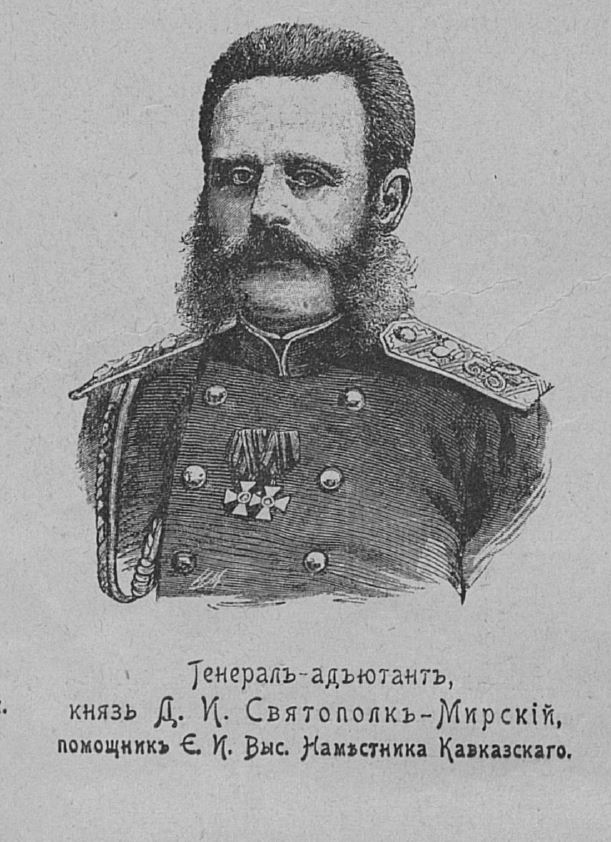
As we recall, he became the owner of the estate in 1881. Indeed, he was a very interesting figure.
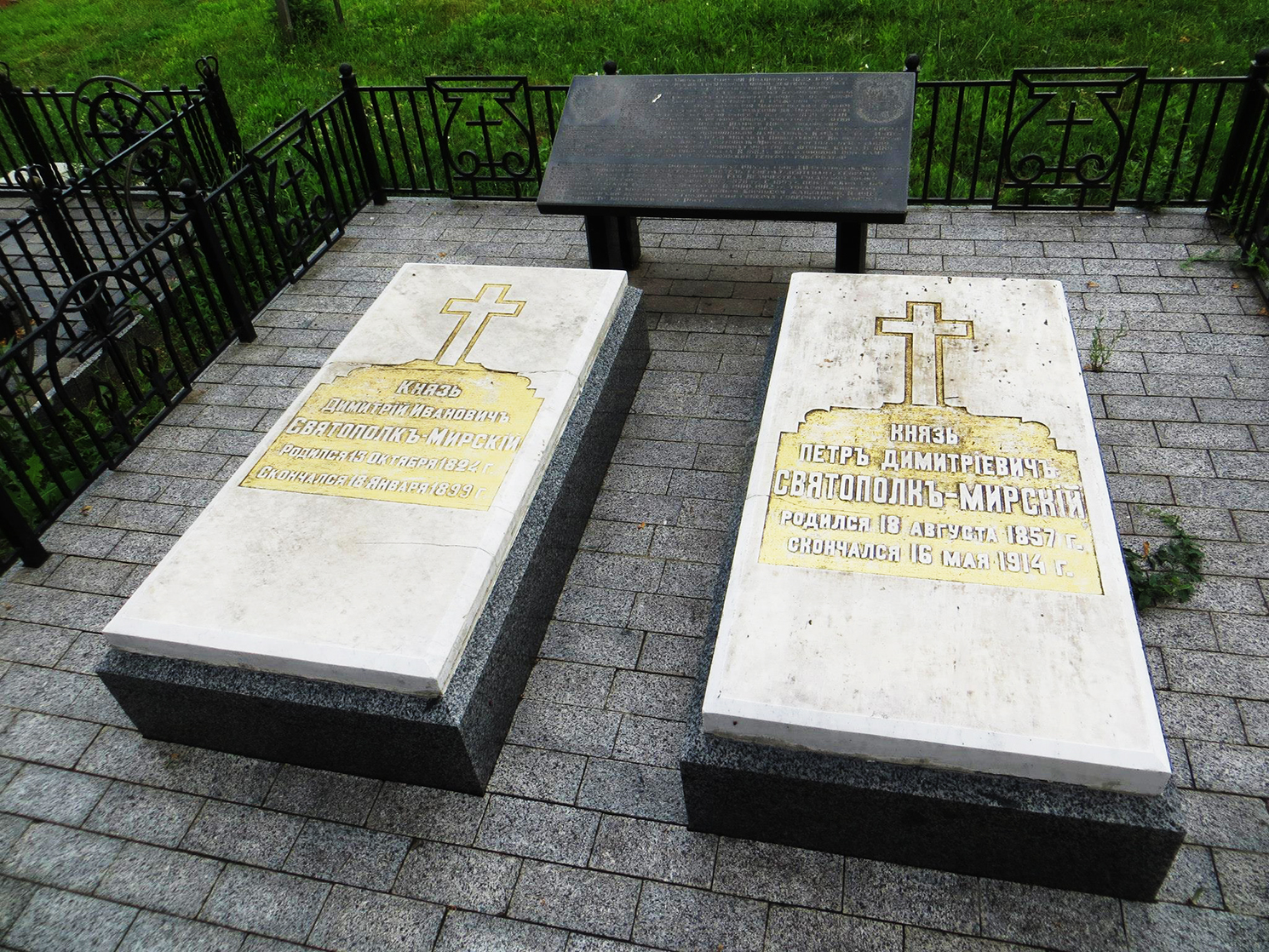
From 1841 to 1853, he took part in the “Chechen” military campaign in the Caucasus. From 1853 to 1856, he fought in the Crimean War. Mirsky then returned to the Caucasus, continuing to fight against the Chechens. In 1859, he was promoted to major general and received numerous orders and awards. From 1881 to 1882, the prince served as acting commander of the Kharkiv Military District and acting governor-general of Kharkiv. It was during this time that Mirsky acquired Gievka. When Dmitry Ivanovich died in 1899, he was buried near the Nikolaevskaya Church, located next to the estate.
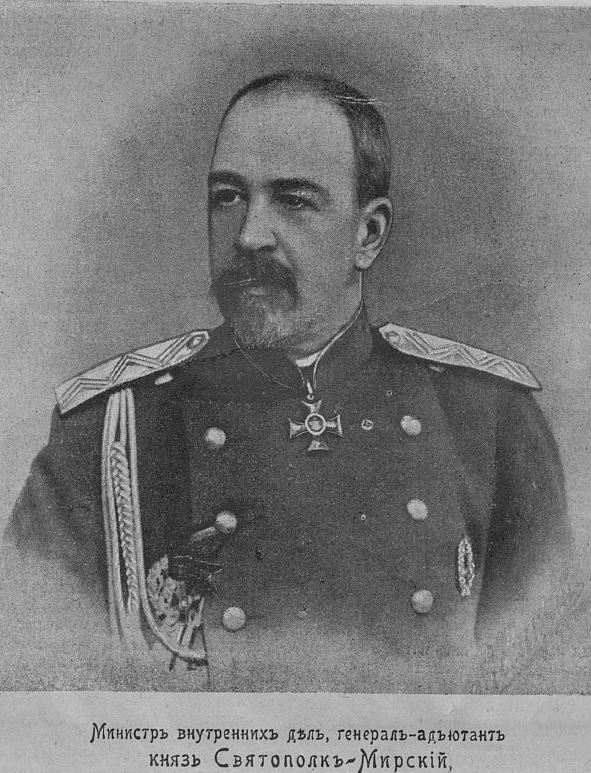
If a book were ever to be written about the son of Gievka’s first owner from the Mirsky family, I am certain it would be quite a thick volume. For Prince Pyotr Dmitrievich Svyatopolk-Mirsky was truly an outstanding citizen and accomplished many remarkable things.
From June 11, 1895, to December 30, 1897, he served as governor of the Penza Governorate. From December 30, 1897, to April 13, 1900, he served as governor of Yekaterinoslav. Subsequently, on April 20, 1900, he was appointed commander of the Separate Gendarmerie Corps. And on May 8, he became Deputy Minister of Internal Affairs. From September 15, 1902, to September 26, 1904, he served as Governor-General of Vilnius, Kaunas, and Grodno.
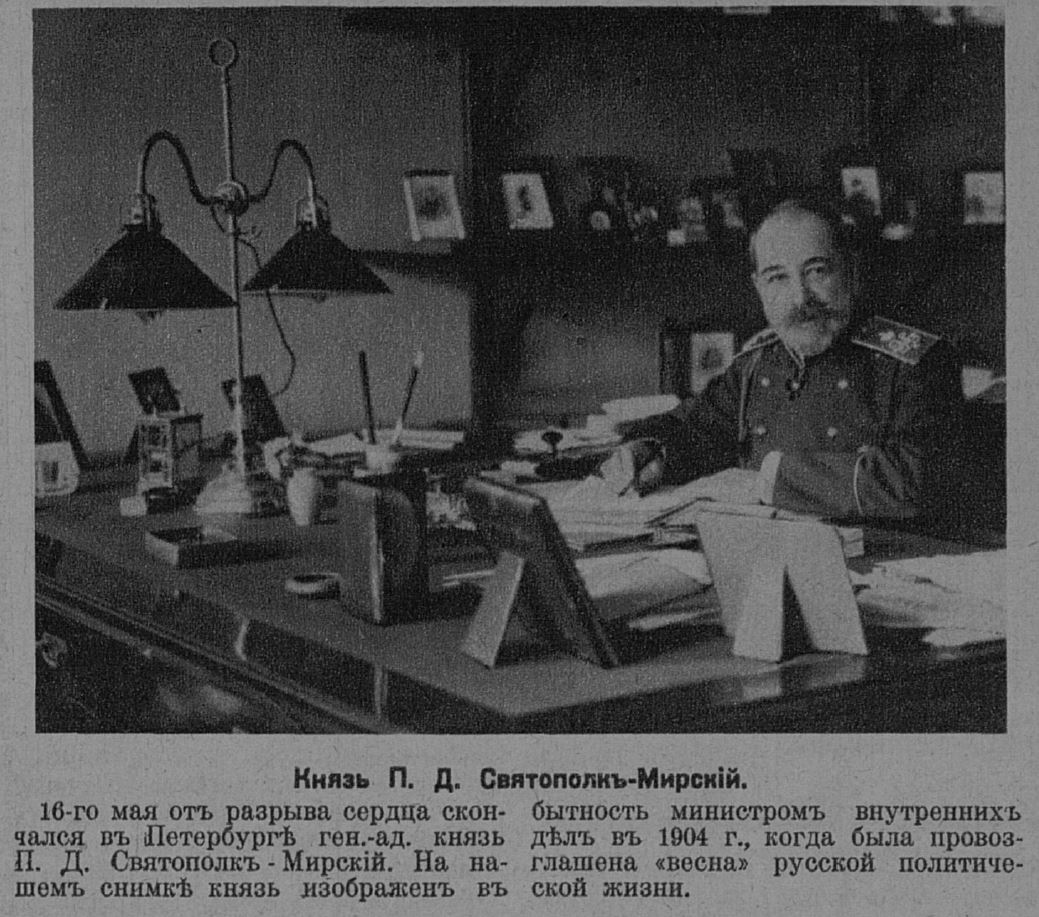
Following the assassination of Vyacheslav Konstantinovich von Plevé on July 15, 1904, the position of Minister of the Interior became vacant. On August 26, Pyotr Dmitrievich was appointed to the post. The events that took place in St. Petersburg on January 22, 1905, are known to most as “Bloody Sunday.” The dispersal of the procession, which resulted in the deaths of several hundred people, sent shockwaves throughout the country. The opposition placed full responsibility for the bloodshed on the tsar and the Minister of Internal Affairs.
The day after the events, Prince Svyatopolk-Mirsky, as a man of honor, resigned. Historians are still debating what role the owner of the Hyivka estate actually played in those terrible events.
Although under the Communists, of course, they pinned all the blame on him—forgetting that Pyotr Dmitrievich was known for his extremely gentle and benevolent nature, and was not an experienced politician either. Mirsky, who held liberal views, relaxed censorship while serving as Minister of Internal Affairs. Even one of the greatest poets of the early 20th century, Alexander Blok, referred to the Ministry of Internal Affairs in his letters—at the time when it was headed by Prince Svyatopolk-Mirsky—as a “sentimental ministry.” And Sergei Yuryevich Witte wrote that “Svyatopolk-Mirsky is a man of outstanding moral integrity. He is a man of absolute integrity, impeccably honest, a man of high principles, a man of rare character, and a highly cultured general of the General Staff… Wherever Mirsky served, he was loved and respected by all.” After his retirement, the prince never returned to politics.
Pyotr Dmitrievich died of a heart attack at the age of 56 in St. Petersburg on May 16 (29), 1914. After the funeral service at the Church of the Savior on the Waters, his body was transported by train to Hyivka for burial.
On the platform at Lyubotin Station, crowds of people and various delegations gathered to greet the train carrying the prince’s ashes. The prince’s funeral was not without incident. The ribbon on one of the three funeral wreaths bore the following inscription: “To the Creator of Spring, Prince P. D. Svyatopolk-Mirsky.” The authorities decided that this text was of a “demonstrative and political nature” and launched an investigation. It turned out that the wreath bearing this inscription had been presented by teachers from the Hyivka Zemstvo Public School at the initiative of the head of the delegation, Ivan Alekseevich Kozyrev. Ultimately, the investigation established that the 43-year-old schoolteacher had not intended the inscription to be a statement of any kind, but had written it—without giving the content much thought—to please the Mirsky family, to whom he owed a great deal.
But, as the saying goes, every family has its black sheep. In the collections of the State Archives of the Kharkiv Region, one can, if so desired, familiarize oneself with a rather scandalous case: “On Submitting for Discussion by the Nobility’s Deputy Assembly the Extravagant Lifestyle of Prince Semyon Nikolaevich Svyatopolk-Mirsky.” This case was initiated on October 5, 1913, and wasn’t concluded until May 17, 1914. What was the reason for it?
Semen Nikolaevich (Petr Dmitrievich’s cousin), who lived permanently at his estate in Hyivka, was extremely frugal, polite, and thrifty—to the point of stinginess—when it came to household expenses.
However, when he made his way to Kharkiv a few times a month, he became a completely different person.
He would down 2–3 glasses of vodka at once, throw money around, and disappear for 3–5 days on binges from which he never woke up. When drunk, he would pay bills presented to him for 1,000 rubles or more without even glancing at them. In this state, he might approach a stranger’s table at a restaurant. If the people there didn’t mind the prince’s presence, he would pay their entire bill right then and there. Needless to say, many took advantage of this. One winter, the prince arrived in Kharkiv with his wife and stayed at the Grand Hotel. Leaving his wife there, Mirsky went out to party. When he was brought back at 3 a.m., dead drunk, he not only woke up and upset all the other guests at the hotel with his antics, but also managed to drive his wife to a nervous breakdown.
The scale of the drunken antics of this noble reveler in Kharkiv had reached such a point that many of the city’s respectable hotels and restaurants simply refused to accommodate him. However, such refusals did not particularly upset Nikolai Semenovich. The doors of Kharkiv’s brothels and the homes of his friends—where he could continue his revelry—were happily thrown open for the prince.
The assembly of deputies postponed and rescheduled the consideration of this case several times, despite numerous complaints, citing a “lack of evidence of embezzlement.” So back then, just as now, money and social status were the deciding factors…
As we all remember, the first owner of the estate in Hyivka was the writer Vasily Maslovich. Ironically, the estate’s last owner was also a figure well-known in literary circles.
He was an outstanding literary scholar, literary critic, journalist, and translator—the son of Pyotr Dmitrievich, Prince Dmitry Petrovich. He was born in Hyivka in 1890. He spoke several languages and wrote poetry. He fought in World War I and the Russian Civil War (on the side of the “Whites”). In 1920, he emigrated to Poland and later to Greece. From 1921 to 1932, he lived in London, teaching courses on Russian literature at King’s College, University of London. Thanks to his immense erudition and innovative approaches, he gained recognition even in a foreign land. He had a reputation as a leading literary historian in Europe; even the most rigorous English scholars recognized Mirsky’s books as “the ideal model.” He arranged for Marina Tsvetaeva to visit London and, prior to her arrival, published the first article about her in English, thereby introducing the poet to British readers.
However, in 1932, with Gorky’s assistance, Mirsky returned to the Soviet Union, becoming one of the most prominent aristocrats to align himself with the Kremlin. In Soviet Russia, he translated works by English writers and worked on a biography of Pushkin. In 1937, a wonderful book titled *Anthology of Modern English Poetry: 1850–1935*, with commentary by M. Gutner, was published in Leningrad with a print run of 5,300 copies. This work is better known as the “Gutner Anthology” (incidentally, it was a favorite of the young Brodsky).
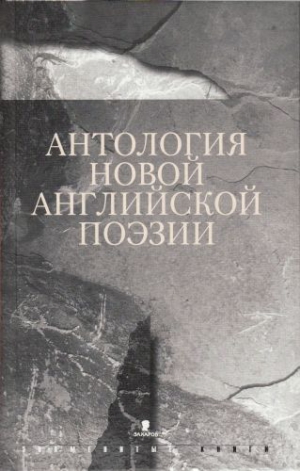
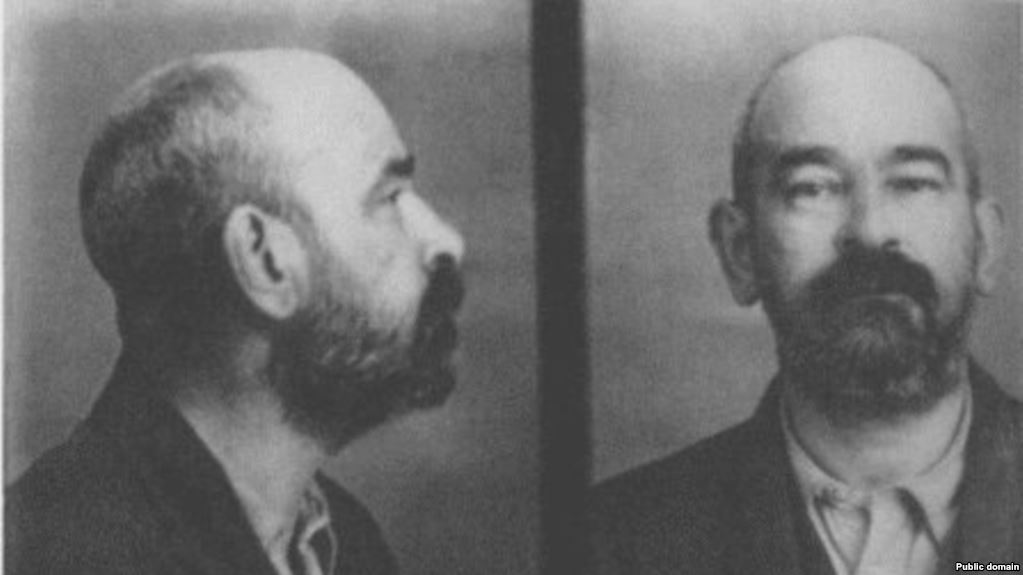
However, its true author was Prince Dmitry Petrovich Svyatopolk-Mirsky, a member of the Union of Soviet Writers who was arrested in the summer of 1937 and the former owner of the estate in Hyivka, who subsequently died in 1939 in a camp hospital near Magadan.
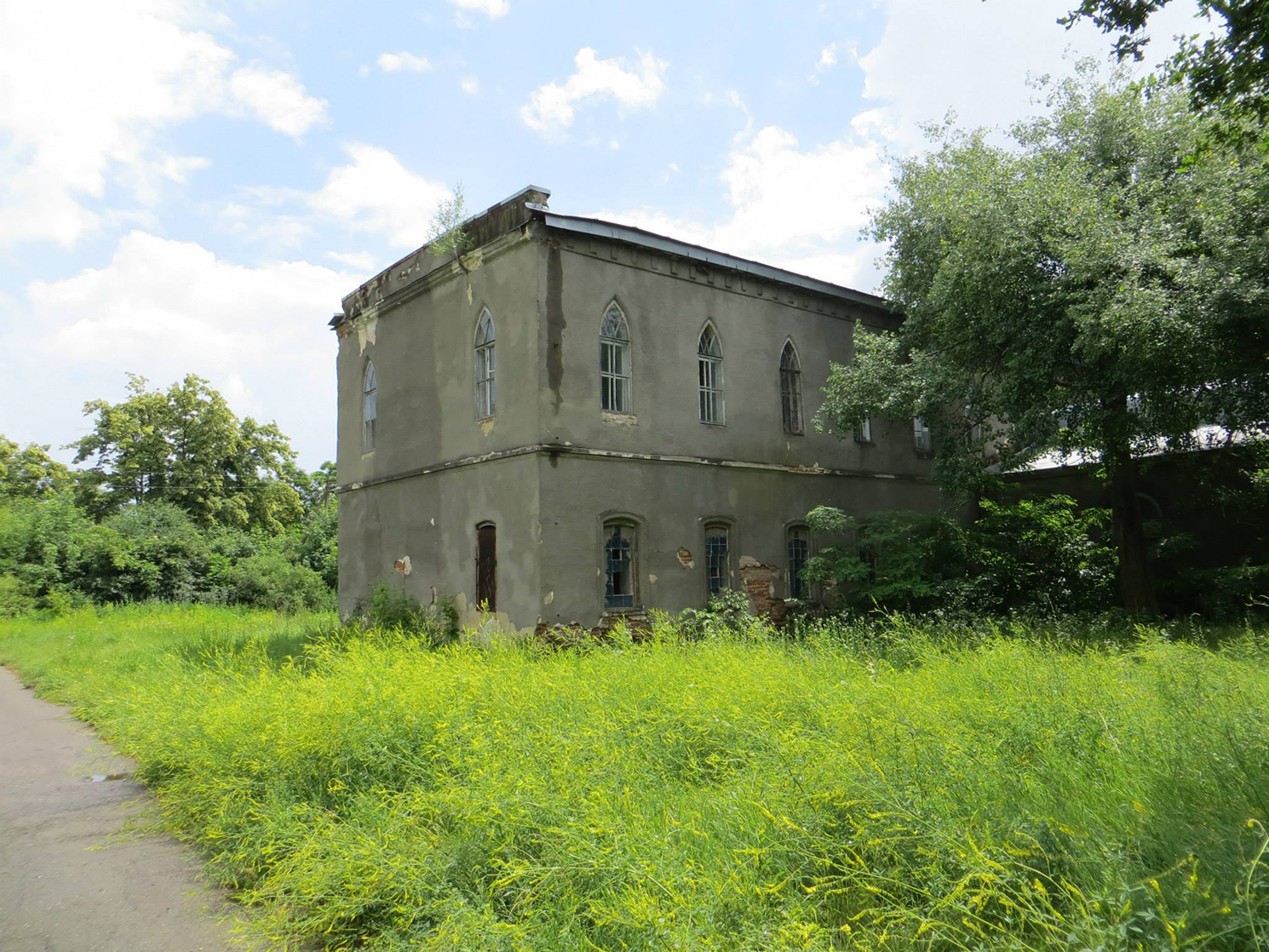
Researchers from Kharkiv—Andrei Paramonov and Elena Borisovna Dovzhenko—have written and continue to write excellent works about Hyivka and its owners. The Kharkiv State Historical and Architectural Archive also contains quite a few interesting records related to it. Until mid-2015, the estate looked like this:
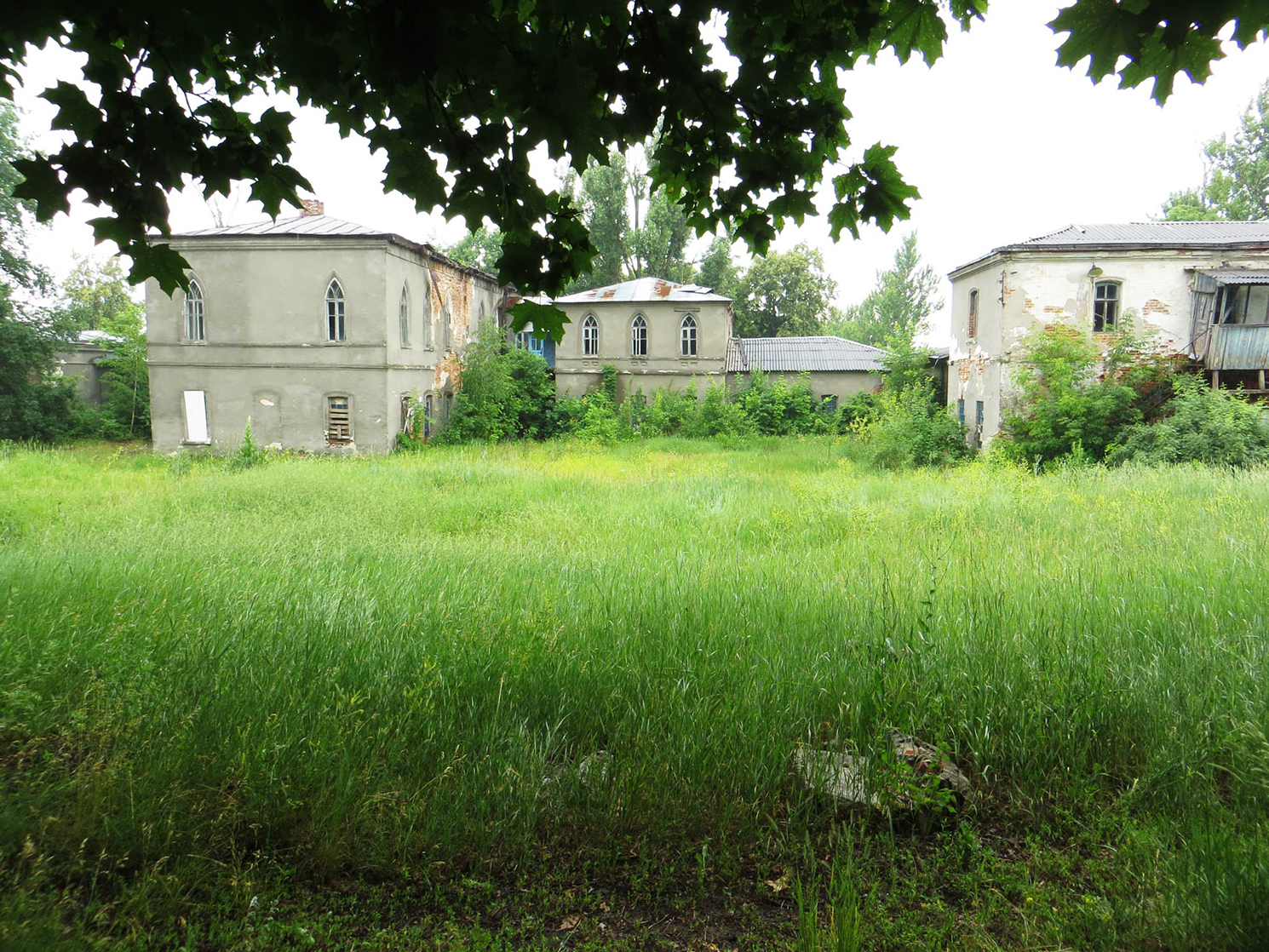
However, a fire broke out in August of that same year. Part of the estate was damaged. If you visit the site today, you’ll find picturesque ruins like these.


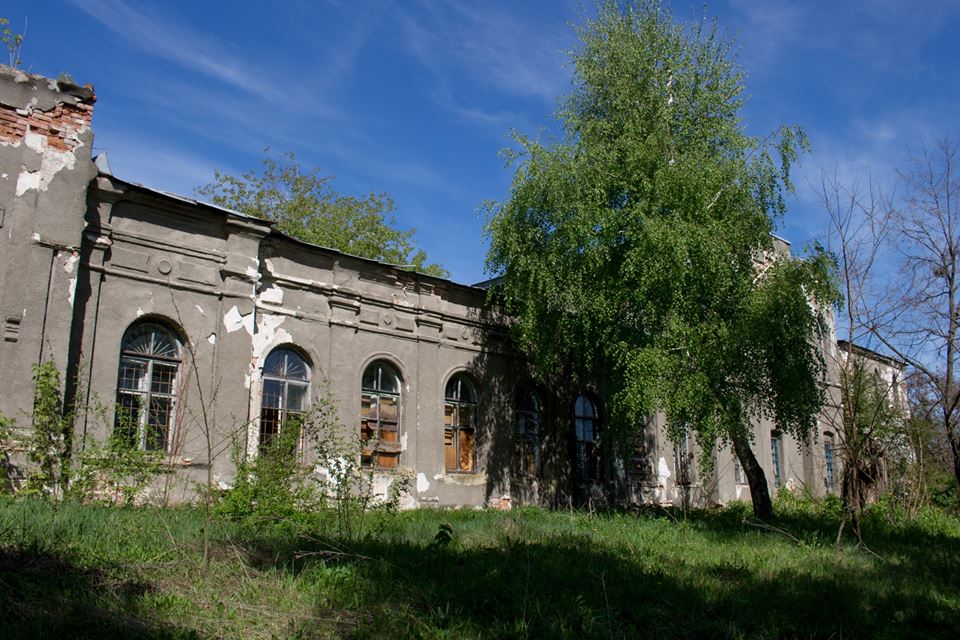
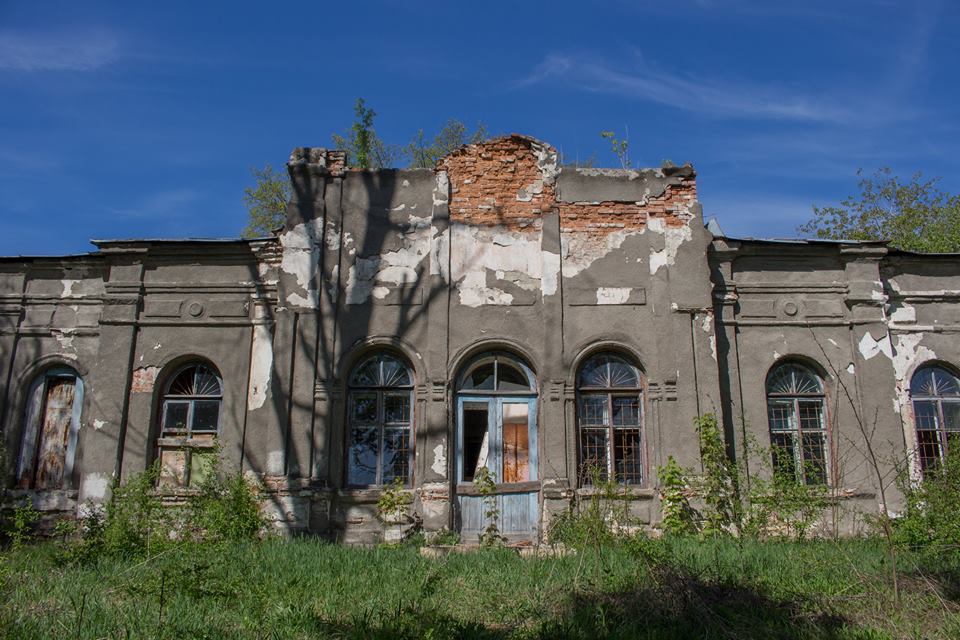
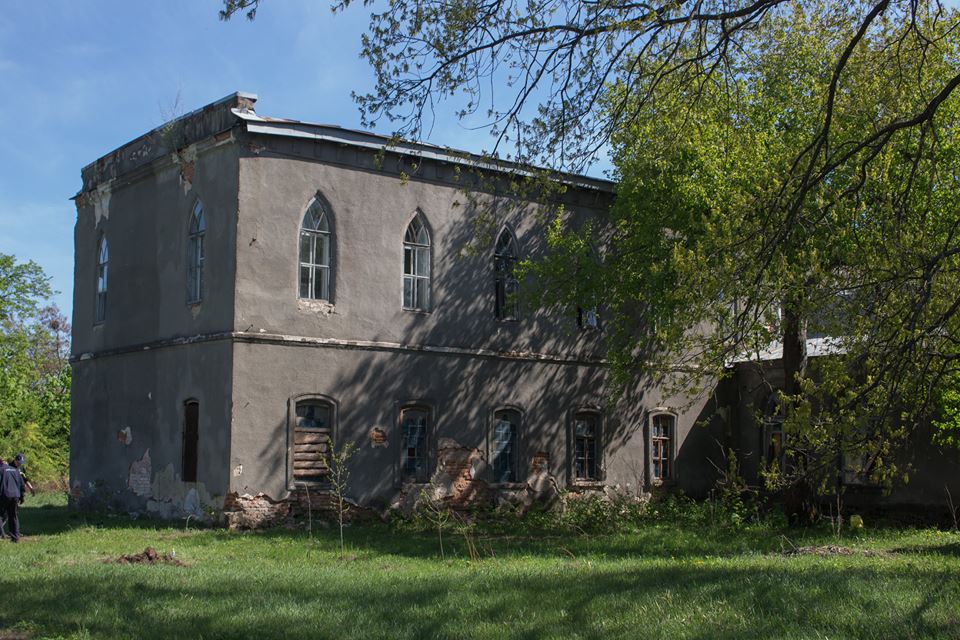
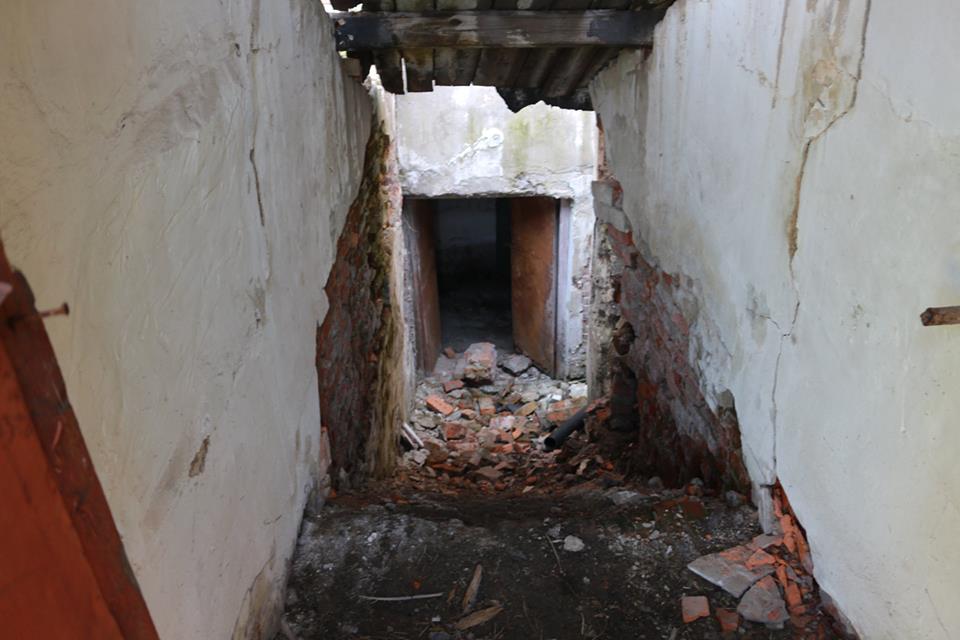
What’s stopping us from preserving this estate—whose history is linked to so many illustrious names—and turning it into a tourist destination? A rhetorical question…

- About the military pilot school and the airfield in Kharkiv… - 04.11.2020
- Nikanor Savich—A Political Career by Mistake - 13.07.2020
- And once again, about the Cavalry Guards… - 21.01.2020