In the book *Montenegro: Past and Present* by the distinguished Slavic historian Pavel Apollonovich Rovinsky, published in 1905, one can find the folk song “Ivo Podgorica and Mehmet-Arapin.” In his commentary on the song, the author cites a legend that exists in Podgorica:
He was an ordinary resident of Podgorica who was wealthy and well-respected. One day, on the eve of Easter, he went to a Turkish butcher (a convert to Islam) and, after ordering a nice cut of lamb for his feast, headed to church. When he returned from church, he found that the meat he had ordered had been sold to another Turk. Ivo began to reproach the butcher, but the butcher cursed him back: “You pig! — the Turk shouted at him. “And you dare to argue with me!” And with that, he struck him with his hand. Ivo could not bear it, drew a pistol from his belt, and killed the Turk. After that, he could no longer remain in Podgorica: he fled through the Leshanska nahiya to the Montenegrin village of Dodoshi (opposite the Turkish fortress of Žabljak at that time); from there he crossed by boat to Vir (in Cermnica), then traveled overland through Venetian territory to Budva, where he boarded a ship that was likely bound for Trieste; he then made his way through Austria to Russia. It is unknown exactly where he arrived, nor is anything known about his life in Russia in general. He immediately entered military service, during which he distinguished himself in battle and received great favors and lands from Empress Catherine II, eventually becoming a count and a landowner in the Kharkiv Governorate.

This legend tells the story of the Counts of Podgorica. Its real-life protagonist, Ivan (Ivo) Mihajlović, came from an ancient Serbian family in the province of Cetinje. Today, the beautiful and historic city of Podgorica is the capital of Montenegro. In 1759, Ivo, like many of his compatriots, entered the service of the Russian Empire, attained the rank of colonel in the Moldavian Hussar Regiment, and took part in the Seven Years’ War (1756–1763).
The mounted patrols (riding parties) under Ivo’s command struck terror into the hearts of the enemy, and he himself distinguished himself during the capture of Berlin in 1760.
In February 1761, Russian General Count Gotlib Kurt Heinrich von Totleben, using the authority granted by his command to negotiate with the enemy, established correspondence with Prince Heinrich of Prussia and Frederick II, Podgoricani was among the officers who suspected treason. The messenger carrying the treasonous correspondence was captured, and on June 9, 1761, Totleben was arrested by officers at night while in bed. It is said that Totleben was particularly angry with Colonel Podgorichani and two other staff officers, and in his defense against the charges, he asked His Majesty to take action against “their unheard-of, tyrannical conduct,” asserting that the sole reason for his arrest was that he had refused to allow these staff officers to plunder.
Be that as it may, in 1763 Totleben was sentenced to death by a court-martial, but Catherine II ultimately pardoned him. As for Ivo Podgoricani, for his distinguished service in the Seven Years’ War, he was promoted to brigadier and appointed colonel in the same Moldavian Hussar Regiment (September 24, 1762).
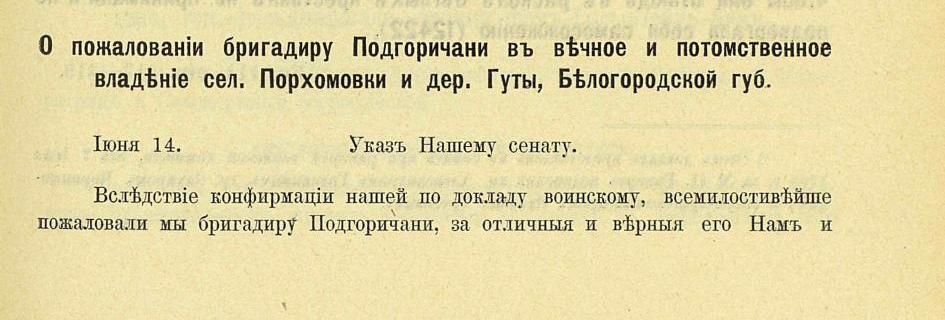
On June 14, 1765, Empress Catherine II, in what was then the Belgorod Governorate (an administrative-territorial unit of the Russian Empire from 1727 to 1779), “for his zealous service,” Brigadier Podgorichani was granted, in perpetual and hereditary possession, the village of Parkhomivka —which had 150 households and 550 souls—as well as the village of Guty, which had 22 households.
On May 16, 1766, Ivo Podgoricani was promoted to the rank of major general. The 1767 lists of the nobility of the Akhtyr Province state:
In the Bohodukhiv District:
Nobility—Major General of the Akhtyr Hussar Regiment, Regimental Commander Podgorichani—642 people.
In 1768, Podgorichani took part in the fight against the Polish Confederates; sent to the town of Staro-Konstantinov with a single cavalry detachment, he launched an assault on the town, dismounting his men, but was forced to retreat. Upon learning of Podgorichani’s failure, Empress Catherine II wrote to Panin:
I believe that General Podgorichani will spare us this trouble, for he possesses both glory and bravery, as well as skill; it is a pity that he was unable to capture Konstantinov with his hussars alone, for that laurel wreath would have adorned his gray head.
That same year, the King of Poland awarded Podgoricani the Order of St. Stanislaus (specifically in April 1768).
In May, Ivo Podgoricani’s forces defeated large Confederate detachments near Khmelnyk, and then a strong Confederate detachment that was marching to the aid of Berdichev, which was under siege by the Russians. And in June, the Bar Confederates were completely routed. But the commander himself wished to go to Montenegro, where he believed he would be “in good standing: I know the region well, for I have been everywhere there myself.” After submitting a plan of military operations and a map to the Empress, he declared to Catherine II:
Whether you choose to make me your superior or your subordinate—I am ready for anything, as long as I can be an instrument in freeing my fellow countrymen from the yoke of tyranny.
In the excellent document “List of Princely and Countly Surnames for Which Titles Were Recognized or Confirmed, conferred upon them by foreign sovereigns or belonging to them by descent from ancient titled or ruling families, as well as those who were permitted to append to their surnames the titles and surnames of their relatives” published in 1889, we find the following:
1769:
Major General Ivan Podgorichani
and his nephews, Georgy and Ivan Podgorichani, were granted the title of count.
The point is that Ivo Podgorican presented a patent from the Republic of Venice proving that his ancestors were counts. Consequently, by a supreme decree of the Governing Senate on July 6, 1769, he was recognized as a count.
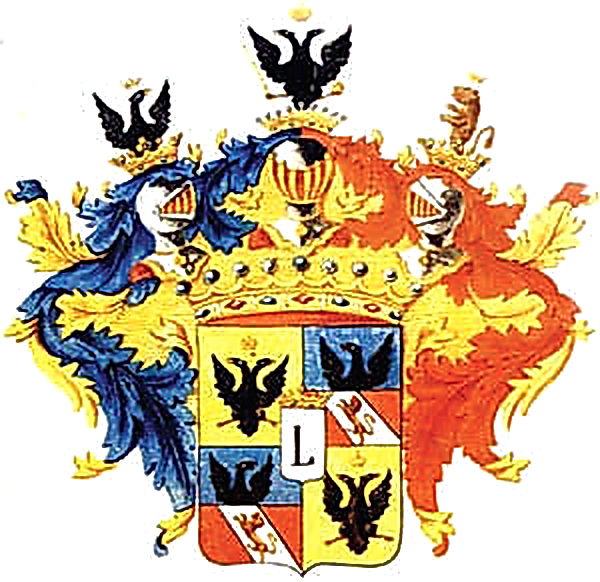
The description of their coat of arms is quite interesting:
In the shield, divided into four parts, there is a small silver escutcheon in the center, surmounted by a crown and bearing the black letter L. In the first and fourth quarters, on a gold field, there are two black double-headed eagles, each with a crown above its head. In the second and third quarters, on a blue field, there are two black single-headed eagles with outstretched wings, each rising halfway into the air; beneath them, on a red field, two lions are depicted diagonally on silver stripes. The shield is surmounted by a count’s crown, upon which are placed three helmets, crowned as follows: the middle one with a count’s crown, and the two outer ones with noble crowns; on the middle one is a black double-headed eagle holding a scepter and orb in its talons, on the outer helmets, a single-headed black eagle extends halfway out on the right side, and on the outermost one, a lion; above their heads are depicted golden crowns. The mantling on the shield is blue and red, lined with gold.
The Count of Podgorica was then sent to fight in the war against the Turks. During the battles of 1770, the dashing Montenegrin general, as before, bravely charged the numerically superior enemy.
And on November 30, 1770, he submitted a petition to His Imperial Majesty from the theater of war requesting his discharge from service “due to advancing old age and infirmity, due to various ailments throughout his body resulting from long-term service on horseback, particularly in his eye, and due to frostbite on his feet sustained last winter.” In addition to his illnesses, the reason for Podgorichani’s retirement was that, in his absence, the distillery in Parkhomivka —in which he had invested his last remaining capital—had burned down. The elderly count asked the Empress for financial assistance, as he had been completely ruined. As early as December 29, 1770, Podgorichani was granted retirement, with promotion to the rank of lieutenant general. However, the Military Collegium did not grant his request for financial assistance. Ivo Podgoricani died in 1779…
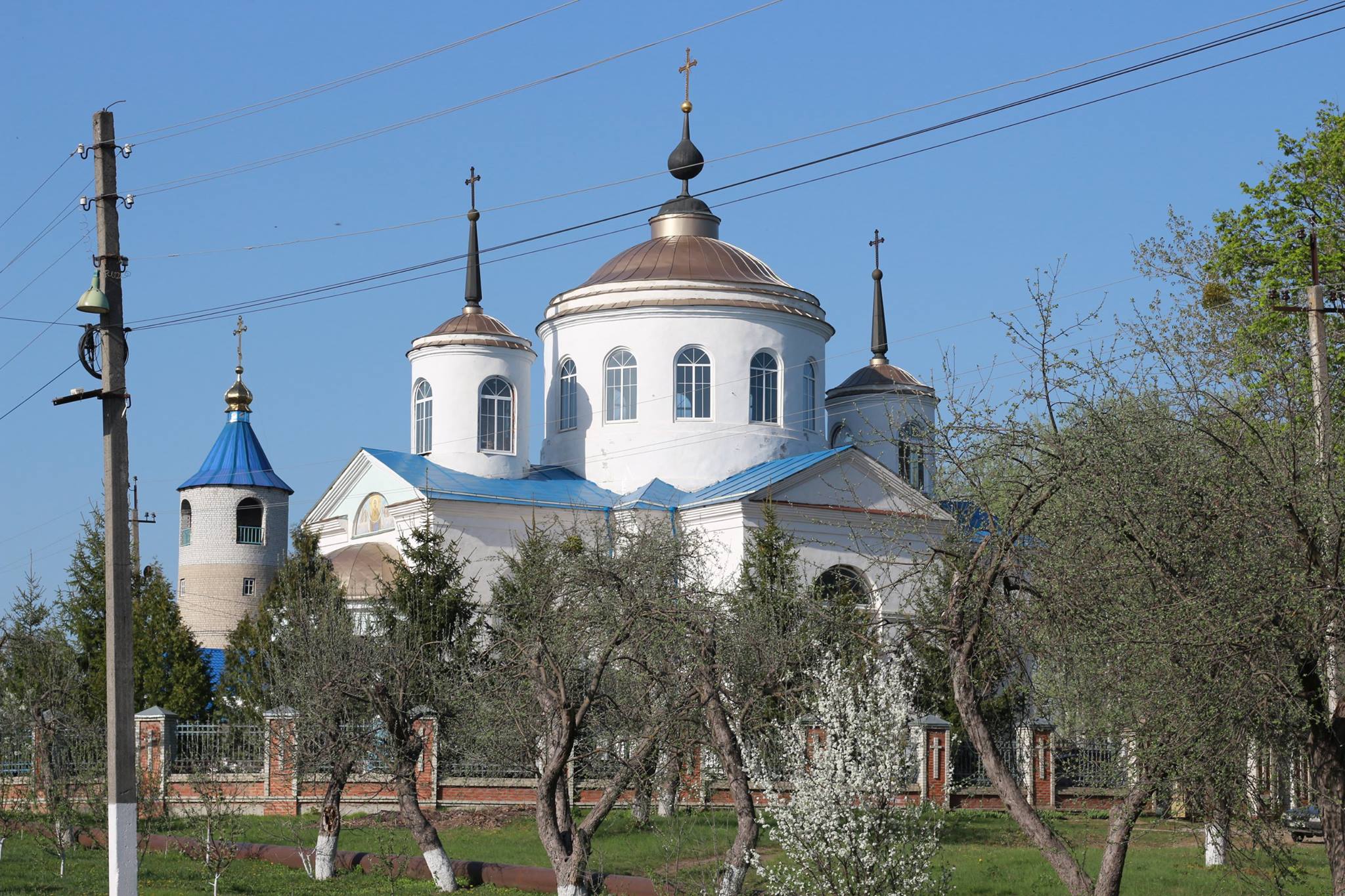
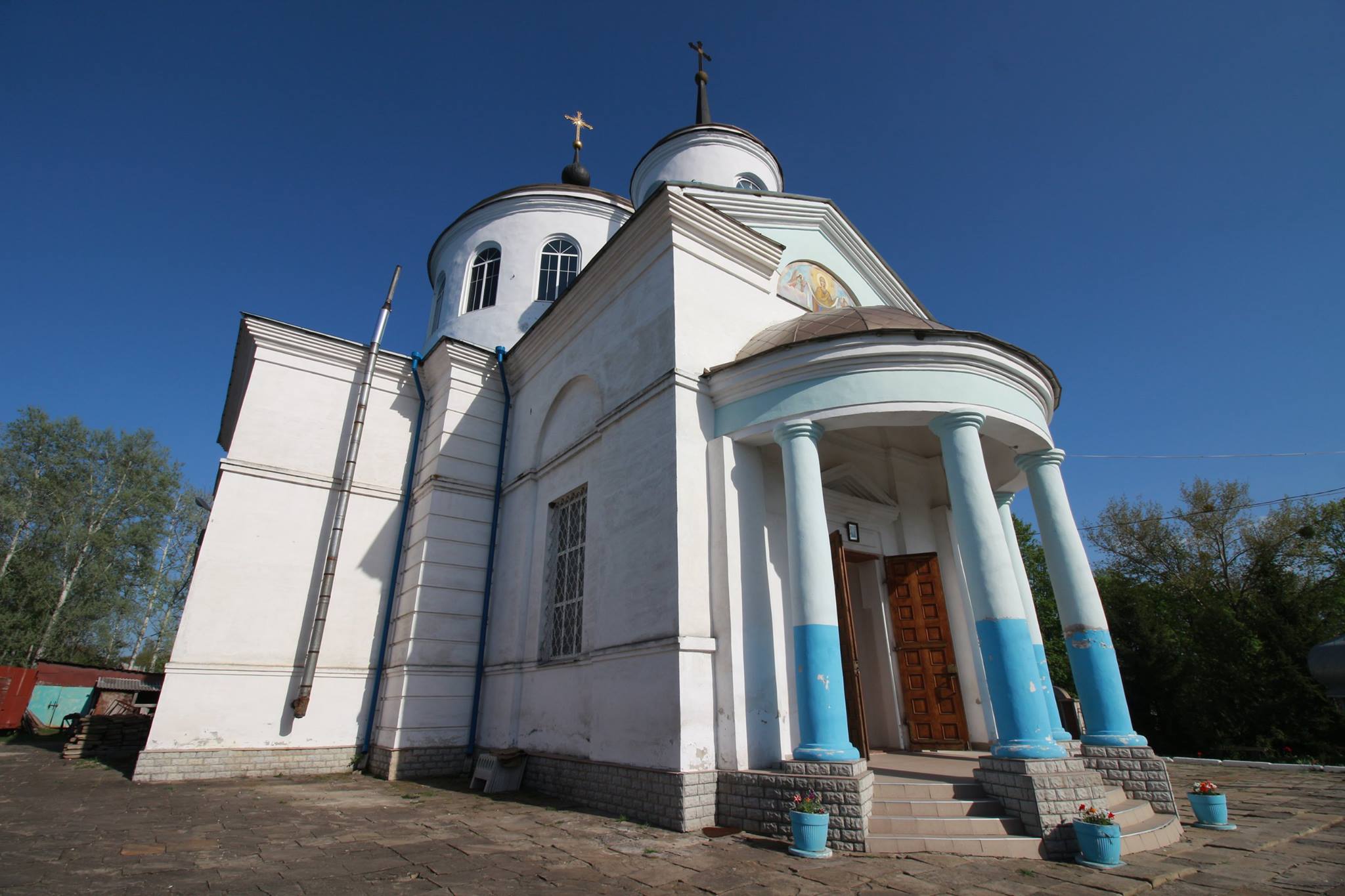
In 1804, Parkhomovka was still owned by his sons, Fyodor and Mikhail. Even at that time, it featured a stone manor house and a wooden church with five domes and three altars. From 1807 to 1810, Count Mikhail Ivanovich served as the district leader of the Bohodukhiv nobility. And in 1808, his mother, the widow of Count Varvara Podgorichani, had a stone church built in Parkhomivka in honor of the Intercession of the Theotokos, which continues to delight us to this day.
As we recall, the title of count was also granted to Ivo Podgorichani’s nephews—Georgy and Ivan, the sons of his full brother, Peter Mikhailovich Podgorichani. Subsequently, upon submission of the necessary documents, the Yekaterinoslav Viceroyalty Noble Deputies’ Assembly, on April 21, 1785, entered Major General Count Georgy Petrov, son of Podgorichani, along with his wife Anna and their son Yegor, into the fifth section of the noble genealogical register. When their aforementioned son died, leaving no other children, then, on the basis of the will of Count Georgy Petrov, son of Podgorichani, dated 1791, and at the request of his widow, Countess Anna Podgorichani, by decree of the Governing Senate in 1814, her husband’s cousin, nobleman Lieutenant Georgy Filippov, son of Podgorichani-Petrovich, was adopted with full inheritance rights, the title of count, and the double surname Podgorichani-Petrovich.
It’s worth mentioning that in the early 19th century, the Counts of Podgorichani-Petrovich really got on the nerves of the well-known Vasily Nazarovich Karazin. The thing is, the legendary founder of Kharkiv University was up to his ears in debt. There were protracted legal battles between him and the Montenegrin family, which was among his main creditors. All of these are described, based on archival sources, in an excellent article by Kharkiv researcher Andrei Paramonov titled “V. N. Karazin and His Debts.”
In the first half of the 19th century, the estate in Parkhomivka passed from Colonel Count Fyodor Podgorichani to his relatives, the Vukotič family. According to the will dated April 1, 1840, Second Lieutenant Ivan Ivanovich Vukotić bequeathed all his movable and immovable property to his nephew, Luka Petrovich Vučičević, for perpetual and hereditary possession. The inheritance, incidentally, was quite substantial, namely:
In the village of Parkhomivka , Bohodukhivsky District, according to the latest census, there were 1,272 men, along with their wives and children, as well as 5,460 desyatinas of arable and hayland, 590 desyatinas of timber forest, as well as, specifically in the outlying areas of the village of Gut, 3,255 desiatinas of pine and black pine forests and 58 peasants, along with various structures and all movable property that may be found after his death.
The most interesting thing is that the Montenegrin deprived his second wife, Alexandra Ivanovna, of her legal share of the inheritance for “misconduct.” As is customary in such cases, a legal battle over the inheritance ensued. It turned out that Vukotić’s wife’s “misconduct” consisted of the fact that, while he was still alive, her husband had begun to suspect her of apostasy from the Orthodox faith…
Retired Lieutenant Count Yegor Filippiev, son of Podgorichani-Petrovich, owned 256 souls near the village of Riasne in 1834, 117 souls near the village of Kadnitsa, and 260 souls in various counties of the Kherson Governorate, together with his wife, as well as 20 souls belonging to his wife’s family in the Poltava Governorate. Upon presentation of all evidence, Lieutenant Count Georgy Filippov, son of Podgorichani-Petrovich, by decision of the Sloboda-Ukrainian Noble Deputies’ Assembly, held on November 19, 1834, was entered, along with his children, into the fifth section of the noble genealogical register.
In 1861, his son, Count Valerian Yegorovich Podgorichani-Petrovich, owned the village of Riasne and the village of Nadezhdin in the Bohodukhivsky District. Adjacent to the estate of the Montenegrin counts was the estate of the Counts Kleinmichel in Lyutivka.
Thanks to archival documents about Count Valerian Valerianovich Podgorichani-Petrovich, we can learn a great deal of detailed information.
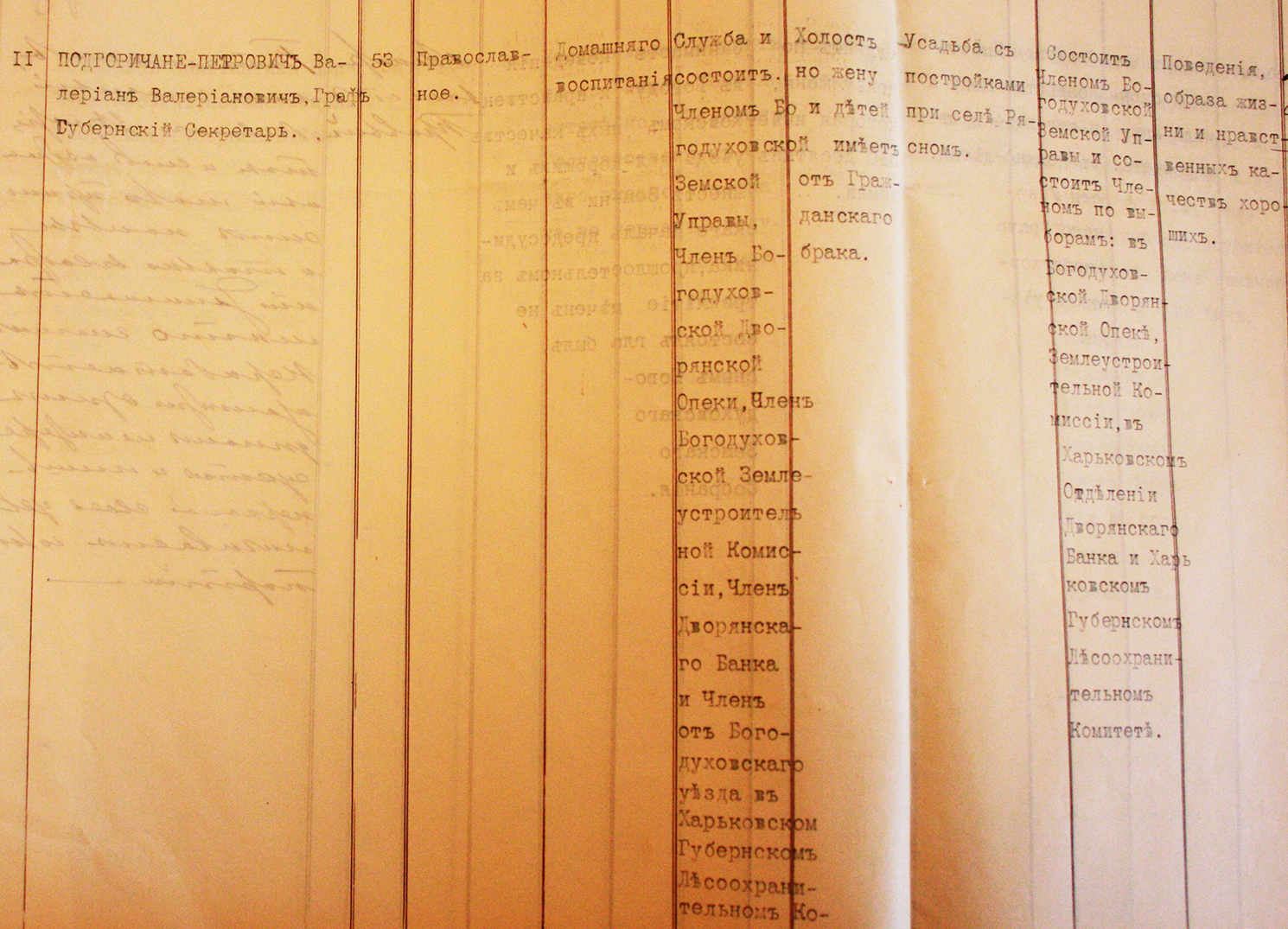
In 1913, he was 53 years old, an Orthodox Christian, and had received his elementary education at home; after which the count studied at the Kharkiv Real School; he was unmarried but had children from a common-law marriage; he lived in Bohodukhiv and owned an estate with outbuildings in the village of Riasne. Politically, he was a monarchist. He was elected several times as a delegate to the Bohodukhiv Zemstvo Assembly and served at the Kharkiv branch of the Nobility Bank and on the Kharkiv Provincial Forest Protection Committee.
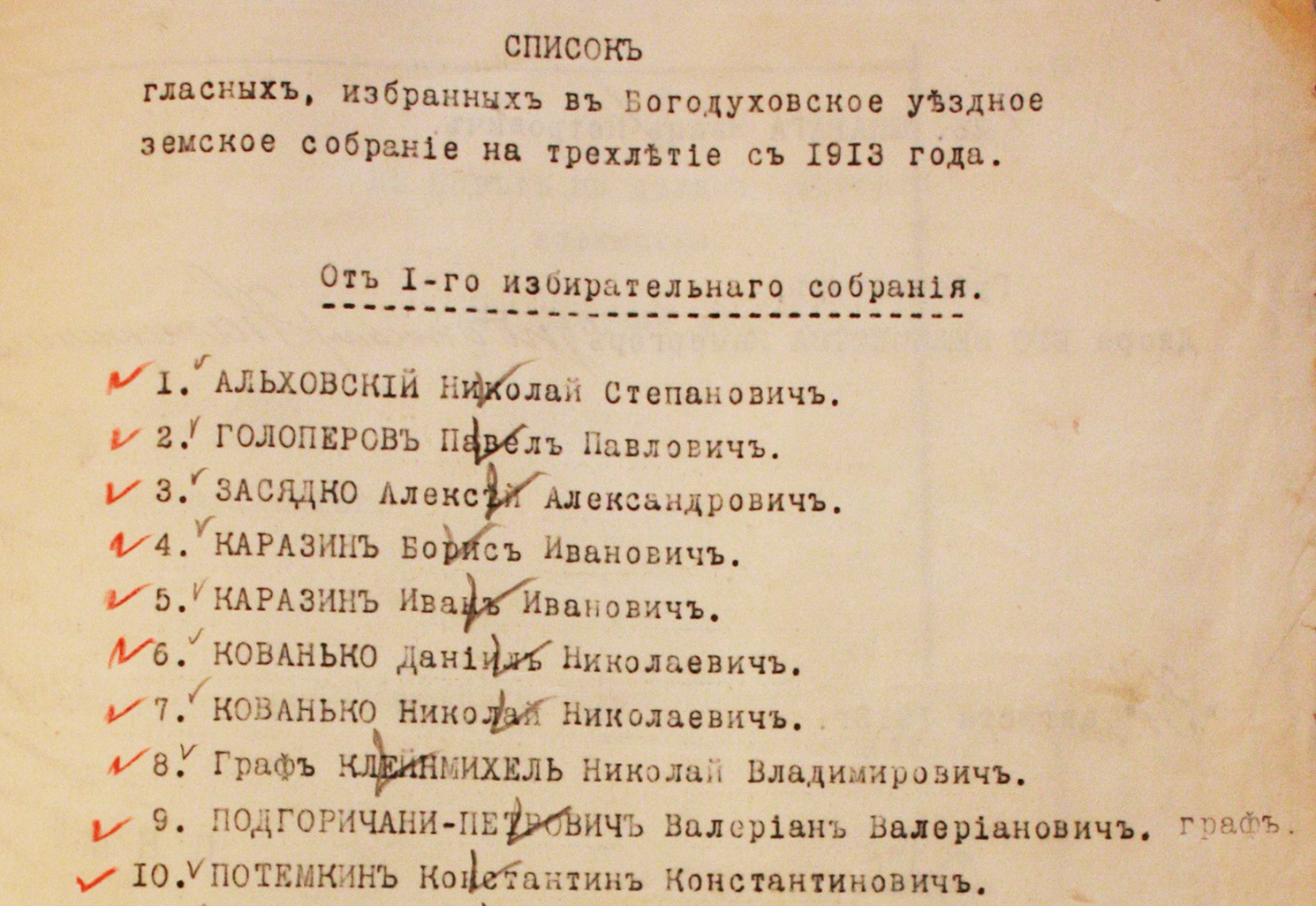
The count took an active part in the life of both his city and the county. His signature can be found on many documents from that period.

The year 1917 had arrived… Nothing remains today of the estate of the Counts Podgorichani-Petrovich in Riasne. And even in Bohodukhiv itself, few people remember or know that name. Respected tour guides hand out count and baron titles left and right to families who have not the slightest connection to the nobility. Everything flows, everything changes. But the lives and deeds of the real counts, who came to Sloboda Ukraine from distant Montenegro, will forever remain inscribed in the glorious history of our land.

- About the military pilot school and the airfield in Kharkiv… - 04.11.2020
- Nikanor Savich—A Political Career by Mistake - 13.07.2020
- And once again, about the Cavalry Guards… - 21.01.2020