Quite some time has passed since our last trip to the beautiful Sloboda Ukraine region on July 22. Having spent quite a while in Kharkiv and planning our next trip, we intended to visit just six sites. We met up on August 30 at our usual spot at 7:30 a.m. with Inna Romenskaya, Dmitry Krivulei, Alina Shulga, and our good friends and colleagues from the UAR (Bogdan Bondarenko, Alexei Sorokin, and Olga Dzyuba), we were absolutely certain that the new route for our next “Sloboda Ukraine Odyssey” would look like this:
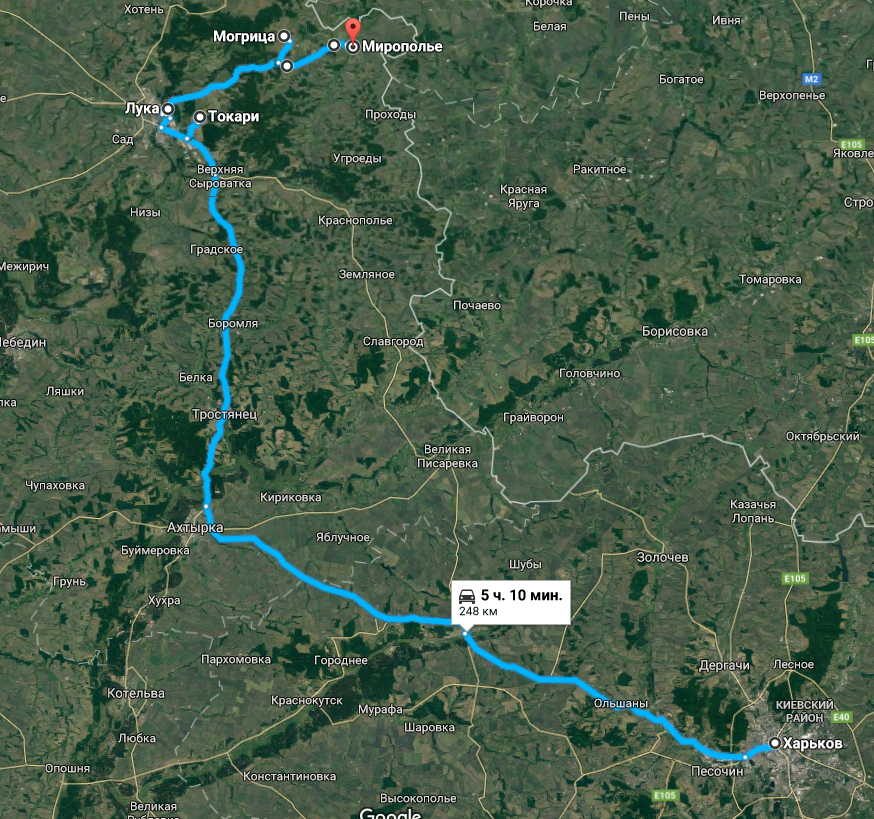
But, as the saying goes, “If you want to make God laugh, tell Him your plans.” It all started when, for technical reasons, we left about 40 minutes later than planned. After an unexpected stop along the way—because “something accidentally came loose” on one of the cars—I started to seriously wonder about the prospects for the trip.
The weather that day wasn’t great, and for some reason I thought this might be our last trip (yeah, we’d already planned a trip for October). So, as we drove through the charming old town of Trostyanets’ for the fourth time, I suggested we finally make an unplanned stop there. After all, many of the participants in our “Nakipelo Expedition” hadn’t been there before. Even though the tour of the local history museum was so… mmm… captivating that it was simply impossible to tear ourselves away, after exploring the local sights—which I’ll tell you about later—we finally made it to our first planned destination. After thoroughly admiring the remains of the bell tower of the All-Saints Gate Church of the Sumy Dormition Monastery in Tokary, we began to get ready to continue on our way. The plan was to drive to Sumy—or, more precisely, to Luka—where the Lintvarev estate and the Anton Pavlovich Chekhov Museum were located. But it was already around 1:30 p.m., and we realized that if we made it to the legendary “Chekhov sites,” we’d end up in Kharkiv afterward.
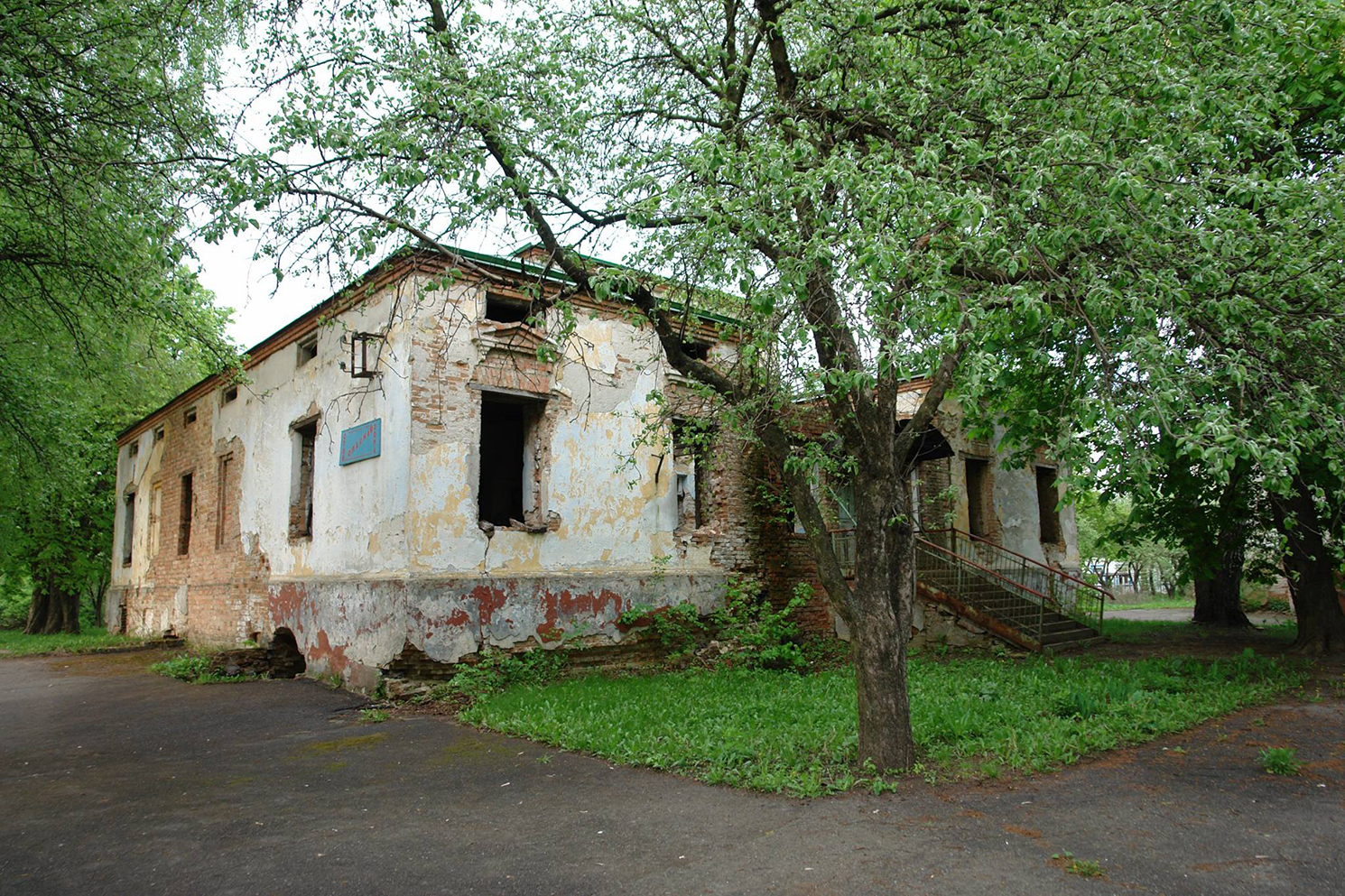
The group reached a decision: to stop by Luka, Zapselie, and Myropillya if we had time. And so we set off for Hrunivka. I’ll share the details of our visits to all of the places mentioned above next time. Today I’d like to write about the main destination of our trip, namely Mohrytsya, which has long been included in the “Top 7 Wonders of the Sumy Region.”
To be honest, I first learned about this extraordinary place back in the fall of 2015, thanks to a good friend of mine, Olga Kovalevskaya. One of her programs, “Sumy Region Incognita,” was dedicated specifically to Mohrytsya.
This village is old and steeped in legend. Filaret Gumilevsky writes the following about it:
Old-timers say that long ago, in the lands of Mohrytsya—which were then mostly covered by impenetrable forests—a bandit named Kulik lived with a gang of accomplices, which is why the place was formerly called Kulikovshchina. When Kulik was captured and, by court order, executed along with his wife and other accomplices for his godless deeds, his less culpable companions, spare from the same punishment as him, gathered with friends and relatives in Kulikovshchina and swore an oath to one another to abandon their former way of life. They held a feast; and when the feast was over, they threw the dishes from which they had drunk into the river and said to one another: “We will no longer call ourselves the Kulikovites; we will be brothers of Saint Mogrits.” Thus, according to legend, Mogrits became the name of the settlement of those former outlaws. What we can accept as true in this legend is that the site of present-day Mohrytsya was once a hideout for a band of robbers: but the Mohrytsya River, with its impassable forests and swamps, is known even from the 1672 land survey records, when the settlement of Mohrytsya was not yet visible.
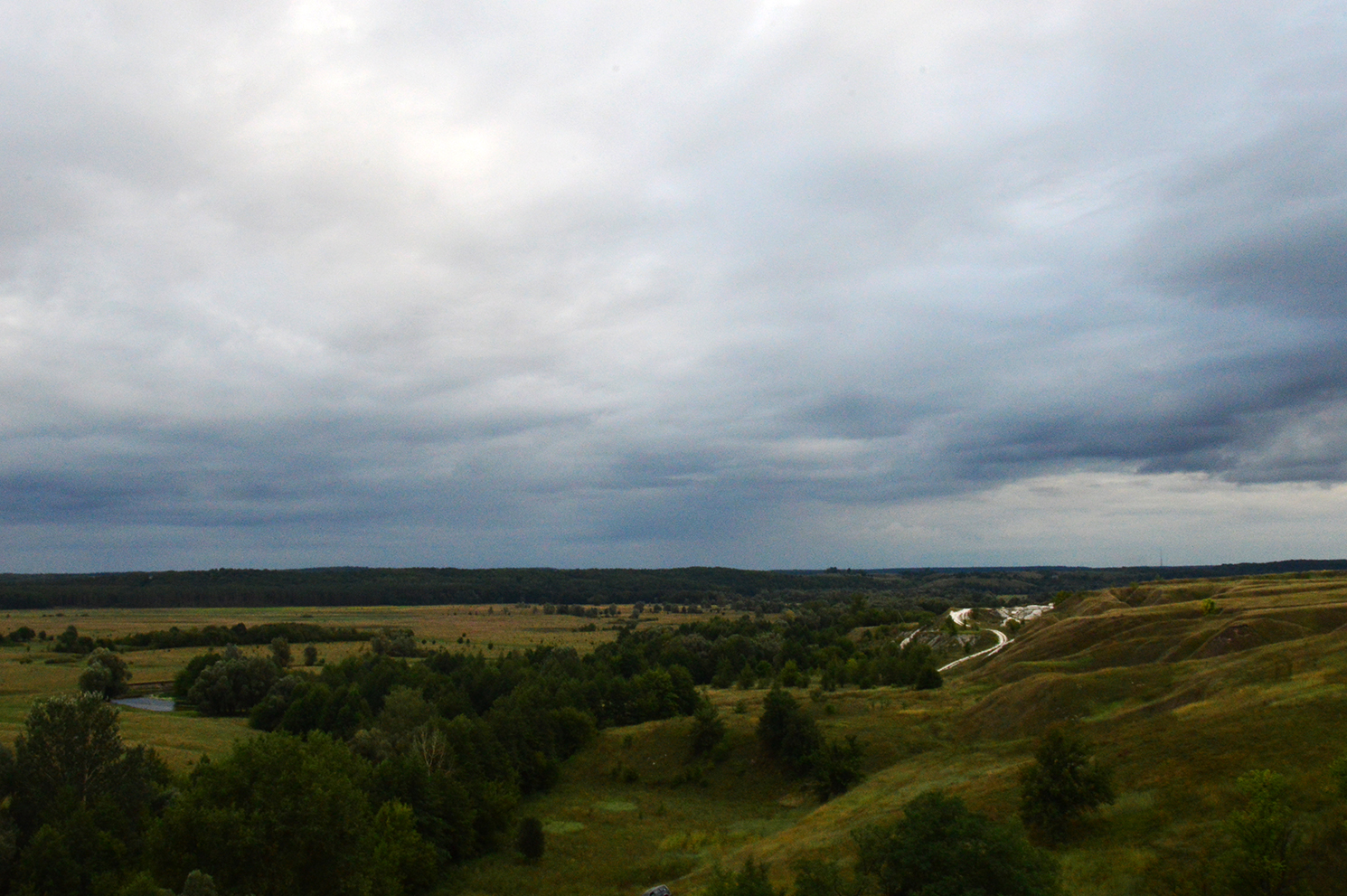
At the entrance to the village itself, you can see a large sand quarry.

The first wooden church in Mohrytsya, dedicated to St. Nicholas the Wonderworker, was built around 1700. In 1766, a new church—also made of wood—was erected on the same site. Local historians claim that an icon was once allegedly found at a spring somewhere in Mohrytsya. No one can say what kind of icon it was. However, it is believed to be that of Our Lady of Vladimir. Therefore, in 1844, a new stone church bearing the same name was built on the site of the old church.
The village owner, Prince Andrei Mikhailovich Golitsyn, donated bricks, lime, wood, and iron for its construction, while the parishioners raised the funds to pay the craftsmen. The Golitsyn princes, who owned Mohrytsya, also owned a sugar beet factory, which was founded in 1838.
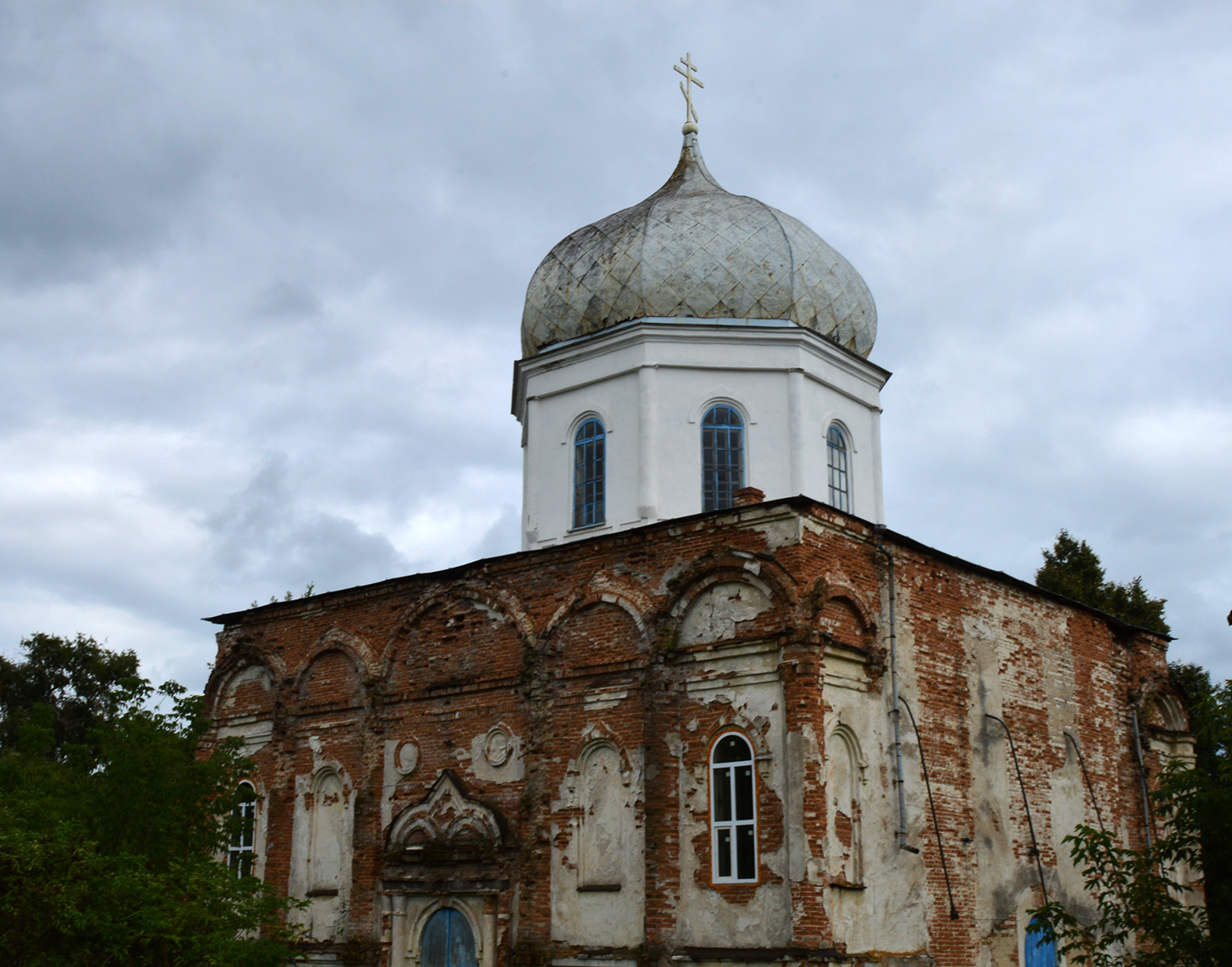
However, there was a slight mix-up regarding the architect who was commissioned to design the church. Many sources attribute the design to the famous architect Bartolomeo Francesco Rastrelli, who lived from 1700 to 1771. Thus, it is claimed that the church is unique in its architecture. Upon hearing this, the practicing architect traveling with us—Bogdan Konstantinovich Bondarenko, a candidate of art history specializing in “design” and a senior lecturer in the department of the Kharkiv State Academy of Design and Art (KhGADI), categorically said, “No.” And Andrei Paramonov, a researcher of church architecture in Sloboda Ukraine, reported that this was a standard design by Konstantin Andreevich Ton, the architect of many beautiful churches. Be that as it may, the church was built in 1852. Although its bell tower has not survived to this day, it is still worth seeing. And it doesn’t matter at all whose design it was built according to—it remains beautiful.

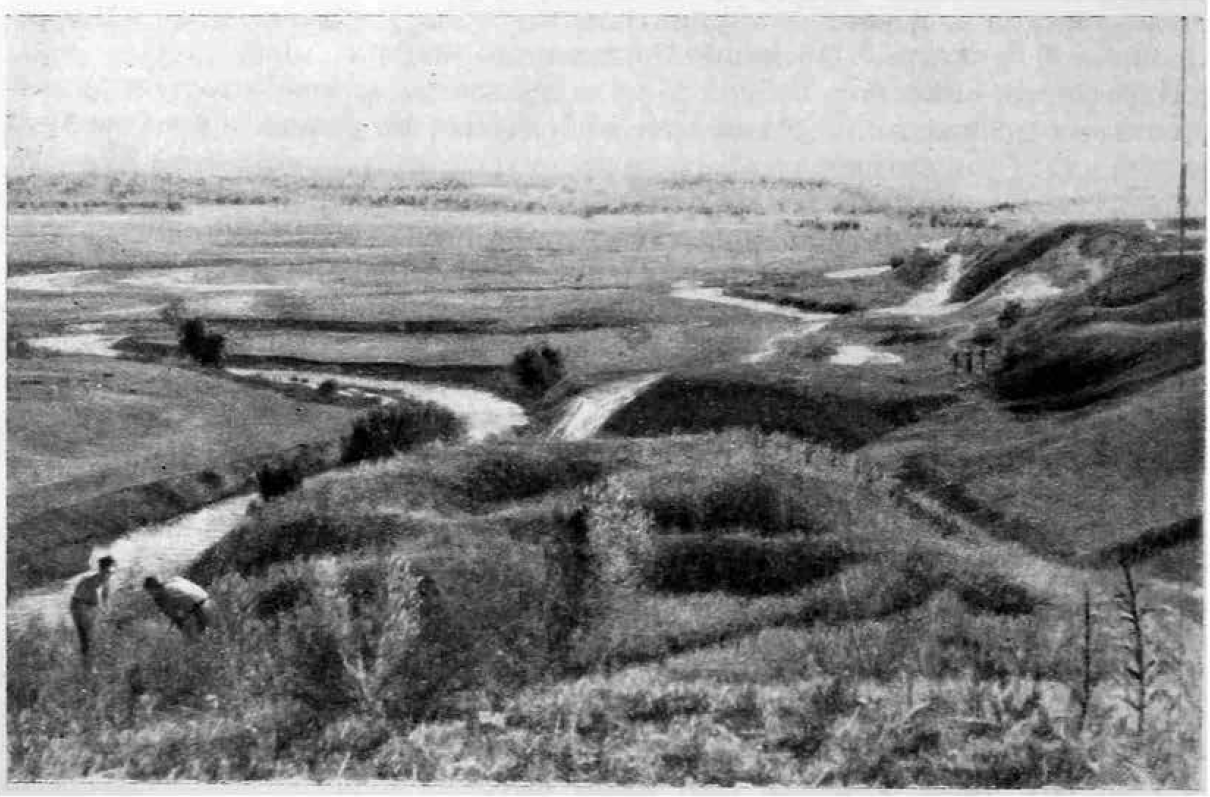
There were two ancient settlements near Mohrytsya—Devichye and Bolshoye. Filaret Gumilevsky, mentioned above, wrote about them, noting that “the Mohrytsya settlement occupies more than 100 desyatinas of land on the right bank of the Psla River. Its burial mound, 36 sazhens high, is surrounded by a deep moat; its area is 24 sazhens long. On the southeastern side of the mound, facing the Psel River and located right at the bank, there was, according to legend, a gate with an iron grate. The area of the settlement is covered with a significant number of graves; human bones were found in one of them during excavation. When plowing the land of the settlement, peasants found spears and other weapons, as well as skulls and other parts of human skeletons.”
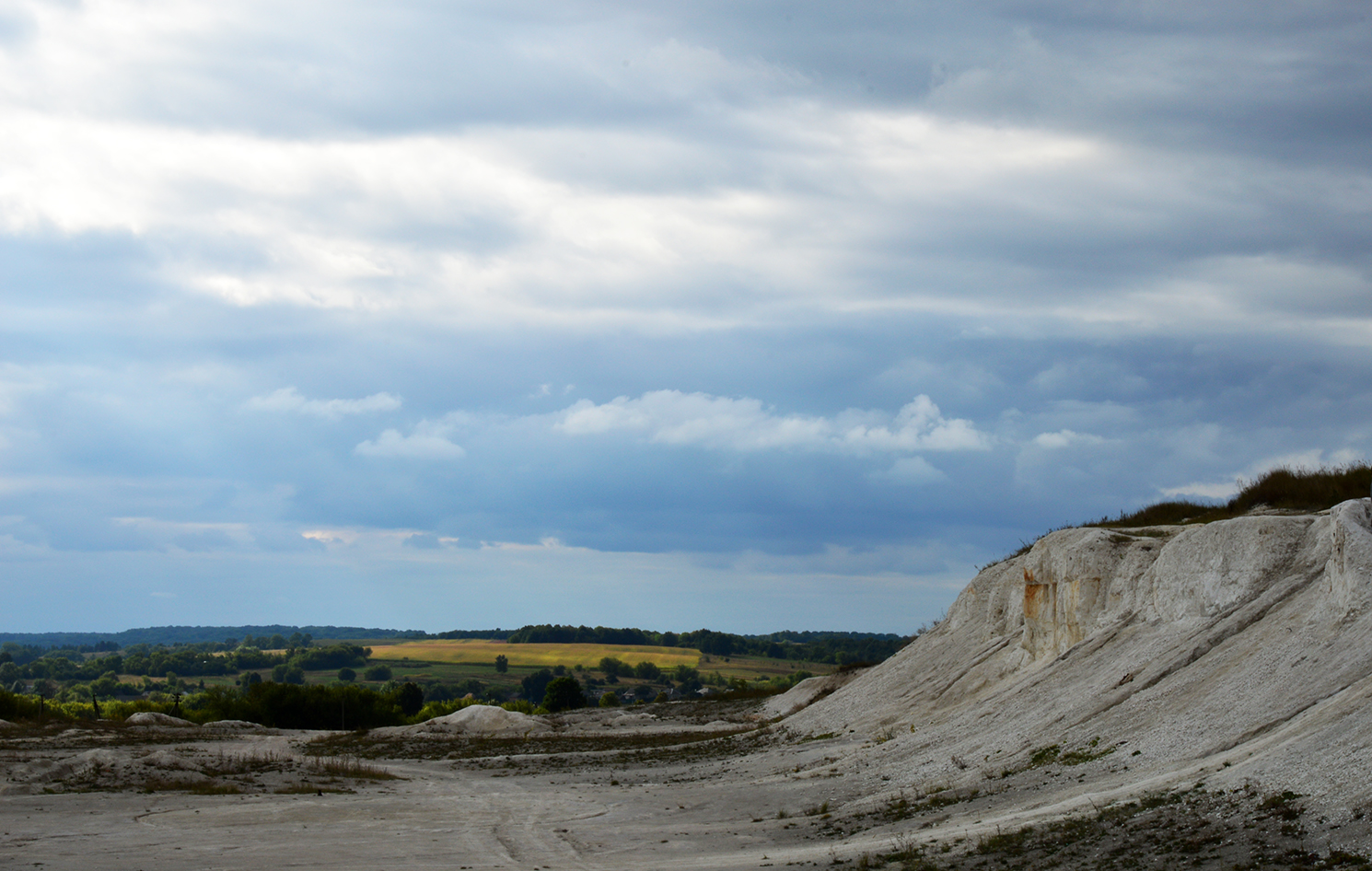
In the mid-19th century, the remains of the Scythian settlement were destroyed by the operation of a chalk quarry. However, the settlement of the Slavic tribe of the Severians has survived to this day. It is 50 meters long and 16–18 meters wide. On the river side, the slopes are high and steep, and a deep moat in front of the former fortifications is clearly visible. During excavations in the southern part, pottery from the Romny-Borshchiv culture (8th–9th centuries CE) was discovered, as well as pottery from the 11th century. Based on these findings, archaeologists date the settlement to the 8th–13th centuries. An iron sword from the 3rd–5th centuries was also found in the area; it was later transferred to the Sumy Regional Museum of Local History.
During the Soviet era, the Mohrytsya settlement was excavated by such distinguished archaeologists as Ivan Ivanovich Lyapushkin and Mikhail Petrovich Kuchera.
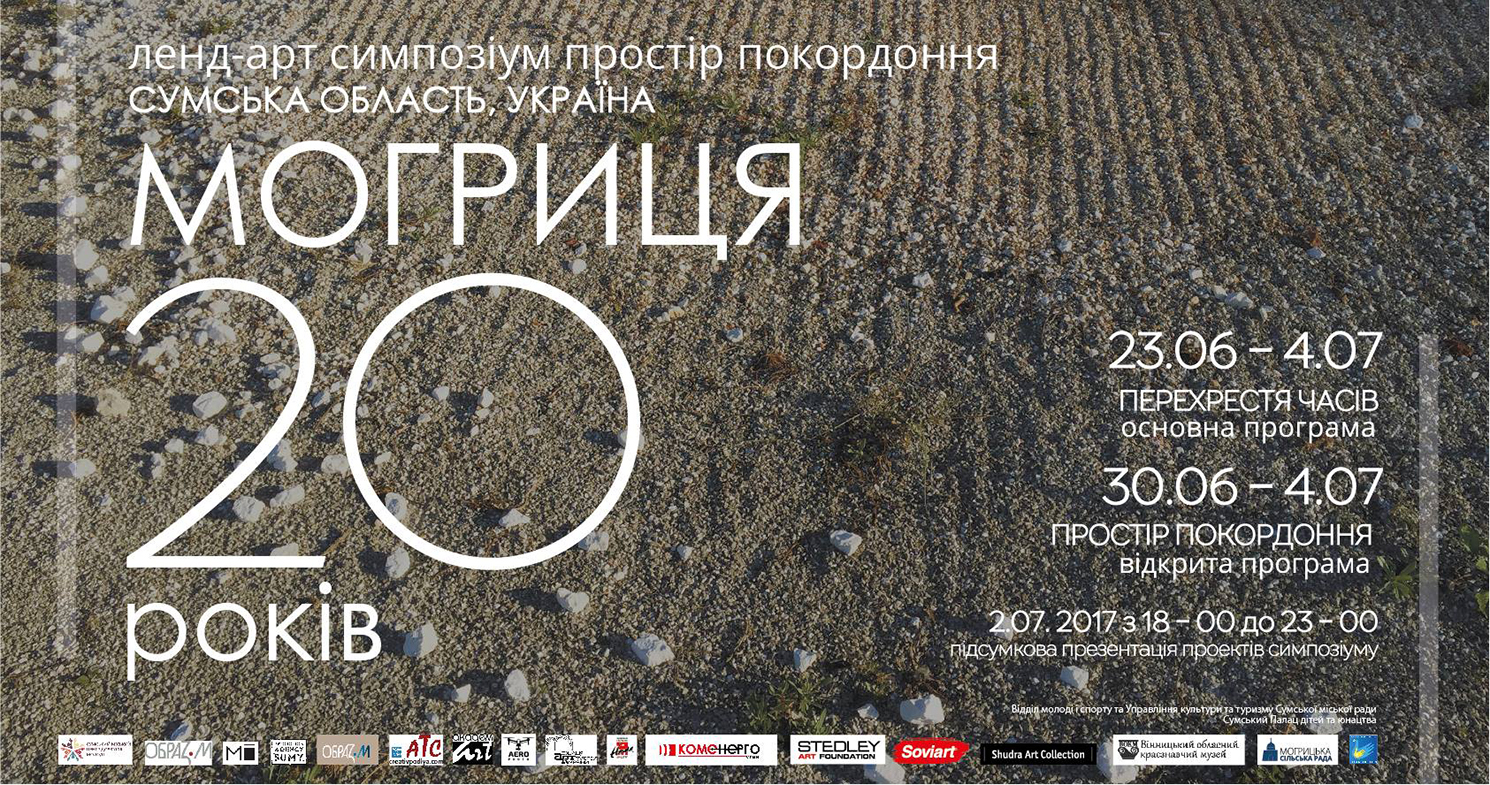
However, this place is famous not only for its ancient history and archaeological finds. Rumor has it that witches gather there among the ravines and burial mounds on Midsummer’s Day. So it’s no surprise that these enchantingly beautiful lands have become a traditional venue for land art symposia, during which artists from all over converge here. This year’s international land art symposium, held in Mohrytsya from June 23 to July 4, was a milestone event—the twentieth of its kind.
Much to my regret, I am not skilled at describing nature. But after visiting Mohrytsya, I finally realized that the greatest architect of our region is by no means man, but nature itself. There, I was able to see with my own eyes the most precious gift from the Creator to our blessed land. There, the sky is within arm’s reach. There, the earth breathes so deeply that if you place your palm on it, it feels as though you can hear the heartbeat of Sloboda Ukraine. There, you can walk for hours on end, yet still fail to fully grasp all of its indescribable beauty. There, a miracle is hidden behind every bend or hill. There, everything bad and ugly is washed away like mud by the water, and purification takes place. There, you find yourself… It’s so wonderful here that you don’t want to leave. And a part of your heart and soul will remain here forever. Yes, now I can say that, perhaps, the most magical place in the Sloboda Ukraine region is Mohrytsya. No words, photos, or videos can convey the full grandeur, uniqueness, and mystery of this place. It’s something you want to share with others—to tell them about and show them. For to know of such beauty and remain silent about it is a terrible crime.
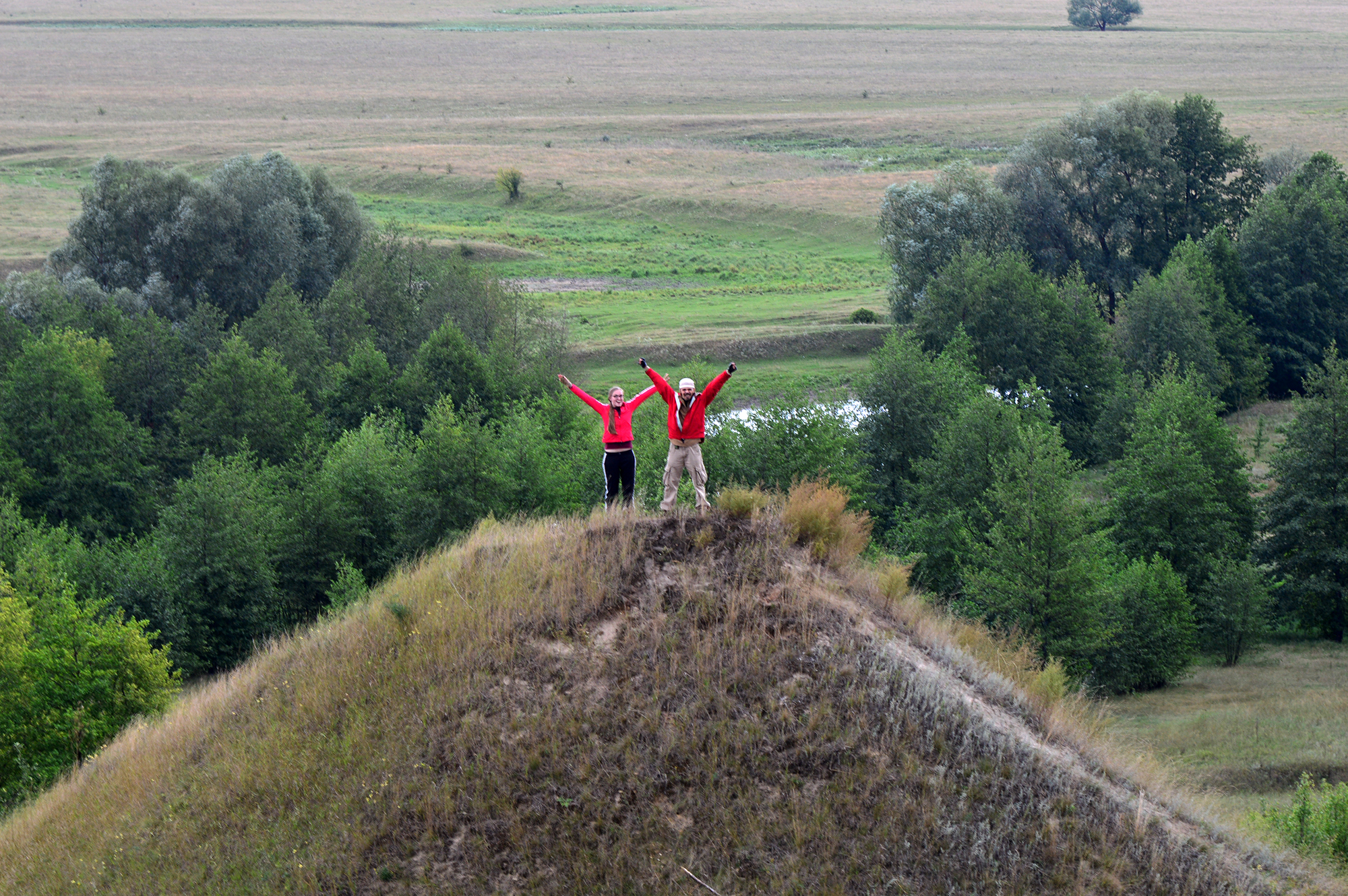
This indescribable place has once again proven that there’s simply no place in the world more beautiful than Sloboda Ukraine! Now I personally know a place I’ll try to visit at least once a year. And I recommend you do the same. Because the land of our ancestors deserves to be loved and appreciated.

- About the military pilot school and the airfield in Kharkiv… - 04.11.2020
- Nikanor Savich—A Political Career by Mistake - 13.07.2020
- And once again, about the Cavalry Guards… - 21.01.2020