You can never have too much of Sloboda Ukraine’s beauty. And our homeland is truly worthy of admiration. For this reason, on July 22, the close-knit team of the “Nakipelo Expedition”—consisting of myself, Igor Leptuga, Alina Shulga, Dmitry Krivuli, Inna Romenskaya, as well as our close friends from UAR (Ukrainian Automobile Movement)—Alexei Sorokin and Olga Dzyuba—set off on a new journey. Roman Tkach provided significant support for the trip; unfortunately, he was unable to join us himself.
It was a long trip, and we had to visit and film six locations before the day was over.
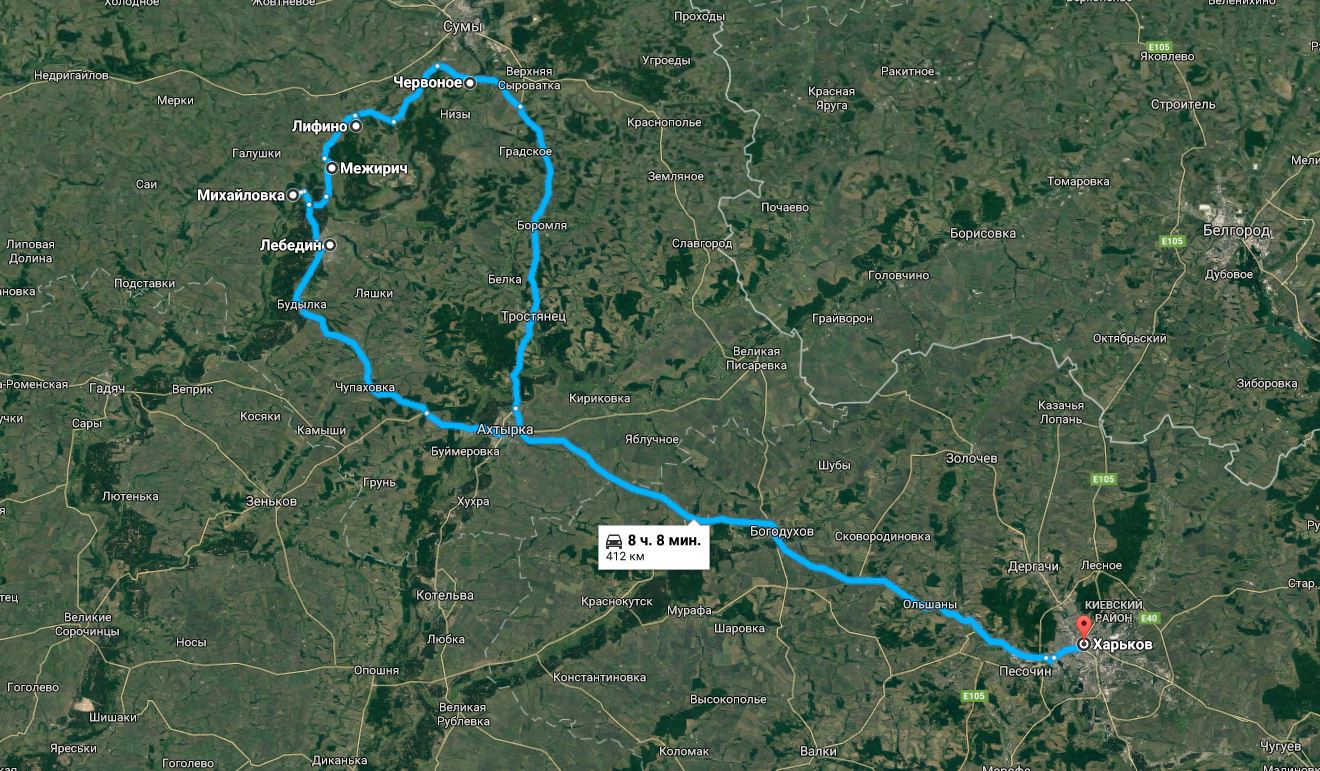
We set out at 7:30 a.m., and around noon we finally reached the first buildings,
located on the high bank of the Psel River.
Stare Selo existed as early as 1642 and is considered one of the oldest settlements in the Sumy Regiment. Gerasim Kondratyev, who later became the famous and legendary colonel of the Sumy Regiment, lived in Stare Selo.

In 1753, Colonel Stepan Ivanovich Kondratyev built the stone Church of St. Nicholas. At the beginning of the 20th century, Grigory Lukomsky, who had come to Stare Selo, still found this building standing. However, in the late 19th and early 20th centuries, the parish here was considered extremely poor. It was not until 1900 that a Sunday school was opened there, followed by a public library and reading room.
At the same time, a house was built next to the church, which is a relic of the estate architecture of Sloboda Ukraine.
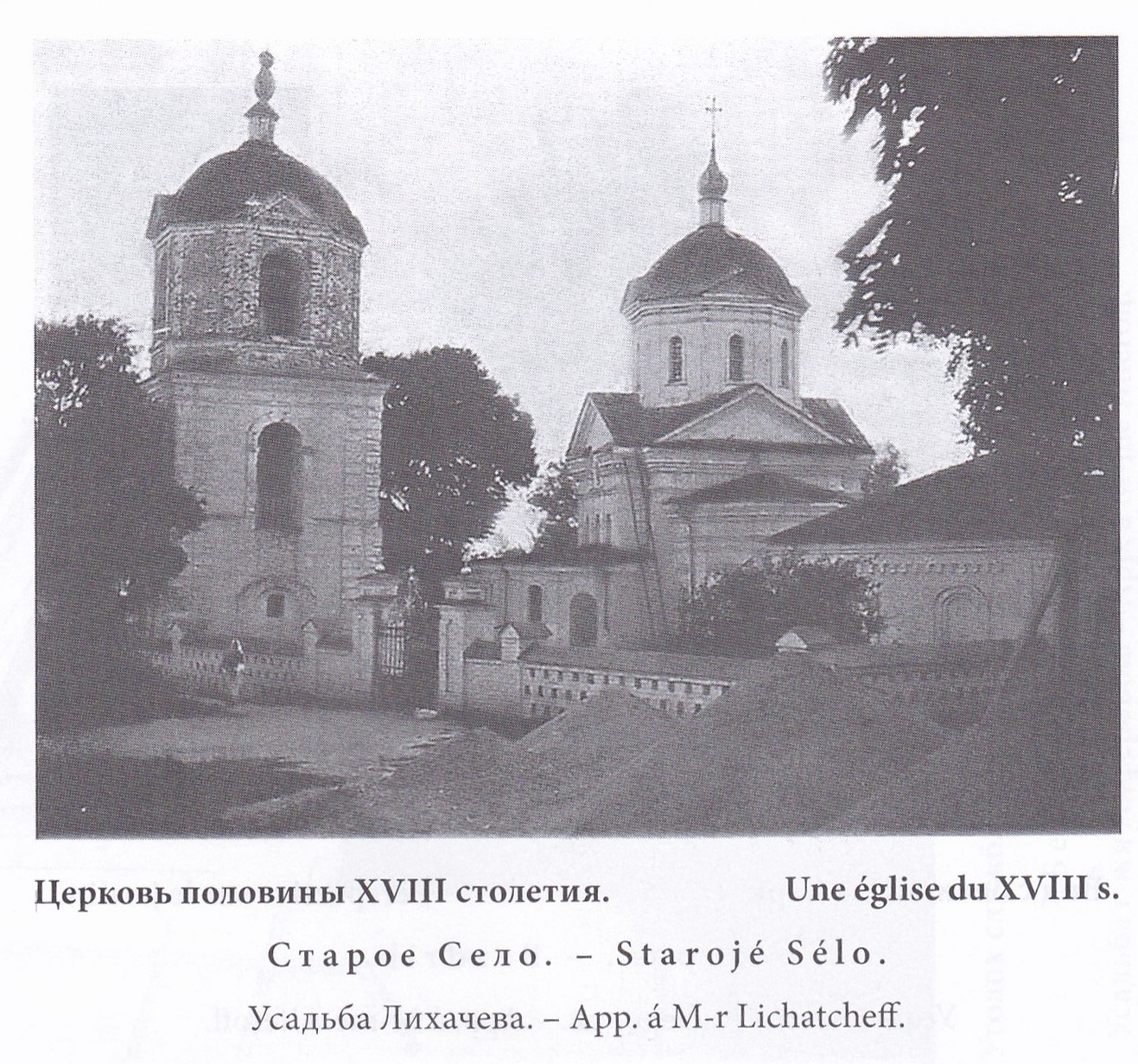
In his book *Estates of the Kharkiv Governorate*, Lukomsky writes the following about this structure:
There is almost no doubt that it served as a residence, as indicated by both its architecture and floor plan. At one time, the finish of its walls resembled the architecture of the so-called Biron Palace or the Tuchkov (Penkov) Palace in Petrograd. The construction periods of both buildings coincide exactly. Could they have been designed by the same architect? Today, the house—with the later-added wooden second-floor galleries—has a somewhat different appearance than before. On the west side, it has an entrance and two small first-floor windows between rusticated pilasters. On the second floor, one window has been bricked up. All the window frames are in the typical style of the early second half of the 18th century: a transition from the Baroque of the Elizabethan era to the Louis XVI style of the Catherine the Great era. The cornices are already in the latter style, with small decorative elements. On the south side, a “runduk” has been preserved, a remnant of an ancient Russian custom (unfortunately, it has been built up above). On the ground floor, the doors have iron shutters. The windows still have their original iron frames. There used to be six windows upstairs; now there are four: one has been converted into a door, and one has been bricked up. In general, the lower part likely served as a storage area in those days, while the upper part was residential. The overall proportions of the house are very cozy and typical.
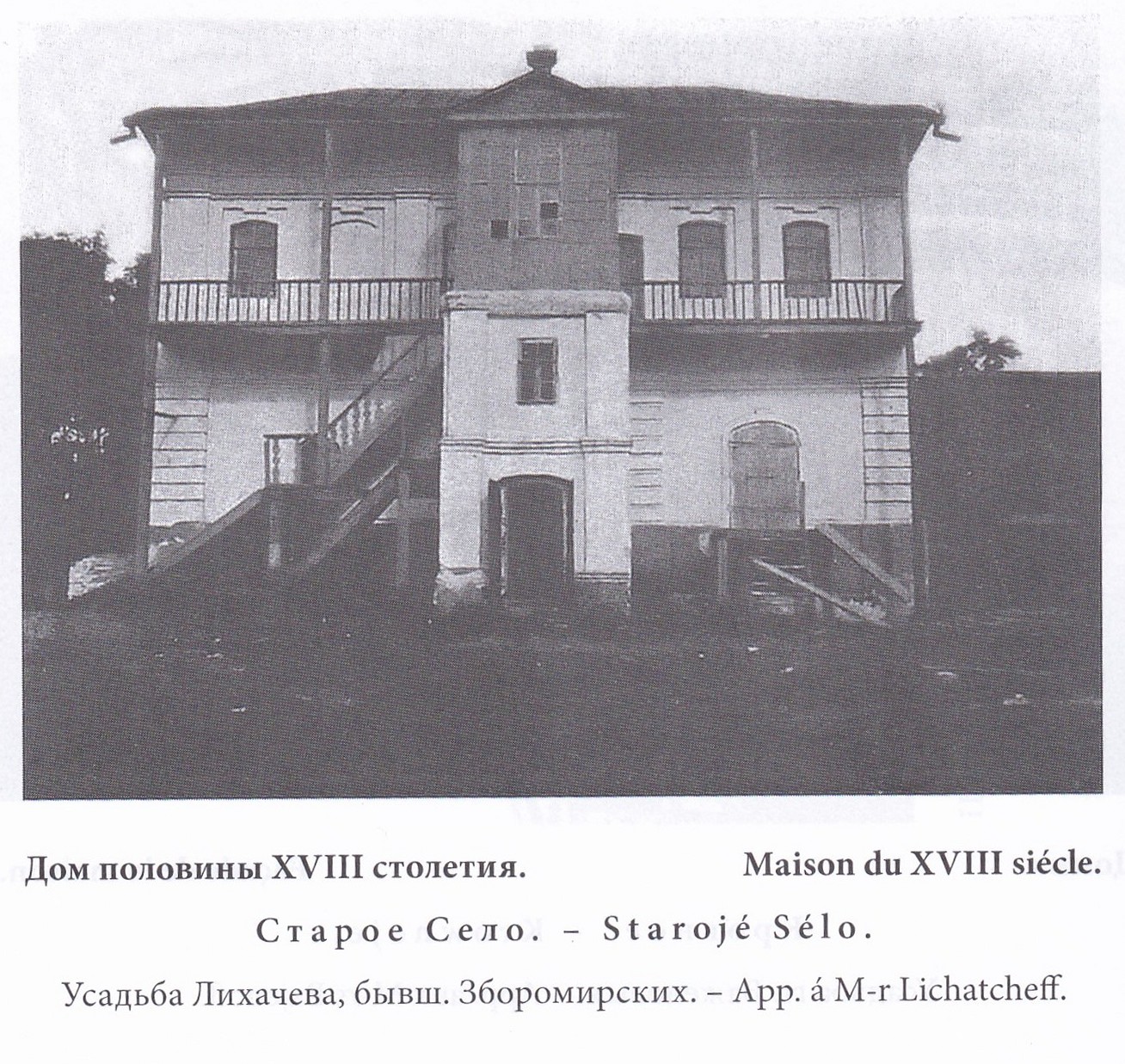
According to legend, Tsar Peter the Great stayed the night in this very house on his way back from the Battle of Poltava. For this reason, the building is also known as “Peter’s Terem” or simply “Teremok.”
However, this site, which holds significant historical importance for Slobozhanshchyna, attracted the interest of more than just Lukomsky. In addition to him, the building was examined by S. Taranushenko before 1917 and by M. Tsapenko in 1950. In his research, Tsapenko noted:
A rare example of this same single-chamber type is the so-called “teremok” in Krasne Selo (formerly Stare Selo) in the Sumy Region. The building dates to the first third of the 18th century. On-site research has shown that it was originally a single-story structure with a basement and barrel vaults. In the 18th century, another room was added, also with a basement but with a flat ceiling. In a third phase, a second story was built over the entire structure. All of these additions are easily distinguishable. For example, the rusticated corners of the first floor are found inside the added chamber. The pilasters on the first and second floors are of different styles and do not match. Thus, this monument is an example of the further development of the single-chamber type…
…The issue of restoring a number of the most important monuments of Ukrainian architecture, in our view, concerns sites such as the Kochubey House in Baturyn, the stone houses in Pryluky, Lyubech, Krasne Selo, the Lizogub House in Chernihiv, the complexes of the Hustynsky, Gamaleevsky, and other monasteries, as well as civic and religious buildings in Nizhyn, Hlukhiv, Korop, and Starodub.
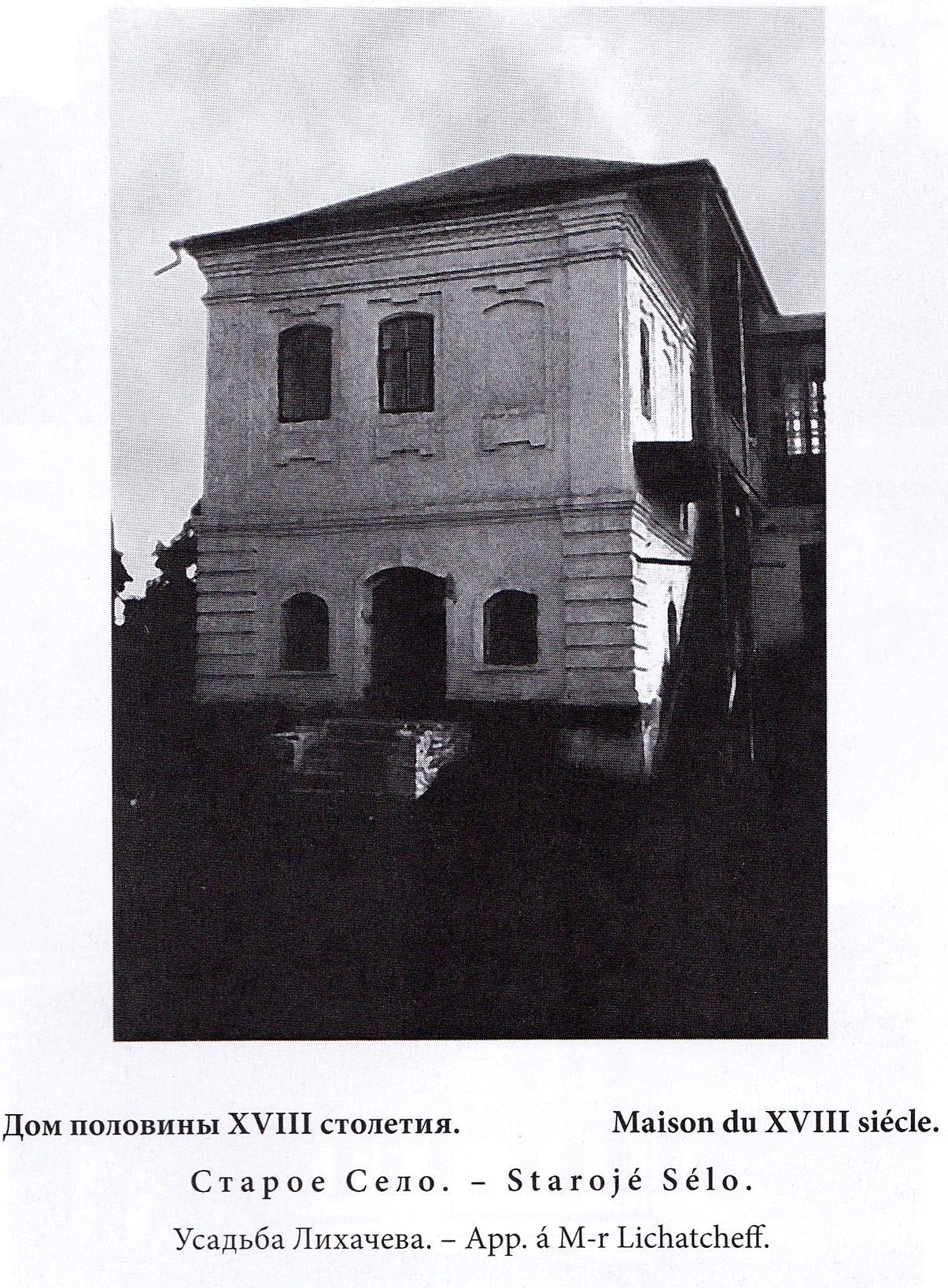
For over 200 years, the lands of the village of Stare Selo belonged to the Kondratyev family. From the first half of the 19th century until the early 20th century, Stare selo was owned by the Zboromirski family. During this period, a sugar factory and a new manor house were built in the village. However, the manor house is not the only thing that remains in Stare as a reminder of the Zboromirskis.

As early as September 1878, speaking at the Sumy Zemstvo Assembly, Alchevsky, a delegate, pointed out that one of the model two-grade schools for children of both sexes would be most conveniently established “in the village of Podlesnovka or Stare Selo, which, although densely populated, are at the same time extremely poor.”
On June 29, 1886, the Starosel Peasants’ Association of the Sumska Volost submitted a petition to the zemstvo council requesting the opening of a first-class school in the Stare Selo. Lev Mikhailovich Zboromirsky, a landowner in Stare Selo, donated a building for the school, and the peasants undertook to renovate it at their own expense and adapt it for educational purposes. But the Zboromirskys’ support for public education did not end there. Elizaveta Fedorovna Zboromirskaya was elected trustee of the Starosel School; she donated books to the students, and her funds were used to provide singing lessons and finance repairs to the building.
Elizaveta Fyodorovna also served as the health supervisor for this settlement. In their reports for 1896, officials noted that in many schools in the Kharkiv Governorate, “the number of students far exceeded the legal limit.” In Stare Selo, there were 68.
However, this did not deter teachers who were eager to impart knowledge to children. In 1900, at a meeting, the Sumy School Board decided to award the local teachers a bonus equal to one month’s salary in recognition of their highly successful work in education and student guidance. Yulia Belyaeva, a teacher from Stare Selo, was also on that list.
In 1910, Elizaveta Fyodorovna Zboromirskaya resigned from her position as trustee of the Staroselsky School. She was succeeded by the new owner of the estate in Stare Selo, the nobleman Alexander Alexandrovich Likhachev.
In addition to the old church, the “terem,” and the manor house, the village also had a horse stable (factory)—a massive structure with four domes, combining Moorish and Russian architectural styles.
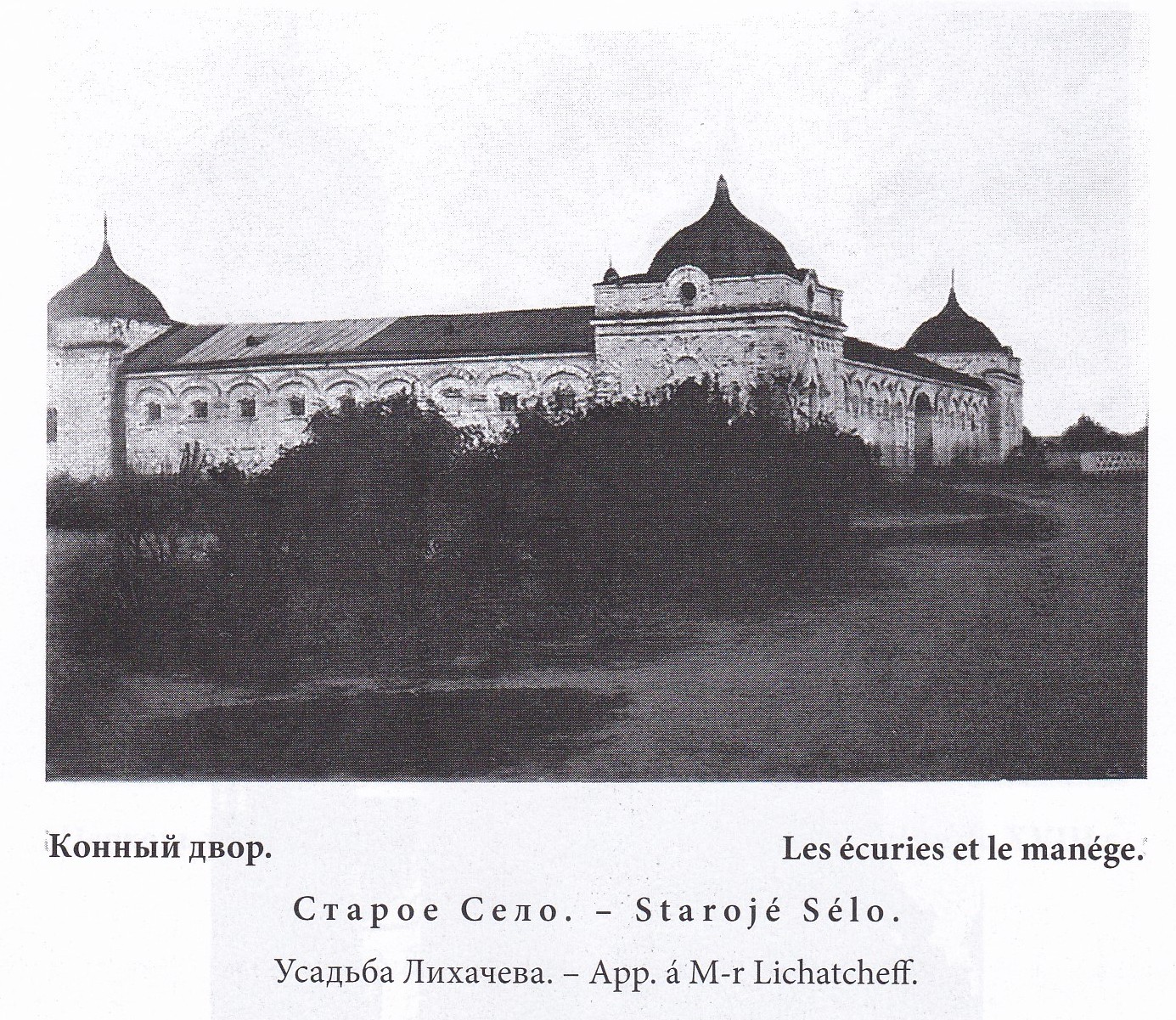
After the Bolsheviks came to power, a general-education school was established in the building of the former Zboromirski-Likhachayev estate. In 1930, Stare Selo was renamed Krasne (Chervonde).
As early as the beginning of the 20th century, the so-called “Kondratyev Terem” was used as a granary for storing grain. Until the 1980s, the house was a residence. Today, the oldest estate building in Sloboda Ukraine is surrounded by impenetrable thickets. The “terem” itself is falling into disrepair more and more with each passing year.

All that remains of the church, which was destroyed in the 1930s, is the bell tower, which was restored in 2004. Not a trace remains of the Moorish-style factory. Since the new school was built, the Zboromirski estate has also fallen into increasing disrepair.
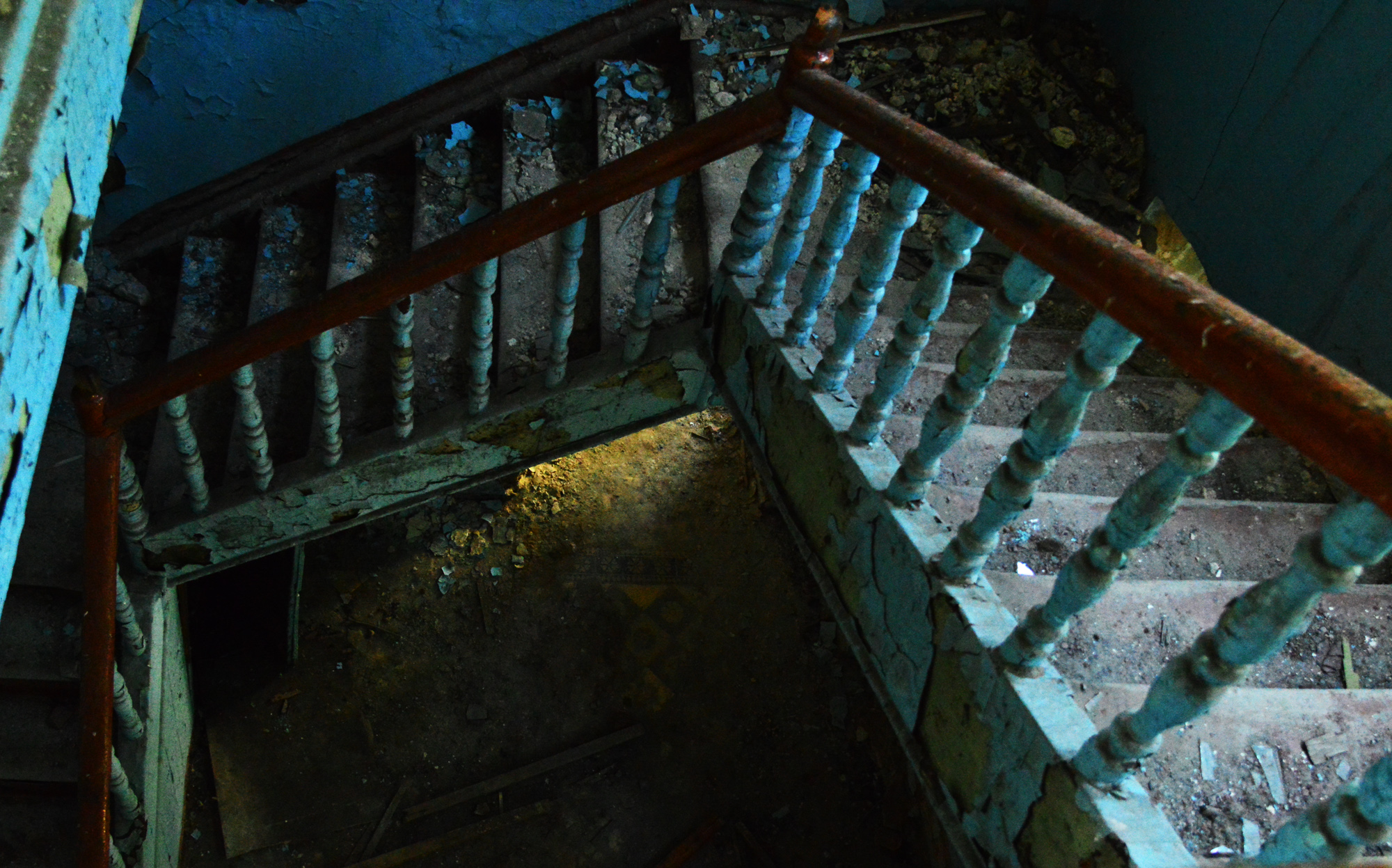
With each passing year, the legacy of our ancestors is dwindling more and more. What they were unable to destroy during the Soviet era is now being ruthlessly destroyed. And yet, I so badly want to see all this beauty with my own eyes before it’s too late! After spending two wonderful and unforgettable hours in Stare Selo, we set off again…

- About the military pilot school and the airfield in Kharkiv… - 04.11.2020
- Nikanor Savich—A Political Career by Mistake - 13.07.2020
- And once again, about the Cavalry Guards… - 21.01.2020