Slowly, the sun began to set. After leaving Kiyanitsa at 7:00 p.m., we set off for the final destination of our journey in Khotin. Having heroically conquered a truly fairy-tale road—though made not of yellow bricks but of “wicked” ones—we finally arrived at our destination.
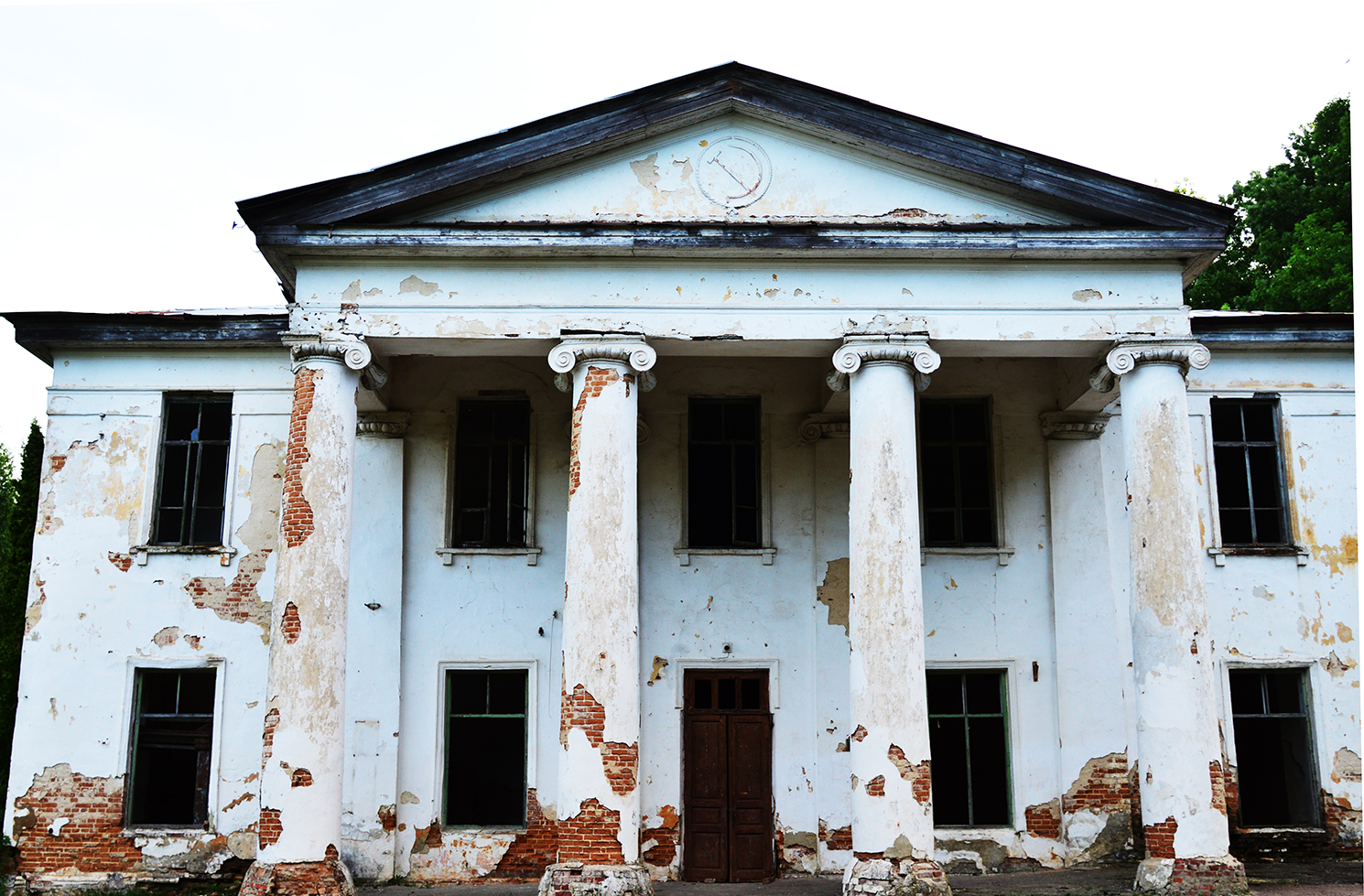
Originally, these lands belonged to the prominent Sloboda Ukraine family of the Kondratyevs.
The family was very wealthy, and Gerasim Kondratyevich Kondratyev, a colonel in the Sumy Cossack Regiment, is considered the founder of the city of Sumy.
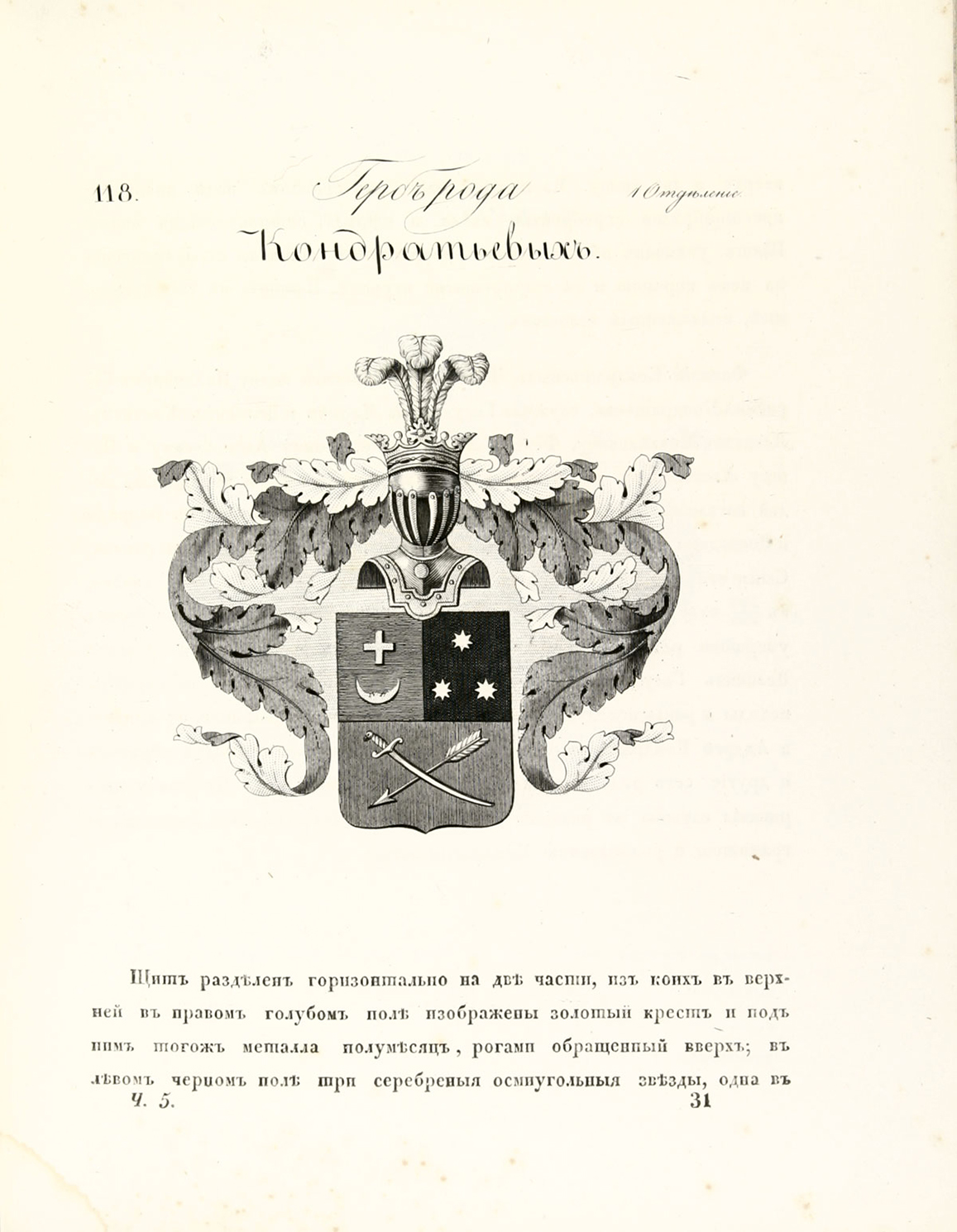
In the tsar’s royal charter dated April 24, 1703, granted to Colonel Andrei Gerasimovich, the settlement of Khotin, with the Church of the Apostles Peter and Paul, is mentioned among the estates inherited from Colonel Gerasim Kondratyevich Kondratyev. The charter states: “At the Khotin well lies the village of Nova Sloboda, and within it is the Church of the Holy Apostles Peter and Paul, along with the colonels’ estate, a mill, 50 free men of Cherkasy, and land in the surrounding tracts.”
In the 1783 document titled “Inventory of the Movable and Immovable Property of the Late Life Guard Andrei Andreevich Kondratyev,” we read the following:

His daughter, Anna Andreevna Kondratyeva, inherited not only the estate in Khotin but also other extensive holdings, and was considered a highly desirable and wealthy bride.
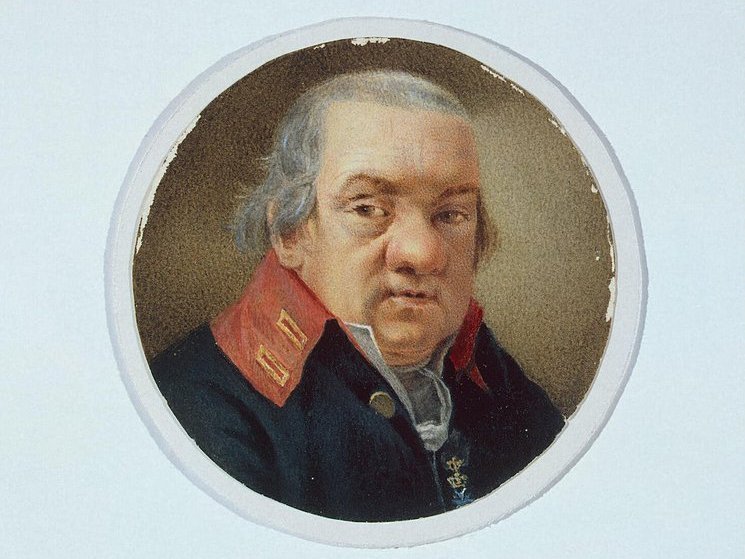
In 1799, Mikhail Ivanovich Komburley, then governor of Kursk, proposed to her.
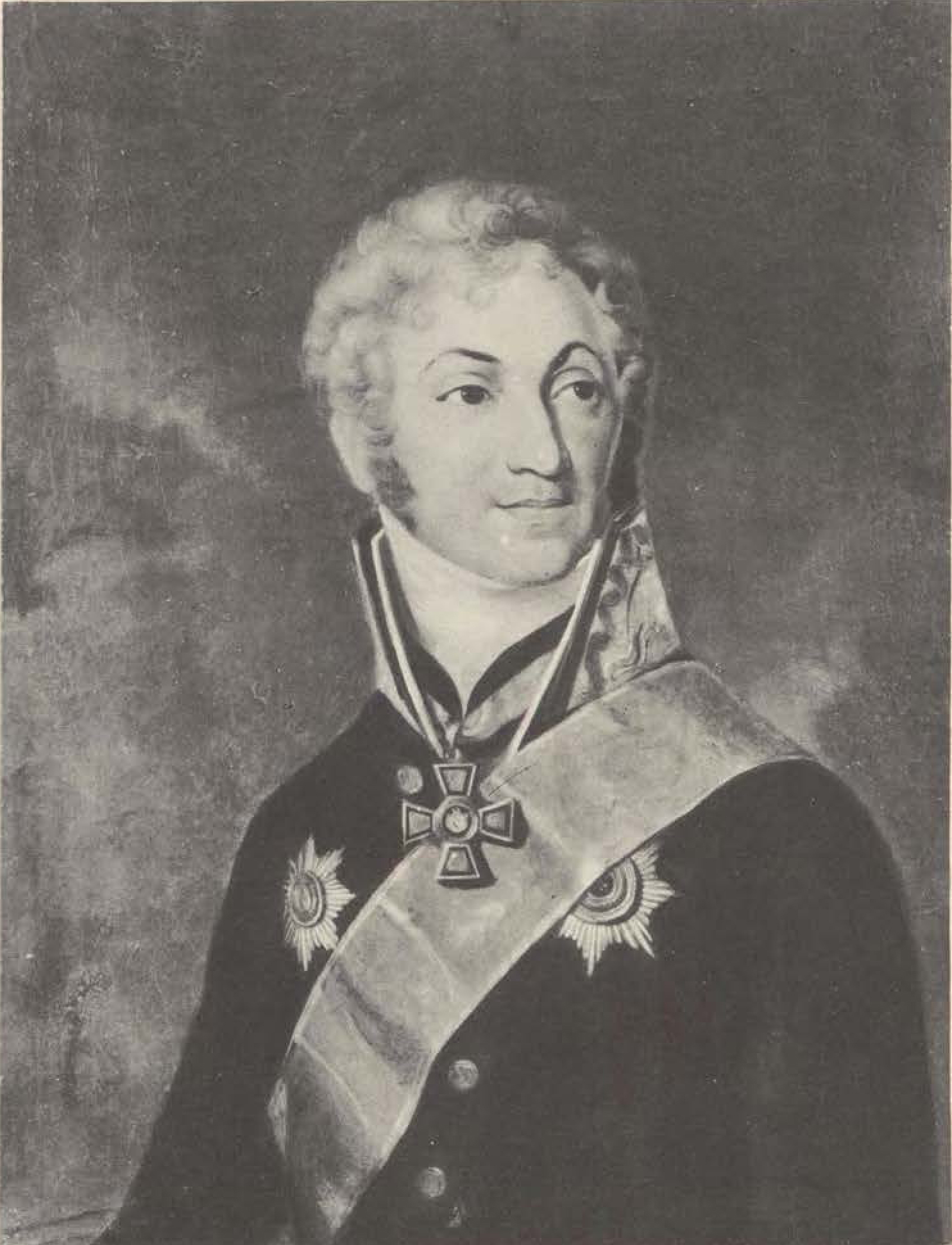
The son of Ivan Kumburley, a Greek tax farmer, began his career at court. He served as the provincial leader of the nobility in Yekaterinoslav (1793–1796), and on July 27, 1798, he was granted the rank of full chamberlain. And on December 21 of that same year, he was appointed governor of Kursk. At the time of their wedding, the bride was about 18, while the groom was already nearly 40. In the spring of 1800, Kumburley arrived with his young wife in Khotin, where he began to set up their new home.
As early as 1804, there was a wooden manor house and a large garden in Khotin. Then, on July 3, 1806, Komburley became governor of Volhynia. The construction of the estate in Khotin is generally dated to the first quarter of the 19th century. Before moving on to a description of the estate itself and its subsequent history, I would like to address the question of who designed the Khotin Palace.
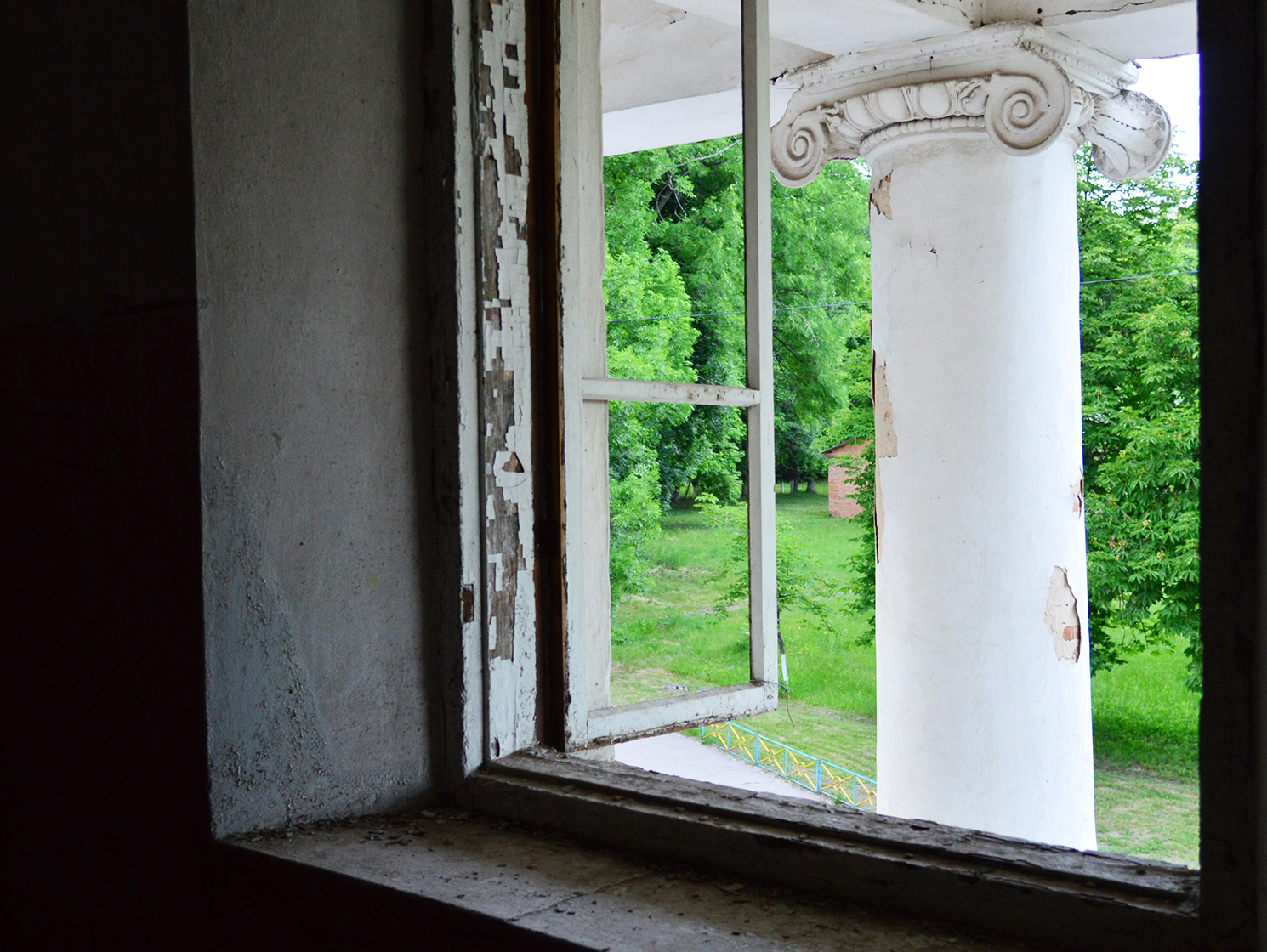
In his book *Historic Estates of the Kharkiv Governorate*, Grigory Lukomsky, who visited the estate in 1914, writes:
…Khoteni—more austere, more imposing, and reminiscent of Gvarengiev’s buildings in St. Petersburg—the Smolny Institute and, especially, the Mariinsky Hospital on Liteiny Prospekt…
…The finest example of this style is the palace in Khotin. Even in “manor-house” Italy, there were no structures as imposing and vast as this. Gvarengi’s power is evident in the porticos, the lavish staircase, and the halls
…… And while the facades and the architecture as a whole were the fruit of Gvarengi’s creativity, the ceiling paintings are the work of the finest fresco artists of that era……
All the creative traits that reveal Gvarengi’s style and taste are evident. If we add to this that the similarity in the overall architectural character of the palace in Khotin and the palaces in Petrograd (the English Palace) and Alexandrovsky (in Tsarskoye Selo) is tenuous but nonetheless exists, and the resemblance to the Mariinsky Hospital on Liteiny Prospekt is striking, any doubts about Gvarenga’s involvement are dispelled, especially since 1) the time period coincides perfectly: the late 18th and early 19th centuries, and 2) Gvarenga built in these areas (Lyalichi, Panurovka, etc.), and even if he was not here in person, the landowners in these areas knew him and could have invited him or, at any rate, commissioned designs from him.
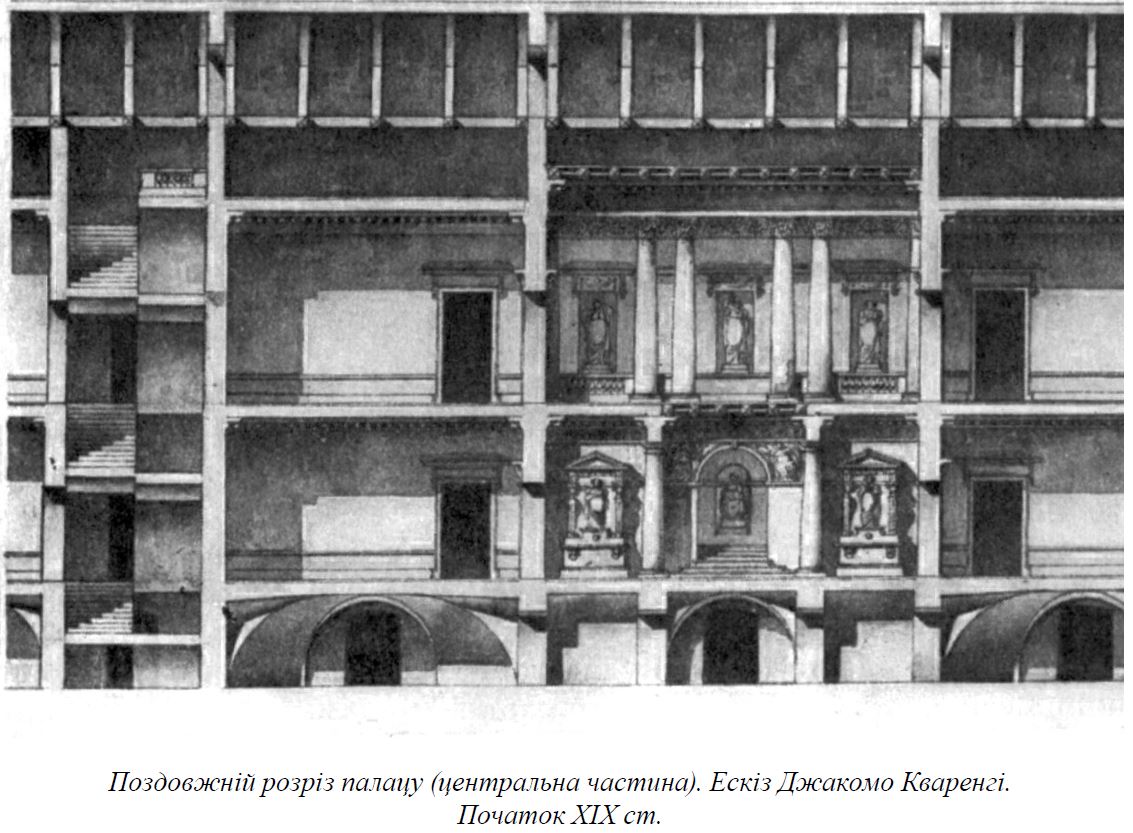
However, all of this remained nothing more than hypotheses and conjecture. After all, there has never been any documented confirmation that the estate was designed by the renowned architect of Italian descent, Giacomo Antonio Domenico Quarenghi (formerly spelled Gvarengi).
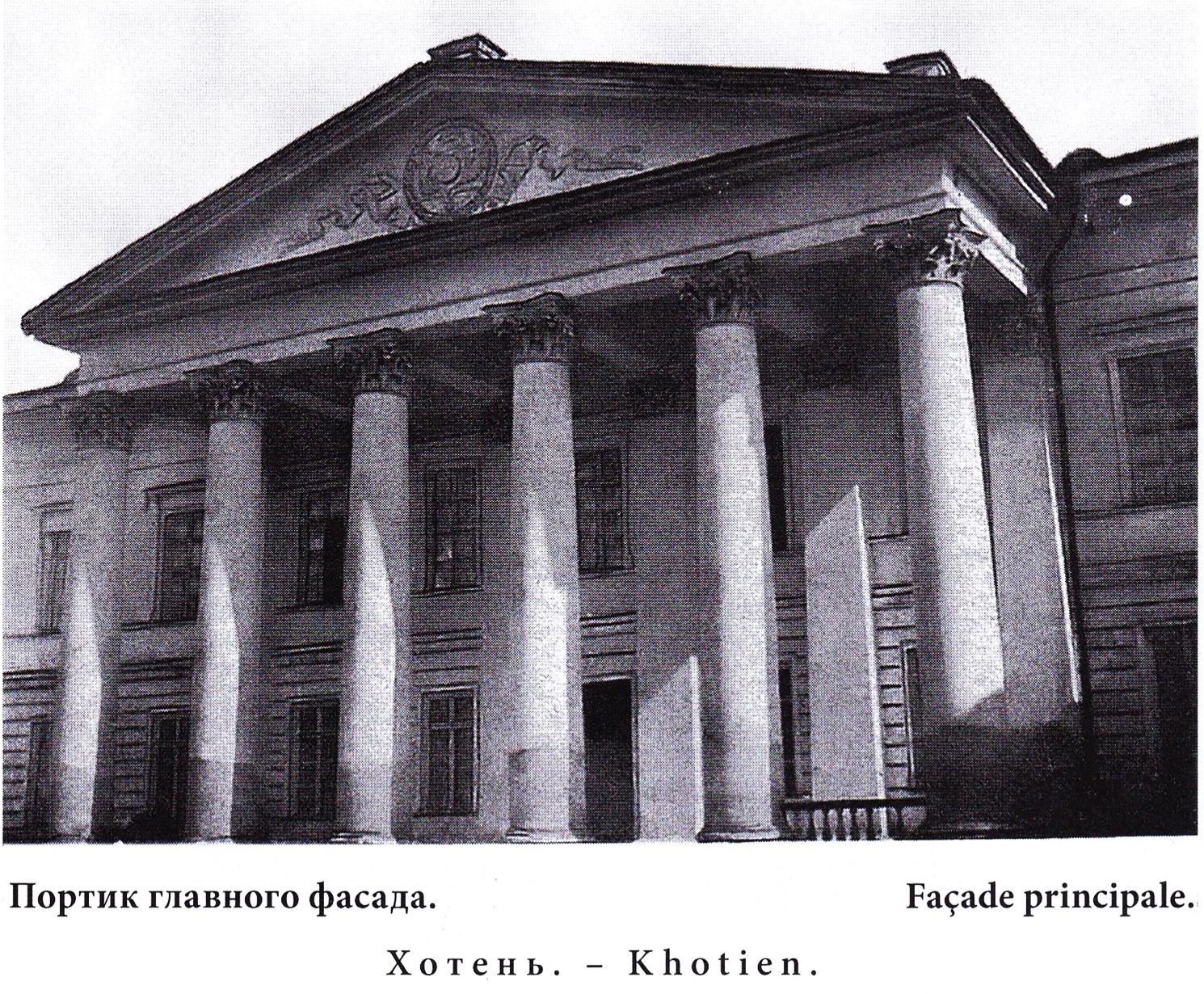
It was not until 1935 that German Germanovich Grimm (1905–1959), a Leningrad scholar and expert on Quarenghi’s work, was able to provide documentary evidence supporting Lukomsky’s hypothesis. Among the drawings that had been transferred to the Academy of Arts Museum from the drawings department of the State Russian Museum, he found nine sheets labeled “design for an unknown house, by an unknown artist.” The drawings had been transferred to the museum in 1930 from the Stroganov Palace. Grimm later determined that this was a design for the palace in Khotin, Kharkiv Governorate, by architect Giacomo Quarenghi. On the reverse side of one of the sheets was a partially erased pencil inscription: “plans for the Khotin house.” After comparing the palace drawings with photographs taken by Lukomsky in 1914, Grimm confirmed the accuracy of this inscription.

The estate, a brilliant example of estate architecture from the Catherine the Great era, was situated at the very top of a hill in the center of a beautiful park.
Even V. N. Karazin, the founder of the famous garden in the village of Osnovyantsy in the Bohodukhiv District, sent his serfs to study under the English gardener who managed the Khotin garden.
To the right and left of the approaches to the main house stood two two-story wings (for servants and guests) with Ionic porticos featuring four columns, as well as other wings, utility buildings, sheds, stables, and greenhouses. In the center between them was a circular flowerbed, beyond which stood the 87-room palace. The ground floor of the palace was rusticated. All the windows were separated by pilasters. In the tympanum on the entrance side, the Komburley coat of arms was displayed: an eagle with a bow in a shield, a star below, and on either side a magnificent canopy of banners, all enclosed in a wreath with lavishly flowing ribbons.
The palace rooms were also lavishly decorated and painted. An entire street of wooden country houses was built for the musicians and singers. After all, the estate’s owners were accustomed to living in luxury.
Kamburley himself had a reputation in Volhynia as an embezzler, and in 1816 he eventually came under investigation. Malicious gossip at the time claimed that the reason for this was Kamburley’s excessive leniency toward Jews who were involved in smuggling, and that, they said, he was hiding some of that very contraband in the vast cellars of his palace in Khotin.

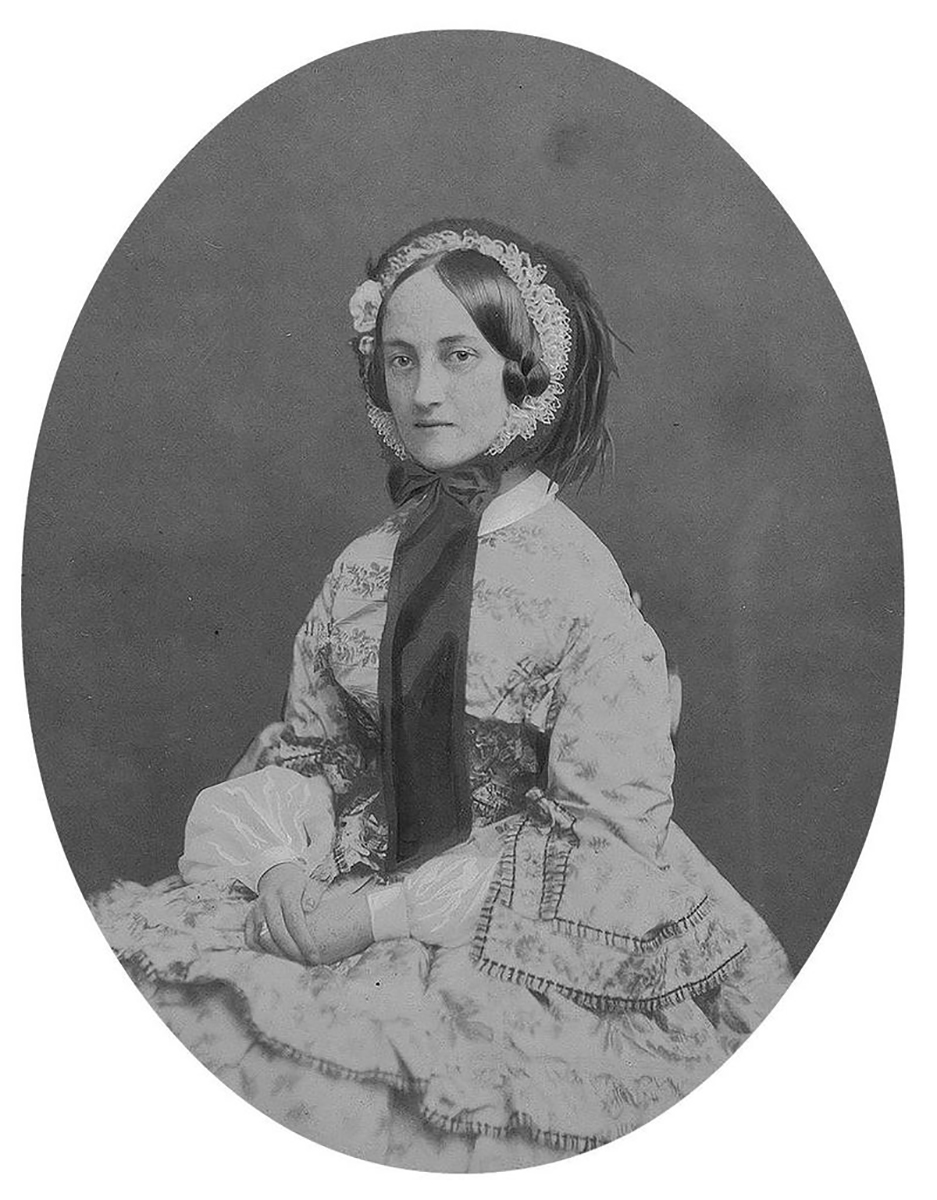
Elizaveta, the daughter of Mikhail Ivanovich and Anna Andreevna, later married the renowned military historian, Major General, and Senator Dmitry Petrovich Buturlin.
As part of the dowry, the Buturlin family also acquired the Khotin Palace. And in 1851, thanks to his marriage to Anna Dmitrievna Buturlina, Khotin came into the possession of the Stroganov family, well known to many.
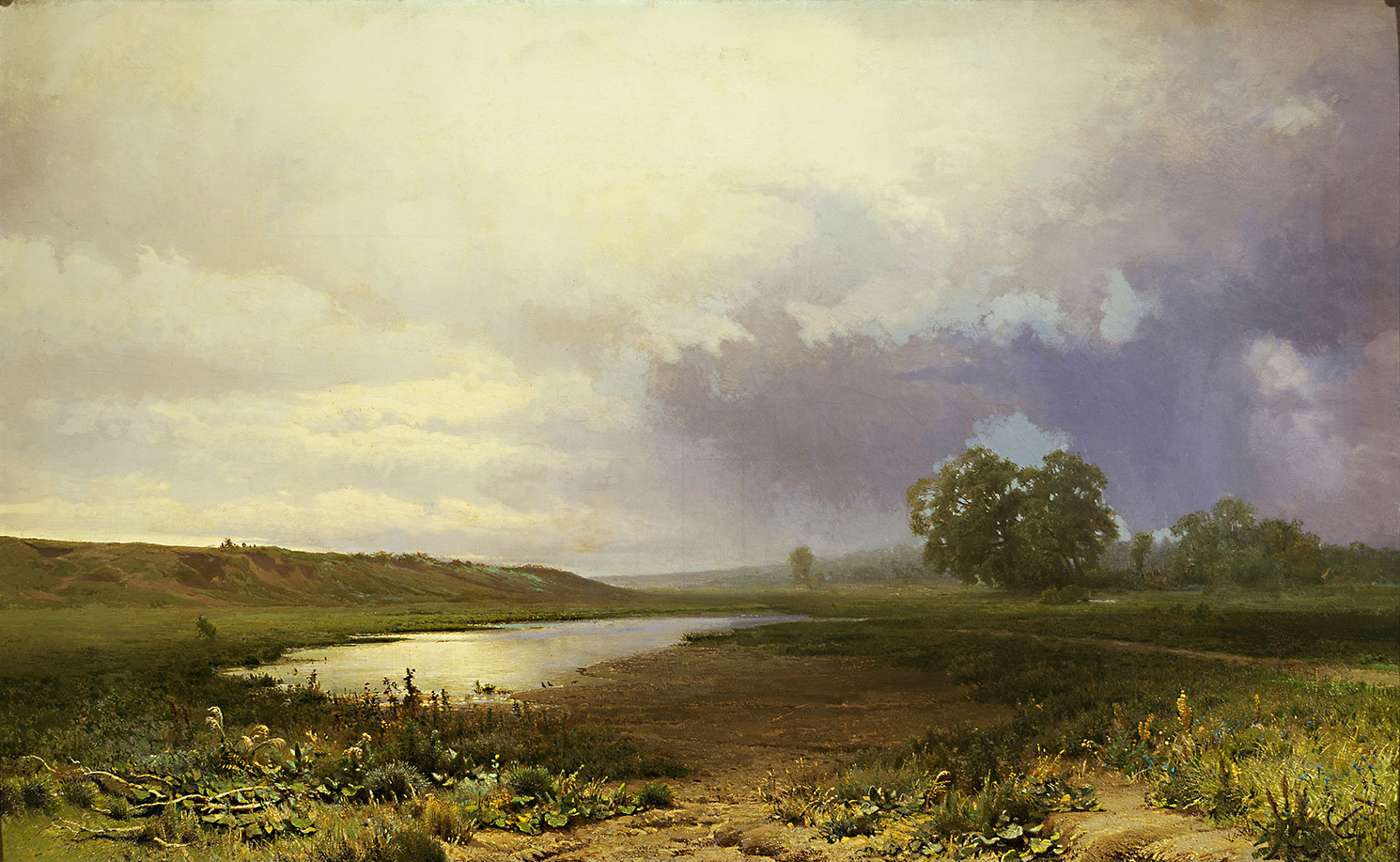
Anna Dmitrievna’s husband, Count Pavel Sergeyevich Stroganov, was a man of considerable wealth who had a passion for antiques and collected paintings. In September 1868, the talented painter Fyodor Alexandrovich Vasilyev arrived in Khotin with Count Stroganov’s family. The artist was so captivated by the beautiful landscapes of Sloboda Ukraine that it was his impressions of Khotin that formed the basis for his future depictions of nature “from memory.”
In the winter of 1870, Vasilyev caught a severe cold; the 20-year-old artist was diagnosed with tuberculosis. To recover his health, Vasilyev accepted Count Stroganov’s invitation and arrived at the count’s estate in the summer of 1871. In Yalta in 1872, the dying artist, longing for the nature of Khotin, created one of his most brilliant works—the painting “Wet Meadow.” The freshness and accuracy of the atmosphere’s depiction are achieved through the masterful use of numerous shades of green.
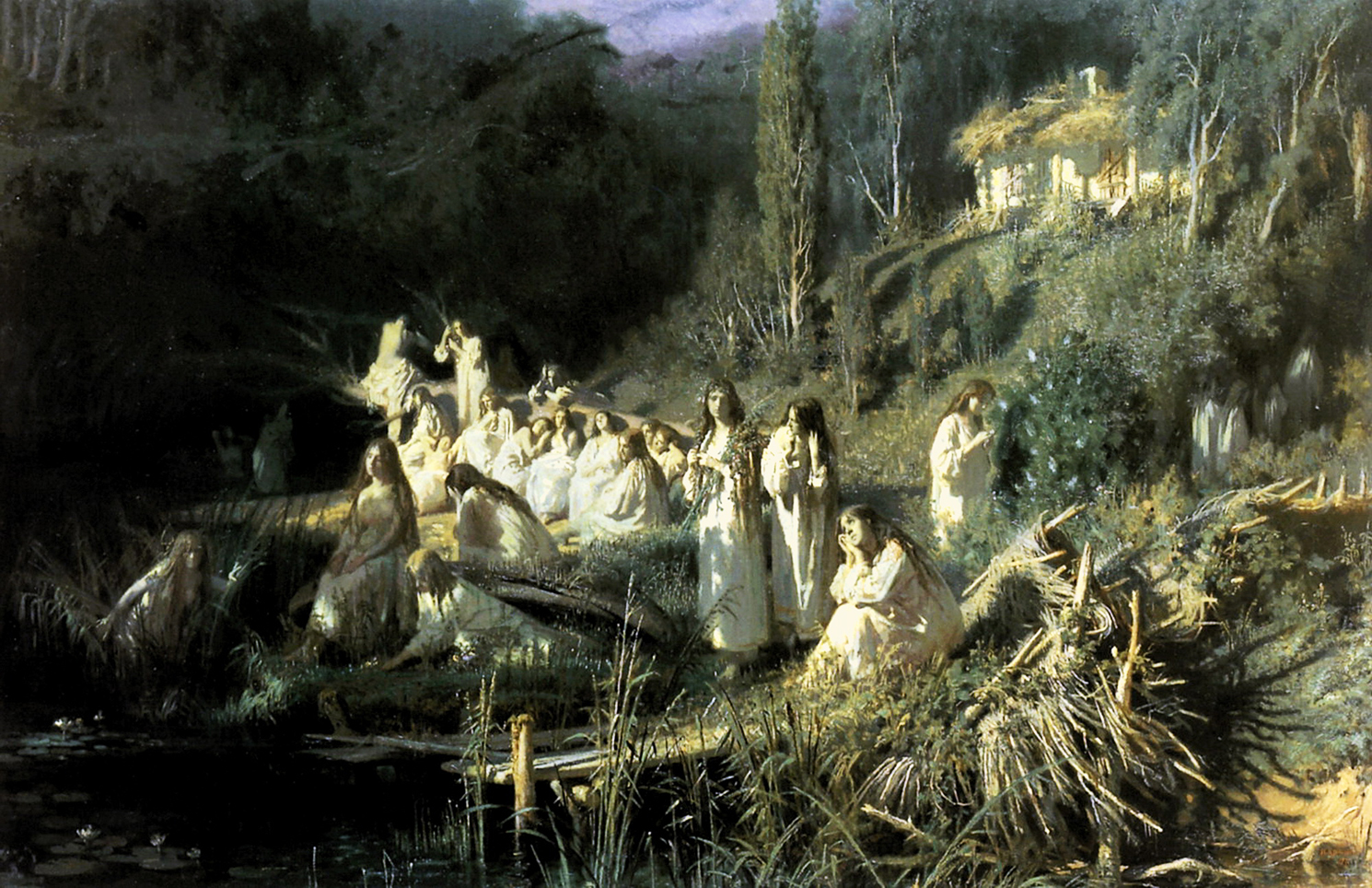
Ivan Nikolaevich Kramskoy, a close friend of Fyodor Vasilyev, was also a guest at the estate. He was a renowned artist. The reason for his visit to Khotin in 1871 was extremely simple. Having begun work on a painting based on Nikolai Gogol’s story “A May Night, or The Drowned Girl” from the collection *Evenings on a Farm Near Dikanka*, the artist needed a Ukrainian model.
Kramskaya writes to Vasilyev about her arrival in Khoten:
I arrived at night. As I drove up to the house through the garden, I was verifying everything you’d told me: indeed, the night makes a magical impression… I waited for ghosts that night—but they didn’t come. 10 a.m. The sun, the garden before me—and not a soul in sight, only the rustling of the trees. God knows what’s going on! A strange feeling came over me: it’s so beautiful here, yet I feel so heavy-hearted. This is nature! I’ll stay here and finish *Night*.
The artist’s main goal was not to create yet another formulaic illustration for Gogol’s work, but to depict the extraordinary, mysterious beauty of a Ukrainian night. The moon illuminating the lakeshore, and the delicate, otherworldly figures of young women…
The result of Kramskoy’s more than two-week stay in Khotin was a painting titled “A Scene from Gogol’s ‘May Night.’” It was first presented at the inaugural exhibition of the Society for Traveling Art Exhibitions, which opened in St. Petersburg in late 1871. Viewers received this honest yet extraordinarily fairy-tale-like painting with great enthusiasm.
After the death in 1911 of Count Stroganov, who had no children, legal disputes over the inheritance broke out among his heirs, including a dispute over ownership of the estate in Khotin.
The most vivid impressions of the state of disrepair prevailing in the palace were left by the aforementioned Grigory Lukomsky, who visited Khotin in 1914–1916, who lamented that Leshchinsky, who had purchased the estate, would find it extremely difficult to restore it:
…A second example is the deliberate destruction by the advisors of the late Count Stroganov of the Kondratyevs’ estate, Khotin, which he had inherited for life, from which he ordered the sale of all the furnishings of rare artistic value (part of which, remaining in the Kharkiv Governorate, is reproduced below), and the palace was to be dismantled brick by brick for use in building a church—a plan that, fortunately, was never carried out. However, having gone unmaintained for many years, the palace has fallen into a state of disrepair, as can be seen in the photographs…
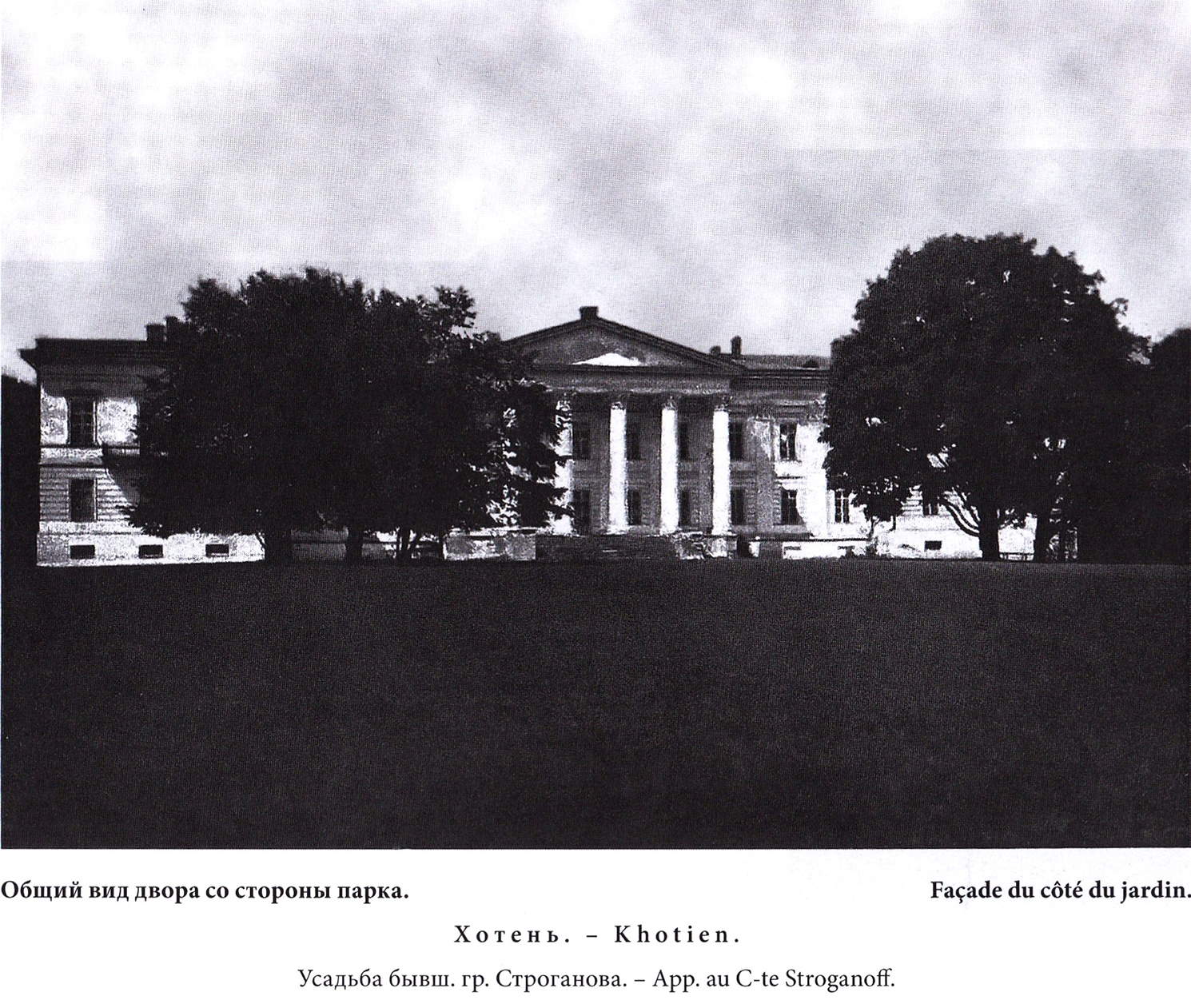
…in the courtyard of Khotin—a scene of desolation (the ground-floor rooms are littered with grain, the ceiling panels are crumbling, the fireplaces and doors have been stolen, and there are gaping cracks in the building’s exterior walls)…
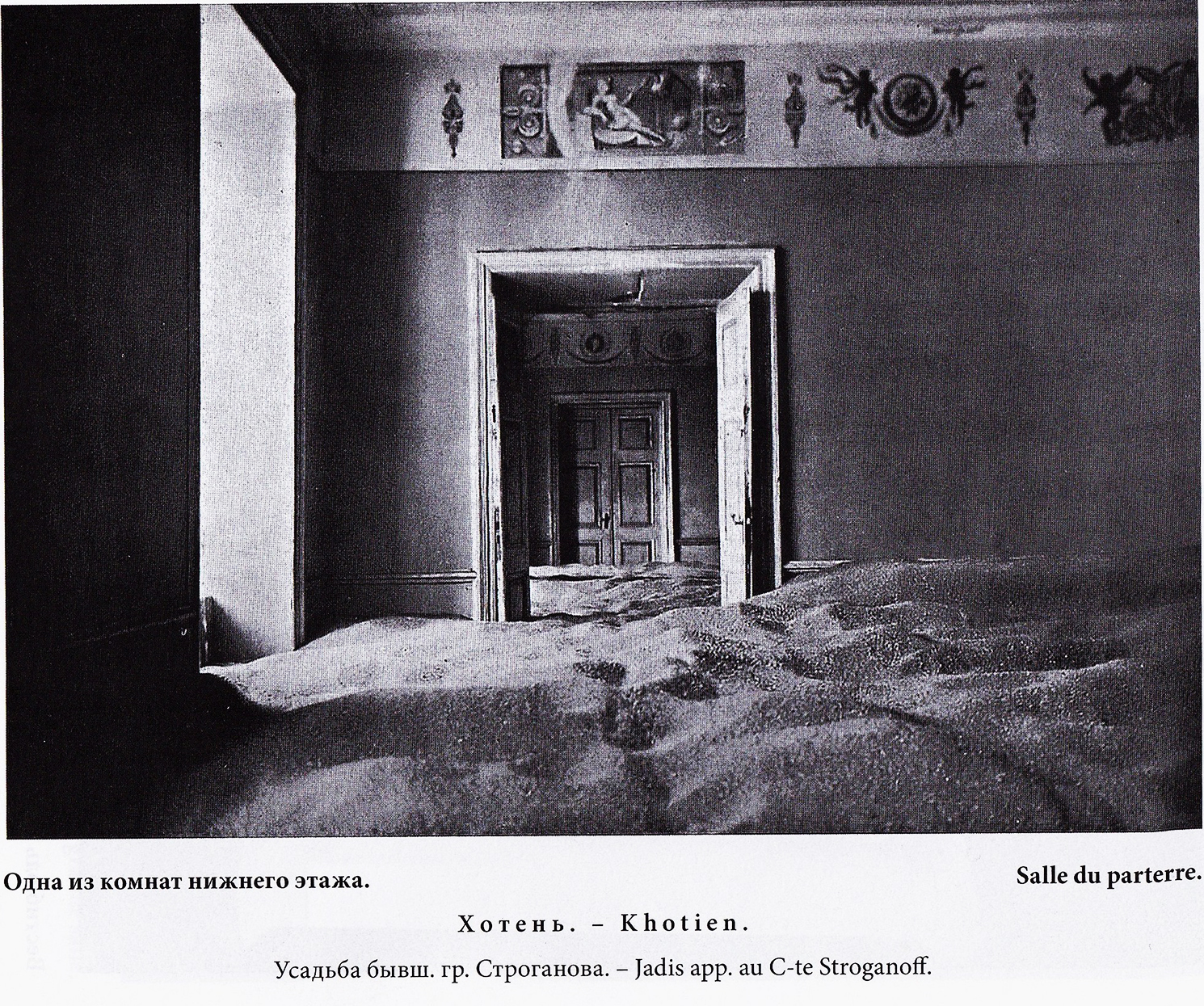
…In the summer of 1914, when the estate was still a bone of contention among Countess Stroganova’s heirs, nothing remained of the house’s furnishings except for broken picture frames, the inscriptions on which, however, indicated that the Rubens was by no means the rarest gem in the collection. The house had fallen into a state of utter ruin, both inside and out, and the furniture had been sold off by the steward; only a small portion of it, having survived within the Kharkiv Governorate, is now housed in the House of the Nobility in Kharkiv, at the Mikhailivka estate, at Count Kapnist’s estate, in Lyutivka at Count Kleinmichel’s estate, at Rebinder’s estate, in the estate of P. I. Kharitonenko, and elsewhere…
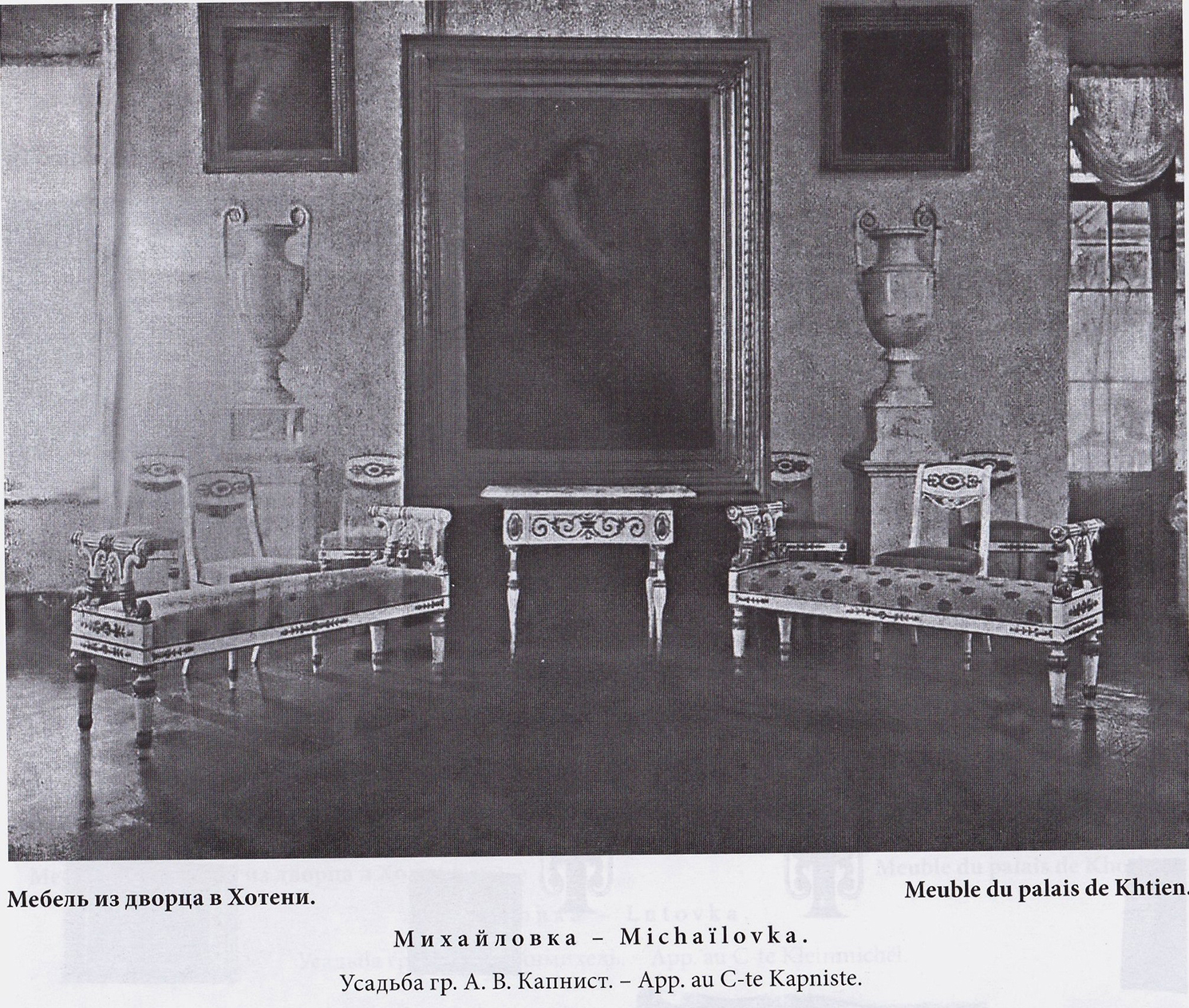
…As for the house itself, the state of disrepair of its exterior facades and interiors borders on complete ruin. The reasons for this were not only the harsh weather conditions and the long-term lack of repairs (such as repainting the roof or replastering the walls), but also in the malicious, negligent, crude, and senseless treatment of the house by the manager and those involved in its administration. Using the ground-floor rooms as grain storage and the upper rooms as laundry rooms and kitchens for the children’s sanatorium—that is what is called vandalism!
The walls of the lower floor, warped by the weight of the grain, developed cracks; the painted ceiling panels began to crumble; and upstairs, due to a leak through the ceiling, huge chunks of the murals fell away. The bronze ornaments on the fireplaces were torn off (due to a lack of supervision), entire chunks of marble were ripped out along with the mortar, and the exquisite parquet floors, flooded with water, were left in a completely unusable condition…
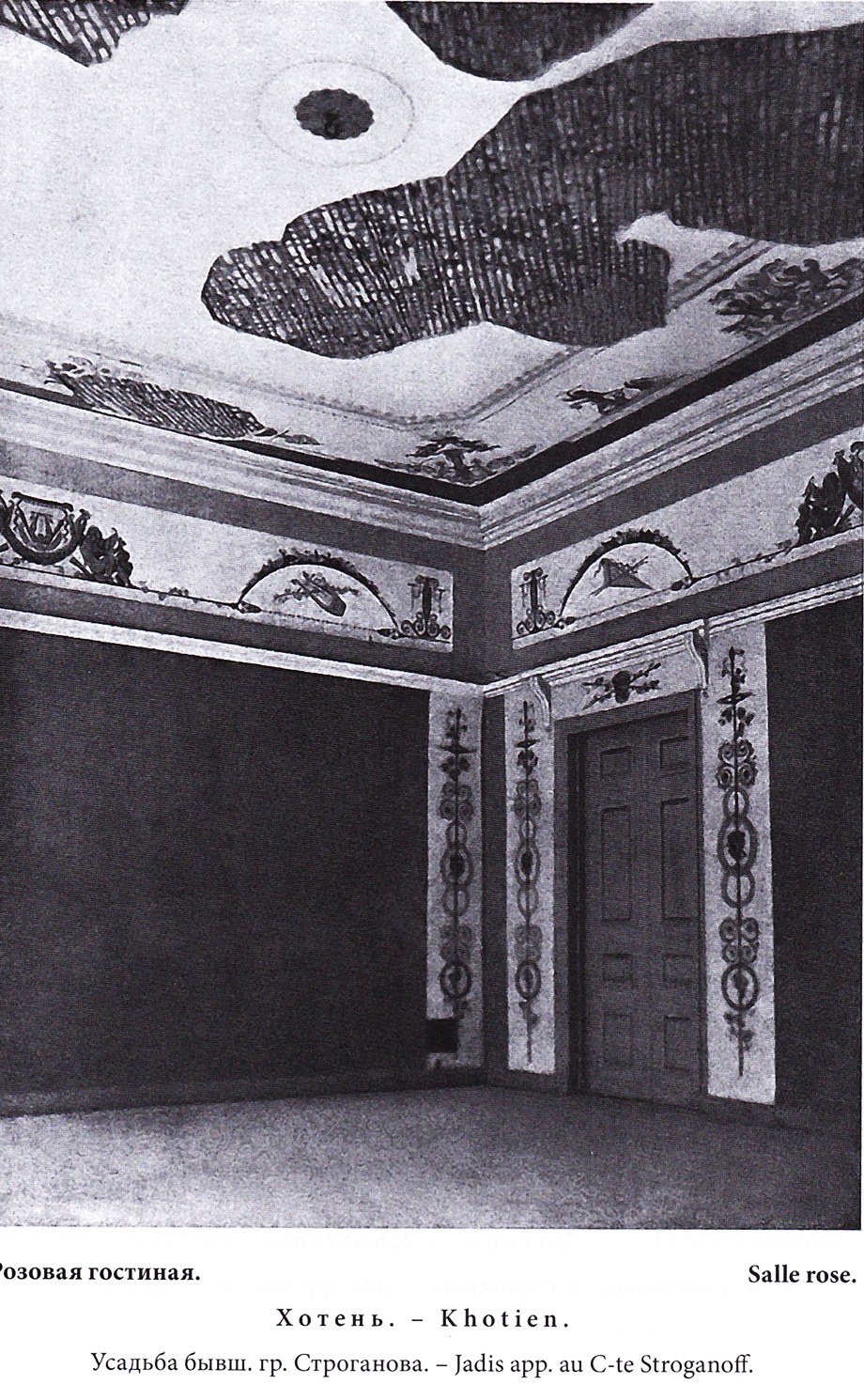
In 1918, the palace—which had fallen into even greater disrepair—burned to the ground. Today, all that remains of the estate are two outbuildings for guests and servants, which still manage to impress tourists with their splendor, while a school stadium now stands on the site of the palace.

At the very end of his account of Khotin, Grigory Lukomsky writes some prophetic words, with which I, too, would like to conclude this text:
The years of our country’s artistic and cultural heyday have passed, and now only the remnants of the splendor of bygone days adorn the rooms of the most cultured landowners. But how many of them are there? Unfortunately, not only are we no longer able to create anything comparable to the Khotin estate, but we do not even always preserve the old estates as well as the examples cited. More often than not, as in Khotin, the descendants have failed to preserve even what was bequeathed to them. Such an attitude toward one’s property—which constitutes Russia’s historical heritage (meaning the territory of the entire Russian Empire at that time—author’s note)—cannot go unpunished; it deserves retribution… and paints a bleak picture of the future for us!

- About the military pilot school and the airfield in Kharkiv… - 04.11.2020
- Nikanor Savich—A Political Career by Mistake - 13.07.2020
- And once again, about the Cavalry Guards… - 21.01.2020