In 1927, the Soviet Union invited American writer Theodore Dreiser to Moscow to celebrate the 10th anniversary of the October Revolution. Dreiser persuaded the Soviet authorities to allow him to take a tour of the country.
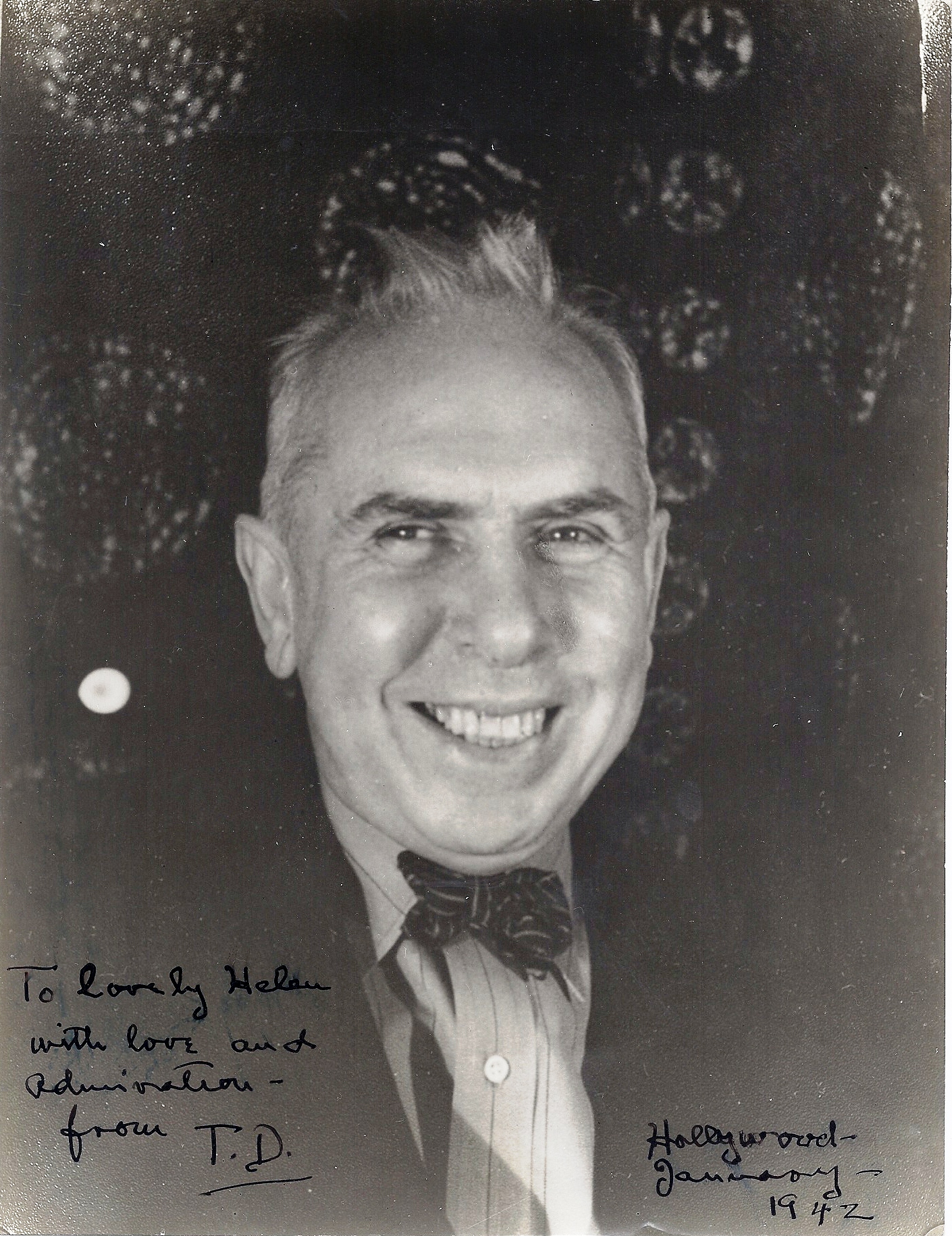
From November 1927 to January 1928, the writer visited cities such as Kyiv, Odesa, Leningrad, Rostov-on-Don, Baku, and Tbilisi… On December 16–17, 1927, he was in Kharkiv, where he attended the drama theater and the opera, and was very impressed by the quality of the productions.
Dreiser also visited the Electromechanical Plant, where he encountered, among other things, the classic Soviet “fake show-and-tell”… Finally, he visited an exhibition of Ukrainian art at the newly built Derzhprom. Excerpts from his diary describing the trip were first published in the United States as late as 1996.

Memoirs written by foreigners are always valuable for their unclouded perspective, and they are doubly interesting when written by a master of the naturalist novel, whose literary talent allows him to capture the smallest details.
Here is a translation of an excerpt from a book that illustrates what life was like in the city during the second half of the 1920s and what the writer encountered:
December 16, 1927, Friday.
It was gray and cold when we arrived in Kharkov again at about noon. I had conceived a prejudice against Kharkov from rumours I had heard, and it seemed confirmed as we rode through the unattractive streets in a dilapidated automobile. At the Hotel Krasnaya (Red) we were given only one room temporarily, a long narrow room which looked like it was meant for a corridor.

The streets were very lively and in the open square in front of the hotel stood a long row of izvozchiks, their sleds gay with bright colored carpets and red and green upholstering
and little tinkling bells on the horses. Next door we found a branch of Donugol, the travelers’ bureau, and went in and got de-tailed information about the rest of the trip. The man there sent us to Donoogel (the Coal Trust of the Donetz Basin) to see about the journey into the Don Bas. We wandered about in this enormous, imposing looking gray stone building for some time looking for the right department, until we dropped in on the rooms of the American Commission.
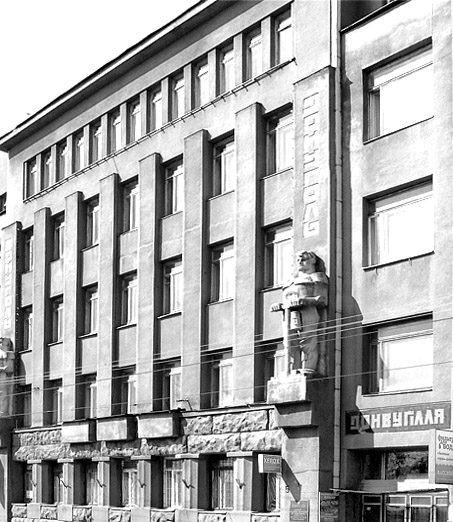
I knew at once that there were some Americans in the room, for their appearance was unmistakable-five American engineers who had been only a few months in Russia. They had many friendly suggestions to make about the trip to Don Bas, and one of them offered to use his influence in the hotel to get us a better room. We had cocoa and rolls in a bakery lunch room which was crowded with what were certainly businessmen, officials of industrial trusts, private traders, etc., a large proportion of whom were Jews.
We had dinner in the hotel dining room, with music, during which we tried to raise our spirits by talking about the beauties of Florida and the Black Sea. In Kharkov we seemed no nearer our
dream of a warmer clime than in Moscow.…After dinner, we were given a large room upstairs for 10 R., which we decided to share
together… A very cultured young man came from the Educational Dept. and offered a practical program for seeing the city.In the evening he took us to the leading Dramatic Theater which was giving in the Ukrainian language a dramatization of Rigo-letto. It was a large theater built on the plan of the Bolshoi, with the three tiers of circular boxes above, but almost empty because of a sudden change of program.

Later on, several hundred soldiers from the local base crowded in and filled up the seats. I was surprised at the excellence of the production and the playing. The Ukrainian people seem to have a wonderful amount of artistic talent, which, suppressed under the tsars, since the official language was Russian and the masses knew only Ukrainian, now under the new movement
of authorizing local languages, seems to be blossoming forth. After two acts, I left with reluctance to go to the opera house. Here, strange to say, another foreign classic was holding forth, ‘Carmen’, also in the Ukrainian language.
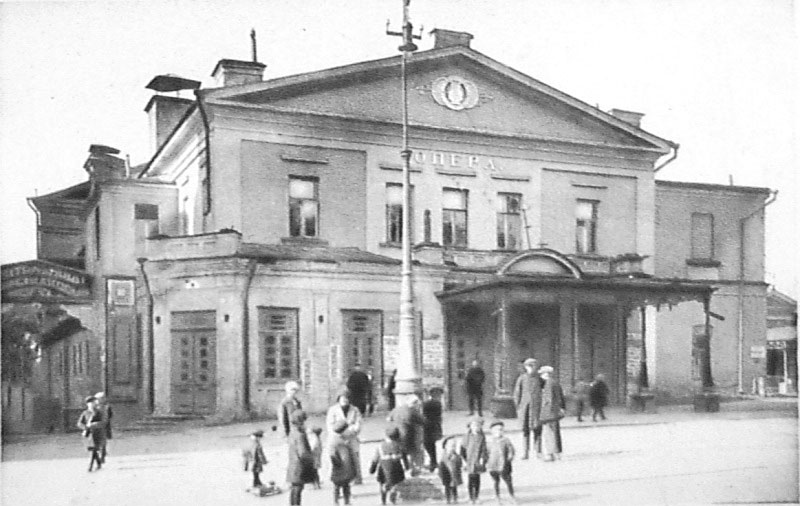
Here again, I liked the production very much, the voices were beautiful and Carmen was as good as any I have seen in the role. I was so tired that I wanted to go after the third act, but the director begged me to stay, assuring me that the last act was the best. However, the intermission was so long, more than half an hour, that I was quite out of patience when the curtain finally rose. We rode home in an izvozchik and my opinion of Kharkov was steadily rising.
The next day, Dreiser visited the Electromechanical Plant and an exhibition of Ukrainian art at Derzhprom; after seeing these, as well as the plans for the development of the square, he called the city the future “Ukrainian Chicago.”

- 1st Kharkiv Gymnasium - 17.09.2026
- The Oldest Movie Theater in Ukraine - 24.08.2026
- The Alkhovsky Estate - 14.08.2026