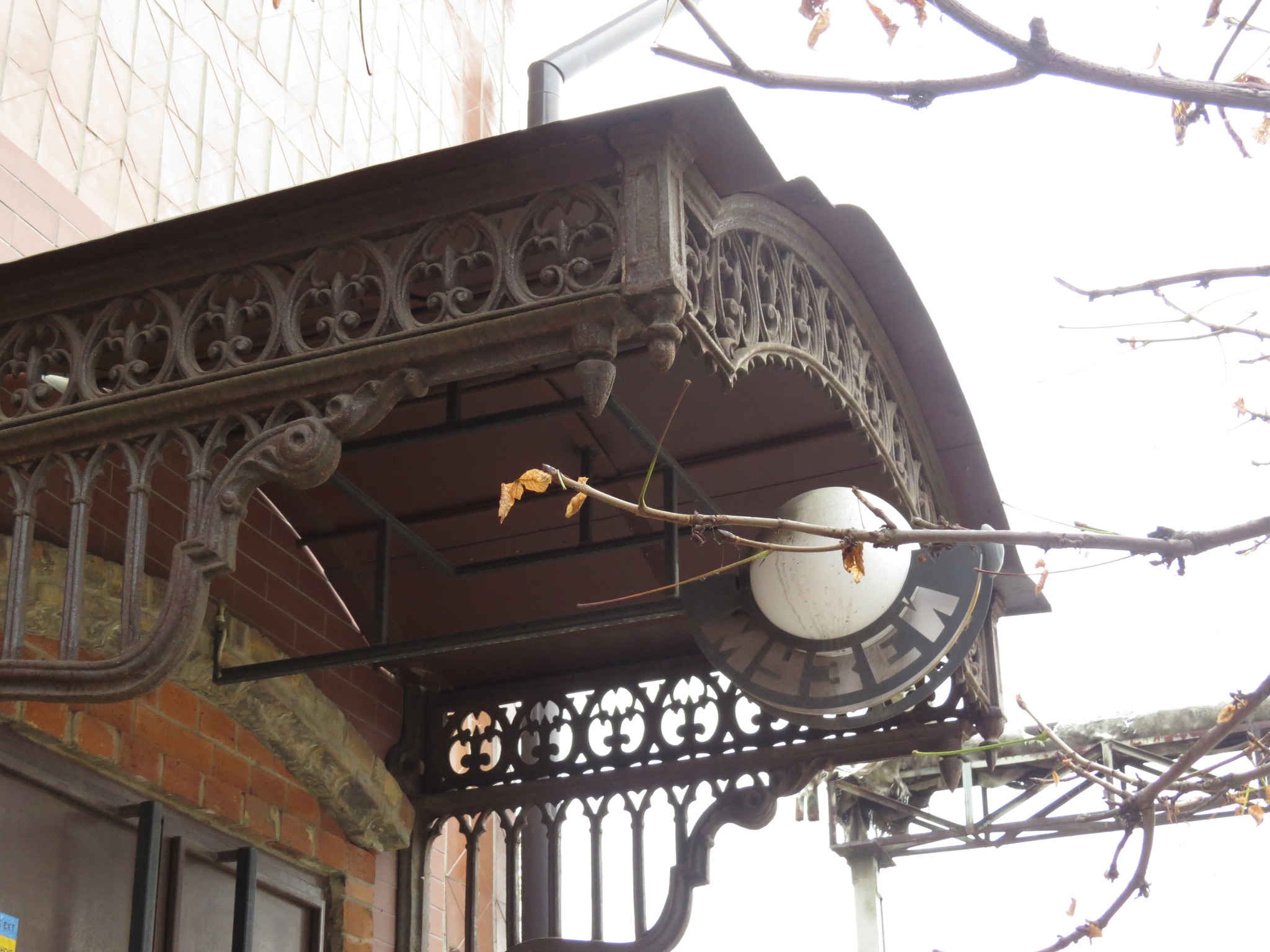
What do airships, buses, and bricks have in common? PLINFA, one of the oldest machine-building plants in Kharkiv and Ukraine, that is located at Kontorska Street, 77 (since 2019, this part of the street has been renamed Valery Petrosov Street).
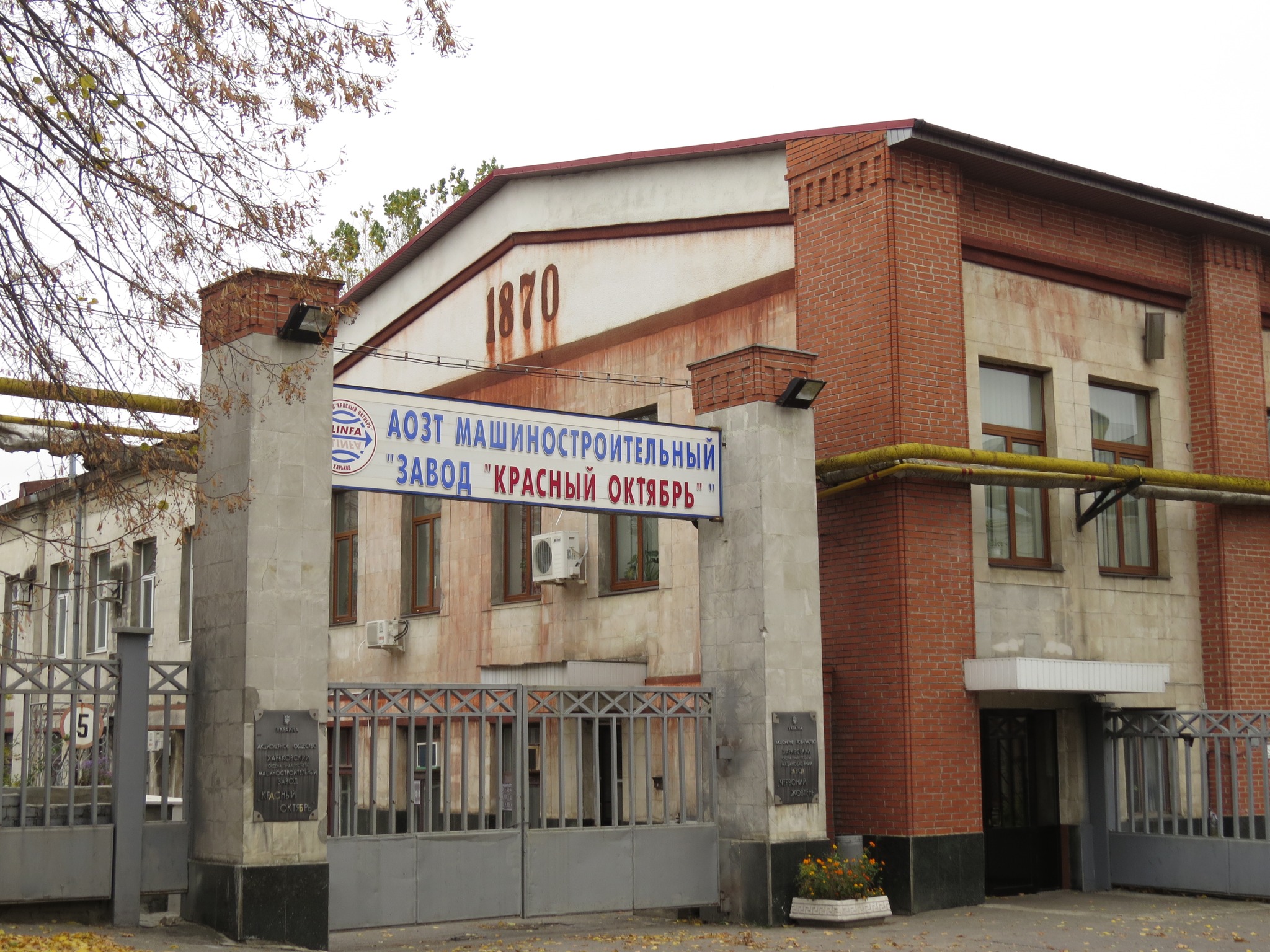
Although the facades of its buildings have lost details over the years, been built on, and faced with tiles, the factory’s walls remain the same, dating back to the 19th century.

The enterprise was founded in 1870 by Andrei Pilström, a second-guild merchant and Swedish citizen. Together with his business partner, Nikita Pavlov, they reconstructed the soap factory on Kontorska Street into an iron foundry.
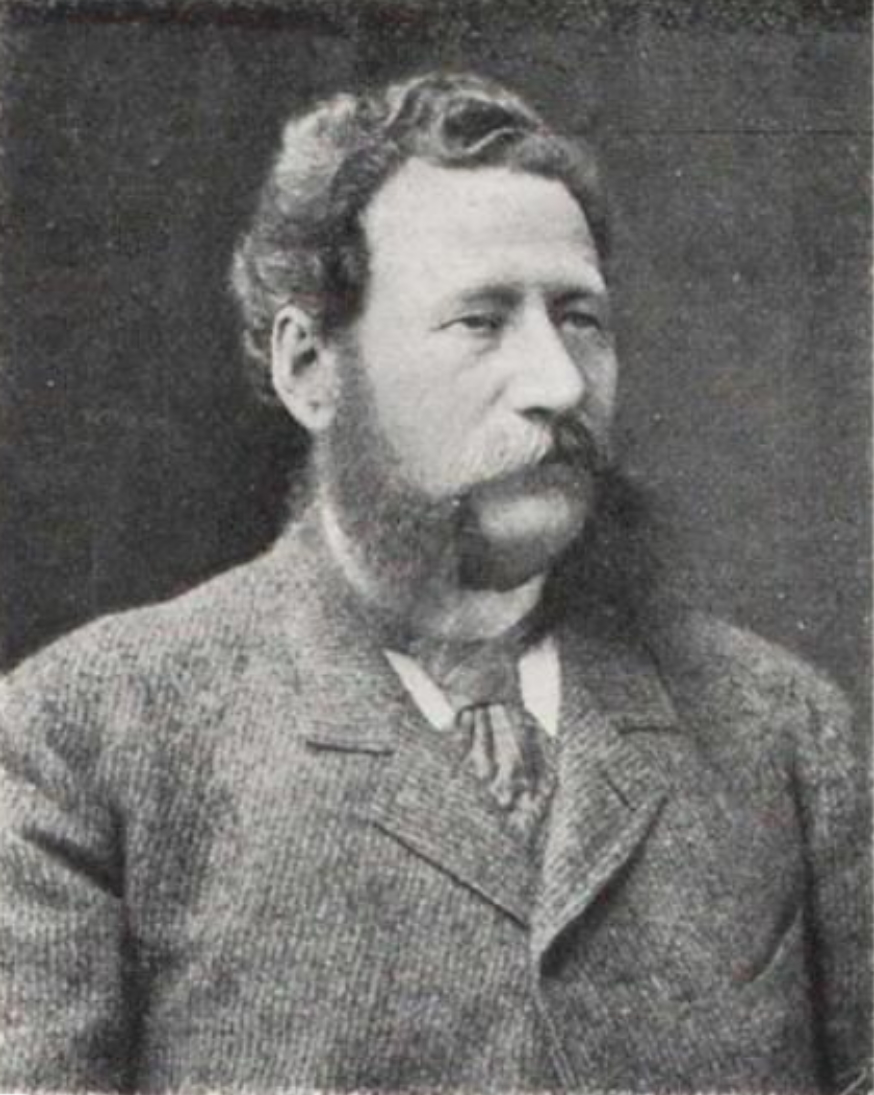
In 1875, Pilström became the sole owner of the factory and invited his brother, Gustav, a technician, to join the operation. The latter’s wife invited her relatives, who invited theirs, and thus a whole mini-diaspora of Lutherans of Swedish and German descent emerged on Kontorska Street – the Pilströms, the Oldenborgs, the Pilschaus…
The Pilström plant began by smelting cast iron products for the railway, building materials and metal structures, but soon focused on expensive products for other factories – machine tools, steam engines, turbines and presses.
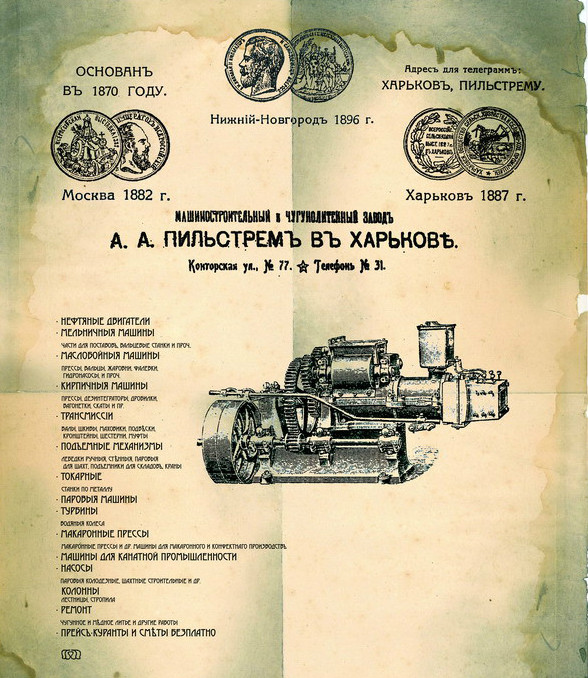
Its clients included sugar, oil, pasta, and rope factories; from the beginning of the 20th century, the company’s range of products included presses for factories producing bricks and ceramic products.

Andrey Pilström was a generous philanthropist, supporting orphanages, the city vocational school, and the Voznesensk Girls’ Gymnasium. However, he is best remembered as the sponsor of the eccentric inventor and physician Konstantin Danilewsky, who built the first airships in Ukraine.

Only five of Danilewsky’s aerostats are known to have been built, ranging from a small “flying carpet” model from 1894 to more substantial designs from 1897-1899, with a volume of 150-180 cubic meters and lengths of up to 16 meters (Embryon, A. Pilström, Orichka, No. 4). However, his airships are so interesting that they deserve a separate article.

In 1913, the factory was acquired by Konstantin Shimansky, a merchant and member of the City Duma. His mansion can be seen at Geroev Nebesnoj Sotni Square, 32B.
In 1910, Shimansky organized the first bus route in Kharkiv. Six double-decker Gaggenau buses traveled from the train station to the drama theater in 15 minutes.
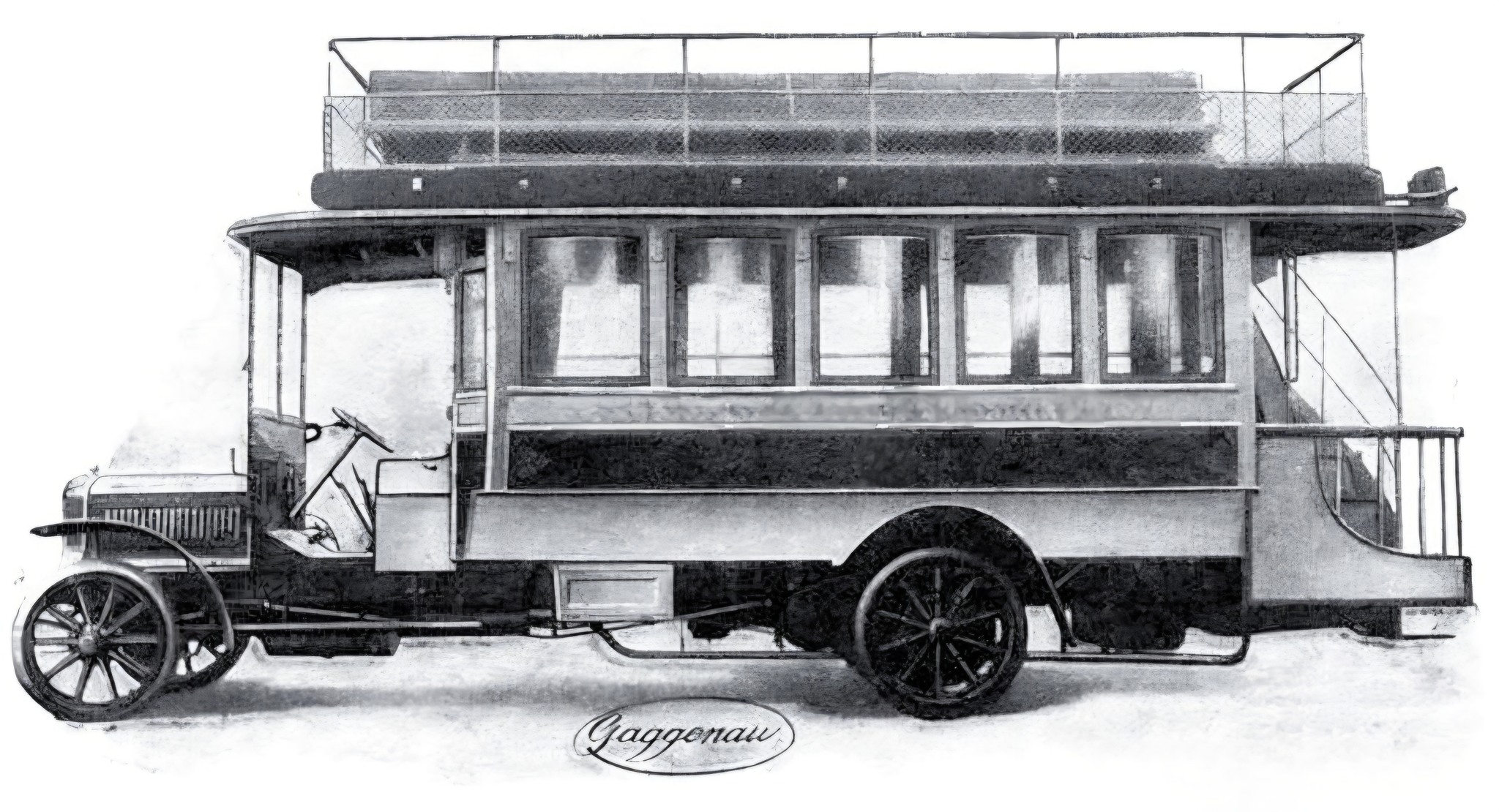
Unfortunately, the first version of Kharkiv’s bus service lasted only two years. Due to pressure from transport competitors, Konstantin Shimansky shut down the business, and the bus service returned to Kharkiv only in 1925.

During WWI, the Shimansky plant produced military equipment, shell parts, and even submarines! The plant employed over 600 specialists.

The Shimansky plant was nationalized in early 1918. From 1922 to 2016 it was called “Red October”, and Kontorska Street was called Krasnooktyabrskaya (literally “Red October”).

Equipment for the brick industry was the main specialization of the plant,
In 1956, an impressive building was constructed for the plant’s workers at Poltavskyi Shliakh Street, 57/59.
In the 1980s, the company was equipped with high-precision Japanese machine tools.

The PLINFA plant remembers its history well—reproductions of historical documents and vintage advertising can be seen on stands in front of the entrance to its museum.