According to a 1915 guidebook, there were about 3,500 horse-drawn cab drivers in pre-revolutionary Kharkiv. Most of them were single-horse carriages (2 passengers); there were few two-horse carriages (max. 3 passengers). The introduction of the electric tram significantly reduced the number of cab drivers, so it can be assumed that by the time the tram opened in 1906, there were about 5,000 private cab drivers for a population of approximately 270,000.
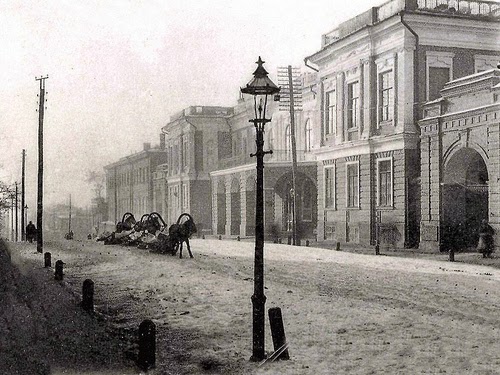
The best cab drivers used tube rubber tires; moreover, passengers had to pay more than three times as much for this comfort option than for a ride in a carriage with bare wheels or on a sleigh in winter. An intermediate option was tubeless rubber tires.
The fare for these was also quite high. As we can see from the fare table, a trip from the train station to the Locomotive Building Plant (now the Malyshev Plant) in a one-horse carriage with good tires cost 1 ruble 20 kopecks, with an average monthly salary of 37 rubles—meaning a month’s salary was equivalent to 30 trips.
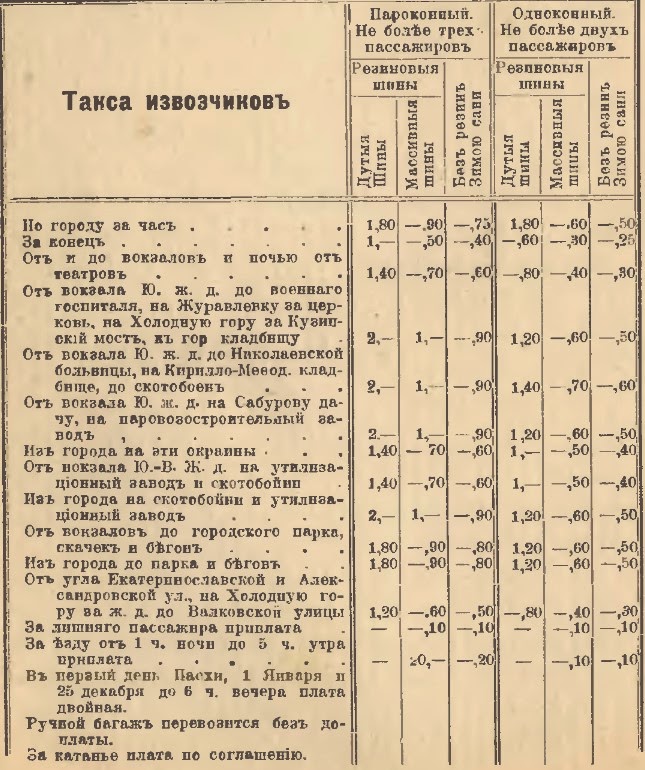
Naturally, just as is the case today, on Easter Sunday, on Christmas Day (which, until 1918, was celebrated on December 25), and on New Year’s Day, the fare was doubled. An additional charge was also levied for each extra passenger.
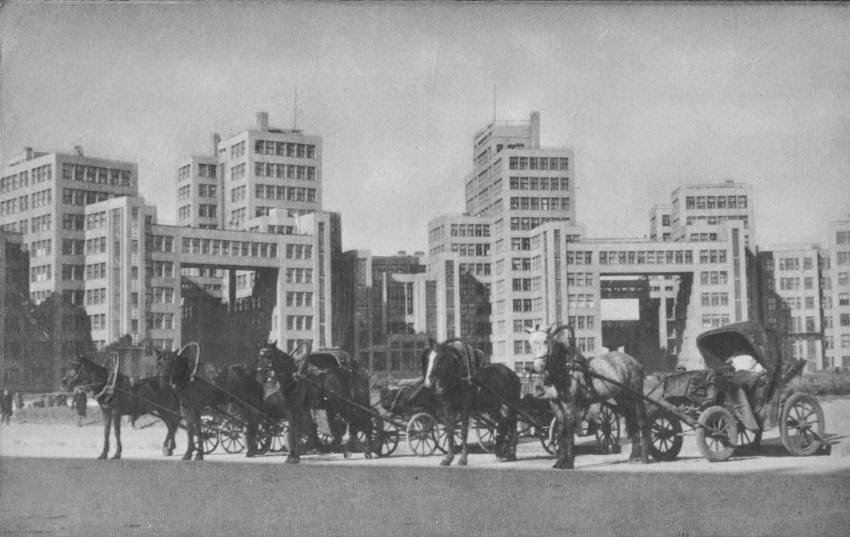
After the Civil War, the city’s nascent motorization slowed down even further. Imports of automobiles ceased, and mass production of domestic cars in the USSR was not established until the early 1930s. Consequently, in front of the new Gosprom building—a symbol of the future—horse-drawn carriages with rubber and wooden tires stood in the traditional manner, while in photographs of American cities from the late 1910s, it is already very difficult to spot a horse in city traffic.
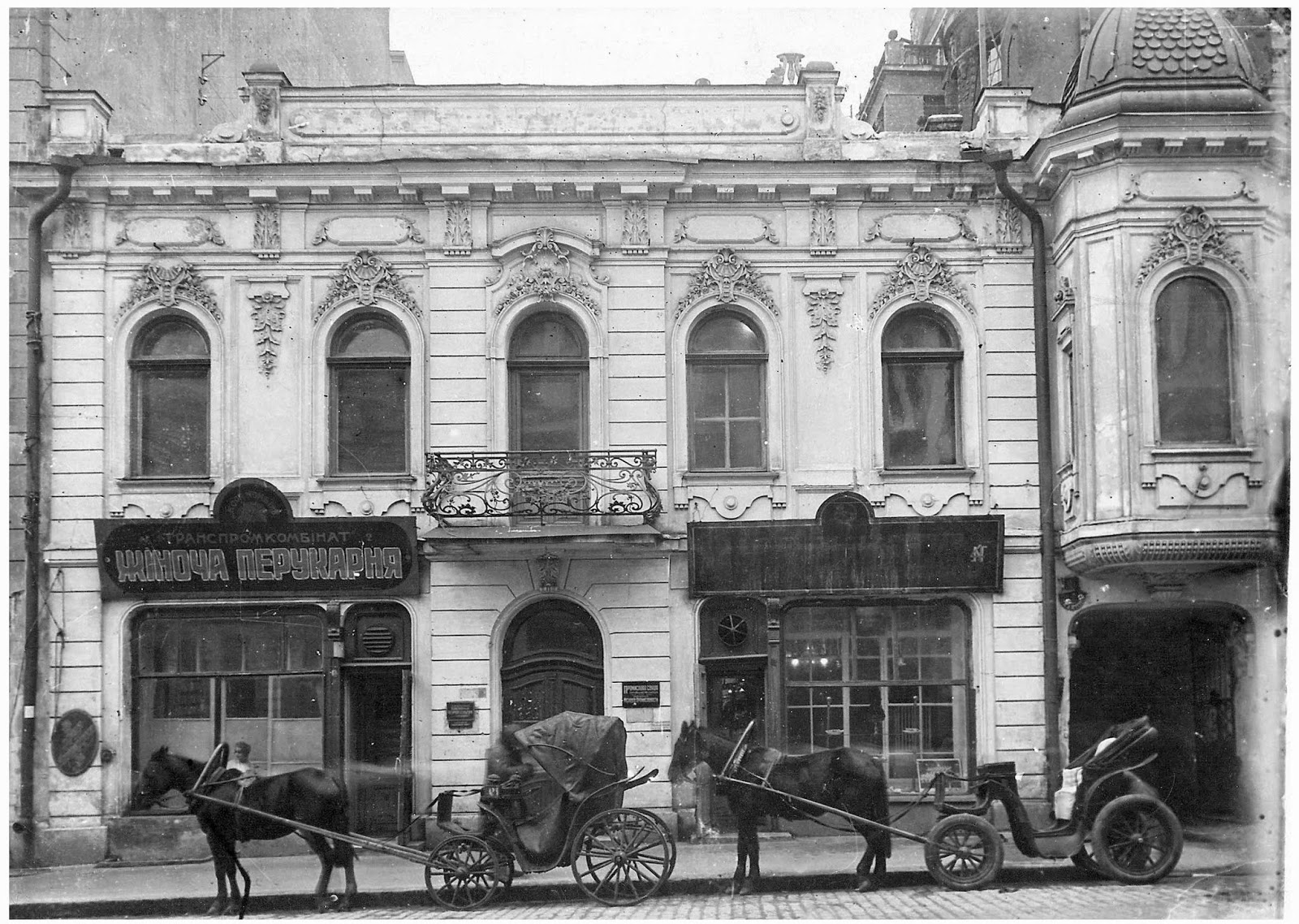
It is worth noting that closed carriages were not common in the cab service at that time; in fact, we found virtually no images of any closed carriages in old photographs of Kharkiv. Protection from bad weather consisted of a small folding top, which essentially covered only the passengers’ shoulders and heads. If the wind and rain blew in their faces, even the folding top offered no protection. The cab driver was completely exposed—he got the full brunt of the weather and the road spray. Back then, cab drivers were called “vankos.” Nowadays, taxi drivers who wait for passing customers on the street are called “ivans.”

- 1st Kharkiv Gymnasium - 17.09.2026
- The Oldest Movie Theater in Ukraine - 24.08.2026
- The Alkhovsky Estate - 14.08.2026