After an unplanned stop in Trostyanets’ on July 22 of this year, our close-knit team set off again.
The village of Tokari is located 2 km from the city of Sumy. Although Tokari today actually consists of two settlements (Tokari and Mala Chernetchina), they were later merged into one. In Tokari itself, as early as the beginning of the 20th century, one could admire the beautiful estate of A. D. Ignatiev. It was a two-story house with a projecting portico, in front of which stood pyramidal poplars. The first floor of the estate had a semi-basement, and the second floor featured shallow rustication.

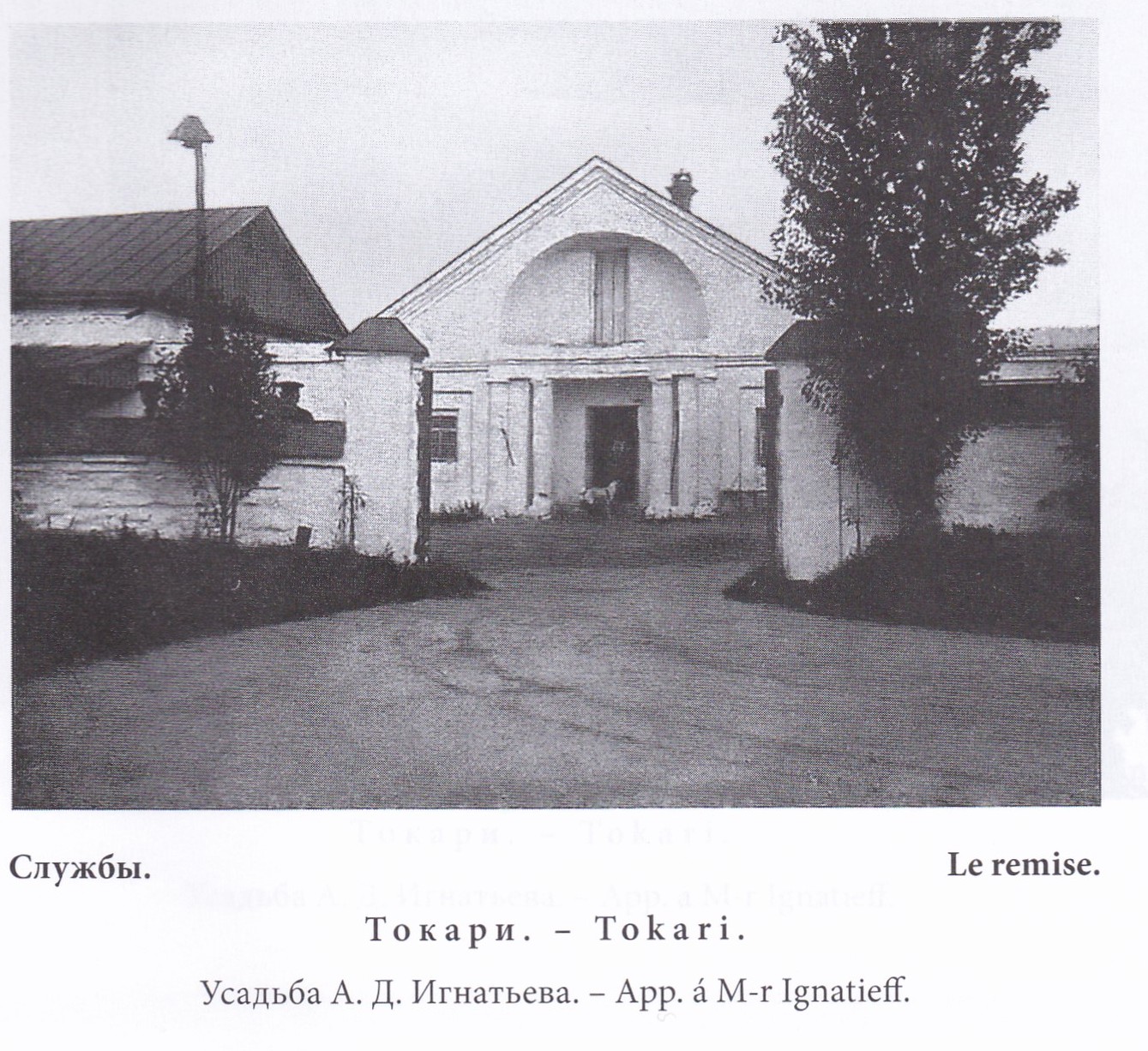
Alas, not a trace of the estate remains today. So we headed to the eastern part of the village, where the village of Mala Chernetchina—also known as Monastyrek—once stood. From these names, one can quite logically conclude that this settlement was somehow connected to monks. And that is absolutely true.
Long ago, on a small hill surrounded by forested mountains, stood the Sumy Assumption Monastery for Men. It was founded by the famous Colonel Gerasim Kondratyevich Kondratyev. It is believed that the monastery was founded in 1658, although the earliest documents referring to these lands date back only to 1671. In the first half of the 18th century, the monastery had three churches, all of which were built of stone. In 1750, the Church of the Dormition of the Mother of God was built, and in 1753, through the efforts of Lieutenant Colonel Yakov Alekseevich Shubsky, a gate church and bell tower dedicated to All Saints were constructed.
In 1755, a third church was founded in honor of the Archangel Michael, which included a refectory for the monastic community. The Sumy Dormition Monastery was considered one of the centers of culture and education in that region. It is believed that the famous Ukrainian enlightener, philosopher, and poet H. Skovoroda lived there for some time in the 1760s. The monks of the Dormition Monastery owned six large orchards and a mill with ten wheels on the Psel River.
During the reign of Empress Catherine II, a secularization reform was implemented. One of its objectives was the confiscation of church property and the abolition of some monasteries. In 1787, secularization (which had begun in 1764) reached the Sloboda Ukraine region. The monastery was closed, and the monastic community was ordered to relocate to Kuryazh. The buildings themselves were dismantled. The bricks from the main church were sold to the church in Verkhnia Syrovatka, the iron to the Sumy Resurrection Church, and the iron doors to the Sumy St. Nicholas Church. The iconostasis, by order of the Holy Synod, was transferred to the Kaplunovskaya Church. The Archangel Church was used for the construction of the bell tower of the Sumy Intercession Church. The stone wall surrounding the monastery was sold to the Chernetchinskaya Theological Church, and the wooden cells were sold to the residents of Sumy. The monastery’s peasants from Chernetchina moved into the other buildings and formed the parish of the former monastery’s All Saints Church. Only the All Saints Church remained.

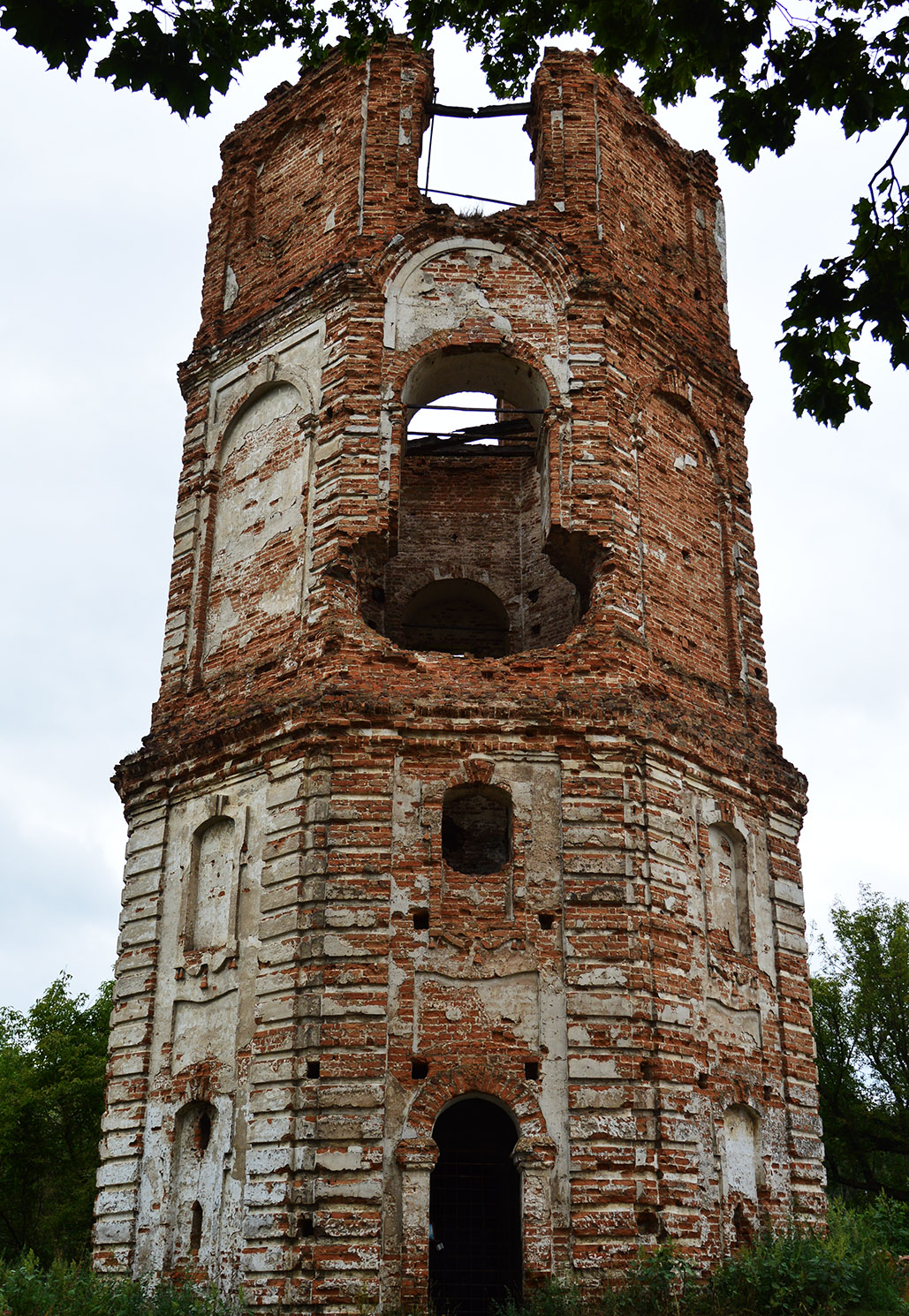
However, today the All-Saints Church in Mala Chernetchina has not survived in its entirety—all that remains is the bell tower, standing alone in the middle of the village and visible from afar.
After spending 20 minutes examining the ancient four-tiered 18th-century structure, clearly designed for defense, we continued on our way.
When asked if I would return to this place associated with Skovordin and Kondratiev to admire the beautiful Baroque-style building, I’m afraid I can’t give a definitive answer. It seems interesting enough, but I don’t feel drawn to go back.
So, the next stop on our journey is a village in the Krasnopolsky District of the Sumy Region called Hrunivka. On the way there, not far from the turn-off to our beloved Mohrytsya, there’s a rural eco-tourism estate. It’s wonderful that, even if it’s been a struggle, this sector is still developing in Sloboda Ukraine. By the way, the distance from the estate to the beauties of Mohrytsya is only about 6 kilometers.

But the situation with Grunovka itself is complicated. It seems to be ours—part of Sloboda Ukraine—but at the same time, not quite. The fact is that in 1796, as a result of Emperor Paul I’s provincial reform, the Sloboda-Ukrainian Province was reestablished, and the Myropillia District, which had previously been part of the Kharkiv Viceroyalty, was abolished. Its lands were transferred to the Sudzha District of the Kursk Governorate. These territories were not returned to the Ukrainian SSR until October 16, 1925. So it turns out that it’s ours, but not quite. Be that as it may, it’s still worth a trip to Hrunivka. And here’s why.
The ancient Baryatinsky princely family descended from the princes of Chernihiv. Prince Alexander Andreevich (the 16th generation from Rurik) is considered the founder of the family.
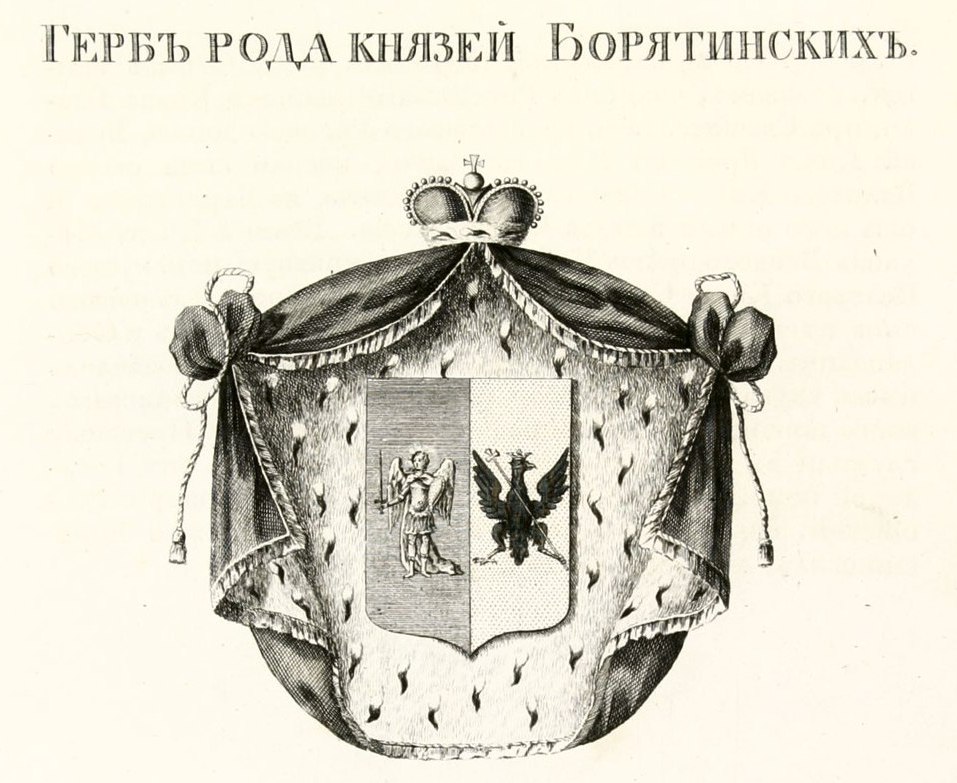
During the 18th and 19th centuries, members of this ancient family significantly improved their financial standing through successful careers and advantageous marriages. Prince Ivan Sergeyevich Baryatinsky (1738–1811) was a renowned diplomat of the Catherine the Great era and ambassador to Paris. His only heir was Prince Ivan Ivanovich (1767–1825). In 1799, Paul I granted him the hereditary rank of Commander of the Order of Malta. While serving at the diplomatic mission in London, the prince married the daughter of Lord Sherborne. From 1806 to 1812, he served as ambassador to the court of the King of Bavaria in Munich, where he gained a reputation as a well-known Anglophile.
Between 1811 and 1820, Ivan Ivanovich built the magnificent family estate of Maryino near the village of Ivanovskoye (founded by Hetman Ivan Mazepa) and named it in honor of the prince’s two wives: Maria Franziska Detton, who died shortly after the birth of their daughter, and Maria Fyodorovna Keller.
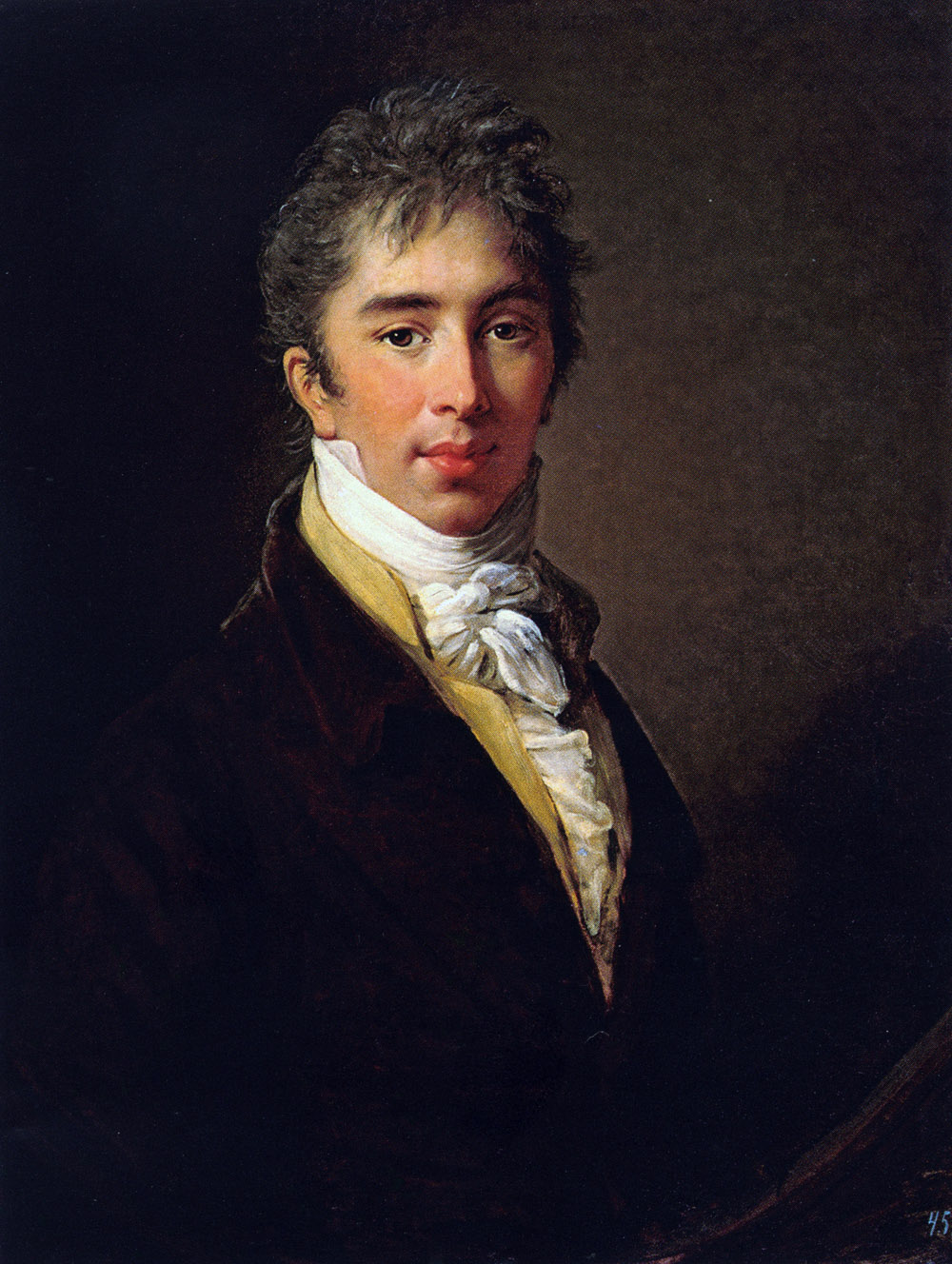
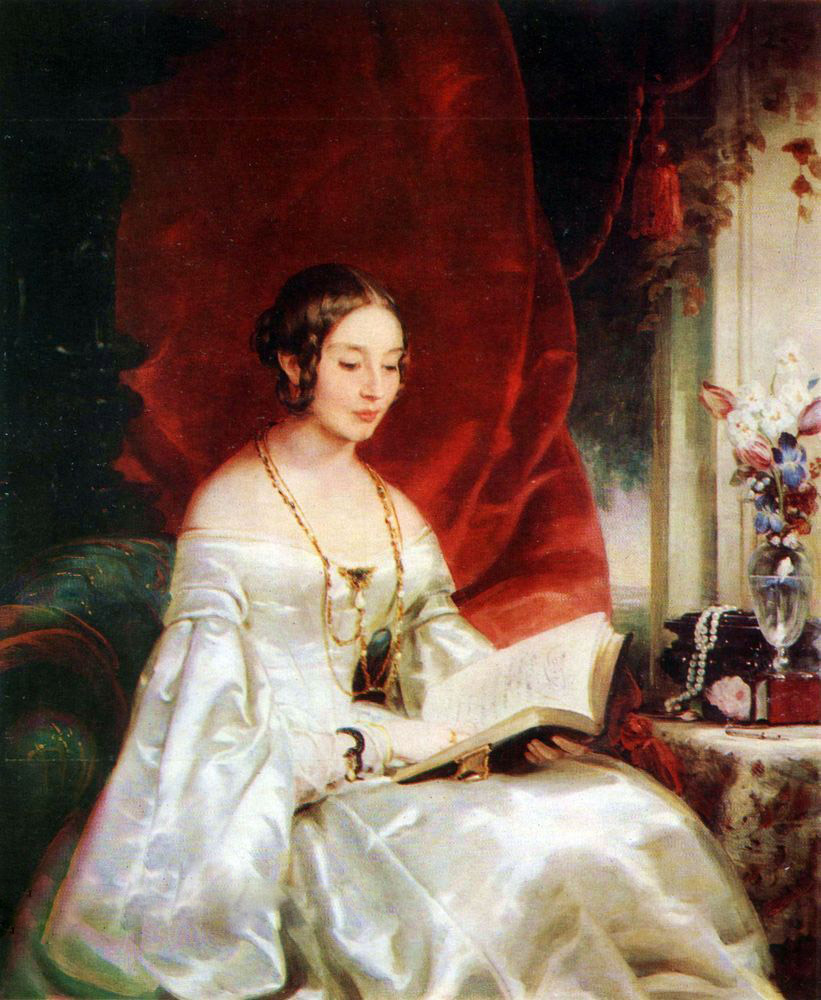
From his two marriages, the prince had eight children, who in turn went on to strengthen the family’s position. Ivan Ivanovich’s daughters were renowned for their extraordinary beauty. The renowned Scottish portrait painter Christina Robertson, who worked at the court of Nicholas I, painted portraits of Olga Ivanovna Baryatinskaya—the wife of Count Vladimir Petrovich Orlov-Davydov.

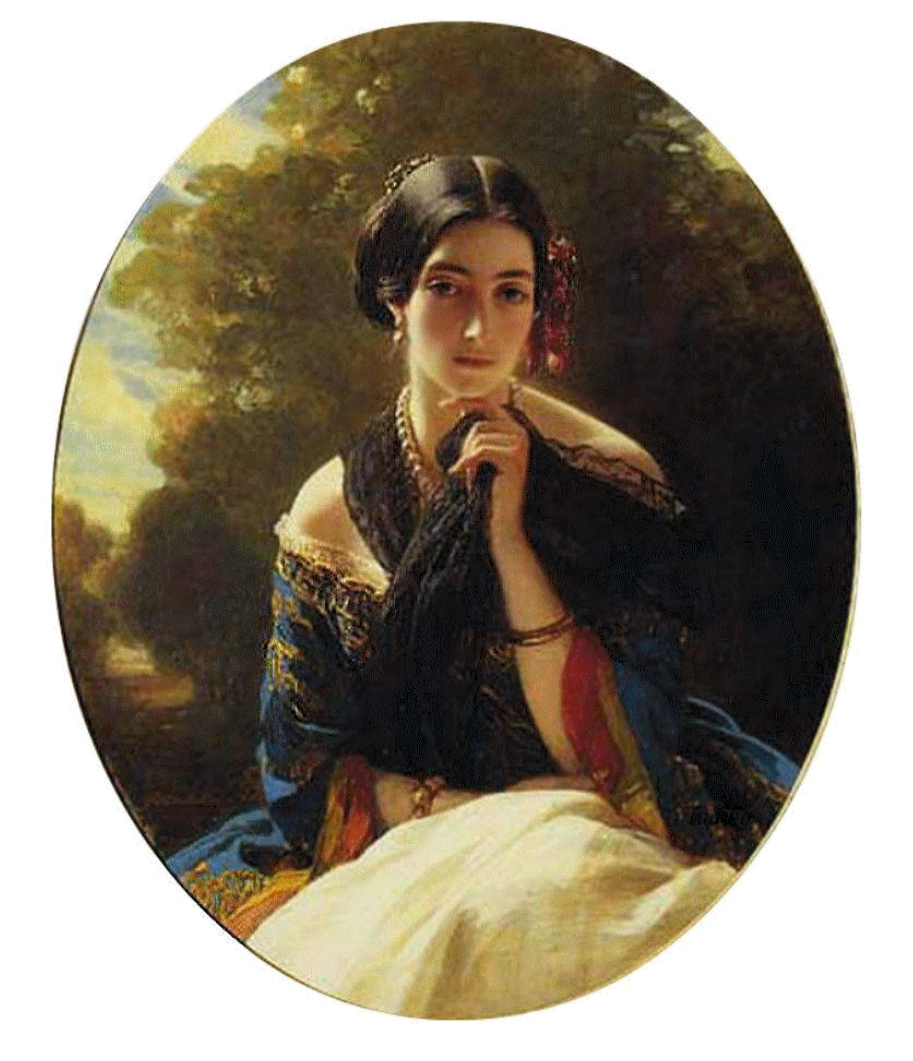
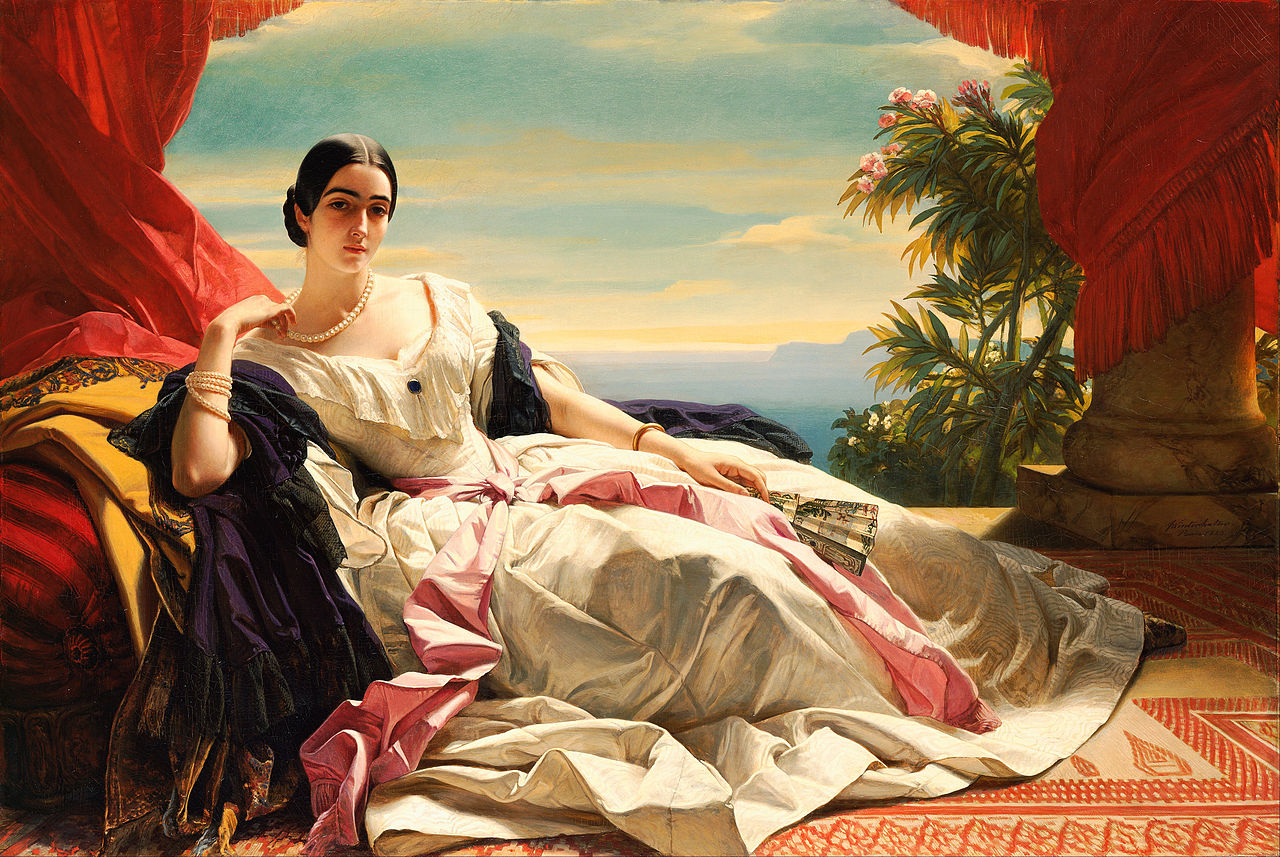
Leonilla Ivanovna (married name: Sayn-Wittgenstein) was widely regarded as one of the most beautiful women of her time and lived to be 102 years old. Franz Xaver Winterhalter, one of the most fashionable German portrait painters of the mid-19th century, immortalized her image for the world in his paintings.
For example, the eldest son, Prince Alexander Ivanovich, is known for breaking the resistance of Shamil’s troops and capturing him in 1859. But Ivan Ivanovich’s children inherited more than just their parents’ beauty, brilliant minds, and social standing. The Baratyinsky princes were among the largest landowners in the Kursk Governorate. They inherited numerous houses, estates, and villages.
In 1860, in the Lgov District of the Kursk Governorate alone, Prince Vladimir Ivanovich Baryatinsky owned about 30 settlements. As for the youngest of Prince Ivan Ivanovich’s children, Viktor, he owned the village of Nikolaevka and the settlement of Hrunivka in the Sudzha District. He was no less remarkable a figure than his older brothers and sisters.

In 1841, after graduating from St. Petersburg University, the prince enlisted in the navy of his own accord and soon joined the Black Sea Fleet as a midshipman. Victor Ivanovich soon earned a reputation as an excellent sailing officer and caught the attention of Admirals Lazarev, Kornilov, Nakhimov, and others. As a member of the Odessa Society of History and Antiquities, the prince devoted all his free time to archaeology, which was his passion. He even named his personal yacht “Olbia.” While living in Sevastopol and later in Greece, during his voyages abroad, Baryatinsky devoted his time off from duty to archaeological research and was the first to conduct excavations at Chersonesos Taurica. Incidentally, it is believed that he was the one who identified the location in Athens where the Theater of Dionysus was supposed to have stood at the foot of the Acropolis. Only the departure of his ship from Greece prevented him from digging to the depth at which the theater was later actually discovered by the renowned archaeologist Schliemann.
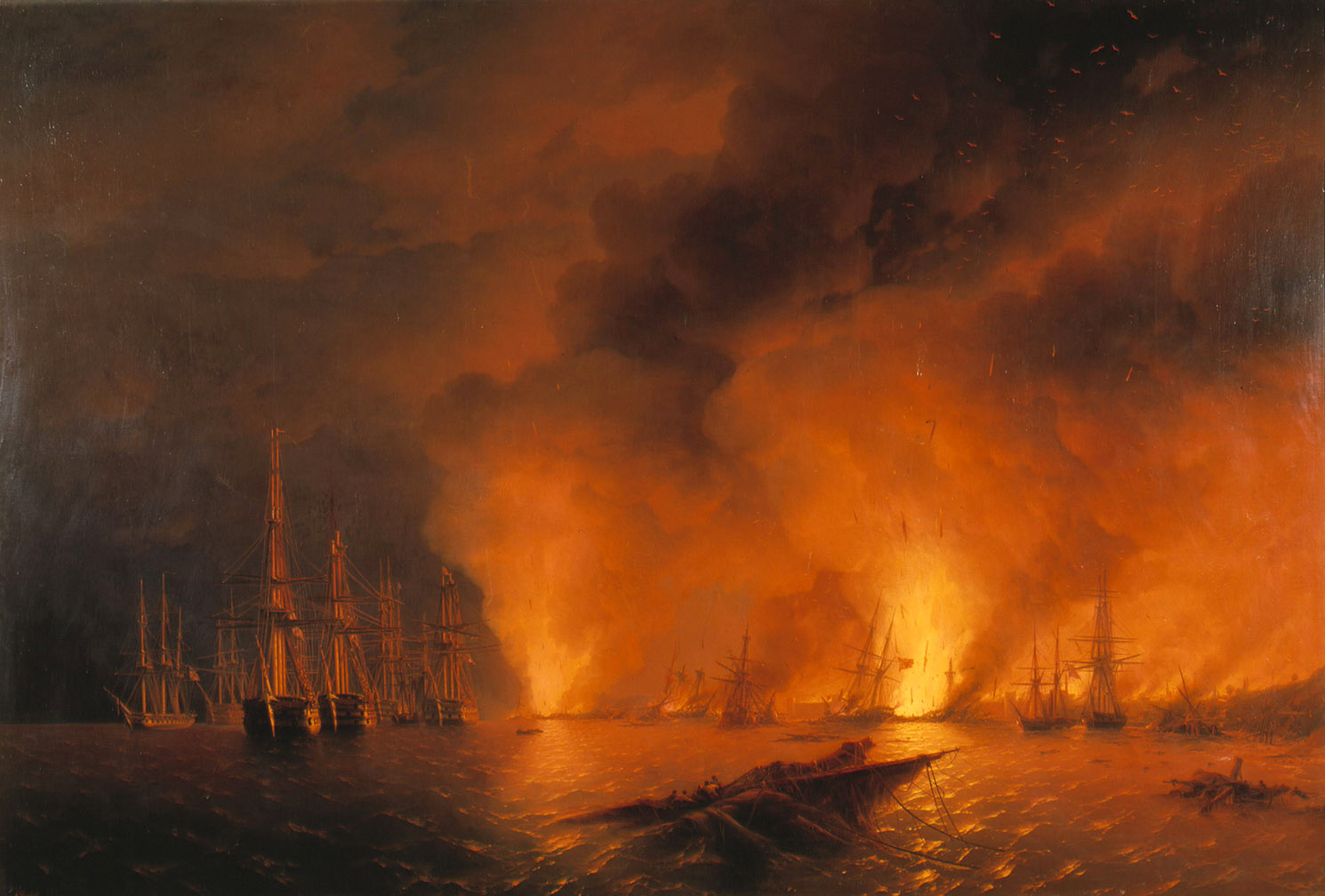
The highly talented painter Hovhannes Ayvazyan (Ivan Konstantinovich Aivazovsky) created more than one work on the theme of the Crimean War. The artist dedicated two paintings to a single battle: “The Naval Battle of Sinop, November 18, 1853” and “The Battle of Sinop: The Night After the Battle.” Aivazovsky recreated the latter work based on a sketch by Prince Viktor Baryatinsky, which the prince had drawn on site at the request of Vice Admiral Nakhimov. It is interesting to note that the prince not only noted the positions of the Russian ships but also recorded the main colors of the battle separately. “In order,” he later said, “to convey all this to some painter.”
The owner of Hrunivka also took part in the defense of Sevastopol. After falling seriously ill with typhus, he was taken out of the city for treatment. In the fall of 1855, Viktor Ivanovich married Maria Apollinarievna Buteneva. His young wife was her husband’s equal in intellect and originality. Because she was born in Constantinople, she was nicknamed “Princess Kokona.” She spent her childhood and youth in Rome, spoke Italian fluently, and had a thorough knowledge of Italian art; she was an excellent musician and a superb painter.
After the peace treaty was signed, Viktor Ivanovich retired with the rank of captain 1st rank and lived alternately in Odesa (where he bought a magnificent house) and at his beloved estate in Hrunivka. There he built a huge estate (on par with the family estate in Maryino) with 42 rooms, which was sometimes called the “Mirror Palace.” Inside, the prince set up an entire museum of antiquities, a vast library, and an art gallery.
While living at the estate, the prince was also actively involved in public affairs as an honorary magistrate and a member of the local council. Around 1861, a highly unusual church dedicated to Saint Michael the Archangel was built in Hrunivka.
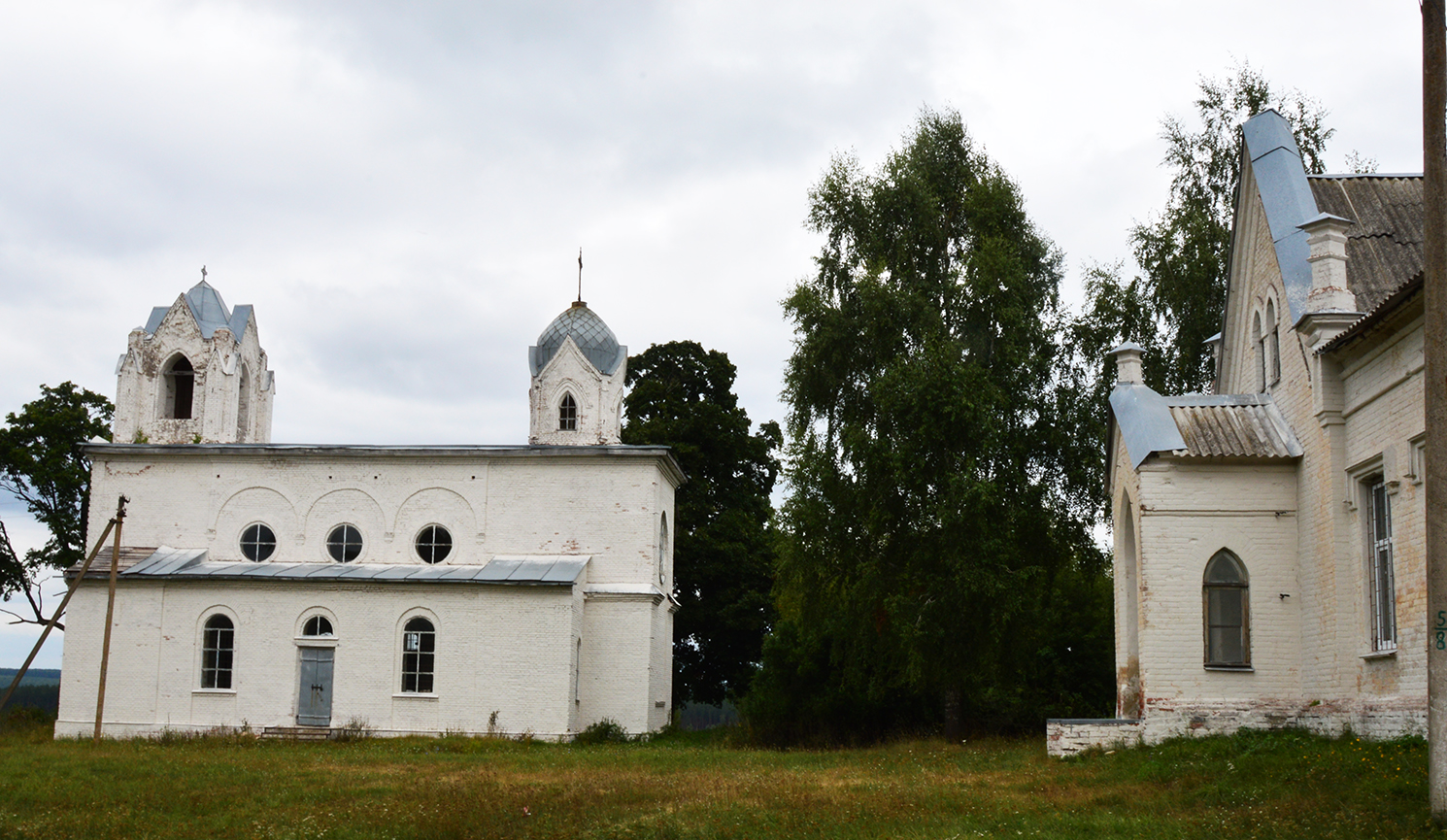
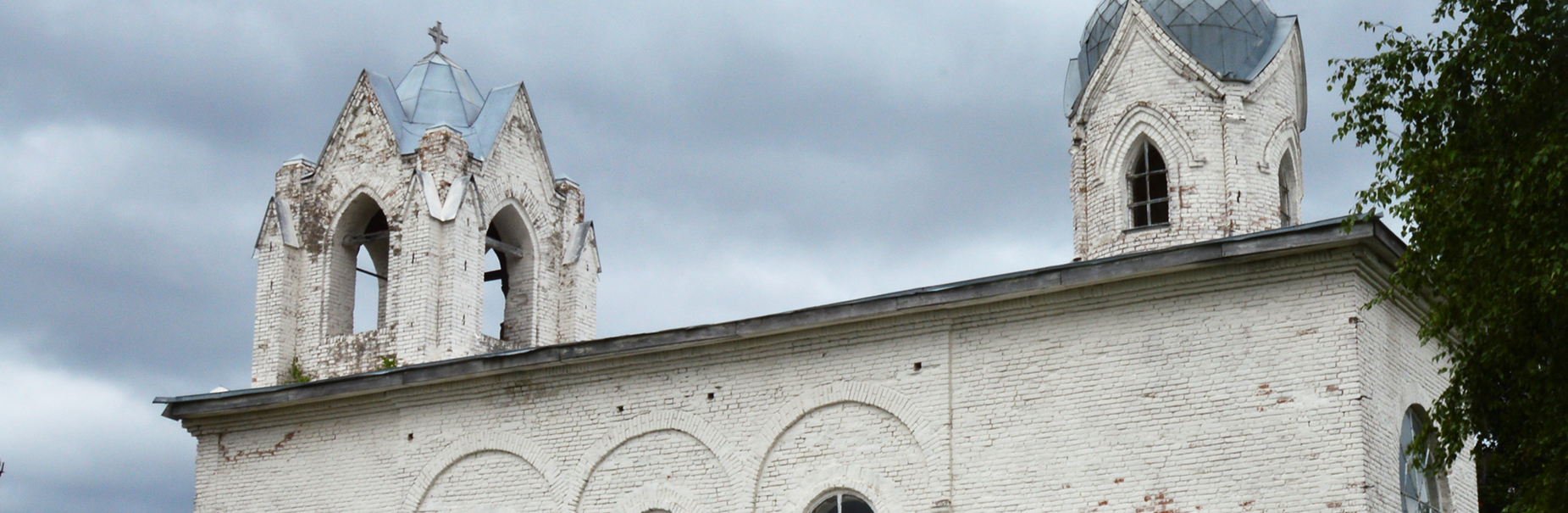
What makes this church unique is that it combines Catholic and Orthodox architectural styles. This may be because Maria Apollinarievna herself was a Roman Catholic. Next to the church, a parish school was built in the same style.
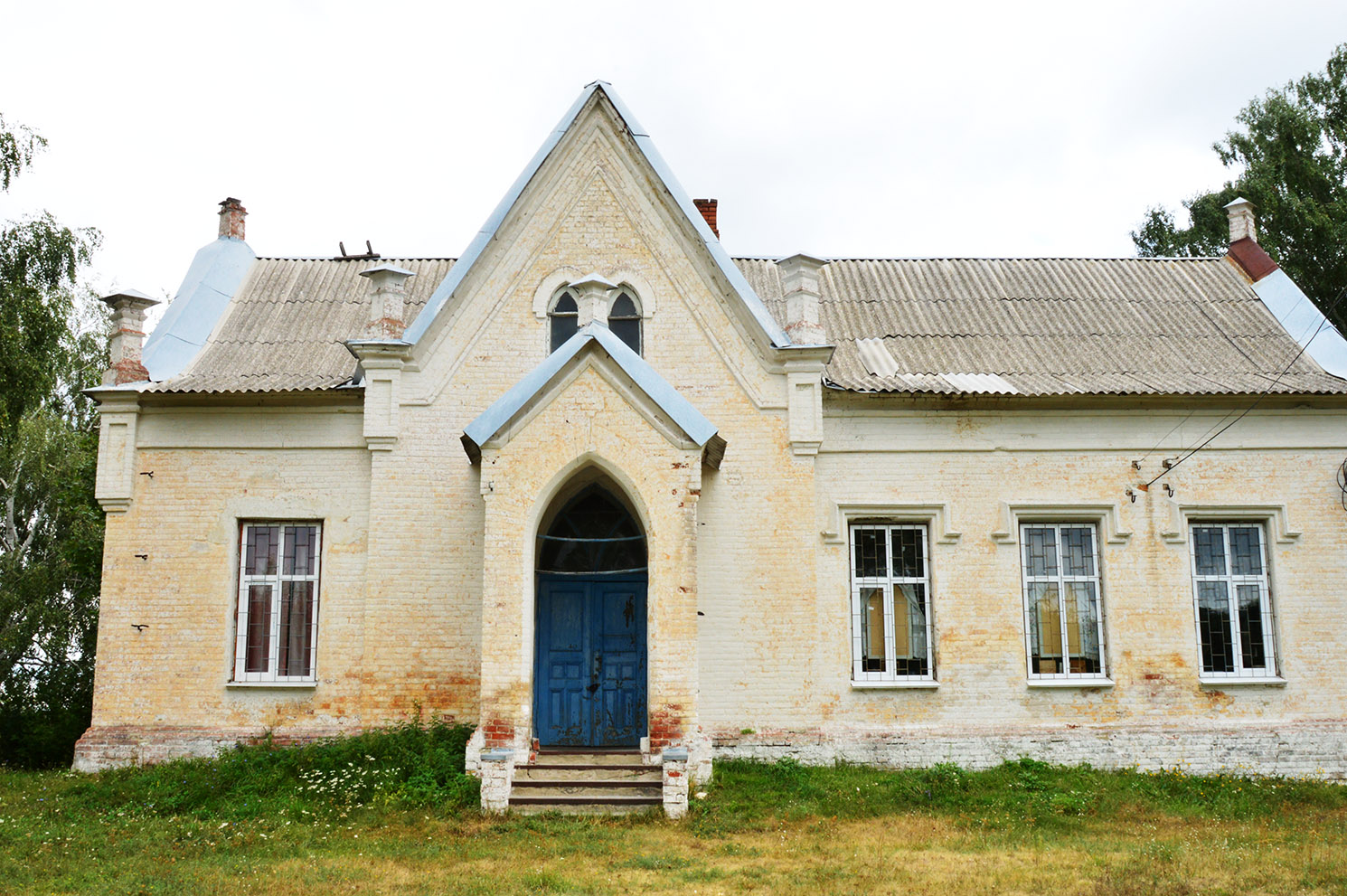
It should be noted that church services were held at the Hrunivka Church for both Orthodox and Catholic worshippers. In 1874, Princess Baryatinskaya founded a children’s orphanage there.
Needing a warm climate due to illness, Prince Viktor Ivanovich spent the last 12 years of his life almost exclusively in Italy. He died on May 8, 1904, in Rome at the age of 81. Two years later, Maria Apollinarievna also passed away in Lausanne.
Today, not a trace remains of the vast estate of the Baryatinsky princes in Hrunivka. The unique church, despite the fact that its bell tower has lost some of its original shape, has been preserved almost entirely. The building of the parish school also remains…
But will it last? It all depends on us.

- About the military pilot school and the airfield in Kharkiv… - 04.11.2020
- Nikanor Savich—A Political Career by Mistake - 13.07.2020
- And once again, about the Cavalry Guards… - 21.01.2020