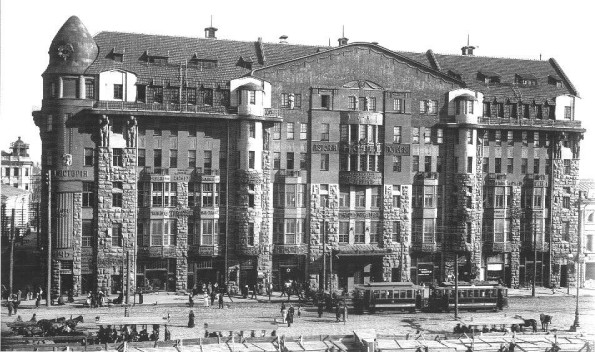
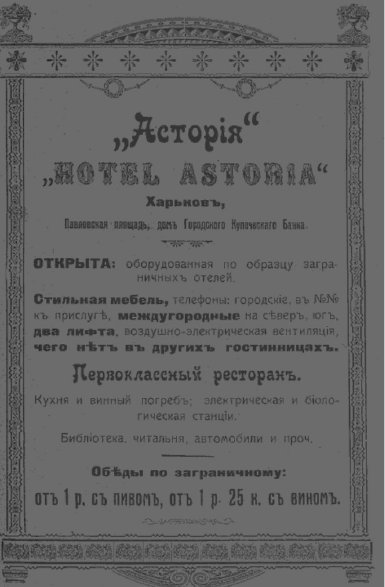
We are all familiar with the building that once housed the “Melodiya” store—a favorite among many Kharkiv residents—which also served as the former Merchant Bank and the Astoria Hotel.
One of the first buildings in Kharkiv to feature a reinforced concrete frame. However, few residents of Kharkiv realize that this building could have looked completely different…
To begin with, in the 19th century, the market square was surrounded by two-, three-, and four-story stone buildings. One of the first to appear was the large two-story stone house of the merchant Lamakin, built on the corner of Pletnevsky Lane by the provincial architect P. A. Yaroslavsky. This house was considered one of the finest in the city. In 1816 and 1820, rooms in it were set aside for Emperor Alexander I during his visits to Kharkiv. In 1870, the city’s Merchant Bank purchased the house from Lamakin’s heirs, opened an office there, and rented out part of the premises. From 1888 to 1891, several rooms on the second floor housed the Public Library, which did not yet have its own building at that time.
In 1908, the building was deemed unsafe, and a design competition was announced for the construction of the Merchant Bank building.
A total of 21 projects were submitted, of which 15 were local (by Kharkiv architects) and 6 were from outside the city.
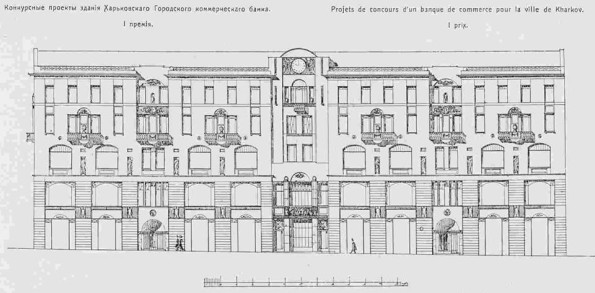
Ultimately, according to the judging panel’s minutes, the awards were presented on June 16;
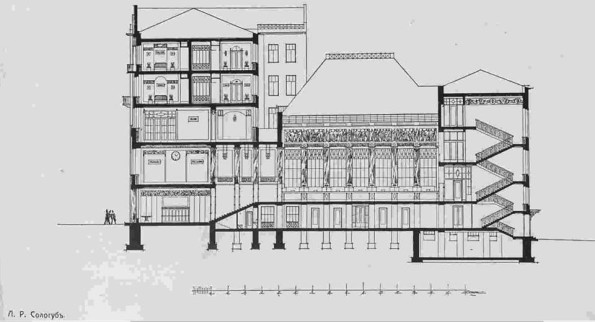
– First prize (1,400 rubles) – for the design titled “Spring” by L.R. Sologub;
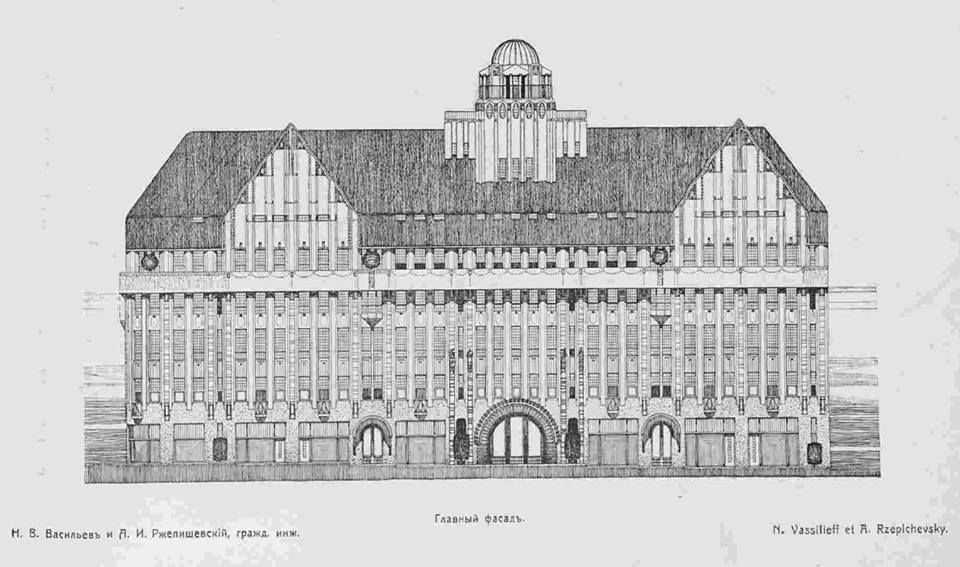
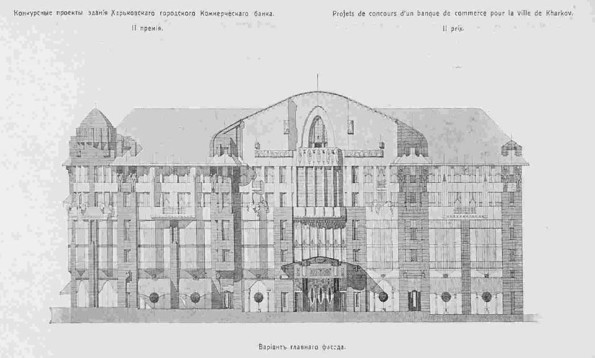
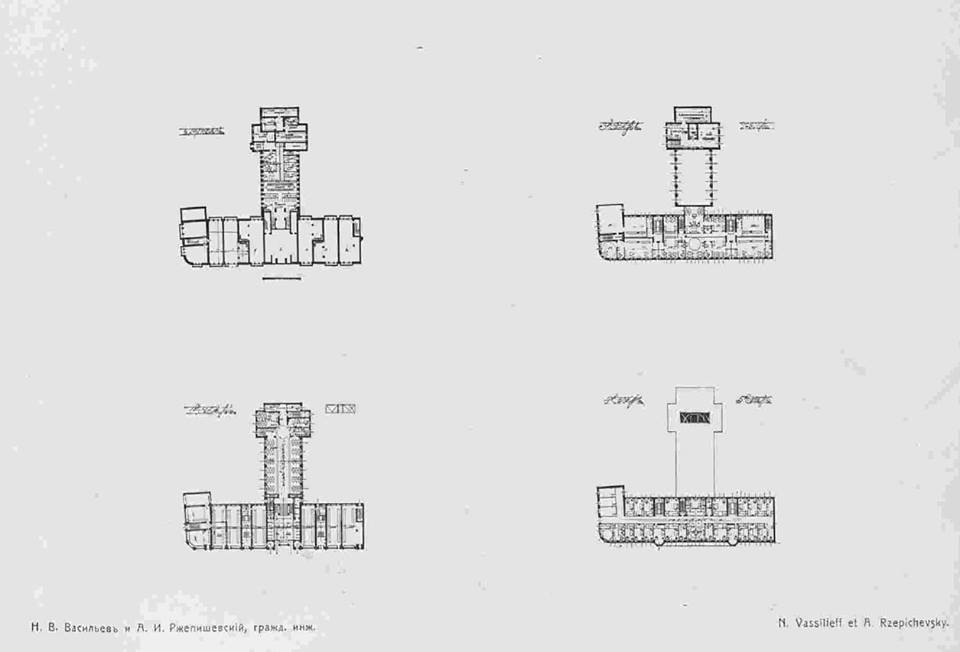
– Second (1,200 rubles) – the project titled “Bank” – designed by N.V. Vasilyev and O.I. Rzhepishevskyi (Vasilyev and Rzhepishevskyi actually submitted not one but two versions of the main facade).
– Third (450 rubles) – the “Bank” project – designed by D.D. Smirnov.
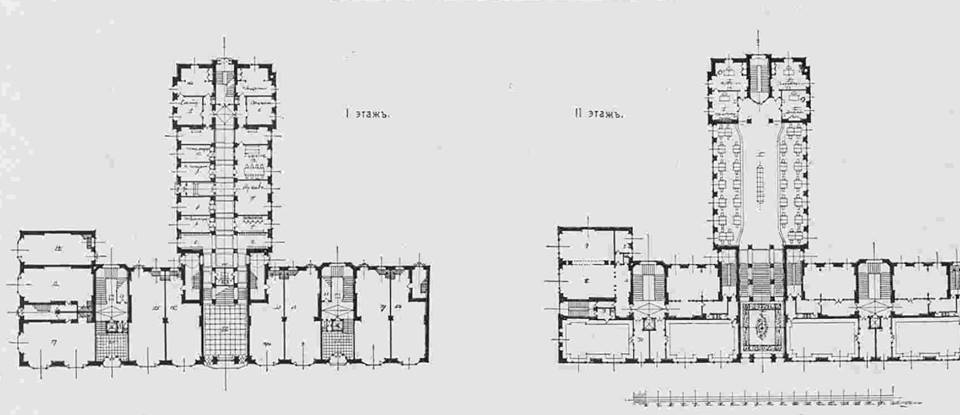
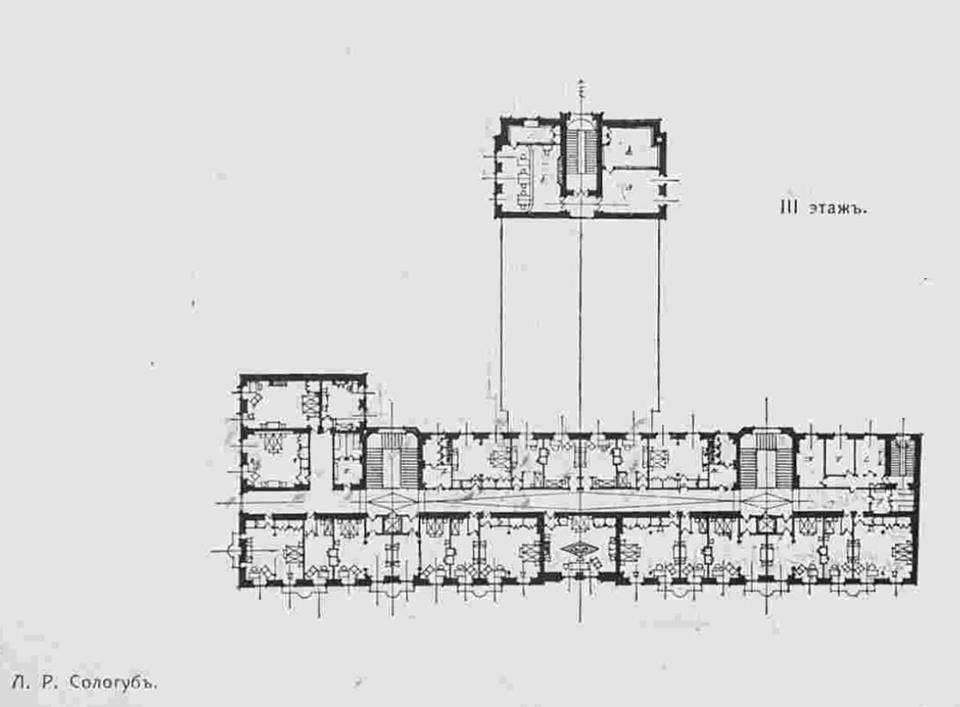
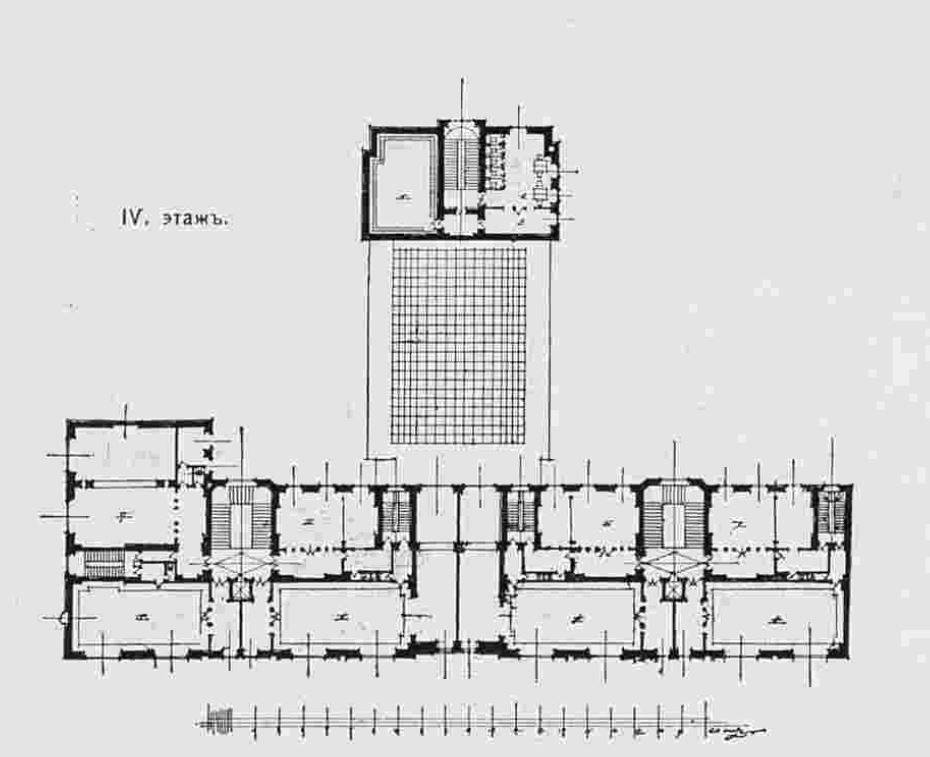
“Spring.” The layout of the building masses is well-designed and allows for convenient future use of the right side of the site. The restroom near the main lobby is dark. The large operating room and the rooms directly adjacent to it are well arranged. However, it would have been preferable to place each storage room and the staff lounge on the second floor instead of the third, although by doing so the architect achieved a more compact overall layout. The grand staircases in the front wing are well arranged, as are the offices and furnished rooms. The façade, though austere in its details, appears somewhat crowded in its overall layout. The perspective of the lobby is artistically executed, and the style is characteristic of a bank.


The project is titled “Bank.” The overall layout is well-conceived. The large main hall and adjacent rooms are well-lit and effectively grouped (it would be preferable to extend the staircase leading to the upper floors of the bank all the way to the ground floor, which is easily achievable). The placement of the staircases in the front wing is well-designed. The facades are interesting and artistically executed, though somewhat overly decorative.

“Banchek.” The overall layout is very interesting and well-designed. The floor plan is practical for the bank’s internal operations, effectively separating the bank’s offices from the public areas. The restrooms in the main lobby are dimly lit, though they are conveniently located. The main hall is spacious and comfortably laid out, though somewhat distant from the main entrance. The rooms adjacent to the hall and located on the upper floors are also conveniently situated, as they can be accessed without passing through the main hall. The connection between the main entrance and the lobby is not particularly grand due to the narrow passageway, which would ideally be widened slightly. Among the project’s shortcomings are the excessive number of stairwells in the main front wing—particularly in its front section—and the insufficient lighting in the corridors of the furnished rooms. The façade is weak in both composition and execution and lacks any artistic merit.
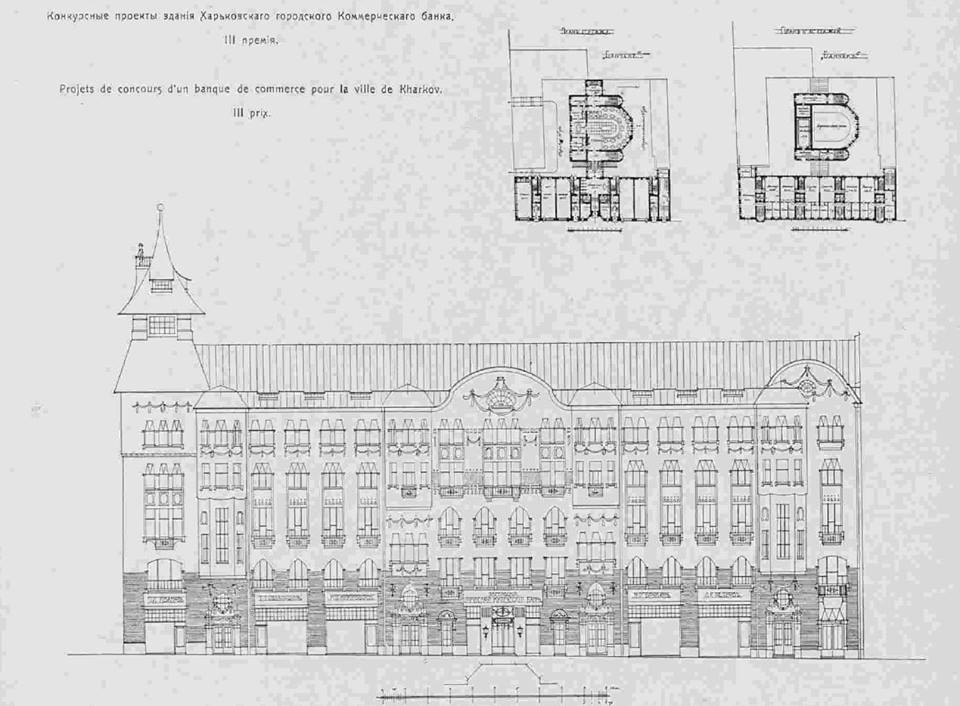

The projects that received awards or were purchased from the contest organizers became the property of the Merchant Bank.
The plan was to construct the building based on L.R. Salogub’s design. But the bank’s board, led by P.M. Akimenko, after meeting with Rzhepishevskyi and listening to an impassioned description of the future building’s merits, decided to implement the design by N.V. Vasilyev and O.I. Rzhepishevskyi, which impressed with its majestic, imposing facade in the “Northern style.” “The facades are interesting and well executed, though overly decorative”—such was the commission’s opinion, but certainly not that of the Kharkiv merchant class. What most attracted the attention of the Kharkiv merchants was the original structural solution using precast reinforced concrete elements of the “Gennebik” system, which allowed for more economical construction.
The results of this research are covered in a separate article.
In particular, this article draws heavily on the 1909 issue of the journal *Zodchiy* and the 1915 *Kharkiv Calendar*, as well as numerous online sources about Rzhepishevskyi.
The building was damaged as a result of a Russian missile strike on the Palace of Labor on March 2, 2022, and lost some of its glazing.

- About the military pilot school and the airfield in Kharkiv… - 04.11.2020
- Nikanor Savich—A Political Career by Mistake - 13.07.2020
- And once again, about the Cavalry Guards… - 21.01.2020