The history of Kharkiv spans three and a half centuries. However, as we know, it contains quite a few “blank spots” worthy of serious study. One such “blank spot” is the network of underground passages beneath the central part of our city, about which there are still more myths than facts to this day. Clergymen began studying them as early as the late 18th and early 19th centuries. Some of the passages, located beneath religious buildings, were already being used for the church’s needs at that time.
Later, in the second half of the 19th century and early 20th century, secular researchers from the capital of Slobozhanshchyna also devoted themselves to studying this romantic and mysterious aspect of Kharkiv’s urban development. By studying archival materials and drawing on the knowledge of long-time residents, they reached the well-founded conclusion that there was an extensive network of underground structures beneath the central part of the city, partly used for practical purposes (for example, by the well-known Kharkiv merchant Zheverzheev) and partly under the jurisdiction of the church (the underground section of the Pokrovsky Monastery complex).
The main reasons researchers turned their attention to Kharkiv’s underground structures were both an interest in the history of their hometown and its mysteries, as well as the practical need to study what lies beneath the feet of Kharkiv residents and could pose a threat to construction—and sometimes even to movement.
The first quasi-scientific study devoted to the Kharkiv underground passages was conducted in preparation for the 12th Archaeological Congress, held in Kharkiv in 1902. In our opinion, such a study is the letter from the former rector of the Kharkiv Imperial University, Professor I.P. Shchelkova, to D.I. Bahalii, chairman of the preliminary committee for organizing the 12th Archaeological Congress, published in the Proceedings of the Preliminary Committee alongside M. Levakovsky’s article “On the Underground Passages of Kharkiv.” This article had previously been published in the *Kharkiv Vedomosti* and was, in essence, a direct response to D.I. Bahalii to the residents of Kharkiv, asking them to provide all known information about Kharkiv’s underground passages to the preliminary committee.
The increasing number of cave-ins and discoveries of ancient underground structures during excavation and construction work in the early 20th century led to the creation of two departments under the Kharkiv City Administration, whose purpose was to study the underground space of the city of Kharkiv:
1) The Department for the Management of Underground Structures and Coordination of Underground Work within the Technical Department of the Kharkiv City Administration;
2) Commission for the Study of Underground Passages in Kharkiv.
The history of the department’s activities can be traced through documents in the State Archives of the Kharkiv Region from April 11, 1913, to November 27, 1914.
We can gain the most complete picture of the commission’s activities from its minutes, published in the *Bulletin of the Kharkiv City Duma*, which cover the period from July 24, 1913, to July 2, 1914, as well as from numerous articles in the Kharkiv press from 1913–1914.
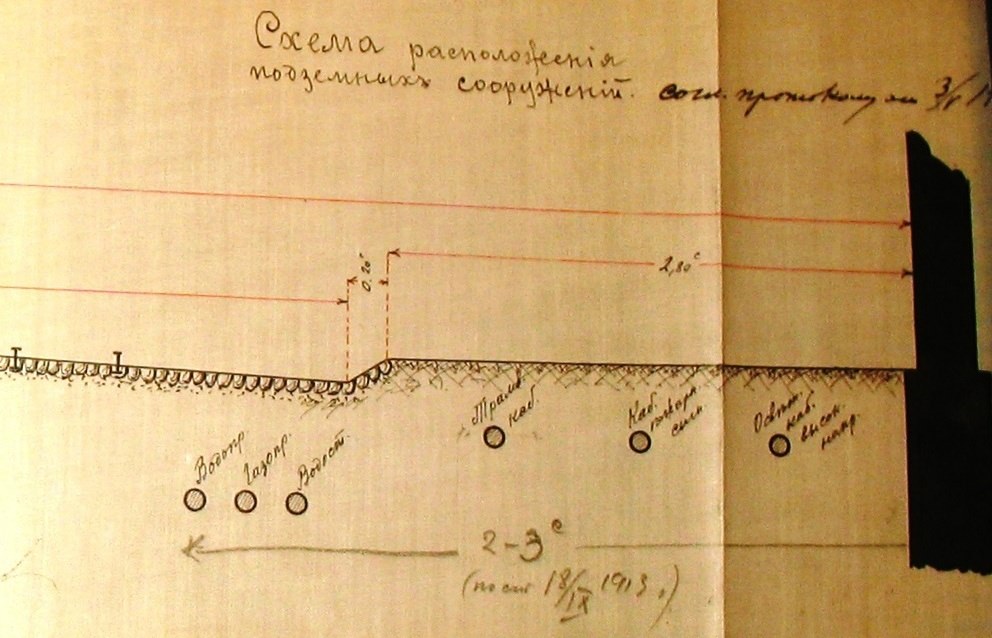
On May 3, 1913, the Kharkiv City Council held a meeting of a special commission tasked with determining the locations and conditions for laying an underground telephone cable. The operative part of the commission’s meeting minutes stipulated that every project for underground structures in the city of Kharkiv must be submitted for review by the conciliation commission on the construction of underground structures, and only after receiving its approval could it be submitted to the City Council for approval.
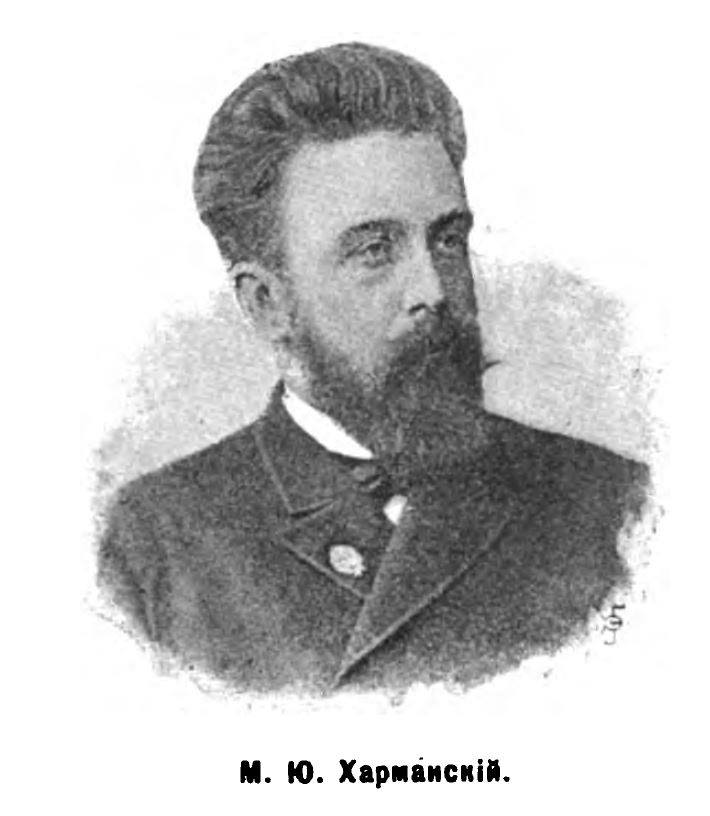
Ten days later, Z.Y. Kharmansky (later chairman of the commissions for the coordination of underground work and for the inspection of underground passages), in his report to the city administration dated May 13, 1913, noted that it was necessary, as soon as possible, “to measure on site all pipes, cables, wells, and other underground structures; to plot them on a single drawing at a sufficiently large scale, to precisely mark their location in both the horizontal and vertical planes, and to compile a complete inventory of them.” Furthermore, in his opinion, given that the number of underground structures is constantly increasing, it is necessary to establish a permanent body under the City Administration that would oversee all underground work, their classification and systematization, as well as the preparation of plans for all underground structures—which was a separate problem at the time due to the lack of as-built drawings for most of the existing underground structures…
That body was the Department for the Management of Underground Structures and the Coordination of Underground Work, whose mission was twofold:
- First, to compile a complete overview of all underground structures within the city limits;
- Second, to coordinate the activities of various individuals and organizations—both private and public—as they carry out various types of underground work.
The issue of the department’s employees’ chain of command was resolved quite simply: their immediate supervisor was the city engineer, and the entire scope of work was overseen by a member of the engineering department’s administrative board within the Technical Division.
Thus, as early as 1913, it became an urgent priority for the Kharkiv city authorities to survey and organize the existing underground structures, as well as to develop standards and regulations governing earthwork, the installation of utilities, and the construction of new underground structures.
To address this complex challenge, specialists from various city departments were brought in to serve on the commission responsible for coordinating underground construction work.
The aforementioned board member, engineer Z. Harmansky, was appointed chair of the commission; the following individuals were appointed as members of the commission:
- City Engineer B. Kustersky;
- Chief Engineer of the Postal and Telegraph District, Engineer Ivanov;
- B. Gamrat-Kurek, manager of the municipal power plant network;
- D. Titz, Chief Engineer for Water Main Expansion;
- S. Ponomarev, Chief Engineer of the Water Supply System;
- Chief Engineer of the Pylkov Municipal Power Plant;
- G. Stefanovich, gas plant technician;
- D. Cherkes, Chief Sewer System Contractor;
- Secretary and Clerk of the Technical Department of the City Administration, Engineer M. Yevseenko.
As can be seen from the list above, the composition of the commission for the coordination of underground work was not chosen at random but was determined, first and foremost, by the extent to which various municipal departments were involved in the conduct of underground work.
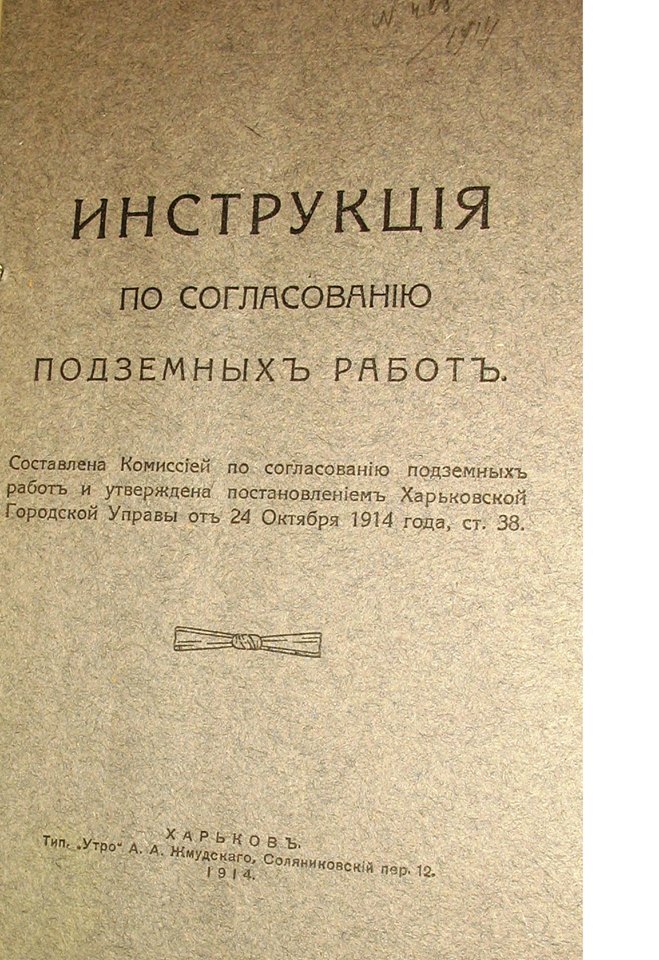
Over the course of nine months in 1914, the commission painstakingly drafted the “General Considerations on the Protection of Underground Structures,” which resulted in the “Instructions for the Coordination of Underground Work.” These instructions established clear rules for carrying out such work and were mandatory for all city departments conducting underground work.
What types of cables and pipes, at what depth and at what distance from one another, in what sequence and on what basis they should be installed, which agencies should carry out the work, and how they should be supervised—these are the main points of this document, which is crucial for the safe conduct of underground work and the subsequent operation of underground structures in our city.
Monthly meetings and inspections, the development and approval of project documentation, the resolution of disputes between various agencies and services conducting underground work, and the study and improvement of the underground space of the city of Kharkiv as a whole— —these were the responsibilities of the Department for the Management of Underground Structures and Coordination of Underground Work within the Technical Department of the Kharkiv City Administration. The discovery of new sections of underground passages in central Kharkiv in the summer of 1913 led the City Council, upon the governor’s proposal No. 2199 dated July 2, 1913, to instruct City Engineer B. Kustersky and City Architect A. Linnik to investigate the discovered underground passages, and Council member Z. Kharmansky to establish a commission to investigate the underground passages with the participation of employees from the relevant city departments.
Already at the commission’s first meeting, the issue of a large-scale archaeological study of Kharkiv’s underground passages was discussed, as well as the mapping of already discovered and presumed passages onto a plan of Kharkiv, with the aim of alerting homeowners and builders to the need to observe safety precautions when laying the foundations and erecting the walls of buildings.
Due to the lack of archaeological data, it was decided to invite a representative of the Kharkiv Archaeological Society to serve as a member of the commission and to ask the society to provide all materials currently available on the subject under study.
Representatives of the Historical and Philological Society of Kharkiv Imperial University actively joined the commission’s work. Among them were A.S. Fedorovsky, head of the university’s geology department; E.M. Ivanov, head of the historical archives; and Professors V.I. Savva and M.F. Sumtsov.
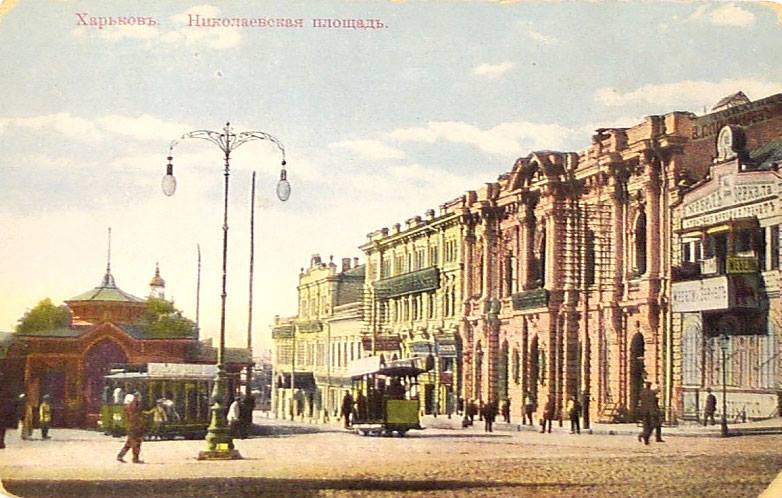
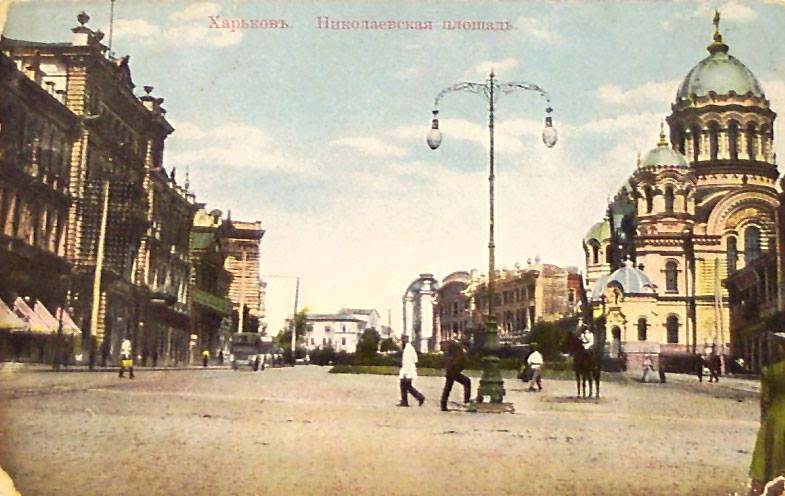
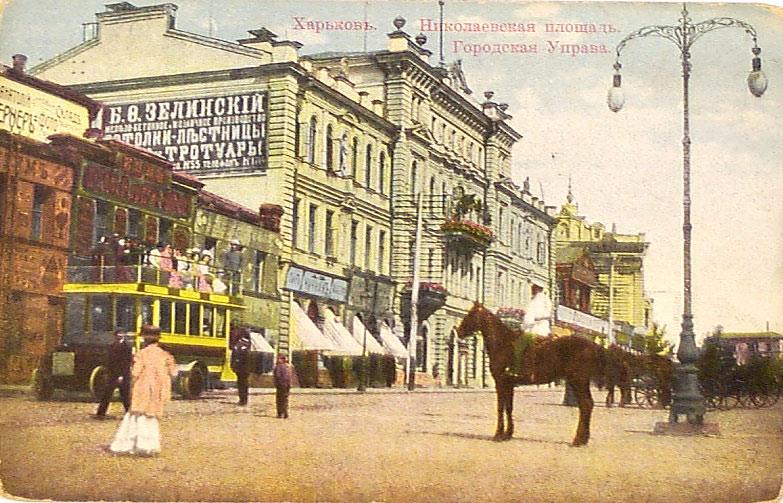
The underground passages beneath Nikolaevskaya Square, which were inspected in July 1913 by members of the commission, as well as those under Sobornaya and Goryainovsky Lanes, were deemed safe (at least for the next 10–15 years); a decision was also made regarding the need to include them on the city map.
The question of the purpose of the underground passages sparked heated debate. University representatives V.I. Savva, E.M. Ivanov, and A.S. Fedorovsky pointed out that the construction of the passages was a public undertaking carried out for defensive purposes and to provide a means of escape for the population during Tatar raids. Professor Fedorovsky also noted that underground passages are quite common as historical monuments. For example, similar passages are known to exist in Kyiv, Poltava, and Chernihiv. The city architect G. Pavlovsky held a completely different view; he believed that the construction of the passages served commercial purposes and that the underground tunnels were the work of merchants or concessionaires who used them to store their goods.
In late August 1913, the commission adopted a program for surveying the underground passages proposed by A.S. Fedorovsky. The primary objective of the program was to ensure the safety of the underground passages for buildings by conducting field surveys and drawing up a precise map of all the passages inspected. This task was entrusted to the engineering department of the City Council.
Insufficient funding and difficulties in conducting research on private property meant that, in the summer of 1914, the commission’s main activities was to send letters to those engaged in underground work, asking them to notify the commission upon discovering underground tunnels, and to study archival materials.
With the outbreak of World War I, the Commission for the Study of Underground Passages ceased its activities.
Thus, the existence within the Kharkiv City Administration during 1913–1914 two departments dedicated to the study and improvement of the city’s underground space allows us to speak of a certain positive contribution by Kharkiv’s local government to the study of the city’s underground structures in the early 20th century.
References:
- 1. Proceedings of the Kharkiv Preparatory Committee for the Organization of the 12th Archaeological Congress. – Vol. 1. – Kharkiv, 1902.
- 2. GAKHO, f. 45, op. 4, d. 11868.
- 3. Proceedings of the Kharkiv City Duma. – Kharkiv, 1913, No. 8; 1914, Nos. 6, 7, 8.
- 4. Kharkiv Provincial Gazette. – Kharkiv, 1913–1914.
- 5. The Southern Frontier. – Kharkiv, 1913–1914.
- 6. GAKHO, f. 45, op. 4, d. 11868, p. 117.
- 7. GAKHO, f. 45, op. 4, d. 11868, p. 32.
- 8. GAKHO, f. 45, op. 4, d. 11868, p. 33.
- 9. GAKHO, f. 45, op. 4, d. 11868, p. 96.
