There are all sorts of rumors swirling around the underground chambers of the Holy Intercession Monastery in Kharkiv! For those who don’t mind reading, I’d like to share the following.
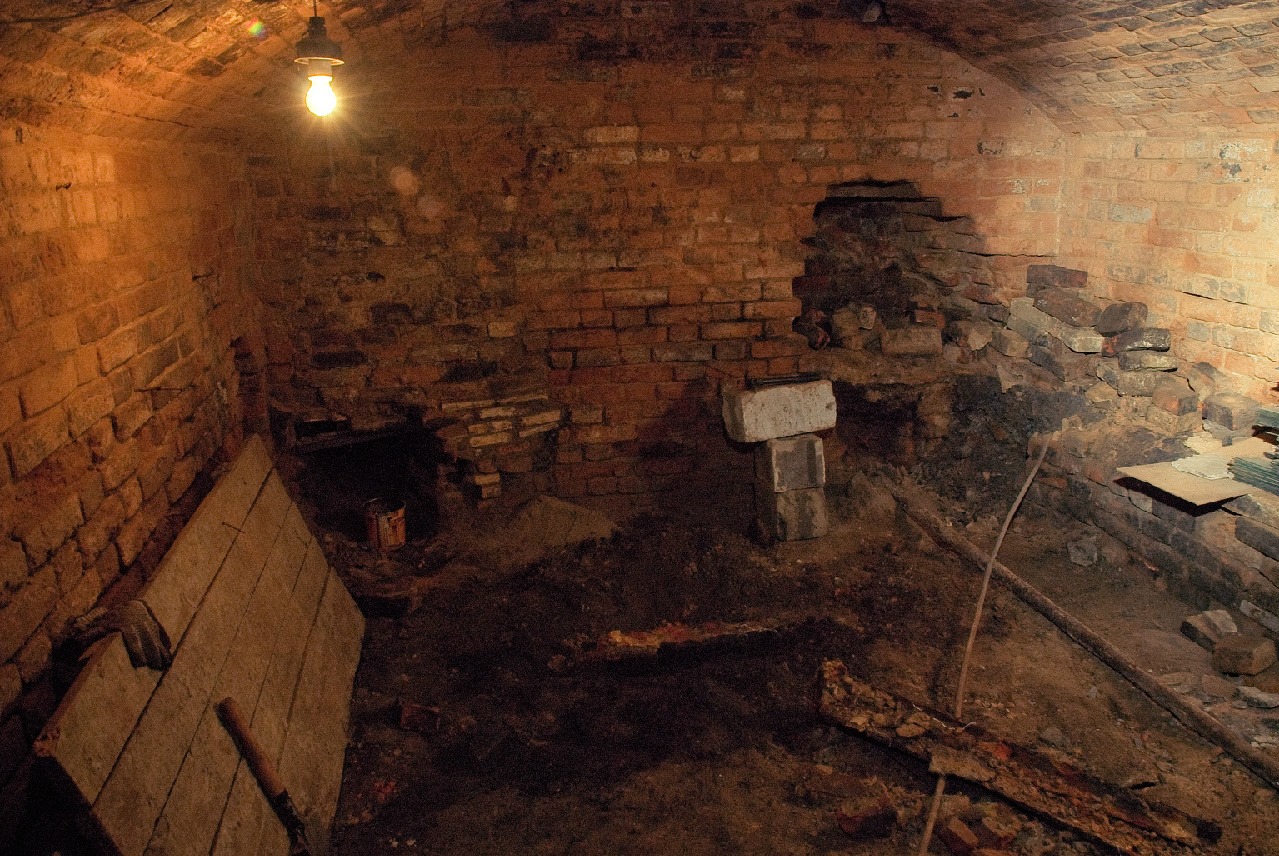
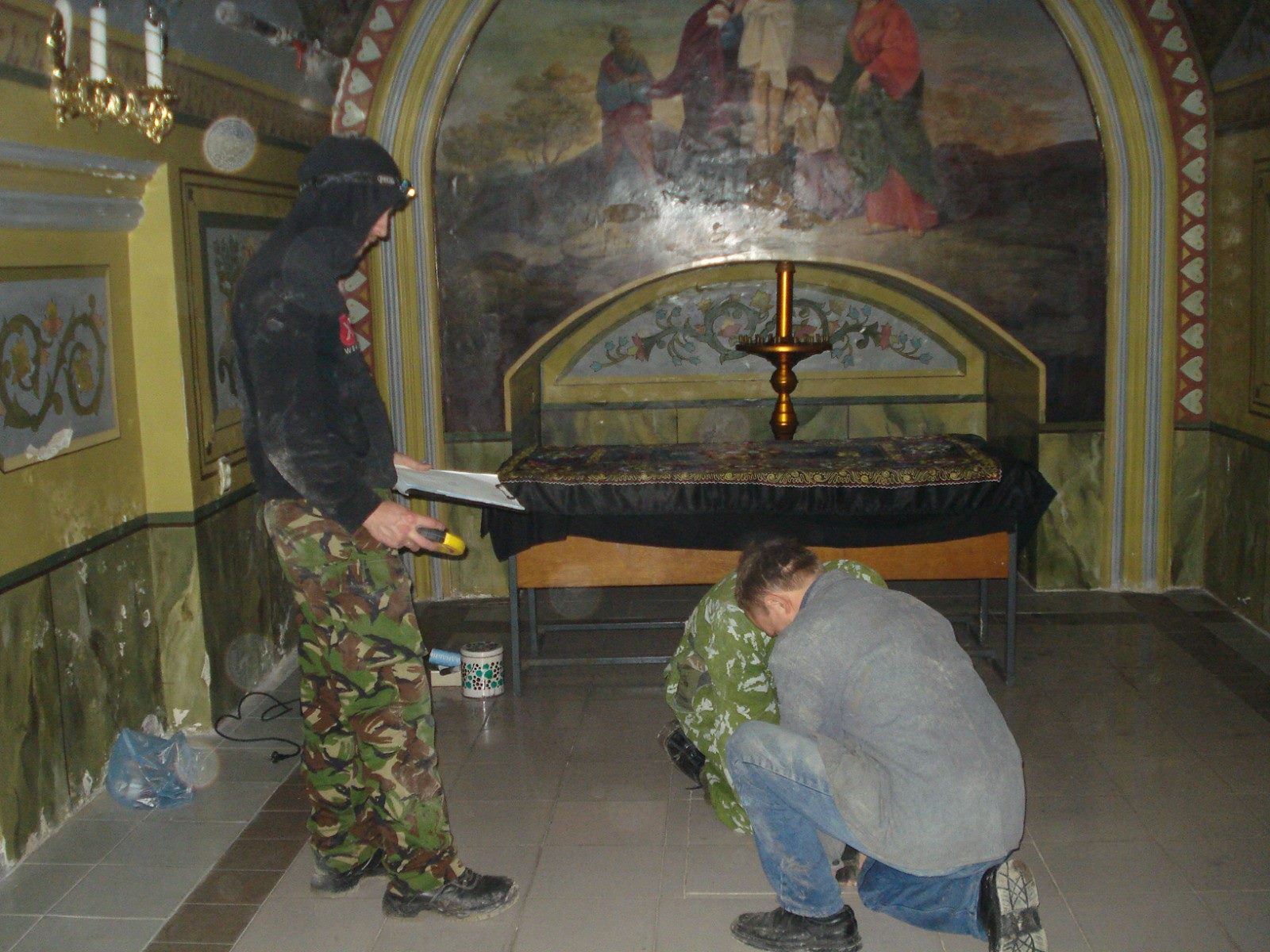
In the summer of 2011, our research team from the “Children of the Underground” Foundation was granted access to a previously unexplored site beneath Kharkiv’s oldest architectural gem — the Church of the Intercession of the Most Holy Mother of God, built in 1689 (for which we would like to extend special thanks to Father Nafanail, a hieromonk of the Holy Intercession Monastery, who took a direct part in the research). The underground chamber revealed to the researchers is, in our opinion, a heating chamber where the furnace was located and from which the ducts originated, through which hot air rose upward through the thickness of the walls to heat the church during the winter months.
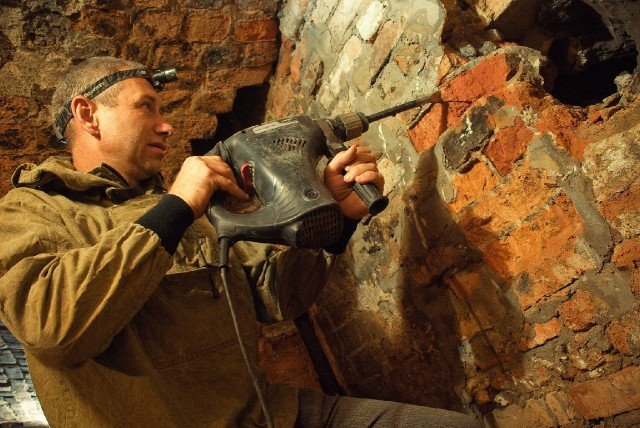
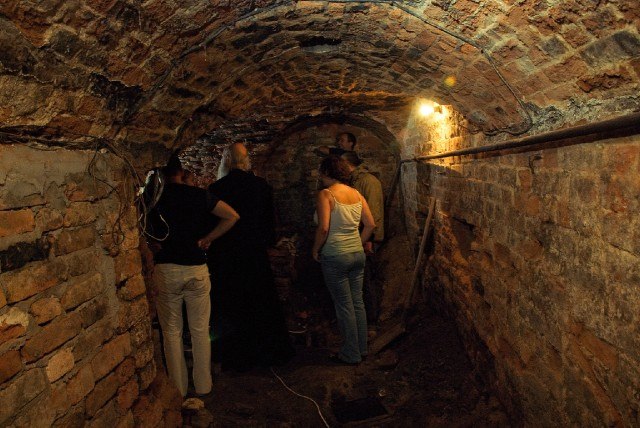
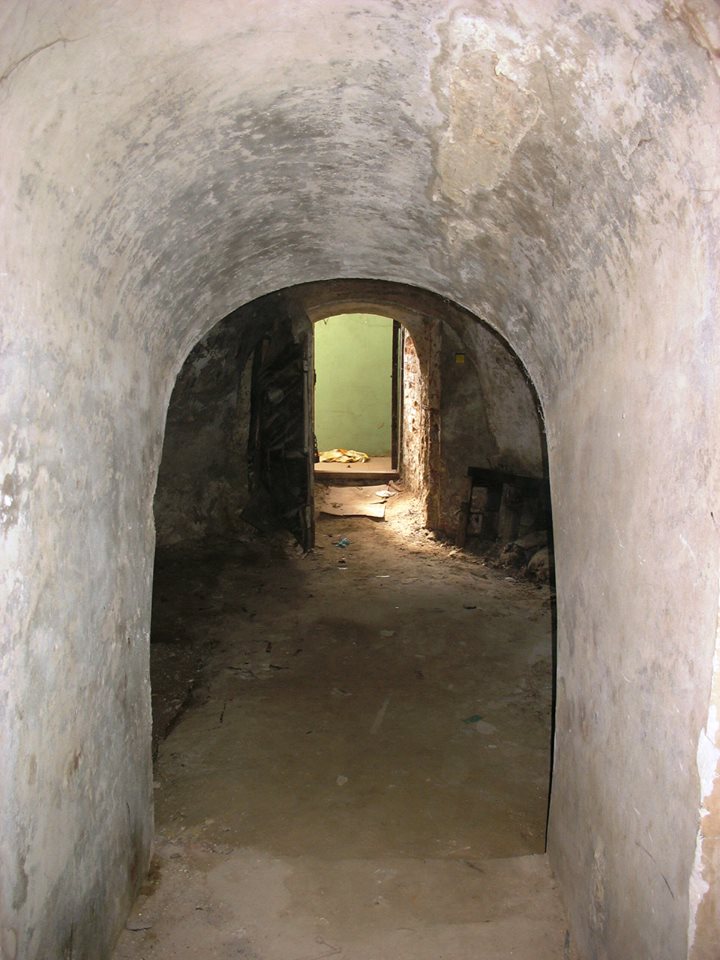
The entrance consists of a square metal hatch adjoining the temple wall on the northwest side. After opening the hatch and descending a vertical metal ladder a little over two meters, we find ourselves in an entrance gallery about 3 meters long and 1 meter wide.
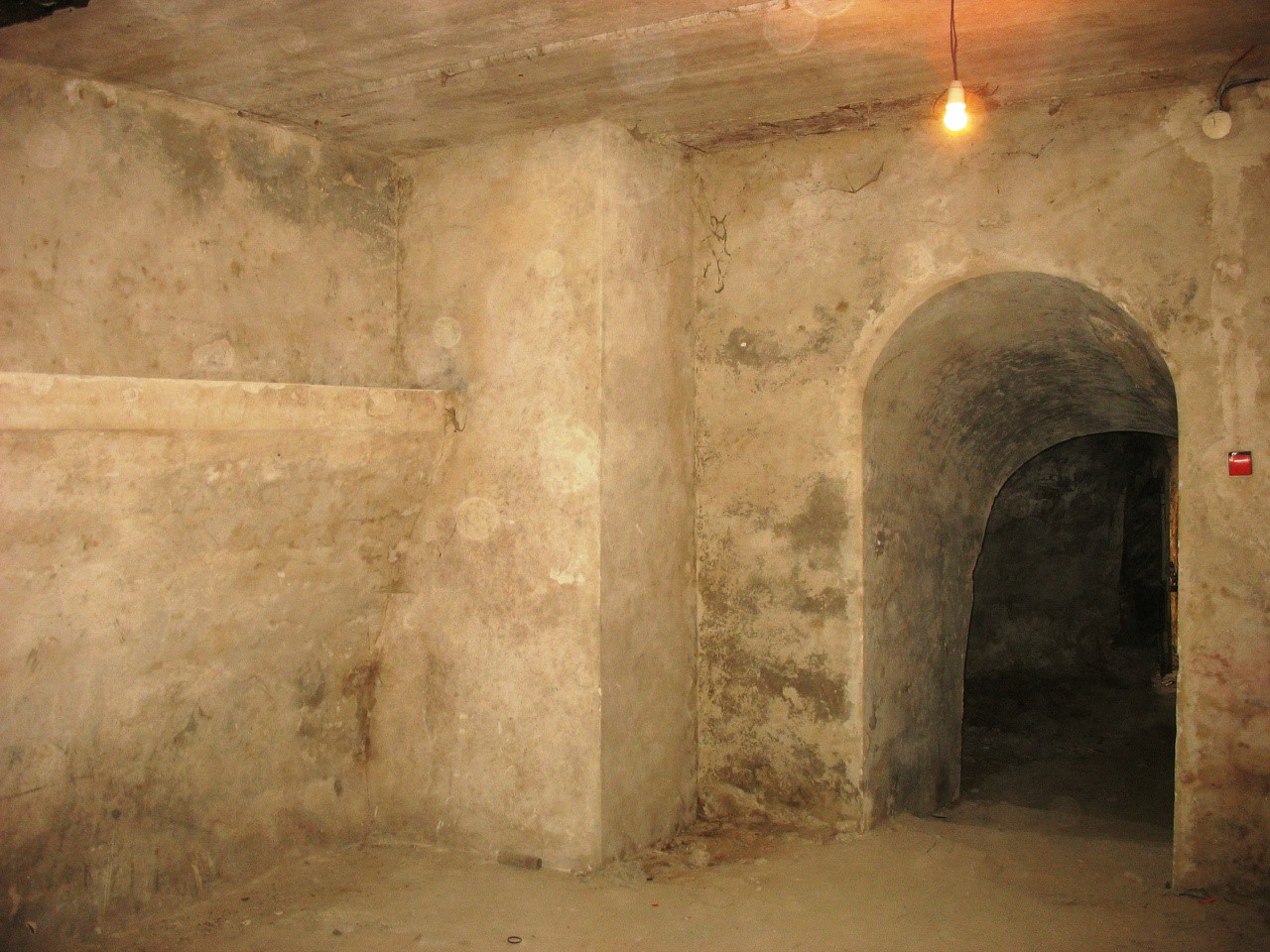
The chamber itself is a rectangular room measuring 5 by 6 meters with a vaulted ceiling that is 2.2 meters high at its center. The walls and vaults are made of well-fired red brick set with lime mortar. Six channels radiate fan-like from the center of the ceiling, through which hot air rose upward. In the southern wall of the chamber, directly opposite the entrance gallery, there is a passageway built with alternating red and white bricks set in cement mortar. From the outside, this passageway is filled to the top with loose soil. The floor of the room was made of red brick laid in a herringbone pattern, and in the area where the furnace presumably stood, it rests on a layer of sand; currently, the bricks are covered with compacted soil. Surveys have proved that the heating chamber is surrounded by backfill and has no direct connection to other sections of the basement of the Holy Intercession Cathedral and the bell tower. Moreover, this room is not mentioned in the seminal work by the renowned Kharkiv local historian Stefan Andreyevich Taranushenko, *The Pokrovsky Cathedral in Kharkiv: Tenne’s Measurements*, published in Kharkiv in 1923. Nor does it appear on any of the numerous diagrams in the aforementioned work.
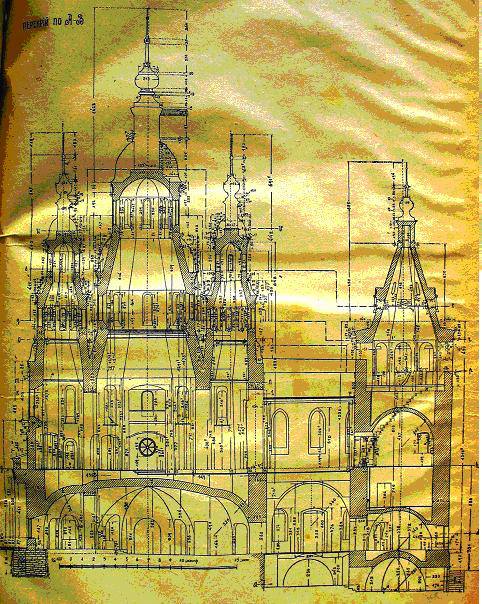
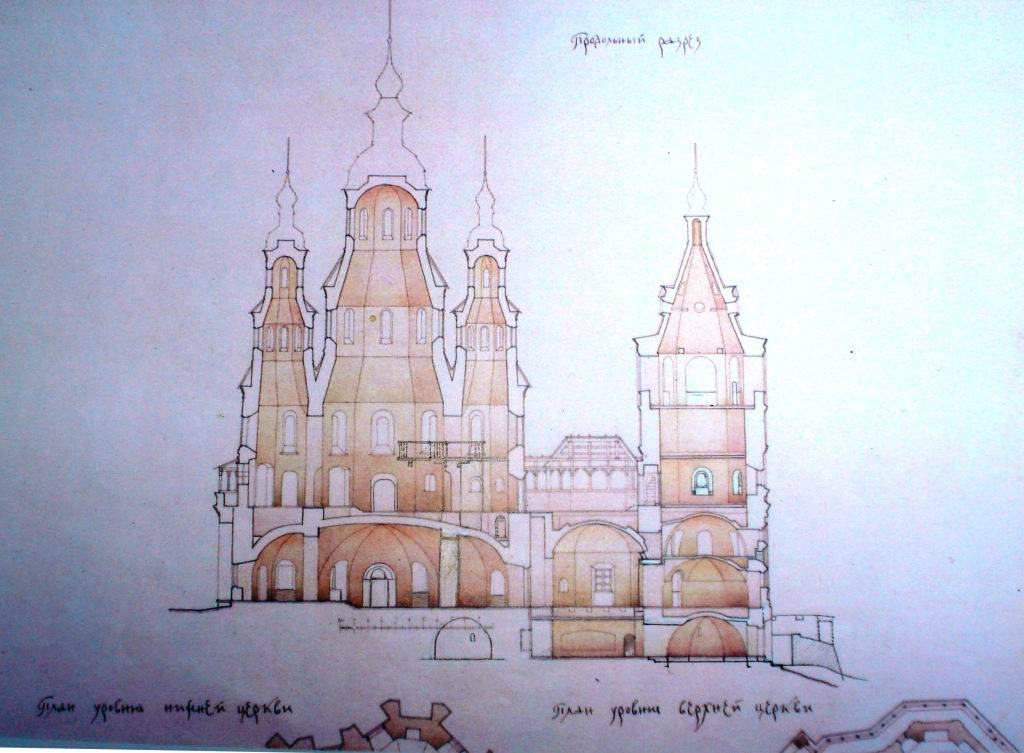
At the same time, S.A. Taranushenko includes in his work a plan of the underground church-crypte of the Holy Intercession Church, as well as a cross-section of the church, which features a schematic representation of the basement of the bell tower—which originally stood separate from the church— and another basement room adjoining it.
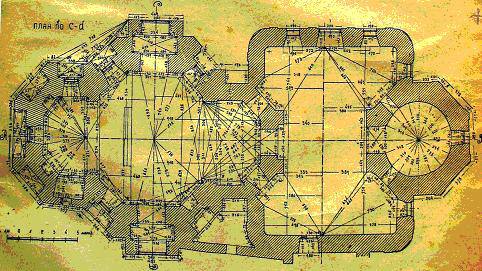
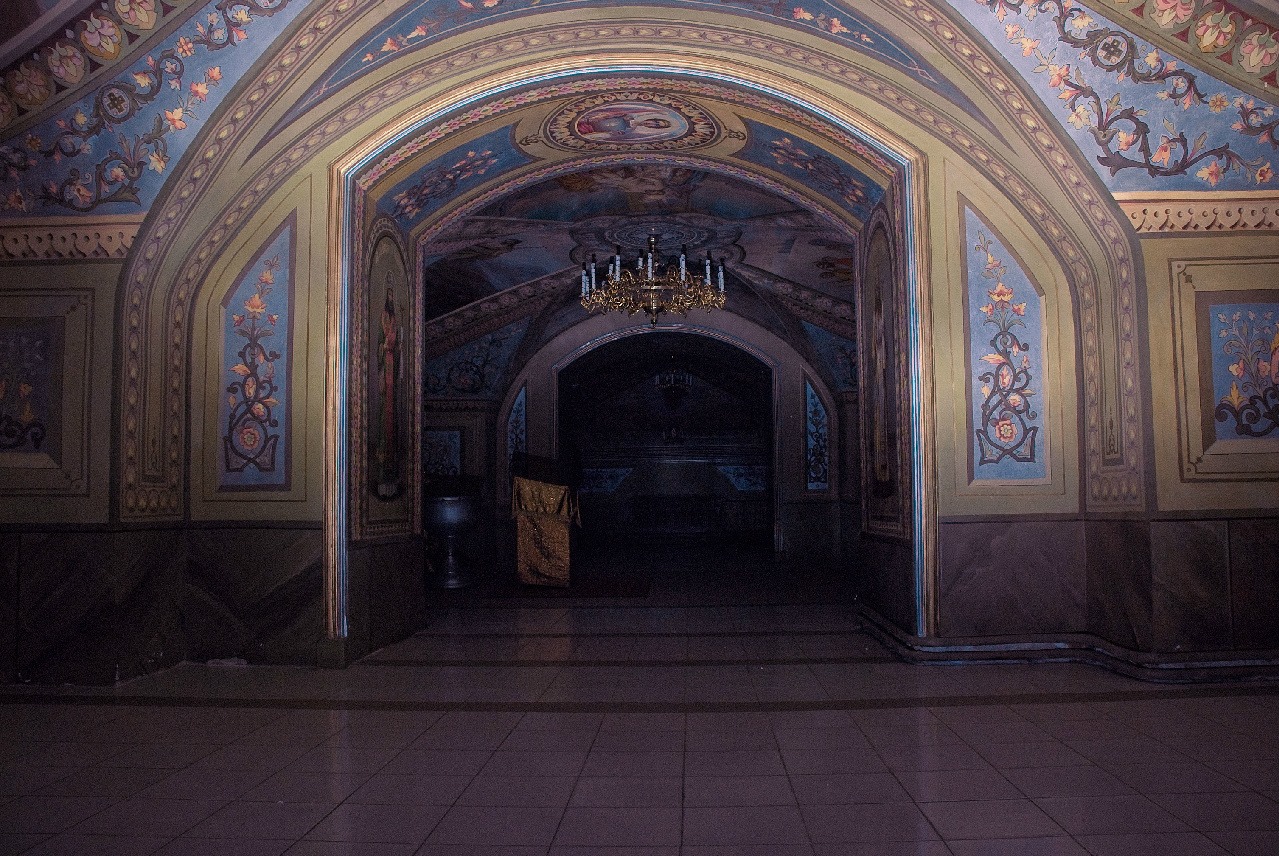
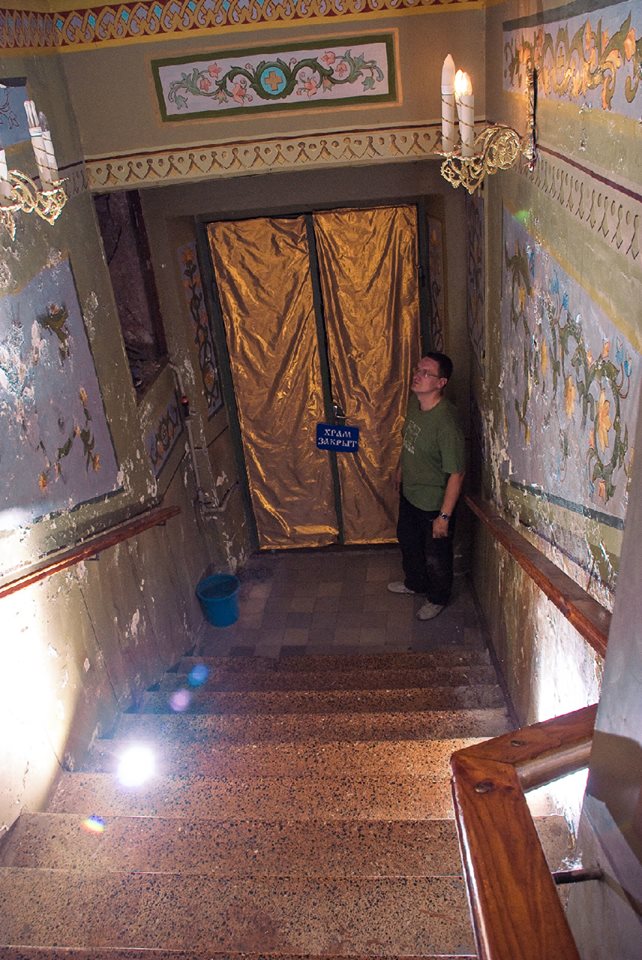
These basement rooms, in a somewhat modified and scaled-down form, are accessible to modern researchers. They are currently used for the practical needs of the Holy Intercession Monastery. Of the three entrances to the former underground church shown on the plan, only one remains—through the bell tower’s basement. At present, there is nothing to indicate to a researcher that this space was used as a place of worship 120 years ago and became the final resting place for a number of high-ranking clergymen and prominent Kharkiv residents.
It is known that in 1846, “pneumatic heating was installed in the upper and lower churches,” and in 1854, the basement beneath the church was expanded and converted into “an underground church intended to be a place of rest and remembrance for the departed archpastors of the Kharkiv Diocese,” which “is to be consecrated in the name of the Three Holy Hierarchs of the Universe.”
Thus, the coffin of His Eminence Meletius (who died on February 29, 1840), as Archpriest N. Laschenkov, remained in its original location at the time of the consecration of the underground chapel—namely, to the right of the altar, near the eastern wall of the chapel.
In the first section of Filaret (Gumilevsky)’s *Historical and Statistical Description of the Kharkiv Diocese* (published in 1852), the author writes that many noble families of Sloboda Ukraine were buried beneath the vaults of the lower church of the Holy Protection Cathedral—“the stone crypts of many remain intact to this day beneath the floor of the lower church.” For example, the family crypt of the well-known Kharkiv Kvitka family was located there. At the same time, S.A. Taranushenko points out that the basement beneath the bell tower of the church was converted into an underground burial church.
Thus, it can be concluded that throughout the 18th century and the first half of the 19th century, the burial vault for high-ranking clergy and prominent residents of Kharkiv was located beneath the Lower Church of the Three Holy Hierarchs at the Holy Intercession Cathedral, and in the mid-19th century, their remains were transferred to the basement of the bell tower of the Holy Intercession Cathedral and the adjacent rooms, which had been specially converted into an underground burial church. This underground burial church survived the fire of 1875 and was dismantled at the very end of the 19th century, when the burial site was moved to the lower church of the Holy Ozeryansky Cathedral.
In the northwestern part of the basement, beneath the lower church of the Holy Protection Cathedral, the heating chamber discussed in this paper was constructed. According to some oral accounts, it served its original purpose until the 1970s, though by then it had been equipped with different technical components. It should be noted that the parts of the basement adjacent to the chamber described here—which are now filled in with soil—are of particular interest to modern researchers. Clearing and studying these areas would help provide a more complete picture of the church builders’ original design and identify the parts that were later rebuilt, as well as confirm or refute the widely held theory that there is an entire system of ancient underground passages beneath the Holy Intercession Church.
In addition to the heating chamber described in detail in the previous article, the research team from the “Children of the Underground” Foundation surveyed all the Holy Intercession Monastery’s underground structures accessible from the surface. A big surprise awaited us there.
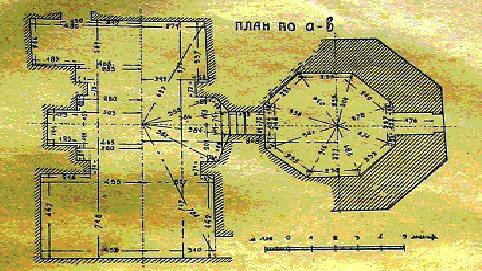
Unfortunately, the legendary, incredibly extensive network of underground tunnels that everyone loves to talk about was not found. Nevertheless, a number of underground structures serving a wide variety of purposes were explored. I’d like to briefly discuss the ones that piqued our interest the most.
1. The underground burial church of the Holy Protection Cathedral.
These basement rooms, in a somewhat modified and scaled-down form, are accessible to modern researchers. They are currently used for the practical needs of the Holy Intercession Monastery. Of the three entrances to the former underground church shown on the plan, only one remains—through the bell tower’s basement. At present, there is nothing to indicate to a researcher that this space was used as a place of worship 120 years ago and became the final resting place for a number of high-ranking clergymen and prominent Kharkiv residents.
2. The crypts in the basement of the Holy Ozeryansky Church.
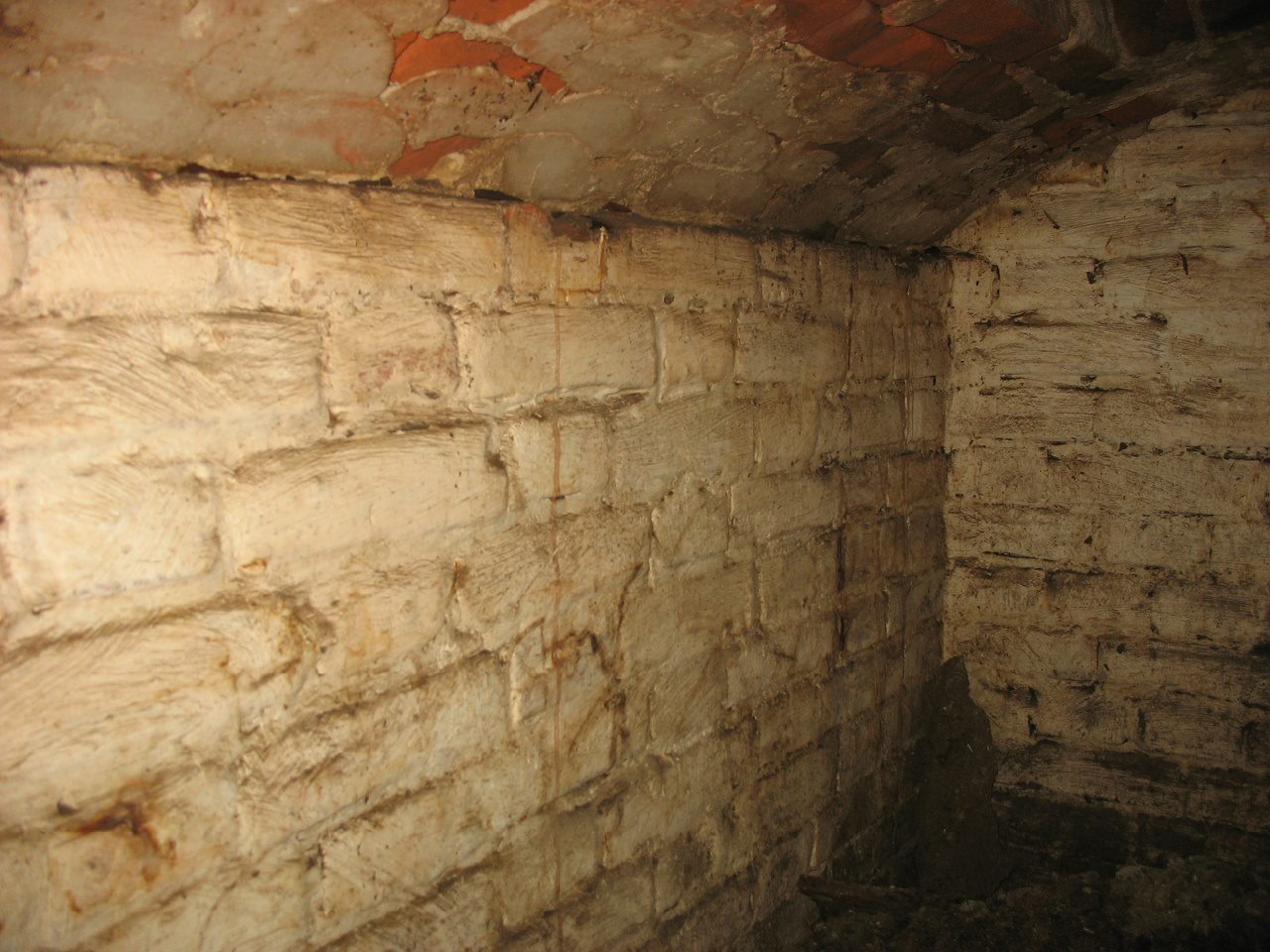
Two ransacked crypts were examined; they can be accessed through hatches in the floor of the church’s basement. History has yet to reveal who was buried there or when the burials took place. The monks provided a very informative explanation: “Oh, just one of our own.”
3. A well running through the wall from the balcony-gallery into the basement of the Church of the Holy Protection.
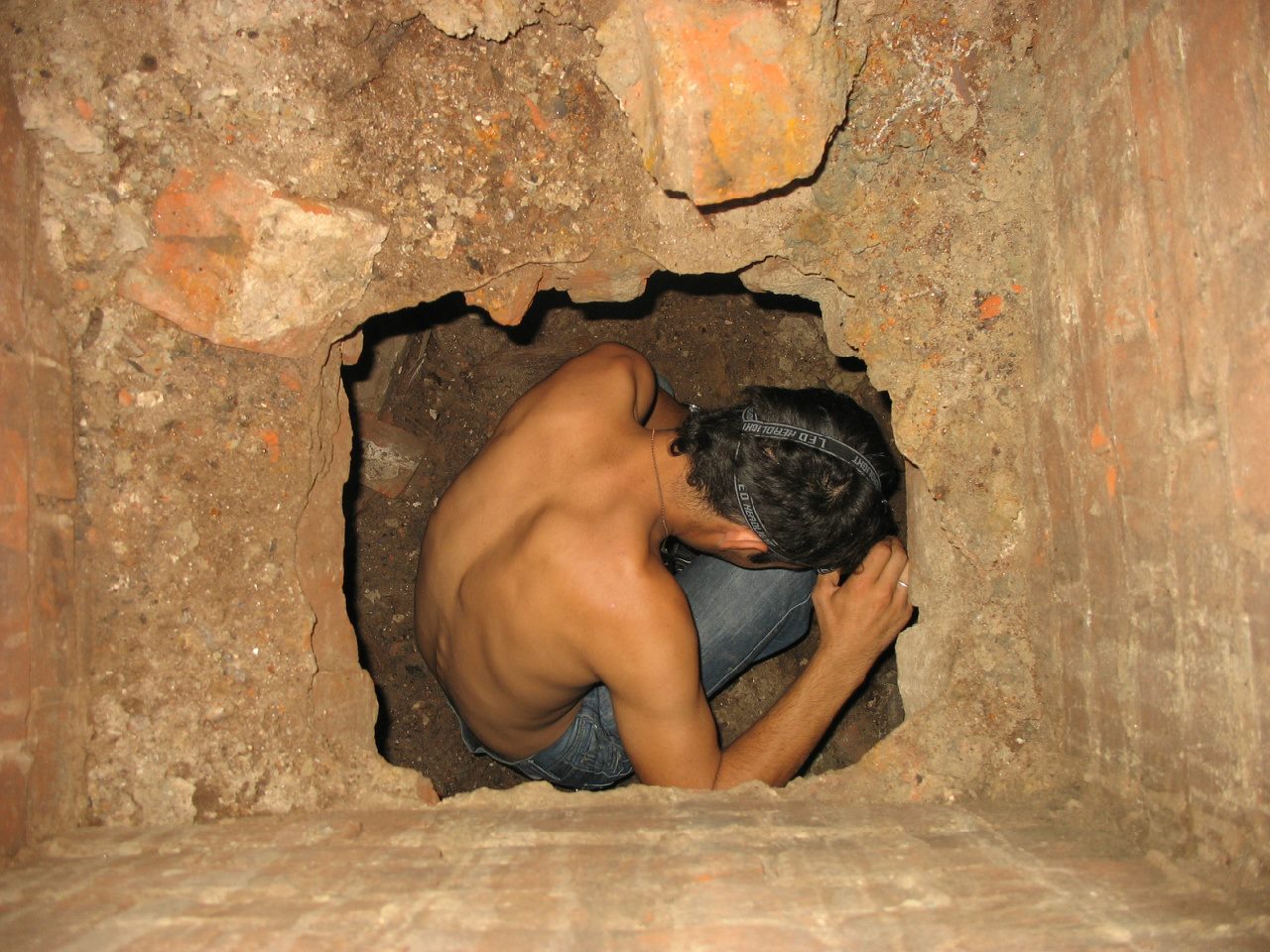
It is covered on top by a round wooden hatch. It was built with old bricks without mortar to a depth of more than 5 meters. It’s wide enough for a person to pass through. It was built in a “spiral” shape, which may have helped archers on the balcony use a rope to quickly and safely descend into the basement during an assault on the church (Originally, the Holy Intercession Church was located outside the Kharkiv Fortress and served as a freestanding fortification—a sort of defensive tower.) It was also used as a ventilation shaft. There are traces of soot on the walls.
4. A cistern in the courtyard of the Holy Intercession Monastery.
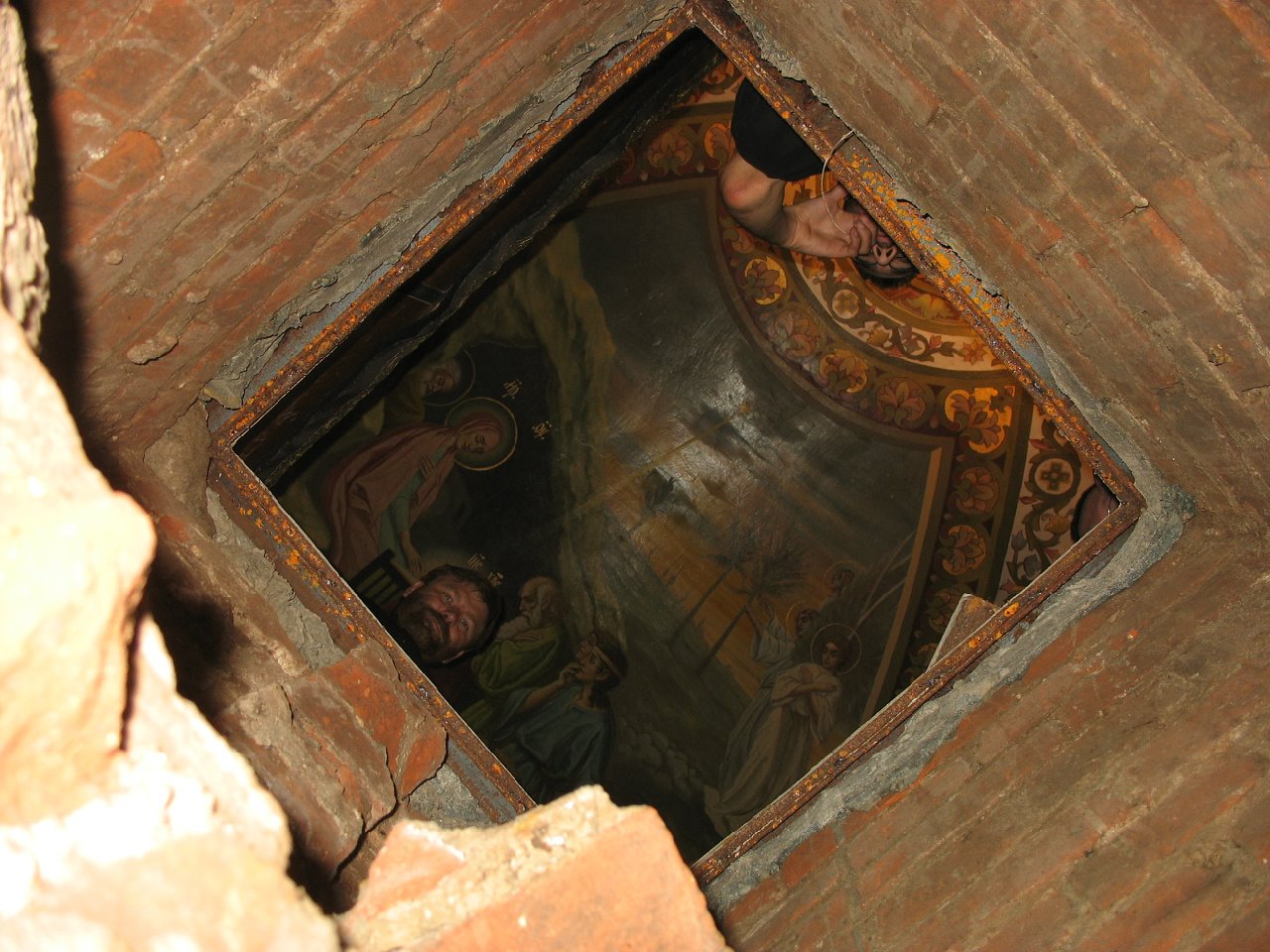
It was discovered while digging a trench for an electrical cable at a depth of about 1 meter below the surface. A looters’ entrance had been cut into the vault, even though the main manhole was less than a meter away. It is a vaulted cylindrical structure 3 meters in diameter and height. It is well plastered. The floor is conical. It was filled with debris almost to the top. During the cleanup, fragments of pre-soviet tableware from the Budyansky Porcelain Factory, a cassock, women’s shoes, and a significant number of vodka shot glasses were found.


That’s all for now. I truly hope that the monastery, which grew up around the oldest surviving church in our city (consecrated in 1689), hasn’t yet revealed all of its underground secrets and will delight us with new and interesting underground passages that we can explore.
References:
- Bagaley, D.I., and Miller, D.P. A History of the City of Kharkiv: 250 Years of Its Existence (1655–1905). Historical monograph in 2 vols. – Kharkiv, 1993.
- Laschenkov, N. “Memories of His Eminence Meletius, Archbishop of Kharkiv”// “Kharkiv Collection,” Issue 3, literary and artistic supplement to the Kharkiv Calendar for 1889. – pp. 209–212.
- Laschenkov, N. “The Bicentennial of the Pokrovsky Church of the Kharkiv Bishop’s Residence” // *Kharkiv Collection*, Issue 3, literary and artistic supplement to the *Kharkiv Calendar* for 1889. – pp. 201–202.
- O. Filaret (Gumilevsky), *Historical and Statistical Description of the Kharkiv Diocese*. – Vol. 1. Monasteries. – St. Petersburg, 1857.
- Taranushenko, S. The Pokrovsky Cathedral in Kharkiv: Tenne’s Measurements. – Kharkiv, 1923.
