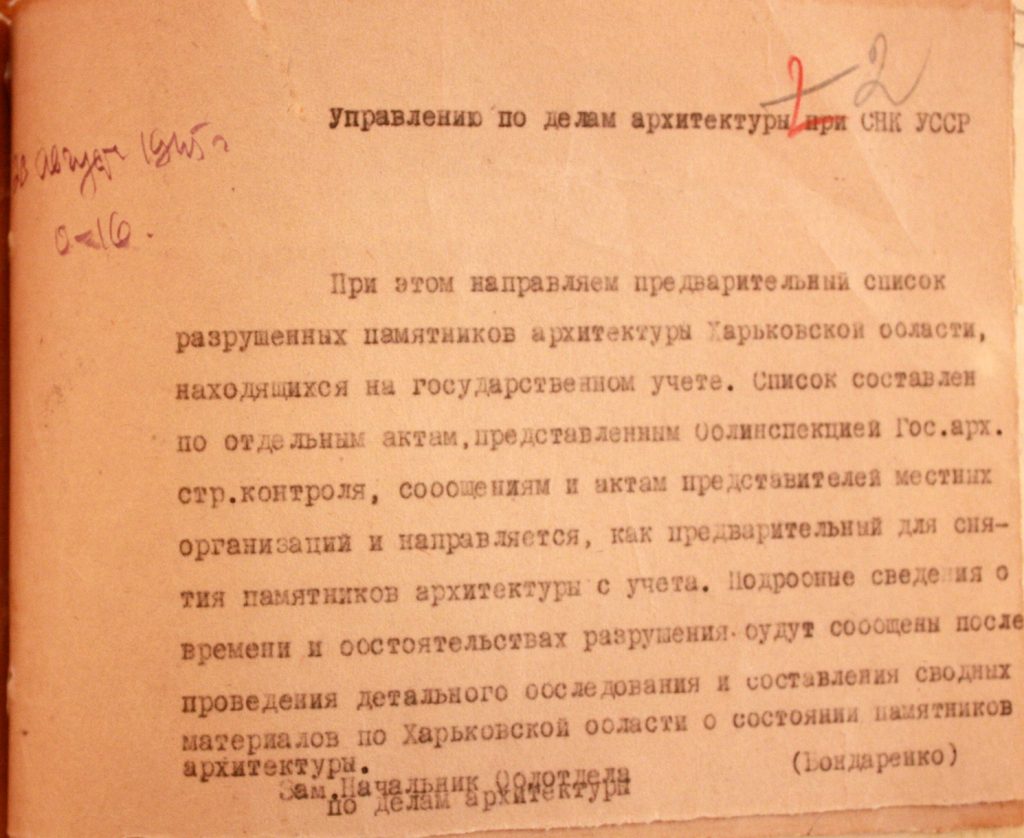
Today, in Kharkiv and the surrounding region, it probably comes as no surprise to anyone that beautiful historic mansions are deliberately allowed to fall into disrepair, and then the authorities—out of deep concern for the health and well-being of the city and all its residents— demolish these buildings. We’ve grown accustomed to estates “accidentally” catching fire, with the causes of these fires remaining undetermined even years later. And the remaining architectural landmarks are encased in concrete, a process proudly referred to as “restoration work.” We have also grown accustomed to seeing a building removed from the register of architectural landmarks at the whim of some official and subsequently destroyed. No matter how hard some architects, researchers, and enthusiasts who simply love their city try to save at least something, the architectural heritage left by our ancestors is dwindling with each passing year. Alas, we have lost this battle. And not just today, nor even 5–10 years ago. After all, one of the very first documents on this subject in the postwar period was sent to the Department of Architectural Affairs under the Council of People’s Commissars of the Ukrainian SSR as early as August 23, 1945.
We are also submitting a preliminary list of destroyed architectural landmarks in the Kharkiv region that are registered with the state. The list has been compiled based on individual reports submitted by the Regional Inspectorate of State Architectural and Construction Control, as well as reports and documents from representatives of local organizations, and is being submitted as a preliminary list for the removal of these architectural landmarks from the registry. Detailed information regarding the timing and circumstances of the destruction will be provided following a thorough survey and the compilation of summary reports on the condition of architectural landmarks in the Kharkiv region.
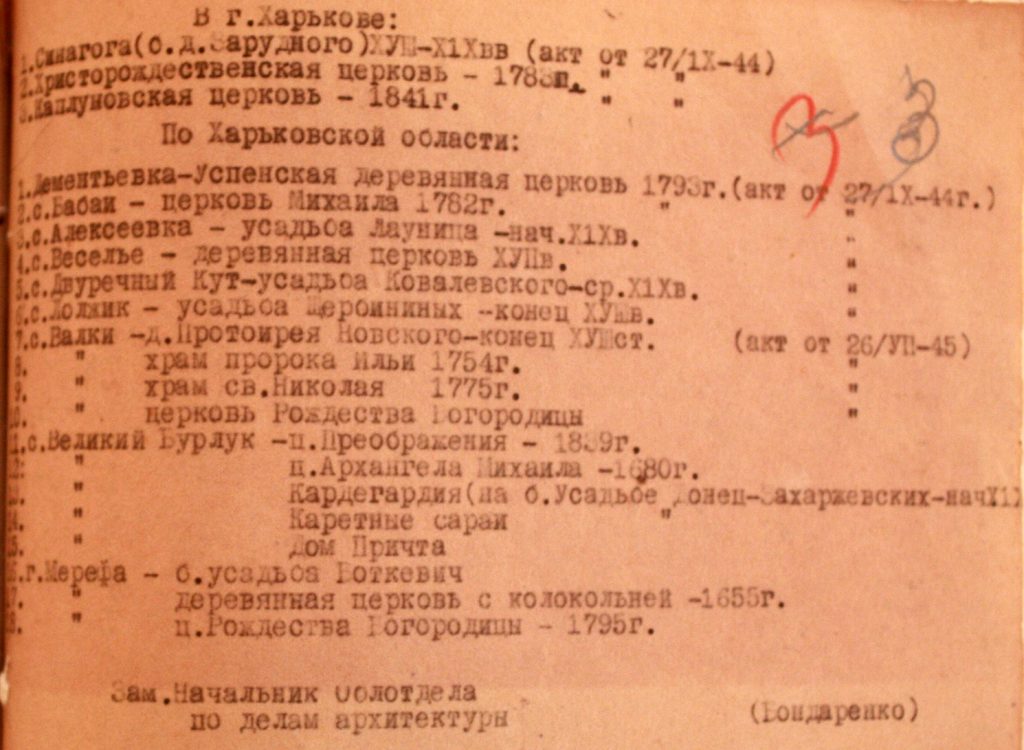
The list included 21 structures built in the 18th and 19th centuries, three of which were located in Kharkiv and 18 in the region. Most of the buildings removed from the registry were churches. However, there were also estates. For example:
— Alekseevka village — the Launitsa estate;
— Dvurechny Kut village — the Kovalevsky estate;
— Dolzhik village — the Shcherbinin estate;
— Merefa village — the Bortkevich estate.
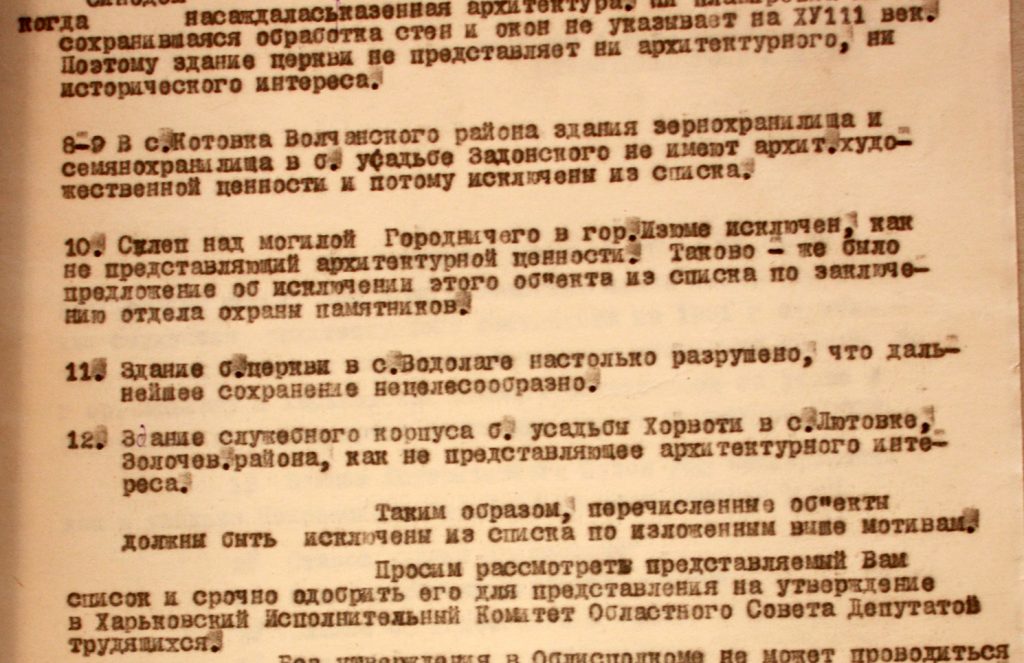
Five years later, the Kharkiv Regional Department of Architecture submitted a revised list of sites in Kharkiv and the region to the Department of Architecture under the Council of Ministers of the Ukrainian SSR. In addition, a separate document listed the buildings that had been removed from the register of architectural landmarks. Unlike in 1945, however, the sites were not merely listed; their condition was specified and, most importantly, the reason for their removal was indicated.
Let’s start with the city of Kharkiv.
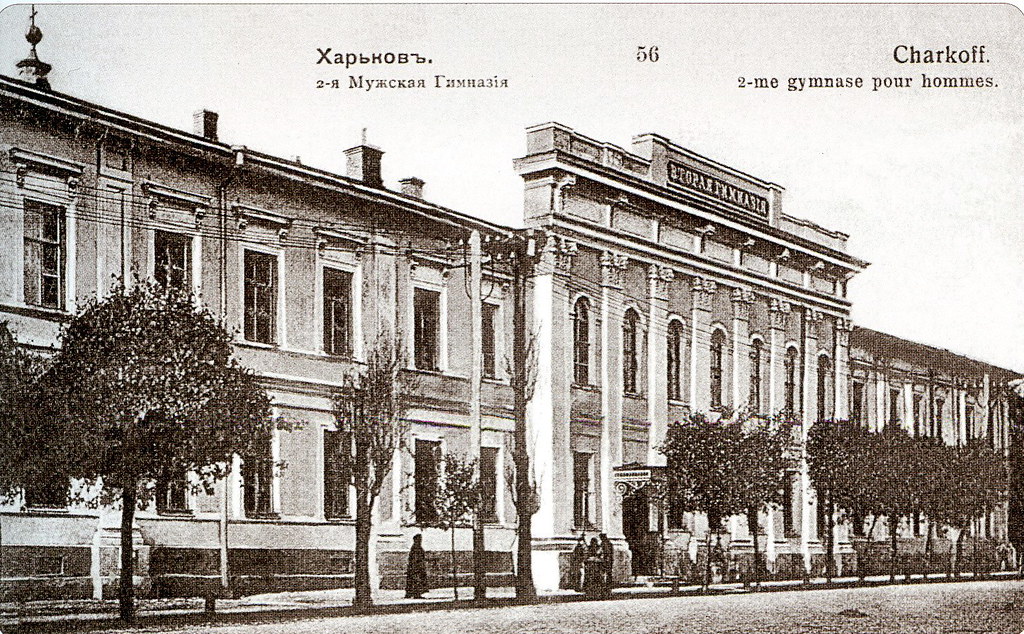
1. The building of the former boys’ gymnasium on Karl Marx Street. This building was rebuilt and, in the 1930s before the war, was used as a residential building. During the war, the building was destroyed; only parts of the exterior walls remain, with no traces of the original architecture. Therefore, preserving the building does not seem feasible.
2. The residential building at Kontorska Street, 34 has been removed from the list as it has no architectural, artistic, or historical value. The building contains no architectural elements or details dating from the early or mid-19th century (with the exception of the rustication on the first floor).
3. The bank building on Tevelev Square was included on the list simply due to a misunderstanding: there is no bank building in the old architectural style at that location.
4. The building of the experimental agricultural station on Kommunalnaya Street was also included in the first list by mistake, since the existing building of the experimental station is not considered historic architecture.
In the Kharkiv region:
5. The former Tikhotsky manor house in the village of Tishki, Lipetsk District, dating from the 19th century, has been excluded as having no architectural or artistic value.
6. The Manege building in Chuhuiv has been removed from the list because it has been destroyed, and the ruins of its walls are of no architectural interest. Preserving the ruins of the building is not advisable.
7. The building of the former Pokrovskaya Church in the village of Kotovka, Vovchansky District, has been erroneously included in the list as an architectural structure from the late 18th century. In fact, based on its stylistic features, this church should be dated to the second half of the 19th century. Neither the floor plan nor the surviving finishes of the walls and windows point to the 18th century. Therefore, the church building is of neither architectural nor historical interest.
8–9. In the village of Kotovka, Vovchansky District, the grain and seed storage buildings on the former Zadonsky estate have no architectural or artistic value and have therefore been excluded from the list.
10. The crypt above the town magistrate’s grave in Izyum has been excluded from the list as having no architectural value. A similar proposal to exclude this site from the list was made based on the conclusion of the Department of Landmark Preservation.
11. The building of the former church in the village of Vodolaha is so badly damaged that it is not feasible to preserve it any further.
12. The service building of the former Horvat estate in the village of Lyutivka, Zolochiv District, as it is of no architectural interest.
In 1951, the Kharkiv Regional Department of Architecture informed the head of the Architecture Division of the Council of Ministers of the Ukrainian SSR about a new revision of the list of architectural landmarks in the Kharkiv region and stated that “the following buildings will likely be excluded from the list as having neither historical nor architectural-artistic value.” Namely:
1. In Kharkiv—a house at Karl Marx Street, 20 (mid-19th century).
2. In Vovchansk—a dormitory building for the School of Agricultural Mechanization (mid-19th century).
3. In the village of Konno, at the “Chervona Khvylia” state farm (Velyko-Burluk District)—a dairy house and a staff house (19th century).
4. In the village of Vasylivka (Vovchansk District)—two wooden granaries (early 19th century).
5. In the district center of Pechenegi—the building of the former prison and the building of the former weaving workshop (early 19th century).
6. In the village of Lyutivka (Zolochiv District)—the former Kleinmichel manor house (built in 1892).
7. In the village of Cherkaski Tyshky, Liptsy District—the former Tikhotsky manor house (clinic).
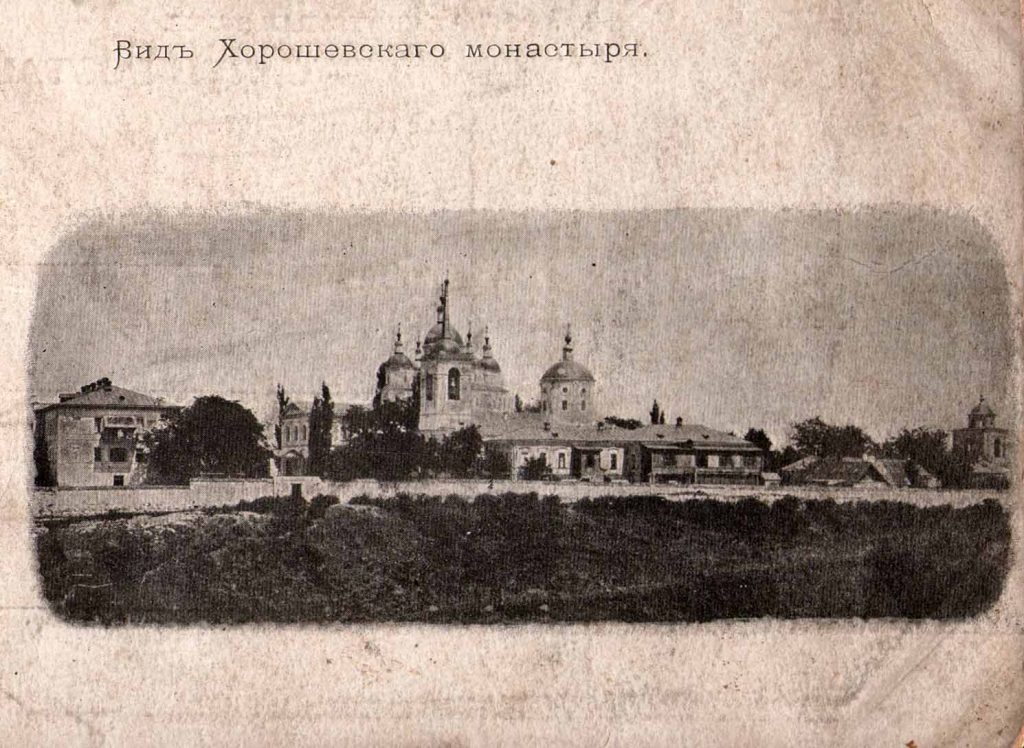
8. In the village of Khoroshevo, Kharkiv District—a dormitory (second half of the 19th century), the building of the “new” church from 1835 (ruins, only the walls remain), the building of the old church (18th century), and walls with towers (18th century).
The document also specified that “in order to make a final decision, we need to conduct some research, which will be completed by April 15 of this year. By that time, we will have prepared all the necessary documentation and justifications for removing the specified buildings from the list of architectural landmarks.”
Indeed, documentation describing the condition of the buildings and explaining the reasons for their removal from the registry was eventually compiled. From this documentation, we learn the following.
The wooden residential house at Klochkovska Street, 43 (the former Pavlovsky estate, early 19th century) has fallen into such disrepair that almost none of its original features remain. The telegraph building on Feuerbach Square (early 19th century) has undergone repeated renovations; its current architectural features are of no historical value. In the village of Lyutivka in the Zolochiv District, the former manor house of landowner Kleinmichel, built in the late 19th century, has been preserved. However, the estate must be excluded because “the architecture of the house imitates the classical style. Since there are many similar late-19th-century buildings in our cities, there is no reason to consider this house an architectural landmark.” It turns out it’s that simple. With a simple “stroke of the pen” in 1951, someone decided that there were many estates in the Kharkiv region, and therefore the beautiful estate in Lyutivka could be removed from the register of architectural landmarks.
Regarding Skovorodynivka—a place so beloved by today’s tour guides—the text states verbatim: “The house associated with the name of H. Skovoroda has not been preserved in its original form. Therefore, it makes sense to register this house with the Regional Department of Culture.”
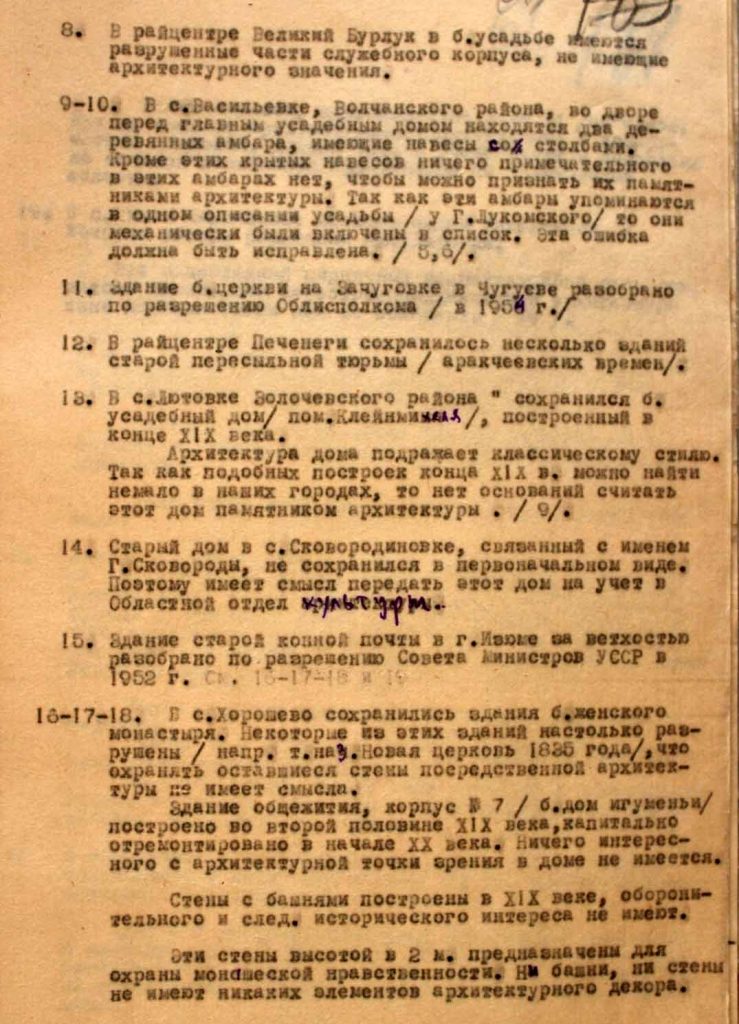
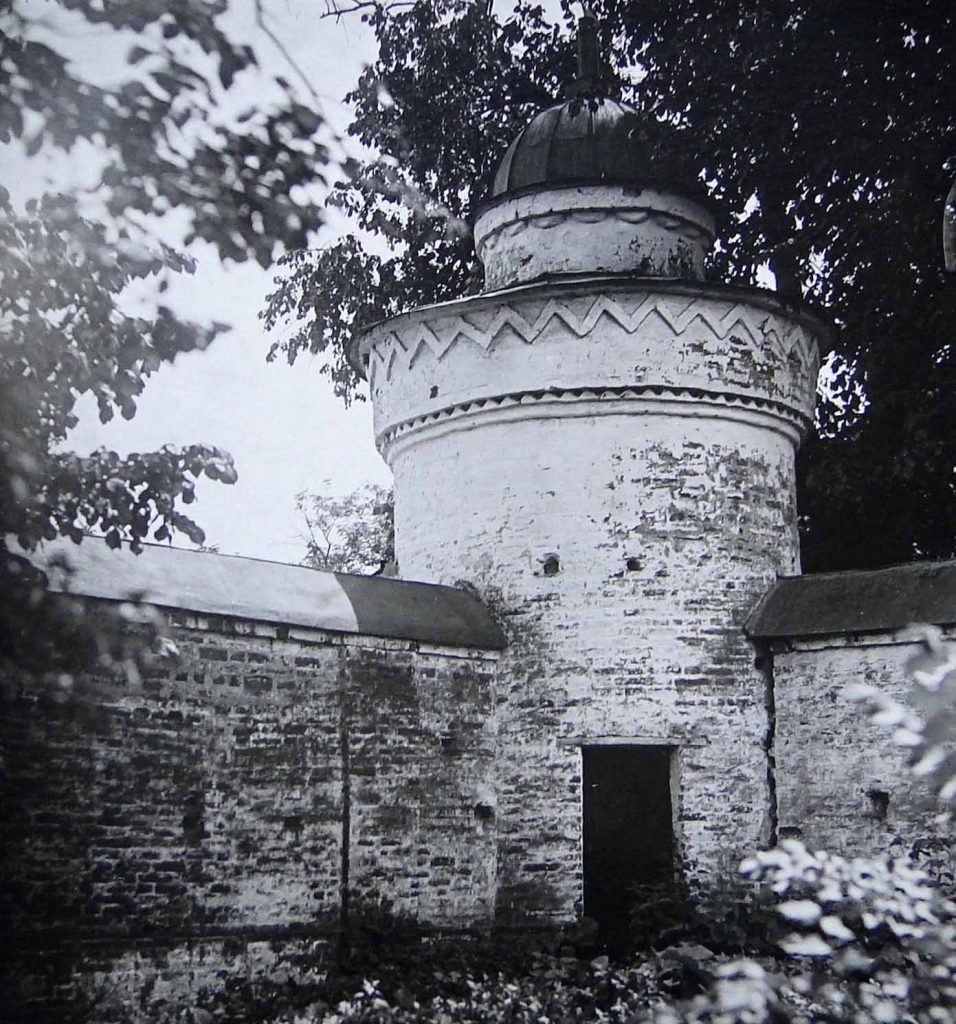
The situation with the ancient Khoroshevsky Monastery was no less “amusing” than that with the estate in Lyutivka. However, by 1951, some of the monastery buildings had fallen into such disrepair (for example, the church built in 1835) that, in the opinion of officials at the time, there was no point in trying to save the remaining walls of “mediocre architecture.” Thus, the former abbess’s residence was not of architectural value. The 2-meter-high walls with towers, which had been pointed in the 19th century, “are of no historical interest.”
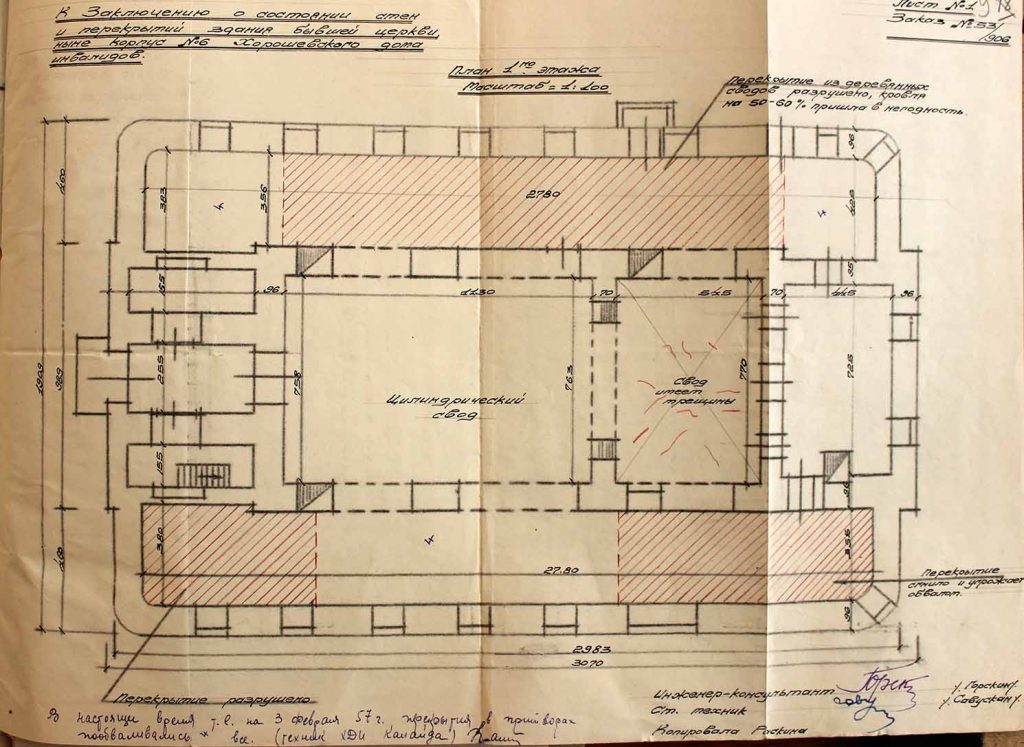
On December 20, 1953, a “Report on the Structural Condition of the Walls and Floors of Building No. 6 of the Former Church at the Khoroshevsky Home for the Disabled” was compiled. As a result, the building was deemed unsafe, and despite desperate attempts to save it, it was demolished along with other structures that were part of the monastery complex. Khoroshevo was last mentioned in official documents in 1963.
The list of structures to be removed from the register of architectural landmarks (from what remained at that time) includes:
Mikhailovska Church (1785). The building is not in use. It is in a state of partial ruin. Only the remains of the walls are left. The 18th-century tower is used as a water tower by the local nursing home. It is in satisfactory condition.
To be honest, I don’t know what has survived to this day. According to travelers’ blogs, as far back as 2012, it was still possible—albeit with some difficulty—to find the remains of the old wall and one of the towers in Khoroshevo.
The Kleinmichel family estate in Lyutivka fared a little better than the monastery. In the spring of 2018, it looked like this.
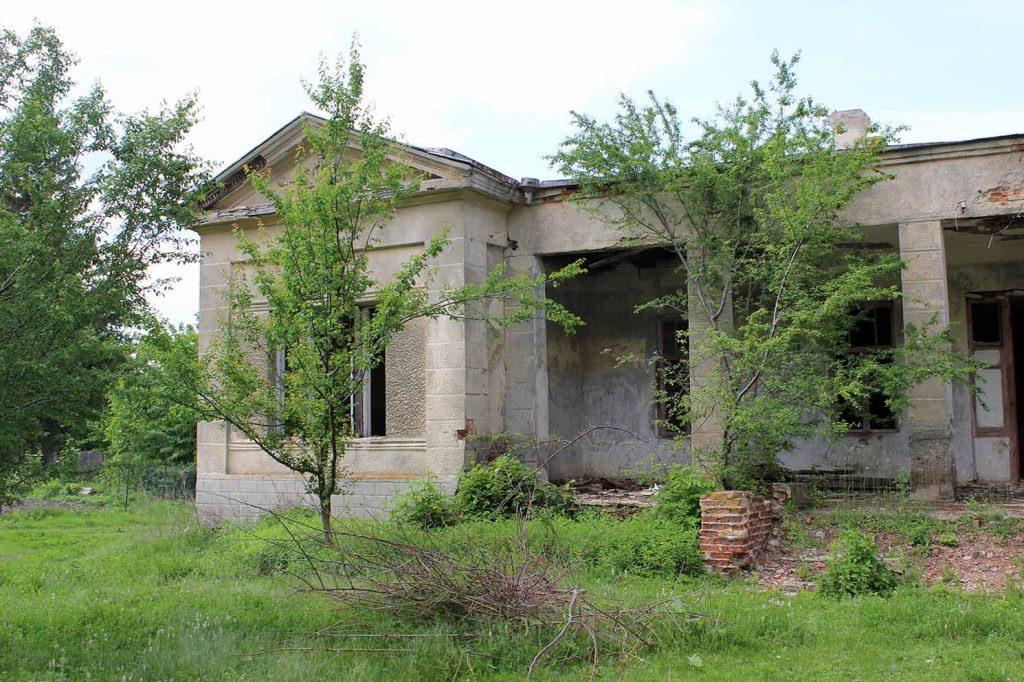
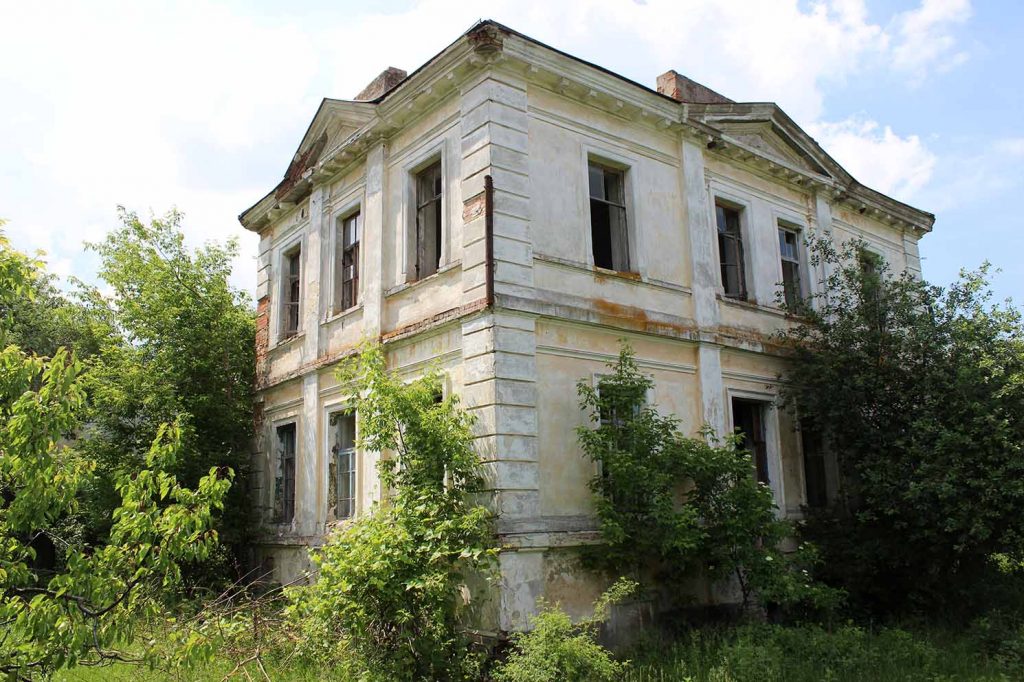
It sounds silly, but the estate—which is by no means ordinary or particularly dilapidated—actually exists, yet it still isn’t listed in the registry, even in the years since Ukraine gained independence. In 1951, as we recall, it was written that “there are quite a few similar late-19th-century buildings in our cities.” Well, looking at the estates in Staryi Merchyk, Hiyivka, and elsewhere, I can say that Lyutovka has outlasted them all. But for how long? After all, if something were to happen to it tomorrow, we, alas, would never know about it.

- About the military pilot school and the airfield in Kharkiv… - 04.11.2020
- Nikanor Savich—A Political Career by Mistake - 13.07.2020
- And once again, about the Cavalry Guards… - 21.01.2020