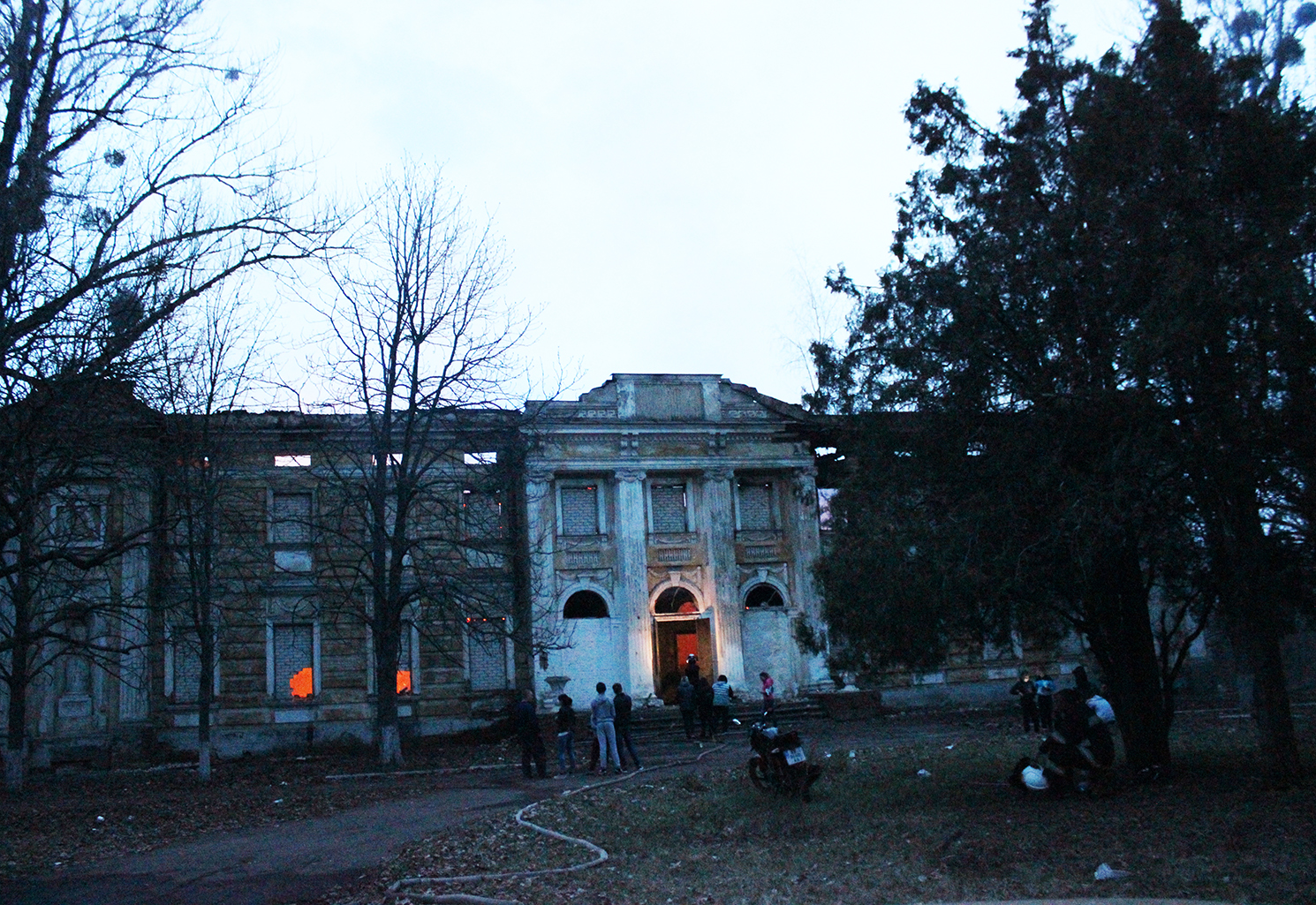
As we recall, on the evening of April 15, 2018, a fire broke out at the estate in Staryi Merchyk, a place so beloved by many generations of Slobozhans. One of the architectural gems of our region burned for several days. Discussions are ongoing regarding the cause of the fire and who is to blame. But whatever the case may be, the fact remains that in recent years, the government has done nothing to save this architectural site of national significance. Of course, the authorities always have plenty of excuses—the economic crisis, the hardships of wartime. In short, there’s never “time” to preserve our architectural heritage, and it’s always “sometime later.” Meanwhile, historic estates are quietly burning down and falling into ruin. It terrifies me to even think about what will remain in Sloboda Ukraine ten years from now and what our grown-up children will be able to see, aside from photos from our travels.
However, there had been hard times here before. For example, in the mid-1940s and 1950s, when the country was in a state of postwar devastation. Today, I’d like to talk about what life was like in Staryi Merchyk and how the estate was saved immediately after the victory in World War II. At that time, the authorities conducted a very detailed inventory of historic architectural landmarks listed in the registry. This was entirely appropriate because many sites of national and regional significance had been damaged or destroyed during the war.
In the 1945 list of architectural landmarks in the Kharkiv Oblast, under No. 80, we find both the estate itself and a brief description of it.

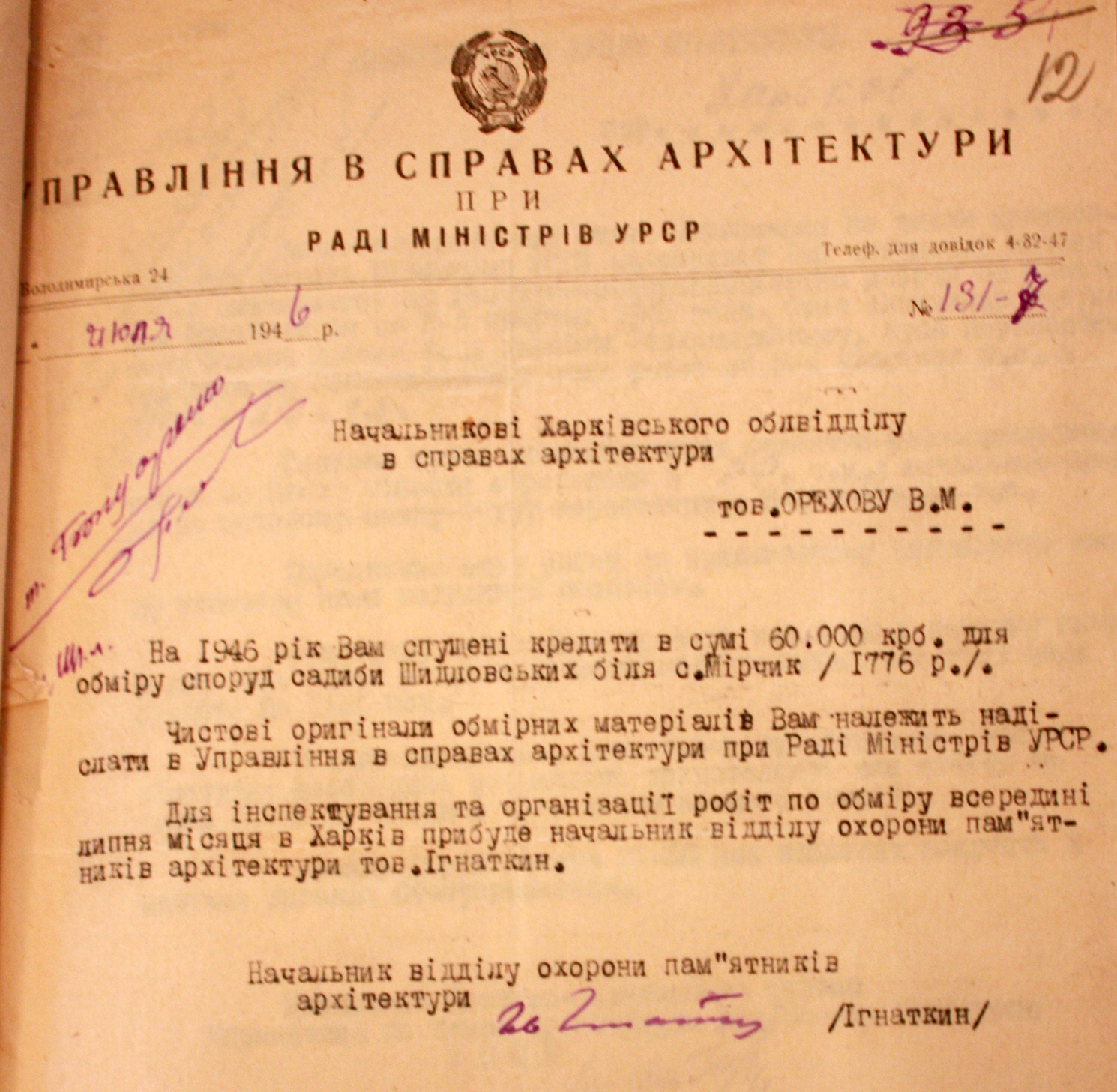
That same year, the regulation “On Architectural Landmarks and Historical Sites” was adopted. And as early as 1946, the Department of Architecture under the Council of Ministers of the Ukrainian SSR allocated a loan of 60,000 rubles to survey the structures of the estate in Staryi Merchyk. For that time, this was a substantial sum, but what is important here is something else entirely. No other similar documents from 1944–1946 have been found in the archives. This suggests that it was the preservation of the Staryi Merchyk estate (and not the estates in Gyivka or Sharivka) that was given priority.
On September 12 of that same year, B. A. Bondarenko, head of the Kharkiv Regional Department of Architecture, signed an employment agreement with V. P. Kostenko, the foreman of a five-person team of architects. The agreement called for the following work to be performed:
a) conducting inspections, preparing defect reports, and filling out the required forms in accordance with the instructions;
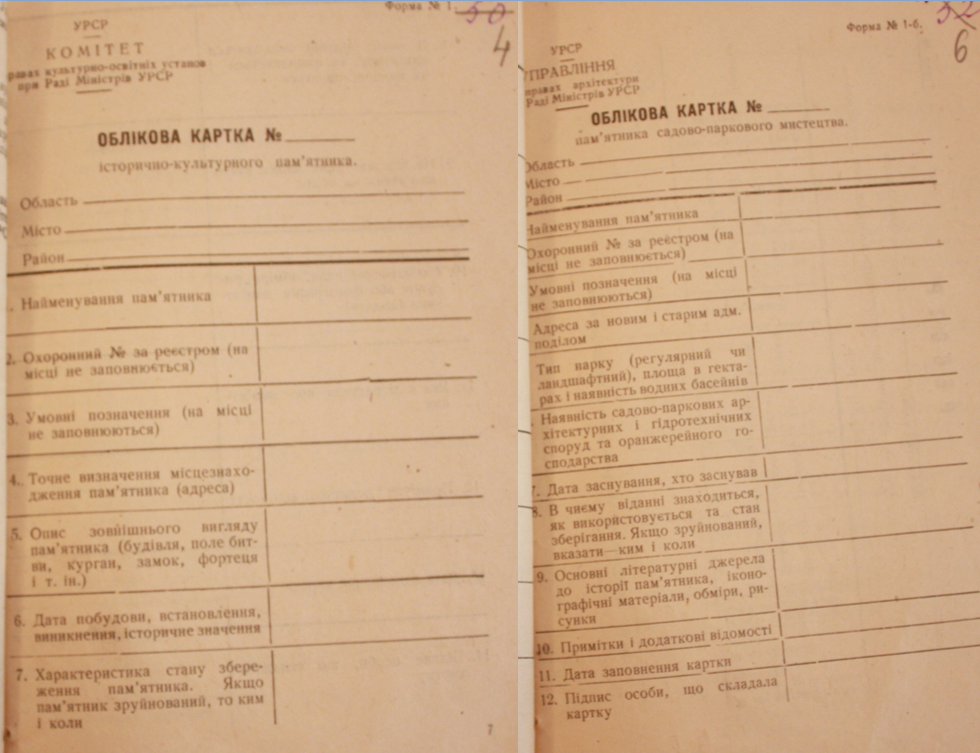
b) on-site measurements of the seven buildings on the estate and photographing all facades, details, interiors, and general views;
c) on-site sketches and the preparation of final drawings for the albums based on the measurements;
d) writing a monographic essay with a selection of archival and other materials.
The deadline for submitting a number of completed projects to the regional department of architecture was set for December 10, 1946. The document specified that the estate consisted of the following structures:
a) a two-story palace with a basement,
b) a two-story residential building,
c) two one-story residential buildings,
d) a bell tower,
e) a warehouse,
f) a carriage house,
g) a gazebo,
h) a park with ponds.
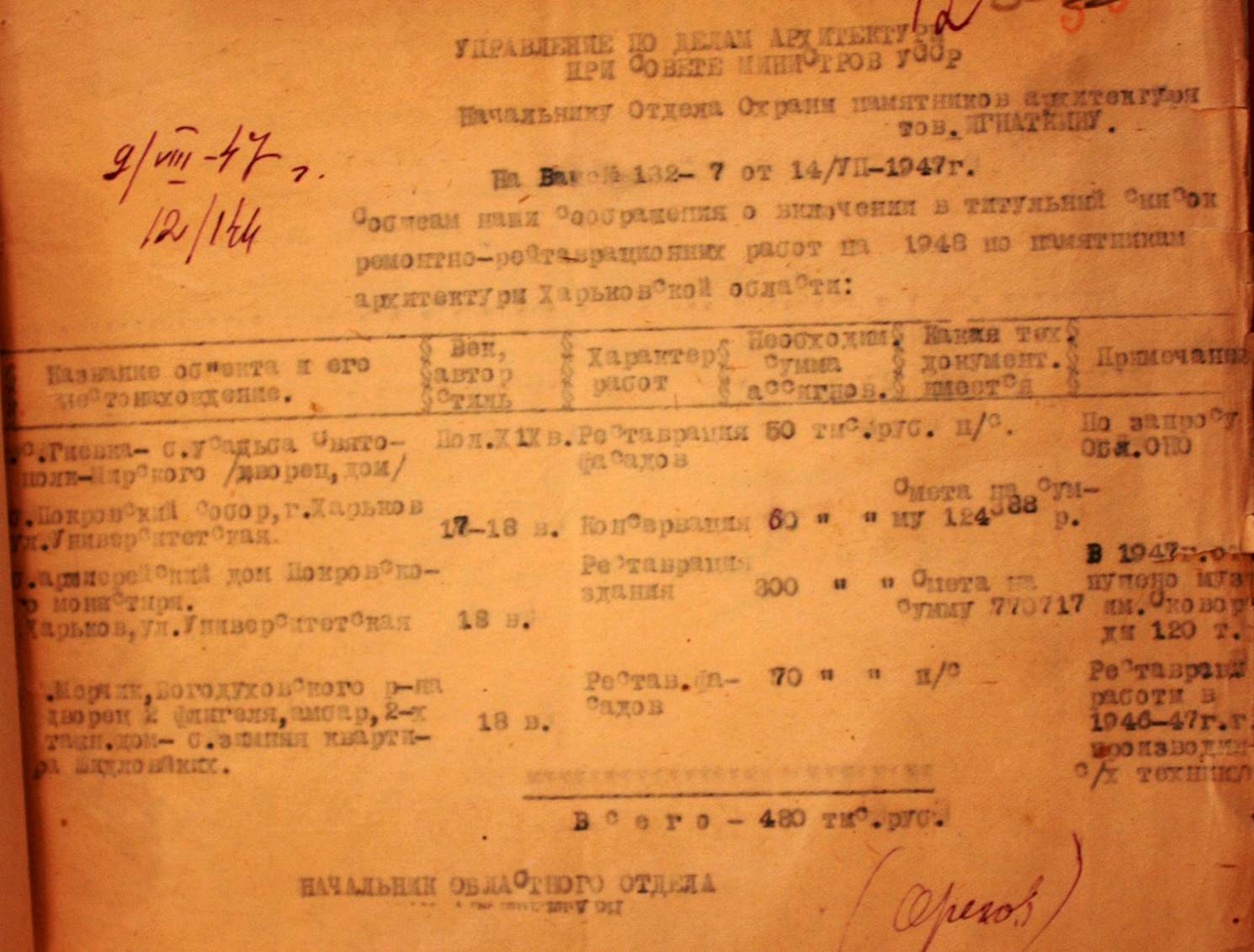
In 1947, the head of the Kharkiv Regional Department of Architecture reported to the authorities in Kyiv that restoration work had been carried out at the estate in 1946–1947. He also noted that 70,000 rubles would need to be allocated to continue the work in 1948.
We can learn about the results of the work carried out by the architects who conducted the measurements in Staryi Merchyk from the acceptance report submitted to the Department of Architecture under the Council of Ministers of the Ukrainian SSR on November 20 of that same year.

A number of amendments were made to the register of architectural landmarks of local significance in the Kharkiv region. For example, in 1948, it was noted that the bell tower next to the estate was in poor condition, the well in the park was 80% destroyed, the stables no longer existed, and the palace itself required further repairs. However, the cellar and the well in the estate park were still there at that time.
In 1949, the Department of Architectural Affairs under the Council of Ministers of the Ukrainian SSR decided to install protective plaques on three architectural landmarks in the Kharkiv region, namely:
— on the building of the Pokrovsky Monastery;
— at the estate in Gyivka;
— at the estate in Staryi Merchyk.
And so it was done. I do not know what became of the bronze plaques installed at that time. To be honest, I never even thought they had been there in the first place.

While restoration work was underway at Staryi Merchyk in 1950–1951, residents of Kharkiv raised the issue of adding the estate to the list of landmarks of republican significance and sent the necessary documentation to Kyiv. On January 14, 1952, Kuteepov, an inspector for the protection of architectural landmarks, visited the estate to inspect it and prepare the preservation documentation. In his detailed report, he wrote the following:
The former church building has been renovated and converted into a bakery. The bell tower, which was built at a later date, is in a state of disrepair and is not in use.
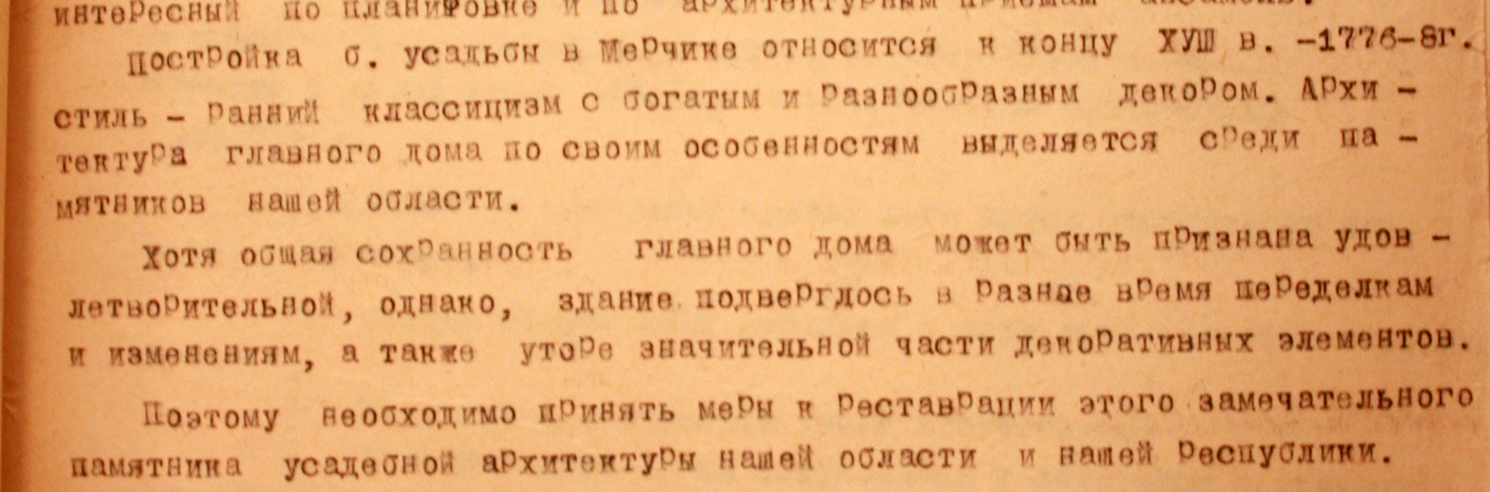
Speaking of the estate’s main building, the architect points out that
The architecture of the main house stands out among the historic sites in our region due to its distinctive features. Although the overall state of preservation of the main house can be considered satisfactory, the building has undergone renovations and alterations at various times and has lost a significant portion of its decorative elements. Therefore, measures must be taken to restore this remarkable landmark of estate architecture in our region and our republic.
That was the attitude toward the Shidlovsky estate during the difficult postwar years. I’ll be sure to tell you in a few weeks about the efforts made in the mid-1950s and 1960s to save this gem of Slobozhanshchyna from destruction.
A few days after the arson, I spoke with Vladimir Lopatko, an associate professor in the Department of Reconstruction and Restoration of Architectural Structures at Kharkiv National Technical University of Construction and Architecture and a member of ICOMOS (International Council on Landmarks and Sites), Vladimir Lopatko. Speaking about the burned-down estate in Staryi Merchyk, he summed it up:
You see, our government’s attitude toward preserving architectural landmarks is similar to its attitude toward retirees. In other words, the more and the faster they die off, the less money the government has to spend on them from the budget.
It is with these very words that I would like to conclude today’s article.

- About the military pilot school and the airfield in Kharkiv… - 04.11.2020
- Nikanor Savich—A Political Career by Mistake - 13.07.2020
- And once again, about the Cavalry Guards… - 21.01.2020