Very soon—literally this week—thousands of young residents of our city will be heading to school. For many of them, this will be their first time, so there’s a good chance that these new students will carry the most vivid memories of their first grade with them for the rest of their lives.
What stands out in the memory of 11-year-old Kharkiv resident Tatyana Grigoryevna Morozova about the start of the school year, when she enrolled—101 years ago, on August 1—in one of the most prestigious institutions not only in Kharkiv but in the entire Russian Empire?
We can learn about this from her quite fascinating memoir, *At the Institute for Young Ladies*.
To begin with, as the daughter of a lieutenant general, she was incredibly fortunate.
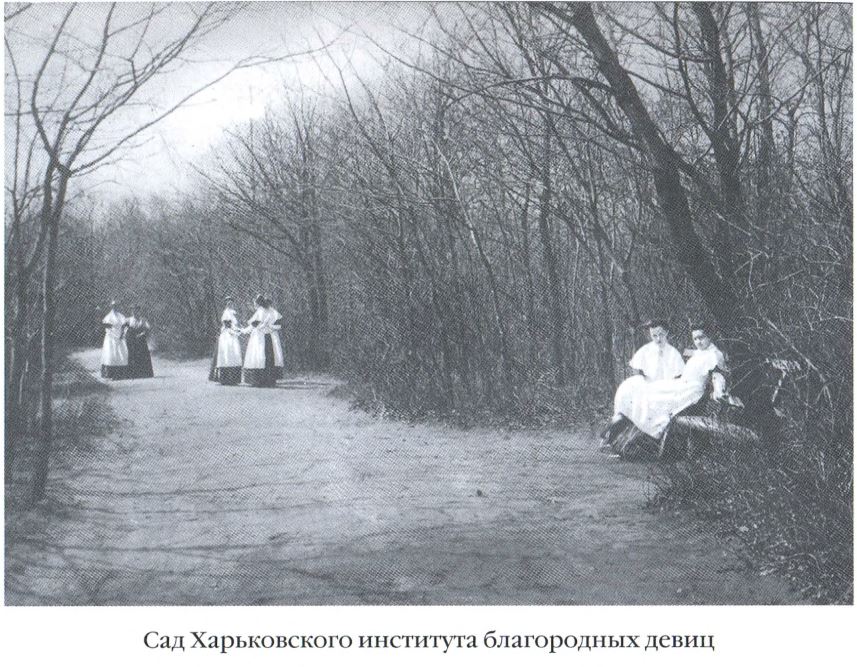
The Kharkiv Institute for Young Ladies was founded with funds from the province’s nobility in 1812. For a long time, it remained the only institution of its kind in southern Russia. The importance of this educational institution was immense—after all, girls from all the southern provinces of the country studied there. The patronage of the imperial family not only conferred prestigious status on the Institute but also yielded material benefits.
For example, Emperor Nicholas I visited the Institute five times. In 1829, an imperial decree was issued “On the transfer to the Institute of the land, buildings, and materials located at 33 Sumskaya Street,” which had previously belonged to the cadet corps, which was relocated to Poltava. Construction began in 1831 and was completed in 1839. The building was destroyed during World War II.
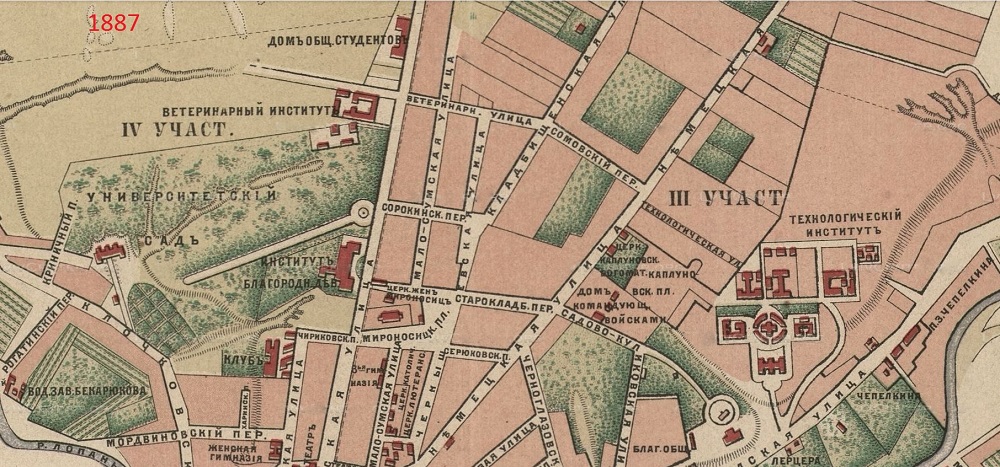
The Kharkiv Institute for Young Ladies was considered one of the most progressive in the Russian Empire at that time. The school accepted not only girls of noble descent but also the daughters of lower-ranking military officers, merchants of the 1st and 2nd guilds, and day students. To enroll in the institute, one first had to pass exams in arithmetic, German, and French (oral and written), a Russian dictation, and an exam on the Law of God. In 1860, a seven-year course of study was introduced. The first grade was considered the highest, and the seventh the lowest. The following year, public exams for graduating students were abolished, and a 12-point grading system was introduced to replace the 5-point system. It goes without saying that throughout their entire education, the young ladies lived in the same building. Upon graduating from the institute, the girls were eligible to enroll in higher educational institutions for women.
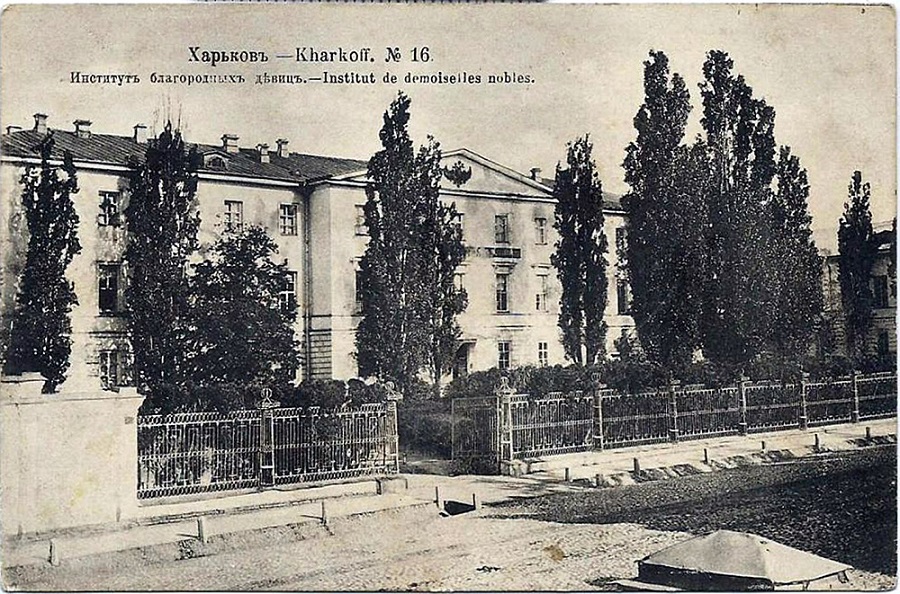
So, about a year ago, they began preparing little Tanya and her sister mentally for the admissions process.
…I am 10 years old, and I attend a very good private school run by Vera Alexandrovna Platonova, the wife of a well-known professor of psychiatry in Kharkiv. I enrolled in this school when I was six, and along with general education subjects, we started learning German and French early on and took classes in drawing, sculpting, and singing. This year, Mom started talking more and more often to me and my younger sister Natasha about the institute. It usually began with a half-joking threat: “If you keep misbehaving, I’ll send you to the institute. They’ll make you toe the line there.” But then it all turned out to be very interesting and appealing. The institute is a kind of school where girls both live and study. They have very pretty uniforms. True, they’re woken up very early, at 7 a.m., and every morning the girls have to wash themselves from the waist up with cold water. There are two teachers in each class. One day at the boarding school they speak French; the next day, German. That’s why the school’s graduates are fluent in foreign languages. All this was said in a tone that made it sound incredibly appealing—even the early wake-up calls and washing with cold water…
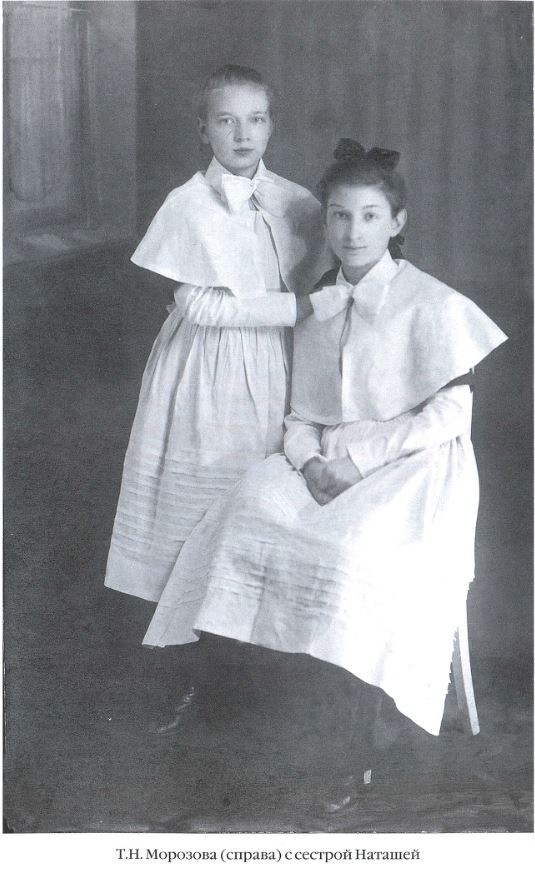
Yeah, really, how tempting it is—to wash with cold water up to the waist every morning…
Morozova then recalls, it seems, the psychological trauma she suffered before entering college.
Among the documents I had to submit when enrolling in college was a certificate of confession and communion. My mom and I went to the regimental church. The priest led me behind a small partition:
“Do you smoke?”
“No.”
“Do you drink vodka?”
“No.”
“Do you listen to your parents?”
“Yes, I do.”He placed the epitrachelion on my head and forgave my sins. My mom asked me, “What did the priest talk to you about?” I recounted our conversation to Mom. Mom came with me to speak to the priest. “Father,” she said, “what kind of questions are you asking a little girl? Is she a soldier or something?” The priest laughed and said, “What else is there to ask her? She didn’t even tell the truth about obeying her parents… She probably doesn’t listen to them…” And that was the first confession of my life…
Although I think that these days, many people would have to lie during confession about points 1 and 2 as well.
The list of required items at the institute is also very interesting. It’s actually quite surprising, by the way, that not a single bookstore in Orthodox Kharkiv had a copy of the Gospel for sale!
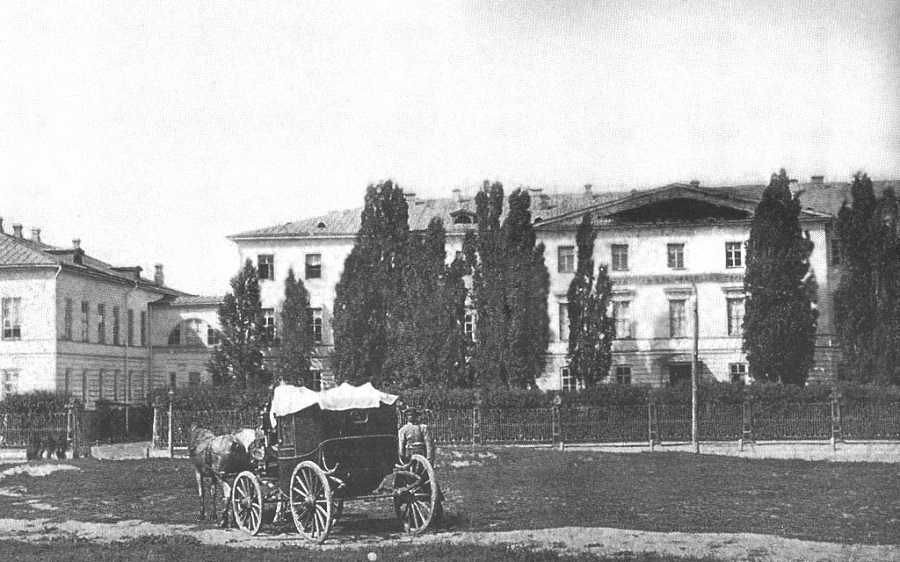
And so I was enrolled in the sixth grade at the Kharkiv Institute for Young Ladies, located on the city’s main street—33 Sumskaya Street. The list of required items for the institute included: a cross on a gold or silver chain or on a black cord; a Gospel, a prayer book, a lockbox of a certain size with a key for storing small items, a small cup, a toothbrush, a nail brush, tooth powder, a soap dish, soap, and a sponge; a comb, a fine-toothed comb, and scissors; a black ribbon of a certain width for braiding, or a round comb for those with short hair; a canvas bag for storing sweets in the dining hall; needles, two spools of thread—one white and one black. My mother and I spent the whole day walking around town with a long list in hand. We had trouble finding a jewelry box. After some discussion, we decided that I would take my father’s, which he had brought back from the war in Japan. I took my school prayer book, and Mom brought me the Gospel, with its bright blue cover, later: on the day of our shopping trip, we couldn’t find a single new copy in any of the bookstores. For the first time in my life, they placed my gold baptismal cross on a silver chain around my neck. I was all set…
And finally—a fact that left me a little stunned. It turns out that young ladies were taken to the bathhouse ONCE EVERY TWO WEEKS. So, for those who wish to be a beautiful, noble young lady, I recommend this beauty secret.
We were taken to the bathhouse regularly, once every two weeks. I remember my wet hair hanging loose, preening in front of the mirror in the dorm, and the large gray shawls—with a fine black-and-white check pattern—draped over our shoulders, and the fact that after the bathhouse we didn’t go for a walk not only that day, but the next day as well
This is how a young girl from Kharkiv, who lived in our beloved city a little over 100 years ago, remembered the start of the school year. I sincerely hope that the current generation’s memories will be even more vivid, and that our descendants will enjoy reading them in 100 or 200 years, discovering many new and interesting things for themselves.

- About the military pilot school and the airfield in Kharkiv… - 04.11.2020
- Nikanor Savich—A Political Career by Mistake - 13.07.2020
- And once again, about the Cavalry Guards… - 21.01.2020