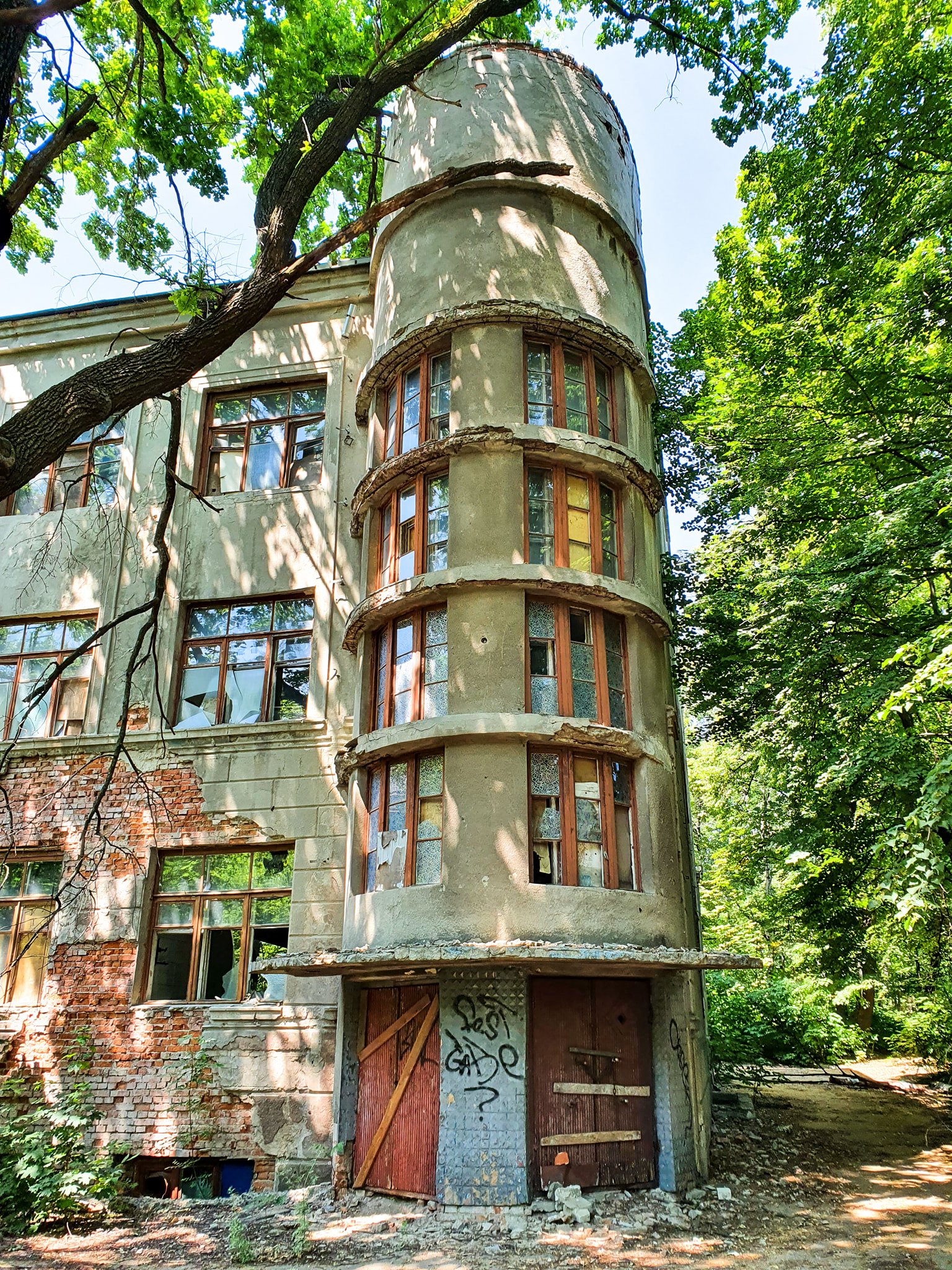
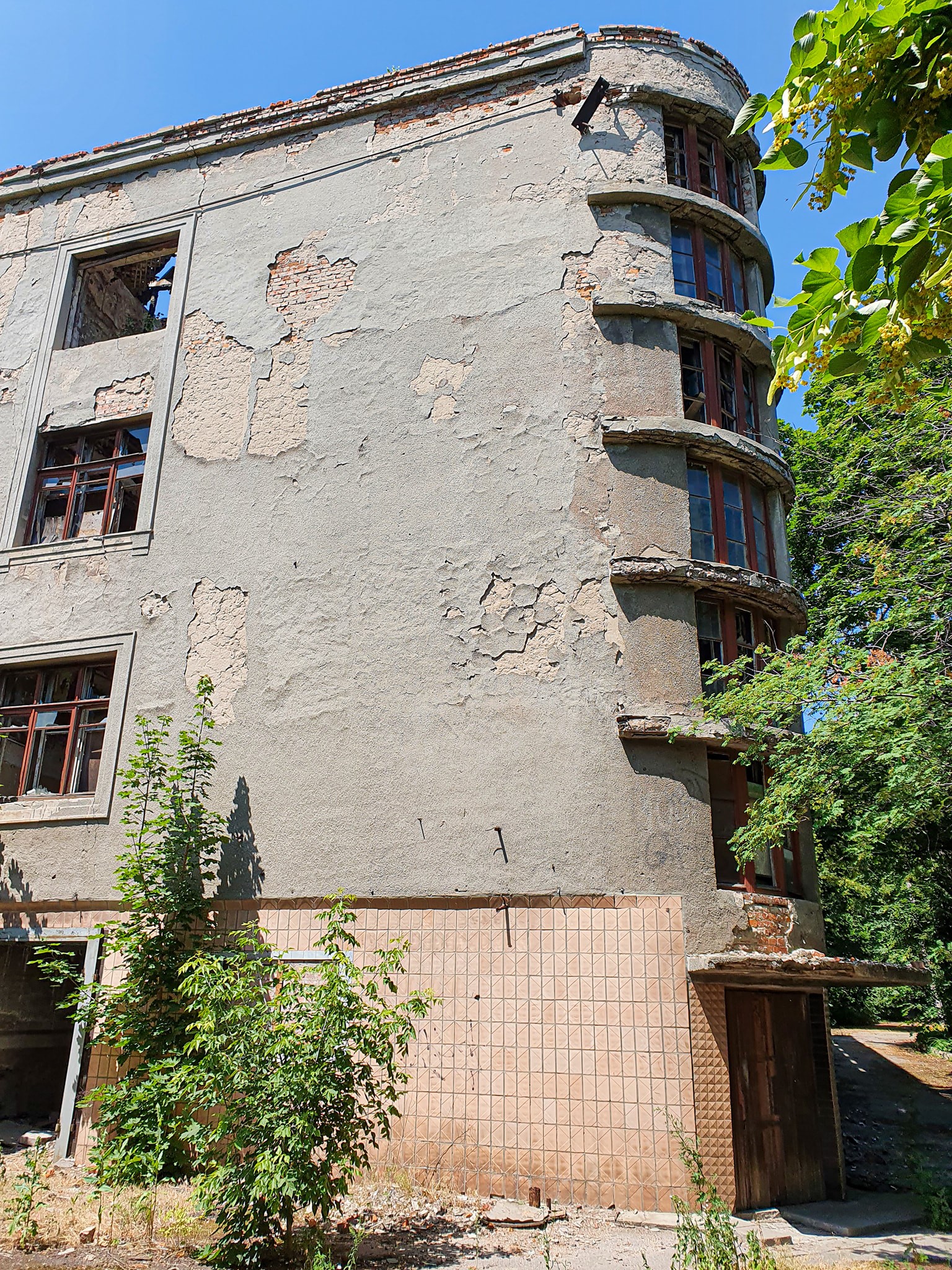
At Seminarska Street, 46 stands a complex of buildings that once housed the Kharkiv Theological Seminary and later – the School for Red Officers. Ironically, the mid-19th-century seminary building has outlasted the Constructivist wings added to it, which are now slowly falling into ruin.
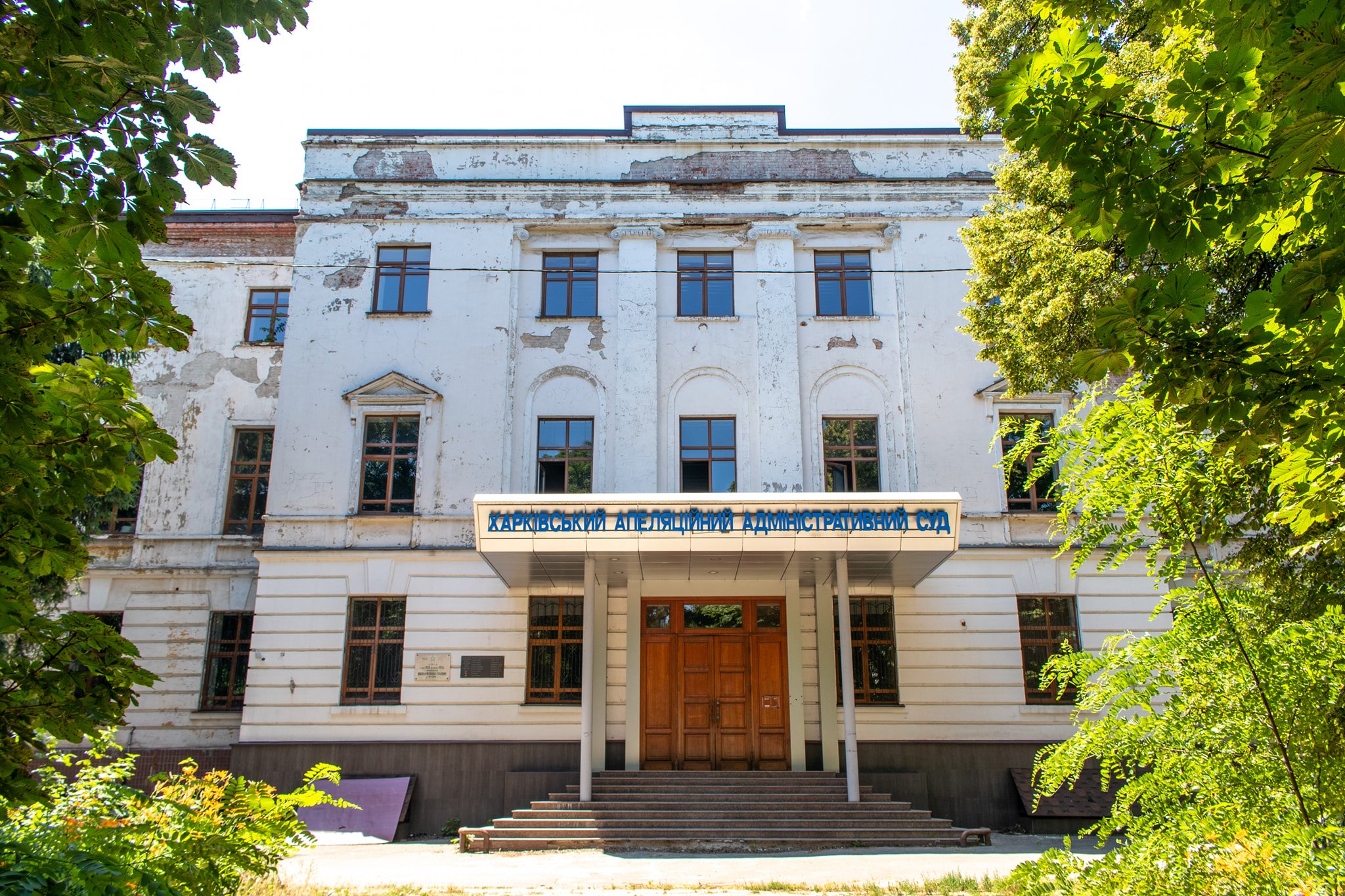
The seminary was a large complex, comprising administrative buildings, faculty apartments, a laboratory, a library, an infirmary, and the St. John the Theologian chapel (consecrated in 1851)…
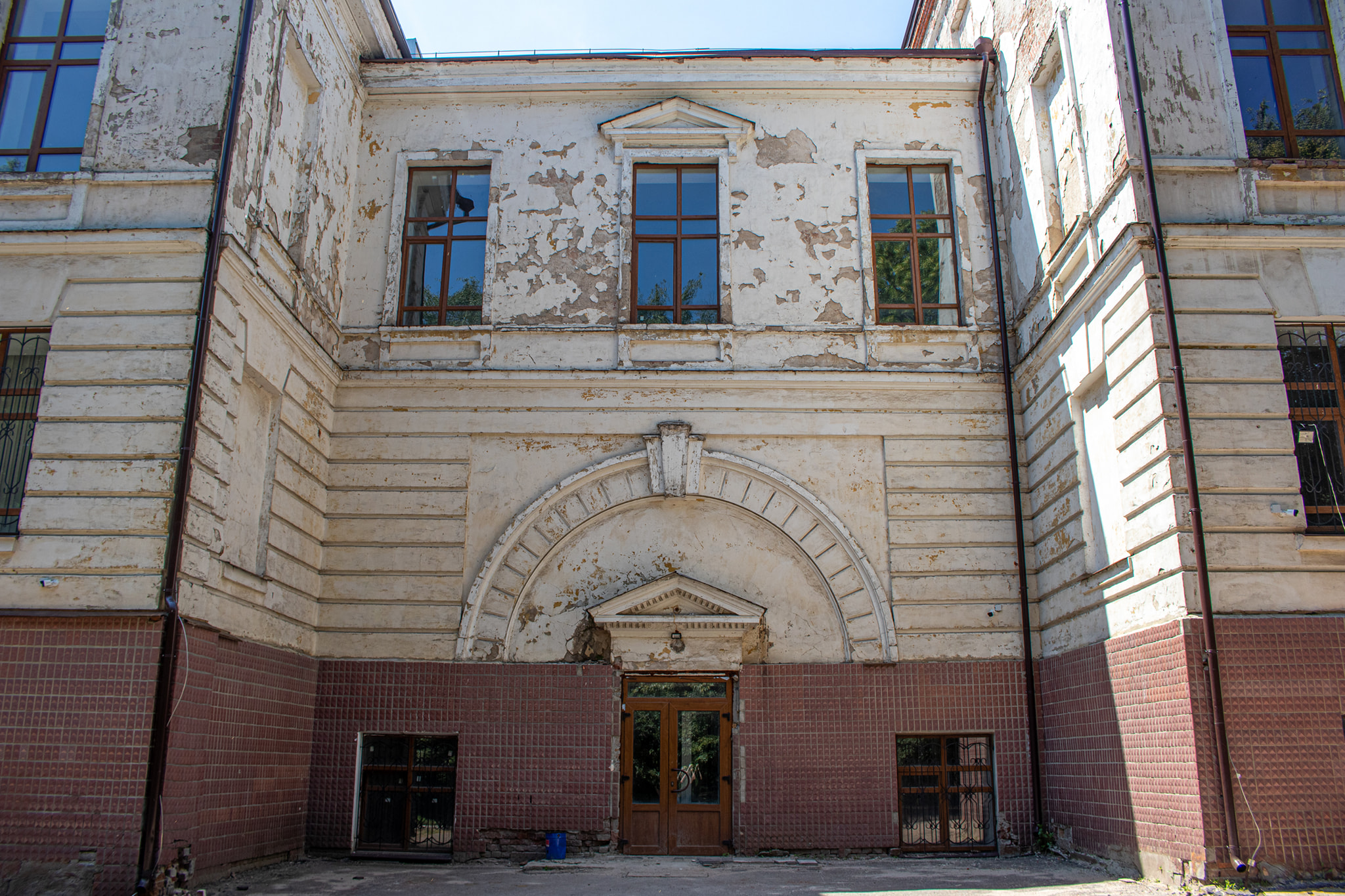
All of this was built in several phases. The first buildings were erected in the mid-1840s based on a design by the Moscow architect A. Shchedrin. According to information in the contemporary Kharkiv Diocesan Gazette, the work was supervised by Andriy Ton.
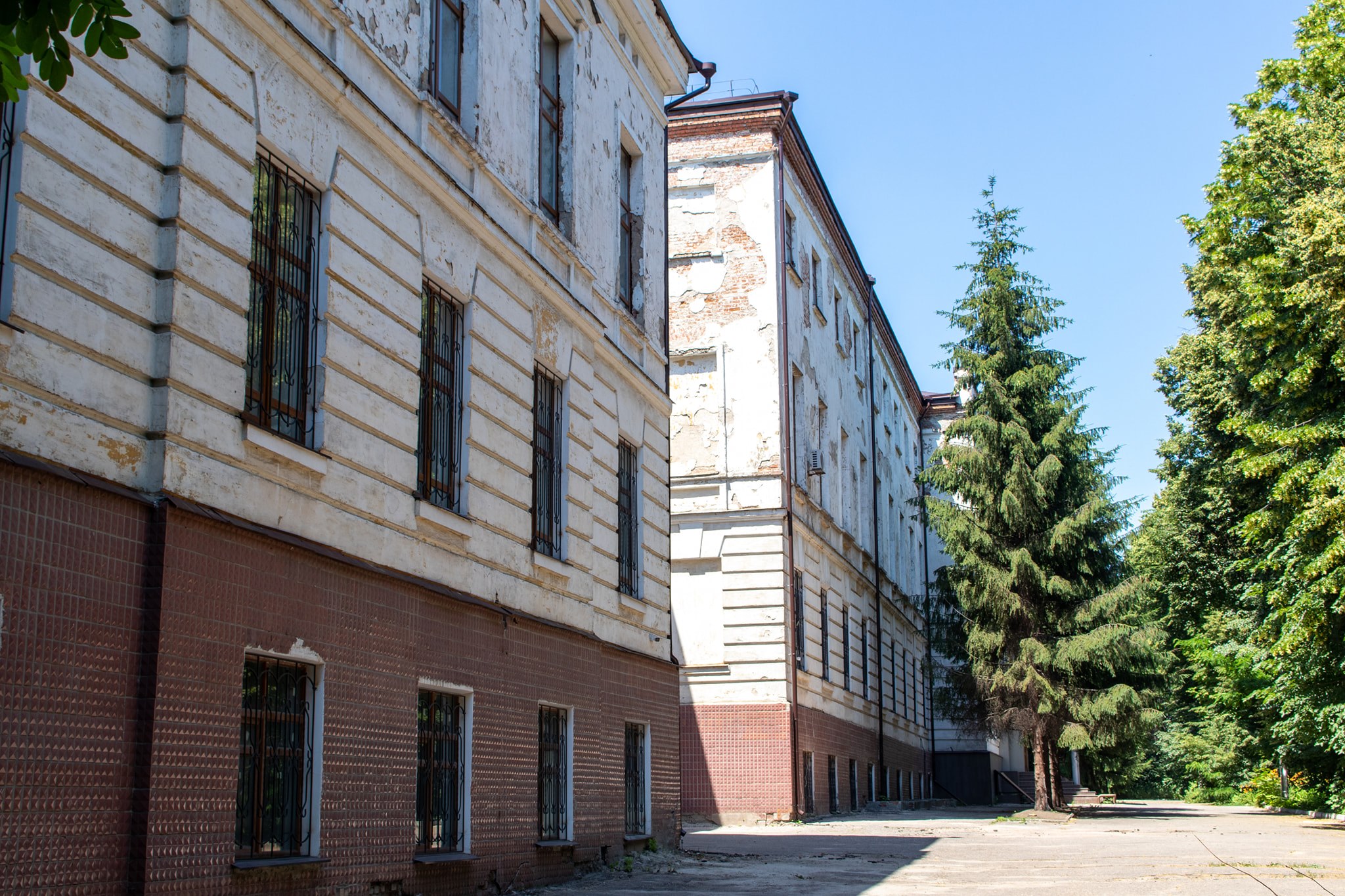
As Filaret Gumilevsky wrote in the 1850s, there were 236 students at the seminary. In 1907, there were 338 students enrolled. The faculty building was constructed in the late 1880s by Vladimir Nemkin.
My hands are going numb, my eyes are closing…
Goodness, how much longer must I go on?
From early morning till late at night,
I must keep turning the needle all day long.That tiresome,
Cursed, secretive sewing
Sucks the life out of me,
Until the capricious, spoiled young lady
Throws it all away like rubbish.
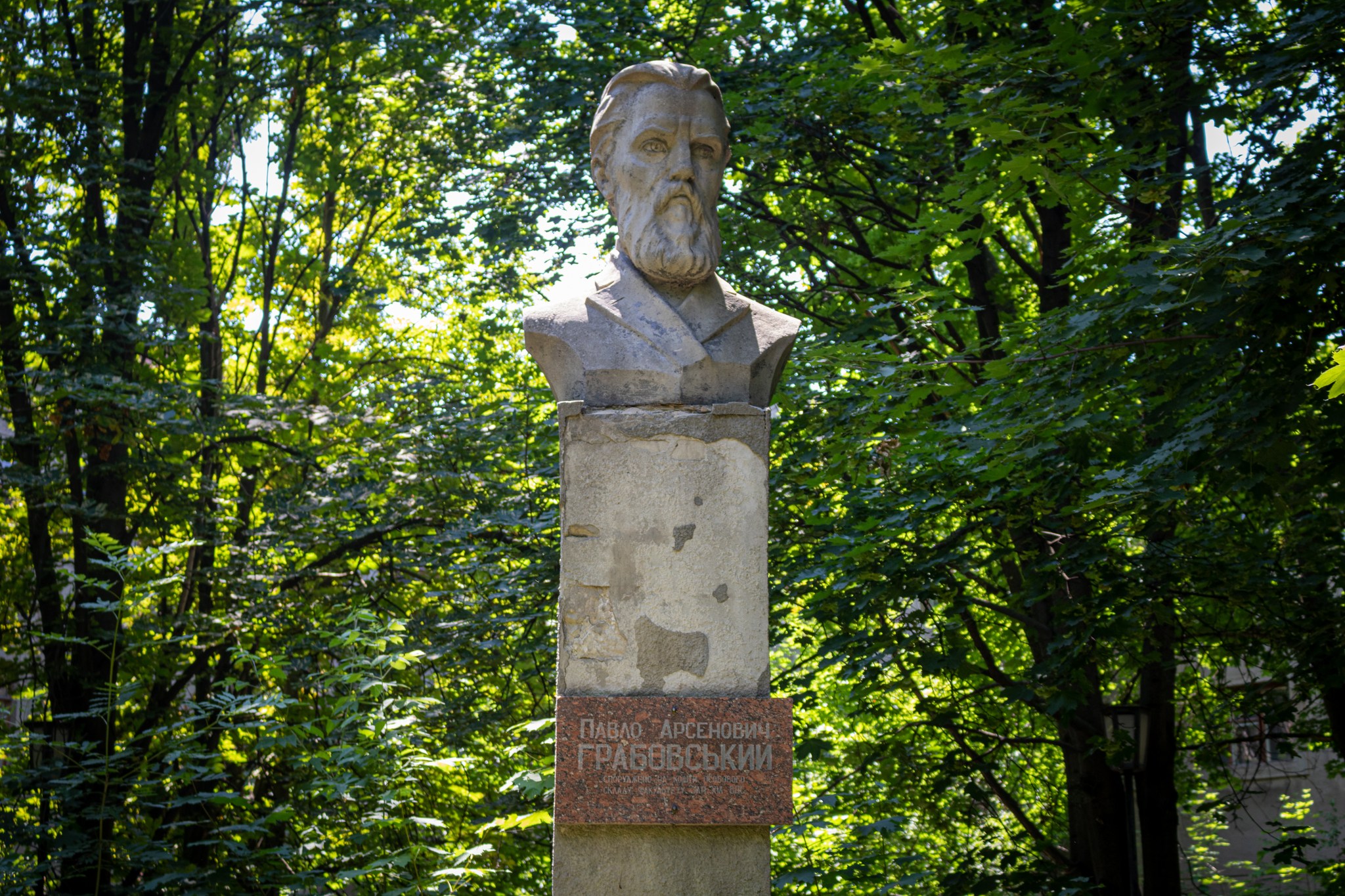
Pavlo Hrabovsky, the author of verses familiar to all Ukrainian schoolchildren, was born in 1864 in the Akhtyrsky Uyezd in Sloboda Ukraine; he studied at the Akhtyrsky Boarding School and the Kharkiv Seminary. His fate was tragic; he dedicated his life to working in underground Narodnik organizations. His first arrest came at age 18, followed by expulsion from the seminary. Then came the army, endless prison terms, and exile… Nevertheless, even in the remote corners of Siberia, Hrabovsky continued to write poetry and articles and translated works of world literature into Ukrainian. He died at the age of 38 in 1902 of tuberculosis in Tobolsk and was buried, in accordance with his will, next to the Decembrists. A monument to Hrabovsky was erected on the grounds of the former seminary in 1996 (sculptor O. Fomenko).
Pavlo Hrabovsky also had a very talented son, Boris (1901–1966), who lived in Kharkiv for a time; in 1925, he was the first to invent and patent a system for electronically capturing video images and displaying television signals using a cathode-ray tube. In 1928, Boris Hrabovsky carried out the first transmission and reception of a TV signal via radio…
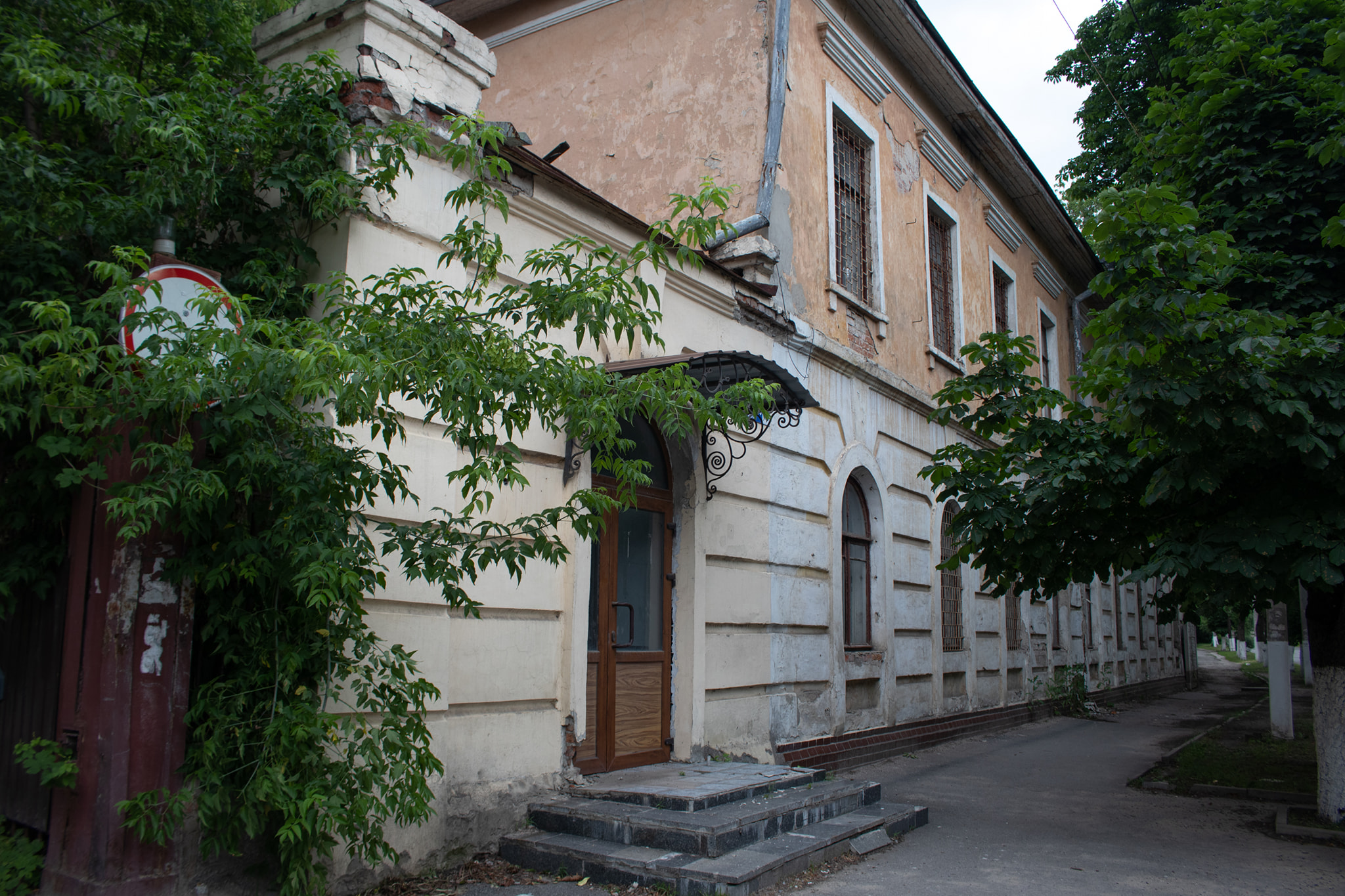
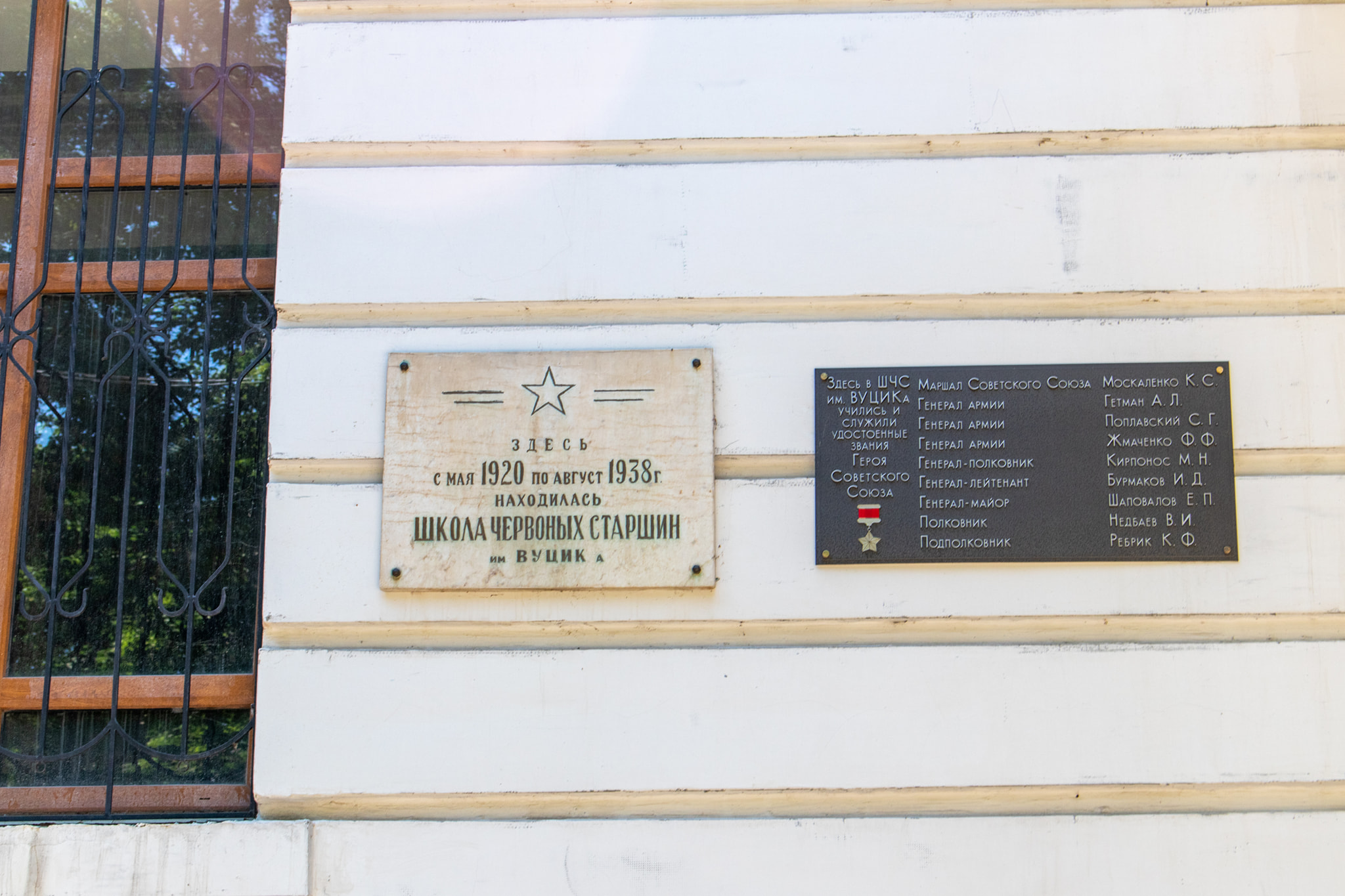
From 1920 to 1938, the former seminary housed the School for Red Officers, where, according to a commemorative plaque, nine Heroes of the Soviet Union studied or served.
Later, the Pilot Training Institute was established there, and after it moved out, the Kharkiv Administrative Court of Appeals has been housed in the seminary building since 2008.
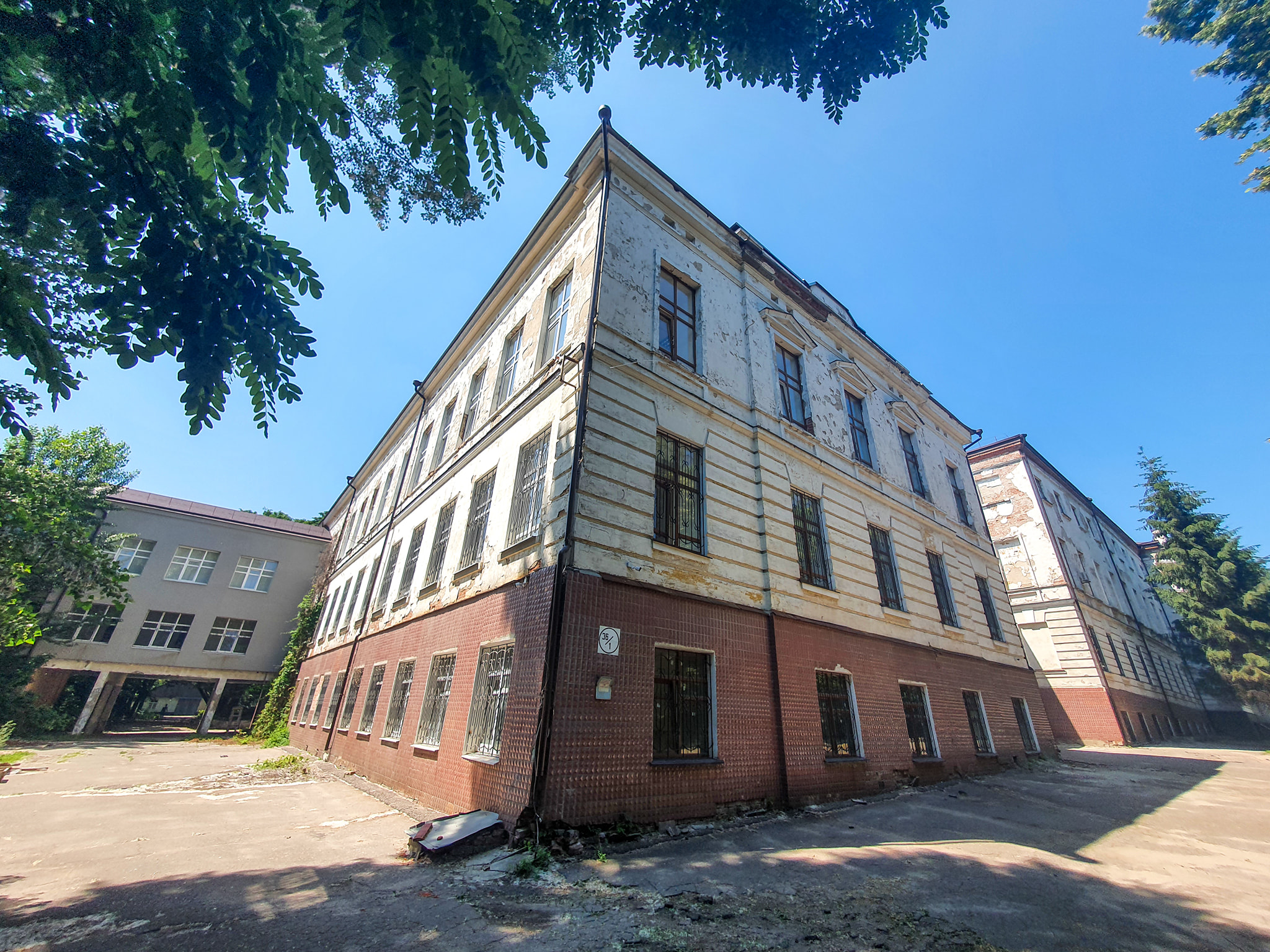
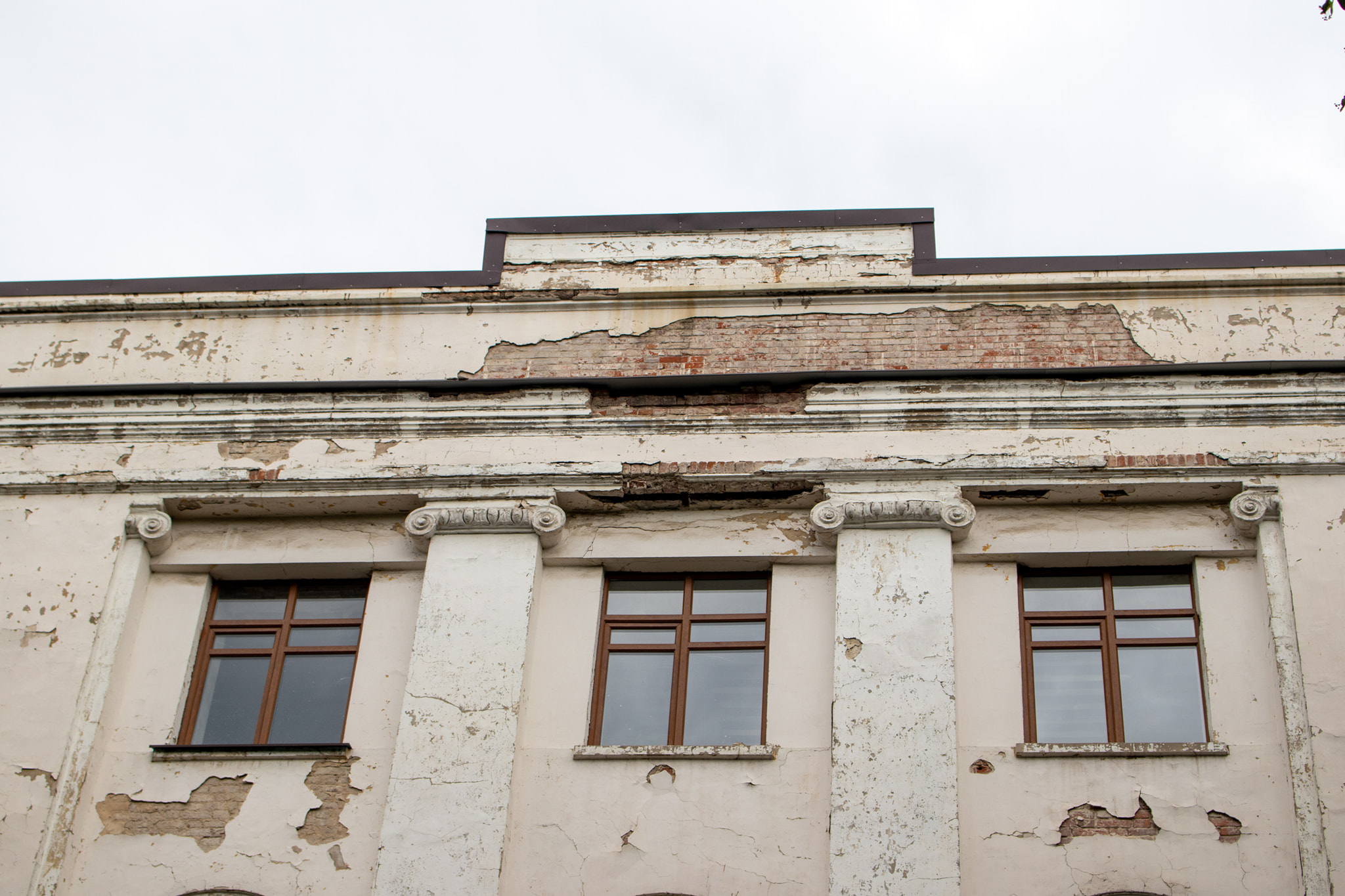
Although the facade is already in very poor condition, the building has a new roof—which was replaced after a lightning strike in 2017—and new windows.
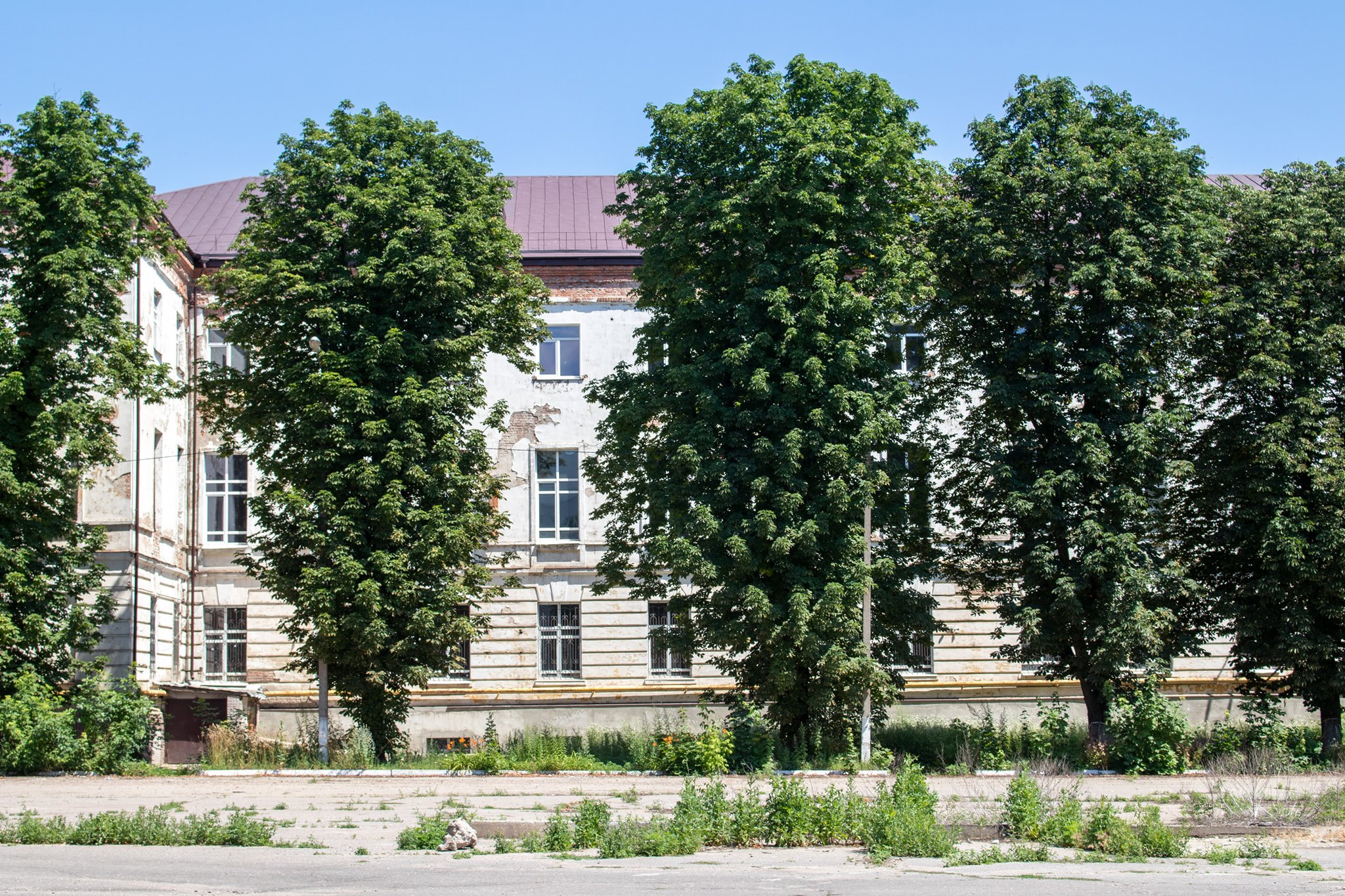
At the same time, the new double-pane windows are a standard “wood-grain” color with “period-style” frames. So there is hope that eventually the facade itself will be restored… As well as the overgrown surrounding area, which has turned into a wild thicket.
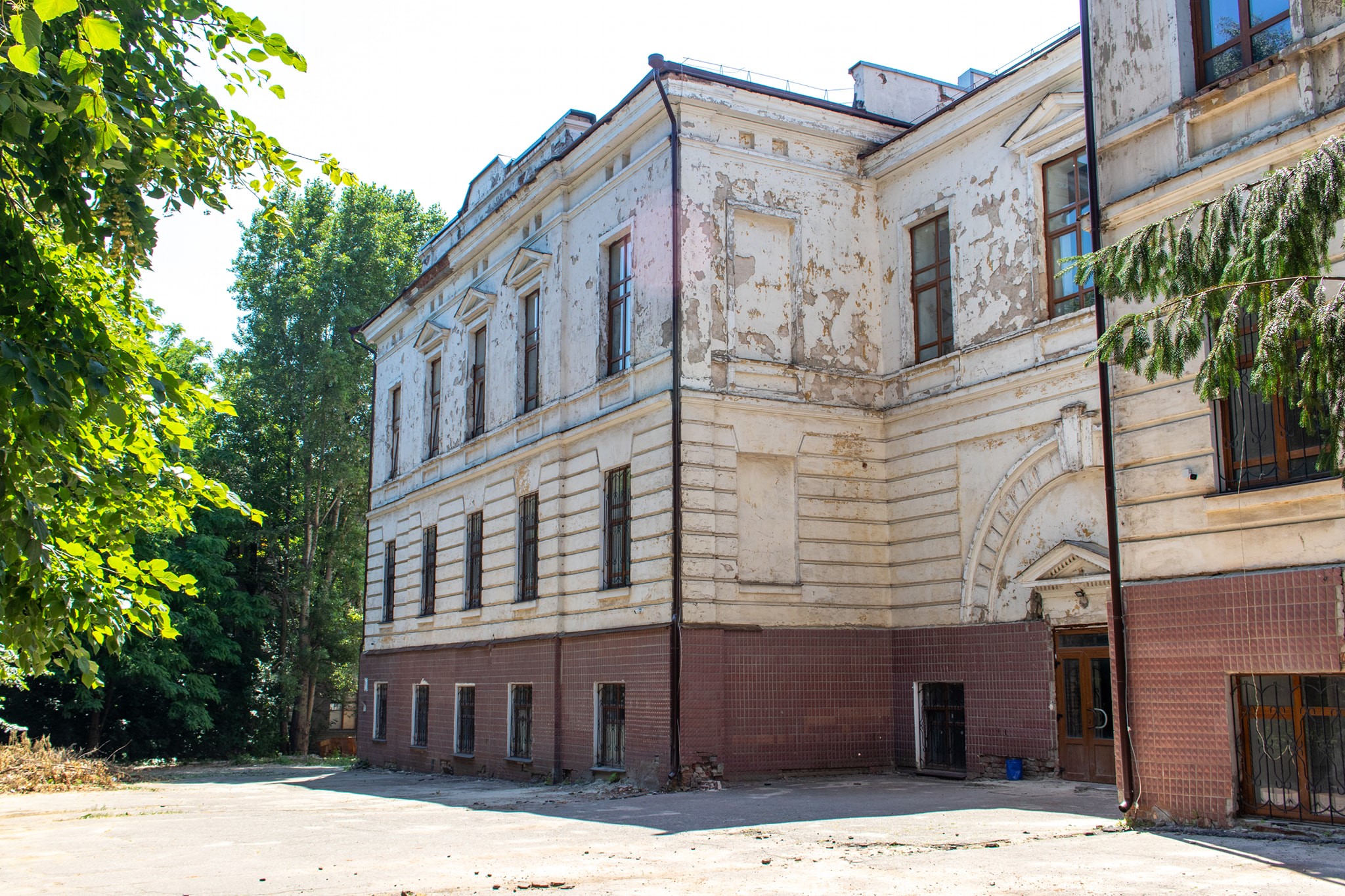
Unfortunately, the building’s windows and doors were severely damaged by Russian missile strikes in the spring of 2022.
And for the Constructivist part… In the 1920s and 1930s, buildings in the Constructivist style were constructed for the School of Red Officers.
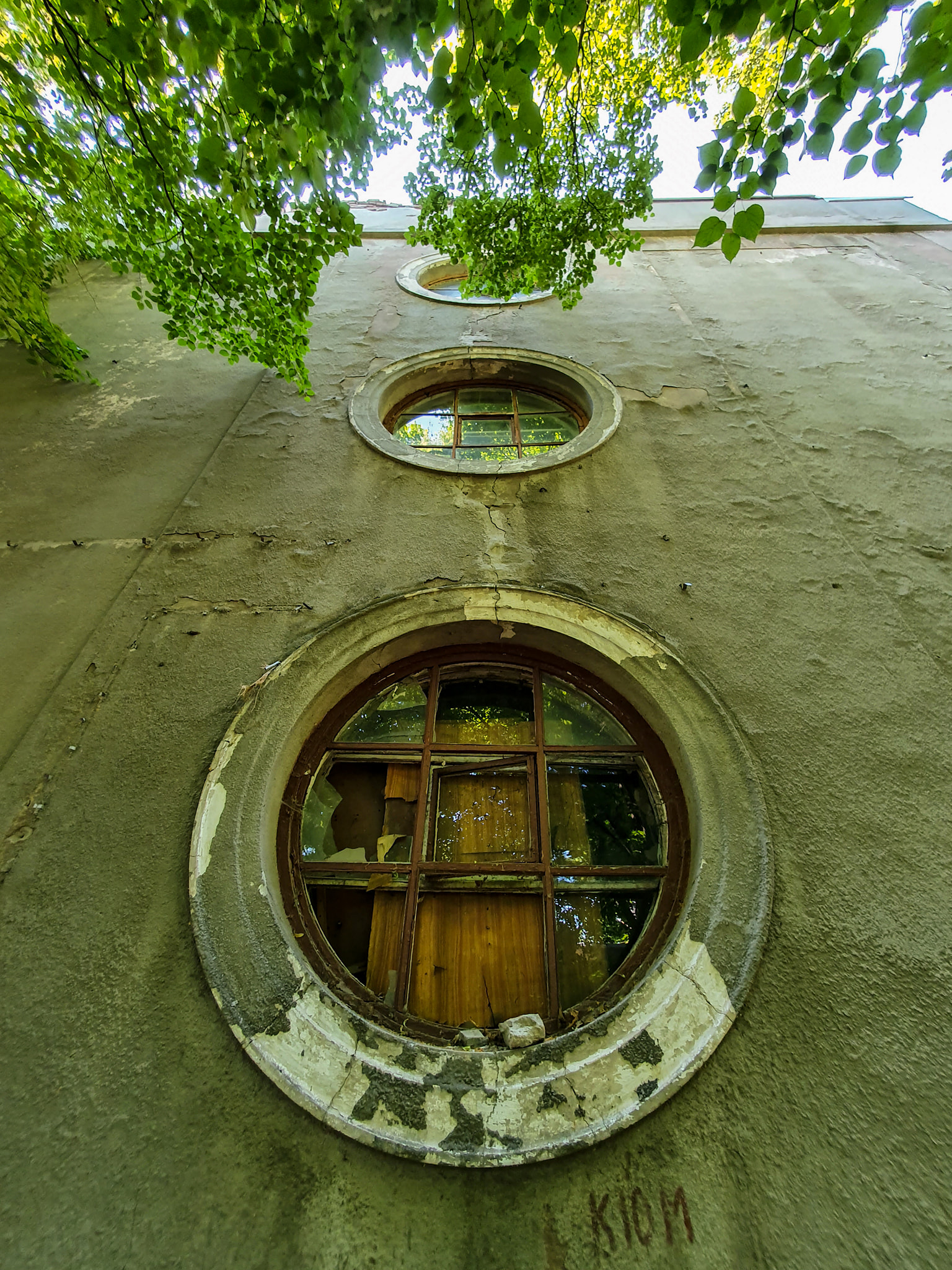
Unfortunately, they have been completely abandoned.
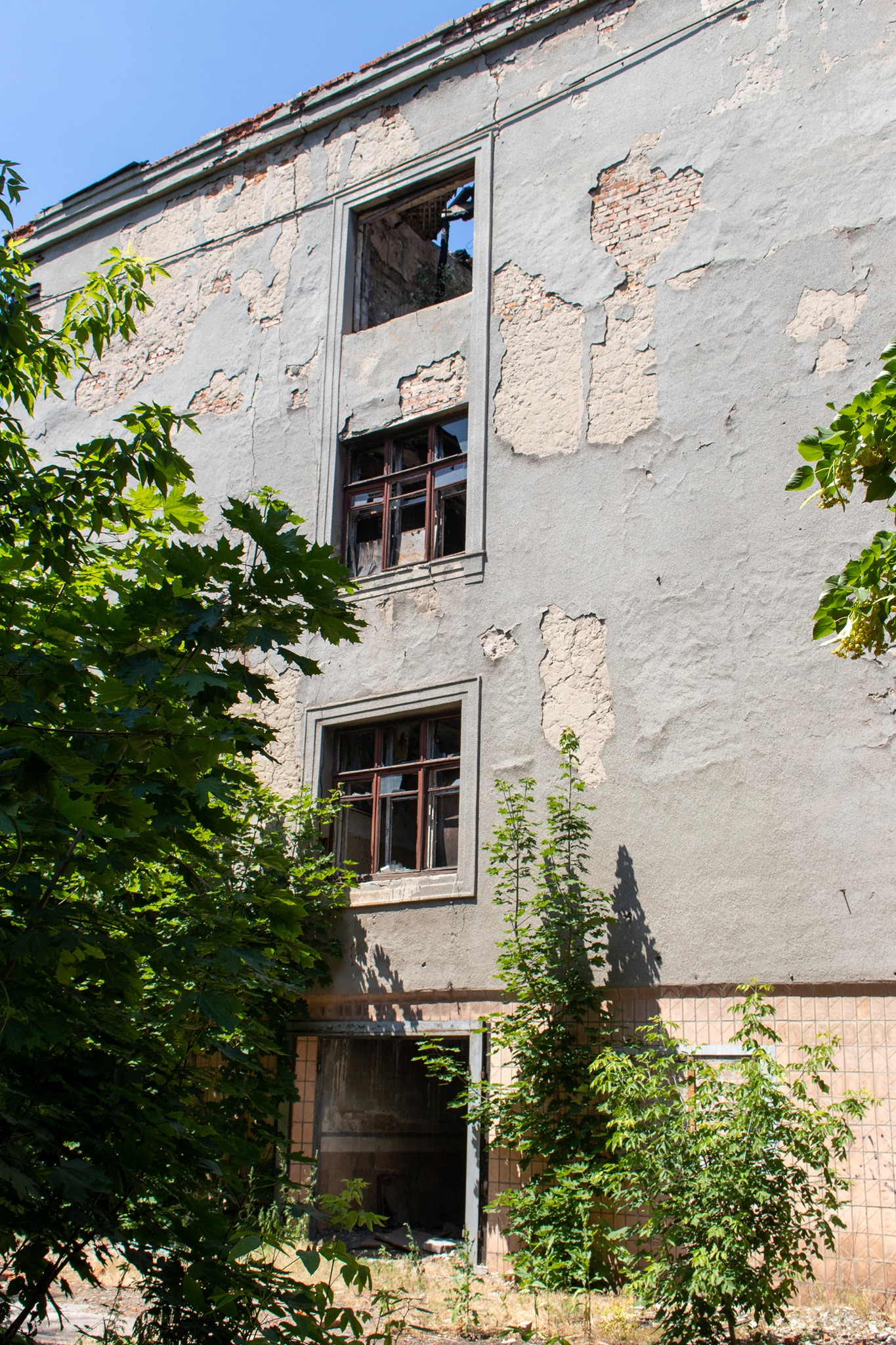
In July 2013, a fire destroyed the roofs of several buildings, so dampness, snow, and rain will cause them to deteriorate even faster.
In 2014, a church community restored one of the seminary’s abandoned service buildings and established a church dedicated to the Smolensk Icon of the Mother of God there. It was damaged in 2022 by a Russian rocket strike as well.

- Danylevs’koho Street, 19 - 13.10.2026
- Debunking the myth about one of the most famous Kharkiv photos - 12.10.2026
- The Architectural Evolution of the Kharkiv Theater - 26.09.2026