Thanks to the works of contemporary historians, we now know much more about the October Revolution of 1917 and the Red Terror that followed in our city than we did before. However, less is known about the events of the February Revolution and the sentiments surrounding it. Equally interesting is the perspective of an outside observer—a visitor to Kharkiv—who witnessed these events from the sidelines.
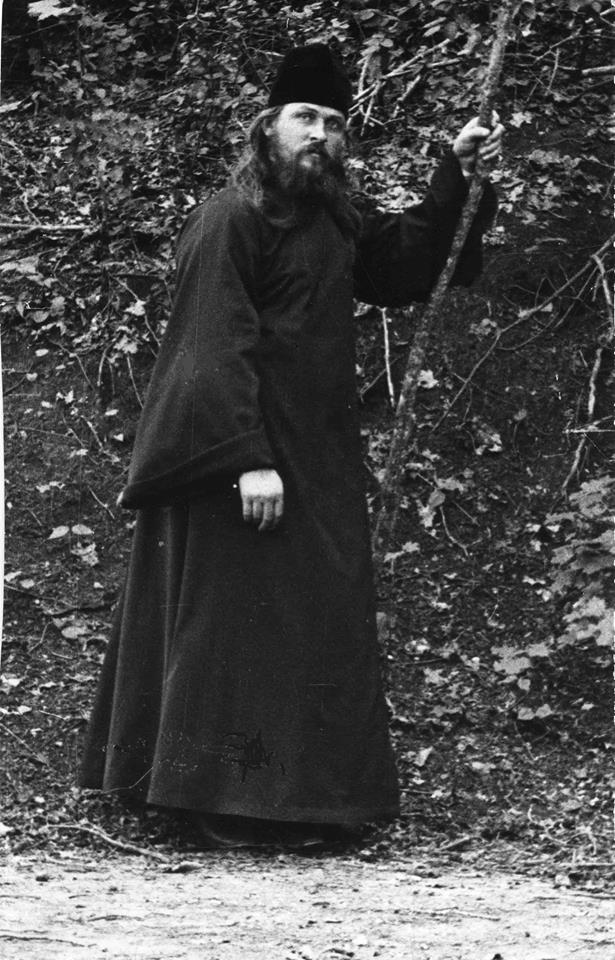
Archimandrite Benjamin Fedchenkov, the future Metropolitan of the Aleuts and North America, was in many cities of the empire during the turbulent events of 1917, including Kharkiv. Here is how he recalls the February Democratic Revolution of 1917 in his memoirs, *At the Crossroads of Two Eras*, written in the United States during World War II:
I recall two more incidents that seemed funny at the time but were actually quite mysterious. I pondered both of them back then, and even now they remain a mystery to me.
One of them dealt with the issue of socialism and property, and the other with the relationship between revolution and religion.
First, I’ll tell you about the second case; it happened earlier.
When I was passing through Kharkiv and stopped there, I witnessed the following scene. In the city’s central square—where the cathedral stood, with government offices across from it and the university to the right—a huge crowd had gathered. They stood with their backs to the cathedral and their faces toward the provincial administration building, looking up at the roof of that building. I turned to look in that direction. I saw a soldier in a greatcoat scrambling across the iron roof. Where was he going?.. Then he carefully climbed to the very top of the triangular cornice, facing the cathedral. I looked: he was holding a club in his hands. Beneath the cornice was a huge sculpted double-headed eagle with crowns and a four-sazhen (8,5 m) wingspan. This is the symbol of Russia itself, looking out over the two continents—Europe and Asia—where its dominions lie. But it was usually regarded as a symbol of the tsar and his autocratic power. Of course, to the revolutionary heart in that heated moment, it was unbearable to see the “remnants of tsarism.” And it was decided to destroy them as much as possible. Who would stand in the way?.. Now—freedom and revelry. But it was a dangerous undertaking: a soldier could easily fall from a three-story building and be crushed to death. However, this was a serious, national matter—the revolution—and it was worth risking one’s life for…

Once he has regained his composure, the soldier stands up straight and, in full view of all the honest people, slowly removes his military cap, devoutly makes the sign of the cross three times, covers his head, takes the club in both hands, and with two or three deft blows knocks off both the crown and the eagle’s head. Below, above the entrance doors, was a flat glass canopy; pieces of shattered plaster fell onto it and, with a clatter, smashed the glass to shards… I don’t remember if there was applause or cheering… How could there not be?! The soldier, triumphant at having accomplished a great task, slid down into the skylight and on his way.
And I watched and thought: What kind of enigma is this Russian-Ukrainian man? He overthrows the tsar and prays to God… That’s not the old way. Yet somehow he comes to terms with it. Apparently, he instinctively considers the revolution to be a good and necessary cause as well…
…But another conversation took place in the train car, after Kharkiv.
There were Ukrainians on the train. They’re a tricky bunch! It’s not easy to figure out what they’re thinking… A silent crowd… They’re puffing on their tobacco pipes, and everyone’s just thinking, thinking… A young, well-dressed soldier was hanging around one group… As I recall, he spoke Russian. He was traveling from the front or to the front, somewhere “on business.” It turned out he was a military medic—so, in a way, a kind of scholar. And right before my eyes, he passionately and at length explains to the Ukrainian men what socialism is. How wonderful everything will be now! People would have to work very little, and there would be plenty of everything. And most importantly, everything would be free for everyone: no money to pay, and in fact, money wouldn’t even be needed under socialism…
The Ukrainian men are listening and don’t argue… It’s just that they’re strangely silent, as if they were stupid. But the speaker, pleased with himself and his own wit, doesn’t notice this…
And suddenly, one of the listeners, tapping ash out of his pipe, said slowly (he was speaking Ukrainian, of course), looking down at his pipe: “Yeah, that’s… sure, it’s better without money… What’s the point of money, then?.. Well, maybe just a little for some tobacco?!”Did he really think that the higher-ups wouldn’t provide tobacco—since it was considered a trivial and unnecessary item? Or was he using this playful irony to express his doubt that everything would be free under socialism? I don’t know. It seems, however, that this Ukrainian wanted to say that even under communism, there should remain some aspect of life—albeit a minor one—dedicated to individual freedom. And where does that line lie? Is it limited to just a pack of cigarettes?
They were the only ones who didn’t believe that they wouldn’t have to work very hard. To this lifelong worker, that’s both incomprehensible and even unpleasant…
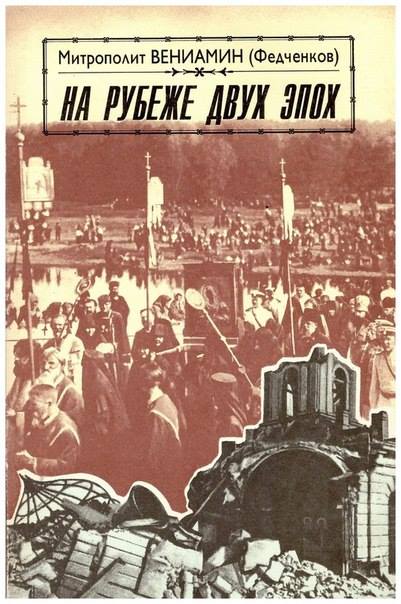
It is worth noting that despite his active participation in the White movement, Veniamin Fedchenkov was not an idealist and took a critical view of the corruption that had afflicted not only the tsarist regime and its accompanying institutions but also the White Guards, not to mention the Bolsheviks:
They took Kharkiv, Sumy, and other nearby cities from the Reds… They said that at the “Emergency Commission” (the Revolutionary Police Emergency Commission), they tortured the arrested terribly, beating them as if they were taking off their gloves—that is, dipping their hands into boiling water until the skin peeled off, and so on. Maybe it’s not true, but that’s what people said… During a revolution, anything is possible… Even the Germans are torturing old people and children now! America doesn’t believe it, but the facts are right there. And it’s understandable—when the Whites arrived, the townspeople greeted them with enthusiasm. They say they even kissed the cavalrymen’s stirrups and boots. But then? And then they soon became disillusioned with them. For example, General Mai-Maevsky, who commanded the unit, allegedly handed the city over to his troops to “plunder and pillage” for three days. And he reveled in it himself. I fully believe this, because General Wrangel, having taken command after Denikin, even issued a special order that “the sacred cause of saving the motherland must be carried out with clean hands.” And he complained to me about how many among the Whites had gone corrupt… Under his command, I didn’t even hear about this famous Mai-Maevsky.
That was Kharkiv “at the turn of two eras”—a city home to Ukrainian workers for whom faith and freedom had always been of paramount importance. Alas, their greatest trials were still ahead of them…

- Danylevs’koho Street, 19 - 13.10.2026
- Debunking the myth about one of the most famous Kharkiv photos - 12.10.2026
- The Architectural Evolution of the Kharkiv Theater - 26.09.2026